Anointing the Hidden King

The author of Siddur Otzar HatTefillos  explains why we do tashlich on Rosh  HaShanah from a statement on today’s daf. “Rav Saadiya Gaon explains that we blow the shofar on Rosh HaShanah because on that day we declare Him as king of the world. We blow shofar to accept His kingship over us. This is also why we go to the river or another water source to do tashlich on Rosh HaShanah. As we find in Kareisos 5, we only anoint a king near a body of water. Similarly, on Rosh HaShanah, the day we renew our acceptance of God’s kingship, we re-anoint Him as it were by a river.

The Magid Devarav L’Yaakov, zt”l, explains in a similar vein why we don’t do tashlich on Rosh Hashanah which falls on Shabbos. “Tashlich is a kind of anointment of God as king. We find in Kareisos 5 that we only anoint a king when there are enemies to his becoming king. But if no one objects to his becoming king, there is no need to anoint. When Rosh Hashanah falls out during the week, one must contend with many enemies which try to trip him up, making it very difficult to declare God’s kingship with a full heart. We therefore must go to a water source and anoint Him there. In this manner we silence all accusers. On Shabbos, however, the Zohar tells us that there are no accusers—at least compared with during the week. It follows that there is no need to anoint God king.”

Daf Yomi Digest
Stories Off the Daf
“Anointing Our King”
Kereisos 5

Then Jesus came from Galilee to the Jordan to John, to be baptized by him. John would have prevented him, saying, “I need to be baptized by you, and do you come to me?” But Jesus answered him, “Let it be so now, for thus it is fitting for us to fulfill all righteousness.” Then he consented. And when Jesus was baptized, immediately he went up from the water, and behold, the heavens were opened to him, and he saw the Spirit of God descending like a dove and coming to rest on him; and behold, a voice from heaven said, “This is my beloved Son, with whom I am well pleased.” –Matthew 3:13-17 (ESV)

I couldn’t help but make this comparison because it seemed to fit so well. It also makes me wonder when John performed the ceremony of immersion with the Master as recorded by Matthew and, in future days, when Jesus will be anointed as King over all the earth? I’m not making any sort of declarative statements. Just wondering.

If indeed, according to Jewish custom, the shofar is blown as an announcement of accepting the Messiah’s Kingship over us, I also wonder why we Christians, who claim Jesus as Messiah and King, never took the practice of the shofar upon ourselves. I guess it would have been “too Jewish.” But, since Jesus came first for his “lost sheep of Israel” and then only for the nations of the world, on the day when Jesus returns to claim his Kingship, won’t we all, Jew and Gentile alike, hear the sound of the shofar when he is anointed? Maybe the church should start getting used to the idea that we have a truly Jewish King.

I suppose I’m guilty of some degree of presumptuous arrogance in comparing the Jewish Messiah and the Christian Jesus, since most Jews do not see these two as being the same man. Also, many in the church do not recognize even the possibility that, when Jesus returns, he will be a Jewish King and will preside over Israel and the world in the legacy of David rather than as a “Gentile Gee-sus.”

In many ways the true face of the King of Kings has been concealed from both the Christian and the Jew, as have been his names.

Of the many names for the Messiah found in Tsvi Sadan’s book The Concealed Light, none of them, in English, translate to “King” or “Anointed” or even “Shofar”. However, the Hebrew word “Stam” is thought to be one of the names for our hidden King. Also remember that, for many Jews, the name of the Messiah remains hidden…for now.

In some places, when no name is attached to the word “king,” the identity of the king is said to be stam, meaning the king’s identity is unclear and open for interpretation.

Messiah as Stam King flows from understanding the words of Hannah, “He will give strength to His king, and exalt the horn of His anointed.” (I Samuel 2:10). Since there was no king in Israel when these words were spoken, some could assume that Hannah was prophesying about Messiah. So, says Radak, “The king is Messiah, and Hannah said it by way of prophecy or by way of tradition that in the future Isarel will have a king” (Radak to I Samuel 2:10).

-Sadan, pg 172

We think we know him. We think we know our Lord and Savior in the church. Judaism looks for the Messiah to come to redeem Israel and bring righteousness to the nations under his scepter. We both have it right and we both have it wrong. We both need to have his face revealed and his name to be made clear to all.

And we are all waiting for the King to arrive and be anointed…and to reign over his Kingdom, which is centered in Jerusalem and extends to the ends of the earth. May he come soon and in our days. Amen.

I Will Awake the Dawn!

My heart is steadfast, O God! I will sing and make melody with all my being! Awake, O harp and lyre! I will awake the dawn!

I will give thanks to you, O Lord, among the peoples; I will sing praises to you among the nations. For your steadfast love is great above the heavens; your faithfulness reaches to the clouds. Be exalted, O God, above the heavens! Let your glory be over all the earth! That your beloved ones may be delivered, give salvation by your right hand and answer me!

Psalm 108:1-6 (ESV)

Wake up by your own body clock, before the alarm. King David said, “I will wake the morning”—not that the morning woke him. You see, if you are only awake because it is morning, you are not really awake—you are sleepwalking. If it is morning because you are awake, however, then you are truly awake and in control.

-Rabbi Tzvi Freeman
“How to Get Out of Bed…and really mean it”
from the Multimedia Guide to Jewish Prayer series
Chabad.org

I hadn’t noticed that David said, “I will awake the dawn” before. I think most of us, when we first get up, are “sleepwalking” for some period of time, as Rabbi Freeman describes. We are waiting for morning, or our first cup of coffee, to wake us up. In his article on getting out of bed from which I’m quoting, Rabbi Freeman provides rather detailed instructions on what to do, from the first moment you realize you’re awake, through the process of entering into morning prayer. These steps are traditional for a religious Jew and so may not be particularly adaptable for the Christian.

On the other hand, there may be a thing or two we can take into our own morning routine as we prepare to greet our Creator.

As I previously mentioned, the first thing a Jew does after waking up is to recite the Modeh Ani blessing, thanking God for returning his soul to him and restoring his life. Immediately afterwards comes the Netilat Yadayim or the traditional handwashing, followed by other specific routines to prepare for prayer.

You can read Rabbi Freeman’s article in full at the links I’ve already provided, so I won’t go into a step-by-step description of the awakening process of a Jew preparing for prayer. Frankly, I don’t believe most of it specifically applies to the Christian and that these are rituals uniquely Jewish in nature.

However, there are a few things we might want to pay attention to, especially activities that a Jew should avoid prior to tefillah (prayer):

  • Don’t eat a meal.
    Eat what you need to focus your mind in tefillah. Maybe that’s just a hot drink. Maybe a light snack. But stop there. First connect your soul, then feed the body.
  • Don’t check the news.
    Sure it’s important to know what’s going on in the world. Starting from the event of the greatest, earth-shaking import. And that is that you are about to talk to the Creator of the Universe. Keep your head clear. You’ll need it.
  • Don’t visit a friend.
    This is a classic, mentioned in Talmud. You’re about to greet your Maker, so it’s not good protocol to visit someone else first. If you do see someone you haven’t seen for a while, the custom is to not say, “Shalom Aleichem” or even “Shalom”. Shalom (peace) is a name of G-d, so we don’t use it for anyone else until we’ve spoken with Him personally. “Good morning, how are you?” is fine.
  • Don’t check your email or otherwise take care of business.
    Getting tough? Consider each day to be like a mini-week, and the late night and early morning comprise the mini-Shabbat.
  • Don’t get into distracting conversations.
    You don’t have to be rude. But once those conversations start, there’s no end. When you try to put your head into meditation before tefillah, everything you heard and said that morning keeps rattling around in your head. Why add noise, when it’s already so hard to quiet down the mind?

Do you pray in the morning before launching into your day? I must admit that I don’t do so very often. I have a morning routine, but while it contains time to read from the Psalms and the Gospels, it doesn’t accommodate itself to a specific and formal prayer time. I’m not saying that I’m right in this, only that I don’t feel really good about formal prayer while I’m still in my PJs or unshowered, and by the time I take a shower, it’s time to zoom out the door to work.

Would my day go better if I read from the Bible and regularly prayed in a formal manner to God? I can only assume it would. So why don’t I?

Habit, I suppose. Here’s what a typical (actually ideal) morning looks like for me during the week.

  • Wake up and recite Modeh Ani.
  • Use the bathroom.
  • Make coffee and drink a glass of water while I’m waiting.
  • Read various comic strips on the computer which helps my brain wake up.
  • Finish one cup of coffee and one glass of water and then (if I’m very good) head off to they gym.
  • Return home after the gym, drink more water, and publish the day’s “morning mediation” blog.
  • Eat breakfast.
  • Shower, brush my teeth, and shave.
  • Read from the Bible, usually a page of Psalms and a chapter from the Gospels.
  • Pack my lunch for the day and head out the door.

Believe it or not, including the workout at the gym, that covers from 4 a.m. to 7 a.m. and I make it to work by around 7:30 a.m. depending on traffic.

Pouring waterDoesn’t sound much like how Rabbi Freeman describes a morning for a traditional religious Jew.

I hate to make this sound dry, but in many ways, holiness is a habit. Like many people, I tend to do the same things each morning when I get up as a matter of routine, not because it’s better or worse than any other way of waking up. I suppose there are some very diligent Christians and Jews who have extremely disciplined morning routines that are infused with the presence of God. There may also be a large number of Christians and Jews who have a routine that is more or less like mine.

A Christian tends to think of prayer life, like most other aspects of the Christian lifestyle, as “free,” that is, you can pray pretty much any time you’d like. This is true and it’s true in Judaism as well. However, there is also a formal aspect to Jewish prayer that dictates specific times when one is to pray (ideally with a minyan) in a ritual manner. The morning prayer service is called Shacharit and is one of the three times a day a Jew is commanded to enter into prayer.

I mentioned in my last morning meditation that God desires we voluntarily enter into a relationship with Him, and this is true. However, I also mentioned that for the Jew, there is a certain set of connections, rituals, and traditions that are part and parcel of being a Jew. There is a “belonging” and a “commandedness” to being a Jew that few Christians truly understand. I don’t know if this is a good thing or a bad thing, only that it is a Jewish thing.

A few months ago, I wrote that the Roman Centurion Cornelius (see Acts 10) seemed to have adopted the Jewish tradition of fixed prayers, probably because having come to faith in the God of Israel, it was the only available model for his prayers. This suggests that fixed times of prayer are not forbidden to the Christian, even though they are not formally commanded of us by God.

I can find all kinds of reasons why I should pray in the morning, but it is entirely up to me to choose to initiate such prayer or to disregard it. To incorporate morning prayer as a daily routine, I will need to change my habits which, as I’m sure you’re aware (assuming you have habits, too) is easier said than done.

But having admitted a need to improve certain areas of my life, which includes a more intimate relationship with God, what else can I do but either take God seriously or discard His presence?

When I imagine other Christians or anyone who shares a faith in the God of Abraham, Isaac, and Jacob, I imagine them in the morning, entering into deep and meditative periods of prayer with God. But that’s my imagination and it can be used to fuel a sense of guilt, because I don’t have such a time in my morning, admittedly by choice. On the other hand, I’ve heard numerous Christians say they “share” their first cup of coffee with Jesus, praying to him in the morning (but even Jesus said we are only to pray to God the Father) as if they were talking to a neighbor or acquaintance sitting around the kitchen table.

I apologize if this sounds offensive, but I’ve always been put off by that image. One does not approach the throne of the King with a cup of coffee in one hand and a folding chair in another, sit down next to His Throne, and then address the King of the Universe in the same way as you’d chit chat with a casual acquaintance.

I think that’s one of the reasons I hesitate to pray in the morning. When am I really prepared to enter into the presence of the King? When am I clean enough? How should my hair be combed? Should I be hungry or full? Should I be sleepy or well “caffeinated?”

Is it just my own “hang up” that I think morning prayer or any formal, regular prayer should contain a sense of formality, respect, and awe of God? Is this something that only the Jews have retained and that the church has tossed in the gutter, in favor of a casual dip into the shallow pools of grace and freedom?

But I’ll never be “good enough” to actually enter into the august and majestic Throne room of the Almighty and All-encompassing King of Everything. How do you even do that? Is that why Christians “dumb down” prayer for the most part? Should I emulate the Jewish “style” even though I’m not a Jew, for lack of any better model?

I’m tossing this question out to you readers. What do you think?

You might think that the more lowly the created being, the lower the divine spark it contains.

Just the opposite: Only the highest of sparks could descend to the lowest of places and retain their power to sustain such an existence.

That is why the deepest truths are so often found in the darkest of places.

-Rabbi Tzvi Freeman
“The Taller They Are…”
Based on letters and talks of the Rebbe
Rabbi M. M. Schneerson
Chabad.org

How can I wake up the dawn?

Vayikra: Voluntary Offering

The Torah portion Vayikra discusses various types of korbanos, sacrificial offerings, first relating the laws of voluntary offerings and then of obligatory offerings. Why does the Torah begin with free-will offerings; one would think that we should first be made aware of the laws regarding the korbanos that must be brought, and only then learn about the details of the voluntary offerings. The answer is that, by doing so, it indicates that the most crucial aspect of all offerings is that they be offered from a genuine desire to come closer to G-d – “his heart’s intent is for the sake of Heaven.”

It can thus be said that all korbanos are to be considered free-will offerings, for at the crux of all offerings are the feelings of the individual bringing them.

In fact, the intention required is found within each and every Jew, but when an individual brings a free-will offering, these latent desires are revealed for all to see.

Thus, it is not necessary for the Torah to command this intent, for it is found in any case; bringing the offering will automatically reveal the Jew’s innate intention of drawing close to G-d.

-from “Korbanos and the Heart’s Intent”
Commentary on Torah Portion Vayikra
Based on Likkutei Sichos, Vol. XVII, pp. 9-13
and the teachings of the Lubavitcher Rebbe
Rabbi Menachem M. Schneerson
Chabad.org

In Christianity, we have a tendency to view Jewish religious behavior as obligatory, works-driven acts; almost a kind of “slavery” to God. By comparison, the Christian believes that grace makes us as free as a bird in flight to enjoy the peace and understanding of a loving and forgiving God. What we do in response to the grace of God and the crucifixion of Jesus Christ is based (ideally) on sheer gratitude for all God has done for us. There are few, if any, obligations incumbent on the Christian, or at least that’s how it sounds when most Pastors deliver their message from the pulpit on Sunday.

But here we see a different side of Judaism, one that we’re not always aware of. We see that a Jew is encouraged to embrace the motivation of voluntarily drawing closer to God. It’s not a slave approaching a Master with bloody sacrifices on a hot, burning, and ash-filled altar, but a person who actually wants to approach, as a lover with a gift, desiring to enter into the presence of her paramour.

Today’s daf continues to discuss the halachos of various issurei kareis.

The evil inclination will drive a person insane if given half a chance. First it entices a person to sin. Then it riddles him with thoughts of guilt and gloomy thoughts of what will be the result of his sinful activities.

Rav Yitzchak Sher, zt”l, explained why the yetzer hara won’t even allow a person to enjoy having sinned. “The yetzer wants to kill us, as our sages teach. He therefore pushes one to sin and urges God to punish the hapless fellow. Even if he cannot kill us, he wants us to suffer. He is in essence saying, ‘You sinned, now give up all the pleasure too.’”

One of the strongest arguments the yetzer has is when a person transgresses issurei kareis, chas v’shalom. The evil inclination immediately begins harping on this stain, insisting that teshuvah doesn’t help—in direct contradiction of the Gemara itself. Yet even one who learned that kareis can be rectified cannot help being daunted by the need for Yom Kippur and yesurin to clean away such guilt. Although the Meiri there adds that a complete teshuvah also atones alone, who can say he has done a complete teshuvah?

The Chofetz Chaim, zt”l, brings that the Yesod V’Shoresh Ha’avodah, zt”l, teaches how to wipe away even the kareissins. “It is brought from the Arizal that one who did a sin punishable by kareis should stay awake the entire night and learn Torah, especially those segments where the sin he transgressed is discussed.”

The Yesod V’Shoresh Ha’avodah adds, “This practice is most frequently followed during the nights of Aseres Yemei Teshuvah. The custom is for people to stay on their feet and learn Meseches Kareisos the entire night.”

The Chofetz Chaim adds that one who learns Meseches Kareisos well attains added holiness and purity. Learning this tractate is a segulah to rectify transgressions.

Daf Yomi Digest
Stories Off the Daf
“Repairing the Damage”
Kereisos 3

That doesn’t sound very voluntary, but when we have distanced ourselves from God, it’s pretty tough to actually want to face Him again, particularly after we’ve sinned and let Him down. Guilt makes things a mess and we’ll put ourselves through all kinds of pain and sorrow as a result.

But God does not want sin to make His people distant and desires that His chosen ones draw close, even after periods of separation.

The unique love which G-d shows the Jewish people is reflected in the beginning of our Torah reading, which states: “And He called to Moshe, and G-d spoke to him.” Before G-d spoke to Moshe, He called to him, showing him a unique measure of endearment. G-d did not call Moshe to impart information; on the contrary, He called him to express the fundamental love He shares with our people. (For although it was Moshe alone who was called, this call was addressed to him as the leader of our people as a whole.)

The inner G-dly nature which we possess constantly “calls” to us, seeking to express itself. This is reflected by the subject of the Torah reading, the sacrificial offerings. The Hebrew word for sacrifice, korban, shares a root with the word kerov, meaning “close.” Sacrifices bring the Jews’ spiritual potential to the surface, carrying our people and each individual closer to G-d.

-Rabbi Eli Touger
from “The Dearness of Every Jew”
Commentary on Torah Portion Vayikra
Adapted from
Likkutei Sichos, Vol. VII, pgs. 24-26;
Vol. XVII, pgs. 12-15;
Sefer HaSichos 5750, Vol. I, p. 327ff
Chabad.org

But how does this speak to the Christian? Actually, it speaks to us especially so that me might understand how passionately God does not want His chosen ones, the Jewish people, to be distant from Him…ever. How can the joining of the nations to the God of Israel ever diminish, or God forbid, destroy the loving union between the Jews and God? How can we ever dare believe such as thing?

But if God is so close to the Jew, where does that leave the Gentile?

“For God so loved the world, that he gave his only Son, that whoever believes in him should not perish but have eternal life. –John 3:16 (ESV)

And Jesus came and said to them, “All authority in heaven and on earth has been given to me. Go therefore and make disciples of all nations, baptizing them in the name of the Father and of the Son and of the Holy Spirit, teaching them to observe all that I have commanded you. And behold, I am with you always, to the end of the age.” –Matthew 28:18-20 (ESV)

Therefore remember that at one time you Gentiles in the flesh, called “the uncircumcision” by what is called the circumcision, which is made in the flesh by hands – remember that you were at that time separated from Christ, alienated from the commonwealth of Israel and strangers to the covenants of promise, having no hope and without God in the world. But now in Christ Jesus you who once were far off have been brought near by the blood of Christ. –Ephesians 2:11-13 (ESV)

God’s grace and mercy are not limited to the Jewish people, although the Jews have been and always shall be a special people unto the Creator. God grants His grace to the nations of the world as well, but here’s the catch. We must volunteer to draw near to Him. We are not compelled to do so, nor are we born into His grace.

To one degree or another, if you are born Jewish, even though God desires the Jewish person to draw near of his or her own free will, there is an attachment of the Jew to all other Jews and to the Torah that can never be disconnected. You belong, quite frankly, whether you want to or not. This is not true for the rest of us. Although each of us was created in God’s own image, we either choose to draw near to Him or we choose to be distant. Even the atheist, who believes it is more rational to disbelieve in the existence of God, is still making a choice, since knowledge of God is abundant in the world around us.

But God desires us. He desires that we all draw near to Him and that none should be lost or perish (2 Peter 3:9). But we must desire Him. How can this be done, since all human beings desire only their own wants and needs without hardly a thought of God? It would take a miracle. Rabbi Touger’s commentary continues.

The G-dly potential within every Jew and within our people as a whole will not remain dormant. Its blossoming will lead to an age when the G-dliness latent in the world at large will become manifest, the Era of the Redemption. At that time, the Jewish people will “relate [G-d’s] praise” in a complete manner, showing our gratitude for the miracles performed on our behalf.

Herein we see a connection to the month of Nissan, during which Parshas Vayikra usually falls. Our Sages associate Nissan with miracles. Further, Nissan is the month in which the Jews were redeemed, and the month in which we will be redeemed in the future. At that time, our entire nation will proceed to our Holy Land and “relate [G-d’s] praise” in the Beis HaMikdash. May this take place in the immediate future.

The Rabbi’s words echo those of the Apostle Paul who also said that “all Israel will be saved” (Romans 11:26). We also see how the rest of us are included in God’s grace, as Rabbi Touger says that the “blossoming” of Jewish holiness, “will lead to an age when the G-dliness latent in the world at large will become manifest, the Era of the Redemption.”

This is the era of the Messiah’s return.

The Christian world is looking forward to a reminder of the return of Jesus in its celebration of his resurrection on Easter Sunday, which is on April 8th this year. For the Jew, the special time of redemption is when the Jewish people were redeemed from slavery by God, during the Passover season, which begins at sundown on Thursday, April 5th. I personally relate more to the Passover season for reasons too numerous to mention here, but regardless of which time you hold dear in your heart, realize that we are called, not to be chained to God, but to fervently desire to be near to Him, to draw close, to love His Word and His Presence in our lives.

To want to be near God, we must believe we are safe when we are with Him. We must do more than hope in Him, we must trust in God, something that is not always easy for me. I suppose this is a major reason why our relationship isn’t what it should be. I suppose it’s why God drops little reminders into my calendar; little invitations to draw near to Him. He does so every week on Shabbat. He does so every day for morning and evening prayers. He does so many times a year and, after all, as I just mentioned, Passover is drawing near. These are times when God asks me to set aside my doubts and fears, to trust Him, to believe in miracles, and to approach.

Trust transcends hope, as the sky above transcends the earth below.

The heart that clings to a thread of hope is anchored to its earthly bounds. It desires to receive, but its capacity is tightly defined. The thread snaps and your eyes look up to see nothing more than the open sky. Hope is gone. All you can do now is trust the One who has no bounds.

That is Trust: When you stop suggesting to your Maker what He should do. When you are prepared to be surprised and open to wonders and miracles.

-Rabbi Tzvi Freeman
“Trust over Hope”
Based on letters and talks of the Rebbe
Rabbi M. M. Schneerson
Chabad.org

Good Shabbos.

I’m Alive!

“Be who you are and say what you feel because those who mind don’t matter and those who matter don’t mind.” -Dr. Seuss

I admit, thank, surrender before You, to Your essential being, O King, He who speaks the world into being and who is the source of all being, who is alive and the source of life, and who is enduring, sustaining, and unchanging. Because You have returned within me and You are recharging me with my breath of life by and with Your gracious compassion. Great and magnificent is Your faithfulness.

Modeh anee lifanecha melech chai vikayam, she-he-chezarta bee nishmatee b’chemla, raba emunatecha.

-Modeh Ani

You just woke up. I just woke up. It’s a new day and we’re alive!

I’m continuing to follow the path of preparing a day before God. I’ve written about the activities that ideally lead up to this moment including An Introduction to a Prayer, Dream Not of Today, and Morning Rebirth, to mention just a few of the most recent blog posts in this series. In preparing for this moment, you have allowed yourself (again, ideally) to  dedicate your evening to reading, and studying, and meditating on God and His eternal Word, and praying the Bedtime Shema. Then, within the confines of His arms and blessing, you have fallen asleep.

And now it’s morning. And now you’re awake. What are the first thoughts that come to you? According to Rabbi Freeman, those thoughts should be of God, which is what you’d expect, and how grateful you are for returning you to this life, since sleep is where you approach the realm of death. You are reborn for another day. The breath of life has been restored to you, much in the same way God breathed life into the first man (Genesis 2:7). I can’t imagine what Adam must have thought in those first few moments of his existence, and if he really understood that prior to that moment, he did not exist at all, and then he was alive and the first living man. If he could possibly have comprehended all that God had done, how God had created the entire Universe for the sake of a man, how grateful would Adam have been?

There’s no way for us to understand the experience of the first man, but we can understand our own experience upon awakening, when we realize we are alive and we have lived to see another day.

I realize that most of you take that for granted. When you go to sleep, you expect to wake up the next morning. You expect to get up, use the bathroom, get a cup of coffee, check your email, take a shower, brush your teeth, get dressed, and so on, and so forth, just like you have a thousand mornings before.

Just like the sun is supposed to rise in the east every morning like clockwork. You don’t even worry that it won’t.

But what if you were severely ill? What if your living from day to day wasn’t such a sure thing? What if you had a medical condition that might result in you dying in your sleep. Even trying to go to sleep might make you anxious or even terrified, if you thought you might not wake up again…ever. If you expected that you could die in your sleep and then found yourself awake the following morning alive and feeling well, wouldn’t you be grateful to God for returning your life?

It is said that each beat of our heart requires the will of God, and should God withdraw His will, our heart would stop in an instant. We really take our beating heart for granted because it’s never let us down yet, has it? If it had, we would be dead. So we assume that if it’s worked all of this time without a problem, then it will just keep on going and going and going, like the Energizer Bunny.

Frankly, if we worried second by second all day long about whether or not God was going to extend our life into the next minute or the next hour, we probably would be a nervous wreck and would never be able to just get on with our day to day routine.

So, for the most part, we don’t worry. But then, are we grateful?

If you do so at no other time, the moment when you first wake up is a terrific time to express your gratitude to God for who you are and the fact that you made it to the start of another day. And just as you pondered the ancient texts and the oft-repeated tales of the greatness of God and all that He has done while you were getting ready for sleep, you can allow the awareness of Him to enter into you, and to fill you with His light as you wake up.

In today’s study, Rabbi Freeman presented a detailed, step-by-step breakdown of Modeh Ani, from which I took my rather literal translation of the Hebrew at the beginning of today’s meditation. While we won’t always be aware of the full weight and import of this deceptively short and easy morning blessing each time we say it to ourselves and to God, we should at least be aware of what we are saying before we commit to using these words to express our gratitude.

Depending on who you are, and how you conceive of God and your relationship to Him, you may never choose to adopt this particular blessing as part of your process of waking up each morning and re-entering the world that God has made.

But I hope and pray you choose (if you haven’t already done so) something similar. It’s not only because God deserves our gratitude and praise, but because we need to make the effort to integrate who we are into who He is. Otherwise, what is our life without His love?

“While there’s life, there’s hope.” -Marcus Tullius Cicero

Morning Rebirth

Envision that the Creator, whose glory fills the earth, He and His presence are continually with you. This is the most subtle of all experiences.

Rejoice constantly. Ponder and believe with complete faith that the Divine Presence is with you and protecting you; that you are bound up with the Creator and the Creator is bound up with you, with your every limb and every faculty; that your focus is fixed on the Creator and the Creator’s focus is fixed upon you.

Tzavaat Harivash 137
as quoted from Chabad.org

He then reached into his pocket and took out his wallet. Under the isinglass window was a card on which were written some words. He shoved the wallet across the table and said, “There, son, read that. That is my formula, and don’t give me the song and dance that it won’t work either. I know better from experience.”

The obstacle man picked up the wallet and with a strange look on his face read the words to himself.

“Read them out loud,” urged the owner of the wallet.

This is what he read in a slow, dubious voice, “I can do all things through Christ which strengtheneth me.” (Philippians 4:13)

-Norman Vincent Peale
“Chapter 8: I Don’t Believe in Defeat”
The Power of Positive Thinking

In continuing to review Rabbi Freeman’s series A Multimedia Guide to Jewish Prayer, I found surprising (to me) similarities between the advice of the Chasidim and that of a Christian Pastor. Despite the rather unpalatable presentation of Peale’s book, if you scrape away the “Christianese” and the rather improbable circumstances he describes, there is a kernel of truth lying underneath. I suppose his style and language appeal to his primary audience (which somehow doesn’t include “Christian” me) but while not being Jewish, I find the same set of instructions easier to read from Jewish sources.

In religious Judaism, sleep is considered “one-sixtieth of death,” which is why a Jew will pray for the protection of the angels when reciting the Bedtime Shema before retiring, and then gratefully thank God for returning his life to him by reciting the Modeh Ani immediately upon awakening. Rabbi Freemen teaches to this point.

If sleep is one-sixtieth of death, then waking up is a miniature rebirth. As your eyes blink open to greet the morning sun, you are a newborn child, a seed of a person ready to sprout forth from under the soil, spread forth branches and grow.

I suppose you’ve heard the saying that goes, “today is the first day of the rest of your life,” which tends to shut the door on whatever goof ups and agony occurred in whatever past you had before today, and opens up a whole new world of fresh possibilities starting right now. However, in real life, it’s difficult to let the past stay in the past or, putting it another way, it’s hard to let “whatever happens in Vegas, stay in Vegas,” especially if we have people in our lives who have been hurt by what we did “in Vegas.”

The Lord is merciful and gracious,
slow to anger and abounding in steadfast love.
He will not always chide,
nor will he keep his anger forever.
He does not deal with us according to our sins,
nor repay us according to our iniquities.
For as high as the heavens are above the earth,
so great is his steadfast love toward those who fear him;
as far as the east is from the west,
so far does he remove our transgressions from us.
As a father shows compassion to his children,
so the Lord shows compassion to those who fear him.
For he knows our frame;
he remembers that we are dust. –Psalm 103:8-14 (ESV)

Even if our trust in God’s boundless forgiveness and mercy is completely solid, the human beings in our life are most likely not going to be as compassionate and forgiving.

And then there’s how or if you forgive yourself.

It’s only a brand new day if you decide it is. For that matter, I only face a brand new, fresh, clean day before me if I can let go of the past and put my sins as far from me as “as the east is from the west.” It may be difficult or even impossible to expect everyone to forgive you for everything you’ve done to hurt them, but it can be equally difficult (or impossible) to receive forgiveness from yourself.

I have a vague memory of playing a game in childhood where you could call “do-overs.” Outside of science fiction, there is no way to go back and change the past in order to recreate yourself and your history. But is there a way in the realm of God?

Jesus answered him, “Truly, truly, I say to you, unless one is born again he cannot see the kingdom of God.” Nicodemus said to him, “How can a man be born when he is old? Can he enter a second time into his mother’s womb and be born?” Jesus answered, “Truly, truly, I say to you, unless one is born of water and the Spirit, he cannot enter the kingdom of God. That which is born of the flesh is flesh, and that which is born of the Spirit is spirit. Do not marvel that I said to you, ‘You must be born again.’ The wind blows where it wishes, and you hear its sound, but you do not know where it comes from or where it goes. So it is with everyone who is born of the Spirit.” –John 3:3-8 (ESV)

This is where we get the concept of being a “born again Christian,” but in my case, I’m talking about being “reborn” not just once and for all, but each and every morning. As difficult as life is and as many mistakes as we make, just being “reborn” once won’t cut it. I’m convinced our greatest failures don’t occur before we become believers, but after we dedicate our lives to Christ. That’s when we should “know better” and when there is so much more at stake when we make a mistake or commit evil in the world.

Because when a Christian sins, what hope is there for recovery unless we can somehow have that sin washed away as if it had never happened?

For God did not send his Son into the world to condemn the world, but in order that the world might be saved through him. Whoever believes in him is not condemned, but whoever does not believe is condemned already, because he has not believed in the name of the only Son of God. –John 3:17-18 (ESV)

It would be nice to wake up one morning and not be…or even feel condemned by God and by other people…and by myself.

Rabbi Freeman quotes extensively from Tzavaat Haribash 137 in order to help his audience understand that when you wake up, being aware of God as your first conscious thought can mean “becoming aware of your existence within an existence larger than your own.”

Tell yourself, “He is the Master of all that occurs in the world. He can do anything I desire. And therefore, it makes no sense for me to put my confidence in anything else but Him, may He be blessed.”

Rejoice constantly. Ponder and believe with complete faith that the Divine Presence is with you and protecting you; that you are bound up with the Creator and the Creator is bound up with you, with your every limb and every faculty; that your focus is fixed on the Creator and the Creator’s focus is fixed upon you.

And the Creator could do whatever He wants. If He so desired, He could annihilate all the worlds in a single moment and recreate them all in a single moment. Within Him are rooted all goodness and all stern judgments in the world. For the current of His energy runs through each thing.

And you say, “As for me, I do not rely upon nor do I fear anyone or anything other than Him, may He be blessed.”

Jesus says that a man must be born again of water and spirit. Chasidic teachings instruct us to consider ourselves as reborn “within an existence larger than your own.” Waking up in the morning is not only the start of a brand new “existence,” but a reminder that we are already a “brand new person in Christ” (2 Corinthians 5:17). To create that awareness, the first words that come to you once you are awake enough to develop a coherent thought are the most important.

“I gratefully thank you, living and existing King, for returning my soul to me with compassion. Abundant is your faithfulness.” -Modeh Ani

Sitting at the bottom of the abyss as I attempt to arise from sleep, the first rung of the ladder of God is sitting in front of me. If I choose to believe so, at that moment, there is no past but only the potential for a future inside of a new day and inside the grandeur of the existence of God.

The Modeh Ani is said before washing your hands, while still lying half-awake in your bed. Unlike other tefillot, you don’t have to ensure that your hands, your body or the place where you are sleeping is clean before saying it. The simple reason is because it does not contain any name of G-d or any verses of Torah. Yet there is a deeper reason: because it comes from a place that no impurity can contaminate, from the spark of G-d within, a place where you and your G-d are one, where not even the worst contamination in the world could come between you.

We call that level of the soul yechidah. Just as a person may have different names that he is called according to the role that he takes (father, husband, son, teacher, student), so the soul has different names according to the relationship it takes with the body.

According to Rabbi Freeman, the Yechidah or “Essence” is the first rung on the ladder of prayer. You can find a more detailed explanation of the five levels of the soul, as Chasidic Judaism sees them, by referring back to today’s lesson in prayer (you may have to scroll down a bit, and I encourage you to read the entire article).

To sum up:

Right now, first thing in the morning, I’m going to latch on to that essence. That way, it will be with me when I climb up the first rung of my ladder. And the second, and the third, and even at the fourth, highest level—everything I attain will be because I started with that essential point.

There’s a point of newness and fresh experience when we first wake up; before anything has happened and before we have even gotten out of bed. We can’t say what will happen today, even if we have made plans, because the day hasn’t happened yet. Such is life for a newborn. He can’t say what will happen later in life because it hasn’t happened yet. When you are born or born again, there is no past, there is only a future. If God really does cast our sins away from Him and from us, as far away as the east is from the west, then it’s as if they do not exist for Him. If we continue to insist that they exist from us, then we have denied ourselves the opportunity to benefit from our state of “newness” and it’s as if we were not reborn at all.

And yet, like Nicodemus, accepting even such a simple truth is enormously difficult, and especially so as we get older, because there is so much more to remember and to regret. I gratefully thank you, living and existing King, for restoring my soul to me. May you help me truly accept that this is a “new” soul, untainted by yesterday and before yesterday, and that it is possible for me to spring forth from sleep as a new sprout from a seed and a new soul from the ashes of the old.

Abundant is your faithfulness.

Death in Toulouse

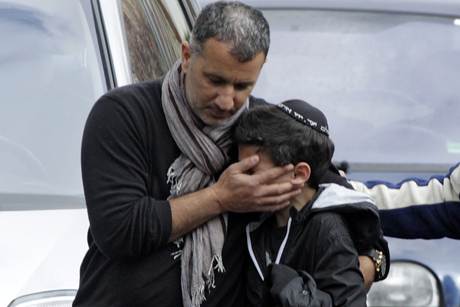
Rabbi Sandler of Kiryat Yovel in Jerusalem and his sons Aryeh, 6, and Gavriel, 3.5, were murdered in Toulouse Monday morning, as was 8 year-old Miriam Monsonegro, daughter of the director of Ozar HaTorah Toulouse, Yaacov Monsonego.

Binyamin Toati, Head of the France Desk of Bnei Akiva, told Arutz Sheva before the names were published that there are reports that the man who was killed is a rabbi who served as an Israel shaliach (emissary) at the school and that two of his children were killed with him.

French press reported that two children were among at least three people killed in a shooting outside a Jewish school. Two other children are reported fighting for their lives. The French news reports said the dead are a teacher and two children, and that two other children were badly wounded.

“Toulouse: Rabbi Yonatan Sandler and his Children among the Dead”
-by Gil Ronen
First Published 3/19/2012, 10:18 a.m.
Arutz Sheva News

I’m sure you’ve heard this tragic news by now. I’m sure you’ve heard that a Rabbi, his two children, and a third child were all murdered in cold blood outside a Jewish school in Toulouse, France yesterday. The story has been covered by virtually every news agency on the planet. Sixty-seven years after the end of World War II and the end of the Holocaust, Jews are still being murdered just because they’re Jews.

I guess I’m taking it personally.

No, I’m not Jewish, but my wife and children are. That means the killer who cut down Rabbi Sandler and three innocent children just because they were Jewish is quite capable and willing to kill anyone who is Jewish, including my family. Yeah, I’m taking it personally, so forgive me if what comes out in this blog isn’t exactly “rational”.

I took a walk by the greenbelt on the Boise river over my lunch hour. It’s the first day of spring and it’s snowing and windy outside. It’s the perfect day to reflect on horror and terror and sadness in the world. It’s the first day of spring, when new life is beginning to trickle back into the trees and grass and flowers are soon to bloom.

And it’s snowing and windy and bitterly cold outside. It fits.

And four Jewish people were murdered yesterday in Toulouse, France for no other reason than just because they were Jewish.

I’m not trying to be insensitive. I know that, in the grand scheme of things, this is just one more harsh thing to happen in a world of harsh things. Many people, including children, are hurt and killed all over the world every day. Just point your web browser to CNN.com and you’ll see all of the headlines. Syria’s maimed children cry out, Slave master becomes abolitionist, 7.4 earthquake hit Mexico, and the beat goes on.

I’m not just upset because kids were murdered, although that upsets me. I’m not just upset because Jews were murdered just because they were Jews, although that upsets me. I’m upset because some people think it’s OK for Jews to be murdered just because they are Jews. OK, maybe I’m exaggerating. Israel’s Prime Minister Benjamin Netanyahu doesn’t think it’s an exaggeration to accuse the European Union’s foreign policy chief, Catherine Ashton, of saying that three Jewish children being murdered in cold blood is exactly the same thing as the children being killed in Gaza because the IDF is retaliating against the Palestinian terrorists who are firing an endless stream of missiles into Israel.

She spoke of remembering “young people who have been killed in all sorts of terrible circumstances — the Belgian children having lost their lives in a terrible tragedy and when we think of what happened in Toulouse today, when we remember what happened in Norway a year ago, when we know what is happening in Syria, when we see what is happening in Gaza and in different parts of the world — we remember young people and children who lose their lives,” she said, according to a transcript of the speech distributed by the European Union.

Ms. Ashton’s spokesman issued a statement of clarification on Tuesday, following the criticism, saying that her words had been “grossly distorted” and that she had not intended to draw any parallel.

“Israel Criticizes E.U. Official for Comments on French School Attack”
-by Isabel Kershner
Published March 20, 2012
The New York Times

To detail Netanyahu’s statement a little better according to the Times:

Prime Minister Benjamin Netanyahu had said that he was “infuriated” by what he called “the comparison between a deliberate massacre of children and the defensive, surgical actions” of the Israeli military that he said were “intended to hit terrorists who use children as a human shield.”

The New York Times viewpoint on the “defensive, surgical actions” of the Israeli military includes:

During the four days of fighting, 26 Palestinians were killed, according to the Israeli military. Most were militants, but four of the dead were civilians. A 12-year-old boy was among those killed in Israeli air strikes; another boy, 14, was killed by explosives in disputed circumstances. During the same period, Palestinian militants fired more than 150 rockets into southern Israel.

Notice the Times uses the term “militants” instead of “terrorists”. A subtle difference? Perhaps.
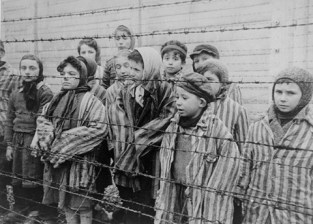
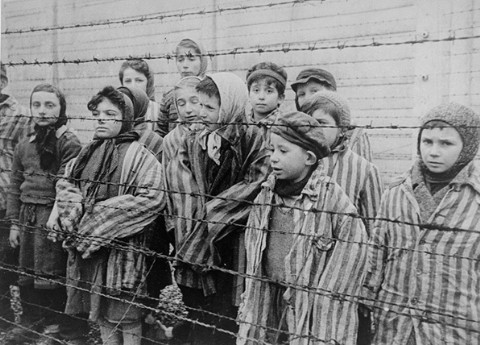
I just keep thinking that it’s been less than 70 years since the end of the Holocaust, and Jews are still not safe. They’re not safe in France and they’re certainly not safe in Israel. They’re also not safe in the world of public opinion or the news media. We’re supposed to live in a modern, civilized, enlightened world, but that’s what made it so difficult for Germany’s Jews to understand the danger they were in when the Holocaust began. They just couldn’t believe that a nation as civilized, as educated, and as enlightened as Germany was in the early 20th century could be capable of such evil. That’s what made it so difficult for the rest of the world to understand, too. That’s why some people didn’t believe it was happening. But is that an excuse for not believing it’s still happening today?

What do you do when you want to kill someone? That’s not a random question. For most of us, it would be almost unthinkable to actually kill someone, even in self defense. We have to weave all sorts of extreme and violent mental scenarios to even imagine ourselves pointing a gun at another person and pulling the trigger. Even if the killing were justified, such as defending your family from violent home intruders, the aftermath; actually living with the memory of having killed someone, would be horrendous.

So unless you are inherently violent or violently insane, it would be extremely difficult to point a gun at someone and to pull the trigger, knowing that they’d be dead in the next few seconds.

So how to you kill someone? How do you train soldiers to kill someone? How do you train a populace that it’s completely acceptable to send an army to another country to kill a lot of people? Today in the United States, the Government doesn’t do a very good job of training the citizens to accept war and so most people don’t accept war. During World War II, we had a fabulous propaganda machine that depicted the Germans and Japanese as non-human, murderous monsters. That made it possible for normally non-violent young men to go overseas and to shoot, bomb, and gas a bunch of other human beings who were trying to shoot, bomb, and gas them. That’s what made it possible for the average U.S. citizen to completely support sending an army to different countries around the globe to shoot, bomb, and gas non-human murderous monsters, who would certainly shoot, bomb, and gas us if they got half a chance.

Ironically, what the United States fails to do in terms of war, it does all too effectively in terms of abortion. What do you have to do to kill an unborn human baby? (I know…you didn’t see that one coming) You make them an “embryo” or a “fetus” but you never, ever make them a human being. It’s the same thing that let U.S. soldiers kill the enemy. It’s the same thing that let U.S. citizens approve of U.S. soldiers killing the enemy. It’s the same thing that let Nazi soldiers and the Nazi SS (Schutzstaffel) round up, torture, starve, shoot, and gas Jewish men, women, and children during the Holocaust.

It’s what let one (reportedly) neo-Nazi killer shoot and kill one Jewish adult and three Jewish children yesterday in France.

To France’s credit, they are (literally) up in arms over these deaths and are diligently searching for the shooter. According to news reports, the shooter has killed prior to this incident and there’s every reason to believe he’ll kill again. I want him caught too, and swiftly. I want him taken off the streets and put in prison.

But he’s only one man.

I know what you’re thinking. He’s only one man. He’s an extremist. He may be mentally ill. He is an aberration. If he’s stopped, things will become safe again.

Will they? I’m sure that the Jews living in Germany in the mid-1930s felt something similar. They couldn’t imagine any irrational hatred of Jews being anything but an aberration; something extremely unlikely to occur, and only involving one or two extreme individuals.

Except they were wrong. It involved thousands who committed horrible atrocities against human beings and millions who condoned it by the actions or their silence. Over the past 70 years tens or hundreds of millions of people have chosen to ignore or to deny the Holocaust, which murdered not only Jews but many other “undesirables” including the physically and mentally handicapped, gypsies, homosexuals, and anyone else who didn’t fit the “Aryan ideal”. All you have to do to kill them is to believe they aren’t human; to believe they aren’t like you, that they’re inferior, that they’re “less,” that they’re “monsters” or “things.”

Because if they’re humans just like you are, then you know that they want to live, just like you do. You know they have feelings, just like you do. You know that they can be scared and hurt, just like you can be scared and hurt. And if you have empathy for someone, you can’t hurt or kill them unless they’re doing something that’s very scary and threatening to you. One Jewish Rabbi and three Jewish children are very unlikely to be doing anything to scare or threaten anyone. They just died because they were Jews.

If we, who represent the rest of the world, don’t speak up and speak out and say “Stop!” to the rest of the world, then our silence is tacit acceptance that it’s permissible to kill a Jew for being Jewish, or to kill a person for being mentally ill, or gay, or for the color of their skin, or for the language they speak, or for being an inconvenient pregnancy.
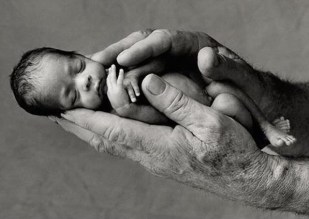
If we believe that it’s acceptable to kill Jewish children for being Jewish, then we’re saying some people aren’t human and that’s OK with us. We like to think we’re civilized and enlightened, but if we are silent and do not protest injustice, then we are accepting injustice. We live in a world that still generally does not condone the murder of Jews, or African-Americans, or Gays, but we do condone the murder of millions of unborn baby boys and girls every year all over the world (and we’ve got a terrific propaganda machine in operation in America that justifies the whole damn thing and makes it sound enlightened and reasonable). Some people still believe it’s OK to kill Jews. A bunch of them live on land that used to be within the borders of Israel until other enlightened nations made Israel surrender that land to people who like shooting missiles at Jews. It’s a crazy world.

I told you I was taking this personally and that I wouldn’t be rational. But murder isn’t rational either. I figure you have a couple of choices. You can stand up and protect the defenseless and the victims from their murderers, or someday you’ll become either one of the murderers or one of the victims.

What? You don’t believe me? Neither did the German Jews in 1930…and neither did their German Gentile neighbors.