Behar-Behukotai: Seeking Crowns

The majority of this Torah reading focuses on the rewards granted for observance of the Torah, and the punishments ordained for failure to observe. One might ask: When a person has internalized the self-transcendence of Bechukosai, of what interest is reward? As the Alter Rebbe would say: “I don’t want Your World to Come. I don’t want Your Gan Eden. All I want is You alone.” (As quoted in Derech Mitzvosecho, Shoresh Mitzvos HaTefillah, ch. 40. See also Rambam, Hilchos Teshuvah, ch. 10.)

In truth, however, only a person who genuinely “wants You alone” can appreciate the full measure of reward G-d has associated with the Torah and its mitzvos. As long as a person is concerned with his individual wants and desires, he will interpret the reward received for observance in that light. When, by contrast, a person has transcended his individual will, instead of these petty material concerns, he will appreciate the essential good and kindness which G-d conveys. (See Likkutei Sichos, Vol. XV, p. 312)

This will create a self-reinforcing pattern, for the purpose of the rewards granted by the Torah is to enable an individual to further his study and observance. (Rambam, Mishneh Torah, Hilchos Teshuvah 9:1.)

As this pattern spreads among mankind, we will merit the full measure of blessings mentioned in the Torah reading, with the return of our people to our land, led by Mashiach. Then “Your threshing season will last until your grape harvest…. You shall eat your bread with satisfaction…. I will grant peace in the land, and none shall make you afraid.” (Leviticus 26:5-6.)

-Rabbi Eli Touger
In the Garden of the Torah
“Real Growth”
Commentary on Torah Portion Behukotai
Leviticus 26:3-27:34
Chabad.org

“Blessed are you when others revile you and persecute you and utter all kinds of evil against you falsely on my account. Rejoice and be glad, for your reward is great in heaven, for so they persecuted the prophets who were before you.Matthew 5:11-12 (ESV)

What we get out of our relationship with God is a matter of perspective. As Rabbi Touger illustrates, how we perceive our “reward” depends on how we perceive ourselves. I’ve written a number of commentaries on Rabbi Joseph Soloveitchik’s book The Lonely Man of Faith including my most recent missive, Burning the Plow. Soloveitchik presents “two Adams” using the two depictions of the creation of the first man in Genesis to show us two sides of the person of faith, the material and the spiritual. How we function in relation to God is how we see what God can do for us.

That probably sounds selfish, and it’s meant to be, at least in part.

The material man sees his relationship with God in terms of the world of here and now. He prays for success in business, good weather for planting crops, health for his family, and so on. There’s nothing wrong with this of course, but it is the general limit of the material man’s vision of his relationship with God. Man is the majestic steward of the world God created, and in return, he desires that God reward him with the benefits related to that creation.

It is written in Pirkei Avot Chapter 4, Mishna 2, that “the reward of a mitzvah is a mitzvah” (quoting Rabbi Dovid Rosenfeld). Thus the continued cycle I have described in the previous paragraph is self-perpetuating as long as the perspective of the material man does not change.

And for many people of faith, it never does.

However, Rabbi Touger’s commentary, quoting the Alter Rebbe, shows us a different path:

“I don’t want Your World to Come. I don’t want Your Gan Eden. All I want is You alone.”

On an emotional level, most of us can more or less understand this desire. We want to “feel” closer to God, to love Him with great zeal and to pour our heart and our life into pools of mystic wonder where only God exists. However, such a desire is difficult to grasp for very long for most of us, and we tend to believe that only saints or holy men or mystics who live in caves or monasteries can truly exist in a sustained state of “All I want is You alone.”

It’s hard for most Christians to imagine that Jews might express such a desire to want to walk with God alone, since Judaism is seen as a largely “behavioral” religion. An observant Jew tends to be defined by the mitzvot, by Torah study and obedience to the commandments. By contrast, Christians see their faith as more metaphysical, residing in the realm of belief and pure faith and grace, than in the raw mechanics of feeding a hungry person or donning tallit and tefillin before prayer.

But what about the Jews who first came to the realization that Jesus was and is the Messiah? Where is the meeting point between classic Judaism and traditional Christianity? Where did it all begin before man artificially split the two faiths (or was that split all part of God’s plan as Paul describes in Romans 11:25)?

For I am already being poured out as a drink offering, and the time of my departure has come. I have fought the good fight, I have finished the race, I have kept the faith. Henceforth there is laid up for me the crown of righteousness, which the Lord, the righteous judge, will award to me on that Day, and not only to me but also to all who have loved his appearing. –2 Timothy 4:6-8 (ESV)

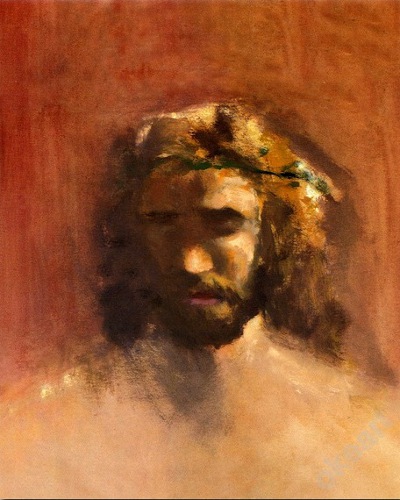
What is this “crown of righteousness” of which Paul speaks? Is it a literal crown he wears in the Heavenly court? Is it the sheer experience of bliss and wonder in God’s “Gan Eden” (Garden of Eden or Paradise)? Or could it be “God and God alone?”

Around the throne were twenty-four thrones, and seated on the thrones were twenty-four elders, clothed in white garments, with golden crowns on their heads. –Revelation 4:4 (ESV)

And whenever the living creatures give glory and honor and thanks to him who is seated on the throne, who lives forever and ever, the twenty-four elders fall down before him who is seated on the throne and worship him who lives forever and ever. They cast their crowns before the throne… –Revelation 4:9-10 (ESV)

The passages from Revelation 4 certainly seem to indicate real, physical crowns as the rewards, but this could be deceptive, since John’s vision of the Heavenly court and the events he witnessed is highly mystical and may not represent actual, literal actions. But look at what the twenty-four elders do with their crowns when they “give glory and honor and thanks to him who is seated on the throne.” They “cast their crowns before the throne” and say:

“Worthy are you, our Lord and God,
to receive glory and honor and power,
for you created all things,
and by your will they existed and were created.”

In addressing “the Lord God Almighty” (v 8), what does it mean to cast your crowns before His throne?

I’m no theologian so it’s impossible for me to say with any authority what John was really witnessing in this act of supreme worship of the Ein Sof God Almighty, “who was and is and is to come.” But let’s pretend what they were/are all doing was/is fulfilling this desire:

“I don’t want Your World to Come. I don’t want Your Gan Eden. All I want is You alone.”

When I was a child and I tried to imagine Heaven, I thought it sounded pretty boring. There was nothing to do there except constantly worship God. I thought it sounded like one, infinitely long church service where you had to sit in a hot sanctuary in sticky, itchy clothes, and be quiet, and listen to organ music, and pray and recite stuff, and endlessly say:

“Holy, holy, holy, is the Lord God Almighty,
who was and is and is to come!”

Didn’t anybody ever have fun in Heaven? What kind of reward was all this “holy, holy, holy” stuff anyway?

Most children tend to be “material man,” lacking the ability to see beyond their immediate, temporal needs and desires. Many adults, even in the community of faith are like this, too.

Beyond majestic, material man is the person seeking to simply walk with God; who perceives his path as illuminated by an ineffable light. When we desire “God alone” there is no way we can truly understand what we are asking for. Who could possibly imagine what the crowns of Paul or the elders in John’s vision actually were, and if they existed materially or not? I choose to believe that there is so much more to the rewards awaiting covenantal, spiritual man and that, attempting to imagine them from the viewpoint of the material human being, we miss the point completely.

Pray not for Heaven or for Paradise or for crowns of gold. Let your only desire for reward be God Himself.

Then let awe and wonder in every corner of your existence take hold and realize that He is already here. Life is a miracle and your soul is the soul of your Creator. Once you know this, the mitzvot will take care of themselves for they will be inseparable from the ineffable light of God.

He could have made a world where the nature of each thing may be deduced from its parts. A predictable, orderly world. A world devoid of wonder. And then we would say, “Things are this way because they must be this way.” G-d would be a stranger in His own world.

Instead, at each step a whole new world emerges, one we could never have predicted from anything we knew before. Until we must conclude that our finite world somehow contains infinite possibilities, that both nothing and everything is possible, that things are the way they are only because He desires they be that way.

He has made our world wondrous, so that it has room for Him.

-Rabbi Tzvi Freeman
“The Unnatural Nature of Things”
Based on letters and talks of the Rebbe
Rabbi M. M. Schneerson
Chabad.org

Good Shabbos.

Planting Seeds of Light

“If you go in My statutes.” (Vayikra 26:3) Our Sages interpret the word “if” as a plea, (Avoda Zara 5a) in the sense of “if only you would go in My statutes.” G-d’s pleading (as it were) with Israel to keep the Torah, in itself aids man and gives him the ability to remain steadfast in his choice of the good. Moreover, “…you go in My statutes” – the soul then becomes a mehaleich, it progresses. (to higher levels of achievement. See Iyar 6.)

With the advent of Mashiach, there will be revealed the superior quality of the traits of simplicity and wholeheartedness found in the avoda of simple folk who daven and recite Tehillim with simple sincerity.

Hayom Yom
Iyar 24, 39th day of the omer
Compiled by the Lubavitcher Rebbe
Translated by Yitschak Meir Kagan
Chabad.org

“O Jerusalem, Jerusalem, the city that kills the prophets and stones those who are sent to it! How often would I have gathered your children together as a hen gathers her brood under her wings, and you were not willing! See, your house is left to you desolate. For I tell you, you will not see me again, until you say, ‘Blessed is he who comes in the name of the Lord.’”

Matthew 23:37-39 (ESV)

Given the state of the world today and particularly the state of the church, it’s not hard to imagine that God is pleading to us to return to Him, to turn our hearts back to the will and love of God. I’m not really writing this to condemn the church, nor am I absolving myself of any poor performance in the service of God. However, I am aware that there is great benefit is continually looking into the mirror and assessing the person we see to determine if we have fulfilled the commandments of our Master as a disciple should. Have we earned the Master’s praise when he says, Well done, good and faithful servant,” or do we deserve something else?

The passage I quoted from Matthew 23 is sometimes used by Christians to level specific criticism toward Jews (while conversely praising the church), but I think it can be applied to all of us. A few days ago in my “mediation” Burning the Plow, I pointed out a few things:

The transactions between Jesus and those he called to be his disciples seem to be functionally similar to the interaction between Elijah and Elisha. Jesus, the “ultimate covenental man” encounters various “material men” in the process of performing their usual routines and commands them to follow him. Those who hesitate or who desire to fulfill their material obligations first, he says are unfit for the Kingdom of God.

The level of commitment called for both by Elijah and by Jesus seems abrupt and absolute and anything less is considered a failure in terms of entering the Kingdom of God.

There are times in our lives when we pursue righteousness with extraordinary zeal and strive to fulfill the desires of God with all due diligence and even excellence. Those are the times when, like a long-distance runner who is approaching the finish line, we drive ourselves to perform one final sprint in order to reach our goal and perhaps pull away from a slightly slower competitor in the race.

There are other times, most times probably, when like that same long-distance runner, we allow fatigue to dictate our response to God and we merely plod along, laying one foot ahead of the other, managing to continue to move forward, but only as a matter of course. All we’re thinking about it making it through the next step, the next turn, the next day, and longing for a final rest. We aren’t really present with God or truly observing the steps of our Master, trying to imitate not only where he has placed his feet but what he was doing as he walked in holiness.

The beginning of one’s decline, G-d save us, is the lack of avoda in davening. Everything becomes dry and cold. Even a mitzva performed by habit (Compare Yeshayahu 29:13) becomes burdensome. Everything is rushed. One loses the sense of pleasure in Torah-study. The atmosphere itself become crass. Needless to say, one is totally incapable of influencing others.

Hayom Yom
Iyar 23, 38th day of the omer
Compiled by the Lubavitcher Rebbe
Translated by Yitschak Meir Kagan
Chabad.org

Dry spots in our journey of faith are probably inevitable given that we are frail and fallible human beings, but when we become aware of them, we don’t have to stay there. Sure, it’s more tolerable and maybe even more comfortable than the alternative, but it’s not desirable. When we hear God pleading to us and listen to the lament of our Master over us, we can reply with something else besides, “I’m tired” or “I’m doing the best that I can.” Perhaps what we need to do is to stop for a moment, catch our breath, and to see if we’re on the right path at all. Realize that we all get to a place in our faith when we force our effort after we’ve forgotten its purpose. We need to let ourselves be reminded of who God is and who we are in Him, and then let ourselves be refreshed by Him.

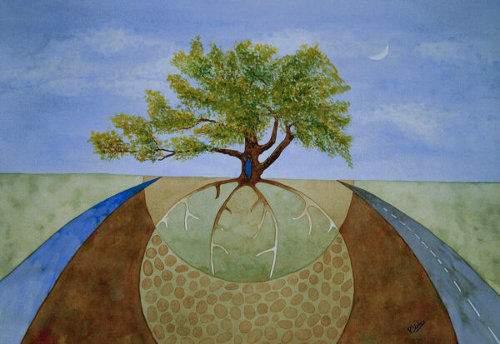
Just as a tiny seed awakens the infinite power of life hidden within the earth, so an act of caring and giving buried quietly in the ground can ignite an explosion of infinite light. Charged with that power, all the world is changed.

-Rabbi Tzvi Freeman
“Seeding Change”
Based on letters and talks of the Rebbe
Rabbi M. M. Schneerson
Chabad.org

We are the tiny seeds our Master planted, watered, and nurtured with his life and his spirit. When will we ignite in an explosion of infinite light and change the world?

Minister of Peace

“Reorganizing the letters of shalom spells out moshel (king). The purpose of a true king is to make peace. King Solomon’s name means ‘peace.'”

Rabbi Yitzchak Ginsburgh
found on twitter

For to us a child is born,
to us a son is given;
and the government shall be upon his shoulder,
and his name shall be called
Wonderful Counselor, Mighty God,
Everlasting Father, Prince of Peace.

Isaiah 9:6 (ESV)

Most Christians will immediately connect the words of Rabbi Ginsburgh with the passage from Isaiah and arrive at the Messiah, the Savior, Jesus Christ, the Prince of Peace. He came as a teacher and prophet, a humble man of God, who was led like a lamb to the slaughter. He will one day return as the Lion of Judah, the conquering King of the Jews, who will restore Israel to a place of high honor and bring peace to all the world.

In Rabbi Ginsburgh’s blog post The secret of peace, he describes the following:

In the Torah portion of Behar, we read that as a consequence of observing the sabbatical and jubilee years, God’s promises us, “…You shall settle the land securely… and you shall settle securely upon it.” This twice repeated promise recurs a third time at the beginning of the next Torah portion, Bechukotai, which is often read in conjunction with the portion of Behar: “And you shall settle securely in your land,” and is immediately followed by the blessing of peace, “And I will grant peace in the land.” Rashi asks, “If you were to say, ‘We have food and we have drink, but if there is no peace then they are worthless!’ for this reason the Torah continues, ‘I will grant peace in the land.’” From here we learn that peace is as important as the sum of all other blessings.” Another blessing that concludes with “peace” is the Priestly Blessing. The Amidah, the main prayer repeated three times a day, also concludes with a blessing for peace. Peace is the link that connects all the prophetic visions of the ultimate redemption and it is the universal catchword and today, everyone wants peace…

We are promised peace in the days of the Messiah, but we are not content to wait (and it’s difficult to be content when there’s no peace). We want our peace; our shalom right now. But in a world of chaos and turmoil, where can it be found?

We seek peace everywhere; with our families and friends, with our neighbors and co-workers, in every area of our lives, but we don’t often find it. We substitute true peace for temporary entertainment and distraction, and the desire to distract ourselves has become a multi-billion dollar industry (just look how well the movie The Avengers has done at the box office recently). I’m not sure that even people of faith can find a true and lasting peace in the world around us. Is it any wonder that those who do not even seek God can find no true and lasting peace at all?

So we wait for the Prince of Peace to come. Rabbi Ginsburgh’s commentary continues:

Obviously, the messianic goal doesn’t end with peace amongst Jews alone, but aims even higher, to achieve universal peace. The Mashiach will teach the entire world how to make true peace: peace between the soul and the body, family harmony, fraternal peace, peace between Jews and the nations, and peace between all of humanity. As the prophet Zechariah said of the Mashiach, “And he shall speak peace to the nations, and his rule shall be from the sea to the west and from the river to the ends of the earth.” [The word “peace” (shalom) appears explicitly in this verse, and in the initial letters of the words, “peace to the nations, and his rule shall be from the sea.”] World peace does not marginalize the unique light of the Jewish nation. On the contrary, the peace that spreads out so far, “to the ends of the earth,” is the perfect setting from the special qualities of the Jewish nation to be revealed, for in the end, peace between Jewish souls comes from the most exalted source of all.

The Master said that Salvation is from the Jews,” (John 4:22) but then, so is peace. This is another reason why we Christians, and indeed, the entire world, owes the Jews a debt that can never be repaid. It is their King who will finally come and bring peace for everyone, not just the nation of Israel, but the nations of the earth.

…but they shall sit every man under his vine and under his fig tree, and no one shall make them afraid, for the mouth of the Lord of hosts has spoken. –Micah 4:4 (ESV)

In spite of what I said before, Rabbi Ginsburgh believes we can achieve a sort of peace in the present world through pursuing righteousness.

These three circles of peace can help us understand Rabbi Shimon bar Yochai’s words in the Zohar regarding the Mashiach, who is called, “the minister of peace” – “The minister of peace is a righteous person who is at peace with the world, at peace in the home [peace among Jews] and at peace with the Divine Presence.” These three circles of peace form a progression, with each higher than the previous one. We hope to see all three revealed speedily in our days by the minister of peace, the Mashiach.

It’s interesting that Rabbi Ginsburgh says that a righteous person is at peace with the Divine Presence rather than at peace with God. The Divine Presence, also known as the Shekhinah, is that expression of God which descended upon the Tabernacle in the desert (and later Solomon’s Temple) and inhabited it; God dwelling among His people. This is just an opinion, but maybe we weren’t designed to understand peace between us and the great, unknowable Ein Sof God, but only that expression of the Divine that allows itself to enter into our world.

Is that the secret to being at peace with God, by being at peace with the Minister of Peace, the blood of the prince, the “I am” who was before Abraham, the Messiah, Jesus?

Burning the Plow

So he departed from there and found Elisha the son of Shaphat, who was plowing with twelve yoke of oxen in front of him, and he was with the twelfth. Elijah passed by him and cast his cloak upon him. And he left the oxen and ran after Elijah and said, “Let me kiss my father and my mother, and then I will follow you.” And he said to him, “Go back again, for what have I done to you?” And he returned from following him and took the yoke of oxen and sacrificed them and boiled their flesh with the yokes of the oxen and gave it to the people, and they ate. Then he arose and went after Elijah and assisted him.

1 Kings 19:19-21 (ESV)

Rabbi Joseph Soloveitchik concludes his classic book The Lonely Man of Faith with a comparison of Elisha and Elijah as archetypal figures representing the “two Adams” or two different types of men of faith: material and spiritual man. I recently suggested that what makes the man of faith lonely isn’t just the inability to adequately connect to God, but the difficulty in developing a true relationship between the spiritual and material persons that “live” inside each of us.

How do we resolve this conflict, or is it unresolvable? I’m inclined to believe the latter, since Rabbi Soloveitchik introduced his book thus:

I have no problem-solving thoughts. I do not intend to suggest a new method of remedying the human situation which I am about to describe; neither do I believe that it can be remedied at all. The role of the man of faith, whose religious experience is fraught with inner conflicts and incongruities, who oscillates between ecstasy in God’s companionship and despair when he feels abandoned by God, and who is torn asunder by the heightened contrast between self-appreciation and abnegation, has been a difficult one since the times of Abraham and Moses.

-Soloveitchick from the Foreword of his book

So if there are no “problem-solving thoughts” and no “new method of remedying the human situation” of the man (or woman) of faith, then why continue to belabor the point? Faith will always isolate us from God, from society, from each other, and even from our own personalities. But Soloveitchick did not end his book on a note of despair or futility.

Elisha was a typical representative of the majestic community. He was the son of a prosperous farmer, a man of property, whose interests were centered around this-worldly, material goods such as crops, livestock, and market prices. His objective was economic success, his aspiration – material wealth. The Bible portrays him as efficient, capable, and practical, remindful of a modern business executive. When Elijah met him, we are told, he was supervising the work done by the slaves. He was with the twelfth yoke in order not to lose sight of the slave-laborers. What did this man of majesty have in common with Elijah, the solitary covenantal prophet, the champion of God, the adversary of kings, who walked as a stranger through the bustling cities of Shomron, past royal pomp and grandeur, negating the worth of all goods to which his contemporaries were committed, reproaching the sinners, preaching the law of God and portending His wrath?

Yet unexpectedly, the call came through to this unimaginative, self-centered farmer. Suddenly the mantel of Elijah was cast upon him. While he was engaged in the most ordinary, everyday activity, in tilling the soil, he encountered God and felt the transforming touch of God’s hand. The strangest metamorphosis occurred. Within seconds, the old Elisha disappeared and a new Elisha emerged. Majestic man was replaced by covenantal man.

This isn’t really what I was looking for. Elijah represented the covenantal man, the man of God, while Elisha possessed the role of majestic, material man, in command of his environment, aware of God but not consumed by Him. The answer to the dilemma of how to connect spiritual and material man seems to be to convert one to the other. Elisha effectively becomes Elijah, and one man is substituted for the other rather than resolving the conflicts and distance between the two which would have allowed them to co-exist.

Interestingly enough, this wouldn’t be the last time such a conflict is described in the Bible and such a resolution is attempted.

To another he said, “Follow me.” But he said, “Lord, let me first go and bury my father.” And Jesus said to him, “Leave the dead to bury their own dead. But as for you, go and proclaim the kingdom of God.” Yet another said, “I will follow you, Lord, but let me first say farewell to those at my home.” Jesus said to him, “No one who puts his hand to the plow and looks back is fit for the kingdom of God.” –Luke 9:59-62 (ESV)

The transactions between Jesus and those he called to be his disciples seem to be functionally similar to the interaction between Elijah and Elisha. Jesus, the “ultimate covenental man” encounters various “material men” in the process of performing their usual routines and commands them to follow him. Those who hesitate or who desire to fulfill their material obligations first, he says are unfit for the Kingdom of God.

The response of material man to spiritual man it seems, must be immediate or it does not work at all. So what did Elisha do according to Soloveitchik?

He slew the oxen and fed the meat to the slaves who, half-starved, tilled the soil for him and whom he, until that meeting with Elijah, had treated with contempt. Moreover, covenantal man renounced his family relationships. He bade farewell to father and mother and departed from their home for good.

The level of commitment called for both by Elijah and by Jesus seems abrupt and absolute and anything less is considered a failure in terms of entering the Kingdom of God. But that isn’t the end of the story.

Elisha’s withdrawal from majesty was not final. He followed the dialectical course of all our prophets. Later, when he achieved the pinnacle of faith and arrived at the outer boundaries of human commitment, he came back to society as a participant in state affairs, as an adviser of kings and a teacher of the majestic community. God ordered him to return to the people, to offer them a share in the covenantal drama and to involve them in the great and solemn colloquy.

I’m not satisfied. The book ends with Elisha lonely but not despairing, discovering triumph in defeat, hope in failure, and sheltering the Word of God in his bones like an all-consuming fire burning in his heart. In his loneliness, Elisha discovers a God who resides in the recesses of transcendental solitude.

But is that all there is?

None of us bear the mantle of prophet and holy man in the way of Elijah and Elisha, but we see that a similar process occurs when Jesus calls each of us into discipleship. We are all called to leave our former life, to metaphorically burn our plow and slaughter our oxen in order to feed the poor and enslaved, and then to follow the Master on a completely new course of life, interacting with the material world as a messenger for the spiritual world. Is that what’s supposed to happen?

And I am no longer in the world, but they are in the world, and I am coming to you. Holy Father, keep them in your name, which you have given me, that they may be one, even as we are one. While I was with them, I kept them in your name, which you have given me. I have guarded them, and not one of them has been lost except the son of destruction, that the Scripture might be fulfilled. But now I am coming to you, and these things I speak in the world, that they may have my joy fulfilled in themselves. I have given them your word, and the world has hated them because they are not of the world, just as I am not of the world. –John 17:11-14 (ESV)

We aren’t taken out of the world to become completely one with the spiritual realm. There’s an interactivity between who we are as spiritual people and the role we play in the material world around us. We cannot serve the purpose God created us for if we merely retreat into our spiritual reality and ignore the majestic and material environment where we happen to live.

Soloveitchik is right. There is no cure for the loneliness of a man of faith but that’s to be expected. We don’t belong here, none of us. We are the proverbial strangers in a strange land, pilgrims in a broken world, carrying a message from the Master to everyone else not to give up hope. It’s a hope that no political figure or celebrity can offer because they are wholly one with the material and are limited by the boundaries of their devotion to only the physical. The hope we offer as messengers of our Master is the love of God and the promise of redemption, not only of created world, but of our very beings.

The loneliness of the man of spirit will end, but not yet.

A Physical Object is Merely “I am”

The mitzvos are primarily physical deeds performed with physical objects: animal hides are fashioned into tefillin and wrapped around one’s head and arm; flour and water become the instrument of a mitzvah in the form of the matzah eaten on Passover; a ram’s horn is sounded on Rosh Hashana; a citron and palm fond are taken on Sukkot. For the physical world is ultimately the most appropriate environment for the function of the mitzvah to be realized.

“The mitzvos relate to the very essence of G-d” is a mainstay of chassidic teaching. But the very notion of something relating to another thing’s essence is a philosophical oxymoron. The “essence” of something is the thing itself, as opposed to manner in which it affects and is perceived by that which is outside of it. Hence the philosophical axiom: “The essence of a thing does not express itself or extend itself.” In other words, if you see it, it is not the thing itself that you see, only the manner in which it reflects light and imprints an image on your retina; if you understand it, then it is not the thing itself that you comprehend, only a concept which your mind has pieced together by studying its effect on other things; and so on.

Nevertheless, G-d desired to project His essence into the created reality. This is the function of the mitzvos: through observing His commandments and fulfilling His will, we “bring” the very essence of G-d into our lives. And this is why He chose the physical object as the medium of the mitzvah’s implementation.

Spiritual entities (i.e., ideas, feelings, etc.) intrinsically point to a source, a cause, a greater reality that they express and serve. The spiritual is thus the natural medium for the various expressions of the Divine reality that G-d chose to convey to us – unlike the physical, whose deeper significance is buried deep beneath the surface of its corporeality, the spiritual readily serves as the expression of a higher truth.

But when it comes to the projection of G-d’s essence, the very “virtues” of the spiritual disqualify it: its capacity to convey, to reveal, to manifest, runs contrary to the introversive nature of “essence.” Here, the physical object, the most non-transcendental element of G-d’s creation, is the most ideal vehicle for G-d’s essence capturing mitzvos.

A physical object merely is: “I am,” it proclaims, “and my being is wholly defined by its own existence.” As such, the physical object constitutes the greatest concealment of the Divine truth. Precisely for this reason, it is G-d’s medium of choice for man’s implementation of His will.

In other words, the object of the mitzvah is not a “manifestation” of the Divine. Were it to reflect Him in any way, were it to reveal anything of the “nature” of His reality, it would, by definition, fail to capture His essence. But capture His essence it does, simply because He willed it to. G-d, of course, could have willed anything (including a manifest expression of His reality) to convey His essence, but He chose a medium that is most appropriate according to logical laws he established in creating our reality – a reality in which “essence” and “expression” are antithetical to each other. He therefore chose the material world, with its virtual blackout on any revealed expression of G-dliness, to serve as the “tool” with which we perform the mitzvos and thereby relate to His essence.

-from a commentary on
Ethics of Our Fathers (Chapter 4)
“Essence and Expression”
Iyar 17, 5772 * May 9, 2012
Chabad.org

Yesterday’s “extra meditation,” The Blood of the Prince, took a look at the “deity of Jesus” issue and inspired many passionate responses. Here’s the same issue from a different point of view.

You may have just read this lesson from the Pirkei Avot or Ethics of Our Fathers and wondered what it had to do with anything. In Christianity, the physical and the spiritual are usually seen as two separate and often incompatible entities. Christians are always trying to escape “the flesh” so they can connect to the Spirit. Yet in Judaism, this isn’t necessarily the same picture.

The connection of flesh and spirit is a question that was discussed with some fervor recently on Gene Shlomovich’s Daily Minyan blog post, Crisis? A Jewish husband believes that Jesus is the Messiah but not G-d. Once again, the question of the Deity of Jesus was brought up and once again it was not resolved, except in the minds of people who feel they know for sure that Jesus is “God in the flesh.”

Some of us however, aren’t so sure how it’s all supposed to work, which I guess is why we have faith but not always complete knowledge of who and what God is and isn’t.

But the commentary I quoted from includes a very interesting statement:

A physical object merely is: “I am,” it proclaims, “and my being is wholly defined by its own existence.” As such, the physical object constitutes the greatest concealment of the Divine truth. Precisely for this reason, it is G-d’s medium of choice for man’s implementation of His will.

I started thinking about something the Master said that sounds at once somewhat similar and yet is entirely different.

Your father Abraham rejoiced that he would see my day. He saw it and was glad.” So the Jews said to him, “You are not yet fifty years old, and have you seen Abraham?” Jesus said to them, “Truly, truly, I say to you, before Abraham was, I am.” –John 8:56-58 (ESV)

Of course, the statement “I am” not only recalls the Pirkei Avot commentary, but Exodus 3:14:

God said to Moses, “I am who I am.”

The Master is apparently saying not only that Abraham believed in him, Jesus, by faith (see Hebrews 13:11 as well), but that the great “I am” of Exodus is also the Christ. The quote from the Pirkei Avot commentary says that a physical object’s loudest cry of “I am”  (including physical man) declares that it is defined by its physical nature, and that physical nature is also the ultimate hiding place for the Divinity of the Creator. Which “I am” reference can we apply to Jesus…or can we apply both?

I’ve explored Messianic Divinity before and have leaned toward an alternate “explanation” for the joining of humanity and Divinity in the person of Jesus Christ than the one held by the church. That doesn’t make me a popular fellow by more traditional Christian thinkers (whether in the church or the Hebrew Roots movement) but at least I’m willing to question my assumptions and admit that I don’t know everything (which seems a prudent position given the ultimate “unknowability” of God).

That said, I’m taking somewhat of a different position today and exploring the other side of the coin, albeit through the interface of a commentary on the classic Jewish texts. I’m hardly saying that what was written in the Pirkei Avot directly or indirectly applies to the concept of the Messiah in general or Jesus in specific. The two “I am” references are competely disconnected in practicality. I’m just choosing to use this comparison as a “jumping off point” for exploring both Jesus and God.

That’s a big jump.

But then, I never said that Jesus wasn’t Divine in some manner or fashion, I just failed to jump on the mainstream Christian bandwagon in terms of an explanation. Judaism may not hold that a man can also be God and worthy of the worship and honor due to God alone, but it does (and I’m not even speaking of Jewish mysticism here) acknowledge the ability of the Divine to somehow exist within our universe and even to play by the rules of that universe, though as a matter of choice, not limitation:

Indeed, since the purpose of creation is that the essence of the Divine should be drawn down into the physical reality, the objective is to do so on its (the physical reality’s) terms, not by overriding them. So if the logical laws that govern our reality and dictate that “expression” is incompatible with “essence,” our bringing of G-dliness into the world is to be achieved “blindly,” without any perceptible manifestations of the Divine essence.

On the other hand, however, if G-d’s essence is truly to enter our reality, He must enter it as He is, without hindrance or inhibition. If His reality tolerates no limits or definitions, “revelation” must be no less conducive to His essence than “concealment.”

In other words, for Him to be here implies two (seemingly contradictory) truths: if He is to be truly here, then His presence must be consistent with our reality; yet if it is truly He who is here, He must be here on His terms.

This is why created existence has two distinct components: the Present World and the World to Come the process and its culmination. The process of drawing down the Divine essence into the created reality is carried out under an obscuring veil of corporeality, in keeping with the created rule that “the essence of a thing does not express itself or extend itself.” At the same time, the product and end result of this process are a world in which G d is uninhibitedly present, in which also the expressions of His reality fully convey the quintessence of His being.

In Jewish mystic tradition, the Angels and even the mysterious essence of the wisdom of Torah must be “clothed” in the mundane in order to exist in our world. Though God the Ein Sof, the infinite and unknown Creator does not interact with the world, something we call the Shekinah, which in most Christian Bibles is translated as “God’s glory” did enter our world, incinerating the top of Sinai and entering the Tabernacle in the desert, constructed by the hand of man. That Shekinah, we call “God” too, but it doesn’t seem to bother us that God existed simultaneously as Ein Sof and Shekinah (if something that strange, mystical, and metaphysical can even be expressed in temporal terms).

In the beginning was the Word, and the Word was with God, and the Word was God. And the Word became flesh and dwelt among us, and we have seen his glory, glory as of the only Son from the Father, full of grace and truth. –John 1:1,14 (ESV)

I don’t know how it all works so I have no answers to give you. If you’re comfortable with your answers, then I guess that works for you. Frankly, I’m more “comfortable” or at least better able to tolerate the vast uncertainty of the nature of “the Word became flesh and dwelt among us.” Once we say that we know all there is to know about God, it is humanity defining Divinity rather than the other way around. I don’t think I could live with that.

The Blood of the Prince

tallit-prayerThis is one of those “hot” topics. A Messianic Jewish rabbi friend of mine recently got an email from a distraught woman urgently asking him to intervene on behalf of her husband. I would like some opinions on the matter from my readers. I will paraphrase that email below to protect all parties:

Please pray for us and help us. You see, my Jewish husband (who is from Israel) believes that Jesus is the Messiah of Israel through whom God redeems and saves, but he refuses to believe that Jesus is God too. My husband is adamant that he will not accept this belief. I don’t know what to do – I don’t want him to be lost. I need urgent help and I think my husband will benefit from your counseling. I am really hoping that you would be able to convince him of his error before it’s too late.

Question for my readers: should this woman be concerned about the spiritual fate of her husband? If this Jewish man never changes his mind on the nature of the Messiah, should he be concerned about his final destiny and should we?

-Gene Shlomovich
Crisis? A Jewish husband believes that Jesus is the Messiah but not G-d
Wednesday, May 9, 2012
Daily Minyan blogspot

I’m not in the habit of quoting one person’s full blog post to begin one of my own, but this question, which I thought was unanswerable, may just have been answered (though judging by the subsequent comments that have been accumulating as I’ve been writing this missive, maybe not). There was a lively debate by various folks commenting on this blog but it degenerated (and is still degenerating) into a “Jesus is God” vs “Jesus is Messiah but not God” vs “I don’t know what Jesus is” kind of debate. A few people took a stab at actually trying to answer Gene’s question, but no one really knew or could support their opinions from scripture…that is until now:

I am convinced that Peter’s first introduction to Messiah (John 1:41), and his own confirmation of that introduction (John 6:69, 11:27) brought him into sonship, and is all that is expected of any Jew to be saved and secured for Kingdom status (Romans 10:13, 11:26).

-Brad

Then Gene replied:

@Brad…

Thank you for providing an answer to my exact question directly from scripture.

Traditional religious Judaism doesn’t spend a great deal of time worrying about whether or not Jews are saved. In the merit of Abraham, Issac, and Jacob, Jews are all considered to have a place in the world to come. However, in Christianity and the various corners of the Hebrew Roots and Messianic Jewish movements (which all overlap but are not really the same), there are a couple of important questions that have remained unanswered:

If Jews are “saved” through the merit of the patriarchs, what significance does Jesus have as the Messiah to them?

On a more fundamental level, the question is:

Are Jews saved?

I’ve struggled with these questions as well. To say that the process of salvation for a Jew is identical to a Gentile means that prior to the coming of the Messiah, no Jews could be saved. I also means that the millions of Jews who refused to convert to Christianity because they believed we Christians practiced paganism and polytheism, have been consigned to hell, often having suffered torture and murder at the hands of the church who was attempting to force their conversion, first.

I’m not sure I have the answer regarding “salvation” relative to all Jews everywhere, but it appears that Brad, armed with “only” a Bible, has answered the first question. Let’s take a look at his material in a more detail. His statement can be broken up into two main sections:

I am convinced that Peter’s first introduction to Messiah (John 1:41), and his own confirmation of that introduction (John 6:69, 11:27) brought him into sonship…

PrayingSo what do we see when we are introduced to the Messiah and that introduction is confirmed? What brought Peter into “sonship?”

The next day again John was standing with two of his disciples, and he looked at Jesus as he walked by and said, “Behold, the Lamb of God!” The two disciples heard him say this, and they followed Jesus. Jesus turned and saw them following and said to them, “What are you seeking?” And they said to him, “Rabbi”, “where are you staying?” He said to them, “Come and you will see.” So they came and saw where he was staying, and they stayed with him that day, for it was about the tenth hour. One of the two who heard John speak and followed Jesus was Andrew, Simon Peter’s brother. He first found his own brother Simon and said to him, “We have found the Messiah”. He brought him to Jesus. Jesus looked at him and said, “You are Simon the son of John. You shall be called Cephas”. –John 1:35-42 (ESV)

After this many of his disciples turned back and no longer walked with him. So Jesus said to the Twelve, “Do you want to go away as well?” Simon Peter answered him, “Lord, to whom shall we go? You have the words of eternal life, and we have believed, and have come to know, that you are the Holy One of God.” –John 6:66-69 (ESV)

Mary, the sister of Martha, also faced the same question and arrived at the same conclusion.

Jesus said to her, “I am the resurrection and the life. Whoever believes in me, though he die, yet shall he live, and everyone who lives and believes in me shall never die. Do you believe this?” She said to him, “Yes, Lord; I believe that you are the Christ, the Son of God, who is coming into the world.” –John 11:25-27 (ESV)

Now here’s section two:

and is all that is expected of any Jew to be saved and secured for Kingdom status (Romans 10:13, 11:26).

So what is actually expected of a Jew for salvation through the Messiah?

For with the heart one believes and is justified, and with the mouth one confesses and is saved. For the Scripture says, “Everyone who believes in him will not be put to shame.” For there is no distinction between Jew and Greek; for the same Lord is Lord of all, bestowing his riches on all who call on him. For “everyone who calls on the name of the Lord will be saved.” –Romans 10:10-13 (ESV)

Lest you be wise in your own sight, I do not want you to be unaware of this mystery, brothers: a partial hardening has come upon Israel, until the fullness of the Gentiles has come in. And in this way all Israel will be saved, as it is written,

“The Deliverer will come from Zion, he will banish ungodliness from Jacob and this will be my covenant with them when I take away their sins.” –Romans 11:25-27 (ESV)

“No distinction between Jew or Greek” seems to be relative to the issue of salvation, so the Messiah has always been a vital element, but as Paul also said, “a partial hardening has come upon Israel, until the fullness of the Gentiles has come in. And in this way all Israel will be saved,” so this two is part of God’s plan for Israel.

Putting it all together, nothing else but what has been presented above is required to answer Gene’s question (and I’m paraphrasing): “Is a Jewish man ‘saved’ if he comes to faith in Jesus as the Messiah but not as God clothed in flesh and blood?”

Peter believed that Jesus was the Messiah, the holy one of God and that he had words of eternal life. Mary, sister of Martha also believed that Jesus was the Messiah and Son of God that that “everyone who lives and believes in him shall never die.” Everyone, Jew or Gentile, who calls on the Lord’s name shall be saved, and Gentiles, in God’s mercy, are brought into the Kingdom through the temporary hardening of the Jews. In the end, as Paul continues, “all Israel will be saved.”

God will not abandon the life of his heritage Israel nor let the blood of the Messiah go to waste:

The poor man stood in the doorway, smelling the sweet, freshly baked bread, and held out his hand for something to eat. Hunger gnawed at his stomach, for he had not eaten in days. He had tried to find work, but no one wanted to hire him. At last, hearing that Rabbi Yitzchak of Kalush had an open heart and an open door, he came to his house late one Friday afternoon.

Even before they opened the door, he could smell the fresh baked bread . . .

The cook looked at her challahs, golden baked and twisted, and sprinkled with poppy seeds. The cook did not want to give him a slice from the challahs. They were for Shabbat. She looked in the kitchen cabinets and drawers for an old, stale piece of bread, the kind that is usually given to beggars, but she found none.

“Slice up a loaf,” a man’s voice said, “no blood will be lost because of it.”

And so she cut into the loaf, soft and white, and gave the poor man a thick slice to eat. Unless a person has truly been hungry, he cannot know the meaning of bread. The poor man ate greedily. As he left, a man with kind eyes nodded. He was the one who had told her to cut the bread. The poor man knew that this man had saved his life.

-from a commentary on
Ethics of Our Fathers (4:3)
“The Blood Not Lost”

The Son of God is the bread of life to all mankind but particularly to His people the Jews. The blood of the Prince was not spilled in vain on Jewish soil and was not wasted for the sake of Israel. We in the church should not consider the Jew with contempt:

Ben Azzai used to say: “Do not regard anyone with contempt, and do not reject anything; for there is no man who does not have his hour, and nothing which does not have its place.” -Avot 4:3