Wisdom and Doubt

When someone is angry at you, organize wisely what you wish to say. Begin speaking in a manner that is likely to have a calming effect. For example, begin by admitting your own mistakes. When you start off in an appeasing manner, the person will pay more attention to your words, and this will prevent him from causing you harm or loss.

We find an example when Abigail successfully calmed down King David, who was furious at her husband (see Shmuel 1, 25:25). She began by admitting that she herself had made an error. Only then did she present her arguments to King David. When you concede that you are wrong, others calm down.

When someone is angry at you, and you start out by either blaming him or denying it, you will usually increase the person’s anger. If you want someone’s anger to escalate, the best way to do this is to either say: “It’s your fault, not mine.”

It takes courage to admit your own mistakes. Even if you are only responsible in a small way, it is still best to start off by saying something like, “Yes, I could (or should) have done differently. I’m sorry for any pain or inconvenience I have caused you.”

This will put the other person in a calmer state, and he will then be much more likely to listen to what you have to say in your own defense.

-see Ralbag – Shaar hapiyus, no.1;
Rabbi Pliskin – Consulting the Wise, pp.58-9
quoted from Aish.com

Just a few days ago I quoted from another Aish.com missive that said:

Only when a person has peace of mind can he really feel love for humanity. Lack of peace of mind leads to animosity towards others. Peace of mind leads to love.

The reality of the situation is that if we wait until we’ve achieved perfect peace of mind before we start interacting with other people, we’ll never interact with other people. Since that’s impossible for most of us, we’ll need another strategy.

What if you’re wrong? Ever thought about that? I think about it all the time, but then again, that’s just me. Maybe I’m insecure or something.

Or something.

The whole problem with the world is that fools and fanatics are always so certain of themselves, but wiser people so full of doubts.

Bertrand Russell
British philosopher, logician, and mathematician

I hope that means that I’m on the path to wisdom, but I’d hate to delude myself or elevate myself beyond my true position. But I think it was Socrates who said, “the beginning of wisdom is the discovery of one’s own ignorance,” so I suppose I’m in good company whenever I answer a question with the statement, “I don’t know.”

That’s not the same as giving an answer and then discovering that you’re wrong, but it’s related. In the world of the Internet, everybody seems to feel like they must have the “right” answer to all questions and debates all of the time. In that sense, I must be some sort of anomaly for having more questions than answers.

But back to the topic at hand. What if you’re wrong?

I’ve already been wrong in public including in the blogosphere, so it doesn’t bother me so much anymore, but I get the impression that it just terrifies others who blog, comment, or otherwise express their opinion online. Some people can’t admit it. Some people would feel like a failure to admit they made a mistake.

I suspect that it’s closer to the truth to say that people already feel like failures or carry around a great burden of hurt and pain when they find themselves in a position where they can’t back down, they won’t recant, and they refuse to admit that they could have made a mistake and overstated their position.

That’s horrible.

That means you are totally locked out of being able to enter into a conversation with someone you’ve hurt or offended and to, as Abigail did, calm down that person and then try to make amends. It also means that even if the other person were wrong as well in some way, you’ll never get to the point in the discussion where they’ll feel free to hear your gentle criticisms. That’s because you’ll still be too busy defending your own “rightness” and challenging the other person’s opinion.

More’s the pity.

You don’t have to possess peace of mind, and you don’t have to even feel compassionate love for humanity to begin to fix this. You do however, need to be able to make claim to just a small bit of wisdom and humility. The Proverbs we find in the Bible are replete with examples of those who disdained wisdom in favor of their own self-directed council.

Those people, no matter how certain of themselves they may seem, are very often completely insecure and uncertain and indeed, not asserting knowledge and facts, but desperately defending an increasingly disintegrating ego. The other day, I called such a person a nudnik. Today, I’m saying that like any hurt and injured human being, they should be pitied and if possible, they should be helped.

Was it something I said or something I did
Did my words not come out right
Though I tried not to hurt you
Though I tried
But I guess that’s why they say

Every rose has it’s thorn
Just like every night has it’s dawn
Just like every cowboy sings his sad, sad song
Every rose has it’s thorn

-lyrics by Bret Michaels
from the ballad Every Rose Has It’s Thorn (1988)
Recorded by Poison

But even if we are injured, hurting, humiliated, and emotionally bleeding, we can’t always wait for all that to stop before trying to right what is wrong. If we still possess a modicum of mercy, grace, and justice within us and we don’t want to live long enough to see ourselves become the villain, then we have to take who we are and do the best we can with ourselves. No one enters life a perfect person and no one leaves life perfect either. Sure, during whatever lifetime we are granted, we are given many opportunities to learn, to become wise, and to elevate ourselves spiritually, but in the end, we are who we are. We take all of that and do our best with it and with us.

If it is permissible, we must use it for good. If it can be elevated, we cannot leave it behind.

-Rabbi Tzvi Freeman
“Leave Nothing Behind”
Based on letters and talks of the Rebbe
Rabbi M. M. Schneerson
Chabad.org

If you can be a better person today than you were yesterday, then you must make every effort to be that better person. Better to admit that you can be wrong and risk looking foolish than to always demand that you’re right and prove you really are unwise.

Just ask yourself, “what does God want me to do in order to honor Him and to avoid disgracing myself?”

Through love, all pain will turn to medicine. –Rumi

Please don’t destroy yourself. Please don’t try to destroy others because you feel they hurt or maligned you. God is the author of love and life, not hate and destruction.
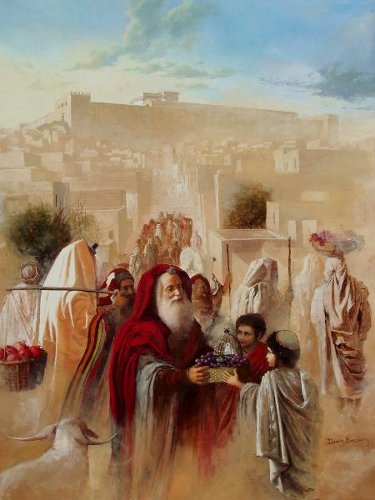
Jesus the Traditionalist Jew

However, the Jewish background of the ideas of the Jesus movement is only one piece of the new picture I’m sketching here. Much of the most compelling evidence for the Jewishness of the early Jesus communities comes from the Gospels themselves. The Gospels, of course, are almost always understood as a marker for a very great break from Judaism. Over and over, we find within the interpretations of them (whether pious or scholarly) statements of what a radical break is constituted by Jesus’ teaching with respect to the “Judaism” of his day.

Even among those who recognize that Jesus himself may very well have been a pious Jew – a special teacher, to be sure, but not one instituting a consequential break with Judaism – the Gospels, and especially Mark, are taken as the sign of the rupture of Christianity, of its near-total overturn, of the forms of traditional (Jewish) piety.

-Daniel Boyarin
Chapter 3: “Jesus Kept Kosher”
The Jewish Gospels

I’ve been slowly, very slowly reading Daniel Boyarin’s excellent book The Jewish Gospels and have written regarding my responses to his text in two previous blog posts: The Unmixing Bowl and The Son of Man – The Son of God. Daniel Boyarin is a noteworthy Talmudic scholar and Professor of Talmudic Culture in the Departments of Near Eastern Studies and Rhetoric at the University of California, Berkeley, so I’d have to say that, at least from my point of view, he knows his stuff. The book I’m reading contains an examination of the “stuff” about the ancient perceptions of Jesus and how it may not have been unusual at all for many Jews in the late Second Temple period to see Jesus as Rabbi, Messiah, Prophet, and indeed, Divine Son of God.

In the third chapter of his book, Boyarin examines the “Jewishness of Jesus”.

For anyone involved in the Messianic or Hebrew Roots movements, the fact that Jesus was (and is) Jewish and that he led a completely normative Jewish lifestyle as recorded in the Gospels is no surprise, but it may have been to Boyarin when he first encountered the “good news” of the Master. I still think that Boyarin isn’t personally convinced that Jesus is Messiah King or Son of God, but he does seem to be strongly suggesting that it is no mystery why Jews in the Holy Land 2,000 years ago (and even more recently in many parts of the world?) would believe that he was.

The portion of Boyarin I quoted above aptly defines how most modern Jews and Christians see the role of the Gospels: as defining a sharp break from Jews and Judaism in the teachings of Jesus and the establishment of the very “unJewish” Christian religion. But as we already know, this was hardly the case.

Counter to most views of the matter, according to the Gospel of Mark, Jesus kept kosher, which is to say that he saw himself not as abrogating the Torah but as defining it. There was controversy with some other Jewish leaders as to how best to observe the Law, but none, I will argue, about whether to observe it. According to Mark (and Matthew even more so), far from abandoning the laws and practices of the Torah, Jesus was a staunch defender of the Torah against what he perceived to be threats to it from the Pharisees.

Boyarin characterises the Pharisees as “a kind of reform movement…that was centered on Jerusalem and Judaea (and who) sought to convert other Jews to their way of thinking about God and the Torah.” It’s interesting (since I’ve never heard this interpretation before) that Boyarin characterizes the tension between Jesus and the Pharisees as one of interpretation of halakah. According to Boyarin, the Pharisees may have represented the establishment of religious practices that were formed during the Babylonian exile “while the Jews who remained in the land continued their ancient practices.” Jesus, Boyarin asserts, supported the more ancient Jewish practices and was actually a Torah conservative and traditionalist compared to the “radical innovations in the Law stemming from the Pharisees and Scribes of Jerusalem.”

We usually see Jesus (at least those of us to perceive him as a wholly Jewish man and teacher living a life consistent with the covenant of Sinai) as interpreting the “true” Torah in opposition to the “leaven of the Pharisees” who made up all kinds of stuff and were totally hypocritical. Boyarin suggests that the struggle between the two “Judaisms” may have been one of traditional halakah (Jesus) vs. reform interpretation (Pharisees and Scribes).

Far from being a marginal Jew, Jesus was a leader of one type of Judaism that was being marginalized by another group, the Pharisees, and he was fighting against them as dangerous innovators. This view of Christianity as but a variation within Judaism, and even a highly conservative and traditionalist one, goes to the heart of our description of the relations in the second, third, and fourth centuries between so-called Jewish Christianity and its early rival, the so-called Gentile Christianity that was eventually (after some centuries) to win the day.

I realize that Boyarin’s opinion is a minority view among both Jews and Christians, but it is compelling to consider that the “original” Jesus Christ was not only a Jew who never broke the Laws of Moses or taught others to break them, but was a teacher who was strongly advocating for a return to a very conservative and traditionalist interpretation of Torah relative to the normative Judaism of those times.

Wow.

Imagine what that might mean to 21st century Christianity and Judaism. Imagine what that might mean to the movement we call “Messianic Judaism,” which is struggling tremendously to establish its own Jewish identity and connection to the other Judaisms of our modern era. Jesus the Jewish traditionalist. Jesus the teacher of conservative halakah.

Like I said. Wow.

Apparently, Boyarin isn’t the only Talmud scholar who holds this opinion of the relationship between Jesus and the Pharisees.

Yair Furstenberg, a young Talmud scholar at the Hebrew University, has recently provided a convincing explanation of the basic controversy between Jesus and those Pharisees. Furstenberg writes that Jesus’ statement (see Mark 7:14-23) needs to be read literally that the body is made impure not through ingesting impure foods but only through various substances that come out of the body…

…This is a debate between Jews about the correct way to keep Torah, not an attack on the Torah. Furstenberg has brilliantly argued that in its original sense, Jesus’ attack on the Pharisees here is literal; they have changed the rules of the Torah…

Really. Consider this. The argument that most Christians interpret about whether or not Jesus made all foods clean had nothing to do with abrogating the kosher laws. It was an argument between different factions of Jews on what made a person impure, which was not eating food but coming into contact with certain objects and substances such as a dead body or certain bodily fluids (you’ll have to read the whole chapter to get the details since Boyarin’s analysis is lengthy). He even presents a different view of Pharisees as “hypocrites” which doesn’t quite fit with what most Christians believe:

We should remember, however, that “in general, in ancient Jewish and Christian contexts a ‘hypocrite’ is a person whose interpretation of the Law differs from one’s own,” as Joel Marcus has so sharply put it.

That statement recasts the Pharisees in the role, not as liars and frauds, but as Jews who had a (sometimes) radically different perspective on halakah from the more conservative interpretation of Jesus.

Of course, the vast, vast majority of people in the church and probably in the Christian colleges and seminaries won’t agree with this. Boyarin suggests a corrective solution, but I don’t know how many believers, scholarly or otherwise, would be willing to try it out:

When put into its historic context, the chapter is perfectly clear. Mark was a Jew and his Jesus kept kosher. At least in its attitude toward the embodied practices of the Torah, Mark’s Gospel does not in any way constitute even a baby step in the direction of the invention of Christianity as a new religion or as a departure from Judaism at all.

Mark is best read as a Jewish text, even in its most radical Christological moments. Nothing that Mark’s Jesus proposes or argues for or enacts would have been inappropriate for a thoroughly Jewish Messiah, the Son of Man, and what would later be called Christianity is a brilliantly successful – the most brilliantly successful – Jewish apocalyptic and messianic movement.

Those of you who have read more than a few of my blog posts know I’m no Biblical scholar. I don’t have the “chops” to adequately evaluate Boyarin’s perspectives relative to other learned texts and teachers and to determine how much evidence there is to support his assertions. However, in general, what he presents to his readers is quite consistent with what is believed by modern “Messianic Jews” and those Gentiles who are called to follow that path of faith.

Jesus was and is a Jew. This “Jewishness” is written all over the Gospels. Jesus never attempted to depart from normative Jewish practice in even the slightest manner and as we see, he may very well have been advocating for a return to the more conservative and traditional understanding and practice of ancient halakah.

Imagine what this will mean for Christians and Jews everywhere when the Son of Man returns in glory. Imagine what it will mean, and what it should mean, to all of us right now.

Worshiping the God of Israel and giving great and very high honor to the Jewish Messiah King within a completely normative Jewish context is not dead. In fact, when he comes back to us and establishes his throne, it’ll all just be getting started.

Waking Up Alive

In school, from an early age, Joe learned how stuff works. Joe learned how pulleys work, how electrical circuits work, how cells divide and how neurons process thoughts. He learned that the whole world is a big machine, and we are all little machines inside it.

Joe graduated college, got a job, got married, had kids.

Then Joe had a crisis. He needed help. He picked up books of today’s most popular genre—self-help. Lots of them. The books told him he has a soul, he has purpose, that’s there’s something beyond just being a pleasure-seeking machine.

Joe felt better. He was able to go back to work, keep his marriage and enjoy his kids.

There are many things the world needs. It needs nothing more than a soul.

Joe needed to know he has a soul.

-Rabbi Tzvi Freeman
“Why the World Needs a Soul”
from the “Chassidic Thought” series
Chabad.org

Some people don’t know this. Some people will never learn this. Even for people who do know that they have a soul and that life has a broader purpose beyond the day-to-day grind, any pain that is strong enough or lasts long enough will knock that information right out of awareness.

And all that you’ll be about to think or feel is the pain.

Fortunately, Joe was able to overcome that, as were the equally fictional Julie and Sasha in Rabbi Freeman’s tale (which I highly encourage you to read in its entirety since it makes many good points).

Yesterday, I talked about how experiencing chronic emotional and spiritual pain can make it very difficult to connect to your purpose and to cling to the awareness of your soul in any meaningful way. Actually, that kind of pain makes it hard to even get up in the morning and care about whether you have a purpose or not. No matter how hard the soul strives to reach its Creator, the weight of a thousand, thousand failures, disappointments and criticisms presses the soul back into the dirt like the hand of a thoughtless child crushing a bug.

Yesterday, I also said this:

Supposedly, you can only go down so far before you start to rise up again. There is a principle in some areas of Judaism that says, “Every descent is for the sake of a future ascent.” Of course, that “ascent” might not occur until the world to come, which means you’re already dead and your life on earth hasn’t worked out at all. Besides, it’s just a saying. You can’t find it in the Bible.

There is an increasingly mythical sacred person buried under endless tons of rock, dirt, and pain. They keep trying to dig their way out of their cave-in using only splintered, bloody stumps of what’s left of their fingers. The light is dimming and the air is running out. When the Divine spark is extinguished, what will be left of the person who was supposed to be holy? When the abyss finally claims its victim, will God still be there to watch?

Is God watching when we’re about to surrender to the final abyss and does He see how tiny and fragile the flicking spark of our soul is under the oppression of darkness and hopelessness? Is He waiting for our ascent after the descent as well? Is He waiting in vain?

It is said “that which doesn’t kill you will usually try again.” But that assumes whatever is trying to kill you will succeed. What if it just hurts instead?

“What is unique about a Jewish martyr,” wrote Rabbi Sholom DovBer of Lubavitch, “is that he would rather stay alive.”

-Rabbi Tzvi Freeman
“Martyrs for Life”
Based on letters and talks of the Rebbe
Rabbi M. M. Schneerson
Chabad.org

You feel the Divine spark growing weaker within you. The light dims. Suddenly, you realize that you are in complete darkness. Your lungs labor for air and then there is none and your chest sucks in only dirt and dust and gravel. You close your eyes in anguish one last time welcoming a final oblivion.

But the next morning you wake up and realize you’re alive. On days like that, I still say:

I gratefully thank you living and existing King for restoring my soul to me with compassion.

Abundant is Your faithfulness.

Modeh Ani

Somehow, the weight is still there but it’s lighter, just light enough to allow my chest to expand, let my lungs fill with air, let me exhale, and then inhale again. I open my eyes and I can see light. I sit up in bed, put my feet on the floor. And I can stand.

Why am I thanking God for being alive?

Because I have a soul and regardless of what the rest of me feels like, my soul is part of God and she (in Hebrew, words have gender and the Hebrew word for soul is feminine) thanks her maker for the restoration of life and the ability to continue in the service of the King.

Regardless of what the rest of me feels.

The need for meaning in our personal lives, the sense of responsibility for the ecology of our planet and the respect for the dignity of every human life—all these are sacrosanct today. Which is a good thing, because without them we would have destroyed ourselves in the century just past.

Yet they are entirely hollow. More than that: they are in utter conflict with the materialist concept of reality that we are taught in school and practice in the laboratory.

In short, we suffer an aching disconnect between our brains and our soul.

Our soul believes life has purpose and meaning, while our brains consider our bodies to be no more than a walking water-bottle of biochemical reactions. We teach small children to cry over the future of the elephants, the pandas and the blue whale, that they have a responsibility to save the planet and sustain it, and then we teach them that all this arrived due to a big bang and a series of accidents. We will not tolerate any voice that suggests the superiority of one family of human beings over another, all the while reducing this creature to a string of DNA in which serious differences have already been uncovered.

Nothing could be more precarious.

The world, existence, everything, is more than just how we feel at any given moment. No matter how much life can sometimes hurt, who we are and that we’re alive is more than just our circumstances, our history, our “excess baggage,” and how we perceive our lives. The world needs a soul because it needs a purpose. God built that into each and every human being, whether we choose to recognize that fact or not. Once we do, we’re “trapped” with that knowledge and we become aware of the Divine that lives within our secular, ordinary flesh. We are more and different than the sum of our wetware and our programming. The part of us that thanks God every morning for waking up alive means we can suffer what we think will kill us but still arise the next morning a living martyr.

Life means more than getting our way or winning or losing the endless arguments we find in the blogosphere and in social networking venues. It’s important to step away from the monitor and the keyboard and to realise that life doesn’t primarily occur in the Internet. It occurs in the connection between man and God, even if we only cry out to Him that it hurts, oh my does it hurt.

I recently read an article written by a fellow named Dr. Harlan Weisman called My 11 Months of Kaddish. It’s too long to quote the whole thing here, but it’s the story of a man who, in saying Kaddish for his deceased father everyday for 11 months, discovered himself, who he is as a Jew, and ultimately the relationship between his soul and God.

But he couldn’t do it until his father died and he began his bitter grief. However, Dr. Weisman didn’t really start to live again until the eleven months of saying Kaddish were over:

Next day, I went to shul, even though I didn’t have the obligation to say Kaddish anymore. But I needed the warmth and the continuity. And the minyan needed me, the tenth man. I’m repaying all those who took care of me for those 11 months. I’m helping those who continue their period of saying Kaddish, and I watch the new ones joining us, some just as unsure of what they’re doing as I was 11 months ago, as they stumble through their first Kaddish.

I go because it feels good to join the generations of Jews before me who were blessed with the same traditions.

I go because it makes the light inside me shine more brightly.

In the weeks following my last Kaddish, the hole inside of me opened and closed in unpredictable cycles. The sadness continued, coming and going, but gradually became less intense. And the hole gradually filled and stopped opening, just like the rabbi said. The sadness was pushed away by the knowledge that my father was not gone. He is with me today, with me every day. His values, his kindness, compassion, courage, endurance, fortitude, determination and tenacity to do what’s right, his commitment to justice and fairness, but most of all his love, is with me today, tomorrow and always. And I am passing these gifts onto my children, as they will to theirs, through the generations.

Sadness, grief, regret, self-loathing, depression…something’s trying to kill us, but our soul won’t let us die. We’ll just continue to suffer under the weight of a life we never wanted and cannot control. But something has to die for us to live again. Something must be extinguished, and we must let go of it before we realize that it is time for it to end.

Someday, we’ll pray to God, not just because we need Him, but because we want Him, too. Because being with God is the most natural and normal thing for us to do…like waking up in the morning, like breathing.

Our soul will never stop needing God. But we must realize that the rest of us needs and wants Him, too. Then we can stop simply existing in our suffering silence. Then we can begin to wake up alive.

Blessing the Nudnik

:‫גדולה שמושה של תורה יותר מלמודה – ז‬
The service of Torah is greater than its study. – 7b

After R’ Reuven Grozovsky, Rosh Yeshiva of Beis Medrash Elyon, had a stroke he was left paralyzed on the right side of his body. The bochrim in the Yeshiva had a rotation to help the Rosh Yeshiva wash negel vasser, hold his siddur and wrap the Rosh Yeshiva’s tefilin around his arm and head. To make the task an even greater challenge, the Rosh Yeshiva’s left hand would occasionally shake uncontrollably.

On one particular occasion, a new bachur was assigned the task of helping R’ Reuven, and the bochur was very nervous. He had never really spoken with the Rosh Yeshiva before. When he heard R’ Reuven wake up, the nervous young man quickly walked over to help the Rosh Yeshiva wash negel vasser. Unfortunately, R’ Reuven’s hand suddenly shook and the water missed the Rosh Yeshiva’s hand entirely. The embarrassed bochur tried a second time, but this time he was so nervous that he ended up pouring the water all over the Rosh Yeshiva’s bed and clothing. The bochur now wanted to run, but R’ Reuven was relying upon him. The third time he carefully poured the water over R Grozovsky’s hands, held the siddur while R’ Reuven said birchos hashachar and helped put tefilin on the Rosh Yeshiva. As the bochur was ready to leave, R’ Reuven called him over and chatted with him for a few moments. The bochur left a few minutes later much calmer than before after this pleasant conversation with the Rosh Yeshiva.

When the bochur retold the story to his friends in the Beis Midrash they couldn’t believe it. As far as anyone knew no one could ever remember the Rosh Yeshiva speaking while he was wearing tefilin. It became clear to everyone that R’ Reuven had made an exception to the rule in order to be able to put the mind of this young bochur at ease.

Daf Yomi Digest
Stories Off the Daf
“Lessons learned when attending to Gedolim”
Berachos 7

This may be a little difficult to understand, but imagine that the esteemed Rosh Yeshiva, a man who had suffered a stroke and who struggled to perform his daily prayers, who never spoke with another person while wearing tefilin, actually took the time to make an exception for this extremely anxiety-ridden young person. Usually, we think of performing acts of kindness for the sick and the infirm, but here, the infirm R’ Reuven Grozovsky extended himself to perform an act of kindness for this new bachur.

Reading this, I couldn’t help but think that this is the center of what it is to be a person of faith. We simply must put forth our efforts to help others in any way that we can when we see a need.

It certainly would have been within the Rosh Yeshiva’s rights to complain and to chastise the bochur for his numerous blunders. He didn’t have to speak to him at all and he could have told others afterwards what a blockhead this young fellow was. He could have shredded this person’s already (obviously) fragile ego and everyone in that community would have probably supported R’ Grozovsky in doing so.

But the Rosh Yeshiva was a true tzaddik and for such a man, performing a cruelty would have been unthinkable.

How do we treat people?

I know, we shouldn’t treat others with disrespect and insult them since, as people who are disciples of our Master, we have been taught to “turn the other cheek” when maligned and mistreated. But what about if the other person deserves a good (metaphorically speaking) slap in the face?

“You have heard that it was said, ‘An eye for an eye and a tooth for a tooth.’ But I say to you, Do not resist the one who is evil. But if anyone slaps you on the right cheek, turn to him the other also. And if anyone would sue you and take your tunic, let him have your cloak as well. And if anyone forces you to go one mile, go with him two miles. Give to the one who begs from you, and do not refuse the one who would borrow from you.

“You have heard that it was said, ‘You shall love your neighbor and hate your enemy.’ But I say to you, Love your enemies and pray for those who persecute you, so that you may be sons of your Father who is in heaven. For he makes his sun rise on the evil and on the good, and sends rain on the just and on the unjust. For if you love those who love you, what reward do you have? Do not even the tax collectors do the same? And if you greet only your brothers, what more are you doing than others? Do not even the Gentiles do the same? You therefore must be perfect, as your heavenly Father is perfect. –Matthew 5:38-48 (ESV)

Jesus isn’t directing us to be doormats or to let someone beat us to a pulp, but if we’re to err, it seems as if we should err on the side of compassion and humility, even if there’s a chance we could be cheated or misused in some other way. Loving your enemy isn’t giving a flower to the guy who’s trying to shoot you. It’s showing kindness to someone who is a nudnik (pest) or other annoying or unreliable person for their own sake and for God’s.

Hard as it is for us to imagine sometimes, God loves the person who annoys us the most just as much as He loves us.

Given that I’m a blogger and that I comment on the blogs of others, I occasionally run into such individuals and the temptation is to tell them what I really think of them and feel perfectly justified in doing so.

But as you can see, that would be wrong. Sometimes it’s important to forgive others, even if reconciliation isn’t going to work out between the two of you. No, forgiving doesn’t always mean it’s wise or practical to continue a relationship, particularly if the other person is unrepentant and unlikely to stop being abusive, verbally or otherwise. But God still loves that person a great deal. How can we return hostility for hostility knowing this?

The blessing of an ordinary man should not be considered lightly in your eyes.- 7a

Tur Shulchan Aruch rules (‫ )הל‘ נשיאת כפים‬that every Kohen has a mitzvah to participate in the blessing of the people. We do not discourage a person who is known to be a rasha from joining, for this would be causing him to add evil to his already tarnished reputation. Rather, we allow him to bless the people with the other Kohanim, and we look upon his involvement no less than “the blessings of a simpleton”, which we are not to treat lightly. Tur then adds: “The blessings are not dependent upon the Kohanim, but they are rather in the hands of God.”

This final comment of the Tur needs to be understood. He already justified including the Kohen rasha in the mitzvah, for even the blessing of a simpleton is important. What additional factor is provided by concluding that everything is in the hands of God? Tur apparently understood the Gemara as did the Rashba. A ‫ הדיוט‬is not referring to an evil person. Rather, it refers to someone who is at a lesser level or stature than the one being blessed. Even Dovid HaMelech was a ‫ הדיוט‬vis-à-vis the service which the Kohanim performed in the Beis HaMikdash, and all Kohanim were ‫ הדיוטות‬vis-à-vis the Kohen Gadol.

Gemara Gem
“The blessing of a ‫הדיוט‬”
Berachos 7

A rasha is considered someone who is wicked and even criminal. Nevertheless, there are provisions for a “rasha” Kohen to say the blessings so that they do not make their evil deeds even worse.

I’m not going to try to suggest that we make ourselves or our communities completely open to people who are prone to physical, sexual, or psychological violence, but within the confines of practicality and common sense, we can at least avoid verbally bashing and slandering people we don’t like, even if they’ve mistreated us and seem unable to realize their own faults and misbehaviors in how they treat others.

It’s called “taking the moral high road.”

Yes, it was an encounter with such a person (hardly a rasha but certainly a nudnik) that has inspired this “extra meditation” today, but it was also a “backchannel” discussion about how God loves even nudniks that sealed my decision to write it. Once the sting of having my “tail stepped on” dulled, I realized it’s the right thing to do because it’s what God does for us. Even though in God’s eyes, I’m sure we are often “nudniks,” too.

Yes, I think it’s possible to love someone you don’t always like. It’s even possible to love someone you know you may never be able to speak to again. God doesn’t need to be protected from our bad moods, attitudes, and unkind words and so, if we are willing, He not only forgives us but provides for reconciliation between us. On the human level, it isn’t so easy because we are vulnerable to harmful people and even to people who have not a clue that they are a toxic element in every conversation in which they participate.

But we must remember this:

Bless those who persecute you; bless and do not curse them. Rejoice with those who rejoice, weep with those who weep. Live in harmony with one another. Do not be haughty, but associate with the lowly. Never be wise in your own sight. Repay no one evil for evil, but give thought to do what is honorable in the sight of all. If possible, so far as it depends on you, live peaceably with all. Beloved, never avenge yourselves, but leave it to the wrath of God, for it is written, “Vengeance is mine, I will repay, says the Lord.” To the contrary, “if your enemy is hungry, feed him; if he is thirsty, give him something to drink; for by so doing you will heap burning coals on his head.” Do not be overcome by evil, but overcome evil with good. –Romans 12:14-21 (ESV)

If God can allow a rasha Kohen to participate in the blessings, then we can try to remember to bless the occasional nudnik who crosses our path. May we be blessed even as we bless others.

Hate, it has caused a lot of problems in the world, but has not solved one yet.

-Maya Angelou

What Doesn’t Kill You

:‫אחד המרבה ואחד הממעיט ובלבד שיכוין לבו לשמים. — ה‬

Whether one does a lot or a little, it is equal, as long as his intention is for the sake of Heaven – 5b

In his commentary to Hilchos Krias Sh’ma, the Or Zarua writes: “One who toils in Torah to the best of his ability might nevertheless feel that he has accomplished very little. He should know, however, that as long as he has done his best, he has earned the same reward as another who has toiled in Torah and who has accomplished much. The reward is commensurate with the effort. (Avos 5:23). The Yerushalmi even says that if one person toiled in Torah day and night for one hundred years, while another studied Torah to the utmost of his abilities for a shortened lifespan of twenty years, God rewards them equally.”

The Or Zarua concludes and rules that the same measure is used in terms of giving tzedaka and for all meritorious acts. When a person honestly does whatever he can and works to the fullest extent of his abilities, God judges it as if he has accomplished what is expected from him, and God will reward him accordingly.

Daf Yomi Digest
Gemara Gem
“To focus one’s heart for the sake of Heaven”
Berachos 5

I suppose this could be condensed down to something like, “do your best” or some similar statement. The “Gemara Gem,” from a Christian point of view, is probably thought of at best as a learned opinion or an encouraging statement, though as I’ve mentioned before that Christianity doesn’t look at Bible study as an act of loving God or something done for its own sake. In religious Judaism however, Torah study brings a Jew close to God in a way that most non-Jews will never understand. I certainly can’t claim any special insights myself.

But think of the implications here. For an observant Jew, failure to strive in Torah study or approaching Torah study with a rather casual attitude must be looked at by God in a less than complementary fashion. If Torah study is that important, whether you’re an accomplished scholar or someone who can hardly grasp the basics, it is your effort and devotion that results in God’s favor. Imagine how you’d feel if you didn’t try your best, but you still cared about merits from God. Or even imagine if you tried your best and still accomplished very little. You might still feel, regardless of what was quoted above, that you are a failure. You might even have friends or family who are more than willing to re-enforce that opinion of yourself, whether due to poor Torah study or any number of other disappointments.

Yesterday, I tried to explain that each of us, having been made in the image of God, are holy and sacred people. We should treat each other and ourselves with dignity and respect befitting someone who contains a precious spark of the Divine. However, I ended yesterday’s missive with a cautionary note:

Oh, one more thing. All this is far easier said than done, especially finding that “holy” guy in the mirror while I’m shaving in the morning.

Knowledge and insight are wonderful things but they don’t automatically result in wisdom and change, especially when your so-called “holiness” collides into the reality of day-to-day life.

Consider this.

Someone spends most of their life, for whatever reasons, believing that they have little to offer others and that whenever they try to do their best, failure is the result. They have hurt others without meaning to, hurt themselves, and generally made a mess of things. Finally, they come to the conclusion that everyone who they love and want to be close to, resents them and even sometimes hates them because of all the trouble they’ve caused.

At some point, this person, on a cognitive level, realizes that at least some of what they’re experiencing is self-constructed and self-maintained. They learn that “you are what you think” and after reading more self-help and inspirational material than they thought they could stand, they come to the realization that they have the power to change how they think and therefore, how they feel and behave.

So they give it a shot. Maybe they just practice some set of rules or habits that they’ve been told effective people use. Maybe they even go to a counselor of some sort to help get a direction and supportive feedback.

But it doesn’t work.

Here’s why.

Each day for twenty, thirty, forty years or more, this person has added ten pounds of weight on their back. I know ten pounds doesn’t sound like much, but if you added ten more pounds each day, day in and day out, 365 days a year for decade upon decade upon decade, it would eventually become tons…tons of weight on the person’s back. Tons of weight holding the person down.

Each time they employ some sort of method to change their thinking, their feeling, and their behavior, they are taking a small hammer and a wee chisel and chipping off a fleck here and a fragment there of fifty or sixty or seventy tons of concrete and steel, trying to lighten the load. After a few days or a few weeks or a few months, the person tries to stand up under the load. It doesn’t seem any lighter. They still can’t stand. They still can’t move.

On top of all this (no pun intended) the original mechanism of thoughts and perceptions that cause this person to process all outside input as negative and punitive is continuing to add more and more weight on. So as this person attempts to make their burden lighter at an extremely miniscule rate, the weight is being replaced faster than it can be removed, so in fact, change is not occurring at all or worse…the weight is getting even heavier.

Do you think when the Or Zarua says the following, that it applies to our much burdened individual?

When a person honestly does whatever he can and works to the fullest extent of his abilities, God judges it as if he has accomplished what is expected from him, and God will reward him accordingly.

I’m not sure it does. Here’s why.

Only when a person has peace of mind can he really feel love for humanity. Lack of peace of mind leads to animosity towards others. Peace of mind leads to love.

Only if a person has peace of mind will he be able to pass the test of dealing properly with other people. He will be able to [be] kindhearted to everyone. His peace of mind will enable him to tolerate others and be patient with them.

see Daas Chochmah Umussar, vol.2, p.203;
Mussar Hatorah, p.10;
Gateway to Happiness, p.73
quoted from Aish.com

If we are supposed to love God by loving other people and performing acts of kindness and charity, and thus achieve an understanding that we can love ourselves and that indeed, God loves us too, how is this achieved if you cannot perform the first step? I suppose I’m looking at this in too much of a linear fashion. I’ve said before that feelings are not necessary in order to do good. Just do good. And yet, thoughts and feelings of self-loathing, self-deprecation, and the insurmountable weight of depression, like 88,000 pounds of lead crushing you into the dirt and mud, makes it difficult or even (seemingly) impossible to budge an inch. In real life, it takes some sort of motivation to do just about anything, especially something that is out of character and that requires an extraordinary effort.

As for you, always be sober-minded, endure suffering, do the work of an evangelist, fulfill your ministry. For I am already being poured out as a drink offering, and the time of my departure has come. I have fought the good fight, I have finished the race, I have kept the faith. Henceforth there is laid up for me the crown of righteousness, which the Lord, the righteous judge, will award to me on that Day, and not only to me but also to all who have loved his appearing. –2 Timothy 4:5-8 (ESV)

But the encouragements of Paul in the New Testament might seem to backfire in the face of someone pinned to the ground by their faults like an insect trapped in amber.

I know some people read blogs like mine for a sense of encouragement, support, and inspiration, but mine is a very strange “inspirational” blog. Candy-coating life is usually ineffective, and it’s practically insane to deny that some people find emotional survival to be the best they can accomplish on any given day, or at the very least, it’s rather cruel. In the background of life for a person like the one I’ve been describing, it isn’t just the fear that the people they love will get fed up with them and leave, but that God will get fed up as well.

Worry can always provide reason. Maybe G‑d is out to punish you. Maybe you don’t deserve to be saved from the mess you’ve gotten into. Maybe an ugly mess is the only way He has to provide for you.

That’s not called trust. Trust means you have not a shade of doubt that He will deliver. No matter what.

The heavens above mirror the earth below. Trust in Him and He will fulfill your trust.

-Rabbi Tzvi Freeman
“Forget Punishment”
Based on letters and talks of the Rebbe
Rabbi M. M. Schneerson
Chabad.org

Telling someone like this that they don’t trust God may seem to be rather “oh duh” at this point. They know that. It’s just another nail in their emotional coffin, just another ten or a hundred pounds added to what they’re already ladened with (though I should say at this point that if you can’t trust God, trusting or even liking most other people is probably out of the question, but here’s the kicker…do you not trust God because people have proven to be untrustworthy or do you not trust people because you believe God is untrustworthy?).

You must treat yourself with respect. To do otherwise is to desecrate something that is holy.

That which doesn’t kill you will usually try again.

Supposedly, you can only go down so far before you start to rise up again. There is a principle in some areas of Judaism that says, “Every descent is for the sake of a future ascent.” Of course, that “ascent” might not occur until the world to come, which means you’re already dead and your life on earth hasn’t worked out at all. Besides, it’s just a saying. You can’t find it in the Bible.

And yet the Jewish people have survived every conceivable defeat, degradation, and humiliation, and still managed to survive and even to thrive due to such teachings added to the promises of God.

Why doesn’t this work for anyone else?

There is an increasingly mythical sacred person buried under endless tons of rock, dirt, and pain. They keep trying to dig their way out of their cave-in using only splintered, bloody stumps of what’s left of their fingers. The light is dimming and the air is running out. When the Divine spark is extinguished, what will be left of the person who was supposed to be holy? When the abyss finally claims its victim, will God still be there to watch?


The Image of the Holy

[If a criminal has been executed by hanging] his body may not remain suspended overnight … because it is an insult to God.
Deuteronomy 21:23

Rashi explains that since man was created in the image of God, anything that disparages man is disparaging God as well.

Chilul Hashem, bringing disgrace to the Divine Name, is one of the greatest sins in the Torah. The opposite of chilul Hashem is kiddush Hashem, sanctifying the Divine Name. While this topic has several dimensions to it, there is a living kiddush Hashem which occurs when a Jew behaves in a manner that merits the respect and admiration of other people, who thereby respect the Torah of Israel.

What is chilul Hashem? One Talmudic author stated, “It is when I buy meat from the butcher and delay paying him” (Yoma 86a). To cause someone to say that a Torah scholar is anything less than scrupulous in meeting his obligations is to cause people to lose respect for the Torah.

Suppose someone offers us a business deal of questionable legality. Is the personal gain worth the possible dishonor that we bring not only upon ourselves, but on our nation? If our personal reputation is ours to handle in whatever way we please, shouldn’t we handle the reputation of our nation and the God we represent with maximum care?

Jews have given so much, even their lives, for kiddush Hashem. Can we not forego a few dollars to avoid chilul Hashem?

Today I shall …

… be scrupulous in all my transactions and relationships to avoid the possibility of bringing dishonor to my God and people.

-Rabbi Abraham J. Twerski
“Growing Each Day, Av 17”
Aish.com

This is an excellent point we Christians should learn. Yesterday, I commented about the intrinsic interweaving of loving God, loving other people, and loving ourselves. Rabbi Twerski’s commentary builds on that and shows us that what we do, for good or for ill, reflects upon the name of God. If we do good, God’s Name is elevated, even among the unbelieving nations. If otherwise, God’s Name is desecrated.

But there’s more.

Since all people everywhere across the vast span of human history have been created in the image of God, how we treat each other and how we treat ourselves is incredibly important. To treat another human being for any reason, with a lack of respect and dignity, is to treat God with dishonor. When we show kindness and compassion to someone, it is as if we were doing so to God. To show cruelty, dishonor, and disrespect to another…

…well, you get the idea.

“Then he will say to those on his left, ‘Depart from me, you cursed, into the eternal fire prepared for the devil and his angels. For I was hungry and you gave me no food, I was thirsty and you gave me no drink, I was a stranger and you did not welcome me, naked and you did not clothe me, sick and in prison and you did not visit me.’ Then they also will answer, saying, ‘Lord, when did we see you hungry or thirsty or a stranger or naked or sick or in prison, and did not minister to you?’ Then he will answer them, saying, ‘Truly, I say to you, as you did not do it to one of the least of these, you did not do it to me.’ And these will go away into eternal punishment, but the righteous into eternal life.” –Matthew 25:41-46 (ESV)

This reminds me of a song I heard Alanis Morissette sing on the radio, though I guess it was originally released by Joan Osborne:

What if god was one of us,
just a slob like one of us,
just a stranger on the bus trying to make his way home?

-Lyrics by Eric Bazilian

If we would just try to imagine that everyone we encounter, no matter who they are, is God. How would that affect how we respond to them? How would we treat them differently? How would we see them? How would we feel about how we treated them yesterday?

But if God is holy, and being created in the image of God, other people are holy, what about you…and me? That is, how are you treating yourself? How am I treating myself?

Lakanta (played by Tom Jackson): What do you think is sacred to us here?

Wesley Crusher (played by Wil Wheaton): Maybe the necklace you’re wearing? The designs on the walls?

Lakanta: Everything is sacred to us – the buildings, the food, the sky, the dirt beneath your feet – and you. Whether you believe in your spirit or not, we believe in it. You are a sacred person here, Wesley.

Wesley Crusher: I think that’s the first time anyone’s used that particular word to describe me.

Lakanta: You must treat yourself with respect. To do otherwise is to desecrate something that is holy.

Wesley Crusher: Is that what you think I’ve been doing?

Lakanta: Only you can decide that.

Wesley Crusher: I guess I haven’t had a lot of respect for myself lately.

from the Star Trek: The Next Generation episode,
Journey’s End (1994)

I always feel a little embarrassed when I include a quote from a television show or movie in these “meditations” but this transaction between Wesley and Lakanta absolutely crystallizes the point I’m trying to make. Remember, I previously said that there’s a connection between loving God and loving other people with loving yourself. Now we see that perhaps we can’t obey God at all; we cannot love Him and treat His Name as sacred, until we learn that to treat ourselves with disrespect is to desecrate someone who is holy…that is you…and me.

I know, it’s pretty hard to wake up first thing in the morning, look at that tired, unshaven face in the mirror, and think of myself as holy. On the other hand, what do we see when we look at the faces of other people? If we can’t see what is holy in them, how will we ever see what is Holy in God?

When we seek to serve God, when we do our best to help others, to treat them kindly, with respect, with dignity, we aren’t just doing it for them, though of course they benefit. We aren’t just doing it for ourselves either, for that would be ultimately self-serving. But in honoring others, we are serving a purpose that transcends our human existence and connects us with holy realms and an infinite God. The very act of spending half an hour with a sick friend at the hospital or even donating one can of beans to your local food bank inescapably connects you with the Divine purpose; the very heart of the One and True God. It’s not just morality, it’s spirituality. It’s not just right and wrong. It’s living holiness.

It’s so easy to think of ourselves as “ordinary.” It’s so easy to get swept away by the habits of our small lives. To go to work. To shop for food. To mow the lawn, To take out the garbage. But that’s not why we’re here. We’re not here to be ordinary people doing ordinary things. God created us to do great and wonderful things. It’s all at our fingertips. All we have to do is look in the mirror and see a sacred person. All we have to do is look at somebody else, and see someone who is holy.

God is One and we were created in His image. So it is as if God were one of us. It’s as if God is all of us, not as imagined in some mystic, eastern philosophical way, but because we are all of His image, His essence.

You are holy. So am I. So is the next person you see or speak to, no matter who they are.

As a person behaves here below, so he is treated above.

Perhaps someone once tried to tell you about the ugly deeds of another. Perhaps you responded, “I’m not interested.” And you didn’t listen.

Then there will be a time when a heavenly being will wish to report on your doings here on earth. If you have had the guts to respond this way, G‑d will also say, “I’m not interested. I don’t want to even listen.”

-Rabbi Tzvi Freeman
“How to Not Listen”
Based on letters and talks of the Rebbe
Rabbi M. M. Schneerson
Chabad.org

What if God was one of us?

Oh, one more thing. All this is far easier said than done, especially finding that “holy” guy in the mirror while I’m shaving in the morning.