
 Dear Rabbi,
I am going to visit my grandmother’s grave and was planning to buy a bunch of her favorite flowers. But I have noticed that Jewish graves are usually flowerless. Is there anything wrong with placing a nice bouquet on her grave?
Answer:
While flowers are a beautiful gift to the living, they mean nothing to the dead. In death, the body which is ephemeral and temporary is gone, and all that remains is that eternal part of the person, their soul. The body, like a flower, blossoms and then fades away, but the soul, like a solid stone, lives on forever.
In the world of truth, the place we all go to after life on earth, what counts is the lasting impact we had on the world. It is the achievements of the soul, not of the body, that remain beyond the grave. The money we make, the holidays we go on, the food we eat and the games we play – these are all flowers that die along with us. But the good deeds we do, the love we show to others, the light we bring into the world, these are eternal.
If you want to honor your grandmother, take the money you would have spent on flowers and give it to charity in her memory. Then take a modest stone that costs you nothing and place it on her grave, to tell her that though she is gone, the impact she had on you is everlasting.
-Rabbi Aron Moss
“Why No Flowers on Jewish Graves?”
Chabad.org
I’m tempted to just leave it at that. I mean, how can I possibly add to such a beautiful sentiment? Rabbi Moss has given us such a perfect answer and pointed us in a direction that honors our deceased loved ones and continues to help the living who are in need.
I’ve said before that the religious blogosphere is replete with debates and discussions where two or more groups “jockey for position” and attempt to establish the “rightness” of their arguments relative to the “wrongness” of someone else’s. I don’t deny that it’s important to dynamically exchange ideas in order to seek truth and establish clarity among the worshipers of God, but that’s not really defines us.
As least I hope not.
We know that what is supposed to define the disciples of Jesus Christ is our love for one another, as he expressed it in his new commandment recorded in John 13:34. As far as I know, I may be one of the few people in the religious blogging space who spends so much time “invoking” this new commandment of the Master’s as both lesson and plea to the body of believers (am I beating a dead horse?).
Last week, on Judah Himango’s blog, I suggested that we both (and anyone else who was game) spend the next week blogging only on uplifting and inspirational topics and leave the “debates and discussions” for another time. I subsequently announced my intent on my own blog and for the past week, I’ve made every effort to avoid writing about controversy and to truly create messages that illustrate the beauty of God and the hearts of those who love Him. I hope I was successful, but that’s for my audience to judge.
It’s not like I’ll never post another uplifting and inspirational “meditation” again, but at the end of this coming Shabbat, the week will be over and I’ll open up the content of my blog to a wider range of topics. This week has taught me a few things. For one thing, two of my “followers” dropped off, so I guess blog posts about God, love, and compassion toward others aren’t for everyone. Activity levels have also dropped off somewhat, so I suppose this sort of theme doesn’t inspire a lot of discussion.
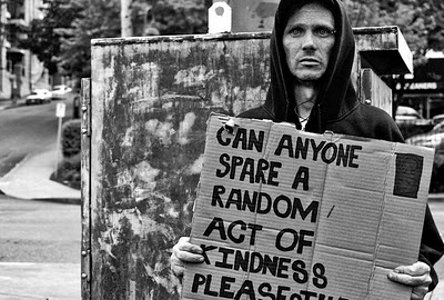 However, I also learned that it’s more difficult to be “dark and moody” when I am focused on crafting a message that must be supportive and uplifting toward anyone who reads it. No debating theological puzzles. No anguishing over personal issues. No staring into the dark abyss of my soul. No controversies. No disputes. No debates. No “us vs. them.” Just following the path created by a God who wants us to love Him by loving other human beings…and by loving ourselves as He loves us.
I thought that dedicating my daily blog posts to a limited theme would be restrictive and in one sense, it was. On the other hand, it was also very liberating. I could put down the weight of defining my theological and spiritual message in terms of what I opposed and was free to rise up out of the mud and seek out a higher purpose. There is no higher purpose than to serve God and to help other people.
It did require though, that I keep my mind more fluid and open to seeing the good in other people, other circumstances, and in everything I encountered.
There is nothing new under the sun. –Ecclesiastes 1:9
America was always there, long before Columbus discovered it. Penicillin killed bacteria long before Fleming discovered it. We could go on to list numerous discoveries which could have benefited mankind long before they came to our attention.
It has been said that when the student is ready, the teacher appears. We can say the same thing about discoveries: they become evident to us when we are ready for them.
Just what constitutes this state of readiness is still a mystery. While technological advances are usually contingent upon earlier progress, many other discoveries were right before our eyes, but we did not see them.
This concept is as true of ideas and concepts in our lives as it is true of scientific discoveries. The truth is out there, but we may fail to see it.
In psychotherapy, a therapist often points out something to a patient numerous times to no avail, until one day, “Eureka!” – a breakthrough. The patient may then complain, “Doctor, I have been coming to you for almost two years. Why did you never point this out to me before?” At this point, many therapists want to tear out their hair.
Just as patients have resistances to insights in psychotherapy, we may also resist awareness of important ideas and concepts in our lives. If we could sweep out these resistances, we could see ourselves with much more clarity. We must try to keep our minds open, particularly to those ideas we may not be too fond of.
Today I shall…
try to keep an open mind so that I may discover ideas that can be advantageous to myself and others.
-Rabbi Abraham J. Twerski
“Growing Each Day, Av 29”
Aish.com
 We can think of leaving flowers on the grave of a loved one as something we do more for ourselves than for someone else. After all, Rabbi Moss is right in saying that the flowers mean nothing to the dead. The flowers look beautiful for a day and then fade, wilt, and finally die. Then someone has to come along, pick them up, and toss them in the trash.
In a hundred years, will all the debates and discussions on our “vital issues” in our blogs become dead flowers that have to be thrown in the trash?
But what of our good deeds, our acts of compassion, our expressions of love? Aren’t these the crowns that will last forever?
Everyone who competes in the games goes into strict training. They do it to get a crown that will not last, but we do it to get a crown that will last forever. –1 Corinthians 9:25 (NIV)
Like I said before, it’s not that we shouldn’t discuss, debate, and seek out the truth by placing it in a sort of “blogosphere crucible.” We should just keep our perspective and realize what is really important to people, to our world, and to God. Whoever “wins” a blogosphere debate may get a “crown” but it will not last. Whoever feeds a hungry person, visits a sick friend in the hospital, or comforts a widow in her grief will gain a crown that is eternal.
 Morning Meditations
James,
“Whoever “wins” a blogosphere debate may get a “crown” but it will not last. Whoever feeds a hungry person, visits a sick friend in the hospital, or comforts a widow in her grief will gain a crown that is eternal.”
This couldn’t be more true. I once had a time where I was heavy in to apologetics, and mainly the intellectual areas of faith. I’d scour through books, articles, blogs, opinions, etc, in an effort to learn as much as I could about my faith. And though I firmly hold that one must have a solid intellectual foundation on which to rest on (our faith is a historical faith, and thus, we must be able to justify our positions in more than a purely faith centered approach), I found that, as time went on, I began to get nudges from the Spirit, basically telling me, “all this knowledge of who I AM is good and well, but what have you actually DONE with your faith? Who have you helped today? Laughed with? Cried with? Hoped with? Loved with? Forgiven with?”
It’s one of those things, I think, that is a stage of faith. It’s as if, once you really begin to understand who Yeshua was, and what his mission was all about, you realize that our faith in G-d through Him, is a living faith, a personable faith; not one for closing in on yourself, but one for opening up your arms to anyone who needs the help, the love.
It’s something I struggle with everyday, trying to live my faith, rather than intellectualize it. One of many growths a person of faith must endure I suppose. But what a beautiful thing it is.
In Yeshua,
Nate
Thanks, Nate. I think you’ve captured what a lot of us go through, particularly if we feel more comfortable living in our heads rather than working with our hands. As much as it is needed for us to “get into the Word,” to study, to learn, and to teach, the real work of God is in acts of compassion, kindness, patience, generosity, and love.
Good Shabbos.
Exactly,
Nothing captures this better than Matthew 25;
” Come, you who are blessed by my Father, inherit the kingdom prepared for you from the foundation of the world. For I was hungry and you gave me food, I was thirsty and you gave
me drink, I was a stranger and you welcomed me, I was naked and you clothed me, I was sick and you visited me, I was in prison and you came to me. Then the righteous will answer him, saying, ‘Lord, when did we see you hungry and feed you, or thirsty and give you drink? And when did we see you a stranger and welcome you, or naked and clothe you? And when did we see you sick or in prison and visit you? And the King will answer them, Truly, I say to you, as you did it to one of the least of these my brothers, you did it to me ”
And, Matthew 7:21;
” Not everyone who says to me, ‘Lord, Lord,’ will enter the kingdom of heaven, but the one who does the will of my Father who is in heaven ”
Per usual, Our Lord sets his standard on the heart, and the will. May we all reach such a standard as this.
G-d Bless,
Nate