
So far in my “Defining Men” series, I’ve written Defining Men, Part One: Looking Through the Barbie Lens and Part Two: What is Feminism?.
When addressing the 21st century secular progressive (and religious progressive) world, you can’t really define men without addressing feminism. So here in Part Three I’ll ask “Does Feminism Hate Men?”
I mean, on the surface a lot of guys certainly seem to think so, hence a lot of male resistance and even hostility to anything that labels itself feminism.
But is that all true?
The web publication “It’s Pronounced Metrosexual” (I’ve never heard of it either) posted an article in 2012 called 5 Reasons Why So Many People Believe Feminism Hates Men and Why They’re Not True. The unique thing, at least for me, was that this was written by a guy. His name is Sam Killermann (interesting surname) and he’s a feminist.
He’s a feminist and he doesn’t hate men. Well, I hope not since he’s one of us. Here’s what he believes.

He doesn’t start well by quoting the late far-right evangelist Pat Robertson:
The feminist agenda is not about equal rights for women. It is about a socialist, anti-family political movement that encourages women to leave their husbands, kill their children, practice witchcraft, destroy capitalism, and become lesbians.”
I don’t know many guys including anyone even slightly leery of the feminist movement who literally believes all that stuff. But Killermann says it’s an example of how “feminism has a bad rap.”
However, in his first point, he admits some people think feminism hates men because some individual feminists hate men. Wow. Someone actually said the quiet part out loud.
In 30 seconds on Google, I found this article (first page of my first search about “radical feminism”) and this delightful collection of quotes (my favorite: “To call a man an animal is to flatter him; he’s a machine, a walking dildo.” Thanks for the gem, Valerie Solanas.).
You don’t have to look very hard to find examples of “feminists” who hate men.
Addendum: Unfortunately, both of the “misandry” links above don’t work anymore. Maybe “hating men” wasn’t the right way to go.
He points out there’s a difference between feminists and misandrists. It’s nice of him to say that misandry exists, especially when so many men are automatically labeled misogynists. He provides some handy definitions:
Yes, misandrist is a word. But feminist doesn’t mean “person who hates men.” Feminist means “person who believes people should have equitable places in society regardless of their gender.”
Actually in my Part Two, we discovered that the definition of “feminism” covers a lot more territory than Killermann does.
Actually, he does go there:
Most feminists actively disagree with the belief that women are better than men and think that feminists who are anti-men are going against the fundamental principles of feminism, which says we’re all deserving and worthy human beings – women, men, trans* – and should be treated as such.
The second reason is that we have (supposedly) been told that feminists hate men for the past 200+ years.
The whole “feminists hate men” thing has been tossed around for quite a long time now. It’s not new. The first “feminist” women who began advocating for equal status of women in the US did so in the late 1700’s, but it didn’t really pick up steam until the late 1800’s.
What crazy radical things were these man-haters asking for? Primarily, the rights to own property, to attend college, and to vote.
In response to these requests, they were were labeled as anti-family, anti-God, anti-men radical hedonists. That labeling has continued to today, because — surprise! — a group with a lot of power (men) tends to do whatever it can to maintain that power (dismiss equal rights as radical).
I guess that’s the patriarchy talking. To be fair, if feminism has been getting “bad press” by the people running the press, then I suppose it’s bound to be taken as true. After all, look at what’s being sold today in news and social media by the people in control of all of that. Yikes.
The third reason struck home for me. It says “Because most men aren’t bad but think feminism says they are.” Think? I guess this could go back to the misandry messages that have also been sent out into the world for years and years and years. “Unless men totally do this, that, and the other thing without question, they are [insert the bad thing men are].”
So in general, feminists don’t believe “all men are” rapists or evil. Also, no one individual man is guilty of “hundreds of years of oppressive behavior.” What Killermann is leaving out is that all men are blamed for benefiting from a history of oppression to women, people of color, etc…, so that makes it more than likely a feminist can point to an individual man and blame him for his “privilege.”
He actually does confirm this.
The thing feminism thinks is bad is the hundreds of years of sexism part, as well as the existence of sexism today. Sexism is the problem — sexism that a lot of men engage in and a lot of women internalize.
Men engage in sexism because they’ve been taught to behave/think that way. Women internalize it for the same reason.
Let’s stop here for a second. Women internalize sexism and oppression. That means any woman who has anything against feminism has been essentially brainwashed by growing up in an oppressive and anti-female culture. Men have convinced her since she was a baby that the oppressive stuff is normal and that feminism is against all men, including the ones she loves like her Dad, brothers, Uncles, Grandpa, and so on.
In other words, any woman who is against feminism in any way at all MUST hold those attitudes because of internalized sexism and CANNOT have any other good and rational reason for their beliefs.
Just wanted to make that clear, Sam.
Reason four is “Because some feminists aren’t willing to address men’s issues (though some are).”
You mean men have issues? Men are human, just like (gasp) women? Okay, I’m exaggerating, but let’s go into this.
Working towards gender equity means equity for all genders, right? Then what about men? And what about trans* folks? This is a question that often gets raised by men (about men, not as much for trans* folk). Feminism in general has mixed feelings about addressing men’s (and trans*) issues.
Since we’re trying to define men relative to feminism, we stumble again over “trans*” as part of the “not-female” matters feminism has problems with. I guess that’s why you have feminists like Harry Potter author J.K. Rowling who doesn’t see transwomen as women being called a TERF by feminists who absolutely insist we all believe transwomen are women.
But back to men’s issues.
But do many feminists ignore these issues because they hate men? No.
The mixed feelings about addressing men’s issues tend to stem from the fact that “men’s issues” tends to be the default in our society. We’re a male dominant society.
Many feminists are concerned that addressing men’s issues (or gender issues as a broad goal) will move the conversation completely away from women’s issues, resulting in no progress for the women’s part of the gender progress.
That makes sense. If you’ve been oppressed since time began by men, you probably don’t want to think or feel toward your oppressor in a sympathetic manner. But that goes back to not just blaming a “system” for oppressing you, but individual men. The “system” doesn’t have men’s issues, individual men experience issues such as depression, isolation, suicidal ideation (I’ll get into all of that in a future blog post).
The last reason is that “Sensationalism is a good way to distract from real issues.”
The door swings both ways. Men (not just some men) are accused of all that oppressive behavior or at least benefiting from it, and, to be fair, a lot of men still think of women in a number of negative ways, such as controlling, irritable, overly emotional, angry, and so on.
He puts the ball back in the court of all men when he gives 30+ Examples of Male Privileges.
The thing is, it could be easily said that Sam is a feminist so he can escape the criticism that feminists level against men. Of course, he has to agree with the criticisms against men, including his own “privilege.”
He says:
No. I am a White man. That wouldn’t serve me well at all. What I’m trying to do, and what feminism is trying to do, is bring the woman up.
Unfortunately, the easiest way to bring one group up is by lowering another. Feminists have said that’s what men have done to women (and a lot of other people) for a long, long time. The easiest way to counter that isn’t to really make all (both) genders equal but to make them unequal in the opposite way.
That probably won’t happen any time soon since the world still seems really, really male oriented. So maybe the feminists have a point. I don’t see feminism as a truly equality based movement. It is a movement based on raising up the disadvantaged and oppressed as they see it. Since men aren’t seen that way, they don’t need to be raised and therein lies the tale.
In other words, every story needs a good person (protagonist) and a bad person (antagonist). Equality would mean that everyone has an equal status as the protagonist (who wants to be the antagonist or “everyone is the hero in their own story”) and there are no antagonists. That means, no one is being oppressed and we’re all in the same storm together pulling for each other. If that happened, there would be no feminist movement, no BLM, no Antifa seeing “fascists” under every rock. There would only be people trying to get along with other people.
Feminists would be replaced by being people.
But we aren’t there.
Here’s what Killermann is up to lately.
Another Addendum: I was curious and discovered Killermann fell off the grid at the end of 2020. I have no idea where he went, but he had a pretty big online presence, and then nada.
Actually, another article published in 2017 by Palomar College’s newspaper The Telescope says Today’s feminism movement has devolved into men hating. It’s a pretty short write up, so I won’t quote from it here. It does accuse feminism, including male feminists, of wanting “to belittle men and put women above men. They do not want to only end the supposed patriarchy, they want to turn the world into a matriarchy.”
Of course Killermann might say this is just another example of men perpetuating the “myth” that feminists hate men, but there are always at least two sides to every story.
We briefly return to the “Barbie” movie in the CNN article What is patriarchy? What does it mean and why is everyone talking about it? (and good grief, Ken is made to look completely ridiculous as a man).
The article says that the story is “CNN’s ongoing series on gender inequality”, so the stage continues to be set.
What is patriarchy?
Defining patriarchy, renowned American sociologist Allan Johnson wrote: “Patriarchy does not refer to any man or collection of men, but to a kind of society in which men and women participate … A society is patriarchal to the degree that it promotes male privilege by being male-dominated, male-identified, and male-centered. It is also organized around an obsession with control and involves as one of its key aspects the oppression of women.”
Uh huh.
This male dominance perpetuates beliefs and practices (cultural norms) that — whether consciously or unconsciously — favor men over women, and these beliefs are not just held by men, but by the majority of the people in that society, whatever their gender.
There’s the internalized part again.
Gender inequality — the unequal treatment of someone based solely on their gender — is an outcome of patriarchal societies but the terms do not mean the same thing.
And…
Despite strides towards sex equality that have been gaining momentum for more than a century, the US remains a patriarchal society.
Yes, I can agree with that. I never said such a system didn’t exist, just that not all men are personally responsible for everything the patriarchy is blamed for (is there a patriarchy club, you know, kind of like a political party or a country club?). Now let’s look at matriarchies and how they work, at least in CNN’s limited perspective:
Here are just a few of the matriarchal societies known to exist around the world:
The Minangkabau are the world’s largest known matriarchal society, comprising millions of people living on the island of Sumatra in Indonesia. They are matrilineal, tracing descent and inheritance through the female line.
The Bribri are among the world’s oldest surviving matrilineal communities. This indigenous group mainly lives in the mountainous Talamanca region of Costa Rica and in 2015, it was estimated that there were 11,500 people in this area, with a smaller population in Panama, but their culture is said to be under threat.
There are also the Mosuo in China, the Khasi in India, the Himba in Angola and Namibia and many more. But even social orders don’t exist in a binary choice between patriarchies and matriarchies. Of the 1291 populations defined in the 2019 study, 590 were patrilineal. Aside from matriarchies as detailed above, the study also identified five other ways societies decide lineage.
So matriarchies exist, but the article skips over how they work and how men and women are treated in said-systems.
Is the patriarchy good for men? CNN says “yes and no.” The upside should be obvious. Here’s how they see the downside:
But it also comes with expectations, and it is these expectations — that a “manly man” is heterosexual, always strong, shows little emotion, is the provider not the caregiver, dominates over others, must always be in control — that have led to what is popularly referred to as toxic masculinity.
In other words, men have also internalized the patriarchy so that being masculine is “toxic.” That list is a bunch of stereotypes and if the CNN writer thinks that’s how all men operate, they’re deluded.
Can the patriarchy be dismantled? Remember, this is the stated goal of feminism (yes, I’ve come back to feminism). What happens should you dismantle the patriarchy? Do you dismantle men?
The patriarchy is a social system that was designed by men to favor men. It has been adopted throughout the ages through learned behavior and cultural norms that put men on top. To dismantle this ideal, we have to challenge the entrenched biases against women.
Sounds simple, but there is much work to do. In the face of “sexual and reproductive rights being rolled back” and “women’s rights … being abused, threatened, and violated around the world,” UN Secretary General António Guterres said in March that gender equality seemed to be “300 years away.”
And finally…
In a column for CNN, President of the Democracy Alliance Pamela Shifman wrote: “In order to reverse the mounting damage being done every day to women’s and LGBTQ+ rights, feminist movements need more resources. They also need the freedom to respond to new threats and opportunities and to boldly innovate. The threats, in their source and nature, are always changing and we need feminist organizations that are resilient and able to change too. Now is the time to fund those organizations into being.”
So we don’t know what it would actually look like to “dismantle the patriarchy.” Funny how that’s skipped over.
I came across a story at the Washington Examiner called Democrats and Republicans aren’t divided by gender, they’re divided by marriage. It seems not to quite fit until you look at one of the issues against feminism. The dismantling of the patriarchy may mean dismantling time-honored institutions such as marriage. If the patriarchy goes away, does marriage go with it?
Politico’s aversion to asking men to write about masculinity aside, one theme throughout the feature was that, in Katelynn Fossett’s words, over the last few decades, “women are voting for Democrats more, and men are usually sticking with Republicans.”
And here we go…
Adding marital status to the mix, the GOP advantage among married men shoots up to 20 points (59% Republican to 39% Democrat) and shrinks among unmarried men to just 7 points (52% Republican to 45% Democrat).
But what most people don’t know, including everyone who works at Politico apparently, is that among married women, Republicans still maintain a sizable 14-point advantage (56% Republican to 42% Democrat).
But if Republicans are winning married men by 20 points, married women by 14 points, and unmarried men by 7 points, then who is keeping Democrats competitive?
Single women are single-handedly saving the Democratic Party. By a 37-point margin (68% to 31%), single women overwhelmingly pulled the lever for Democrats.
Relative to supporting more leftist politics, feminism being well within that mix, is feminism advocating for women remaining single? Being a single woman doesn’t provide an escape from the patriarchy, but then the woman wouldn’t be “sleeping with the enemy” either.
The story’s conclusion is:
The message the Democratic Party has for men is clear: You are, at best, worthless. Democratic Party programs have empowered women to procreate without you entirely. In fact, most likely, you are a #MeToo pervert who needs to be punished, without due process, by a college inquisition board. If you want, you can be a silent ally for women’s causes, but please don’t ever talk — we’ve heard enough from the patriarchy already.
No wonder men, and women who want to be married to men, are fleeing the Democratic Party in droves.
Very politically biased. I don’t know if that last bit is really true given a single news article, but it does deserve some thought.
https://twitter.com/monitoringbias/status/1687114031289847809
So, what have we learned? Does feminism in general “hate men?” On a man-by-man basis, I’d say no. That is, I don’t think any given feminist would say they hate every single man they meet, all of their coworkers, neighbors, relatives, and so on, at least not for “just being a man.”
However, in the name of the oppressive patriarchy and how all men everywhere benefit from the oppressive patriarchy, I can believe that individual men are blamed for how they benefit from it and their privilege, whether they consciously think about it or not. So the individual man, having heard of the sins of the patriarchy, if they internalize the feminist message that they have benefited from injustice just by breathing air, and have unfair privilege just because of their chromosomes has one of two responses…well, one of three.
The first is to do what Sam Killermann did and become a feminist. If you align with the people who think you benefited from oppressing them, it’s harder for them to blame you (isn’t it?). Of course, you have to acknowledge that your have benefited from injustice and privilege, even if you never personally took part in any of that. I’m not sure what mental gymnastics would be necessary to live with yourself as a male feminist (I once read that men can’t be feminists because of their privilege, they can only be “allies”).
That leads to option two: Men can hate themselves. Any individual man is actually powerless to change hundreds, thousands, or tens of thousands of years of human history that they’ve supposedly benefitted from. They are powerless as individuals to “dismantle” a system that is largely conceptual, a faceless monster-under-the-bed that supposedly is not represented by any tangible man or group of men. Individual men aren’t “bad” but individual men are the recipients of “bad” for their own sake, thus unconsciously and unwillingly continuing to oppress women and others.
What option do you have left but to feel that you’re bad, awful, lousy, scum, and so on (more on men’s issues later)?
The third option is to say it’s all BS and to reject the entire thing. I mean a guy has to live inside of his own skin and not hate himself anymore than the world is telling him to. Some men see becoming a feminist or agreeing 100% with what all feminists in the world say about everything as self-betrayal.
If a woman who has internalized the patriarchy is working against her own self-interests, then can’t the same be true for a man who internalizes feminism?
Throughout this rather long article, I’ve painted an “Us vs. Them” dynamic. But then words and concepts like “patriarchy” and “feminism” do exactly the same thing. There is no “Us” without “Them.” There is no hero without a villain, no protagonist without an antagonist. If feminism really is about total equality, then that dichotomy would cease to exist.
There would just be “Us.”
But since there isn’t just “Us,” I’ll stop here and we can pick up on Men’s Issues in Part Four.
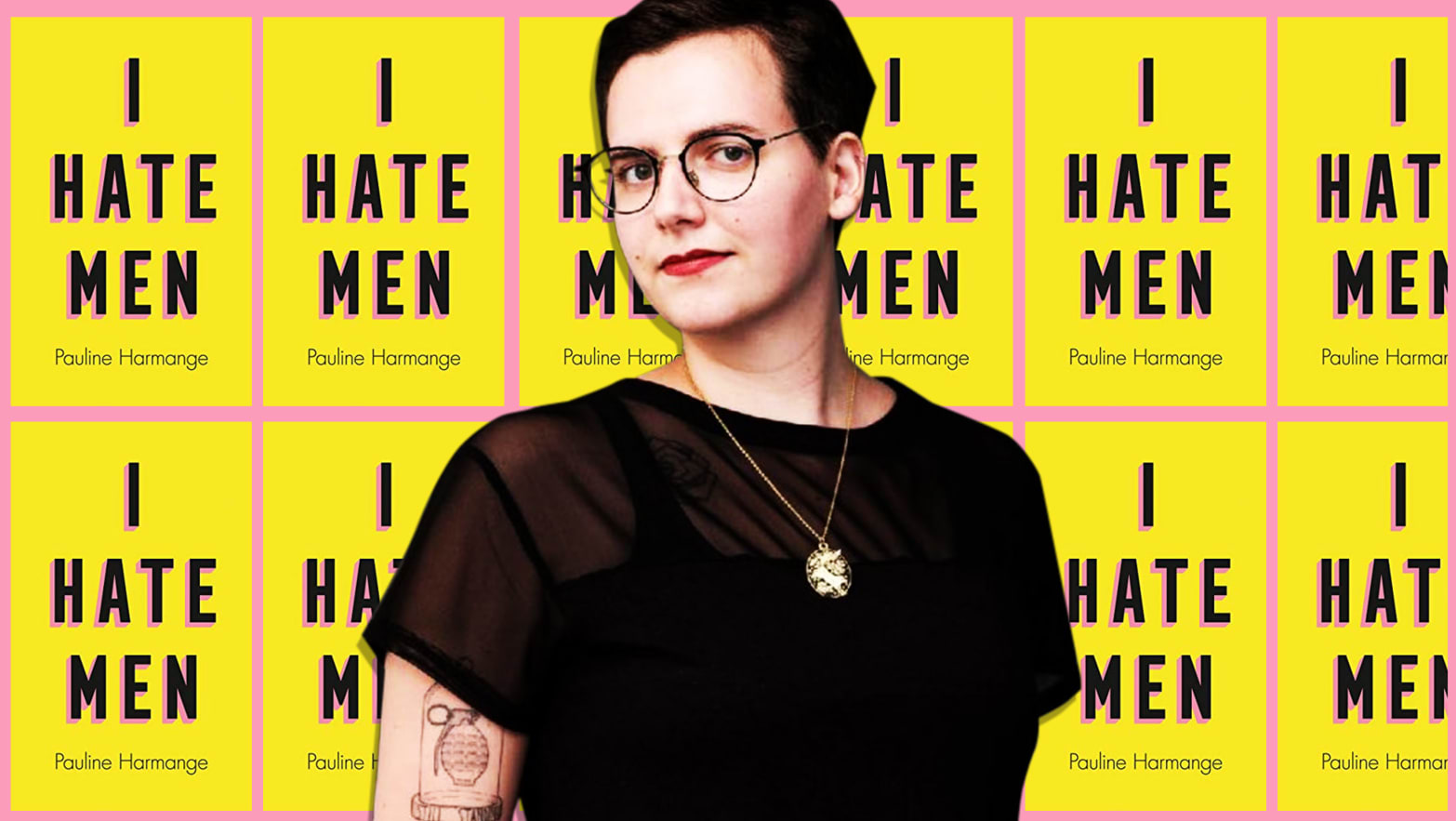
Oh, here’s more about the book I Hate Men.
The author Pauline Harmange, ended an interview with:
I really think feminism and misandry go hand-in-hand: this feeling of fighting for what’s right, alongside people you feel comfortable being yourself around.
*sigh*
Wait, there’s more. I found this on twitter.

To which someone (a guy) replied:
So, you’ll be starting a project to exterminate all men on Earth so you’ll be safe. What’s it called when you hate an entire gender? In the case of hating men, it’s called “misandry.”
The beat goes on.
Look for part four soon.
 Morning Meditations
The closing feminist question “Protect us from whom?” is, of course the wrong question, being both short-sighted and narrow-minded. A better question might be “Protect us from what?” The answer there has to do with extinction, from the lack of reproductive partners, clonal replicative degeneration, and natural disasters where greater human strength is required to overcome numerous physical challenges. The fundamental problem remains a failure to embrace the bicameral definition of the human family established by the Creator of our species, and the fact that He Himself began with a single integral man. Immediately He observed that this was an incomplete system, and pulled genetic material from that integral individual to establish a suitable helper, thus establishing the precursors of the relationship between the sexes. This was not defined as an adversarial relationship, but rather a cooperative one. If it is not now operated as the latter in any given place or time, the fault belongs to the involved individuals or their society. Feminism exacerbates the adversarial, even to the point of extinction. What viewpoint or “-ism” is fostering cooperation?