
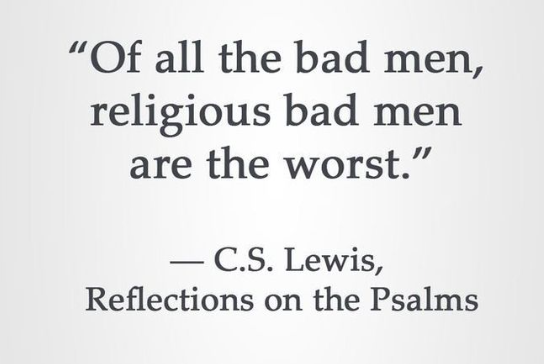
After publishing Part Five: Who are Men of God?, I received a comment from someone which, on the surface, seemed innocent enough. As the “conversation” progressed, it became obvious (although they denied it) that the person had ulterior motives. Perhaps a Christian man or men in a church hurt them in some way, or they have bought into the idea that Christian men are in general bad.
I decided not to tolerate such an attitude, but in retrospect, I realized that not all Christian (or Jewish or Muslim or any man of faith) men are good. Some do hide behind certain scriptures to justify their gad and ungodly behavior, so there is that. Also, as Christians, if we have done someone harm, we need to seek out their forgiveness.
Never repay evil for evil to anyone. Respect what is right in the sight of all people. If possible, so far as it depends on you, be at peace with all people. – Romans 12:17-18 (NASB)
Do not grieve the Holy Spirit of God, by whom you were sealed for the day of redemption. All bitterness, wrath, anger, clamor, and slander must be removed from you, along with all malice. Be kind to one another, compassionate, forgiving each other, just as God in Christ also has forgiven you. – Ephesians 4:30-32
Now He also told this parable to some people who trusted in themselves that they were righteous, and viewed others with contempt: “Two men went up into the temple to pray, one a Pharisee and the other a tax collector. The Pharisee stood and began praying this in regard to himself: ‘God, I thank You that I am not like other people: swindlers, crooked, adulterers, or even like this tax collector. I fast twice a week; I pay tithes of all that I get.’ But the tax collector, standing some distance away, was even unwilling to raise his eyes toward heaven, but was beating his chest, saying, ‘God, be merciful to me, the sinner!’ I tell you, this man went to his house justified rather than the other one; for everyone who exalts himself will be humbled, but the one who humbles himself will be exalted.” -Luke 18:9-14
It is clear from these verses that we must ask forgiveness not only of God but of other people when we have sinned against them. Relative to the person who felt Christian men as a whole do wrong, should I have asked for forgiveness on behalf of those others?
I don’t even know the issues involved. Also, there’s nothing I’m aware of in scripture that allows me to ask for forgiveness on the part of other people, especially people I know nothing about.
Yes, I know the High Priest of Israel would make atonement on behalf of the entire nation on Yom Kippur, but that hardly applies in this situation.
Also, there’s this:
“You have heard that it was said, ‘Eye for eye, and tooth for tooth.’ But I say to you, do not show opposition against an evil person; but whoever slaps you on your right cheek, turn the other toward him also.” – Matthew 5:38-39
On the strength of that verse, maybe I should have accepted that person’s testimony without resistance. Maybe I was too harsh. But in the vein of the theme of my series, I thought how many men have been misused because of “turning the other cheek?” Yes, we should be accountable for the things we’ve done wrong, but what about being accused of what we haven’t done?
The quote from non-Christian Malcolm X might seem a tad extreme but I think it applies.

A violent enemy aside, once a man has broken trust, it’s not easy to earn it back. In fact, when we come under even the slightest suspicion, those we have wronged my immediately assume that we have “done it again,” even when we are innocent of any wrongdoing. Should we turn the other cheek?
That depends. A man deep within his own depression, shame, and with self-harm and suicide hanging over his head just heaps more pain upon himself in such situations. Perhaps they feel they deserve the criticism, even if they have done nothing in that instance to earn it. This becomes another fall into self-condemnation that can actually lead a person away from God and turn the man into what everyone (or at least my critic) thinks he is and always will be. Men like that sometimes say, “To heck with it,” and seeing no way out, surrender to the darkest side of themselves, doing evil because they believe they cannot be good.
Yet in Christianity some believe we should accept responsibility for what we didn’t do based on this:
For God saved us and called us to live a holy life. He did this, not because we deserved it, but because that was his plan from before the beginning of time. – 2 Timothy 1:9, New Living Translation
I’m partial to the NASB translation myself, but this one suggests that even though Christ didn’t deserve to die (and we did), he sacrificed himself anyway.
But he did that for the sake of all humanity. If a Christian man admits to doing something wrong when he didn’t actually do it, who does that “save?”
I can agree partially to this part of the article:
Next time your parents ask you and your siblings who made a mess of the fridge, instead of insisting it was your brother, offer to clean it up. If you see someone knock over a box of pens, pick the pens up instead of making accusations. Or, instead of blaming your classmates for not doing their part in a group project, you can ask them if there’s any way you can help. Take the initiative and help those around you, even if it takes away from your own time.
Even if you didn’t make the mess, spill the pens, or drop trash on the ground, you can take responsibility to clean things up. You aren’t admitting to making the mess in the first place, because you didn’t. However you can be part of the solution and not part of the problem.
Actually, the main reason I’m writing this is because I read an article from Aish called Why You Make Bad Choices. I thought it might dovetail into some of what I’ve said in the earlier parts of my series.

For those of you who don’t know, Aish is a Jewish resource and I like a lot of what they have to say. I don’t quote from such sources much anymore due to what I call the “Messianic Jewish Wars.” Basically, it’s the historic debate about how much Judaism a non-Jew can take onboard. It was sort of the whole “Gentiles are committing cultural misappropriation of Judaism.”
My solution was to back off entirely. My core theology and doctrine is based on certain MJ teachings, but my praxis is strictly generic Christian/Goy.
However, there are things that Rabbi Nechemia Coopersmith said that I thought were applicable to the central theme of my series. Oh, it’s a commentary on Rosh Hashanah, which is coming up.
On Rosh Hashanah, we plead to God, “Remember us for life!” We want to be sealed in the Book of Life, to make the choices that will yield real meaning and fulfillment. Rabbi Noah Weinberg would often say, “The battle for life is the battle for sanity.” Don’t allow yourself to get confused and fall down that rabbithole. One of your most effective weapons in the battle to choose life is clarity. Unmask the confusion and see it for what it really is: a death trap.
A friend recently sent me this list of daily reminders, written by Greg Isenberg, co-founder/CEO of Late Checkout. I thought it was a powerful tool to get clarity and not to allow our lower selves to get us off track. Greg masterfully captures some of the daily choices we are faced with, articulating the two opposing sides, the life and the death, the blessing and the curse.
Daily reminders is a good method to use in self-encouragement.
The first step in battle is to know your enemy. Realize what you’re up against and attain the clarity to make healthy, productive choices. Greg’s list can help you increase your awareness:
Isenberg’s list is:
- Scared —> Take one risk
- Stuck —> Walk
- Tired —> Sleep
- Confused —> Ask
- Frustrated —> Move
- Burned out —> Day off
- Impatient —> Review progress
- Overthinking —> Write
- Unmotivated —> Remember your “why”
Rabbi Coopersmith added:
- Unloved—> Give
- Angry —> Empathize
- Unhappy—> Appreciate
- Hopeless —> Pray
- Aimless —> Introspect
- Apathetic —> Create
Notice all of these are action-oriented, even if the action is cognitive or emotive. If you feel this, do that.
The Rabbi further says:
God instructs us: Choose life! Cut through the confusion and don’t get sucked in by the counterfeit pleasure that is offering you nothing but escape and emptiness, a suicide in installments.
“A suicide by installments.” Yes, we can die a little bit at a time or, as I’ve said before, all at once.

I recently re-watched the 1991 film Star Trek VI: The Undiscovered Country. After Spock (Leonard Nimoy) feels defeated by the betrayal of his Vulcan protégé Valeris (Kim Cattrall), he and Kirk (William Shatner) have this exchange:
Captain Spock : Is it possible that we two, you and I, have grown so old and so inflexible that we have outlived our usefulness? Would that constitute… a joke?
Captain James T. Kirk : Don’t crucify yourself. It wasn’t your fault.
Captain Spock : I was responsible.
Captain James T. Kirk : For no actions but your own.
Two men, two good friends, holding themselves accountable and pointing out there that accountability begins and ends. It’s from a work of fiction, but sometimes those are the best friends to have.
When confronted with blame or someone’s upset or anger, whether you have earned it or not, choose life.
Addendum: Found this on twitter. This is just one example of the world we must resist. A woman wears a Christian cross around her neck and a shirt that says “Made in Hell.”
 Morning Meditations