

“We don’t need a Messiah actually,” she argued. I’ve had this conversation a number of times and on this occasion we were relaxing over coffee. “Everything you say Jesus does we say God does. God is our savior and the whole Messiah thing is not what you make it to be. God redeems, heals, raises the dead, is the king, brings the age to come, restores Israel, and gives knowledge in the future time to the Gentiles.”
-Derek Leman
“Chapter One: Seated at the Right Hand,” (loc 23)
Divine Messiah (Kindle Edition)
Note: Lacking page numbers, I’ll use the “location” (loc) notation in Kindle to describe approximately where in the book each quote is to be found. Also, be prepared. This is pretty long.
Most of my regular readers know or at least are aware of Derek Leman, who he is, what he believes, and what he teaches, but for those of you who surfed in to read yet another book review, on his author’s page at Amazon.com Derek says:
I am a rabbi, writer, and speaker focused on the Jewish context of faith in Jesus (Yeshua), on making the Hebrew Bible (Old Testament) simple, and on the intersection of Judaism and Christianity. Linda and I have eight children who fill our lives with fun and friendship. We are a homeschooling family dedicated personally to the value of a faith-filled home. My special interests include the Hebrew Bible, the Gospels, the life and teachings of Yeshua, theology, Second Temple Jewish history, Abraham Joshua Heschel, the early midrashim of the land of Israel, mussar, mysticism, the Hebrew language, Isaiah, the works of J.R.R. Tolkien and C.S. Lewis, science fiction, fantasy, Star Trek, and beer. Not necessarily in that order.
He has been heavily marketing his Divine Messiah eBook on his blog for months, the most recent effort (as I write this) being Preview: Divine Messiah.
In this short book (the print length is only 98 pages, so hardly the length of a chapter or two in most larger texts) which I downloaded onto my Kindle Fire for a nominal cost, Derek proposes to do what I would consider the impossible: to describe, from a Messianic Jewish point of view, the “mechanics” of Yeshua (Jesus) being co-equal to God the Father.
My personal opinion is that the Deity and Divinity of Yeshua remains a profound mystery that defies analysis and that can only be reasonably discussed in the realm of mysticism (I refer the reader to Messianic Luminary Paul Philip Levertoff’s classic Love and the Messianic Age along with its accompanying textual commentary, both published by First Fruits of Zion, for insights into Jewish mysticism within the Messianic perspective).
The purpose of my current review is to determine if Derek reasonably makes his case that Jesus Christ, that is Yeshua HaMashiach, is indeed God as God the Father is God, that he is worthy of worship and devotion as God, and that the early Messianic Jewish and Gentile disciples worshiped Jesus as God beginning in the early to mid-first century CE.
I will mention as a caveat that there is no one “Messianic Jewish perspective” on anything. Derek represents primarily his own point of view although I can only imagine he draws heavily from his affiliation with the scholarly and authoritative body Messianic Jewish Rabbinical Council. He also draws a great deal from the work of Dr. Larry Hurtado, “New Testament scholar, historian of early Christianity and Emeritus Professor of New Testament Language, Literature and Theology at the University of Edinburgh, Scotland.” I should say that I am also a “fan” of Dr. Hurtado’s work and have received a number of personal insights from his recent and classical writings.
Derek wrote his book in six chapters and I’ll structure my review likewise, followed by a conclusions section.
Chapter One: Seated at the Right Hand
Derek starts out with the issue of what Yeshua brings to the table as Divine Messiah. Referencing the dialog I quoted above from his first chapter, traditional Jewish thought has no need for a Messiah who is also God. The God of the Hebrew scriptures is the God of Israel, the God who was, who is, and who forever shall be. Who is this “figure” who supposedly sits at God’s “right hand?”

The first chapter lays out all the questions. “Is Yeshua really needed, given that God is already in charge?” How can Messiah, a man, a human being, say that he is God? “Doesn’t God say, ‘I am not a man’?” And if Yeshua isn’t Divine, is “he nothing more than a doorway to the future world we will enjoy?” (a question that I recently explored)
Larry Hurtado, in a recent blog post, brings forth questions about what Jesus did or didn’t believe about himself and how his disciples and apostles perceived him, both before his crucifixion and after his resurrection. Derek seems to understand that Jesus knew exactly who he was and is by quoting the following:
But He kept silent and did not answer. Again the high priest was questioning Him, and saying to Him, “Are You the Christ, the Son of the Blessed One?” And Jesus said, “I am; and you shall see the Son of Man sitting at the right hand of Power, and coming with the clouds of heaven.”
–Mark 14:61-62 (NASB)
Derek then proceeds to a number of texts in the Hebrew Bible, principally Daniel 7, also referencing Talmudic scholar Daniel Boyarin’s commentary on the same scripture in his book The Jewish Gospels: The Story of the Jewish Christ, as well as historical notes from other noteworthy Jewish sources such as Rabbi Akiva, Don Issac Abravanel, and of course, the apostle Paul, in order to build a case for how Jewish thought at different points in history, considered God and his “chief agents” as well as how these agents were similar to and different from Yeshua.
Derek’s conclusion here is that no other figure of honor or representing God was treated in the same manner as Jesus:
They saw the Glory of God reflected in the face of Yeshua the Messiah. They saw Yeshua enthroned at God’s right hand and heavenly beings prostrate before both of them. They saw something new, far beyond the other kinds of divine agents in the Hebrew Bible and in Jewish literature of various types.
-Leman, loc 150
While this may seem apparent to most Christians, we don’t often attempt to struggle with comprehending the following:
The belief in Yeshua as Divine Messiah is, in the words of Larry Hurtado “a mutation or variant form of exclusivist monotheism.”
-ibid, loc 161
Chapter Two: God’s Nature in the Hebrew Bible
Having set the stage, Derek next takes a look at the traditional Jewish view of God in the Tanakh (Old Testament), although it should be noted that there is no single, overarching Jewish “opinion” on the nature of God.
The Hebrew Bible is not the record of a God who can be fathomed. His appearance to people is always a surprise. He can appear in ways deceptively small, a bush in the desert. He reveals himself as eternal, with foreknowledge and an unchanging nature, yet acting in human history, regretting things, and at least in appearance moving with events as a participant in them.
-ibid, loc 201
Additionally, and this seems to be the capstone of the chapter:
Monotheism may not be as simple as it seems.
-ibid, loc 210
 As you might expect, the Hebrew Bible declares God a complete and indivisible unity without differentiation. Derek proposes however, based on the Hebrew Scriptures that “God’s nature is differentiated in the Bible (in that) he is at the same time in more than one place and fulfilling multiple roles.” (loc 245)
One vital piece of information Derek confirms is:
The Divine Messiah realization was not disclosed in the Hebrew Bible, but only afterward.
-ibid, loc 257
This may be rather shocking to most Evangelical Christians who cite various proof texts from the Old Testament which they believe establishes Jesus as Messiah as well as Jesus as God. And yet, a careful reading of the Torah, Prophets, and Writings does not lead us to obviously conclude that the Messiah must be God. Apart from the aforementioned Daniel 7, we don’t have any evidence that the Bible presupposed Messiah as God prior to the New Testament.
However, God does appear “differentiated” relative to the various manifestations we see described, such as “Spirit,” “Glory,” and other “forms,” and it’s Derek’s contention that “the Spirit of God” describes something personal about God as opposed to poetic language or even a circumlocution for God’s power such as “the Hand of God.”
God’s Spirit does things requiring active verbs. God’s Spirit was brooding.
-ibid, loc 290
Also…
God does not directly enter the world but sends aspects of his being which are mysteriously undefined.
-ibid, loc 323
Humanity can hardly grasp even imagining the totality of an infinite God. We can’t even grasp the vastness of God’s creation, the universe which is inconceivably large and yet which must be finite. So then, God in all His infinity does not intersect with our universe but rather “aspects” of God that can be witnessed and can interact with our environment and with ourselves. Hence the various “forms” of God we see evidenced in the writings of the Tanakh.
At one point, I believe Derek gets a little premature in saying:
God is not a man, but he is not averse to appearing as one.
-ibid, loc 356
It can be argued that none of the “man-like” supernatural figures appearing in the Tanakh, including Jacob’s “wrestling partner” (Genesis 32:24-32) are not God but angelic representatives or agents, so we may never see God incarnated as a man in the Hebrew texts. Exactly who or what walked with Adam in the Garden (Genesis 3:8), I have no idea, but God did not have to appear human.
Derek does follow-up by stating:
…it should be clear by now that the appearances of God are extraordinarily incomprehensible.
-ibid, loc 411
 The one appearance that is most challenging is the “enigmatic person” who appears with the “Ancient of Days” in Daniel 7 (it always comes back to Daniel 7 it seems) including the mention of a figure “like the son of man” (Daniel 7:13). Derek argues against the modern Jewish interpretation of the “son of man” as national or corporate Israel and gives evidence for a specific individual who is both martyr and ruler, this being “one more example of a seeming paradox.” (in Judaism, paradox and dynamic tension between apparently opposing ideas is sometimes embraced rather than avoided as Christianity does)
Derek even suggests that Trinitarianism (God, Messiah, and Spirit) is supported in the Hebrew Bible, but is far less specific than Christianity’s view of the nature of God.
Chapter Three: Jewish Precursors, Parallels, and Providence
Derek continues to address the nature of God starting out with the two views: God as Force vs. God as Distant. God as Force is seen as the prime actor within our universe but not transcending our universe…personal, active, but wholly embedded in Creation. God as Distant is ultimately transcendent and who set all into motion but then ignores the universe as we might ignore a clock once we set it to the correct time. God is impersonal, the subject of philosophical study, but supremely unapproachable and incomprehensible.
And yet the God of the Bible is both, although His transcendent qualities are obviously more difficult to document. His interaction with our world, as mentioned above, is not through direct contact but accomplished by aspects or agents, and although angelic beings and unique individuals such as Enoch were highly elevated and exalted, “Judaism was not going so far as to say that God became an actual human…” (loc 563)
And again, as mentioned before, Derek tells his audience:
Let me be clear from the beginning (note: though we’re about a third of the way through his book at this point) there was not in normative Judaism the idea exactly like the “binitarian monotheism” of the early Jewish believers.
-ibid, loc 574
Caveat stated, moving forward in history into the time of the New Testament, Derek offers a tour of the “chief agent figures in second temple Judaism.” He explains how the various streams of normative Judaism of that era were reacting to Gentile influences by creating a number of supernatural “divine agents”. Moving still forward in time, Derek then comments on “Rabbinic thought after the first century.”
Did the rabbis have any comparable inspiration to offer regarding God being present in the world of their time? They certainly did and with great beauty they talked about the Word (Memra, Dibbur, Davar), the Shechinah (Presence), and the Spirit. What they did not do — though some have misinterpreted their words as if the divinity of Yeshua is paralleled in rabbinic sayings about Messiah or the Word — is describe any separate entity equal to God.
-ibid, loc 705
Christianity as well as Messianic Judaism, has been accused repeatedly by more normative branches of modern Judaism as well as “anti-missionary” organizations, of deliberately (or sometimes just naively) misusing rabbinic literature as evidence of “Jewish” support for Yeshua as Messiah as well as a “Divine Messiah”. I appreciate Derek’s integrity here in refuting this practice, and twisting the teachings of the rabbinic sages to say what the authors never intended merely cheapens our efforts to be a witness of Yeshua as Messiah.
That said, I do think it’s true that the later rabbis may have interpreted sections of the Bible to deliberately create distance between Jewish and Christian perspectives.
…that in early rabbinic works references to the Holy Spirit were restrained. The Shechinah was used instead, so as not to seem in agreement with Christians…
-ibid, loc 751

Derek returns to the first century Biblical narrative and particularly to Paul and how his letters seem to manage the “Divine Messiah realization.” Agreeing with Hurtado, Derek proposes an early worship of Messiah as God but does say that such a “realization was thought blasphemy when it first appeared” as implied in the story of Paul.
Again citing Hurtado, Derek states that Paul actually inherited the concept of “Messiah as Divine” from the earlier Judean Yeshua-believers, rather than, as many critics claim, “reinventing” Yeshua the itinerant rabbi from the Galilee as a Deity.
Chapter Four: The Early Believers’ Devotion to the Divine Messiah
In the early half of the first century, it happened so suddenly that there are no records of the way the innovation came about. The early community of Yeshua-followers started believing and practicing something beyond any previous concept.
-ibid, loc 860
Hurtado’s 2005 book How on Earth Did Jesus Become God: Historical Questions about Earliest Devotion to Jesus covers this territory more thoroughly and is the source of much of Derek’s material. Interestingly enough, Derek also leverages Bart Ehrman’s newly published book How Jesus Became God: The Exaltation of a Jewish Preacher from Galilee. I say “interestingly” because Ehrman is both a New Testament scholar and an agnostic, and because Hurtado recently reviewed the same book by Ehrman, providing additional dimension to Derek’s research.
Key support for Derek’s assertion of a Divine Messiah who was worshipped early in the existence of the Yeshua-believing Jewish/Gentile ekklesia is a comparison between Isaiah 45 and the “hymn” of Philippians 2 as well as the “Shema” of 1 Corinthians 8. He also comments on the arguments of Chris Tilling regarding the Corinthian letter and what Tilling calls “relational monotheism.”
In other words, Paul is willing to see Yeshua in the Shema, regards Yeshua as worthy of equal relational faith as God, and sees the one God as the Father and the one Lord as Yeshua.
-ibid, loc 967
I have to admit at this point, it’s difficult for me to sort out how “God is One” and yet to have God the Father and Jesus the Lord so differentiated and yet both being God. I think this is what happens by necessity when anyone actually attempts to analyze or map out the “nuts and bolts” of trinitarian thought.
Derek calls one of the sections of this chapter “Careful but Confusing Language about Yeshua,” which says mouthfuls. Some of the doubt critics of Christianity have regarding the Deity of Jesus is that the Bible never comes out and says “Jesus is God.” It certainly would be helpful for those of us who don’t always want to be reading the Bible as a puzzle or a mystery story to be solved, if the New Testament writers would have been more explicit.
But they said “Yeshua is Lord” not “Yeshua is God,” so we’re left with something to interpret rather than a plain, peshat statement.
Derek again emphasizes that no other Biblical figure save God was accorded such devotion and worship, as evidenced by the early hymns about Jesus, prayer to God “through” Jesus, calling upon the name of Jesus, confessing Jesus, and so on.
They went on stoning Stephen as he called on the Lord and said, “Lord Jesus, receive my spirit!”
–Acts 7:59 (NASB)
Even Derek admits that this verse may not be sufficient to support the idea that the early disciples prayed directly to Jesus (bypassing God the Father altogether), but then he goes on to present a larger body of evidence.

In one of my reviews (I don’t recall which one) of D. Thomas Lancaster’s The Holy Epistle to the Hebrews sermon series, I mention that Lancaster says Yeshua’s statement in Mark 14:64 (which I mentioned above) is what got him killed. Derek mentions this again as the foundation of how later opponents to the concept of a Divine Messiah saw the actual worship of Yeshua as Lord (God) as blasphemy, leading to persecution of the Jewish Jesus-believing ekklesia by other branches of first century Judaism.
And yet, referencing Hurtado and Tilling, Derek believes the evidence of Yeshua-worshiping Jewish and Gentile believers is painted all over the New Testament writings.
Some have complained that Hurtado’s evidence that the early believers regarded Yeshua as divine is sparse, based on too few examples and that there is inadequate information about the causes of the new belief. Tilling says language about God-like relational aspects of Messiah with believers nullifies this objection.
-ibid, loc 1185
Further, according to Derek, Paul most often refers to “the Lord” when addressing Yeshua but in referencing God, he uses “Father” or “Abba,” apprehending both as God but differentiated with different titles.
One traditional criticism, both in ancient and modern times, from normative Judaism is that “Christian devotion to Jesus is idolatry.” If you literally worship a common human being as a “god” then you do have problems, but all of Derek’s narrative has been illustrating that not only is Yeshua unique among humans and agents of God, but that he is specifically and uniquely an object of worship equal to God but not representing a separate “power” from God (no “two powers in Heaven”).
He presents his evidence (though exclusively from the New Testament) that worship of Jesus is directly opposed to worshiping idols or pagan (false) gods, and how worship activities such as “the cup of Yeshua” or “the Lord’s supper” were considered “as being as sacred as the Israelite sacrificial meals.” Of course, from a normative Jewish point of view, if you discount the New Testament as an authoritative source, this doesn’t behave much like evidence.
In the end, Derek’s concluding paragraph to this epic chapter addresses our confusion and our need for faith through the Spirit:
It is by the Spirit that we can say, “Yeshua is Lord.” In other words, there is a mystical communication to the soul which cannot be put into words.
-ibid, loc 1298
Chapter Five: Being Followers of a Divine Messiah
The last two chapters of the book are relatively brief and seem to be Derek’s summing up of what all this is supposed to mean to us today.
Fire on a mountain is one thing. A divine man is quite something else.
-ibid, loc 1336
That’s rather an understatement given the task of communicating a Divine Messiah to a disbelieving world or even those who doubt within the body of faith today, or as Derek also puts it, “Welcome to the mysteries of life and teaching of Yeshua.”
 We can’t just study the Bible and expect to learn and grow. “Knowing is experiential as well as intellectual.” Being a disciple of a living and Divine Master is just as much a matter of doing as thinking or feeling. We “behave” in our lives and toward Jesus as teacher, prophet, master and yes, God as Derek would have us believe and do. And yet he says again, “The nature of Messiah, a mystery we only begin to perceive…” (loc 1356) We learn, we know, we believe, and it is all still a profound mystery, which by its very definition, makes writing a book about said-mystery problematic at best and impossible at worst.
And yet, we have Yeshua himself speaking of returning in power and glory and:
“For whoever is ashamed of Me and My words in this adulterous and sinful generation, the Son of Man will also be ashamed of him when He comes in the glory of His Father with the holy angels.”
–Mark 8:38 (NASB)
We have consequences for not having faith in the Divine Messiah when he returns.
Chapter Six: The Case in Short
This is Derek’s final conclusions of his evidentiary arguments for the Divine Messiah, the unsolvable mystery that has many clues. The clues are listed in bullet points within these last few (virtual) pages. His final words are:
The Messianic Jewish belief about God and Messiah is that God has taken an unprecedented new step in lifting up to himself all humanity. This idea is based on a real historical phenomenon that requires some sort of explanation. People could obviously quibble with us about this or that point. But the case has its own internal consistency and a compelling persuasiveness worth considering.
-Leman, loc 1559
Conclusion
Given the open ended nature of Turning Torah how is one to know which meaning is the right one? This is an excellent question, but not a Jewish one. For us there is no one right reading of Torah. There is only the next reading. Of course different Jews will have their preferences, claiming one reading to be superior to others, but this is personal bias rather than a system of right and wrong readings built into the process of Torah Turning.
-Rabbi Rami Shapiro
“Arguing for the Sake of Heaven”
Patheos.com
In reading Rabbi Shapiro’s commentary, I thought of my own Why No One Comes to the Father Except Through the Son. The Torah, and by extension, the entire Bible, from a Jewish perspective, is not a fixed, inflexible, immutable document. According to R. Shapiro, “there is no one right reading of the Torah. There is only the next reading.”
And so it goes with how we read the story of Yeshua in the Gospels and other Apostolic Writings.
Christian literature is replete with apologetics in support of Jesus as Deity, as co-equal with God the Father and God the Spirit. It’s not as if what Derek Leman wrote was the first ever attempt at revealing Lord Jesus to the believing masses.
What was unique, at least relatively so, was making this effort from a Messianic Jewish perspective. I liken it to D. Thomas Lancaster’s presentation of the New Covenant and his interpretation of The Epistle to the Hebrews. This has long since been considered as “Christian” material, completely disconnected from any association with Judaism, reconsidered and reinterpreted from a Messianic Jewish framework.
If you weren’t convinced of a Divine Messiah before this, chances are you won’t be convinced by this book. However, if you are a Jew or Gentile worshiping and studying within a Messianic Jewish context, either individually or in community, I think Derek may have given more than a few of you something new to think about by writing this book.
Remember though that while I (and many others) consider Messianic Judaism to be a Judaism (and not a Christianity as such), it is hardly universally accepted as a Judaism, either by the Church or by the other branches of Judaism as Rabbi Shapiro aptly points out.
There is one limit, however, that is imposed from the outside: arguing for the sake of heaven cannot lead you out of the community. This is a sociological argument imposed by most rabbis. If, for example, a someone turns Torah and finds in God’s use of the plural “us” in “Let us create humanity in our image after our likeness” (Genesis 1:26) proof of the Christian Trinity of Father, Son, and Holy Spirit, almost every rabbi would disavow such a reading. But there is no reason to do so other than the fact that it leads one out of Judaism and into Christianity.
The good Reform Rabbi’s commentary is written to address how Torah can be interpreted and reinterpreted to respond to the needs and even the desires of changing societal imperatives, and can accept many new things that would have been ignored or even shunned by the Rabbis of old, but the hard limit is an interpretation that takes the Jew outside of Jewish community so that even a religious and social liberal opinion as what R. Shapiro seems to represent draws an uncrossable line at a “Divine Messiah.”
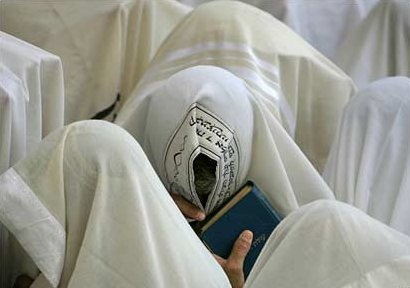 This is the bitter pill Messianic Judaism swallows in its desire to consider the other Judaisms us, not them. Here is where Derek Leman and the other Jews in Messiah walk a difficult line, embracing a vision of Messiah that has long been associated with Christianity while attempting to refactor it through the lens of Hebrew thinking, scripture, and commentary as wholly Jewish.
Repeatedly, Derek said that the evidence indicates Yeshua-worship in the first century CE was an entirely new and unanticipated concept and activity for any branch of Judaism. The Jewish disciples must have been startled at the sudden inception of a Divine Messiah. They scarcely could have believed in a Messiah that could actually be God. It must have been far easier for the Greeks to adopt this notion, and no wonder so many Jews could not accept it.
Christianity has long assumed that the Jewish “offense of the cross” was Jesus as God, but my studies have often shown me that it was Gentile inclusion in the ekklesia as equal co-participants that was the main reason so many other Jewish sects rejected “the Way.” Could another reason for the early rift between the Jesus-believing Jews and all of their brethren also have been the unprecedented worship of the God-Messiah?
Read Derek’s book and see where his arguments take you.
 Morning Meditations