
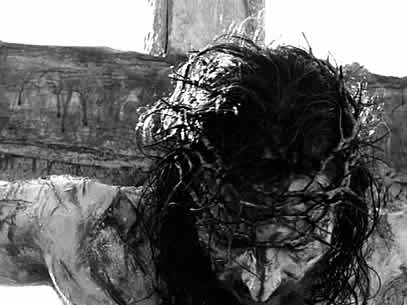
 I am hoping you will be able to resolve a very important issue confronting the very foundation of Christianity.
God’s way of testing Abraham by calling for the sacrifice of Isaac…and then the abrupt staying of the knife…was intended to demonstrate that God abhorred human sacrifice and would not accept it (Gen 22.12). When the great central Law of Judaism (the TORAH) was revealed at Sinai, it called for animal sacrifices. The slaying of an animal and the offering of its blood according to certain prescribed rites, symbolized God’s mercy to the sinner, for this would have been his fate. Later in the Law, Moses gives warning to Israel not to worship God in the manner of the pagans (through human sacrifice) for it is an abomination unto the LORD in any way or form it is practiced (Deut 12.30-32).
Turning to the New Testament, Jesus states that he completely upholds the precepts of the Judaic Law until its complete spiritual enactment through-out the world. This great authorization of the central Law of Judaism renders it supreme (Matt 5.18). Nevertheless, here is where a trouble-some contradiction arises. According to Romans 5.6-11, Jesus’ death was a vicarious atonement. But this is a human sacrifice which is expressly forbidden by the very same Law sanctioned by Jesus.
True, Jesus is unique in being both human and Divine. But by sanctioning the Law He did not allow His uniqueness to detract from His subjection to the Law which is understandable since the Law is the perfect Word of God.
In sum, if Jesus was upholding the Law then His death cannot be sacrificial. Or, if His death is sacrificial, He has rejected the Law which He claimed to uphold. In either case, Christianity’s central doctrine of the sacrificial death of Jesus is proven to be scripturally untenable. Christianity is therefore in peril of crumbling away. The stakes are very high. If Christianity succumbs to an inner breakdown, the moral order in the world will soon follow….
This contradiction can only be satisfactorily resolved by reference to Scripture. Scripture is a single, self-consistent truth, but beginning to end. Each verse urges its own truth. When two verses appear to exhibit incompatible claims, a contradiction develops. We must then attempt to resolve this contradiction by reference to another verse(s) which will reconcile the two opposing viewpoints…
When reconciliation is not forthcoming, the contradiction remains and the verse(s) in question are not Divinely revealed facts, but have been spoken by the prophet out of his own authority…
The defensibility of Jesus’ sacrificial death has been troubling me for a long while. I am unable to resolve it according to Scripture. I would be very grateful to you if you could clear it up for me…
Quoted from christianthinktank.com
Have you ever been asked a question you were so sure you knew the answer to that you never even worried about it, and then, when you tried to answer the question, realized you didn’t really know how to respond?
That happened to me yesterday afternoon. Let me explain.
On most Thursdays after work, I meet with a couple of other guys for coffee and discussion. There’s no set agenda, but we usually talk about matters of faith and questions that come up in the Bible that sometimes drive us crazy. We are all reasonably comfortable questioning the traditional Christian assumptions and our coffee meetings give us an opportunity to ask questions we could never ask in church.
I commute to and from work with my son David. On Thursdays I usually drop him off at his place, then go to the coffee shop for my meeting. Yesterday, my daughter-in-law had an activity planned with some female friends at their place and asked if David and I could hang out together. I asked him if he wanted to join my meeting and he said, “OK.”
David was the first of my children to develop a sense of spirituality. When he was little, he went to church with my wife’s brother Steve whenever Steve was visiting from the Bay Area. After David went to church with Steve, he’d ask my wife and me why the rest of us didn’t go to church and believe in Jesus (this was years before my wife and I became religious). That was kind of awkward.
 Somewhere between childhood and adulthood, David set his faith aside but it’s always been on the back burner, so to speak. Thursday allowed him to revisit old territory and to ask some of those questions that would drive most Christians nuts.
The four of us were having a fairly stimulating conversation when the question of human sacrifice came up. David sees the death of Jesus on the cross to atone for the sins of the world as a direct violation of the commandment not to sacrifice a human being.
So here we are, three guys from different backgrounds but who all have the same fundamental belief in Christ as Messiah and Savior trying to address this question.
I shot off my big mouth first.
Understand, that this is a very troubling question with no simple answer. Also understand that one of the reasons that I am attracted to Jewish mysticism and particularly the Chassidim, is because I don’t think that there is any other way to explain certain things about the Messiah, including his bloody, sacrificial death, outside of a deeply mystic framework.
Just how can a human sacrifice, even that of the Messiah, atone for the sins of the world? What’s the mechanism that makes it possible and that doesn’t violate God’s prohibition against human sacrifice?
My answer was based on the understanding of the death of a tzaddik being able to atone for the sins of a community or even of an entire generation. Of course, my answer was founded entirely on the Chassidic mystic understanding of this process; something which most Jews, particularly in modern times, do not agree with.
So where is this explained in the Bible?
My friend Russ offered David what I would consider the traditional Christian explanation for the sacrifice of Jesus Christ on the cross. As I listened to him answering David, I realized that I didn’t find the Christian viewpoint particularly satisfying. I know that I’ve had this explained to me before at some point, but my memory is a leaky container and a lot of stuff has dribbled away over time, so I don’t remember exactly what was said or when that conversation occurred.
This really bothered me.
The conversation ended with more questions than answers, which is fairly typical for our little group, but where was David now? He continues to focus on the Torah and the Prophets as the foundation of his understanding about God and the Jewish people, though I’m sure he would benefit from a review of his knowledge base, but the New Testament seems to him like so many exceptions and contradictions to his understanding of Torah. On the drive back to my place, David and I continued our conversation, and I decided to encourage David to start where he is. If the Torah and Judaism are the rock on which he now stands, then I will support him returning to and exploring the cornerstone of his faith.
But it still bothered me that not only could I not give a satisfactory answer to his questions about Jesus, but I couldn’t really answer my own questions. I can’t solely rely on the “mystic” explanation for how a tzaddik’s death provides atonement, and assuming the traditional Christian response to this query is also lacking, then what is the answer?
I don’t know.
I know that faith is sometimes the mortar that fills in the spaces in religious understanding, but I’m uncomfortable with it being the putty that replaces solid Biblical knowledge let alone logic.
OK, I know that logic is the beginning of wisdom and not its conclusion and that once we accept the existence of God, we also must accept the supernatural, but David did bring up what seems to be a huge disconnect between the Tanakh (Old Testament) and the New Testament in terms of death, atonement, and sacrifice. You’ve probably already clicked the link I provided above and read the christianthinktank.com reply to this question. I did too, but I’m not sure I’m buying it.
Do we see any example of the death of a righteous man providing atonement for the sins of other people in the Tanakh? Was any man in the Old Testament deliberately killed in order to turn away God’s wrath toward other human beings? We talk about men like Joseph, Moses, and David being “types and shadows” of the Messiah. But we don’t see that their deaths really did anything to illuminate the problem of Jesus being a human sacrifice to turn away God’s fatal judgment from all people everywhere across time who accept Christ as Lord and Savior.
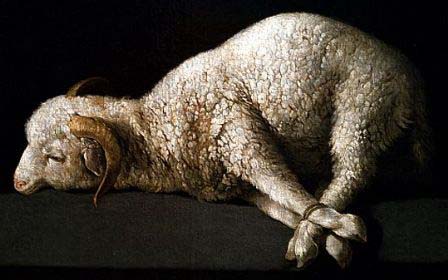 I’m not that smart. Some people think I’m smart. My wife thinks I’m smart (except when she disagrees with me, then I’m not too bright at all *wink*). But it’s not really true. I suppose it’s more accurate to say that in this particular area, I’m not very well-educated. I feel ill-equipped to manage these sorts of questions. On some level, I think that it’s not very easy or maybe even not very possible to use human language and human logic to explain the mysterious, mystical way the death of the Messiah somehow atones for the sins of people.
And yet, that’s all we have to work with. Assuming extra-Biblical and particularly mystical (when my wife learned about this conversation, her response to me was to ask in an incredulous tone, “You talked to him about mysticism?”) sources are not considered valid in this discussion, then we must rely on scripture. But if the Old Testament and New Testament don’t agree that the Messiah must die to atone for sins, then what do we have?
A big, fat, furry mess, that’s what.
So I’m opening up yet another can of worms and throwing this topic out to the public via the Internet. I’m seeking out a greater imagination or at least a more scholarly believer. What’s the answer to how the death of Jesus isn’t human sacrifice? Is there an answer that doesn’t contradict the commandment to not sacrifice people?
The comments section is now open. What do you think?
 Morning Meditations