Tag Archives: prayer

In Your Prayers

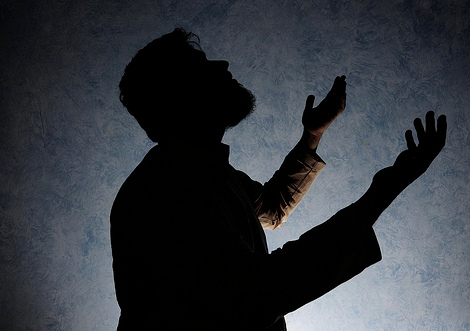
PrayingMoshe was going to die before entering Eretz Yisroel. Yet, his tefillos were answered, and he was given permission to view the holy land, and to see a vision of the land and the history of the Jewish people. When this consent was granted, the verse seems to use a double expression. First, Moshe was told “lift up your eyes”. This directive was followed with the instructions “and see”, which apparently is the obvious purpose of his having lifted up his eyes.

One of the objectives of tefillah is for a person to arrive at an understanding that “the ways of Hashem are correct”, and that everything Hashem does is for the best. This appreciation is realized when one’s prayers are directed toward building a relationship with Hashem, a devotion based upon trust. When a person seeks out Hashem, he arrives at a state of (Tehillim 34:11): “those who seek Hashem will not lack any good.” Finally, through prayer a person achieves the ability “to see – וראה ” and to feel a sense of tranquility and satisfaction in his heart to truly accept all that Hashem does as perfect.

When Moshe ascended to the mountain and looked across at Eretz Yisroel, this might have seemed as if his prayers were not fulfilled, contrary to what the Gemara says. Yet, at this point, Moshe’s degree of perception of the will of Hashem was complete. He now felt totally accepting of the decree for him not to enter the land, and he perceived how this was for the best. He was now satisfied that there could be no better answer to his prayers other than to obey the command for him to remain on the east side of the Jordan, and not to enter the land.

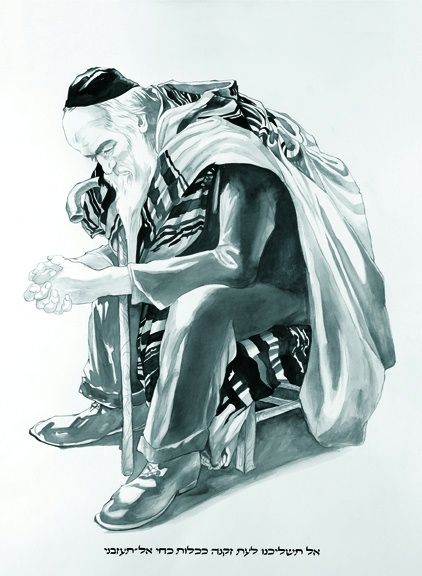
גדולה תפילה שהרי משה נענה … שנאמר עלה ראש הפסגה
“Davening – Lift your eyes and see”
Daf Yomi Digest
Distinctive Insight
Berachos 32

What I’m going to say has been said before, I’m sure. In fact, I’m sure that at some point, I said all this before, too. And yet, to read this “insight” on Berachos 32 and to consider the life and impending death of Moses is just to precious and important not to share.

I can’t even begin to imagine the heartbreak Moses must have experienced at being allowed to view the entire Land of Israel, and yet knowing that instead of being allowed to lead his people into the Land, he was going to die. He was going to have to let Joshua take over his work. Most of all, he was going to have to trust God in a way that he never had before.

Think about it.

All of the times when God was about to wipe out the Children of Israel, Moses was there to intervene on their behalf. When tens of thousands were dying of a plague or poisonous snake bites, Moses prayed. When the Children of Israel were at war and losing a battle, Moses prayed. The Children of Israel survived down to the last man, woman, and child because Moses was there to protect them, even from God.

And now he is looking across the expanse of the Land of promise and he knows that whatever happens after this point, he won’t be there to protect his people anymore.

What a bitter day it must have been for him.

And yet, according to the Midrash, Moses was able to finally arrive at a sort of peace about everything. After all, what choice did he have? But then, what choice to we have?

I’ve talked about trusting God before and I’m sure I mentioned that it isn’t easy. It isn’t easy when you desperately need a job and you are trusting God to provide sufficiently for your family until you find suitable employment. It isn’t easy to watch your wife undergo yet another round of chemotherapy, never knowing what the outcome will be and if the tumors will shrink or grow. It isn’t easy living a life that presents only the illusion of control over every critical detail, and realizing that an invisible and almost always silent God is the one who opens His hand and provides for your every need.

But when Moses looked over the Land of Israel for the first and last time, knowing his lifespan was measured only in minutes, he understood and was “satisfied that there could be no better answer to his prayers other than to obey the command for him to remain on the east side of the Jordan, and not to enter the land.” If only that sense of satisfaction and grace could be experienced by the rest of us.

A person who learns to pray properly can understand what the words of the Chazon Ish in “Emunah Ubitochon”:

“When a person merits becoming aware of the reality of the Almighty’s existence, he will experience limitless joy. His soul is enveloped in sanctity, and it is as though the soul has left the body and floats in the upper Heavens. When a person transcends to this level, an entirely new world is open to him. It is possible for a person to be momentarily like a celestial being, [while at the same time] in this world. All of the pleasures of this world are as nothing compared to the intense pleasure of a person cleaving to his Creator.”

Rabbi Zelig Pliskin
“Cleave to the Almighty in Prayer, Daily Lift #565”
Aish.com

God Finds You

One who raises his voice when he davens is among those of diminished faith.

– Berachos 24b

Raising one’s voice in prayer is considered a demonstration of diminished faith in God. According to Rashi, the reason for this is that the person seems to be showing that he thinks that God will not listen to his prayers if they are spoken softly.

We should not interpret this statement literally. After all, only a fool would think that God only hears prayers at a certain audible level. This is not what the Gemara is discussing. Rather, the Gemara is referring to a person who davens regularly, but he feels that his prayers are not answered. There are two ways of reacting when this happens. One conclusion is to understanding that God, in fact, does respond to prayers, and that He cares about every person and every word directed towards Him. It is just that God has determined to not grant the request at this time, due to His system of perfect justice and due to His mercy.

The other conclusion a person might consider is that God is not listening to him. A person whose prayers are “denied” might feel abandoned, and therefore daven more intensively. A person might then hope that this, in and of itself, was the problem. The raising of one’s voice due to the feeling that God has been ignoring the prayers which were spoken softly is a function of a deficient understanding of God’s willingness to hear prayer.

The lesson of this Gemara is that we must strengthen our trust in God and in the knowledge that He cares about each of our prayers. God is continually monitoring every aspect of our willingness to call to Him, and although the answers to our prayers are not always discernible immediately, nevertheless, God responds in a manner that is always in our best interests. Any misunderstanding of this concept may lead to unnecessary hopelessness.

Daf Yomi Digest
Gemara Gem
“Davening in an audible tone”
Berachos 24

Faith and trust in God. I’ve said many times before, that it’s not easy. As we see in the example above, Judaism recognizes that the heart can grow faint and the will becomes weak when God seems to be silent. So too we Christians can feel that something is amiss with our prayers when God won’t turn to us and help us in our need and anguish. How many times have we felt abandoned and cried out, “Where is God?”

Is this all just a test, then? Is God being deliberately silent just to see how we’ll hold up under pressure. That seems kind of cruel, don’t you think? Is that all life is…a test?

This is why many people refuse to come to faith. It’s not because religion is “irrational” or “absolute” or “superstitious.” It’s because faith means you don’t have control of God.

That seems to also mean you don’t have control over your own life. When we say “God is in control,” we’re admitting that we aren’t. Depending on who you are and how to perceive the implications of that statement, it can be either comforting or horrifying. If you trust God implicitly, knowing that He loves you and desires only good for you, it is ultimately comforting to know that God is in control of the universe, rather than a bunch of capricious, double-minded, self-centered human beings. On the other hand, if self-determination and self-direction are the values you prize above all else, imagining yourself turning over everything to a distant, supernatural (and probably fictional) entity would feel like discovering that the pilot of the airplane you’re travelling in, 36,000 feet above the earth, is a chimpanzee.

You’d have absolutely no control over your fate and your doom would be completely assured, unless you could wrest the controls away from the simian and back into your own “competent” hands.

It is in the dark and empty watches of the night, when the voices are all stilled, and your only companion is your doubt, that who you really are in God is revealed. It is not actually a test anymore than any other challenge or frustrating experience is a test. It’s simply how life works. Some days are better than others and you feel the closeness of God as He seems to walk with you during every waking moment. Some nights are worse than others and it seems as if God is long gone from this mortal sphere, and you have been cruelly abandoned.

And even then, unless your faith and trust is totally exhausted and you walk away from God as you believe He has walked away from you, you still search the night for Him. You look for God in your dreams. You seek Him out in your fears. You hope He’ll appear with the dawn. You call out His name in a whisper.

If we were truly humble, we would not be forever searching higher paths on the mountaintops. We would look in the simple places, in the practical things that need to be done.

True, these are places in a world of falsehood. If the world only had a little more light, none of this would be necessary.

But the soul that knows its place knows that the great and lofty G‑d is not found at the summit of mountains, but in the simple act of lending a hand or a comforting word in a world of falsehood and delusions.

-Rabbi Tzvi Freeman
“The Path of the Humble”
Based on letters and talks of the Rebbe
Rabbi M. M. Schneerson
Chabad.org

And then you find Him when you are completely distracted by the needs of others. You find God in the simple acts of kindness you do every day. You discover your Maker in your gifts to the poor, or the smile on a grateful face. God finds you when you aren’t even looking for Him.


Why Do We Fall Down?

FallingFor after I fell, I have arisen… –Michah 7:8

The Midrash comments: “Had I not fallen, I would not have arisen,” and so indicates that some heights are not attainable without an antecedent fall.

Obviously, no one designs a fall in the hope that it may lead to a greater elevation. Michah’s message, however, is that if a person should suffer a reversal, he or she should not despair, because it may be a necessary prelude to achieving a higher level than would have been possible otherwise.

We can find many analogies to this concept. When we swing a pickaxe, we first lower it behind ourselves in order to deliver a blow with maximum force. Runners often back up behind the starting line to get a “running start.” In many things, starting from a “minus” position provides a momentum that would otherwise not be attainable.

When things are going well, most people let well enough alone. The result? Mediocrity has become acceptable. Changing might involve some risk, and even if we could achieve greater things, we might not wish to take a chance when things are proceeding quite satisfactorily. However, when we are in an intolerable situation, we are compelled to do something, and this impetus may bring about creativity and progress.

We even see this concept in the account of creation in Genesis. First there was darkness, then came light.

Today I shall…

realize that a reversal may be the seed of future growth, and I must never despair.

-Rabbi Abraham J. Twerski
“Growing Each Day, Av 24”
Aish.com

If you’re a movie goer, this piece of advice may sound very close to another slice of “conventional wisdom.” uttered by actor Michael Caine:

Why do we fall sir? So we might learn to pick ourselves up.

Batman Begins (2005)

In yesterday’s meditation, I talked about the value of prayer as a conversation with a very special “traveling companion.” Our relationship with God, once we become aware that there is a God and that He wants us to relate to him, is no simple matter. But then, what do you expect from having daily interactions with the infinite, unknowable, radical One God?

But relationships with other people and even with ourselves aren’t particularly easy, either. A life of faith can be a struggle. We take on board beliefs and a trust in our Creator that not only does the world fail to comprehend, but that we ourselves often puzzle over.

It can be very disheartening, hence the need to continually relate to God.

But like I said, it’s not just about “me and Jesus.” It’s much more than that.

Spend time thinking about the virtues of other people. Not merely as a passing thought – but try to feel pleasure in thinking of their virtues.

-Rabbi Reuven Dov Dessler
Tnuas Hamussar, vol.5, p.180;
see Rabbi Pliskin’s “Gateway to Happiness,” p.103
Aish.com

What does considering and celebrating the virtues of others have to do with learning to get up again once we’ve fallen down?

Plenty.

A tradition handed down from Rebbe to Rebbe: During the well-known conflict (between chassidim and their opponents) the chassidim told the Alter Rebbe about the terrible abuse they suffered from the plain misnagdic folk. The Rebbe said: Grandfather (as he called the Baal Shem Tov) deeply loved simple folk. In my first days in Mezritch, the Rebbe, (the Maggid) said: “It was a frequent customary remark of the Rebbe (Baal Shem Tov) that love of Israel is love of G-d. “You are children of Hashem your G-d”; when one loves the father one loves the children.

“Today’s Day”
Wednesday, Menachem Av 24, 5703
Compiled by the Lubavitcher Rebbe
Translated by Yitschak Meir Kagan
Chabad.org

I’ve said before that not only is it impossible to truly love God without loving people, but that loving God, loving others, and taking care of yourself are all wrapped up into one big package. It comes full circle in helping us to realize that God intensely, completely loves us…all of us. Our deep responsibility to help others is only a reflection of God’s desire to care for and to love us.

Whenever we fall, whether due to disease, injury, or most commonly, emotional and spiritual discouragement, we depend on God to help lift us up again. Often, that help comes in the form of another human being. So it stands to reason that when we see someone else who has fallen, we should unreservedly strive to help that person stand back up again.

You may believe that God doesn’t answer your prayers when you need Him to the most. On the other hand, maybe God’s “agent” for that answer simply hasn’t arrived yet. The other side of the coin is that when you have the opportunity to help someone out, please be timely, because God sent you to be the answer to their prayers.

Why do other people fall down? So that we can do God’s will in helping them back up.

Conversations With My Companion

Question: I spent quite a bit of time praying for someone who was very ill. Many people came together to pray for this person yet she unfortunately passed away. How can we say then that a prayer is never unanswered? Obviously in this case and in many others the prayers of so many people have not been answered. How can we have absolute faith in G-d if He doesn’t spare the life of someone who so many prayed for? I understand that belief in G-d is fundamental to our religion but I just wish to understand this. I have also heard many answers before. For example G-d does everything for a reason and one can’t see the whole picture. I was wondering if you had a different answer as this one doesn’t fully answer my question.

Answer: The first thing to understand is that prayer – no matter how sincere and intense – can never be guaranteed to produce results. Think about it: if all prayers were rewarded, wouldn’t that make us gods, and God nothing more than our slave? Think about this, too: are we really so sure that we know enough of the universe’s workings to be sure that what we’re asking for is really the very best thing for everyone? Isn’t it wiser to place ourselves in God’s gentle and powerful hands; to rely on His judgment?

This, in effect, is what King David’s general, Yoav, was saying on the eve of a very dangerous battle (II Samuel, 10:12) with the words: “Be strong and sure for our people and for the cities of the Lord our God, and the Lord will do what is best in His eyes.” So what then is the purpose of prayer?

-Rabbi Boruch Clinton
from “Belief in G-d and Unanswered Prayers”
JewishAnswers.org

Good question and one that doesn’t offer an easy answer. Some people don’t find an answer at all, and the result is that they leave the faith.

You pray. You pray with all your heart, with all your devotion, with all your love of God, and yet it seems as if your prayers are not answered. The illness is not healed. The loved one is not spared a painful death. Grief and disappointment enter your heart, your soul, your very being. Where is God?

I can’t peer behind the veil of Heaven and give you the answer. This is a question both the faithful and the faithless have been asking ever since man first became aware of a Holy God. Where is God during a flood that leaves millions homeless? Where is God when cancer ravages a once vital and robust person, reducing her to a faded skeleton with skin of parchment? Where is God when I need Him the most? I prayed that she would be healed and recover completely, but instead, she died.

There are any number of books written by Pastors and Rabbis, who are far more learned and wiser than I am, who try to answer these questions. I suppose that’s why I quote from the ancient sages and the modern clergy when I write my “meditations.” I find them just as inspiring and illuminating as the others in their audience. I draw strength and courage from their insights into God, and through what they teach, I try to gain a better understanding of the scriptures, of God, and of myself.

But where is God when disaster strikes the world, strikes communities, families, and individuals, and grips the human heart with terror? And not understanding the answer, why then do we continue to pray to a God who does not seem to answer us when we beg and plead for mercy?

The Talmud says that a Jew is obligated to pray, based upon Deuteronomy 11:13: “serve Him with all your thoughts — Livavchem — and with all your soul.” Livavchem is a form of the Hebrew word Leiv, which is most often translated as the heart. In the Torah, however, we find that the first appearance of Leiv is Genesis 6:5 “Machshavos Libo” — thoughts of his Leiv (see also Proverbs 19:21). We do the same thing in English, referring to a person with a “warm heart,” while in reality we know thoughts are in the head. Be that as it may, the service of G-d in Deuteronomy 11, service “with all your heart,” is found in our thoughts. The Sages of the Talmud say that this is prayer, Tefilah.

The word Tefila deserves further examination as well, because although we commonly translate it as prayer, the origin of the word is the root Palel, meaning to judge or decide (see Ex. 21:22). Jewish prayer, in fact, is a form of reflection and self-judgment. In the reflexive form, the verb L’hispalel, “to pray,” actually means to judge one’s self.

Prayer is better understood as a service of the Al-mighty that takes place in our thoughts, which involves judging ourselves, making decisions, before G-d. We make judgments and decisions many times each day. The obligation to pray asks us to involve G-d in our thoughts and in the decisions we make. Formal prayer remains necessary, for it trains us to turn to Him periodically throughout the day — but the training should lead us to turn to Him whenever we need clarity and help, far beyond the synagogue. (Heard from Rabbi Jonathan Rietti)

G-d loves us, and He asks us to love Him back. Sometimes more precious than hearing “I love you” is hearing “I was thinking about you.” The more He’s on our mind, the closer we come to Him. Also, let’s not forget that He’s the ultimate source of all goodness. He pulls the strings infinitely more effectively than any other resource in our network of friends or associates. Shouldn’t such a personal contact take priority over all others?

-Rabbi Mordechai Dixler
“Your Best Contact”
Commentary on Torah Portion Ekev
ProjectGenesis.org

I don’t know if that’s a good enough answer for you. I don’t know that it’s a good enough answer for me. I do know, or at least believe, that prayer is not a simple ask and answer transaction. As Rabbi Clinton suggests, God is not the genie of the lamp and we are not Aladdin. It’s not a matter of rubbing an ancient illumination device, summoning the all-powerful being that resides within, and simply directing him to give us what we want, when we want it, in the way we want it. If this were so, then we all would be little “gods” running around commanding this all-powerful force to do our bidding, changing the world around us as our wants, needs, and desires saw fit.

Obviously, such is not the case. There is the will of God and as such, His will is not to be denied, even when we face our darkest hour. The Son of Man knew this most poignant and overarching lesson:

He parted from them a distance of slinging a stone and got down on his knees and prayed, saying, “My Father, if only you were willing to make this cup pass from me! Yet let it not be according to my will but according to your will.” An angel from Heaven appeared to him and strengthened him. Then the bonds of death came upon him and he continued to pray fervently. –Luke 22:41-44 (DHE Gospels)

Jesus prayed that God release him from the sentence of a painful, agonizing, humiliating, and ultimately unmerited death; a death in which the Son of Man would be separated from the Father in Heaven, perhaps for the first time since he was born to Miriam.

And yet he said, “let it not be according to my will but according to your will.” The result was that “the bonds of death came upon him.” I believe you know what series of events followed. Jesus prayed. He was comforted. He struggled with the “bonds of death.” He was unjustly tried. He was tortured. He was denied by one of his closest friends. He was humiliated. He was nailed to a tree. He suffered horribly. He was mocked while in agony. The Father (seemingly) abandoned him. And then finally, he died.

And not only he, but his disciples, his closest companions, were utterly disheartened and crushed.

Where was God?

The story has a “happy ending” which Christians celebrate every year at Easter but that “happy ending” is provisional, since we still live in a broken world where people pray, suffer, and die every day.

Where is God?

Why do we bother to pray?

Because, as Rabbi Dixler says, prayer is more about our relationship with God than what God will or won’t do for us. It’s about facing trials and suffering and knowing that the hurt may only end in death, but still knowing that God is our companion in all of that. Faith in God through Jesus Christ comes with a certain promise attached.

This is my mitzvah: that you love one another as I have loved you. There is no love greater than the love of one who gives his life on behalf of his companions. As for you, if you do what I command you, you are my companions. I will no longer call you servants, for the servant does not know what his master will do. But I said you are my companions because I have made it known to you all that I have heard from my Father. –John 15:12-15 (DHE Gospels)

In the past few weeks, I’ve written a great deal about love. Prayer is an act of self-sacrifice. In religious Judaism, prayer substitutes for the sacrifices Jews would make if the Holy Temple currently existed in Jerusalem. The Apostle Paul urged us to offer our bodies as living sacrifices (see Romans 12:1) though not in the literal sense. He referred to himself at the end of his life as being poured out like a drink offering (see Philippians 2:17 and 2 Timothy 4:6). And he urged the church at Philippi:

Let your reasonableness be known to everyone. The Lord is at hand; do not be anxious about anything, but in everything by prayer and supplication with thanksgiving let your requests be made known to God. And the peace of God, which surpasses all understanding, will guard your hearts and your minds in Christ Jesus. –Philippians 4:5-7 (ESV)

Prayer is the act of self-judgment, service to our Master, and turning ourselves inside out to God. It’s totally and willingly revealing of ourselves to Him (not that He doesn’t know us). It’s inviting God into our lives, our hearts, our joys, and our suffering. God isn’t obligated to answer our prayers in the manner we desire, but He has promised to always accompany us on a journey through whatever territory, light or darkness, that we may find ourselves. David’s most famous psalm to the King of Kings included this:

Even though I walk through the valley of the shadow of death, I will fear no evil, for you are with me; your rod and your staff, they comfort me. –Psalm 23:4 (ESV)

David didn’t pray to be spared a journey through “the valley of the shadow of death” (sometimes translated as “the valley of deep darkness”), only that God be his shepherd and that He comfort David.

Jesus promised that we would be more than servants, we would be his companions. The word “companions,” as I previously presented when quoting from John 15:13, is often translated as “friends.” Though we are sometimes in pain and torment, we are never alone, for God is with us. He comforts us, if we will only reach out to Him. We will not always be absolved of pain, but we will never be abandoned.

Rabbi Clinton finishes his answer with this:

The prayer book (Siddur), Psalms and the words various traditional formulations are bursting with valuable lessons about our relationship with God, His compassion and generosity and our own fragile existence. By thinking about these precious words, we are deeply enriching our own faith and expressing our dependence on God – who does, after all – care for us.

Do our prayers have any effect on our suffering friends? Undoubtedly. Perhaps the very act of growing in faith and sensitivity as a result of the prayer process can be considered a significant accomplishment for ones loved one. After all, it was your relationship to him/her which inspired this growth.

There is much more to this subject, but I hope that these words will be of some help to you.

May the God of Abraham always answer your prayers and mine by drawing us close to Him, today and forever. And may we continue to walk and talk with our Master as our traveling companion…and our friend.

Locking Up Meditation

There are three forms of hitbon’nut (contemplation, meditation):

  1. Study-meditation: After mastering the concept thoroughly, one meditates on its profundity, until the intellectual element shines forth for him.
  2. Meditation before davening: This is directed toward sensing the vitality of the concept learned, in contrast to sensing the intellectual element emphasized in study-meditation.
  3. Meditation in davening: To sense the “G-dly element” in the concept learned.

These three are rungs on the ladder of sensitivity. It is only by G-d’s kindness towards us that we may occasionally sense G-dhood spontaneously, without any avoda at all. This comes about by virtue of the quality of Ultimate Essential G-dhood within the soul. For avoda by one’s own efforts, however, these three forms of meditation are essential.

“Today’s Day”
Friday, Tamuz 20, 5703
Torah lessons: Chumash: Pinchas, Shishi with Rashi.
Tehillim: 97-103.
Tanya: Precisely so (p. 357) …or articulation. (p. 357).
Compiled by the Lubavitcher Rebbe; Translated by Yitschak Meir Kagan
Chabad.org

Don’t be discouraged. It’s often the last key in the bunch that opens the lock.

-Author unknown

I always consider meditation to be a quiet, contemplative state. As such, I never enter into it. I know that seems completely contrary to the basic premise of this blog, but I find it very difficult to quiet my mind. About the closest I come to a conscious, meditative state is the four minutes I’m cooling down after an aerobic workout on the elliptical machine. I can close my eyes and imagine my breath going in and out as a frosty, illuminated vapor in the darkness. All I’m trying to achieve though, is to slow my heart rate down as much as I can so that when I get off the machine, it’s not still pounding away at 150+ beats per minute.

I’m not contemplating God.

Even when I do contemplate God, it’s in a sea of static and chaos. It’s difficult or impossible to enter into a space where it’s just Him and me. Frankly, I don’t know if I even want to enter into that space. God is big and scary and I’m not even sure how guys like Abraham and Moses could stand being in His presence for even one split second. The God that created the Universe and everything in it isn’t some comfortable cosmic teddy bear that you can just walk up to and then sit in His lap.

Most days, I have a really good idea what I want to blog about, but not today. I pretty much burned off all my passion in yesterday’s meditation. Today, I’m emotionally drained. Wiped out. I know it probably doesn’t look this way from the outside, but some of these mediations take a lot of energy to write.

I just saw a photo of me (thankfully, I’m way in the background) in some promotional material for where I work. Everyone else looks fresh and young and happy. I look really old and fat and worn out. While I’ve got all this dynamic energy that sparks up in most of my “morning mediations,” today I feel like that picture (believe me, you don’t want to see it). I have this horrible feeling that’s how I look all the time.

I’m kind of reminded of the character Happy Hogan who first appeared in the comic book Tales of Suspense #45 (September 1963) with Iron Man. Marvel comics has “handsomed him up” quite a bit since those days, but back then, he was created for comic relief (along with Tony Stark’s then “mousy” secretary Pepper Potts). Happy rescued Tony from a race car crash and as a reward, Tony gave the out-of-work boxer a job as his chauffeur and personal assistant. Happy was always looking completely glum and “hang-dog”. Tony commented on it early in their relationship and asked if he was depressed. Happy’s response was something like, “Nah, I look like this all the time.”

I think I look like this all the time. OK, so I’ve never been a really attractive person, but I think this is more than age and carrying around a bunch of extra tonnage. I think I get tired of fighting God or fighting life or are they both the same thing? Problem is, that sort of fight is unavoidable. You only stop fighting when you die. Until then, it seems like it’s one battle after another, hammering away at something or being hammered at by something.

I try to imagine what it would be like to not fight. To relax. To set aside responsibility and duty, not just for a few minutes, or an hour, or when I’m asleep, but to really relax. Don’t say “vacation” because vacations are anything but relaxing. In fact, they’re harder work than going to work. Besides, even the most relaxing vacation in the world has to end sometime.

Paul spoke of “the peace of God, which surpasses all understanding” (Philippians 4:7) but I haven’t found it yet. I suspect I never will.

My “morning meditations” are really more like “morning encounters” or “morning contemplations” or even “morning conflicts”. I sleep. Wake up. Drink coffee. Go to the gym with my son. Eat breakfast. Take a shower. Go to work. Somewhere in the rest of the day, the next morning’s meditation gets written depending on my available time and what I’m thinking about. I eat dinner. Go to sleep. And the cycle starts all over again.

If someone has this lovey-dovey, floating on clouds, easy-peasy relationship with God and faith that keeps them in a semi-divine state as they slowly sail through each day, I’d like to know about it. I’m probably not a good candidate for such a state, even if it exists, but sometimes, as fluffy as it all sounds, I think I’d like a piece of it.

We are representatives of Above. And as such, live two lives at once:

We are free-thinking, independent beings.

And we are no more than messengers of Above.

It is a play of opposites in a single being. An impossibility realized in true-life drama. Just the sort of thing in which the Impossible One Above delights.

-Rabbi Tzvi Freeman
“Representatives”
Based on letters and talks of the Rebbe
Rabbi M. M. Schneerson
Chabad.org

Rabbi Freeman presents an idealized view of the thoughts and expressions of the Rebbe and thus of the Chabad, but I know there’s a reality behind Crown Heights in Brooklyn that isn’t anywhere near as pretty. That’s not to say anything against the Chabad as such, but to acknowledge that humans are humans and we can make a mess of things on the inside, even if the outside looks good.

My insides and my outsides seem to look the same, that is rather threadbare and lumpy. All the religious and motivational stuff on the web often seems empty to me because all of that “feel good” material seems so phony and unrealistic. Life is a struggle. You fight hard every day. You can only hope that food and sleep will rejuvenate you enough to face another day just like the one that came before. Somewhere in there, God is present, but who knows exactly where or when or if He’ll make Himself known or intervene in any meaningful way?

Between the “free-thinking, independent being” and the “messenger of Above,” there’s an ordinary (or sometimes I feel, sub-standard) human being who is just trying to stay alive and make sense the events of each passing moment. Making sense of life and contemplating the nature of God doesn’t happen as much as you’d think.

I get tired. Sometimes I don’t know why I’m doing all this. I’ve also just been reminded again of how many Jews see Christians so…gee whiz.

Time for another cup of coffee and then back to work…

..and to try to find that last key that will open the lock to…who knows what?

Speed

Our generation has changed an amazing amount from earlier generations. In earlier times the only people who ate quickly were bandits or people in an unusual rush for one reason or another. Nowadays, we are in the era of “fast” foods. Mealtime is not nearly as formal as it once was for the vast majority of people.

Not surprisingly, when someone first learns the halachos on today’s amud he gets a big surprise. “One who leaves one domain needs to recite a new blessing?” he wonders. “What if I have something in my mouth and as I am running I leave the first domain? Do I have to remove it from my mouth and make a new blessing?”

When someone asked a similar question to Rav Chaim Kanievsky, shlit”a, he ruled decisively. “Even a child who has a candy in his mouth and rushes out of the domain where he made the blessing must take it out of his mouth and make another.”

On a different occasion, Rav Chaim confided that such a case had actually happened to him. “When I was a child the Chazon Ish once noticed that I rushed out of the house with a candy in my mouth. When I came back in—with the candy still ensconced in my mouth—the Chazon Ish called me over to him. He explained the halachah of changing domain. ‘You need to take the candy out of your mouth and make a new berachah every time you leave a domain,’ the Chazon Ish explained.”

Mishna Berura Yomi Digest
Stories to Share
“Fast Foods”
Siman 178 Seif 1

First of all, I don’t do this. Secondly, I’m not telling you to do this. That’s not my point. My point is the speed at which time or rather, the events of our lives rush past us. It’s like standing on a commuter platform waiting for the train that will take you to work to stop, only to watch is pass by just inches from your nose at 70 miles per hour.

What the heck just happened?

Yes, we live in a streaming video, microwave dinner, high-speed Internet world where everything we want and need (or think we do) is delivered super-duper fast, and if it isn’t we want to know why.

I’ll try to keep this short since I’m sure this has all been said many times before and I’ll just sound like some old duffer longing for “the good ol’ days.”

Did God design us to run at such a high-speed? Are we supposed to rush around from this event to that from birth to death, never stopping to figure out what we’re supposed to be doing in-between?

I’m just like you. I wake up too early, hit the gym for an hour, wolf breakfast down my throat, speed off to work, often working through lunch, hit the road for the evening commute, grab dinner while reading the news on the web, write or edit something, pick up or drop off someone somewhere, maybe watch a little mindless entertainment, flop in bed, get too little sleep, start all over again.

The Digging with Darren blog just retweeted (on twitter) an older topic called Daily Disciples of a Disciple which in which the “tweet” contained the words, “Does your schedule make room for discipleship?”

What’s important to you? What will you slow down for so you can take your time, pay attention, and truly experience the moment?

I mean besides TV, video, gaming, or similar activities.

While the various Rabbinic rulings and judgments take a lot of harsh abuse in Christianity and sometimes in Messianic Judaism, in some cases, I can see the point of the Sages. It may seem rather tedious and unnecessary to recite a new blessing when you leave one domain for another, but even if you choose not to do so, it teaches a lesson. If you had to slow down between point A and point B, what would you pay attention to? Would slowing down for a few seconds carry its own value? Would you have a few moments to remember God and maybe even talk to Him?