

Disclaimer: I want to state for the record that this blog post is about as politically incorrect as you can get, so if you’re easily offended, don’t read it. Remember, you have been warned.
Tony Campolo and Shane Claiborne recently published an op-ed piece in the New York Times titled, “The Evangelicalism of Old White Men Is Dead.” They write that evangelicalism (or at least its reputation) is a “casualty” of the recent presidential election. They believe it is time to bury evangelicalism and replace it with a more authentic expression of Christian faith.
-Shayne Looper
“Red Letter Christianity” And The Bible
The Huffington Post
If the recent presidential election proves anything, it’s that we — as individuals, organizations and a country — need to evolve the tech industry’s approach to diversity and inclusion.
-Nichole Burton and Aubrey Blanche
Why white men are diversity’s missing stakeholders
TechCrunch.com
In the days that followed Donald Trump’s election victory, liberal assessments about what went wrong and prescriptions for how the Left can move forward were in short supply. There were, however, exceptions. Notable among those was Mark Lilla’s piece in the New York Times ten days after Hillary Clinton’s loss describing the need to bring about an end to the “age of identity liberalism.”
-Noah Rothman
The Left’s Toxic Identity Obsession
Commentary Magazine
As Donald Trump’s inauguration day rapidly approaches, the news media continues to scramble for some understanding of what went wrong, as in “How could Hillary Clinton have possibly lost to Donald Trump?” kind of wrong.
Their answer, and I’m grossly simplifying it here to make a point, is “White Men Bad!”
More specifically, the Huff Post article states in part:
Campolo and Claiborne regard the fact that 80 percent of white evangelical Christians voted for Mr. Trump as evidence that evangelicalism has been poisoned by self-interest. Its reputation “has been clouded over.”

Actually, I find the statement hilarious. Does Shayne Looper imagine for one split second that everyone who voted for Clinton wasn’t voting out of self-interest? Everyone voted for the candidate they thought would best represent their interests, or at least they voted for the candidate they found less objectionable (and some people were so revolted by the both of them, they voted for neither).
But to that point, Looper goes on:
How, they wonder, could people who take Jesus seriously ever vote for a man whose campaign was marked by “racism, sexism, xenophobia,” and “hypocrisy”?
From Shayne’s point of view, the problem isn’t just white men, but white, male Evangelical Christians. I’m not a huge fan of Evangelical Christianity, in part because it really can be rigid about doctrine and the whole “God, guns, and guts” routine, but they’re Americans too, and they have the right to vote for the candidate of their choice.
I do agree with Shayne that we have to take the Bible as a holistic, unified document rather than emphasize some areas (such as putting everything Jesus said in red letters) and de-emphasizing or completely disregarding others (and it should be said that Jesus was almost universally teaching Jews, not Gentile Christians…if Christians want to understand their own theology better, they need to read Paul).
The “solution,” from Looper’s point of view, is to replace Evangelical Christianity with a more universal form that presents as more compassionate, charitable, and inclusive (my words, not his).
This is somewhat different from the solution proposed by Nichole Burton and Aubrey Blanche at TechCrunch, who believe that instead of ejecting white men in favor of something different, they should be recruited as “allies”.
The Silicon Valley tech community is about as liberal and progressive as you can get, but they’re still struggling with their own “diversity crisis,” probably because like a number of other professions, it’s been historically dominated by white males.
According to Burton and Blanche:
In the election, the majority of white people voted for Trump, whose campaign was characterized by division rather than inclusion. And white men voted for the president-elect by at least a 10 percent margin over other groups.
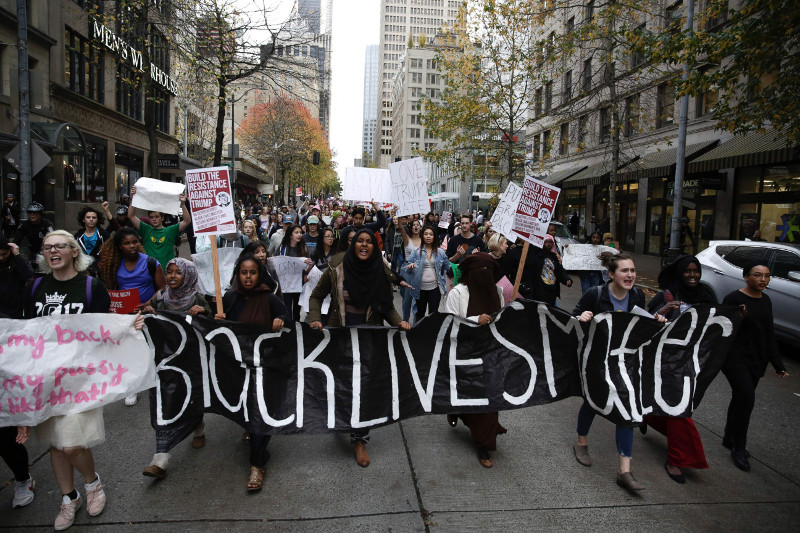
I also found this statement hilariously funny, not because it isn’t true, but because it describes the Obama Presidency to a “T”. Racial and ethnic relations have reached (or so it seems to me) an all-time low in the eight years since Barack and Michelle first walked into the White House.
But they go on:
White men (and other allies) must learn how to be inclusive and use their own privilege constructively. All of us are capable of prejudice and biased behavior, but changing it is more difficult the further a person is from being the subject of discrimination.
I have to be thankful that Burton and Blanche at least acknowledge that it’s possible for people besides white males to be “capable of prejudice and biased behavior,” but of course, it’s worse when whites do it.
They do want to extend a carrot instead of a stick by creating “safe spaces” for “unconverted” whites to hear minority points of view, and to use whites who are already allies to invite non-ally whites into the fold.
So the Huff Post writer wants to trash can Evangelical Christianity for a version that would be more likely to vote for Clinton, while the TechCrunch writers want to solve the same problem by recruiting conservative white males into progressivism as allies, people who also would be more likely to vote for Clinton.
However, according to Noah Rothman at Commentary, the left has a problem:
Notable among those was Mark Lilla’s piece in the New York Times ten days after Hillary Clinton’s loss describing the need to bring about an end to the “age of identity liberalism.” Lilla’s case in favor of a “pre-identity liberalism” is a convincing one, but he doesn’t propose a method to bring about a return to this providential status quo ante. There’s a reason for that: there isn’t one—at least, not an easy one. Political movements are not party committees. They don’t radically redefine their mission at the drop of a white paper. The modern activist left was reared on toxic identity politics, and it seems disinclined to abandon this addictive poison without a struggle.

The idea here is that modern liberalism is hardly united. It’s been fractured into multiple units, some running in parallel to others while some are actually standing in opposition to particular liberal factions.
They have no central rallying point, and thus, no specific focus other than #NotMyPresident.
Rothman goes on:
Take, for example, the so-called “Women’s March” that will descend on Washington D.C. to protest the inauguration of Donald Trump on January 21. The masses gathered in opposition to Trump will create the appearance of unity, but a closer examination of the coalition united by their antipathy for the incoming administration paints a portrait of a movement at war with itself.
The Women’s March will be short at least one formerly eager participant who told the New York Times she canceled her trip to Washington D.C. after reading a volunteer organizer’s Facebook post who “advised ‘white allies’ to listen more and talk less.” The Times noted that racial tensions within the organization extend to the organizational level. A Louisiana coordinator resigned her volunteer role due to a lack of diversity in leadership positions. The decision to change the name of a satellite march based in Nashville yielded to a caustic debate over whether the event had become hostile to white participants.
I read about this in another online venue, and basically what was being said was “white women aren’t victim enough”. I consider this yet another of President Obama’s legacies. Leftist progressives are inhibited from uniting by identity politics. How are they going to accomplish anything if they can’t unify, even over how much they hate Donald Trump?
Google “Democratic party crisis” and the search results will produce quite a number of articles, usually published sometime last November, including this one from Fox News.
They’ve probably recovered from the shock of Clinton losing the election by now, but they’ve got an uphill battle in dealing with a Trump Presidency and a Republican majority in the House and the Senate.
So what does that mean for the rest of us?

If Hillary Clinton had won, then white males who were not self-avowed “allies” would have continued to be relentlessly attacked by the majority liberal left, basically with us being called racist simply because we were born white and male (and we received further demerits if we happened to be Christians or religious Jews). The majority social and political power in the United States would have kept on flattening us with their juggernaut steamroller just as they have for the past eight years.
As the character Howard Beale (Peter Finch) ranted in the film Network (1976) “I’m mad as hell and I’m not going to take it anymore!”
And that’s the real reason Donald Trump won the Presidency. The marginalized rose up against the monolithic system and gave it a taste of its own medicine.
They sure don’t like that taste, not at all.
The result is that in a week, Donald Trump will be sworn in as President of the United States.
I wish that actually meant good things, but every time I hear the man speak, I’m astonished that he managed to build an empire worth billions. At least Clinton could (most of the time) fake being a sane and reasonable human being.
What it really means for us is that instead of a steamroller continuing to mash us flat, the left will either play the victim card hoping we’ll feel guilty enough to succumb to being their allies, or that they’ll put on sheep’s clothing and pretend they don’t think that all white males are “deplorables,” as Clinton declared us, hoping we can be convinced to turn over our free will and self-determination to the collective.
I know all this sounds cynical, and it probably is. Trump isn’t going to help, and in fact, every time he opens his mouth or puts out a tweet, he just pours more gasoline over the inferno.
Because Donald Trump won and Hillary Clinton lost, and because Donald Trump is such as big, white, rich, narcissistic, loudmouth, all white males, and especially conservative and religious white males (along with conservative, religious white woman) will be painted with the same broad brush, and one strategy or another will be employed to either turn us to the “light side of the Force” (in their eyes, not mine) or they will attempt to maintain a “Rebel alliance” which will limp along for the next four years due to factionalized identity politics.
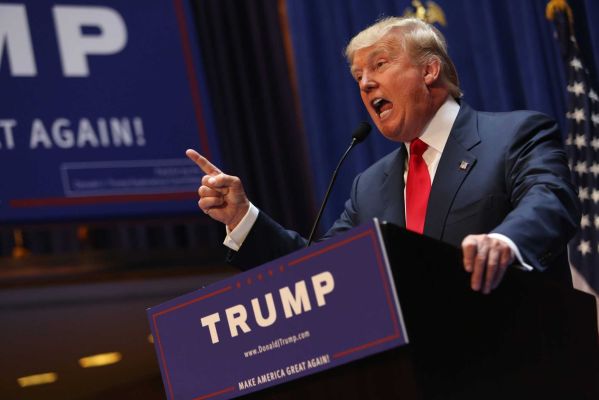
Bottom line is no one is going to have a good time. We’ll all suffer, not only because Trump is a total loose cannon, but the only solution the left has to fix its problem and the problem of white men, is to reframe capitulation as cooperation. They will continue to try to remake us into their drones, and failing that, “demonize” us as the enemy to resist.
May the Messiah come soon and in our day or, continuing my Star Wars references, “Help us Yeshua HaMoshiach, you’re our only hope.”



 Morning Meditations