

A few weeks ago, I wrote Yes, It’s A Pie, But Let Me Explain. It was a response to the meme “Equal Rights For Others Does Not Mean Fewer Rights For You. It’s Not Pie.”
While things like rights and access to opportunities shouldn’t be restricted, they often are based on who is doling out those resources. When some groups say they don’t have as much access to resources as other groups, it’s usually not because the resources or rights are limited so much as the folks doling out said-resources are restricting them.
In my prior article, I compared two very different groups: the LGBTQ+ community and PTSD sufferers. It’s an odd comparison but the month of June is both “Pride Month” and “PTSD Awareness Month.” In observing how each set of events were treated in news and social media and by the government, politicians, celebrities, and corporations, I saw that the former was highly marketed and praised while the latter was all but ignored.
The reason behind that is money. You can make more bank off of promoting goods and services to the LGBTQ community than you can by raising the public’s awareness of people who suffer from PTSD and other anxiety disorders.
It’s not that the real-world rights and opportunities of each group differed in the slightest. It is that the public gave rave reviews, devotion, caring, and attention to the former, but acted like the latter did not exist.
In other words, it’s a pie.
We live in a diverse world. There are differences between people and groups everywhere and there probably always has been, at least since humanity started forming its first societies.
This blog started out way back when as my personal exploration of faith as seen through the lens of Messianic Judaism. But as many have pointed out, Messianic Judaism is “messy.” The religious identity wars once fought with such vigor seem to have died out. This is in large part I suspect, to the fact that people stopped fighting them.
That includes me. I finally got tired of trying to shoehorn my way into a space that wasn’t designed for me, so I opted out. It’s a long story, but now whatever faith life I have, especially since my Mom died and I’m not taking her to church anymore, rests solely between me and the Almighty. My battle for religious identity in Messianic Judaism stopped when I stopped trying to be a part of Messianic Jewish space (it’s more complicated than that, but I’ve already written a lot of blog posts about it).
That was pretty easy in an ultimate sense. It’s not like there are any reminders in my day-to-day life. I’m not involved with anyone “Messianic” in my real-world existence. Since I don’t go to church anymore, I don’t even see normative Christians within a worship context.
But it’s harder to isolate yourself from identity and belonging conflicts along every other possible area or encounter, which is the reason I’m writing today’s missive.
Unless you’ve been living under a rock, you’ve probably heard of the current Israel-Gaza War. While Hamas started the war on October 7th, currently, Israel and the Jewish people are once again “the bad guys.” Instead of backing down in the face of “world opinion” as they have so many times before, Israel is seeing the war to the end.
Many organizations including Amnesty International are calling for a ceasefire while ignoring the fact that Hamas still is holding civilian hostages and will only release them in exchange for convicted terrorists.
This has spawned a terrific upsurge in antisemitism around the world. You can read all about it HERE, HERE, HERE, and HERE.
During a Congressional hearing, several educators from institutions such as MIT, the University of Pennsylvania, and Harvard testified about whether or not anti-Israel protests calling for violence against Jews or even Jewish genocide violated the practices and standards of each school. The educators including Harvard President Claudine Gay said it “depended on the context.”
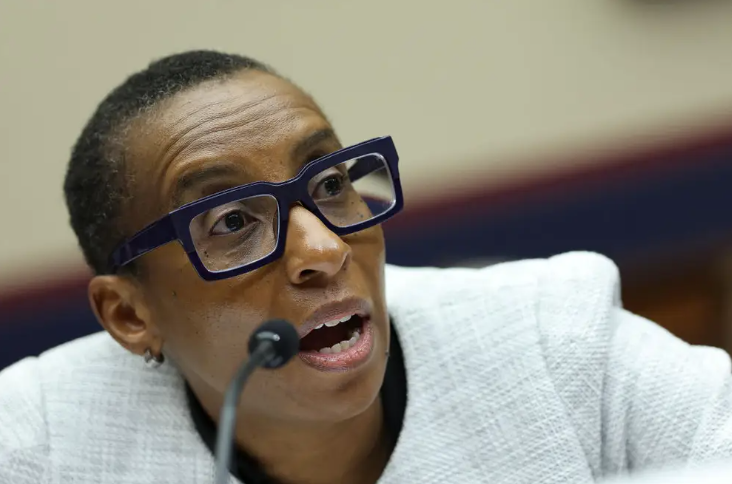
Kevin Dietsch/Getty Images
Two of these school administrators either were dismissed or resigned, but Gay has been defended by Harvard and retained in her position. She even had the nerve to show up at a Chanukah menorah lighting ceremony.
One example of a response comes from Texas governor Greg Abbott who warned state universities that no advocacy of Jewish genocide or antisemitism is to be tolerated. Well, it’s a beginning.
The Jewish people have been treated as the “them” relative to “us” for over three-thousand years, so this is hardly new. However things are accelerating in a very difficult direction.
Illinois NAACP President Teresa Haley recently complained that immigrants in Chicago are “rapists” and “savages.” Threatened with calls to resign, she has since apologized.
You may have heard that Boston Mayor Michelle Wu has come under fire for holding a holiday celebration for the city’s council members which excluded the white council members.
Actually, this particular meeting had been going on for over a decade and the big issue was that the “invitation” was sent out to the white council members as well and had to be rescinded. There’s a long history of people with similar characteristics, backgrounds, or interests to have meetings just for their groups. There are plenty of student groups on many campuses for LGBTQ students, Latin students, Black students, and so forth.
That said if I were a white member on the Boston city council, I’d be a little concerned that my non-white coworkers needed a special “safe gathering” because they considered me, as a white, “unsafe.” I mean, we probably worked together for a long time and see each other regularly. If I’m that “unsafe,” how do they come to work each day?
The beat goes on.
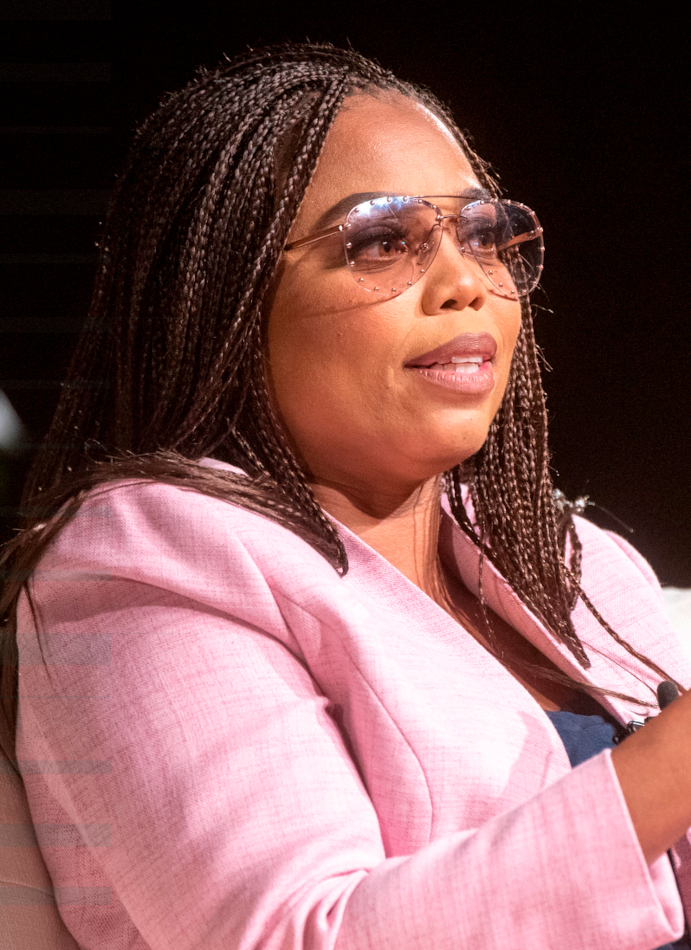
ESPN sportswriter Jemele Hill has complained about Oklahoma governor Kevin Stitt issuing an executive order to stop funding diversity, equity, and inclusion (DEI) programs at state universities.
A Virginia court has revived a lawsuit by a teacher who was fired for not using a student’s preferred pronouns. The teacher’s suit was summarily thrown out, but the Supreme Court unanimously voted that it be reinstated:
“Absent a truly compelling reason for doing so, no government committed to these principles can lawfully coerce its citizens into pledging verbal allegiance to ideological views that violate their sincerely held religious beliefs,”
On the flip side, a Nonbinary Teacher Sued Florida After Getting Fired for Using Gender-Neutral Honorific ‘Mx’.
They (the teacher) said:
“As a human being living in America, I demand to be treated with fairness and equity at work.”
It boils down to the teacher using the gender-neutral honorific “Mx” in their email signature. Yes, it does seem petty.
I know it’s not supposed to be a pie, but all of this sure makes it seem as if resources, attention, preferential treatment, privilege and the like are all “pie.”
Nobody seems to believe that they’re getting their fair share of the pie.
For every holiday party for non-whites, there’s a DEI program defunded. For every “promoting Jewish genocide depends on context,” there’s a “don’t you dare promote antisemitism on your campuses.”
And let’s not forget a black NAACP president calling Latin immigrants rapists and savages.
We are nothing if not our differences, and it doesn’t matter if those differences occur in government, higher education, or in advocacy groups…or religious groups.
One of my instructors many years ago said, “Everyone is unique but no one is special.”
But everyone or at least every group wants to be treated as special, and moreover, that they are THE special group, the ones who should get the biggest piece of the pie.
When I was in high school in the very early 1970s, I imagined a future where all of our conflicts would be resolved and people would peacefully work and live together. I didn’t think that our differences would vanish, but that our differences would contribute to a better collective whole than if we were isolated from one another.
Kind of like the Star Trek philosophy of the IDIC, although even that has been explained as, while being infinite, still also being restrictive and exclusive.
It hasn’t turned out that way, and in fact, it’s going in the opposite direction. All of these differences are being magnified and then isolated from the larger group of humanity.
Maybe that’s the answer, at least for the time being. If you’re not around the people you are in conflict with, there is no conflict. That’s not always easy. I can opt out of Messianic Judaism as a face-to-face and virtual community, but I have to live in the real world with real people.
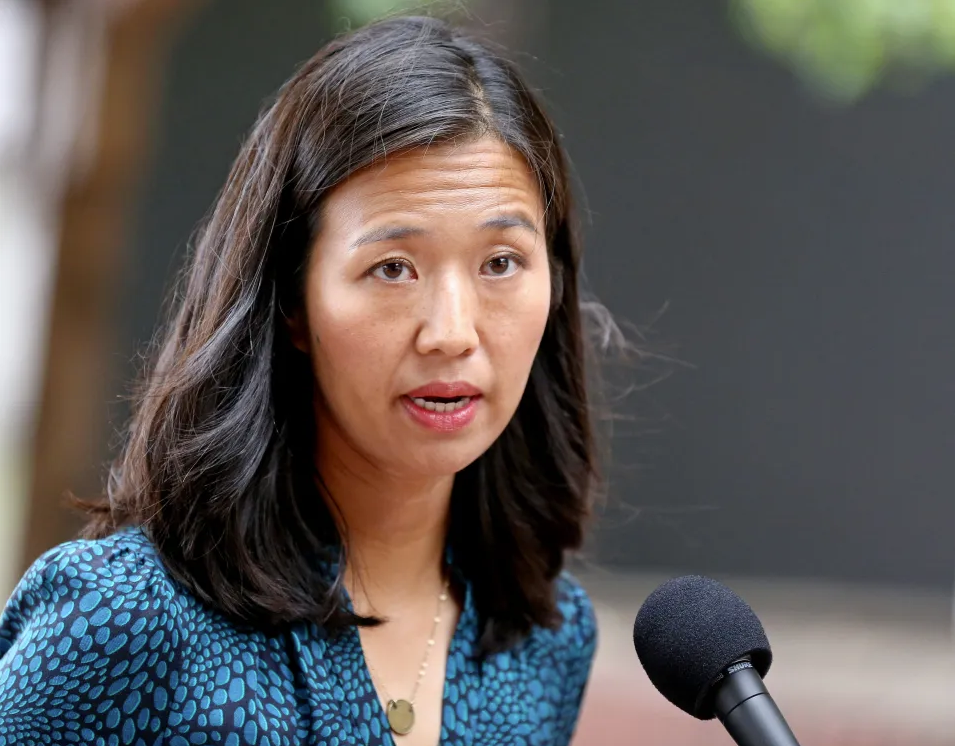
If I were on Mayor Wu’s city council, would I have to resign so that my fellow council members of color wouldn’t feel threatened by my “whiteness?”
Unless I permanently lived and worked at home and had everything I needed delivered to my door, I couldn’t avoid people entirely, so that’s out.
If I wanted to visit Boston as a tourist, I’m sure my tourist dollars would spend just fine, but given recent events, would I feel welcome or comfortable there?
I know it sounds crazy, but remember the Canadian government issued a travel advisory to its LGTBQ citizens about going to the state of Texas.
The same with some trans people and their families raising money to flee Florida and Texas for sanctuaries such as Illinois.
I guess pie is where you find it, but you have to leave or avoid places that won’t give you pie.
I don’t think there’s enough pie for everyone right now. I think there will be, but it is a hard sell. It’s also going to come from a source that not a lot of people would currently accept.
That will be the final chapter in the “pie” series.
 Morning Meditations
I’m sensing some confusion, here, between “rights”, which are not a finite zero-sum resource, and — are limited and must be apportioned like slices of a pie. I suppose that occurs because some folks think that their rights include control of resources, neglecting the difference between rights and privileges.
But I suppose that musing can wait for another installment of this “pie” series. Let me ask a question about a different comment from this essay, about religious community affiliation. You mentioned withdrawal from both “Messianic Jewish” venues and Christian church venues. The latter, I presume, was unsupportive of the wholistic biblical perspective you developed in seeking a place within the MJ environment and its exploration of deeper and more accurate biblical understandings than are available within traditional Christian doctrines. The MJ environment, on the other hand, is still trying to figure out its place within the Jewish covenantal framework and doesn’t really know how to deal properly with non-Jewish associates like yourself. It hasn’t figured out how the model of Isaiah 56 can be implemented alongside the standard Jewish Torah covenant that applies only to Jews — even in its new or renewed Jer.31 image — in a bicameral ecclesial commonwealth (not to be confused with 2H theology). Apparently you yourself are too weary of the struggle to gather like minded folks into a community of enlightened non-Jewish disciples of the ancient Israeli rabbi haRav Yeshua ben-Yosef who can interface with a Jewish community for common celebrations. I can understand that. At our grandfatherly age, it is common to find it difficult to summon the energy needed for such struggles. It took a burning bush, after all, to summon the 80-year-old Moshe back to Egypt and energize him for another 40 years of public leadership. I can’t say I know what to recommend other than to avoid the trap of reclusive withdrawal. I can say that it’s not just us who are tempted to “forsake the assembling yourselves together”. A number of folks and organizations have still not recovered fully from the isolation induced by the covid pandemic and its aftermath. Enthusiasm about getting together was dampened and hasn’t rekindled. One may muse about the Hanukah miracle and what it says about the need for rededication, personally and corporately. I’m wrestling with it, too. Here in Israel, of course, the overt warfare has even more disruptive effects. When it is over — may HaShem grant that victory soon — the question of rededicating many aspects of what once was normal life will require serious effort. With the upcoming 2024 elections in the USA, you may find some parallels to consider.
But as I look back at the stream of consciousness in my last long run-on paragraph, I think I should stop here.
Yes, “stream of consciousness.” To summarize, since Messianic Judaism is still finding its way within larger Judaism, the easiest thing for them and me is for me to step out of the way. Probably the best hope for Gentiles like me who are “messianic-aware” is to look to the Apostle Paul who advocated for the inclusion of the Gentiles into the community of God. Even in the first century CE in the Messianic Jewish community, the inclusion of Gentiles was hotly debated. The irony is that normative Christianity thinks they own the whole thing.
Hi, James –
I attempted to post a comment, but it didn’t appear after I was required to log in afresh. I had copied its text, thankfully, so I tried again. But the button to post it was grayed out, so maybe the post was pending somewhere and no inputs were being accepted meanwhile.
But just in case it has been somehow discarded, I’ll send along the following copy directly, for your consideration if not for forum discussion:
I’m sensing some confusion, here, between “rights”, which are not a finite zero-sum resource, and resources — which are limited and must be apportioned like slices of a pie. I suppose that occurs because some folks think that their rights include control of resources, neglecting the difference between rights and privileges.
But I suppose that musing can wait for another installment of this “pie” series. Let me ask a question about a different comment from this essay, about religious community affiliation. You mentioned withdrawal from both “Messianic Jewish” venues and Christian church venues. The latter, I presume, was unsupportive of the wholistic biblical perspective you developed in seeking a place within the MJ environment and its exploration of deeper and more accurate biblical understandings than are available within traditional Christian doctrines. The MJ environment, on the other hand, is still trying to figure out its place within the Jewish covenantal framework and doesn’t really know how to deal properly with non-Jewish associates like yourself. It hasn’t figured out how the model of Isaiah 56 can be implemented alongside the standard Jewish Torah covenant that applies only to Jews — even in its new or renewed Jer.31 image — in a bicameral ecclesial commonwealth (not to be confused with 2H theology). Apparently you yourself are too weary of the struggle to gather like minded folks into a community of enlightened non-Jewish disciples of the ancient Israeli rabbi haRav Yeshua ben-Yosef who can interface with a Jewish community for common celebrations. I can understand that. At our grandfatherly age, it is common to find it difficult to summon the energy needed for such struggles. It took a burning bush, after all, to summon the 80-year-old Moshe back to Egypt and energize him for another 40 years of public leadership. I can’t say I know what to recommend other than to avoid the trap of reclusive withdrawal. I can say that it’s not just us who are tempted to “forsake the assembling of yourselves together”. A number of folks and organizations have still not recovered fully from the isolation induced by the covid pandemic and its aftermath. Enthusiasm about getting together was dampened and hasn’t rekindled. One may muse about the Hanukah miracle and what it says about the need for rededication, personally and corporately. I’m wrestling with it, too. Here in Israel, of course, the overt warfare has even more disruptive effects. When it is over — may HaShem grant that victory soon — the question of rededicating many aspects of what once was normal life will require serious effort. With the upcoming 2024 elections in the USA, you may find some parallels to consider.
But as I look back at the stream of consciousness in my last long run-on paragraph, I think I should stop here.
I’m sensing some confusion, here, between “rights”, which are not a finite zero-sum resource, and resources — which are limited and must be apportioned like slices of a pie. I suppose that occurs because some folks think that their rights include control of resources, neglecting the difference between rights and privileges.
But I suppose that musing can wait for another installment of this “pie” series. Let me ask a question about a different comment from this essay, about religious community affiliation. You mentioned withdrawal from both “Messianic Jewish” venues and Christian church venues. The latter, I presume, was unsupportive of the wholistic biblical perspective you developed in seeking a place within the MJ environment and its exploration of deeper and more accurate biblical understandings than are available within traditional Christian doctrines. The MJ environment, on the other hand, is still trying to figure out its place within the Jewish covenantal framework and doesn’t really know how to deal properly with non-Jewish associates like yourself. It hasn’t figured out how the model of Isaiah 56 can be implemented alongside the standard Jewish Torah covenant that applies only to Jews — even in its new or renewed Jer.31 image — in a bicameral ecclesial commonwealth (not to be confused with 2H theology). Apparently you yourself are too weary of the struggle to gather like minded folks into a community of enlightened non-Jewish disciples of the ancient Israeli rabbi haRav Yeshua ben-Yosef who can interface with a Jewish community for common celebrations. I can understand that. At our grandfatherly age, it is common to find it difficult to summon the energy needed for such struggles. It took a burning bush, after all, to summon the 80-year-old Moshe back to Egypt and energize him for another 40 years of public leadership. I can’t say I know what to recommend other than to avoid the trap of reclusive withdrawal. I can say that it’s not just us who are tempted to “forsake the assembling of yourselves together”. A number of folks and organizations have still not recovered fully from the isolation induced by the covid pandemic and its aftermath. Enthusiasm about getting together was dampened and hasn’t rekindled. One may muse about the Hanukah miracle and what it says about the need for rededication, personally and corporately. I’m wrestling with it, too. Here in Israel, of course, the overt warfare has even more disruptive effects. When it is over — may HaShem grant that victory soon — the question of rededicating many aspects of what once was normal life will require serious effort. With the upcoming 2024 elections in the USA, you may find some parallels to consider.
But as I look back at the stream of consciousness in my last long run-on paragraph, I think I should stop here.
My condolences on your mother’s passing.
Thank you.