Tag Archives: Christian

Learning to Live

I have been testing the waters, trying to get involved in Judaism. But I feel like I’m swimming in a vast ocean of unfamiliar concepts: Hebrew texts, legal nuances, culture, etc. I’m not sure any of this is for me!

The Aish Rabbi Replies:

There is a misconception that many people have about Judaism, what I call “the all or nothing” syndrome. With 613 mitzvot in the Torah, things can seem a bit overwhelming. People take a look at traditional Judaism with all these different commandments and say to themselves, there’s no way that I can be successful at living that type of lifestyle, so what’s the point of looking into it or getting involved? Where to start? What to focus on? How to make sense of it all?!

That’s not the Jewish way!

Imagine you bump into an old friend and he tells you how miserable he is. You ask him, what’s the matter? He says, I’m in the precious metals industry. My company just found a vein of gold in Brazil that’s going to be worth hundreds of millions of dollars.

You say, that’s fantastic. Your financial problems are solved. What’s the problem?

He says, you just don’t get it. Do you realize that this is just one vein of gold? It represents such a tiny fraction of all of the unmined gold in the world. What do I really have, compared with what’s out there?

You say, are you nuts? Who the heck cares about what you haven’t found yet? What you’ve got now is a gold mine!

That’s the Jewish approach. Any aspect that you learn about, or can incorporate into your life, is a gold mine. What does it matter what aspect of Judaism you’re not ready to take on? In Judaism, every mitzvah is of infinite value. Every mitzvah is more than any gold mine. Don’t worry about what you can’t do. Even if you never take on another mitzvah, you’ve still struck eternal gold.

The best advice: Relax.

“Judaism: All Or Nothing?”
from Ask the Rabbi
Aish.com

Performing mitzvot or “Torah commandments” as such isn’t really the focus of most Christians. And on top of that, what the Rabbi seems to be saying in the above-quoted passage appears to contradict this:

If you really fulfill the royal law according to the Scripture, “You shall love your neighbor as yourself,” you are doing well. But if you show partiality, you are committing sin and are convicted by the law as transgressors. For whoever keeps the whole law but fails in one point has become accountable for all of it. For he who said, “Do not commit adultery,” also said, “Do not murder.” If you do not commit adultery but do murder, you have become a transgressor of the law. –James 2:8-11 (ESV)

According to the traditional interpretation of this passage, to violate one commandment in the law is to violate them all. But since we are all human, sooner or later, we are all going to make a mistake. How could anyone obey all of the laws all of the time?

Christianity’s answer is to replace behavioral obedience to the law with the grace of Jesus Christ and thus, any of our mistakes are forgiven, as long as we repent, turn away from wrongdoing, and return to God.

Of course, if you keep reading James 2, you discover verses 14-17 in which he says that faith without works is dead, so it’s not a matter of doing away with the behaviors that are associated with a life of holiness.

So what is it? If we commit to the law but cannot keep all of it are we perpetually doomed to failure or are we commanded to perpetually try?

The Rabbi isn’t responding to a Christian’s question, though. There are scores of Jewish people who haven’t lived religious lives but who desire to come closer to God, especially in the month of Elul. But as the questioner admits, the number of mitzvot to learn is dizzying and the details associated with proper observance is beyond intimidating. How could anyone not only learn all of the commandments, but additionally, how modern halachah defines proper observance?

The Rabbi has a simple and surprising answer:

The misconception that Judaism is all-or-nothing includes the false idea that a person is either “observant,” or “non-observant.” But that’s not true. In fact, here’s a secret:

Nobody is observing all the mitzvot.

That’s because certain mitzvot only women usually do – like lighting Shabbat candles or going to the mikveh. Other mitzvot only men can fulfill – like Brit Milah. Others only apply to first-born children, such as the “fast of the first-born” on the day before Passover. And only a Kohen can fulfill the mitzvah of reciting the Priestly Blessing.

Actually, it’s not that surprising but then again, I don’t think it adequately answers the original question.

I have an answer of my own. Here’s a story.

Many years ago, I was at my local Reform shul. One of the Jewish members was telling his own story about observance. He had been an atheist for most of his life. He was also an educator and took annual trips to Israel for scholarly purposes. It was on one of those trips that he told a Rabbi that he wanted to live as a religious Jew. Just one problem. It was the same problem the questioner above has. There’s just so much to learn.

Here’s the Rabbi’s answer.

Pick just one mitzvot. It doesn’t matter which one. Let’s say it’s lighting the Shabbos candles. Get a siddur and learn the blessing. Every Erev Shabbat, say the blessing and light the candles. Do nothing else. Keep doing that on every Shabbat until you have learned the mitzvot well and are very comfortable performing it. Once you have achieved that level of competence, pick another mitzvot. It doesn’t matter which one. Learn to perform it until you are comfortable and competent at it. Continue adding mitzvot in this manner. It will take time, but as the months and years past, you will progressively learn to perform a great number of the mitzvot.

I reconstructed all that from memory, so I’m sure it’s not “word-for-word” accurate. But you get the idea.

But what does that have to do with James and with Christians. We don’t obey the mitzvot of Moses. We weren’t called to do so. After all, when Jesus gave his Jewish disciples the “great commission” to make disciples of the people of the nations, here’s what he said:

And Jesus came and said to them, “All authority in heaven and on earth has been given to me. Go therefore and make disciples of all nations, baptizing them in the name of the Father and of the Son and of the Holy Spirit, teaching them to observe all that I have commanded you. And behold, I am with you always, to the end of the age.” –Matthew 28:18-20 (ESV)

Path of TorahNotice what Jesus didn’t say. He didn’t say to teach the disciples from the nations “to observe all that Moses has commanded you.” If Jesus wanted to have the Gentile disciples observe the Torah in an identical manner and for an identical purpose as the Jewish disciples, his message would have been different. It would have been much easier for him to tell the Jewish disciples to convert all Gentiles everywhere into Jews.

Galatians is Paul’s great cautionary tale against Gentile disciples converting to Judaism as a means to be justified before God. He said it would make the bloody, sacrificial death of the Master a waste of time and effort if they did so (see Galatians 2:21).

Paul went on in chapter 3 of his letter to explain that it is by faith and not merely the mechanical observance to the law that we Gentiles received the Spirit. In fact, everyone, Jew and Gentile, received the Spirit by faith, not by the law.

At Sinai, the Israelites agreed to do all that God would tell them to do (at the point when they agreed, the specifics of the Torah had not yet been given). They accepted God’s rule by faith and subsequently, God, through Moses, gave the Israelites the Torah. By faith, we accept Jesus Christ as Lord and Savior and through him, we can come to God in a covenant relationship. But since we Gentiles among the body of believers were not at Sinai as were our Jewish brothers, what do we receive from God?

The Jews have the Spirit, just as we have, but they also have the Torah. Do we have the Torah?

Yes and no.

Naturally, this is just my opinion, but the “Torah” we have isn’t all that dissimilar from that of the Jews (and I know some Jewish and Christian readers may balk at this part). But consider the following.

And one of the scribes came up and heard them disputing with one another, and seeing that he answered them well, asked him, “Which commandment is the most important of all?” Jesus answered, “The most important is, ‘Hear, O Israel: The Lord our God, the Lord is one. And you shall love the Lord your God with all your heart and with all your soul and with all your mind and with all your strength.’ The second is this: ‘You shall love your neighbor as yourself.’ There is no other commandment greater than these.” And the scribe said to him, “You are right, Teacher. You have truly said that he is one, and there is no other besides him. And to love him with all the heart and with all the understanding and with all the strength, and to love one’s neighbor as oneself, is much more than all whole burnt offerings and sacrifices.” And when Jesus saw that he answered wisely, he said to him, “You are not far from the kingdom of God.” And after that no one dared to ask him any more questions. –Mark 12:28-34 (ESV)

I know I tend to revisit this particular scripture with an almost annoying frequency, but it is one of the core teachings of our Master. He emphasizes that we are to love God and love other human beings above all other considerations. The process by which we do so may vary from person to person, but Matthew 25:31-46 gives us a pretty good idea of what Jesus is looking for in how we follow him.

Within myself, I have long since resolved the meaning of what Jesus intended for the disciples of the nations to learn. That’s a personal resolution, and I don’t expect anyone else to particularly agree with my conclusions. On the other hand, we have just a ton of examples of obedience to God as chronicled in the Bible. If you were a new Christian, what would you tackle first? Feeding a hungry person? Going to church every Sunday morning? Praying every night? There’s a lot to consider.

On the other hand, maybe even for we Christians, it’s just as simple as picking one thing, practicing it over and over, and getting good at it. It doesn’t matter what it is. Let’s say it’s praying to God every night before going to bed. Once you’re good at that, you can pick something else. Let’s say it’s donating to a charity. How about collecting canned goods in your home and every month, taking your collection down to the local food bank. Seems simple enough.

There are so many people out there who seem to think that serving God and obeying the mitzvot is this long, complicated, list of actions and behaviors. Maybe it is for them. I know it seems that way when we look at observant Jews. But no one obeys God perfectly or completely. No one performs literally every act of obedience that they can. I’m not suggesting that we should be lazy or to neglect doing what God wants us to do, but we can also give ourselves some time to adjust our lives and learn to be better people, better servants, and better adopted sons and daughters of the Most High God.

For Jews, the month of Elul is a time to prepare for the High Holidays and particularly for the day of judgment. It’s a time of deep spiritual introspection, repentance, and study. Jews renew old friendships, repair broken relationships, and perform many acts of kindness and charity. Maybe it’s a good month for the rest of us, the Gentile disciples of the Jewish Messiah King, to reconsider our own lives, to see where we have gotten things right and where we’ve fallen down face first in the mud.

If your life of faith has become cumbersome, complicated, and even overwhelming, maybe it’s time to step back and see what’s really important to do, and what you could set aside. Just decide what God thinks is important, maybe volunteering to visit sick people in the hospital, for example. Then arrange to do that (or something like that). Keep performing that mitzvot regularly. Learn to get good at it. Love God. Serve His purposes. Help other people.

If you do that, the rest will probably take care of itself.

Learn to live.

Does the Messiah Wait for Us?

As much as a Jew may wrestle to separate himself from his G‑d and his people, the undercurrent of indignation remains endemic to his Jewish psyche, a gnawing conviction that the world is not the way it should be. The Jew aches with expectation, and blatantly demands that the world act according to the beauty it inherently contains.

Yes, there is a way the world is supposed to be. Inherently beautiful, it feigns ugliness; fathomless in wisdom, it acts stupid; like the creation of a master craftsmen brutally dismantled, its parts scattered across a dirt floor; as a philharmonic orchestra tuning up, fragmented into a nightmare of chaos and discord, holding its audience in tortured anticipation.

But we are not the audience; we are the musicians. The instruments are in our hands, such devices to unite humankind as we have never held before; tools to obsolesce ignorance, hunger and need, to plunge the depths of our universe’s wisdom, to know its oneness, the oneness of its Creator.

Do we await a human messiah?

-Rabbi Tzvi Freeman
“Do the Jewish People Still Expect a Messiah?”
from the “Chassidic Thought” series
Chabad.org

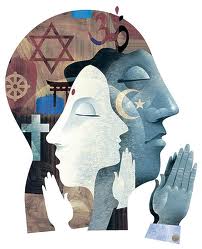
It’s no secret that Christians and Jews have radically different perceptions of the Messiah. For a Jew, the Messiah is a King, fully human, someone born of human (Jewish) parents, a latter-day Moses. For Christians, the Messiah is the Son of God, supernatural, both man and God. Ultimately Divine.

It doesn’t sound like we’re talking about the same guy, does it?

Actually, a recent book written by noted Talmud scholar Daniel Boyarin, describes how it is possible for the Jesus of the New Testament to have been perceived by his Jewish contemporaries as both Messiah King and Son of God, though from Boyarin’s point of view, their understanding of his identity was fatally flawed (some have said the same thing about Boyarin’s “The Jewish Gospels”).

If it were just a matter of the difference between how the church and the synagogue viewed the identity the Messiah, I suppose the distinctions would be clear and the conclusion would be that Christians and Jews will never agree on who the Messiah is or his role in the redemption of both Israel and the world.

But then there are Jews who accept Jesus as the Jewish Messiah King, but with an “appearance,” if you will, that is distinctly more “Jewish” than most Christians would feel comfortable with. It is in “Messianic Judaism” that we see the intersection between the New Testament Jesus and the Jewish Moshiach. It’s not easy making these two guys live together. Heck. It’s not easy even getting them to sit down together in the same room for ten minutes at a time.

Why is that?

A lot of how we understand Jesus/Messiah has been crafted post-Second Temple period and probably the picture we have today has been painted a lot more recently than that. I’m neither a Bible scholar nor a historian, so I can’t comment on any of those details, but it occurs to me (and I’m sure it has occurred to many others) that the Jesus who walked and talked with Peter, Matthew, and John looked, sounded, and acted quite a bit differently than most people in the church would imagine. He also didn’t really fit the mold of how the Messiah is conceived of among Jewish people today (hence the dissonance). He certainly didn’t (at that time) fulfill all of the Messianic prophecies that should have resulted in him restoring self-rule to Israel rather than letting the Romans virtually level Jerusalem some forty years after his death and resurrection.

So where do we go to get a picture of the “objective Jesus;” the person of Jesus as he really was when he walked among his people, as he taught by the lakes, and as he related parables in the Temple courts?

I’m tempted to say, “the Gospels,” but obviously it’s not that easy, otherwise we’d all have the same, identical image of Jesus and it would be the image John, Peter and the others had of him, too.

This is hardly the first time I’ve written on such a topic. Consider In Search of the Jewish Voice of Jesus, A Christian Seeking Messiah ben David, and The Sacrifice at Golgotha as just a few examples of my previous missives.

So where do we find Jesus the Jew?

That’s a tough one. He isn’t as clearly defined as we’d like to believe, especially in terms of his expectations for his Jewish and Gentile disciples. Did he expect us to all conform to a “One Torah” model, or were there distinctions between groups relative to the mitzvot? There’s no consensus. The debate rages on.

I suppose commentaries like this don’t really help…or do they?

The Nesivos, in the introduction to his Sefer Nachalas Yaakov, asks how we can say in Birchos HaTorah that Hashem chose us from all the nations, when we know that God went to each nation and offered them the Torah? It was only after the other nations refused the offer did God approach Klal Yisroel to offer us the Torah, and even then it was given to us only because of our declaration, ‫ .נעשה ונשמע‬Why, then, in the brocha do we say that God chose us?

The Nesivos answers by pointing out that there are three differences between the mitzvos given to Klal Yisroel and the seven mitzvos given to the other nations. The first difference is that we fulfill a mitzvah when we study the Torah as opposed to the other nations who do not fulfill a mitzvah when they study the seven Noahide laws. Secondly, we were given the inner dimensions of the Torah and the non-Jews were not. Lastly, we were given the authority to decide halachah according to our understanding, and that becomes binding halachah even in shamayim. Non-Jews do not have that authority even for the mitzvos they keep.

The three Birchos HaTorah correspond to these three features. The first brochah, “‫”אשר קדשנו…לעסוק בדברי תורה‬ emphasizes that we were given the Torah to study. The second brochah refers to the inner dimensions of Torah which can not be understood by man without a spirit from Above. The last brochah, “‫”אשר בחר בנו‬ highlights the fact that only Klal Yisroel was given the Torah to decide issues according to our understanding and even had the other nations agreed to accept the Torah they would not have been granted that authority. It is with this idea in mind that we say, “God chose us from all the nations.”

Commentary on Berachos 11b

I asked my friend Gene the following question on his blog:

Obviously, this viewpoint doesn’t take the validity of Jewish and Gentile faith in Jesus (Yeshua) as Messiah into account. I have two questions that are related to the “three differences.” First, if we believe that Jews, according to midrash, fulfill a mitzvah when they study Torah, is this not true when Christians (non-Jews who are disciples of the Jewish Messiah King) study the Bible (New Testament and/or full Bible)? Second, if Jews were given the authority to decide halachah as it applies to them, do not Christians have the same sort of autonomy in deciding whatever “halachah” applies to us based on our understanding of the teachings of Jesus?

You can go to his blog to read the entire transaction between us, but basically he said, “That’s a tough one.” Remember though, that our belief in Jesus as the one, true Messiah and the authority he was given by the Father makes all the difference in the world.

But how was all this supposed to work originally and what does it mean to us now? My best guess is, in the days of Paul, the non-Jewish disciples had a much closer image and conceptualization of the Jewish Messiah as transmitted to them by the Apostle to the Gentiles. Their “observance” of the mitzvot may have more closely approximated what was halachah for the normative Judaism of the day because new disciples tend to imitate their mentors and teachers. They just don’t know any better way of learning than to do what their shepherds and guides are doing.

But all that was lost in the ensuing split between Christianity and Judaism and our mission today is one of rediscovery. Publications such as the DHE Gospels and particularly Tsvi Sadan’s landmark The Concealed Light peer into the shadows of antiquity and illuminate the man who both Jewish and Gentile disciples called “Master” and “King”.

But if we can’t even agree among the Jewish and non-Jewish body of believers who Jesus was and is and what he expects us all to do, how can we unite as brothers and sisters in the faith and do the will of our Master? If it were just a matter of bearing good fruit and choosing to love, there wouldn’t be much of a problem.

But wait! Why does it have to be a problem?

What have we forgotten about what Jesus taught? What were his most important lessons? How to tie tzitzit and lay tefillin? The proper order of service in the synagogue?

No.

His most important Torah mitzvot were these:

But when the Pharisees heard that he had silenced the Sadducees, they gathered together. And one of them, a lawyer, asked him a question to test him. “Teacher, which is the great commandment in the Law?” And he said to him, “You shall love the Lord your God with all your heart and with all your soul and with all your mind. This is the great and first commandment. And a second is like it: You shall love your neighbor as yourself. On these two commandments depend all the Law and the Prophets.” –Matthew 22:34-40 (ESV)

A new commandment I give to you, that you love one another: just as I have loved you, you also are to love one another. –John 13:34 (ESV)

Why do I continually repeat these specific teachings of the Master? Because these are the Torah commandments of the Messiah we consistently fail to obey.

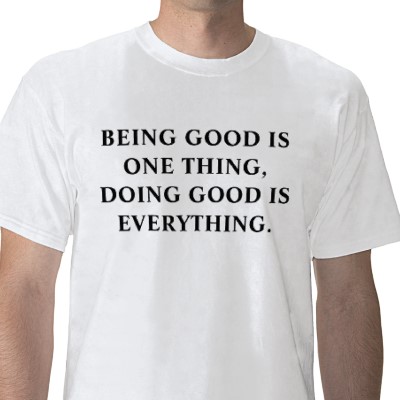
I know, it’s shocking. We can spend all day every day at our computer keyboards ripping apart the minutiae of specific Bible verses down to the level of Greek and Hebrew translations and citing the experts and authorities who we believe support our various theories, but how many of us actually step away from our PCs and Macs long enough to donate even a single can of soup to our local foodbank or to mow the lawn of the aged couple who live across the street?

Who is the true Jewish Jesus and what does he want of us? He wants us to stop blogging long enough to actually do good and to show love to the least of his little ones. We know that Christians and Jews are waiting for the Messiah. But is he also waiting for us?

Man On A String

interfaithFortunately, sociologist Steven M. Cohen has awakened me from my bloggy slumber with a post on Rosner’s Domain, a blog on L.A.’s Jewish Journal. Journalist/blogger Shmuel Rosner (who updates his blog just a wee bit more than I do) asks sociologist Steven M. Cohen, “Are you biased against intermarried Jews?” In essence, Cohen’s reply is that he has no problem with intermarried Jews, just with intermarriage.

-Julie Wiener
“Some Of My Best Friends Are Inmarried”
from the In the Mix series
The Jewish Week

I’ve missed Julie’s blogs. As an intermarried Christian husband to a Jewish wife, I have a sort of affinity with her favorite topic. On the other hand, even for an intermarried couple, my wife and I are very strange. We don’t fit anyone’s idea of intermarried, mainly because my wife’s parents were intermarried (her mother was Jewish) and she wasn’t raised in a Jewish household.

In a blog post called Being Married to the Girl with the Jewish Soul, I’ve mentioned how I feel about my wife, about her being Jewish, and about my absolute need for her to embrace her Judaism. If you haven’t read it yet, please do so before continuing here. It’ll provide a lot of context and dimension for what I’m going to say next.

Being intermarried is not bed of roses but it’s not exactly a bed of thorns, either. It does define a demarcation point between my wife and I on certain topics, but for the most part, our marriage is just like a lot of other marriages in the U.S. We’ve been married thirty years as of last April. We have three adult children. One of my sons is married and has a three-year old son of his own (my grandson, playmate, and fellow Spider-Man fan).

Another thing that makes our particular intermarriage unusual is my background in the Messianic Jewish/Hebrew Roots movement. As a blogger, I’m remain actively involved in that realm, but only because I tend to write on Jewish and Christian themes. My wife intermittently attends shul and I don’t attend a church or congregation of any kind (long story). We both have our faiths but except for brief moments of passionate interaction on some point, they have lives of their own and rarely show up in the same room. I started this blog fifteen months ago, in part to chronicle what I imagined would be my introduction into her religious world.

When that didn’t happen, I kept on writing because that’s just what I do. I write.

Back to why I’m writing this though. As I was reading Julie’s latest blog, I started thinking about my marriage and how it seems to mirror the larger dynamic between Christians and Jews in the world. More specifically, there is a significant parallel between how I live every day of my married life and the sort of relationship, call it a vision, I would wish upon the Christians and Jews to attempt to connect and interact within the Messianic space.

There’s a sort of debate going on in certain corners of the blogosphere about the exact interaction between Jews who believe that Jesus is the Messiah and those Christians who are drawn to a more Jewish (or Hebraic) lifestyle and worship template. For years, there’s been a kind of “jockeying for position” among the various groups that reside beneath the Messianic Jewish/Hebrew Roots umbrella regarding whether or not it was Christ’s original intent for non-Jewish disciples to perfectly emulate their Jewish mentors in all things, including a form of “Jewish” identity.

I used to believe that such an emulation should take place and now I don’t. Some people didn’t (and still don’t) appreciate that I changed my mind, let alone my lifestyle.

But here’s the interesting part.

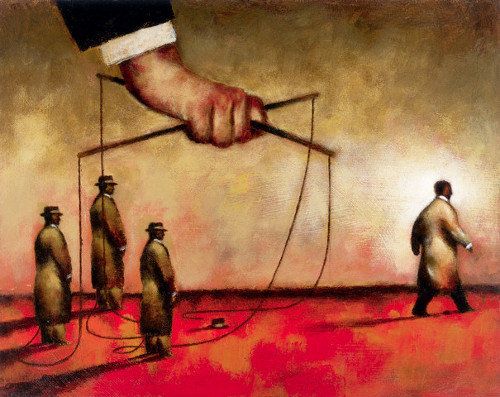
Sometimes, the motives for my change in perspective have been attributed by others to the influence of various individuals and groups in the Messianic Jewish world who advocate for a Jewish/Gentile distinction within Messianism. It was as if I was accused of being a type of Pinocchio to a Messianic Jewish Geppetto; a marionette dancing at the end of someone else’s strings.

I certainly won’t deny that I have been influenced by various folks in the online and real world Messianic community, but that alone probably wouldn’t have been enough to start me investigating the scholarly and Biblical evidence for Jewish and Christian covenant distinction and relationship. After all, organizational position statements and blogosphere commentaries have never changed anyone’s mind about anything.

But I’m married to the girl with the Jewish soul and that made all the difference in the world.

I know I’ve probably explained this before, but I don’t think people understand how important this is to me. I doubt that even my wife understands any of this. Remember in my previous blog post I stressed how vital it is for me to support my wife being Jewish. Obviously, I can’t direct her observance or her lifestyle, but I know how to avoid standing in her way.

In addition to traveling on my own journey of faith, I’ve been watching my wife’s journey. As the months and years passed, I saw just how critical it was and is for her to be part of the Jewish community, to be thought of and treated as a Jew. Every time I picked up a siddur or she “caught” me praying with a tallit and tefillin, I started to feel as if I were stealing from her. It was as if she walked into the room while my hand was in her purse. It was embarrassing and I felt it was pushing us apart rather than bringing us together.

intermarriageNot that she said anything, of course. She always supported me in whatever expression of my faith I chose to observe (though there were times when she was vocal about not understanding it) but I could sense a growing wedge between us. She tried to discourage me from leaving my One Law congregation and I know she didn’t want to influence any of my decisions about what I believed and how I acted upon those beliefs.

Fat chance. How can a husband not let himself be influenced by his wife if he cares about her?

Setting all of those people, those congregations, those organizations aside who have some sort of stake in Messianic worship between Jews and Christians, I’m still a Christian husband married to a Jewish wife. I’m not the perfect husband of course (and my wife reminds me of that periodically), but that doesn’t mean I don’t love my wife and that what’s important to her doesn’t matter to me.

Being Jewish is important to her. Forging a Jewish identity and Jewish relationships for the first time as she’s well into middle-age wasn’t easy for her. She worked very hard to establish her place in the community of Jews. Being married to a non-Jew isn’t a disaster for a Jew, but my being a Christian does throw a monkey wrench into her machine (she’d deny this). My being “Messianic” and performing traditional Jewish acts of worship absolutely threw a pipe bomb into her machine (she’d deny this, too).

My wife is more important to me than whether or not someone on a blog somewhere thinks I should wear a tallit when praying, devote myself to a day of complete rest on Saturday, and try talking to God in a bad approximation of Hebrew (I know some of you are thinking about Matthew 10:34-39, but I don’t think that applies here). That’s why I do what I do and don’t do a bunch other things that other people do.

This next part is important, so pay close attention here! While I agree that Jews continue to have a special covenant relationship with God and unique covenant responsibilities that are not shared by the rest of the world, (including the world of Christians) what really sent me “over the edge” was filtering all that information through the lens of watching my Jewish wife be Jewish. If you’re not a Christian husband married to a Jewish wife, you don’t have my perspective and you are absolutely not going to get the lived experience of my point of view.

But there’s hope. I think I know how to show you what I’m feeling. I’m getting to that part.

Being married to a Jewish wife has allowed me to see Judaism from a singular perspective. I can see how important it is for a Jewish person to be uniquely Jewish and how some Jews struggle when they see others trying to co-opt that uniqueness for their own use. Part of that uniqueness is the way Jews talk, and pray, and worship, and interact, and what they wear sometimes, and lots and lots of other “identity” stuff.

And I don’t want to put my hand in my wife’s “purse” because I love her and I don’t want to take stuff from her.

Please understand that I’m not dancing at the end of some puppeteer’s strings. I’m just a husband who is looking out for his wife. I suppose my methods of doing so seem strange or unusual, but even for an intermarried couple, we can be strange and unusual. She’s not a stereotypical Jew (if there is such a thing) and I certainly am a very odd Christian.

But that’s who I am and who I choose to be and why I’ve made the choices I’ve made. I don’t think these are bad choices and in fact, I think there is a lot to be gained by we Christians coming alongside the Jewish people, even as I am “alongside” my wife, and being co-heirs with Israel, just as my wife and I share our lives together.

I was discussing some of this with my friend Gene on his blog Daily Minyan, and at one point, I made this observation in response to one of his comments:

When I was at the FFOZ Shavuot conference last spring, I met a young Jewish woman named Jordan. She is a gifted scholar and during one of her presentations at the conference, she referred to the Gentiles who supported the spiritual and national redemption of Israel as the crown jewels of the nations. Your comment reminded me of that and the fact that we Gentile disciples of the Master do have a wonderful gift from God, and He has planned out a terrific future for us.

Jordan’s teaching meant a lot to me, not just because it presented such a wonderfully unified vision of a Christian/Jewish “partnership” in the Kingdom of God, but because it so amazingly resonated with how I see my marriage. If I could give everyone reading this blog a gift, it would be to see the relationship between Christianity (that is, all non-Jews who are disciples of Jesus, regardless of denominational or congregational affilation) and Israel the way I see myself and my wife together. If we Jewish and Christian disciples of Jesus could achieve that level of affection and intimacy toward each other, we would be fulfilling the words of the Master.

A new commandment I give to you, that you love one another: just as I have loved you, you also are to love one another. By this all people will know that you are my disciples, if you have love for one another.” –John 13:34-35 (ESV)

Love and peace.

Don’t Give Me Flowers

Dear Rabbi,

I am going to visit my grandmother’s grave and was planning to buy a bunch of her favorite flowers. But I have noticed that Jewish graves are usually flowerless. Is there anything wrong with placing a nice bouquet on her grave?

Answer:

While flowers are a beautiful gift to the living, they mean nothing to the dead. In death, the body which is ephemeral and temporary is gone, and all that remains is that eternal part of the person, their soul. The body, like a flower, blossoms and then fades away, but the soul, like a solid stone, lives on forever.

In the world of truth, the place we all go to after life on earth, what counts is the lasting impact we had on the world. It is the achievements of the soul, not of the body, that remain beyond the grave. The money we make, the holidays we go on, the food we eat and the games we play – these are all flowers that die along with us. But the good deeds we do, the love we show to others, the light we bring into the world, these are eternal.

If you want to honor your grandmother, take the money you would have spent on flowers and give it to charity in her memory. Then take a modest stone that costs you nothing and place it on her grave, to tell her that though she is gone, the impact she had on you is everlasting.

-Rabbi Aron Moss
“Why No Flowers on Jewish Graves?”
Chabad.org

I’m tempted to just leave it at that. I mean, how can I possibly add to such a beautiful sentiment? Rabbi Moss has given us such a perfect answer and pointed us in a direction that honors our deceased loved ones and continues to help the living who are in need.

I’ve said before that the religious blogosphere is replete with debates and discussions where two or more groups “jockey for position” and attempt to establish the “rightness” of their arguments relative to the “wrongness” of someone else’s. I don’t deny that it’s important to dynamically exchange ideas in order to seek truth and establish clarity among the worshipers of God, but that’s not really defines us.

As least I hope not.

We know that what is supposed to define the disciples of Jesus Christ is our love for one another, as he expressed it in his new commandment recorded in John 13:34. As far as I know, I may be one of the few people in the religious blogging space who spends so much time “invoking” this new commandment of the Master’s as both lesson and plea to the body of believers (am I beating a dead horse?).

Last week, on Judah Himango’s blog, I suggested that we both (and anyone else who was game) spend the next week blogging only on uplifting and inspirational topics and leave the “debates and discussions” for another time. I subsequently announced my intent on my own blog and for the past week, I’ve made every effort to avoid writing about controversy and to truly create messages that illustrate the beauty of God and the hearts of those who love Him. I hope I was successful, but that’s for my audience to judge.

It’s not like I’ll never post another uplifting and inspirational “meditation” again, but at the end of this coming Shabbat, the week will be over and I’ll open up the content of my blog to a wider range of topics. This week has taught me a few things. For one thing, two of my “followers” dropped off, so I guess blog posts about God, love, and compassion toward others aren’t for everyone. Activity levels have also dropped off somewhat, so I suppose this sort of theme doesn’t inspire a lot of discussion.

However, I also learned that it’s more difficult to be “dark and moody” when I am focused on crafting a message that must be supportive and uplifting toward anyone who reads it. No debating theological puzzles. No anguishing over personal issues. No staring into the dark abyss of my soul. No controversies. No disputes. No debates. No “us vs. them.” Just following the path created by a God who wants us to love Him by loving other human beings…and by loving ourselves as He loves us.

I thought that dedicating my daily blog posts to a limited theme would be restrictive and in one sense, it was. On the other hand, it was also very liberating. I could put down the weight of defining my theological and spiritual message in terms of what I opposed and was free to rise up out of the mud and seek out a higher purpose. There is no higher purpose than to serve God and to help other people.

It did require though, that I keep my mind more fluid and open to seeing the good in other people, other circumstances, and in everything I encountered.

There is nothing new under the sun. –Ecclesiastes 1:9

America was always there, long before Columbus discovered it. Penicillin killed bacteria long before Fleming discovered it. We could go on to list numerous discoveries which could have benefited mankind long before they came to our attention.

It has been said that when the student is ready, the teacher appears. We can say the same thing about discoveries: they become evident to us when we are ready for them.

Just what constitutes this state of readiness is still a mystery. While technological advances are usually contingent upon earlier progress, many other discoveries were right before our eyes, but we did not see them.

This concept is as true of ideas and concepts in our lives as it is true of scientific discoveries. The truth is out there, but we may fail to see it.

In psychotherapy, a therapist often points out something to a patient numerous times to no avail, until one day, “Eureka!” – a breakthrough. The patient may then complain, “Doctor, I have been coming to you for almost two years. Why did you never point this out to me before?” At this point, many therapists want to tear out their hair.

Just as patients have resistances to insights in psychotherapy, we may also resist awareness of important ideas and concepts in our lives. If we could sweep out these resistances, we could see ourselves with much more clarity. We must try to keep our minds open, particularly to those ideas we may not be too fond of.

Today I shall…

try to keep an open mind so that I may discover ideas that can be advantageous to myself and others.

-Rabbi Abraham J. Twerski
“Growing Each Day, Av 29”
Aish.com

We can think of leaving flowers on the grave of a loved one as something we do more for ourselves than for someone else. After all, Rabbi Moss is right in saying that the flowers mean nothing to the dead. The flowers look beautiful for a day and then fade, wilt, and finally die. Then someone has to come along, pick them up, and toss them in the trash.

In a hundred years, will all the debates and discussions on our “vital issues” in our blogs become dead flowers that have to be thrown in the trash?

But what of our good deeds, our acts of compassion, our expressions of love? Aren’t these the crowns that will last forever?

Everyone who competes in the games goes into strict training. They do it to get a crown that will not last, but we do it to get a crown that will last forever. –1 Corinthians 9:25 (NIV)

Like I said before, it’s not that we shouldn’t discuss, debate, and seek out the truth by placing it in a sort of “blogosphere crucible.” We should just keep our perspective and realize what is really important to people, to our world, and to God. Whoever “wins” a blogosphere debate may get a “crown” but it will not last. Whoever feeds a hungry person, visits a sick friend in the hospital, or comforts a widow in her grief will gain a crown that is eternal.

What Do You Know?

Man, like all creatures . . . possesses both a body and a soul. And just as there are those who are poor in body and bodily needs, so, too, are there paupers in spirit and spiritual needs. Thus, the mitzvah of charity includes both physical charity and spiritual charity. In the words of our sages: “[It is written:] ‘If you see a naked person, you should cover him.’ What is the meaning of this? If you see a person who is naked of the words of Torah, take him into your home, teach him to read the Shema and pray, teach him… and enjoin him regarding the mitzvot….”

Regarding material charity, the law is that the material pauper is also obligated [to give], for even the most impoverished person can find a way to help his fellow pauper. The same applies to spiritual charity. There is no man or woman in Israel who cannot, in some way, influence his or her fellow Jews and bring them closer to the fear of Heaven, the Torah and the mitzvot.

Freely translated excerpt from the very first “public letter” written by the Rebbe
dated Elul 18, 5710 (August 31, 1950)
Printed in Igrot Kodesh vol. 3, pg. 463-4.
As quoted from “A Poor Man’s Gift”
in the “What the Rebbe Taught Me” series
Chabad.org

When I attended my former One Law congregation, it used to bother me a little to teach. Don’t get me wrong, I absolutely loved to teach. I used to craft a lesson the way I write blogs. I’d find inspiration everywhere. I couldn’t read the Bible without getting ideas for future lessons.

But there’s a problem.

I have absolutely no formal educational or vocational background in teaching on Biblical and religious topics. I’m kind of a blockhead that way. I tend to teach as I write; not so much on the nuts and bolts facts, translations, and Greek or Hebrew “wordplay” you see on so many other religious blogs, but on the themes raised by the text and the moral and ethical lessons we can glean from the Word.

It still bothers me to blog for pretty much the same reasons it bothered me to teach. At least now, I’m only representing myself and not a congregation or organization. I don’t have to be worried that what I say and my personal opinions will reflect poorly on others. Now, when I (virtually) shoot off my big mouth, it only reflects poorly (or otherwise) on me.

Well, that’s not absolutely true. As a disciple of Jesus and a worshiper of the God of Abraham, anything I say or do, for good or for ill, reflects upon my Creator. That’s hardly to be taken lightly, but on the other hand, with so many religious bloggers out there, one or two others are probably going to make a few mistakes, too. That’s no excuse of course, but I have to plead that I’m only human. My mistakes are my own, not God’s.

Just in case you were wondering, just how many blogs and bloggers are out there, (I can’t drill down to the specific number of religious blogs, alas) according to nielsen.com, at the end of 2011, there were “over 181 million blogs around the world, up from 36 million only five years earlier.”

Wow!

That’s pretty humbling.

If you’re one of those bloggers and you think your blog is really cool beans, just remember that no matter what you write and how important it is to you, there are almost 200 million other bloggers out there who feel the same way about their messages. Talk about a drop in a bucket.

HumbleThere are a lot of reasons why I continually entertain the thought that I should just quit. Especially after a “bad day” online, I brood a bit and figure I’ll set a date to stop blogging, delete my Facebook and twitter accounts, and let the rest of the world duke it out in cyberspace. I’m sure there are a lot of other things I could do with my time besides blogging a ridiculous amount in the Christian/Jewish/Messianic blogosphere. Besides, it’s not as if my one little online contribution could possibly make any sort of difference in the greater scheme of things.

But remember that I quoted from the Rebbe’s letter at the start of this particular missive.

Often, I use my blog as a platform to encourage and support giving tzedakah in a variety of forms, including material, emotional, and spiritual. But Rabbi Mendel Kalmenson in this commentary presents another idea:

What is often overlooked, however, is the fact that charity not only means feeding empty stomachs, but also includes the nourishing of needy hearts, ignorant minds, misguided spirits, and stagnant souls.

While a now-famous Jewish teaching states, “Whoever saves a life, it is considered as if he saved an entire world,” according to one Talmudic master, “He who teaches Torah to his neighbor’s son is regarded by Scripture as though he created him.”

But wouldn’t that presuppose being a competent Torah teacher? I mean, it’s not like just anyone can teach Torah or, to put it in more “Christian” terms, it’s not like just anybody can be a Bible teacher.

According to our aforementioned commentary, the Rebbe was fond of quoting the following:

“If only you know aleph (the first letter of the Hebrew alphabet) – teach aleph!”

-Old Chassidic Proverb

I suppose that’s sort of like saying, “if you only know the ABCs, teach the ABCs.” But what does that have to do with teaching the Bible or blogging about religious topics, particularly if you are untrained and uneducated?

Herb Brin, a noted author and the editor of four newspapers, met with the Rebbe after becoming editor of the L.A.-based Jewish newspaper Heritage. The private audience lasted six hours. At some point, the following exchange took place:

“Rebbe, I recently became editor of a Jewish publication. The problem is, I know very little about my people and their heritage. Do I have the right to make sensitive editorial judgments as I do not understand Hebrew, my Jewish education was truncated, and I only know fragments of Yiddish?”

Looking him in the eye, the Rebbe said, “Do you have the right to withhold that which you do know?”

OK, that was only a longer and slightly more detailed commentary on what Rabbi Kalmenson said a moment earlier, so not much more was illuminated.

There are actually two problems here. The first is that you should teach only what you are competent to teach. That can be a tough one because human beings are notorious for grossly overestimating what they know and how far their skill sets can take them. The blogosphere is replete with self-appointed “experts” in their fields, particularly when the field is religion, so it would be easy for someone with limited qualifications, or even a reasonably well-educated person, but with a serious ax to grind, to use Rabbi Kalmenson’s lesson as tacit permission to rattle off whatever “teachings” they feel capable of presenting to a spiritually hungry and needy audience.

I can’t speak for all bloggers everywhere, but for my own part, I make every effort to teach and write within the boundaries of my knowledge. I also have a trusted friend or two who, behind the scenes, lets me know when I’ve gone a bit too far.

But what about the second problem?

Say that as a student, I have the right, even the obligation, to teach, to inform, to educate, to share information with those uninformed; but how dare I encourage others when it comes to Jewish observance? How can I promote the practice of a lifestyle that I myself continue to struggle with?

That is an absolutely excellent question, and one that we should all consider when consulting the various blogs out there (including mine) that suggest how to go about living a moral, ethical, and spiritual lifestyle. How can you know if the author is living up to the standards he or she is teaching to others?

The Rebbe had an answer for that one, too.

A college student once approached the Rebbe in the middle of a chassidic gathering to greet him with a l’chaim. The Rebbe turned and asked him if he was involved with encouraging and helping his fellow students to put on tefillin every day.”But Rebbe,” admitted the young man, “I myself don’t put on tefillin every day!”

“Why is that their fault…?” replied the Rebbe, with a smile.

In sum, Judaism teaches that you don’t have to be rich to give to the poor, you don’t have to be a scholar in order to teach the ignorant, and you don’t have to be perfect in order to help others perfect themselves.

That’s absolutely amazing and explains why the poor can give to the poorer or sometimes, even to the rich. You don’t have to be perfect. You don’t have to have a perfect religious or spiritual walk. Granted, I don’t think the Rebbe was suggesting that it’s OK to be a phony, a hypocrite, or a charlatan, but it is OK to be an honest and well-meaning person with a limited skill set and who struggles with their walk of faith and to still teach what they know and what you know to others. I guess on that basis, I’ll continue to blog for a bit longer. You never know what might happen as a result.

What can the poor man give? The answer is, whatever he has. Jesus talked about this too, but he used more concrete terms in his parable.

And he sat down opposite the treasury and watched the people putting money into the offering box. Many rich people put in large sums. And a poor widow came and put in two small copper coins, which make a penny. And he called his disciples to him and said to them, “Truly, I say to you, this poor widow has put in more than all those who are contributing to the offering box. For they all contributed out of their abundance, but she out of her poverty has put in everything she had, all she had to live on.” –Mark 12:41-44 (ESV)

Now imagine that instead of material funds, the Master was talking about what you know, how you encourage, and your example of living out your faith.

What do you have to give? What do I?

When Judgment is an Opportunity

Shortly, it will be Rosh Chodesh Elul (August 18th and 19th), the beginning of the Hebrew month of Elul. This means that there is one month and counting to Rosh Hashanah (Sunday evening, September 16th). Many people might ask, “So, what?” or might think, “Thanks for the reminder to buy a brisket!” However, the answer to “So, what?” is that we have one month to prepare for Rosh Hashanah … and Yom Kippur. Why would one want to prepare for Rosh Hashanah? Rosh Hashanah is the Day of Judgment when the Almighty decides “Life or death, sickness or health, poverty or wealth.” Does it make sense to prepare for a day of judgment?

-Rabbi Kalman Packouz
from Shabbat Shalom Weekly for
Re’eh (Deuteronomy 11:26-16:17) 5772
Aish.com

Good question. Actually, for most Christians, the only “Jewish holiday” most of us are aware of is Passover. The rest of the Jewish religious calendar is something of a mystery to us and therefore has no particular impact.

Except for those of us who are married to a Jewish spouse or have some other reason to be aware of the annual “lifecycle” of Jewish religious observance and faith.

Also, Rosh Hashanah and Yom Kippur are rather moot to most Christians because we were all “saved” when we became believers and confessed Christ. We were all forgiven of our sins and never once looked back or considered our past sinful lives.

More’s the pity.

But why would I say that? Shouldn’t a Christian celebrate and even revel in the fact that, from God’s point of view, our sins are as far away from us as “the east is from the west?” (Psalm 103:12)

Yes and no.

Please don’t get me wrong. Salvation from our former lives as slaves to our own personal wants and desires and reveling in our isolation from God is a tremendous thing and the cornerstone upon which our faith is built. But I sometimes think we Christians gain a little too much mileage from our salvation. I think the result is that we think too little of our sins, at least some of us, and don’t consider that even though we are disciples of Christ and sons and daughters of the Most High God, we’re not perfect.

Far from it.

What shall we conclude then? Do we have any advantage? Not at all! For we have already made the charge that Jews and Gentiles alike are all under the power of sin. As it is written:

“There is no one righteous, not even one; there is no one who understands; there is no one who seeks God. All have turned away, they have together become worthless; there is no one who does good, not even one.” –Romans 3:9-12 (ESV)

OK, so we’re saved but not perfect. We have no righteousness of our own and we depend on the righteousness of Jesus in order to be reconciled with God. But what does that have to do with Rosh Hashanah and Yom Kippur?

The Jewish religious calendar is replete with times of preparation. Jews prepare themselves for their formal meeting times with God. Jews prepare for Passover, Shavuot, Sukkot, and of course, Rosh Hashanah and Yom Kippur.

But Jews formally meet with God every week on Shabbat and twice daily during formal prayer. And Jews prepare for each event, regardless of its scope and frequency.

What do Christians prepare for? The formality and august, immense, majesty of the Days of Awe seem to be without comparison. I’m not even sure if Christians approach Easter with the same solemn effort of preparation and anticipation (but it’s been a long time since I attended a church).

But maybe we should (after all, Easter comes only once a year). Maybe we should do something to remind ourselves of the price that Jesus paid so that the rest of us; the rest of the world could be redeemed. Maybe we should spend some time taking stock of ourselves, making an inventory of our spiritual lives, and determining where we have failed God in the various areas of our walk of faith.

This can include quiet introspection and prayer, but let’s have a look at what else Rabbi Packouz suggests (all this and more is at his Shabbat Shalom Weekly commentary):

  1. Take a spiritual accounting. Each day take at least 5 minutes to review your last year — a) your behavior with family, friends, associates and people you’ve interacted with b) your level of mitzvah observance.
  2. Attend a class or classes at a synagogue, Aish center, a yeshiva on how to prepare. Read articles on Aish.com and listen to world-class speakers on AishAudio.com.
  3. Study the Machzor (Rosh Hashanah prayer book) to know the order of the service and the meaning of the words and prayers. You can buy a copy of the The Rosh Hashanah/Yom Kippur Survival Kit, by Rabbi Shimon Apisdorf (possibly available at your local Jewish bookstore or at Amazon.com — about 26 left).
  4. Make sure that you have given enough tzedakah (charity) and have paid your pledges (One is supposed to give 10% of his net income). It says in the Machzor that three things break an evil decree — Teshuva (repentance), Tefilla (prayer) and Tzedakah (charity). Why not maximize your chance for a good decree?
  5. Think of (at least) one person you have wronged or feel badly towards — and correct the situation.
  6. Make a list of your goals for yourself and your family — what you want to work towards and pray for.
  7. Limit your pleasures — the amount of television, movies, music, food — do something different so that you take this preparation time seriously.
  8. Do an extra act of kindness — who needs your help? To whom can you make a difference?
  9. Read a book on character development — anything written by Rabbi Zelig Pliskin would be great!
  10. Ask a friend to tell you what you need to improve. A real friend will tell you … but in a nice way!

studying-talmudMany of these suggestions probably will seem strange or a poor fit for most Christians. But just look at the level of detail and organization that’s being suggested for Jews as they prepare for the single most holy time in their religious year. Imagine if we in the church were to go through such efforts in order to prepare for our own meeting with God.

I know that Christians and Jews differ on a fundamental level in how we see our service to God. For many Christians, service to God operates in an internal realm and is made up of faith, belief, and prayer. For most religious Jews, although those internal states are present, the main focus is behavioral, not conceptual. Giving to charity in preparation for a meeting with God is totally appropriate. So is taking a religious class, reading an inspirational book, studying relevant sections of the Torah, and reconciling with a friend from whom they have become estranged.

The month of Elul is an opportunity for Jews to review their lives and particularly their failings, and to generate efforts to make amends, to repair relationships, to turn away from sins, and to anticipate the future. In a month, Jews all over the world will approach the throne of God with fear, trembling, and rejoicing. Even on the Day of Judgment; on Yom Kippur, we can learn to dance with God, embracing His Awesome Holiness as both judge and teacher, knowing that we have prepared ourselves for the day of judgment and the day of forgiveness.

Did I say “we?”

The Days of Awe aren’t generally considered appropriate for Christians, but I don’t think it would actually hurt for us to accept Elul as a month of opportunity. Why can’t we use this time to prepare our hearts as well? Couldn’t just spending a little time learning about Rosh Hashanah and Yom Kippur benefit us? Might we not learn to feel just a tad bit more compassion for Jewish people if we learned how they see the God of Abraham and anticipate the Messiah?

We all fail. We all have shortcomings, even the best of us. We can either let that stand or we can do something about it. We can either maintain a “status quo” relationship with God or we can challenge ourselves to draw closer to Him. But that means we’ll have to go through the humiliating and painful process of making a detailed examination of who we are and what we have done to wrong God and to wrong other human beings. We will have to commit ourselves to fixing those damaged and broken relationships, as long as it is within our power to do so. (Romans 12:18)

The month of Elul is the month of reckoning. In the material world, if a businessman is to conduct his affairs properly and with great profit, he must periodically take an accounting and correct any deficiencies… Likewise in the spiritual avoda of serving G-d. Throughout the year all Israel are occupied with Torah, Mitzvot and (developing and expressing) good traits. The month of Elul is the month of reckoning, when every Jew, each commensurate with his abilities, whether scholar or businessman, must make an accurate accounting in his soul of everything that occurred in the course of the year. Each must know the good qualities in his service of G-d and strengthen them; he must also be aware of the deficiencies in himself and in his service, and correct these. Through this excellent preparation, one merits a good and sweet year, materially and spiritually.

“Today’s Day”
Shabbat, Menachem Av 27, 5703
Compiled by the Lubavitcher Rebbe
Translated by Yitschak Meir Kagan
Chabad.org

Failure is wasted if you return only to the place from where you fell. If your plans fail, think bigger, aim higher.

-Rabbi Tzvi Freeman
“Exploiting a Setback”
Based on letters and talks of the Rebbe
Rabbi M. M. Schneerson
Chabad.org

There is no higher goal to aim for than God.

Many Christians believe that devout Jews approach the Days of Awe only with fear of judgment and the almost panicky desire to avoid punishment by “doing things,” to appease an angry God. This couldn’t be further from the truth. Yes, acknowledging failures, confessing sins, and making amends is certainly very humbling and one should not approach an all-powerful God with a casual attitude, but (and my Jewish wife explained this part to me) this is also a wonderful opportunity. This is a wonderful opportunity for Jews to pick up what they’ve put off all year-long, to make their lives and the lives of others better, to improve their relationships, and to almost literally watch God punching the “reset” button on Jewish lives, making everything fresh and new.

While Christians (Jews, too) can do all these things at any time during the year, as human beings we tend to avoid difficult events and tasks. As I said before, the month of Elul is an opportunity to stop being lazy, to get into gear, and to make the effort to be better people that we’ve put off for so long. If this sounds like a terrific opportunity for Jewish people, why shouldn’t a few of us non-Jewish religious people take advantage of it, too?