
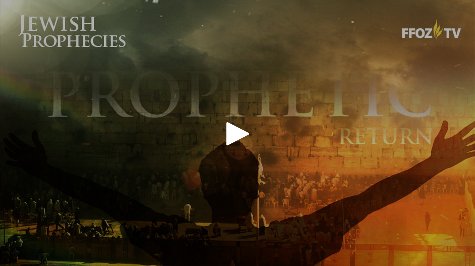
 The First Fruits of Zion television program delivers a high-energy, professional presentation of the prophetic aspects of the Gospel message from a Messianic Jewish perspective. Every episode opens new insights into the teaching of Jesus of Nazareth with end-times implications. Kingdom-focused and Jesus-centered, this is Messianic Jewish teaching at its best. It will encourage Christians to go deeper in their personal relationship with the Jewish Messiah.
The program tagline, “A Promise of What is to Come,” acknowledges that there is something greater taking place than just learning and understanding the bible in a new way.
We are part of a restoration and a return predicted by Moses, the prophets, Yeshua (Jesus) and the apostles. The modern state of Israel and the messianic Jewish revival we see today is only the first blossoming of the great, final redemption, which will usher in the kingdom of messiah.
-from “Welcome to FFOZ TV”
tv.ffoz.org
Messianic Jewish educational ministry First Fruits of Zion (FFOZ) launched its own television series earlier this year with an eye on reaching Christian television networks and reaching Christians. Boaz Michael and Toby Janicki were recently interviewed by God’s Learning Channel (GLC) about FFOZ.tv, and GLC is the first Christian TV network to begin broadcasting the FFOZ TV series. My understanding is that FFOZ.tv is currently targeting other Christian television venues for their program in order to “spread the word.”
But what about their program?
Boaz Michael, Founder and President of FFOZ asked me to review the program on my blog. I’ve been aware of FFOZ.tv for about a year now, having viewed an early version of the first episode at last year’s FFOZ Shavuot conference. I’ve seen a few clips of the show since then, but I’m not a big television watcher, so I didn’t go out of my way to take a look at the finished product.
Overview
For my review, I chose to sample two episodes: episode 4, Jewish Prophesies, originally aired on March 17, and episode 5, Son of David, originally aired on March 24 (the full episode list is available for those shows that have already aired and they can be viewed freely online).
Structure and Format
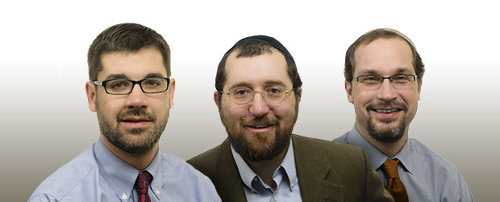
Each show is approximately thirty minutes long and follows a standard format. Toby Janicki is the primary host of the program, presenting the issue to be examined during the broadcast, taking the audience through the scriptures to examine the topic, say Messianic prophesies, and then breaking the information down into three major “talking points.” Mid-show, the scene shifts to FFOZ teacher Aaron Eby speaking from Israel and explaining aspects of Judaism and the Hebrew language as they apply to the subject being discussed. The scene then shifts back to Toby in the studio, where he brings the program and the topic to a conclusion. At the very end, Boaz Michael makes a brief appearance, wrapping up the broadcast and introducing the topic for next time.
Content
The show is written for a Christian audience that knows little or nothing about Messianic Judaism and Judaism in general. For those of us who are familiar with the subjects involved, the content seems elementary most of the time, though therewere “tidbits” of information I found new or at least that were clarified for me. The show is definitely designed to be “Messianic Judaism 101” and its most obvious purpose is to gently bring mainstream Christians into a beginning familiarity with the Jewishness of Jesus, the continued meaning of the Jewish people and the nation of Israel in the present world and the Kingdom of God, and how the future of Christianity must always look to Jewish redemption for the people and nation of Israel as the goal.
 There are twenty-six episodes “in the can” for the first season of the FFOZ.tv series. Each episode builds upon one another, so while each individual broadcast is a self-contained show, the audience won’t gain access to the complete Gospel message being presented from a Messianic Jewish perspective unless they view all of the episodes. Presumably, if the series is successful, the first twenty-six episodes will only be the beginning.
In the two shows I viewed, Toby regularly introduces himself as a Gentile who “practices Messianic Judaism.” This appears to be included to re-enforce Toby’s connection with his Gentile Christian audience but also connect him back to Messianic Judaism as a practitioner and teacher. Aaron’s portion, by contrast, is set in Israel, with his interviews being done “on the streets” to give a definite “Jewishness” to his content.
Look and Feel
Production values for the show are high and are at or near the levels of commercial television programs. The primary studio presents a “den” or “office” setting in rich earth tones, low lighting, and with numerous Jewish artifacts in the background to communicate warmth, approachability, and of course, Judaism. The music seems a little dramatic at times and for a couple of moments (during the HaYesod ad I think…I’m getting to that), I felt like I was getting ready to blast off into space. However, I noticed the tendency toward dramatic music and imagery on GLC when I watched the introduction to the Michael/Janicki interview, so maybe it’s an expected element of Christian television.
As I mentioned, Aaron’s part of the program is always filmed “on the streets of Israel” (presumably Jerusalem) so that the background views are universally recognizable as Jewish and Israeli. Aaron’s portions seem to create a bridge between the audience and Israel, supporting the overarching message of FFOZ.tv that Christianity is Jewish and irrevocably tied to Israel and Judaism.
Marketing
FFOZ is a non-profit organization and their primary “product” is the educational materials they produce. The purpose of FFOZ is to create and disseminate specific data to both Christian and Jewish audiences (see Vine of David for a list of materials specifically designed for Jewish people). The real “product” of FFOZ then is information which is packaged in a variety of forms including books, magazines, programs such as HaYesod and Torah Club, and of course, television.
However, in order to inform potential audiences of the material that is available, you have to market it. That’s another component of FFOZ.tv. The very first scripture that Toby reads in any program (of the two I viewed, anyway), is from the Delitzsch Hebrew Gospels. The rest of the time, he uses the ESV Bible. As Toby is reading from the Delitzsch version, a phone number and website URL appear at the bottom of the screen telling the audience how to purchase a copy.
About half to three-quarters of the way through the broadcast, the program content breaks for an ad about HaYesod, featuring mostly the FFOZ teaching staff presenting information on this learning program (which seems to have evolved quite a bit since I sat in a HaYesod class a decade or so ago).
Near the end of the broadcast, another commercial came on, this time describing the FFOZ Friends program, which allows people who subscribe to donate monthly to the ministry and describes, depending on which tier they choose, which products and services they’ll receive.
On the one hand, this all seemed a little distracting to me, but on the other hand, since at my “day job,” I directly report to the Vice President of Marketing, I have a deep understanding of the necessity and purpose of marketing any product that is for public consumption. You can’t buy and learn from something if you don’t know it exists.
Conclusion
 FFOZ.tv is made to introduce Christian audiences to Messianic Judaism, Judaism, and Israel. Although the Christian faith has its origins in first century Judaism and the Jewish Messiah, we have diverged from them significantly in the past twenty centuries, until the “Jewishness of Jesus” and the Hebraic beginnings of our faith are only a dim memory. FFOZ.tv is attempting to gently guide its Christian audience in a friendly and approachable atmosphere, back to some of the key concepts that define Messianic Judaism in order to realign Christian thoughts and feelings back toward our “Jewish roots.” The television program is also a “jumping off” platform for the audience to use in acquiring and exploring other FFOZ products, which will then (ideally) re-enforce and deepen the information base of Christians on Messianic Judaism, the absolute requirement of Israel’s national redemption in the Kingdom of God, and the vital role of the church in bringing about Jewish primacy and restoring Israel to its former glory, all in anticipation of the return of King Messiah.
If one picture is worth a thousand words, then what is television? In this case, television is entrance for any believer who watches Christian television or who is most likely to accept information in a video format, to the message of the Gospels from the perspective of Messianic Judaism. It provides and easy to access and easy to absorb doorway for the Christian to begin to encounter the Jewish Messiah King and the promise of what is to come.
Please visit First Fruits of Zion: A Promise of What is to Come and view any or all of the episodes available (seven as I write this but more are coming). Watching a single episode will only take thirty minutes of your time and you can judge for yourself whether or not if FFOZ.tv has a message that is speaking to you.
 Morning Meditations