
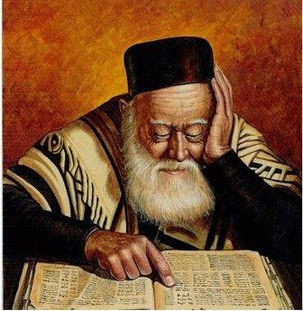
 But of course, it is not advisable for one to pasken for himself by extrapolating from a case discussed in the Mishnah Berurah since he may not discern a simple difference between the cases. He therefore asked (Rav Yosef Shalom Eliyashiv, shlit”a) whether an ill man who must eat on Tisha B’Av must eat less than a k’zayis within the shiur of time.
Daf Yomi Digest
Stories Off the Daf
“A Small Distinction”
Chullin 35
Without going into great detail, this quote comes from a commentary describing a sick man who is trying to see if he must fast on Tisha B’Av. In studying the relevant halachos on the matter, he was surprised to find that an ill person should eat no more “than a k’zayis in the time it takes to eat half a loaf of bread.” He extrapolated this judgment based on what the Beiur Halachah writes on how people ate on Tisha B’Av to avoid becoming ill during a typhus epidemic.
On the one hand, this man was chronically ill and fasting was dangerous for him. On the other hand, as a devout Jew, he was decidedly uncomfortable with eating on Tisha B’Av and wanted to understand the correct halacha. When he encountered a ruling he did not expect, he could have chosen to let his own interpretation guide him but, as we discover, “it is not advisable for one to pasken for himself by extrapolating from a case discussed in the Mishnah Berurah since he may not discern a simple difference between the cases”.
How does this work in Christianity? A Christian wants to make sure he understands what he should do in a certain situation and reads the appropriate Bible verses. He comes across Scripture that surprises him, at least as far as the plain meaning of the text is concerned, or even two Scriptures that seem to contradict one another. Should he rely on his own understanding, pray to the Holy Spirit for guidance, or immediately consult with his Pastor or Bible teacher?
I think a lot of Christians would pray for guidance from the Spirit, which is quite appropriate, but assuming the person felt he had received such supernatural guidance, his inquiry could stop right there. After all, what could a Pastor or a Bible teacher tell him that the Spirit couldn’t? Effectively, depending on your point of view, the Christian may well end up relying completely on his own personal interpretation of the Scriptures in question. This becomes a problem as you’ll see in a few paragraphs.
Sure, I’m oversimplifying the situation, but I think that’s how it plays out for some believers. When I used to worship in a church, there were plenty of times I’d ask a fellow student in a Bible study, a teacher, or one of the Pastors what something in the Bible meant. When praying, I didn’t always get a feeling or an indication that an answer to one of my questions about the Bible was forthcoming and asking another person, at least as a new Christian with a lifetime of secular thinking behind me, was just easier.
As I’ve grown spiritually and in my studies, I’ve come to know that there are many New Testament scholars out there who continually study, do research, and publish new findings. Bible interpretation is hardly a settled matter in the community of Bible scholars and this is an indication that our understanding of the Bible is far from complete or comprehensive. I wonder if most “average Christians” realize this?
 I just read a story at CNN called Actually, That’s Not in the Bible which illustrates my point, particularly on, Christian self-reliance on Bible interpretation and how people can make mistakes, sometimes critical mistakes:
Others blame the spread of phantom biblical verses on Martin Luther, the German monk who ignited the Protestant Reformation, the massive “protest” against the excesses of the Roman Catholic Church that led to the formation of Protestant church denominations.
“It is a great Protestant tradition for anyone – milkmaid, cobbler, or innkeeper – to be able to pick up the Bible and read for herself. No need for a highly trained scholar or cleric to walk a lay person through the text,” says Craig Hazen, director of the Christian Apologetics program at Biola University in Southern California.
But often the milkmaid, the cobbler – and the NFL coach – start creating biblical passages without the guidance of biblical experts, he says.
“You can see this manifest today in living room Bible studies across North America where lovely Christian people, with no training whatsoever, drink decaf, eat brownies and ask each other, ‘What does this text mean to you?’’’ Hazen says.
“Not only do they get the interpretation wrong, but very often end up quoting verses that really aren’t there.”
It’s been a long time since I’ve worshiped at a church and I don’t think I ever developed a “traditional Christian mindset” about a lot of this. I’m blogging my “extra meditation” today, more in the way of asking a question. What do you think? Is the example I quoted from the Daf Yomi Digest above bizarre and alien to Christianity, or do we also have a tradition of going to reliable authorities when we have something we need to understand from the Bible? If we don’t have this tradition, as the CNN article seems to suggest, should we?
Gracious feedback is welcome here. Standing by to receive.
Oh, our chronically ill man did get an answer to his question:
When these questions reached RavYosef Shalom Eliyashiv, shlit”a, he ruled that a sick person does not have to worry about this. “One who is ill should eat what he needs and no more. But he is not obligated to eat less than a shiur. The Beiur Halacha discusses one who eats to avoid getting ill. Such a person should wait to eat as late as possible and also eat less than a shiur. But one who is sick does not have to follow these restrictions on Tisha B’Av at all.”
 Morning Meditations