A few weeks ago, I wrote Yes, It’s A Pie, But Let Me Explain. It was a response to the meme “Equal Rights For Others Does Not Mean Fewer Rights For You. It’s Not Pie.”
While things like rights and access to opportunities shouldn’t be restricted, they often are based on who is doling out those resources. When some groups say they don’t have as much access to resources as other groups, it’s usually not because the resources or rights are limited so much as the folks doling out said-resources are restricting them.
In my prior article, I compared two very different groups: the LGBTQ+ community and PTSD sufferers. It’s an odd comparison but the month of June is both “Pride Month” and “PTSD Awareness Month.” In observing how each set of events were treated in news and social media and by the government, politicians, celebrities, and corporations, I saw that the former was highly marketed and praised while the latter was all but ignored.
The reason behind that is money. You can make more bank off of promoting goods and services to the LGBTQ community than you can by raising the public’s awareness of people who suffer from PTSD and other anxiety disorders.
It’s not that the real-world rights and opportunities of each group differed in the slightest. It is that the public gave rave reviews, devotion, caring, and attention to the former, but acted like the latter did not exist.
MADRE, a global feminist organization, works to diversify and globalize the fight for gender equality. MADRE – ABC News
A few days ago, I wrote the first part of this series, Defining Men, Part One: Looking Through the Barbie Lens. I used the the currently popular film as a “jumping off point” to examine how modern feminism tends to view men. While the movie is touted to be pro-men as well as pro-women (only being “anti-patriarchy”), not everyone is convinced. Not everyone (mostly men) is convinced that the current incarnation of feminism is pro-men either.
As you may know or have guessed, feminism, especially across time, isn’t a static concept. Even the ABC story admits, “Feminism, the first wave of which began with the suffrage movement in the mid-1800s, looks vastly different today than it did generations ago.”
Okay, fine. But how different? The article goes on:
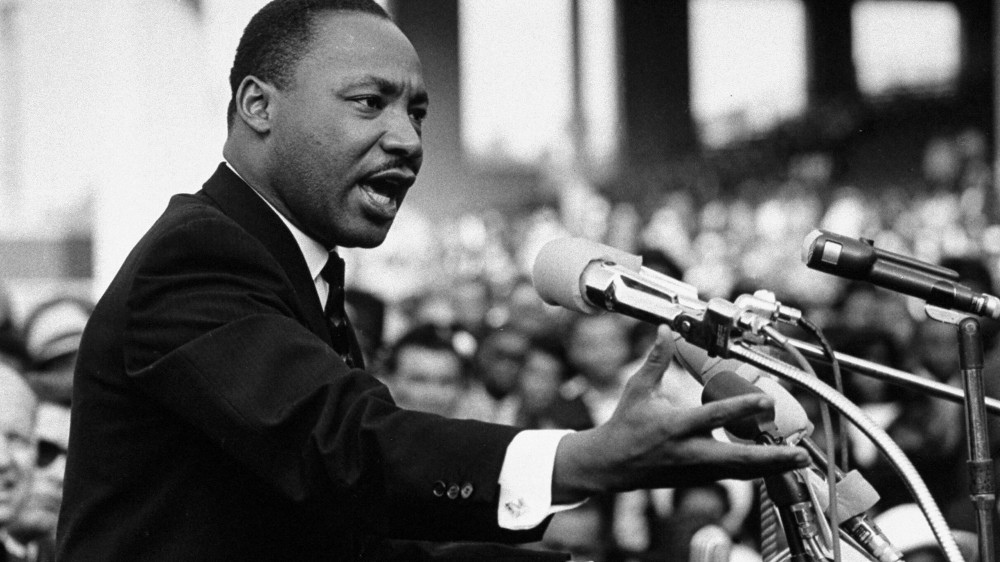
According to activist and online pundit Ibram X Kendi, Dr. Martin Luther King would have supported all of the inclusive and representation initiatives including Critical Race Theory popular today.
Yes, I’m saying this on Martin Luther King Day. Dr. King has been considered a “safe” black person of fame to quote for whites because it makes it seem as if there are no barriers or hurdles between whites and people of color, or at least none that Dr. King acknowledged. Apparently, that’s far from the truth.
Image credit: Gulf News – not other specifics cited
In Part One of this series, I covered pretty effectively not only that the long-term history of Israel from ancient times was undeniably (even though people deny it all the time) Jewish, but whatever you want to call “Palestine” is not and never has been Arabic.
I know a lot of people don’t like to face that because of the common and mistaken idea that the Arabs were living in Palestine until the Jews came and subjugated them in 1948. However, that’s not objective history, but propaganda.
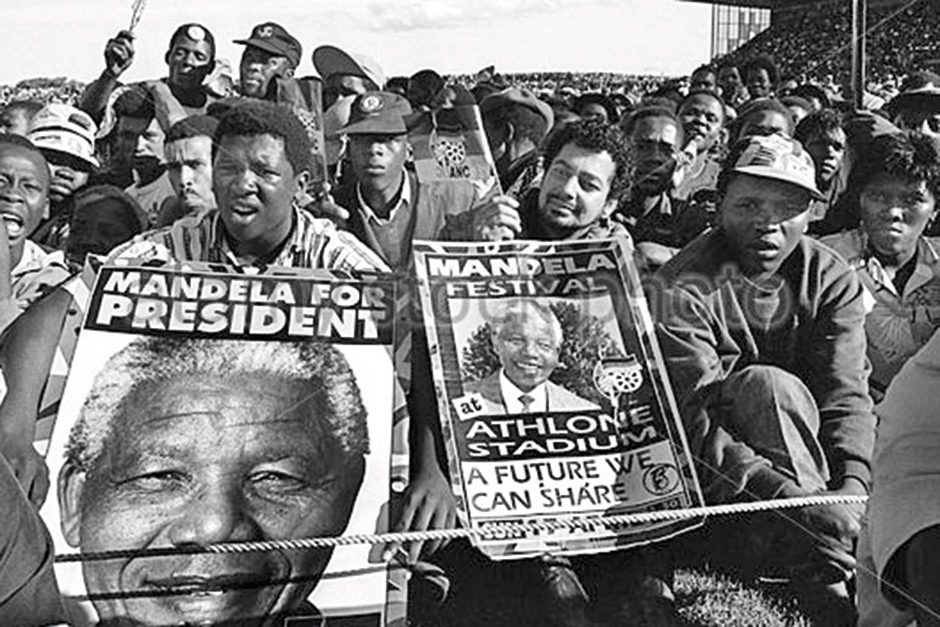
Apartheid (Afrikaans: “apartness”) is the name of the policy that governed relations between the white minority and the nonwhite majority of South Africa during the 20th century. Although racial segregation had long been in practice there, the apartheid name was first used about 1948 to describe the racial segregation policies embraced by the white minority government. Apartheid dictated where South Africans, on the basis of their race, could live and work, the type of education they could receive, and whether they could vote. Events in the early 1990s marked the end of legislated apartheid, but the social and economic effects remained deeply entrenched.
In fact the term is totally embedded exclusively in the history of South Africa. So much so, that a search of Google (at least a casual one) doesn’t easily turn up a list of other nations that practiced the same policies.
So why do people call Israel (which obviously is not South Africa) “apartheid?”
A 2017 report by The Washington Post was headlined Is Israel an ‘apartheid’ state? This U.N. report says yes. Yet when I clicked the link to read the actual report, I got a “Page Not Found” error. Either the report was moved to another URL or it was pulled entirely.
The article begins:
If being an apartheid state means committing inhumane acts, systematic oppression and domination by one racial group over another, then Israel is guilty, a United Nations panel has determined in a new report.
The findings from an Arab-led group were not cleared or fully backed by U.N. leadership and do not set new policies toward Israel. Yet they reflect another attempt to use a U.N. forum to denounce Israel and seek to put its Western allies on the defensive at a time when some have questioned Israel’s hard-line approach, including expansion of settlements in the West Bank.
Okay, the allegation already sounds a tad suspicious. I mean even the U.N. didn’t fully endorse it.
Actually, I looked pretty hard, but it was difficult to find a reputable source that supported the idea that Israel was apartheid. The Guardian published an op-ed piece last year who sees similarities between Israel and South Africa based on experience of fighting South African apartheid:
As a Jewish South African anti-apartheid activist I look with horror on the far-right shift in Israel ahead of this month’s elections, and the impact in the Palestinian territories and worldwide.
Israel’s repression of Palestinian citizens, African refugees and Palestinians in the occupied West Bank and Gaza has become more brutal over time. Ethnic cleansing, land seizure, home demolition, military occupation, bombing of Gaza and international law violations led Archbishop Tutu to declare that the treatment of Palestinians reminded him of apartheid, only worse.
That statement was to some degree based on a 2014 Haaretz article where Desmond Tutu said that Israel’s treatment of the Palestinians reminded him of Black South Africans.
Incidentally, this is also probably the attraction of America’s Black Lives Matter to the Palestinian “cause” if we can believe they are all the same thing.
But as we’ve seen, apartheid isn’t simply racial or ethnic differences or tensions.
I have now lived in Israel for 17 years, doing what I can to promote dialogue across lines of division. To an extent that I believe is rare, I straddle both societies. I know Israel today – and I knew apartheid up close. And put simply, there is no comparison between Israel and apartheid.
The Arabs of Israel are full citizens. Crucially, they have the vote and Israeli Arab MPs sit in parliament. An Arab judge sits on the country’s highest court; an Arab is chief surgeon at a leading hospital; an Arab commands a brigade of the Israeli army; others head university departments. Arab and Jewish babies are born in the same delivery rooms, attended by the same doctors and nurses, and mothers recover in adjoining beds. Jews and Arabs travel on the same trains, taxis and – yes – buses. Universities, theatres, cinemas, beaches and restaurants are open to all.
They go on to state:
However, Israeli Arabs – Palestinian citizens of Israel – do suffer discrimination, starting with severe restrictions on land use. Their generally poorer school results mean lower rates of entry into higher education, which has an impact on jobs and income levels. Arab citizens of Israel deeply resent Israel’s “law of return” whereby a Jew anywhere in the world can immigrate to Israel but Arabs cannot. Some might argue that the Jewish majority has the right to impose such a policy, just as Saudi Arabia and other Muslim states have the right not to allow Christians as citizens. But it’s a troubling discrimination.
A major factor causing inequity is that most Israeli Arabs do not serve in the army. While they are spared three years’ compulsory, and dangerous, conscription for men (two years for women) and annual reserve duty that continues into their 40s, they do not receive post-army benefits in housing and university study.
However…
How does that compare with the old South Africa? Under apartheid, every detail of life was subject to discrimination by law. Black South Africans did not have the vote. Skin colour determined where you were born and lived, your job, your school, which bus, train, taxi and ambulance you used, which park bench, lavatory and beach, whom you could marry, and in which cemetery you were buried.
Israel is not remotely like that. Everything is open to change in a tangled society in which lots of people have grievances, including Mizrahi Jews (from the Middle East) or Jews of Ethiopian origin. So anyone who equates Israel and apartheid is not telling the truth.
If I were to stop here, we could reasonably conclude that Israel is not a perfect country, and yes discrimination does exist, but the nature of that discrimination does not resemble apartheid.
The article concludes:
So why is the apartheid accusation pushed so relentlessly, especially by the Boycott, Divestment and Sanctions (BDS) movement? I believe those campaigners want Israel declared an apartheid state so it becomes a pariah, open to the world’s severest sanctions. Many want not just an end to the occupation but an end to Israel itself.
Tragically, some well-intentioned, well-meaning people in Britain and other countries are falling for the BDS line without realising what they are actually supporting. BDS campaigners and other critics need to be questioned: Why do they single out Israel, above all others, for a torrent of false propaganda? Why is Israel the only country in the world whose very right to existence is challenged in this way?
No such [apartheid] laws exist in Israel, which in its Declaration of Independence pledges to safeguard the equal rights of all citizens. Arab citizens of Israel enjoy the full range of civil and political rights, including the right to organize politically, the right to vote and the right to speak and publish freely. Israeli Arabs and other non-Jewish Israelis serve as members of Israel’s security forces, are elected to parliament and appointed to the country’s highest courts. They are afforded equal educational opportunities, and there are ongoing initiatives to further improve the economic standing of all of Israel’s minorities. These facts serve as a counter to the apartheid argument, and demonstrate that Israel is committed to democratic principles and equal rights for all its citizens.
Moreover, Israel’s acceptance of a two-state solution as the outcome of bilateral Israeli-Palestinian negotiations belies accusations that Israel’s goal is the persecution of Palestinians.
The Algemeiner presents eight critical points about why Israel is not apartheid, and even an op-ed piece by The Los Angeles Times declares “Israel isn’t, and will never be, an apartheid state”.
The evidence I’m presenting may not be exhaustive, but it is extensive, and you’ll need to click the links I’ve provided to get the full context.
The term “apartheid” is being aimed at Israel in an attempt (and a seemly successful one, oddly enough) to stir up an emotional, rather than a reasoned response, to Israel, painting them with the same broad brush as South Africa so that no one will have to consider anything except how they felt about the injustices against the black majority population by the white minority.
Even though the two nations and their bodies of law are not similar, some people will believe anything they hear because they want to. It confirms their biases that at least Israel, if not the Jewish people as a whole, are unjust and even criminal.
Like I said, it’s not like Israel is completely free of discrimination. But that doesn’t make them apartheid.
In Part One, I established the historic right of the Jews to the land of Israel, and that the Arabs did not have such an historic claim. Just now, I addressed why Israel is NOT an apartheid state. In Part Three, I’ll talk about why Israel is not “occupying Arab land.”
Photo credit: KIVI Staff – Black Lives Matter protest in front of the Idaho State Capitol
There’s quite a push in social media and in the news regarding phrases like “silence is concent” and “silence is violence.” In other words, if you are white and you don’t say something about “systemic racism,” and a very specific something, then you are accused of giving tacit approval to racism in general and violence against people of color in particular.
I don’t know about that. The Bible has a lot to say about times when it is better to be silent rather than speaking out of emotion or impulse. Make no mistake, there’s a lot of emotion and impulse in both social media and the real world.
Having Jewish family members, my traditional focus relative to justice is the battle against antisemitism, and, after all, bigotry is bigotry, right? Would not the words I’ve written on this blog for so many years apply to the current situation?
Apparently not.
It seems that the same people who are demanding justice over the death of George Floyd are also attacking Jewish synagogues and businesses. Apparently, Jews in America are being equated with Jews in Israel, which the protesters consider oppressors to the “Palestinians.”
I won’t go into how erroneous that notion is because it’s a very long article all by itself. It does, however, speak to part of the reason why I don’t have a “default setting” of siding unquestionably with the protesters and against police officers.
Am I a racist? No, not as I evaluate myself, but given terms like “systemic racism” and “silence is violence,” I can imagine some folks out there would assume I am. Reading this, they will assume I am because, as I said, I don’t give at least some expressions of protest (the violent expressions that destroy property and hurt and kill people) my undying, absolute support.
Also, some celebrities, such as Rosanna Arquette (although she said this nearly a year ago) suggest that in order to support these protests, support justice, and shun racism, I must not only be ashamed of myself as a white person, but I must hate my “whiteness.”
Okay, so maybe she’s an edge case and most white Americans who are protesting don’t despise themselves (though watching a lot of these people kneel at the feet of people of color seems less like justice and more like subjugation). Some white Americans are pretty upfront with saying they suffer from white guilt, but the response seems to indicate that’s just another kind of privilege.
There are all kinds of opinions about the role of white people in these protests, and some people of color view white protesters as following a trend, albeit a much needed one.
We are encouraged to read books on systemic racism, promote black causes, support black businesses, and otherwise showcase the works of people of color.
As an aside, the Science Fiction and Fantasy Writers of America recently issued a statement of support for Black Lives Matter, with some highly specific suggestions about what its membership (and any science fiction and fantasy reader actually) can do to support artists/writers of color. That’s not a bad thing, and SFWA has been pretty supportive of artists of color anyway, but at the end of the day, these are still all suggestions and its up to the conscience of every individual in how we respond.
And then there are the police.
Tons and tons of people are calling to defund the police in their communities, and the city of Minneapolis has voted to get rid of their police force altogether, eventually replacing it with…well, I don’t know with what because they don’t seem to have a plan yet.
As a white person, for the most part, I’ve had reasonably good experiences with police officers. In the 1990s, I was an investigator for Child Protective Services in Southern California and I worked with multiple law enforcement agencies. Some were really very community friendly, and a few were a pain in the neck.
But if I were a black person, my experience might be a very different one. I mean, black parents have to teach their children at a very tender age what it is to be black in America, which includes how to behave around police.
But it’s become much worse than that. Right here in my own little corner of Idaho, a little white girl learned to be afraid of the police. Fortunately, members of the Kuna Police Department helped her get past her anxiety.
I did see on twitter that when a young black girl was approached by an officer, she immediately raised her hands. As it turns out, the officer just wanted to say “hi”. A lot of people think the child’s fear was caused by police brutality in the first place, or maybe it’s become a learned behavior in the black community. Maybe too, the recent emphasis of depicting all police officers as racist and violent has something to do with it.
And some of it is just plain silly, such as the call to remove Chase the Police Dog from the Paw Patrol cartoons and books (my granddaughter loves them).
So, as you can see, there’s a lot to digest let alone respond to.
After posting a few of my past blog articles to social media and getting no response (I don’t know why I expected any), I figured that was that. What was I supposed to say that hasn’t already been said? We’ve had Black Lives Matter protests in downtown Boise. I didn’t feel compelled to attend. Oh, they were really peaceful, except that one dumb 18-year-old guy accidentally discharged his handgun into the ground. Yes, he was white, and yes, he was arrested.
Credit: KTVB News
Interestingly enough, Boise City Councilwoman Lisa Sanchez wrote a letter to the kid’s parents saying his privilege protected him, and if he were a person of color, things would have turned out differently. Maybe they would have.
She signed her letter:
Lisa Sánchez, Brown woman who chose not to have children for fear of their abuse and murder by white people.
While I don’t doubt her experiences and feelings are real, as a politician and Boise city leader, she might have tried to say something that would de-escalate anxiety and tension rather than the opposite.
Having said all this, I still wasn’t going to craft a response to the “silence is violence” supporters, that is, until I read an op-ed piece written by Kareem Abdul-Jabbar (yes, the former basketball player and actor). He did a very good job at getting me to be able to listen to his anger and described very well (to the best of my ability to understand, with me not having a lived black experience), how black people and white people are going to respond differently to the death of George Floyd.
Addendum: I suppose I should comment about this because, yes, when black people are angry, and they say white people are bad, I do have a problem not taking it as a personal insult. That’s my problem, I suppose, but after all, I do have trouble making it through everyday halfway sane without having these pundits adding to it. I know there is heinous injustice in the world, but I’m trying very hard not to hate myself on command.
He ended his missive with:
What I want to see is not a rush to judgment, but a rush to justice.
Now I would guess, given the article’s larger context, that he meant justice for people of color and not judging them for angry and even violent responses.
But what does that look like?
On one level, it probably means something like reforming the nature of police work across the board, although, as I suggested above, not all police departments are the same, so their responses in violent and crisis situations probably won’t be the same.
Police officers who commit crimes do need to be brought to justice, and perhaps a more stern justice since they broke the community trust and violated their oath as peace officers.
Sooner or later, the protests will die down, and the caldron of America will cool off again, going from a boil to a simmer…that is until next time.
In the 1997 film Air Force One, Harrison Ford playing (fictional) American President James Marshall delivers the line “Peace isn’t merely the absence of conflict, but the presence of justice.”
In Bruce Springsteen’s music video for Born to Run he says “Remember, in the end, nobody wins unless everybody wins.”
In the 1999 film The Matrix, Neo, played by Keanu Reeves, says:
I know you’re out there. I can feel you now. I know that you’re afraid… you’re afraid of us. You’re afraid of change. I don’t know the future. I didn’t come here to tell you how this is going to end. I came here to tell you how it’s going to begin.
Maybe that’s all there is to it. We just begin without necessarily knowing where the road will lead or what the journey will be like.
Perhaps we should always have these protests before us, just to make sure we’re still paying attention. When they go away, and they probably will, in our rush to return to our “old normal,” sweeping George Floyd and COVID-19 aside, we’ll go back to sleep and pretend nothing’s wrong.
I chose to write this on my “religious blog” rather than my writer’s blog because you have no love, or truth, or justice without God.
He has told you, O man, what is good; and what does the Lord require of you but to do justice, to love kindness, and to walk humbly with your God? –Micah 6:8 (NASB)
I’ve seen so many opinions, but even those activists who are believers seem to have sidestepped what we really need, not just as white people or black people, or even as Americans. Is God not the God of all people everywhere? Didn’t the Apostle Paul say that “for all have sinned and fall short of the glory of God?” (Romans 3:23).
I’m not going to tell you how this will end, but I will tell you how we can begin, all of us. By making teshuvah, repent of our sins, which should also be a continual process, for our sins are always before us.
I kneel in the Presence of the Almighty during prayer, but don’t necessarily feel compelled to do so in the presence of people. However, if someone else feels that their path of repentance requires kneeling before people who they feel they’ve somehow hurt, who am I to say they shouldn’t. The important thing is to do so not out of a misplaced sense of guilt or shame, but because we truly do seek to do justice, love kindness, and have a humble walk before our God.
In the end, everybody wins because the Presence of God is the presence of justice.
What, then, shall we say in response to these things? If God is for us, who can be against us? He who did not spare his own Son, but gave him up for us all—how will he not also, along with him, graciously give us all things? Who will bring any charge against those whom God has chosen? It is God who justifies. Who then is the one who condemns? No one. Christ Jesus who died—more than that, who was raised to life—is at the right hand of God and is also interceding for us. Who shall separate us from the love of Christ? Shall trouble or hardship or persecution or famine or nakedness or danger or sword? As it is written:
“For your sake we face death all day long;
we are considered as sheep to be slaughtered.”
No, in all these things we are more than conquerors through him who loved us. For I am convinced that neither death nor life, neither angels nor demons, neither the present nor the future, nor any powers, neither height nor depth, nor anything else in all creation, will be able to separate us from the love of God that is in Christ Jesus our Lord. –Romans 8:31-39
Addendum: I just read a Fox News article (yes, I know what some of you are going to say) referencing a New York Times Op-Ed piece written by Mariame Kaba who really means she wants to abolish (mostly) the police. Her perspective is that, given more resources, particularly good jobs, housing, and so forth, the root cause of crime will be greatly reduced and people will just naturally learn to cooperate and become more community minded.
Apparently, she doesn’t believe what I quoted above from the Apostle Paul. Also, this comes to mind:
Rebbe Chanina, the assistant High Priest, says: Pray for the welfare of the government. For without fear of it, people would swallow each other alive. –Chapter 3, Mishna 2
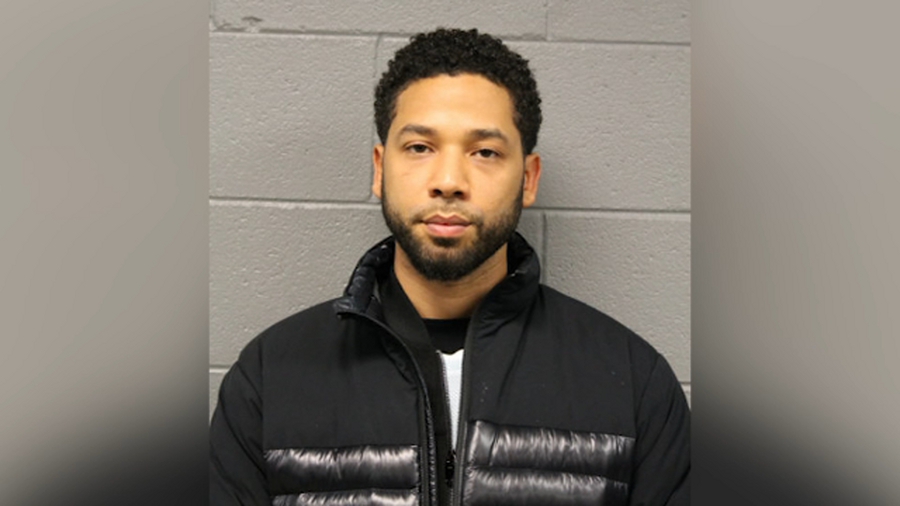
Mug shot taken of Jussie Smollett at his arrest by Chicago P.D. – found at abc7chicago.com
I’m sure most of you have heard by now that actor and musician Jussie Smollet (born “Justin Smollett”) allegedly faked an attack upon himself on January 29, 2019, stating that he was assaulted by two white men who put a noose around his neck, poured bleach on him, and called him racist and homophobic slurs while also saying, “This is MAGA country.” Smollett is African-American and gay. He also allegedly received a threatening letter a week earlier containing a mysterious white powder which turned out to be Tylenol.
While all this is getting a lot of attention in social media, not everyone is condemning him, at least publicly. Some politicians, such as Nancy Pelosi and Cory Booker, have deleted their initial “tweets” on twitter that showed support for Smollett, however U.S. Representative Maxine Waters continues to believe him. Also, African-American author and screenwriter Steven Barnes, while not defending Smollett’s alleged crime outright, does say that faking the attack does not make him a racist (and who said it did?).
Now, although Smollett has gotten a severe “dressing down” from both African-American Chicago Police Superintendent Eddie Johnson and African-American Judge John Fitzgerald Lyke Jr. (I’m pointing out that both men are black so readers don’t believe their comments are based on racism), as Judge Lyke stated, before the law, Smollett is presumed innocent until the state proves its case against him (assuming they can).
However a blog, as well as social and news media, are not courts of law, so we can afford to make some assumptions. Let’s assume that all of the allegations against Smollett are true and that he not only mailed a threatening letter to himself (which may constitute mail fraud, a Federal offense), but hired two men he’s worked with on “Empire” to fake the attack. What can we say about this?
It seems like this 36-year-old man needs a lot of attention, and playing the role of a victim, both because he’s gay and black, would certainly qualify as attention. Having his “assailants” pretend to be white Trump supporters would likely result in immediate condemnation on Trump in particular (for inspiring hate) and white conservatives in general, both being pretty easy targets in the aforementioned social and news media. In other words, on the surface of it, the attack would seem credible to a lot of people.
But that’s not enough. Before Chicago P.D. formally charged Smollett, he described himself during the attack as a gay Tupac, meaning that he was tough and fought back (although the real life boxer Tupac Shakur, who was murdered in 1996 at the age of 25, had his own legal problems). Smollett apparently was attempting to dispel the traditional stereotype that gay men are effeminate and would be helpless in a physical fight (which is ridiculous because I’ve known gay men who have served in the Marine Corps and they are tough).
Smollett is alleged to have staged the attack, in part, because he was dissatisfied with the amount of money he was earning on “Empire” which was supposedly about $125,000 per episode. With 18 episodes per season, that comes out to over two million dollars a year. Of course, there are television actors who earn more, such as the cast of “Big Bang Theory” who are said to each pull down $900,000 per episode. Nice work if you can get it.
If you put everything together, you can make a case for Smollett being a talented but highly insecure individual who needed a lot more recognition than he was getting, and yes, money is definitely a form of recognition. Sympathy and admiration are other forms, which would play to his being a victim and valiantly fighting back against his two, supposedly MAGA loving white racist attackers.
Let’s face it, most of us feel insecure at times and probably want more attention than we’re getting, but most of us don’t go to such lengths to get that attention. Add Smollett’s own admission that he has a drug problem, and you have some significant psychopathology going on, which I bet this young man’s attorneys are going to significantly exploit in court.
But it doesn’t matter. Smollett’s already destroyed his life, at least for the next several years. However, consider actor Robert Downey Jr‘s own drug-related career damage. After five years of substance abuse, arrests, rehab, and relapse, he finally got this act together and now he’s one of the hottest tickets in Hollywood. I suppose that could happen to Smollett, too, but he could also pull a Lindsay Lohan. Or not, since I just read that her career is also slowly getting back on track. Who’d have thought?
However, he’ll have to go through a lot of hurdles first, not the least of which are the consequences of being convicted if it goes that way.
But he’s not the only one who will experience consequences.
Smollett’s ploy isn’t unique. According to USA Today, it’s actually pretty common, and as a result, each false allegation causes further damage to race relations, and in this case, will again make it more difficult for real victims of racism and prejudice against the LGBTQ community to be believed. Now each and every actual victim of a hate crime gets to “thank” Smollett and the many others who put their own issues ahead of everything else. Now, with each difficulty in being believed, in having their allegations be considered valid, at feeling like they’re not being taken seriously, these people can turn to Smollett and realize that he made it harder for them.
And as Catholic teenager Nick Sandmann found out, this also makes it more likely that anyone wearing a MAGA hat for any reason will be considered a violent racist.
Why am I writing this here on my religious blog? Because we’re supposed to be people of good conscience. We’re supposed to provide charity to the widow and the orphan, which is Biblical shorthand for the disadvantaged. I’ve been burned before giving charity to someone who had duped me, and I didn’t just waste my own money doing it. How do incidents like the one Smollett allegedly perpetrated affect our own willingness to believe the victim, offer help, give to the needy? After all, we’re people just like anyone else, and I don’t doubt that there are plenty of Christians right now who are raking Smollett over the virtual coals in social media, in their families, and in their churches.
Is that right?
The court will judge Smollett on legal matters, and like everyone else, God will judge him on how he’s treated the Almighty and other human beings. While we, as individual human beings, likely have an opinion about Smollett and the behavior he’s accused of committing, a wider or more “God-like” view should tell us that we too have a judge, and while we may not be guilty of faking racist or homophobic attacks on ourselves, we do need to pay attention to our own thoughts, words, and deeds first. Have we done something that hurts others because of our own selfishness? If the answer is yes, then it behooves us to make amends in our own lives. This won’t change Smollett, and it won’t justify us “badmouthing” him, but it will mean we’re capable of learning a lesson here. So, hopefully, is Jussie Smollett.
"When you awake in the morning, learn something to inspire you and mediate upon it, then plunge forward full of light with which to illuminate the darkness." -Rabbi Tzvi Freeman





 Morning Meditations