 You foolish Galatians! Who has bewitched you? Before your very eyes Jesus Christ was clearly portrayed as crucified. I would like to learn just one thing from you: Did you receive the Spirit by the works of the law, or by believing what you heard? Are you so foolish? After beginning by means of the Spirit, are you now trying to finish by means of the flesh? Have you experienced so much in vain – if it really was in vain? So again I ask, does God give you his Spirit and work miracles among you by the works of the law, or by your believing what you heard? So also Abraham “believed God, and it was credited to him as righteousness.” –Galatians 3:1-6
Lancaster identifies the influencers in Galatia (called by most Christian commentators “judaizers”, though “judaize” is derived from an intransitive Greek verb – that is, you can judaize [yourself], but you can’t judaize someone else, cf. Nanos, The Irony of Galatians [Minneapolis, Fortress, 2002], 116) as Gentile proselytes to Judaism who are anxious to secure their status in the Jewish community by influencing believing Gentiles to also become proselytes. His thesis makes more sense than Nanos’s (in which unbelieving Jews are the influencers) due to Nanos’s difficulty with Galatians 6:12.
Lancaster writes that the “different gospel that is not really a gospel” being peddled by these influencers is the message that Jewish identity and full Torah observance were necessary conditions for entrance into the believing community and access to the World to Come. This message was attractive for the Galatian Gentile believers because as liminals, they existed between two worlds.
from the review of
D. Thomas Lancaster’s book
The Holy Epistle to the Galatians
from the Hope Abbey blog.
This is the second part of a blog I wrote on Gentiles, Christians, and Noahides. Please read yesterday’s “morning meditation” called The Sons of Noah before continuing here. Things will probably make more sense if you do.
I wrote my own review of Lancaster’s Galatians book about a month ago, but once picked up, it’s hardly a book or a subject that can be casually laid down again. As much as any of his other letters, Paul’s words to the Galatian non-Jewish disciples of Jesus have a great deal to say to those of us who are Christians today.
In yesterday’s “morning meditation”, I introduced the concept of Gentiles and the Noahide Laws. In Judaism, it is understood that all Jews will be “saved” (to put it in the Christian vernacular), however, non-Jews are not expected to convert to Judaism in order to also attain a “saved” status. Jews are obligated to a very high standard of conduct toward God and other people, but the “nations” (i.e. everybody else) are not expected to comply with these obligations (and in many cases, Gentiles are forbidden to obey the mitzvot as a matter of halachah). According to Judaism, the obligations of the Gentiles are outlined in Genesis 9 as the Divine code God gave to Noah which today are called Noahide Laws.
But who is a Noahide?
At Caesarea there was a man named Cornelius, a centurion in what was known as the Italian Regiment. He and all his family were devout and God-fearing; he gave generously to those in need and prayed to God regularly. –Acts 10:1-2
When Paul and his companions had passed through Amphipolis and Apollonia, they came to Thessalonica, where there was a Jewish synagogue. As was his custom, Paul went into the synagogue, and on three Sabbath days he reasoned with them from the Scriptures, explaining and proving that the Messiah had to suffer and rise from the dead. “This Jesus I am proclaiming to you is the Messiah,” he said. Some of the Jews were persuaded and joined Paul and Silas, as did a large number of God-fearing Greeks and quite a few prominent women. –Acts 17:1-4
No, I can’t draw a direct connection between the God-fearing Gentiles of the Second Temple period and the later Gentile Noahides, but I can make a suggestion that they are related and then explore that possibility. Both groups are considered “righteous Gentiles” in the sense that they have abandoned pagan idol worship and polytheism and have attached themselves to the One God; the God of Abraham, Isaac, and Jacob, without abandoning their Gentile ethnic and cultural identity (that is, by not attempting to convert to Judaism).
That said, the God-fearers in the day of Peter and Paul, though not attempting to become Jewish, did have only one model on which to draw to describe and practice a life of faith in the God of Israel:
Cornelius answered: “Three days ago I was in my house praying at this hour, at three in the afternoon. Suddenly a man in shining clothes stood before me… –Acts 10:30
Cornelius is describing performing the Minchah prayers or the afternoon prayers that are required in Judaism. Observant Jews pray three times a day: morning (Shacharit), afternoon (Minchah), and evening (Maariv). We can infer from this brief passage in Acts 10 that as a God-fearer, Cornelius did the same, though probably not in a manner identical to his Jewish mentors.
But Peter, in his encounter with Cornelius, saw something amazing take place:
While Peter was still speaking these words, the Holy Spirit came on all who heard the message. The circumcised believers who had come with Peter were astonished that the gift of the Holy Spirit had been poured out even on Gentiles. For they heard them speaking in tongues and praising God.
Then Peter said, “Surely no one can stand in the way of their being baptized with water. They have received the Holy Spirit just as we have.” So he ordered that they be baptized in the name of Jesus Christ. Then they asked Peter to stay with them for a few days. –Acts 10:44-48
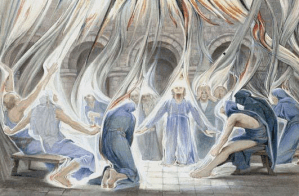 This certainly recalls the events of Acts 2:1-4 when the core group of Christ’s Jewish disciples received the Spirit on Shavuot (Pentecost) and definitively establishes that both non-Jews and Jews have equal access to God through the Covenant of the Messiah.
Now let’s explore a few ideas. Let’s say that Cornelius and his fellow God-fearing Gentiles were the First Century equivalents of today’s Noahides, that is, they were righteous Gentiles who had a relationship with God but not on the same level as the Jewish people (Noahide Covenant vs. Mosaic Covenant). Now we see these God-fearing “Noahides” undergo a startling transformation by receiving the Holy Spirit in just the same manner as the Jewish disciples of Jesus. The status of the God-fearers changes to become more alike with the status of the Jewish disciples.
So in Christ Jesus you are all children of God through faith, for all of you who were baptized into Christ have clothed yourselves with Christ. There is neither Jew nor Gentile, neither slave nor free, nor is there male and female, for you are all one in Christ Jesus. If you belong to Christ, then you are Abraham’s seed, and heirs according to the promise. –Galatians 3:26-29
Paul is saying that in relation to access to God and the love of Jesus Christ, all people of faith are equal. Men are no greater than women in God’s eyes and Jews are no greater than Gentiles in God’s grace and compassion. Does this mean that Jews and Gentiles are absolutely equal in terms of role and function? Of course not, no more than men and women existing in unity as non-gendered, androgynous beings. The Jerusalem Council ruled on this when they issued their now famous edict to the Gentile believers (Acts 15:22-35).
Jewish and non-Jewish equal access does not mean we have identical responsibilities nor identical identities.
It also means that God-fearers or “Noahides” are not equivalent to Gentile Christians. The Covenant of Noah and the Covenant of Christ are not the same, otherwise why would God-fearing Gentiles need to be brought to faith in Jesus by Paul? The non-Jewish people of the world, even those who choose to comply with the Noahide obligations, do not possess the same status as those who take on the greater responsibility of the Messianic Covenant.
2,000 years later, we’re still trying to understand what this all means since, depending on who you listen to, both Noahides and Christians serve God and merit a place in the world to come. I suppose that’s why we have books such as Lancaster’s Galatians and a plethora of blogs on the web such as mine (and of course, in Jewish thought, a Noahide is “saved” by what he does and in Christian thought, a believer is “saved” by what he believes).
So as Christians, if we are no longer simply “Sons of Noah”, who are we?
Yet to all who did receive him, to those who believed in his name, he gave the right to become children of God – children born not of natural descent, nor of human decision or a husband’s will, but born of God. –John 1:12-13
See what great love the Father has lavished on us, that we should be called children of God! And that is what we are! The reason the world does not know us is that it did not know him. Dear friends, now we are children of God, and what we will be has not yet been made known. But we know that when Christ appears, we shall be like him, for we shall see him as he is. All who have this hope in him purify themselves, just as he is pure. –1 John 3:1-3
Paul said that “Therefore, be sure that it is those who are of faith who are sons of Abraham” (Galatians 3:7 [NASB]), which does not undo the status of the Jews as Sons of Abraham, but allows the Gentiles who come to faith to attain equal status in terms of access (though not of Legal obligation and ethnic status). Christians are not Noahides and we are not Jews. Christians are both alike and unlike their Jewish counterparts who have come to faith in Jesus as Moshiach. The Hope Abbey blog provided the following quote illustrating this:
What [Paul’s opponents] evidently failed to appreciate is that Paul made a distinction between Jewish Christians and Gentile Christians… while he saw it as perfectly legitimate for Jewish Christians to express their faith in Jesus through traditional Jewish practices, he strenuously opposed the imposition of these practices on Gentile Christians either for full acceptance by God or as a normative way of life. (Galatians, WBC 41 [Dallas: Word, 1990], xcviii)
While it may be compelling for Christians who are specifically attracted to Judaism and Jewish studies to pursue the status of Noahide (or in some extreme instances, to convert to Judaism) so that they can better associate with the Jewish synagogue and cultural community, in terms of our relationship to God, it’s a step backward. We have a clear record in the Apostolic Scriptures of God-fearers drawing closer to the Almighty by accepting the Messianic Covenant and placing their trust in Jesus Christ as Lord, Savior, and Jewish Messiah. We have been given the right to call ourselves children of the Most High God.
 I don’t think that it’s inconsistent for a Christian to pray the three times daily or to observe a Shabbat rest in a manner similar to the Jewish model. We see these practices in the early (non-Jewish) church. I don’t believe Cornelius gave up the “Jewish” pattern of his prayers after he received the Spirit and perhaps becoming a “Christian” enhanced the meaning of coming into the Presence of God. But keep in mind that as a non-Jew, taking up faith in Jesus, becoming “Messianic”, becoming Christian, enables us to be true children of God and not merely servants. We have a greater duty and intimacy to the Father as sons and daughters. We must not lose that. We must not discard that. Like the prodigal son (Luke 15:11-32), if we desert our Father, we are throwing away “sonship” but perhaps “servanthood” as well”.
Cling to your faith. He’s coming.

 The Chofetz Chaim, zt”l, explains the importance of keeping Shabbos with a parable. “God calls Shabbos a gift. Can you imagine a bride receiving a ring from her groom to symbolize their engagement and returning the ring? Everyone understands that this is a definite sign that their engagement is over. Shabbos is like an engagement ring since keeping Shabbos shows that we are betrothed to God. One who violates Shabbos is like a bride who breaks her engagement by returning her ring. How can a person act in a way that breaks his engagement with God, heaven forbid?”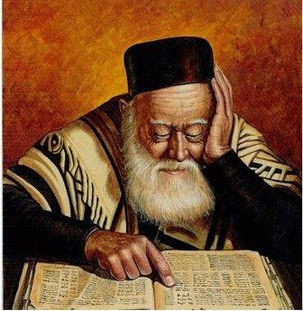


 Morning Meditations