
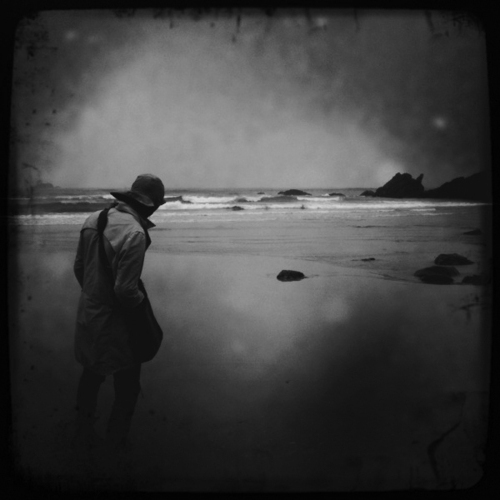
 That day when evening came, he said to his disciples, “Let us go over to the other side.” Leaving the crowd behind, they took him along, just as he was, in the boat. There were also other boats with him. A furious squall came up, and the waves broke over the boat, so that it was nearly swamped. Jesus was in the stern, sleeping on a cushion. The disciples woke him and said to him, “Teacher, don’t you care if we drown?”
He got up, rebuked the wind and said to the waves, “Quiet! Be still!” Then the wind died down and it was completely calm. He said to his disciples, “Why are you so afraid? Do you still have no faith?”
They were terrified and asked each other, “Who is this? Even the wind and the waves obey him!” –Mark 4:35-41
“Serenity is not freedom from the storm, but peace amid the storm.” -Unknown
I remember reading a story about a Jewish Chasid who went to his Rebbe and complained of terrible problems. He had various difficulties in his life, including matters of finance and was distracted all of the time. He begged the Rebbe to help him find peace of mind, so he could return to his Yeshiva studies.
The Rebbe instead became angry and said something like, “All you have been doing is telling me about your problems and how you want peace of mind. What about all you could be doing to help others?”
I can’t recall the source of the parable, so I’m reconstructing it from memory, but I think I’ve captured its essence. The Chasid wanted what we all want at times; peace of mind and relief from the struggles of day-to-day life. He wanted to return to a state where he could calmly, quietly contemplate the things of God and allow his spirit to ascend the heights of the courts of Heaven. Instead his Rebbe, the man who he felt was close enough to God to understand his concerns, completely sidestepped his worries, turned him around, pointed him at the problems of other people, and told him to go out there and be a solution.
Wasn’t that kind of heartless?
Not really.
For the past couple of mornings, I’ve been chronicling the personal struggles we all face in confronting sins, desiring to repent, the roadblocks of despair, depression, and discouragement, and how it seems that hitting the reset button on life during the Jewish High Holidays is more fantasy and wishful thinking than practical reality. After all, how is it possible to rid ourselves of our human frailties and grow closer to God when life will not stop long enough to give us a break? How can we enjoy the sunshine and the gentle breezes of an early fall when the raging storms of winter will absolutely not let up for a second?
“Serenity is not freedom from the storm, but peace amid the storm.” -Unknown
Easier said than done.
The disciples woke him and said to him, “Teacher, don’t you care if we drown?”
He got up, rebuked the wind and said to the waves, “Quiet! Be still!” Then the wind died down and it was completely calm.
He said to his disciples, “Why are you so afraid? Do you still have no faith?”
Was Jesus being unreasonable with his disciples? Who wouldn’t have been terrified? Where was his compassion?
We are not passive observers of this universe, but rather partners in its creation. We are the ones who assign each thing its meaning, who bring definition and resolution to an otherwise ambiguous world.
In fact, we are legal witnesses who determine a matter of life or death: For each thing we hold, each event that enters our life, our word declares whether it breathes with G-dly life or simply idles itself into oblivion.
-Rabbi Tzvi Freeman
“Defining Your World”
Based on letters and talks of the Rebbe
Rabbi M. M. Schneerson
Chabad.org
 But where is God amid the storm? Does God hear the screams of the countless victims of the rape gangs in the Congo? Where is God when the persecuted Christians in China and Afghanistan cry out? Where is God six months after the Japan earthquake and tsunami when the victims still face the long struggle to rebuild their nation and their lives (and now one million Japanese must flee a typhoon)?
While the storm in your life and mine may not be so devastating, where is God when we struggle and sometimes fail? Where is He in the storm?
The LORD said, “Go out and stand on the mountain in the presence of the LORD, for the LORD is about to pass by.”
Then a great and powerful wind tore the mountains apart and shattered the rocks before the LORD, but the LORD was not in the wind. After the wind there was an earthquake, but the LORD was not in the earthquake. After the earthquake came a fire, but the LORD was not in the fire. And after the fire came a gentle whisper. When Elijah heard it, he pulled his cloak over his face and went out and stood at the mouth of the cave. –1 Kings 19:11-13
I don’t have the answers. I can’t tell you why people suffer horribly. I can’t tell you why some people suffer horribly and yet retain an almost mystical trust in God.
Though he slay me, yet will I hope in him;
I will surely defend my ways to his face. –Job 13:15
Most of us aren’t Job. But what choice do we have? If we give up and abandon our faith in the face of our sins and as the storm clouds approach, how are we better off? But how can God give us serenity in the midst of the storm? Paul knew:
I am not saying this because I am in need, for I have learned to be content whatever the circumstances. I know what it is to be in need, and I know what it is to have plenty. I have learned the secret of being content in any and every situation, whether well fed or hungry, whether living in plenty or in want. I can do all this through him who gives me strength. –Philippians 4:11-13
Most of us aren’t Paul. But what choice do we have? The answer is there somewhere, beyond the simplistic platitudes of “you just need to have more faith”. Somehow it’s possible. Somehow, it’s even practical to be able to trust God to the degree that it defies all reasonable expectations. God won’t send away the storm. We must learn how to rely on Him strongly enough to be able to endure the wind and the rain and the chaos.
Somehow.
 Morning Meditations