
 Many see the value of spirituality, and perhaps its necessity. They seek to infuse their lives with spirituality and nurture their relationship the Al-mighty. How does one begin to live such a life?
Abraham sends his servant Eliezer to find a wife for his son Isaac. The Torah, known for its brevity in the general narrative and in outlining the commandments, describes Eliezer’s search in uncharacteristic detail. Our Sages are lead to conclude that “G-d finds more beauty in the regular conversation of our Forefather’s servants than in the children’s Torah” (Rashi, Gen. 24:42 based on Midrash). How could anything be more beautiful than Torah, His Mitzvos (commandments) that guide us how to live life to its fullest?
Let’s observe Eliezer in action (Gen. 24): He arrived at the well where he’d meet Isaac’s bride Rebecca, and he took a moment to pray to G-d for help. As matters unfolded, Eliezer stood back and recognized G-d’s hand in the success of the mission. He began to see success, he then bowed to G-d and said a prayer of thanks. He recounted the events to Rebecca’s family and pointed to G-d’s hand throughout. The family agreed to the marriage and Eliezer bowed in thanks to G-d.
What’s the ultimate beauty of G-d’s Torah? It brings us to recognize and build our relationship with the Al-mighty. That’s spirituality in a nutshell, and there’s no greater joy. Abraham’s servant, amidst all that occurs, maintains that relationship; he lives with the constant awareness of G-d’s presence in his personal life. G-d Himself finds that most beautiful!
-Rabbi Mordechai Dixler
Program Director, Torah.org – Project Genesis
And he said, “O Lord, God of my master Abraham, grant me good fortune this day, and deal graciously with my master Abraham: Here I stand by the spring as the daughters of the townsmen come out to draw water; let the maiden to whom I say, ‘Please, lower your jar that I may drink,’ and who replies, ‘Drink, and I will also water your camels’-let her be the one whom You have decreed for Your servant Isaac. Thereby shall I know that You have dealt graciously with my master.” –Genesis 24:12-14
I receive the Project Genesis Lifeline email on Friday morning, which is usually too late to use as a source for my Torah Portion “morning meditation”, since I write each blog post a day ahead. This is why I tend to comment on a given Torah portion right before and right after Shabbat. This commentary from Rabbi Dixler surprised me a little, not in what he said, but in the fact that he posted a photo of Denver Bronco’s Quarterback Tim Tebow praying before a game. Why use Tebow as an example when Rabbi Dixler could have as easily used a photo of a Jew davening? I looked up Tebow (I’m not a football fan) on Wikipedia and found this:
Tebow was born in Makati City in the Philippines, the son of Pamela Pemberton Tebow, daughter of a U.S. Army colonel, and Robert Ramsey Tebow, a pastor, who were serving as Christian Baptist missionaries at the time.
All of the Tebow children were homeschooled by their mother, who worked to instill the family’s Christian beliefs along the way.
I’m probably reading more into this than is really there, but as I recall, the servant of Abraham was not a Hebrew (some Rabbis consider him a Ger Toshav) and yet he gives us our first example of a personal prayer in the Torah. It’s also interesting that the servant refers to God as, “O Lord, God of my master Abraham” rather than as “my God” or just “God”.
It’s often thought that one of Abraham’s virtues was that he taught all of his household, including his family and servants, ethical monotheism or the nature and character of the One God. We know from later in the scriptures that Israel was and is to be a “light to the nations” (Isaiah 49:6) and moreover, that the nations would be blessed through Abraham (Genesis 12:3) and his seed (Genesis 22:18, 26:4, Acts 3:25).
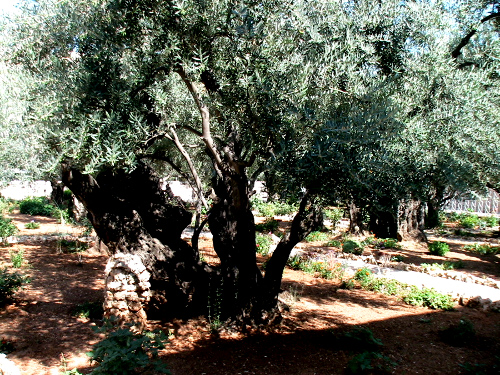 We see from this two things: that the Gentiles connect to God through the Jewish people, and that once this connection is established, we may access God directly. To extend this metaphor, just as the servant of Abraham connected to God through his Jewish intermediary Abraham, we who are Christians connect to God through our Jewish intermediary, His Son, Jesus, the Messiah and Savior. In that sense, there is a duality to our nature as Christians. On the one hand, our unshakable foundation is the Rock and the cornerstone that was rejected, and we can trace his lineage all the way back in time from Jesus to Abraham (Matthew 1:1-17). On the other hand, standing on that rock, we continually reach up to the Heavens seeking the Author of our faith and the King of Majesty and Glory for all the Universe.
Rabbi Tzvi Freeman, though addressing the legacy of the Jews, speaks of this in his article “Life’s Roots” at Chabad.org.
We are trees, living two lives at once. One life breaking through the soil into this world. Where, with all our might, we struggle to rise above it, grapple for its sun and its dew, desperate not to be torn away by the fury of its storms or consumed by its fires.
Then there are our roots, deep under the ground, unmoving and serene. They are our ancient mothers and fathers, Abraham, Sarah, Isaac, Rivkah, Yaacov, Leah and Rachel. They lie deep within us, at our very core. For them, there is no storm, no struggle. There is only the One, the Infinite, for Whom all the cosmos with all its challenges are nothing more than a fantasy renewed every moment from the void.
Our strength is from our bond with them, and with their nurture we will conquer the storm. We will bring beauty to the world we were planted within.
While Judaism sees Noah as the “father” of the Gentiles and believes we should look to him for the seven laws by which we should govern our lives, Paul teaches us that we can call Abraham our father (Romans 4) because like him, we are “justified by faith” and it was from Abraham that the hope of the Messiah comes. We stand on the rock and reach up to the heavens.

 Morning Meditations