
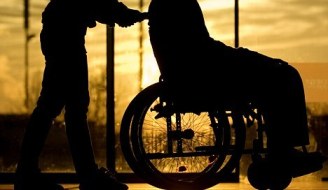
 Question: My granddaughter is becoming bat mitzvah, and my 92-year-old mom is saying she will not be able to go because she cannot drive on Shabbat. But is it allowable—for this special occasion—for her to violate Shabbat just this once? The way I see it, this is a once-in-a-lifetime situation, making it quite okay to drive. This is her first great-granddaughter to reach bat mitzvah, and unfortunately she probably will not be around to celebrate this milestone with any of her other great-grandchildren.
Answer: This is an important question, for it leads us to a central theme in Judaism.
It’s easy to relate to a mitzvah as tradition or symbolism. Perhaps, taking it one step further, a mitzvah is divine advice on how to live the best life possible—the most meaningful, the most blessed.
If we would accept either of those definitions, we would have to agree that fulfilling mitzvot depends on the situation. We would say that yes, tradition is important, living a meaningful life is important, but in this situation there is something else more traditional and more meaningful—so we would use our judgment as to what takes precedence.
But that isn’t so. A mitzvah is precious not just because it is a tradition and has meaning to us. A mitzvah is G‑d’s own will and infinite wisdom. If so, a mitzvah’s incredible power and the blessing it brings is infinite in nature. It’s a connection to an infinite G‑d, way beyond our own understanding. It goes beyond the benefits and meaning we sense—though that’s important as well—for it is part of the divine. And a G‑dly formula for living is not subject to man deciding whether it is or isn’t relevant in a particular situation. (It is only when the Torah itself instructs us to put aside Shabbat, as in to save a life, that Shabbat laws should be disregarded.)
We might feel that a hike to the top of a mountain will be a more spiritual experience than a trip to the synagogue. Or that the pastrami from the new “kosher style” delicatessen will make the bat mitzvah a more joyous experience. Or, in a far more subtle manner, the situation here: that a great-grandmother being at the family celebration outweighs the prohibition of driving. And that’s when we remember that a G‑dly mitzvah is eternal, and extends far, far past the benefits we happen to sense . . .
Your grandmother should most certainly be at this bat mitzvah. It is only that you will need to find a way for this to happen in a permissible manner. Have you looked into her staying within walking distance from the synagogue? If this is not a possibility, you can speak to the rabbi about having a non-Jew wheel her to the synagogue (a subject beyond the scope of this e‑mail).
Mazel tov, and may you have much nachas from the entire family!
-Rabbi Yisroel Cotlar
“Can We Drive Grandma on Shabbat?”
Chabad.org
I suppose, even if I were currently tempted to convert to Judaism, this is one of the reasons I could never be a Jew. I understand, at least to a degree, the principle that Rabbi Cotlar is trying to communicate, but from my point of view, human compassion has to take a back seat to obedience to the mitzvot regarding not driving on Shabbos (maybe saying that makes me a bad person, I don’t know). Worse than that, I don’t understand the Rabbi’s advice about having a non-Jew wheel her to the synagogue (if it would help and if this were happening now in my community, I’d be more than willing…but there seems to be a problem).
It is forbidden for us to tell a gentile to perform work on the Sabbath on our behalf, although they are not commanded [to observe] the Sabbath. [This applies] even when the instructions were conveyed to them before the Sabbath and we do not require [the products of] their work until after the Sabbath.
The above is forbidden as a Rabbinical prohibition to prevent the people from regarding the Sabbath lightly, lest they perform [forbidden] labor themselves.
On the other hand…
[The following rules apply] when a gentile performs a [forbidden] labor on the Sabbath on his own accord: If he performed it on behalf of a Jew, it is forbidden to benefit from that labor until one waits the amount of time necessary to perform the labor on Saturday night.
[The latter leniency is granted] provided the matter is not public notice – i.e., everyone knows that a particular task is being performed for a person on the Sabbath.
If [the gentile] performed [the labor] for his own sake alone, it is permitted to benefit from it on the Sabbath.
Halacha 1 and Halacha 2 from
Chapter six of Mishnah Torah, Sefer Zemanim, Shabbos
Translated by Rabbi Eliyahu Touger
Chabad.org
 Lacking the educational background (as well as an ethnic, cultural, and lived Jewish experience), I admit that I can’t really interpret what is being said here and whether or not a non-Jew would really be permitted to “wheel grandma” to the synagogue on Shabbos if asked by her Jewish relatives. It seems a little dodgy to me, but then again, admittedly the nuances of interpreting Mishnah Torah escape me.
On the other hand, what should we say…that man was made for the Shabbat rather than the Shabbat being made for man?
One Sabbath he was going through the grainfields, and as they made their way, his disciples began to pluck heads of grain. And the Pharisees were saying to him, “Look, why are they doing what is not lawful on the Sabbath?” And he said to them, “Have you never read what David did, when he was in need and was hungry, he and those who were with him: how he entered the house of God, in the time of Abiathar the high priest, and ate the bread of the Presence, which it is not lawful for any but the priests to eat, and also gave it to those who were with him?” And he said to them, “The Sabbath was made for man, not man for the Sabbath. So the Son of Man is lord even of the Sabbath.”
–Mark 2:23-27 (ESV)
I included the entire section of scripture relevant to this situation rather than just quoting verse 27 because I’m aware that the circumstances Jesus was describing may not be directly associated with “driving grandma to synagogue.”
If grandma could stay Friday night within walking distance of the synagogue (assuming she can walk adequately at age 92), then I understand that would be acceptable. If grandma could stay the night within walking distance of the synagogue but could not walk, while I am “unclear” of the legitimacy of asking a “Shabbos Goy” to wheel her to shul, I’d accept that as an alternative from my Christian perspective. But if no halachically acceptable alternative were available, and grandma really, really wanted to attend her great-granddaughter’s bat mitzvah (and/or great-granddaughter really, really wanted great-grandma to be there for this once-in-a-lifetime event), then I’d drive grandma to shul (I know…she would be violating Shabbos by even accepting the ride).
I know this isn’t a life or death situation but I can’t set aside the feelings of the great-grandmother in question or her great-granddaughter either. Besides, according to one person’s comment on the matter, there is precedent for an alternative:
I think of the Rev that chopped wood and made soup for a helpless woman in her bed on Yom Kippur -she had just given birth) Sometimes it is necessary to hurt ourselves spiritually in order that another rmay grow or even live. However, I am loving ths suggestion of staying with her family for the entirety of Shabbat or the motor home. How important will the young ladies’ Bat Mitzvah be to her without Grandma there? How will that affect her walk with Hashem? We will never know. Some souls are mighty sensitive. Will this suck out all of the girl’s joy, what a sin that would be. Have her expectations been considered?
-Emily
I remember reading of this “Chasidic tale” so I think there is a value in Judaism that would allow an individual to violate Shabbos for the sake of another, even when their life is not at risk.
Here are a few more comments:
I proposed some questions to Rabbi Manis Friedman years ago relating to the halachot of shabbos. His answer? Shabbos is shabbos. End of story.
-Anonymous
I wasn’t raised Orthodox and don’t have a full understanding of this. But my argument would be that just because rabbis declared that driving, or even riding in a car, violates the Sabbath, doesn’t make it so. I don’t know, but my guess is that at the time, there were probably arguments going both ways.
-R. Baron
i’m a committed but not orthodox Jew and am fascinated by the question and your response.
The alternatives you gave were good; you may want to consider a nearby hotel for Friday night also. But to the heart of the matter, you mentioned consideration of what is ‘most meaningful, etc.’
I believe keeping the great-grandmother away from attending and participating would be cruel. since the question comes up –and Chabad is consulted –it implies she has done a great job in raising a Jewish family.
I do not believe the divine would want her to miss it and this is not a question of climbing a mountain on shabbat or going to a ‘kosher style deli.’
-Oppie
Apparently, this isn’t a clear-cut issue for at least some Jewish people, either. I know. I’m probably going to “catch heck” from my Jewish friends who read this blog and maybe a few “Judaically-aware” Christians as well. I know that if someone who is shomer Shabbos is lenient on a rare occasion, it may lead to greater lenience and finally to habitually “cheating” on the Shabbat, but on the other hand, isn’t it possible to be too rigid? If a “hedge” is placed around the mitzvot to prevent a Jew from even coming near to violating Shabbos, isn’t it possible the hedge can become too extreme?
My perspective can be easily dismissed with a “you aren’t Jewish and so you don’t understand,” but as I mentioned (and demonstrated) above, even other Jewish people have a hard time with this one. My response (and this is quite a counterpoint to my Shabbat commentary from the other day), all other reasonable alternatives failing, is that I’d find a way to get grandma to shul for the bat mitzvah. I don’t think God would really mind, but then again, how am I to tell?
 Morning Meditations
I think (as a non-Jew) that this encapsulates the angst of being Jewish; you live in a world that forces you to go against the current to be a shomer. I am working to that point where I can observe better the mitzvot, because trying to do it all at once is almost a suicide pact. I have one more wedding to attend and a new place to eventually move into before I can really strike the iron. I’m not where I need to be to best observe. After that, I will not even stop for a wedding. When I get to that point.
Camping and shabbat will be more a challenge; I’m one of those guys who likes to pack light and pretty much disappear into the deep hills. You can bring rolls and a flask of grapejuice and a candle, to my understanding.
It seems we are driving in opposite directions, James. Not on Shabbos, of course. 🙂
I think and hope that in the Messianic Age, Messiah will make Torah observance easy and breaking it hard.
Be well, friend.
Thanks, Drake.
I don’t know if you’re married and/or have kids or not but believe me, besides what I mentioned above, it can make a difference.
Good Shabbos.
I am not married and have no kids.
Sorry to intrude into your personal life. If you’ve been reading my blog posts regularly, you know that a family life can make things a tad complicated at times. 😉
I am wondering why the Rabbi did not suggest using the eruv (unless the one posing the question does not live in a Community). The eruv is a ritual enclosure that some communities construct in their neighborhoods as a way to permit Jewish residents or visitors to transfer objects from one domain type to another, such as carrying an object from indoors (a private domain) to a public street (a public domain) on Shabbat, which they would otherwise understand to be prohibited by Jewish law (Halakha). An eruv accomplishes this by integrating a number of private and public properties into one larger private domain.
The eruv allows these religious Jews to, among other things, carry keys, tissues, medicines, or babies with them, and use strollers and canes. The presence or absence of an eruv thus especially affects the lives of people with limited mobility and those responsible for taking care of babies and young children.
Good point Pat, but it’s impossible to tell. I suspect there were a lot of details that were removed from the transaction in order to “make the point” about Shabbat.