All posts by James Pyles

James Pyles is a published Science Fiction, Fantasy, and Horror author as well as the Technical Writer for a large, diversified business in the Northwest. He currently has over 30 short stories published in various anthologies and periodicals and has just sold his first novella. He won the 2021 Helicon Short Story Award for his science fiction tale "The Three Billion Year Love" which appears in the Tuscany Bay Press Planetary Anthology "Mars."

A Walk to Redemption

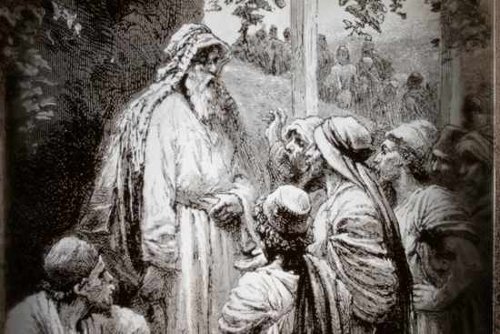
WalkingThe chassidic community in Poland was in a state of shock. The great chassidic master Rabbi Moshe of Lelov had decided to ascend to the Holy Land and settle there. How could they possibly go on without his leadership?

To his closest disciples the rebbe revealed that when he was a small boy, his father, Rabbi David of Lelov, had said to him: “I did not merit to see the Holy Land, but you must go there. Through your divine service which you will perform there, you will succeed in bringing Moshiach sooner, and hastening the Redemption.”

-Rabbi Yerachmiel Tilles
“The Shattered Goblet”
Chabad.org

Last spring, after Shavuot, I wrote a two-part meditation called “Redeeming the Heart of Israel,” Part 1 and Part 2. I received a certain amount of criticism because I was perceived as somehow elevating Israel and the Jewish people above the non-Jewish believer in the Messiah. While the church is slowly moving away from its stance of supersessionism (I know, I used that word, again) and anti-Israel/anti-Jewish beliefs, it is still difficult for many Christians to take Paul at his word and believe that “all Israel will be saved.” (Romans 11:26)

Part of the problem is understanding what redemption means. From a traditional Christian point of view, individuals are redeemed; we are saved by our faith in Jesus Christ, which generally means, when we die, we go to Heaven. All seems so nice and simple and reassuring. But that’s generally not how Jews see the concept of redemption and the coming of Messiah. As we see from Rabbi Tilles’ story, it is clear that the coming of the Messiah is closely coupled with the redemption of national Israel, not necessarily focused on each individual’s redemption (although this too is important). However, the Jewish point of view is often criticized by Christians as extra-Biblical and thus invalid.

But is this actually true or did Christ’s own disciples believe he was supposed to accomplish Israel’s national redemption?

So when they had come together, they asked him, “Lord, will you at this time restore the kingdom to Israel?” He said to them, “It is not for you to know times or seasons that the Father has fixed by his own authority. But you will receive power when the Holy Spirit has come upon you, and you will be my witnesses in Jerusalem and in all Judea and Samaria, and to the end of the earth.”

Acts 1:6-8 (ESV)

I’ve mentioned all this before, but I don’t know if anyone is taking the message seriously. I’m not trying to “undo” or contradict the doctrine of personal salvation through Jesus Christ, but to illustrate that one of the things he will do upon his return, that was expected the first time he was here but not accomplished, is to restore Israel as a nation to a state of rule over the earth, and return the Jewish people to their Land and heritage in glory and honor.

That’s the part some Christians, including some of those in the Hebrew Roots movement, have a problem with. The “inequality” among the body of believers in the form of salvation coming from the Jews. (John 4:22) Traditional Christianity has historically taught (and thankfully, this is changing) that the church has replaced the Jews in all of the covenant promises, and that Jesus killed the Torah in the process. Hebrew Roots maintains that the Torah still lives, but that the distinctions between Jew and (Christian) Gentile have been totally eliminated and there is only one new identity before God, the “Messianic” identity, despite the fact that God has promised to be a God to the Jewish people forever, to return them to their Land, and to establish Israel as the head of all the nations (i.e. the rest of us).

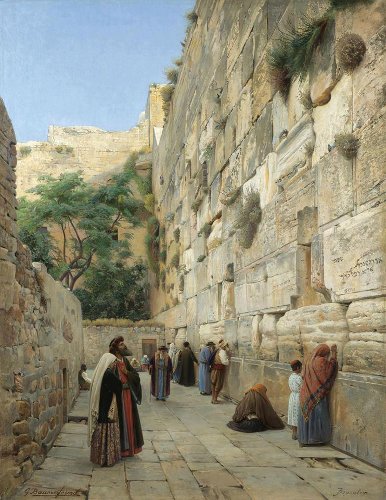
If you read all of Rabbi Tilles’ tale, you’ll see that sadly, Rabbi Moshe of Lelov never accomplished his mission to reach the Kotel and summon the Moshiach. It is believed that this occurred because the time for the Moshiach’s arrival had not yet come. While Christianity doesn’t believe we can do anything to hasten the return of Jesus, Jews believe by performing acts of tikkun olam or “repairing the world,” that we all, Jews and Gentiles alike, can take part in bringing the time of his coming (or return) just a little bit closer.

In the face of everything I’ve just said, we Christians have a couple of choices. We can accept that the Bible is telling us that we are dependent on the Jews for our salvation through the Jewish Messiah and our covenant relationship with the God of Israel, or we can ignore those parts of the Bible that present this information and focus on either the traditional church doctrine of supersession, or one of the variants being created in minority movements within larger Christianity (which includes Hebrew Roots in general and it’s subgroups such as One Law, which indeed is a Christianity and not a “Judaism”).

Probably the most lively debate on this topic currently happening (though it seems to be winding down) in the blogosphere is on Gene Shlomovich’s blog. I’m actually learning a great deal from a few of the individuals posting (and I may mine some of those comments and pull them together for a future “meditation”), mixed in with the more expected objections to Jewish “choseness” within the Messianic body. But I struggle to remember a lesson that I very recently wrote discouraging the acceptance of someone else’s “gift” of their own anger and hostility, which is not an easy task on the web, but one that is absolutely necessary if we are to truly call ourselves disciples of our Master.

We see in the early chapters of Acts that the community of disciples of Jesus Christ were all Jewish and that, upon accepting the Spirit and declaring their discipleship, the Jews did not deviate in any way from being Jewish. In fact, in the Torah Club commentary I’m reading this week, the early Jewish disciples are referred to as “The Temple Sect.”

Contrary to popular assumptions, the disciples did not teach against the Temple or the Levitical worship system. If the gospel did cancel the Torah and the Levitical worship system, the apostolic community in Jerusalem seems to have been ignorant about the change. They continued to revere the Temple and participate in its services throughout their lives.

The disciples of Yeshua revered the Temple because their Master revered it. He regarded the Temple as his “Father’s house.” As a boy, Yeshua was reluctant to leave the Temple courts. As an adult, He was found in the Temple teaching and attending the festival services. He spent the last days of His life, prior to his crucifixion, in the Temple. He prophesied its coming destruction only with sorrow and weeping…

After the ascension, his disciples “were continually in the temple praising God” (Luke 24:53). They were likely in the Temple when the Holy Spirit was poured out upon them on the day of Pentecost. Aftr that, they remained day by day in the Temple together.

As I continue my study of the book of Acts in the First Fruits of Zion (FFOZ) Torah Club, I hope to find that my perceptions are becoming clearer on these points, including what redemption truly means for Israel and the nations, and where we all stand, Jews and non-Jews, as brothers and sisters in the Messiah.

In my Days series, I’ve been recording my plans to return to more traditional Christian fellowship, in part to reconcile on some level with the larger body of Gentile believers. I don’t know how successful I will be, but I’ve been challenged to trust God more than I have in the past. Hopefully, the ground will remain firm rather than falling out from under me.

Walter Donovan (Julian Glover): As you can now see, Dr. Jones, we are on the verge of completing a quest that began almost two thousand years ago. We’re just one step away.

Indiana Jones (Harrison Ford): That’s usually when the ground falls out from underneath your feet.

from the film
Indiana Jones and the Last Crusade (1989)

Hopefully and with God’s grace, my journey toward reconciliation and redemption will also have a “happy ending.”

68 Days: Encouragement

I really, really needed this post today. Sent it to my husband and daughters. The story about Rabbi Schneur Zalman was wonderful. Thank you for writing. You are indeed a benefit to the body.

Blessings!

-Linda in a comment on
one of my blog posts

For God has not destined us for wrath, but to obtain salvation through our Lord Jesus Christ, who died for us so that whether we are awake or asleep we might live with him. Therefore encourage one another and build one another up, just as you are doing.

1 Thessalonians 5:9-11 (ESV)

Sometimes when I’m physically tired and haven’t had enough sleep, I irrationally become discouraged and “bluesy.” I was feeling that way last night, especially after reading some of the more recent and “cranky” responses on Gene Shlomovich’s blog. (Gene’s blog is fine and most of the respondents are too, but not all of them, alas.) This goes along very well with my “Days” series and my countdown to renewal or (virtual) oblivion.

But I’ve been receiving some encouragement. A lot of it is “behind the scenes” but some of it comes in the form of blog comments, such as the one I quoted above. I suppose it’s sort of ironic that I should be encouraged by someone telling me that I’m encouraging them. But isn’t that the point? One of the things I find greatly discouraging is all this bickering on the web between (supposed) brothers in Christ Jesus over who is right and who is wrong, as if this is some sort of twisted form of the recent Presidential debates, and God is the moderator who will decide who wins and who loses.

Really, if God is going to judge us on our actions, I seriously don’t think it will have much to do with our “debates” on all our blogs:

“When the Son of Man comes in his glory, and all the angels with him, then he will sit on his glorious throne. Before him will be gathered all the nations, and he will separate people one from another as a shepherd separates the sheep from the goats. And he will place the sheep on his right, but the goats on the left. Then the King will say to those on his right, ‘Come, you who are blessed by my Father, inherit the kingdom prepared for you from the foundation of the world. For I was hungry and you gave me food, I was thirsty and you gave me drink, I was a stranger and you welcomed me, I was naked and you clothed me, I was sick and you visited me, I was in prison and you came to me.’ Then the righteous will answer him, saying, ‘Lord, when did we see you hungry and feed you, or thirsty and give you drink? And when did we see you a stranger and welcome you, or naked and clothe you? And when did we see you sick or in prison and visit you?’ And the King will answer them, ‘Truly, I say to you, as you did it to one of the least of these my brothers, you did it to me.’

“Then he will say to those on his left, ‘Depart from me, you cursed, into the eternal fire prepared for the devil and his angels. For I was hungry and you gave me no food, I was thirsty and you gave me no drink, I was a stranger and you did not welcome me, naked and you did not clothe me, sick and in prison and you did not visit me.’ Then they also will answer, saying, ‘Lord, when did we see you hungry or thirsty or a stranger or naked or sick or in prison, and did not minister to you?’ Then he will answer them, saying, ‘Truly, I say to you, as you did not do it to one of the least of these, you did not do it to me.’ And these will go away into eternal punishment, but the righteous into eternal life.”

Matthew 25:31-46 (ESV)

I know in the church, we believe that we are saved, not through what we do, but by our faith in Jesus Christ. However, we see that self-same Jesus Christ judging by what we do or fail to do for our fellow human being (and ultimately, for him). I suppose there’s no contradiction here, since if our faith and trust is true and we are actual and authentic disciples of our Master, then our actions following that faith and trust should be almost automatic. We should naturally be found feeding the hungry, visiting the sick, comforting the grieving, extending hospitality to the homeless and lost, and much, much more.

I don’t think we’ll win the race (2 Timothy 4:7) by “winning” a blogosphere argument (and let’s face it, nobody ever changed their minds on the web because of someone else’s devastating argument or piercing witticisms).

So, in writing about what I always write about, that is, whatever’s on my mind and heart at the time, I managed, through God’s grace, to encourage another believer traveling her own path of faith. Fingers pressing keys on a keyboard, and electrons zipping across the Internet managed to communicate the will and kindness of God from one human being to another. How could I not feel honored that my small “service” has been accepted as it was intended?

But I truly believe that those who really have “fought the good fight, finished the race, and kept the faith” probably don’t even know how to create a blog, let alone have the time to write on one. They’re too busy feeding the poor, clothing the naked, making sure the homeless have shelter, opening their homes to the needy, and doing a thousand other things that serve God and provide His generosity to the very least of His servants.

I’m glad, in the middle of my own meager efforts, that I was able to encourage one human being. Thank you Linda, and everyone else who has commented kindly to me, for continuing to encourage me as well. For that’s what our Master, and Paul, his Apostle to the nations, have commanded us to do.

A new commandment I give to you, that you love one another: just as I have loved you, you also are to love one another. By this all people will know that you are my disciples, if you have love for one another.”

John 13:34-35 (ESV)

Community Snapshot: Lessons from Acts 2:42-4:31

Now Peter and John were going up to the temple at the hour of prayer, the ninth hour.

Acts 3:1 (ESV)

At Caesarea there was a man named Cornelius, a centurion of what was known as the Italian Cohort, a devout man who feared God with all his household, gave alms generously to the people, and prayed continually to God. About the ninth hour of the day he saw clearly in a vision an angel of God come in and say to him, “Cornelius.”

Acts 10:1-3 (ESV)

The disciples devoted themselves to “the prayers.” “Luke’s reference to ‘prayers’ rather than to prayer per se here may indicate observance of regular prayer times in the Temple – as well as the community’s own prayers.” (see Le Cornu and Shulam, “A Commentary on the Jewish Roots of Acts: Acts 1-15, 147.”) Most English versions obscure the meaning by not transmitting the definite article. The Greek says that they devoted themselves to “the prayers (tais proseuchais).”

“The prayers” should be understood in keeping with the common liturgical, daily prayers of Judaism, the synagogue, and the Temple. Six verses later, Luke depicts Simon Peter and John “going up to the temple at the ninth hour, the hour of prayer” (Acts 3:1).

This does not mean that early believers prayed out of a Siddur. Prayer books did not yet exist. It only implies that they prayed in concert with other Jewish people, following the same forms, conventions, modes, and times of prayer as the rest of the Jewish world. Their faith in Yeshua (Jesus) did not change their mode of worship. Their faith made their worship more intense and ardent.

Torah Club, Volume 6: Chronicles of the Apostles
from First Fruits of Zion (FFOZ)
Torah Portion Lech Lecha (“Go forth”) (pg 63)
Commentary on Acts 2:42-4:31

In my previous meditation about the Torah Club commentary on Acts, I tried to explain a couple of things. Based on Acts 2, I illustrated that those who were at the Shavuot (Pentecost) festival, and the 3,000 who received the Holy Spirit in Christ’s name, were all Jewish. Coupling what we read in Acts 2 with this week’s study of Acts 2:42-4:31, we can see that the very early days of “Christianity” with Peter and John in Jerusalem involved a completely Jewish religious community. In fact, this portion of Acts is devoted to the description of the early Jewish disciples of the Jewish Messiah in the weeks and months after his ascension.

I’m choosing to focus on that aspect of Jewish community involving “the prayers” for a couple of reasons. One is the obvious point that nothing about the practice of the Jewish disciples changed in the slightest because they were disciples of the Jewish Jesus. They still observed “the prayers” at the set times for prayer. They prayed together with other Jews, both disciples of the Master and any others who had gathered together, seemingly in the part of the Jerusalem Temple known as Solomon’s Portico.

However, you will notice that I again insert something from Acts 10 about the Roman Centurion Cornelius, the God-fearer, who at the beginning of that chapter, had not yet received the Christ; the Messiah, as Lord and Savior. And yet, he was praying at the ninth hour which was “the hour of prayer,” just as the Jews did, including Peter and John.

I also said in my previous missive that the non-Jewish God-fearers and later, the non-Jewish disciples of Jesus indeed took on some (or many) of the Jewish religious practices in order to imitate their mentors and in fact, at that point in history, the “Jewish model” for worshiping God was the only model available. This didn’t make Cornelius or any of the Gentile disciples suddenly Jewish or automatically obligated to a full Jewish lifestyle (otherwise, Paul wouldn’t have thrown such a “temper tantrum” in Galatians 5:1-5). However, it does mean that “Christian” worship looked a lot more Jewish, even after the first non-Jews began to be admitted as disciples, than we could ever imagine it being today.

I suppose that I’ll have a lot more material on Cornelius and the first non-Jewish “Christians” when I actually arrive at the Torah Club’s commentary on Acts 10 (which won’t happen for another six weeks or so) but I want to point out, for those of you reading this who may not already know, the discipleship under Jesus Christ for the early Jewish and Gentile believers did not entail some abrupt demarcation from what otherwise was considered “normal” Jewish religious practice. As D. Thomas Lancaster points out in this week’s study (pp. 61-62):

Notice that each of the four devotions (The Apostles’ Teaching, Fellowship, Breaking of Bread, and the Prayers) are hallmarks of Jewish practice. The new community that formed around the disciples of Yeshua did not adopt new customs or innovations that could be considered particularly Christian and distinct from Judaism. Instead, they devoted themselves to the same pursuits that might characterize any Jewish faith community. Today’s churches and communities of faith would look more like messianic synagogues if we committed ourselves to the four devotions of study, community, hospitality, and liturgy.

That recalls a question I asked not too long ago. Do Christians Practice Judaism? As we understand the concepts today, the answer must be “no.” However, as the “Messianic faith” began as a wholly Jewish expression of discipleship under the Master, what were the very first Gentiles doing when they were brought into discipleship with the Jews? For that matter, what did Cornelius think he was doing when he, as a God-fearer, prayed at the ninth hour and (presumably, though we can’t know for sure) gathered with the Jews in synagogue on Shabbat? Practicing Judaism?

Well, probably not, anymore than a modern-day Noahide could be said to be practicing Judaism by davening with Jews in a synagogue on Shabbat. But is the relationship between a Noahide and a Jew in the 21st century the same as that of a “Messianic” Jew and non-Jew in the mid-1st century? Noahides generally see themselves as bound by the covenant of Noah (see Genesis 9), while Jews claim the Abrahamic, Mosaic, and New Covenants, so strictly speaking, they are unlike members of God’s community, attached to God by different covenants.

I’ve said before that I believe we Christians have a relationship with God due to certain blessings included in the Abrahamic and New Covenants but that we are not attached to all of the same conditions within those covenants. Further, it is my belief (because there’s no evidence directly involving non-Jews) that we are not recipients of any blessings from the Mosaic covenant, which more than any of the other covenants, specifically identifies the Jewish people as a unique covenant people, even within the Messianic community of the 1st century and of the budding Messianic Jewish community of the 21st century.

But let’s wind back to the very early chapters of Acts again and take a look at the community as it existed after that first fateful Shavuot when the Spirit was given.

And they devoted themselves to the apostles’ teaching and the fellowship, to the breaking of bread and the prayers. And awe came upon every soul, and many wonders and signs were being done through the apostles. And all who believed were together and had all things in common. And they were selling their possessions and belongings and distributing the proceeds to all, as any had need. And day by day, attending the temple together and breaking bread in their homes, they received their food with glad and generous hearts, praising God and having favor with all the people. And the Lord added to their number day by day those who were being saved.

Acts 2:42-47 (ESV)

Here we see some of what Lancaster called “the devotions,” namely teaching/studying and fellowship through breaking of bread (which is just as it sounds, eating together, rather than some special sacrament). This passage is also sometimes referred to as “Christian Communism,” since everyone “re-distributed wealth” so that everyone shared everything. This brings up a point I want to make, not only about this passage but about the larger issue of community.

There are some who would isolate this part of the second chapter of Acts and say it’s the only way a Christian community should be run, and if any other Christians are “hoarding” material wealth for themselves through private ownership of a car, house, and so on, they are in violation of their Christian faith.

But we’re only talking about five verses in a single chapter of the Bible. Who develops an entire theology and Christian lifestyle based on a tiny handful of verses taken out of context?

Actually, quite a lot of people. I tend to think of Christians and Christian groups who insist on cherry picking verses to fit some arcane theology as “on the fringe” and I hope they are indeed in the minority, because it’s a dangerous practice. Focusing on just little bits and pieces of the Bible in an attempt to justify a “pet theology” and then to “sell” it to a wider audience as some form of “scholarship” is not only dishonest but potentially misleading to people who may actually believe it for lack of any better insights on their part.

Let’s take another example from Lancaster’s commentary. He defines the early Jewish Messianic community in terms of the larger context of 1st century Judaism in Jerusalem and Roman occupied Palestine. Let’s keep in mind that there was no one, monolithic Judaism then, anymore than there is one now (that goes for Christianity too, by the way). There were differing sects of Judaism and the sect that became known as “the Way” was what we see as the early Jewish disciples of Jesus in the beginning chapters of Acts. They were Jewish. They behaved in a way that was considered acceptable relative to Jewish religious and lifestyle practices. Except for their insistence that the man from Nazareth named Yeshua was indeed the Messiah, and that he was unjustly executed and three days later, rose from the dead, their Jewish lives and teachings wouldn’t have raised an eyebrow from any other Jew in the Holy Land.

Can we take a “snapshot” of their lives as we see them lived out in Acts 2 and 3 and say that’s how we Christians should live today? Is it any more valid to say that than to say that we must live a Christian lifestyle that exactly mirrors Acts 2:42-47? Probably not. It fails to take a great deal into consideration.

If the 1st century Jewish disciples of Jesus lived a lifestyle that was completely consistent with their Jewish peers and their surrounding Jewish culture, does that translate into a bunch of non-Jewish Christians in the 21st century doing the same thing? Remember, for the most part, Peter, John, and the rest of the disciples didn’t appear particularly unusual as they prayed at the ninth our in Solomon’s Portico. They didn’t appear particularly unusual as they met together to study the teachings of their Master. They didn’t appear particularly unusual when they met together for communal meals. Lots and lots of different groups of Jewish disciples of one Rabbi or another behaved in very similar ways.

But that wouldn’t necessarily translate to Christians twenty centuries later any more than it would translate to modern Jews. Our situations have changed drastically and on top of that, we don’t have a complete picture of what the early Messianic Jewish communities looked like. We can extrapolate based on whatever knowledge we possess of wider Jewish practices in the late Second Temple era, but we have even less knowledge of “normal” Christian practices among the newly minted Gentile disciples post-Acts 10. How could we ever figure out, assuming our goal was to imitate some portion of 1st century worship behaviors, how to replicate what that community (or those communities if we assume that once early non-Jewish churches were founded, their practices began to vary from those of the Jewish disciples in the synagogues) did way back in the first weeks, months, and years after the ascension of Jesus?

We can’t, at least not to a high degree of reliability and detail. What we can do is take what we understand of some of the general principles we see lived out and match them up with some of Christ’s teachings within a larger Biblical context and figure out some foundational points with which to connect.

Meeting together? Don’t we do that now? Don’t we have churches? Don’t we have home Bible studies? Don’t we serve food and eat together? Don’t we study together? Don’t we pray together?

Didn’t I just cover Lancaster’s four devotions in the previous paragraph?

Nothing in what we’ve seen in the first chapters of Acts necessarily tells us that the Gentile disciples (who didn’t exist during that time frame) where to behave exactly like their Jewish counterparts. It does tell us that the early Jewish disciples behaved very consistently with the Jewish religious and cultural practices in which they lived. Those Jews believed Jesus Christ was the Messiah and yet there was nothing at all to say that they ever stopped being Jews, stopped making sacrifices at the Temple, stopped celebrating the traditional festivals, stopped keeping kosher, stopped observing the Shabbat, stopped…you know what I’m getting at.

In the days when the Second Temple still stood and after the ascension of Christ, there was nothing to show us that the so-called “Jewish Christians” stopped being Jewish and started being “Christian” as we understand the term today.

But while I’m content to table what the later (from an Acts 3 point of view) Gentile disciples were supposed to do within what appears to be a wholly Jewish religious arena (I know I just left this question hanging, but I’ll pick it up again in subsequent studies of Acts via Torah Club), can we say that if the ancient Jewish disciples of the Master lived completely Jewish lifestyles and those lifestyles were totally consistent with their discipleship under Jesus Christ, could the same be true for the modern Jewish disciples of the Jewish Messiah?

Most of my regular readers (the ones who typically comment, anyway), already know that answer. But some of you, especially if you’re just surfing in here, may be a bit surprised. Food for thought.

The Gift

Buddha was walking into the city market one day and near the city entrance an old bitter man was sitting on a box glaring at Buddha, who carried a bright smile on his face. At the sight of him this old man started cursing Buddha up and down, left right and center, telling him how pretentious he was, how much better he thought he was and how he did nothing worthy of the air he breathed in this world. But Buddha simply smiled and kept on walking to the market to get what he needed.

The next day Buddha returned to the market and once again that old man was there, this time his cursing intensified, screaming and yelling at Buddha as he walked by, cursing his mother, cursing his father and everyone else in his life.

This went on for the rest of the week and finally as the Buddha was leaving the market the man came up to him, as his curiosity had simply gotten the best of him. “Buddha, every day you come here smiling and every day I curse your name, I curse your family and everything you believe in” the old man says ” but every day you enter this city with a smile knowing that I await you with my harsh tongue, and everyday you leave through the same entrance with that same smile. I know by speaking to you now that you are not deaf, why do you keep on smiling while I do nothing but scream the worst things I can think of to your face?”

Buddha, with the same smile still on his face looks at the old man and asks “If I were to bring you a gift tomorrow morning all wrapped up in a beautiful box would you accept it?” to which the old man replies “Absolutely not, I would take nothing from the likes of you!”. “Ah ha” the Buddha replies “Well if I were to offer you this gift and you were to refuse then who would this gift belong to?”. “It would still belong to you of course” answers the old man. “And so the same goes with your anger, when I choose not to accept your gift of anger , does it not then remain your own?”

I don’t know the original source for this, (I saw it on Facebook) but a quick Google search revealed a variant of this story posted on the a raft blog. But how does a story about Buddha relate at all to a Christian?

“You have heard that it was said, ‘An eye for an eye and a tooth for a tooth.’ But I say to you, Do not resist the one who is evil. But if anyone slaps you on the right cheek, turn to him the other also. And if anyone would sue you and take your tunic, let him have your cloak as well. And if anyone forces you to go one mile, go with him two miles. Give to the one who begs from you, and do not refuse the one who would borrow from you.

“You have heard that it was said, ‘You shall love your neighbor and hate your enemy.’ But I say to you, Love your enemies and pray for those who persecute you, so that you may be sons of your Father who is in heaven. For he makes his sun rise on the evil and on the good, and sends rain on the just and on the unjust. For if you love those who love you, what reward do you have? Do not even the tax collectors do the same? And if you greet only your brothers, what more are you doing than others? Do not even the Gentiles do the same? You therefore must be perfect, as your heavenly Father is perfect.

Matthew 5:38-48 (ESV)

Not exactly the same lesson, but we see that we don’t have to accept anger and hostility as they are intended, but as we choose for them to be. And as I recall, I was just talking about being perfect very recently. Perfection is somehow the marriage between our experience with God and our behavior toward people. What we do and how we do it depends a great deal on what we believe, not just about God, but about others and about ourselves. It appears this is not just a Christian attitude, either.

Regardless of where a person actually is physically, he is really where his thoughts are. A person constantly has a choice to think elevated and uplifting thoughts – or negative, self-destructive thoughts. How old you feel is greatly dependent on your attitude about yourself. Elderly people can increase their vitality and vigor by considering themselves young.

We constantly talk to ourselves. We can choose to be our own best friend by telling ourselves positive thoughts, or our own worst enemy by repeating negative thoughts.

-Rabbi Zelig Pliskin
“Daily Lift #616”
Aish.com

I didn’t think I was going to write an “extra meditation” today, but some of the angry responses in the comments section of one of Gene Shlomovich’s recent blog posts made it seem necessary.

I can hardly say that I always take the moral high road in these conversations. All things being equal, I can go off half-cocked as quickly as the next guy. But I still know it’s wrong to do so, even when provoked, and that in accepting the anger of someone else, I’m making it my anger. If I choose to refuse the “gift,” then the “giver” retains their anger and hostility and I am left with whatever I receive from God.

Admittedly, this is a goal I will always strive for but probably never quite attain. Buddha was an extraordinary human being and the Messiah, of course, is the Messiah, the font of all wisdom and peace. Me? I’m just a human being, like so many others, and I’m trying to make my way through life in the world.

It is a bitter thing when supposed brothers in the Messiah contend for the sake of “being right.” To try to follow the intent of Rabbi Abraham Twerski’s Growing Each Day commentaries…

Today I shall…

…try to improve my response to other people so that I only accept and give gifts of kindness, and not of anger.

Be Perfect On Earth and in Heaven

When Abram was ninety-nine years old, the Lord appeared to Abram and said to him, “I am El Shaddai. Walk in My ways and be blameless.”

Genesis 17:1 (JPS Tanakh)

“You have heard that it was said, ‘You shall love your neighbor and hate your enemy.’ But I say to you, Love your enemies and pray for those who persecute you, so that you may be sons of your Father who is in heaven. For he makes his sun rise on the evil and on the good, and sends rain on the just and on the unjust. For if you love those who love you, what reward do you have? Do not even the tax collectors do the same? And if you greet only your brothers, what more are you doing than others? Do not even the Gentiles do the same? You therefore must be perfect, as your heavenly Father is perfect.

Matthew 5:43-48 (ESV)

Another translation of “be blameless” from Genesis 17:1 is “be perfect,” such as we see the Master instructing his students (including us) in Matthew 5:48. But how is this possible, especially when Paul wrote:

…as it is written: “None is righteous, no, not one…

Romans 3:10 (ESV)

What does it mean to “be perfect?” I used to think this was one of the great mysteries of the Bible, but perhaps there is an answer after all.

If a human being cannot be perfect, why did God demand perfection of Abraham?

The entire context of the verse indicates both the definition of this perfection and the way in which it can be achieved. It is obvious that no human being can aspire to equal God’s degree of perfection. What man can achieve is to live according to God’s teachings and thereby live up to his own human potential; more than man’s personal maximum is not possible or expected. Thus, God did not say simply, “Be perfect”; He said, “Walk before Me and thereby you will be perfect.” When a person tries to live according to the Divine teachings, that constitutes human perfection, although one is technically never perfect.

Rabbi Samson Raphael Hirsch notes that the Hebrew word for “walk” in the above verse is not telech but heshalech which implies, “Go your way in spite of opposition, not making your progress dependent on external circumstances, but being led from within yourself: Let your movement proceed from your own free-willed decisions.”

The picture is now complete; human perfection can be achieved by making a free-willed choice to live according to the Divine teaching.

Today I shall…

try to realize that although I cannot be absolutely without flaw, I can be perfect if I make free-will decisions to obey the Divine will.

-Rabbi Abraham J. Twerski
“Growing Each Day, Cheshvan 6”
Aish.com

We all make choices. Every day, we make choices. Sure, some of those choices involve making mistakes, but we continue to strive, like Jacob, struggling with God and with our lives, to do better; to be better today than we were the day before. Of course, observant Jews and Christians have different ideas of what one must do to please God and to stand before the Throne of the Almighty as “perfect.” For Jews, it is an adherence to the mitzvot of the Torah, the study of Torah, and prayer. For Christians, prayer is a large component, as is Bible study, but most importantly, is the belief in the person and sacrifice of Jesus Christ. None of this makes us “perfect” people, but it does represent a journey that we each take upon ourselves, to seek God, even as He is also our traveling companion.

Somewhere in-between the doing and the experiencing of God is where we are supposed to be walking.

Rabbi Schneur Zalman of Liadi, the first rebbe of the Lubavitch dynasty, led the services for Yom Kippur, the holiest day of the year. He stood wrapped in his prayer shawl, profoundly entranced in the cleaving of the soul to its source. Every word of prayer he uttered was fire. His melody and fervor carried the entire community off to the highest and the deepest journey of the spirit.

And then he stopped. He turned, cast off his prayer shawl and left the synagogue. With a bewildered congregation chasing behind, he walked briskly to the outskirts of town, to a small dark house from where was heard the cry of a newborn infant. The rabbi entered the house, chopped some wood and lit a fire in the oven, boiled some soup and cared for the mother and child who lay helpless in bed.

Then he returned to the synagogue and to the ecstasy of his prayer.

The Rebbe added:

Note that the rabbi removed his prayer shawl. To help someone, you must leave your world, no matter how serene, to enter the place where that person lives.

-Rabbi Tzvi Freeman
“A Story”
A favorite story of the Rebbe, central to his activist view of life
Based on letters and talks of the Rebbe
Rabbi M. M. Schneerson
Aish.com

Whether you’re Christian or Jewish (or anyone else), the actions of Rabbi Zalman are bound to seem strange, but if you are aware of the extreme solemn devotion and majesty of the Yom Kippur service, certainly the most Holy Day on the Jewish calendar, then imagining the Rabbi abruptly throwing off his tallit in the middle of services, walking out of the synagogue, even in order to care for a newborn infant and his mother, probably seems startling and even shocking.

But what is it to be perfect? Is it entering into an ecstatic holy state of prayer, speaking in tongues, or other mystical or metaphysical experience that brings us closer to the Divine, or is it extending ourselves back outward, away from what we think we want or need, in order to serve someone who has greater needs than ours?

I suppose you could make the argument that it’s both, since after Rabbi Zalman finished his work at the new mother’s home, “he returned to the synagogue and to the ecstasy of his prayer.” On the other hand, he was willing to abandon, however temporarily, the “ecstasy of his prayer” in the middle of worship services on the Holiest day of the year, and perform a servile duty to the lowliest of God’s creatures in their helplessness. It would be as if a Christian Pastor, right in the middle of leading Easter services, were to suddenly stop, walk out of church, and perform the identical action for a new mother and her infant, then go back to church and pick up where he left off.

What would the parishioners think of what he did? Then again, what would God think?

Every person is a microcosm of the entire Creation. When a person brings harmony between his G‑dly soul and his material life, he brings harmony between the whole of heaven and earth.

-Rabbi Tzvi Freeman
“Microhealing”
Based on letters and talks of the Rebbe
Rabbi M. M. Schneerson
Chabad.org

What is it to be perfect? That’s not an easy question to answer. And yet we see that a significant portion of the answer is to strive to obey God and to bring harmony between our “G-dly soul” and our “material life.” The challenge is to find the balance between the two and to continually struggle to not let one overwhelm the other. We cannot serve Him in the material world without being attached to Him as He is in Heaven. But our service to Him in Heaven, so to speak, serves no one unless it is expressed here on Earth.

“Our Father in heaven,
hallowed be your name.
Your kingdom come,
your will be done,
on earth as it is in heaven.

Matthew 6:9-10 (ESV)

70 Days: The Lost Shabbat

Shabbat candlesWhen Lemech named his new son (at the end of last week’s reading, Gen. 5:29), he called the boy “Noach”, saying “this shall comfort us (yeNaCHameinu) from our work and the difficult labor of our hands.” But the name Noach was prophetic in a different vein, as the name also means to be at rest (“NaCH”). The Zohar, the fundamental work of the Kabbalah, of Jewish mysticism, says that “Noach” is thus a hint to the Sabbath, the day of rest. “Shabbos” is derived from the word “SHeVeS,” which also means to be at rest: “for in [the seventh day] He rested (“SHaVaS”) from all His work.” [Gen. 2:3]

In this week’s reading, Noach is commanded to make sure there is a light in the Ark, using the unusual word “Tzohar” (found nowhere else in the Bible) to indicate brightness like midday (“Tzaharayim”). The Avnei Azel writes that when we combine the numerical value of “Tzohar” with that of the Ark, “Tayvah,” the sum is the value of “Shabbos.” The Sabbath encapsulates both the Ark, the shelter from the flood, and the brightness within it.

We live throughout the week with work and other responsibilities, building up (and sometimes crashing down) around us. Shabbos is quite literally a shelter from the storm, and opportunity to withdraw from all the distractions and focus upon what is truly important. It is the busiest executives who, when they decide to fully observe the Sabbath, and stop using all electronic devices and not do business on that day, frequently remark that they don’t know how they survived without it.

Viewed correctly, the Sabbath isn’t about restrictions, but is the opportunity to focus upon the light within.

-Rabbi Yaakov Menken
“The Light Within”
Commentary on Torah Portion Noah
ProjectGenesis.org

I usually “get in trouble” when I post anything mentioning mysticism or Kabbalah, and I want to assure you that I tend to see mystic writings metaphorically, since I am nowhere near being any sort of “mystic” myself. But in reading Rabbi Menken’s commentary on last week’s Torah portion, I can’t help but once again be captured by the “magic” of the Shabbat. I don’t think it’s so much the mechanics of the seventh day, but the idea that God has provided the Jews with a way to wrap themselves inside a comforting blanket of sorts, that provides peace and a special closeness with God for one day a week. It’s as if the week is a cold, winter’s day with an icy wind blowing, freezing you to the marrow as you make your way about your tasks, and Shabbat is staying in bed late in the morning, toasty warm and pleasantly relaxed inside and under your comforter, while that self-same icy wind blows impotently outside.

I have been told more than once that the Shabbat is the sign of the Mosaic covenant with the Children of Israel and as such, is not “transferable” to the rest of the world, but of all the blessings that God provided the Jewish people, I must admit, I continue to “covet” only this one. I find it a particular disappointment that when Jesus made it possible, through certain blessings of the Abrahamic and New covenants, and through his broken body and blood, for we non-Jews to also enter into covenant relationship with God as his disciples, he didn’t make it possible for us to also enter into a weekly Shabbat as well.

More’s the pity.

But then again, early Christianity, when it threw off its Jewish mentors and guides like old rags and “reinvented” itself in the centuries after the destruction of the Temple by the Romans in Holy Jerusalem, set aside many of the “Jewish” aspects of its own Messianic worship, including meeting with other like-minded Gentiles and Jews in the synagogue to daven on Shabbos. We abandoned the potential for such a “rest” in both God the Father and in Christ. We did it to ourselves.

I say all of this because I’ve contacted a Pastor and set up an appointment to meet with him in a little less than two weeks to discuss my “situation.” As I’ve said in other Days blogs, I pretty much have to “fish or cut bait.” I can try to sit on the edge of a razor blade forever, or pick a side and jump off into whatever awaits me below. So I picked a side and jumped. Now, I’ll be in free fall for the next week and a half or so, and then I’ll arrive at ground level and make the first “bounce” in my landing. Believe me, I’ll make sure you hear it when I go “thump.”

But the closer I move toward Christianity and the church, the further I feel I am distancing myself from Judaism and, in some aspects, particularly from my Jewish wife. And as I said, of all the Jewish practices and values I have been exposed to, the Shabbat is the one closest to my heart. Even though the Shabbos candles are no longer lit in my home on Friday evening, I do not abandon it in my heart. But with my body and everything else, having chosen a “course correction” for myself which is designed to increase my trust in God, what am I leaving behind?

In describing the Shabbos, the verse in Bereshis (2:3) writes: “For on it [the seventh day] Hashem rested from all His work which He created לעשות —to do.” This final word in the verse…does not complete the thought of the verse the thought of the verse smoothly, and it seems to even be an extra word altogether.

A cursory observation of the world indicates that Hashem continues to sustain the world on Shabbos just as on every other day. Plants grow and creatures thrive on Shabbos, with the ongoing providence of Hashem overlooking every detail just as on the weekdays. In what manner, then, is the seventh day a day of rest for Hashem?

The Bnei Yisasschar explains that when the world was created, it was set into place with the potential it needed to continue, and for nature to take its course. Creatures were given the instincts necessary to procreate, and plants were placed into their environment for survival and in order to prosper. As the world continues to exist on Shabbos, it is within the realm of work that was put into place before Shabbos, and the work takes place on Shabbos automatically without further input.

The verse tells that Hashem created the world “to be done.” Hashem continually renews the world every moment. Yet, from the day of creation and onward, this supervision of Hashem is manifest in a manner as if the world is set and conducts itself naturally.

Daf Yomi Digest
Gemara Gem
“A World Set in Motion”
Commentary on Shabbos 17

I’ve sometimes wondered about Creation, the Seventh Day, and entropy, that property of all systems including the universe, to go from a more to a less organized state, very slowly running down like an old clock worked by a mainspring (if you’re old enough to remember such clocks and watches). When God “rested” and He built-in to His Creation the ability to continually move forward under its own “momentum,” so to speak, is what we see of the universe’s expansion, and the general long-term decay of systems (including human being “systems”) part of His “rest?”

Jewish philosophy sometimes states that God is continually renewing the universe and if He was to cease, even for the briefest of moments, existence itself would fly apart. But I seem to notice (and I believe the scientific world will agree with me here) that the universe is rather very slowly, ponderously, “flying apart” anyway. Sort of a disturbing counterpart to the “warm, comforting blanket Shabbat’s rest” I described above.

FallingApartBut if God’s rest isn’t a literal, one-to-one model of Shabbat between Creator and creation, then perhaps it is a twist on the metaphor that we should regularly rest in Him, or otherwise “fly apart” for lack of any rest in God at all. However, I understand that we can also consider the Shabbat as a hint or foretaste of the Messianic era to come, when all of our current concerns and labors will come to an end and we will all perpetually rest with Him.

The Jewish people are compared to the stars twinkling in the high heavens. By their light, even he who walks in the darkness of night shall not blunder.

Every Jew, man or woman, possesses enough moral and spiritual strength to influence friends and acquaintances, and bring them into the light.

“Today’s Day”
Wednesday, Cheshvan 5, 5704
Compiled by the Lubavitcher Rebbe
Translated by Yitschak Meir Kagan
Chabad.org

God gave a good many gifts to the Jewish people, not the least of which is the Shabbat. Although both Judaism and Christianity tend to agree that we non-Jews don’t enter into a weekly Shabbat’s rest (no Christian ever treats Sunday like an observant Jew treats the Shabbat, so no, Sunday is not the “Christian Shabbat”), it is much to our own regret that we fail to do so. For we have robbed ourselves of not only a weekly renewal in God, but of a preview of what life will be like when the Jewish King and Lord will take possession of his kingdom, and rule the world in true justice and in peace.

And yet today and in the weeks ahead, I find myself deliberately walking on a path that leads away from that peace. I hope this is me trusting in God rather than me just being foolish.