Category Archives: Uncategorized

The Prayer of Cornelius

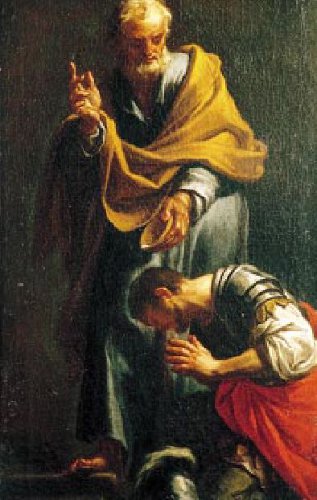
At Caesarea there was a man named Cornelius, a centurion of what was known as the Italian Cohort, a devout man who feared God with all his household, gave alms generously to the people, and prayed continually to God. About the ninth hour of the day he saw clearly in a vision an angel of God come in and say to him, “Cornelius.”Acts 10:1-3

The shortest prayer service of the day takes place in the afternoon, or at least just before sunset, and is called Mincha.

-Rabbi Berel Wein
“Mincha: the afternoon prayer”
Aish.com

moshe.gorin: The KSA says the ikar time for mincha is mincha ketana (9 1/2) hours after sunrise but the Rebbe davened before then. If you’re davening alone, when is best?

Torah613: The Rebbe davvened earlier (probably) because he davvened with the Yeshiva’s minyan, which was daily at 3:15.

Straight halacha would imply that Mincha Ketanah is better, so if it isn’t a question of davvening betzibur, MK is better.

Disaclaimer: As in all halachik questions, a competent Rov should be consulted.

mosheh5769: Whether we pray alone (bediavad) or with a Minyan (betzibbur), the prefered time for Mincha is Mincha K’tanah. Some say that if you pray in Mincha Gedola, you are still Yatza, but Lechatkhila, it is proper to pray at the time of Mincha K’tanah.

I don’t know where and who, but I have no doubt Taryag will help, there is a Posek who ruled that it is better to pray Mincha K’tanah alone than to pray Mincha Gedola with a Minyan. Why, I don’t remember, and I don’t know if other Poskim poskened in the same way.

Anyway, the best time to pray is at the time of Mincha K’tanah and not earlier. But of course, if a Shul has the custom to pray earlier (like the Yeshiva’s Minyan as it has been explained by Taryag) and if there need you to complete the Minyan, even if it is not your custom, you should complete the Minyan and daven earlier.

-from the discussion thread “Best time for Mincha”
Archived thread at Chabadtalk.com

We don’t know much more about the late Second Temple figure Cornelius than what we read in the verses I quoted above. He was what we call a “God-fearer;” a Gentile, a Roman centurion who, by definition, would have been a pagan polytheist, and who, during his assignment in the land of the Hebrews, came to realize that the God of Abraham, Isaac, and Jacob, was and is the God; the One and Unique Creator of the universe.

Coming to that realization alone must have taken great courage and conviction. His actual response to his realization was certainly astounding, given who he must have been and where he had come from. We know he “gave alms generously to the people”, who we assume to be the Jews among whom he lived. The messengers sent to bring Peter to Cornelius after the Centurion’s vision referred to him as “an upright and God-fearing man, who is well spoken of by the whole Jewish nation” (Acts 10:22). And oh wow! Cornelius was so favored by God that this happened.

And Cornelius said, “Four days ago, about this hour, I was praying in my house at the ninth hour, and behold, a man stood before me in bright clothing and said, ‘Cornelius, your prayer has been heard and your alms have been remembered before God. Send therefore to Joppa and ask for Simon who is called Peter. He is lodging in the house of Simon, a tanner, by the sea.’ So I sent for you at once, and you have been kind enough to come. Now therefore we are all here in the presence of God to hear all that you have been commanded by the Lord.” –Acts 10:30-33

Incidentally, the ninth hour is at about 3 p.m. in the way we tell time today, about the time of the Mincha prayers. But why is that important? So who taught Cornelius to pray the Mincha prayers. Ok, there’s nothing to say that he was truly praying Mincha, but here’s why I think he was. Consider this.

The Roman Centurion Cornelius comes to faith in the One true God of the universe. Now what does he do? We know that he gives alms, probably to the poor among the Jews. Whatever else he did resulted in Cornelius being “well spoken of by the whole Jewish nation”, which is no small thing since he was also part of the Roman occupying army. As far as we are able to understand, that group of non-Jews who were called “God-fearers” worshiped on Shabbat among Jews in the synagogue. Where would he have learned the prayers and how to worship? What was the only available model Cornelius could have used to worship a God who was virtually unknown in the Greek and Roman world?
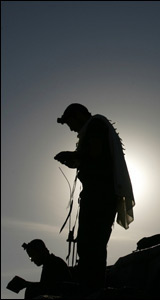
I’m not suggesting that Cornelius “lived as a Jew” in the sense of fully taking on Jewish customs including the various religious and identity markers. It is doubtful (but what do I know) that he would have shown up in the Court of the Gentiles at the Jerusalem Temple. After all, he had to consider appearances and what would the troops in the Italian Cohort have said if one of their Centurions was seen in such a public place among the Jews. On the other hand, his reputation preceded him among the Jewish people based on his being a devout and charitable man. Desiring to worship God above all other considerations, what would he have done? He would have consulted his Jewish mentors as to how to approach God. Prayer offered to the God of Israel is available to everyone, Jew and Gentile alike.

“Likewise, when a foreigner, who is not of your people Israel, comes from a far country for the sake of your great name and your mighty hand and your outstretched arm, when he comes and prays toward this house, hear from heaven your dwelling place and do according to all for which the foreigner calls to you, in order that all the peoples of the earth may know your name and fear you, as do your people Israel, and that they may know that this house that I have built is called by your name. –2 Chronicles 6:32-33

Even in the days of King Solomon, a non-Jew could come to Jerusalem, pray facing the Temple, and expect to be heard by God. Why couldn’t the Jews among whom Cornelius lived and worshiped have taught him the same thing?

How did Jews pray during the Second Temple period? I’m no expert, but assuming the Jews in the time of Cornelius and Peter had similar traditions about prayer to those of Jewish people today, they would have prayed as Jews pray now. They would have prayed the Shacharit (morning), Mincha (afternoon), and Maariv (evening) prayers. If Cornelius wanted to learn how to pray from the Jews, they would have taught him how to pray the way that they prayed, with perhaps only a few variations, because Cornelius was not Jewish. In those days, siddurim (prayer books) were not used and the prayers were generally memorized. That means, Cornelius would have had to say the prayers by memory, probably in Hebrew or Aramaic (given that the Centurion was posted to a foreign land, it’s not inconceivable that he was bi-lingual or multi-lingual). He also would have prayed at the times set by halacha for prayer which, in the afternoon, meant around 3 p.m. or the ninth hour.

Why am I writing this and why should you care? What does it matter to a Christian in the 21st century if a Roman centurion, who came to faith in Jesus almost 2,000 years ago, happened to worship and pray in a manner similar to the Jews? Have you ever wondered why Christians don’t pray in the same manner as the Jews today?

I’m not saying that we must pray morning, afternoon, and night (though it wouldn’t be a bad idea). I’m saying that there’s nothing stopping us from considering where we come from as a faith. However you pray and however you worship in your church, your way isn’t the only way. In fact, if you go back more than a few decades or a few centuries, the way you may consider “Christian” and “holy” probably wasn’t practiced, as least in a manner you’d recognize. Go back far enough, like 2,000 years, and the way a God-fearer and a Christian prayed and worshiped wouldn’t be much different than the way a Jew prayed and worshiped.

Imagine that.

We tend to take prayer and worship for granted because we can always pray and worship anytime we want. But in many ways, the church considers prayer and worship as optional or at least voluntary. We get to choose our own way and manner of doing things. However, for believers and God-fearers like Cornelius, that privlege and honor to worship the King may have come with a commandment attached, maybe at the level of rudimentary “halacha” for non-Jews who had faith.

Today’s amud discusses the halachah regarding hearing the Torah reading when one is in prison. Although today in many places things may be different, it used to be that most prisons would not allow a sefer Torah inside—even for an important person or a minyan of prisoners. When the Vilna Gaon spent about four weeks imprisoned it was impossible for him to fulfill the mitzvah of hearing the Torah reading. After he left prison he called a baal koreh to read for him all four parshios he had missed while in prison.

Although missing so many weeks is very unusual, many greats were meticulous to make up the reading that they had missed that day.

Mishna Berura Yomi Digest
Stories to Share
“The Prisoner’s Duty”
Siman 135, Seif 11-14

Our Gemara reviews a series of Mishnayos where the obligation to fulfill mitzvos is taught to be more inclusive than plainly stated. Regarding the mitzvah to read the Megillah on Purim, R’ Yehoshua b. Levi teaches that the expanded inference is meant to include women. Although this rabbinic mitzvah is one that is restricted to time, and women are generally exempt, here woman are obligated because “they were also included in the miracle.”

Rashi explains that women are obligated in the mitzvah to read the Megillah to the extent that a woman may read the Megillah for her husband or other men.

Daf Yomi Digest
Distinctive Insight
“Women’s obligation in reading and hearing the Megillah”
Arachin 3

The level of “commandedness” which defines Jewish tradition, worship, and prayer seems very “heavy-handed” to most Christians and the spectre of “man-made rulings” is generally disdained in the church (and among many Gentile believers to call themselves “Messianics”). And yet, how would an “upright and God-fearing man” like Cornelius have seen his responsibilities to God as taught to him by his Jewish mentors? Would the Jewish sense of halacha have meant to him what it meant to the Jews? We don’t know. But imagine if we, as Christians, could experience some of the sense of duty and obligation to God, to the prayers, to our way of worship, as Cornelius may have? How much more would God be a part of our lives today? How much more would God be our lives today?

ShemaOne of the functions of tradition and halacha in the life of a Jew is to make every act holy. You cannot eat without blessing God and considering the food on the plate sitting in front of you (or even without considering the plate). You cannot wake up in the morning without gratefully thanking God for returning your life to you. You cannot go to bed at night without asking God to send his angels to guard your soul as you sleep. You cannot progress through your day without ceasing your labors at specific hours in order to devote yourself to God in prayer. And for one day a week, you cannot do many things as you do them on the other days of the week, but instead, you cease labor entirely and dedicate the day to family, prayer, worship, and God.

I’m still not saying that as Christians we should live like Jews, but consider what we’re missing by not taking tradition more seriously. Tradition can be like a straight-jacket or a pair of wings. It can bind us inescapably to a collection of actions and rules that threaten to smother us, or it can send us free into flight away from a mundane world and into the presence of God with practically every move we make.

Maybe this is why the Jews considered the foreigner Cornelius an “upright and God-fearing man”. Maybe this is why God found that Cornelius merited a vision of an angel, and made him and his household a bridge between God-fearers and disciples of Christ.

While Peter was still saying these things, the Holy Spirit fell on all who heard the word. And the believers from among the circumcised who had come with Peter were amazed, because the gift of the Holy Spirit was poured out even on the Gentiles. For they were hearing them speaking in tongues and extolling God. Then Peter declared, “Can anyone withhold water for baptizing these people, who have received the Holy Spirit just as we have?” And he commanded them to be baptized in the name of Jesus Christ. –Acts 10:44-48

Amen.

Exodus: Challenge in Exile

On one hand, people shy away from challenges. There is a danger of failure were there not, it would not be a challenge and no one likes to fail. On the other hand, we seek challenge, for confronting a challenge lifts us out of the doldrums of ordinary experience.

Similar concepts apply with regard to our Divine service. G-d does not want our Divine service to be merely routine. And so, He presents us with challenges. Some of these challenges are limited in scope, and some are more daunting, forcing us to summon up our deepest resources.

This is the nature of the challenge of exile. During the Era of the Beis HaMikdash, the open revelation of G-dliness inspired Jews to serve G-d with heightened feeling and intent. In the era of exile, by contrast, G-dliness is hidden, and we are presented with many obstacles to our observance of the Torah and its mitzvos. We can no longer rely on our environment to deepen our feeling for G-dliness. Instead, our focus must become internal. In this manner, exile arouses our deepest spiritual resources, and strengthens our connection to G-d.

-Rabbi Eli Touger
In the Garden of the Torah
“Challenge, Growth, and Transition”
Commentary on Torah Portion Exodus
Adapted from
Likkutei Sichos, Vol. III, 843ff; Vol. XVI, p. 36ff;
Vol. XXVI, p. 301ff;
Sefer HaSichos 5751, p. 240ff
Chabad.org

In yesterday’s morning meditation, I wrote about some of the challenges of serving God, particularly in how Christians and Jews differ in understanding such service. I also talked about some of the things a Christian can learn about serving God from a Jew, such as preparing our souls to perform a deed in His Name, and approaching such a deed with awe and fear of our Creator.

In today’s commentary on the Torah Portion, we see that God sometimes presents challenges to our service, so we don’t become lazy and complacent. After all, how many religious people advance just so far in their faith and then “rest on their laurels” so to speak? Probably a lot. Could that describe you for certain parts of your spiritual life? Have you ever suddenly faced inconvenient and troubling problems just when you thought you had your life together? Did you ever cry out to God, “Why are you doing this to me?” Maybe this is the answer.

But what does any of this have to do with this week’s Torah reading and the beginning of the Book of Exodus? Let’s continue with Rabbi Touger’s commentary.

These concepts are reflected in our Torah reading, which describes the successive descents experienced by the Jewish people in Egypt. As long as Yosef and his brothers lived, the Jews enjoyed prosperity and security. But with the death of the last of Yaakov’s sons came forced labor, the casting of Jewish infants into the Nile, and other acts of cruelty. Even after Moshe brought the promise of redemption, the oppression of the Jewish people worsened, to the extent that Moshe himself cried out: “Since I came to Pharaoh to speak in Your name, he has done evil to this people.”

Nevertheless, the Torah reading also tells how the Jews cried out to G-d, awakening His attention. In response, G-d conveyed the promise of Redemption and His pledge that, “when you take this people out of Egypt, you will serve G-d on this mountain,” i.e., G-d committed Himself to give the Jews the Torah. This revealed the possibility of a higher and deeper bond with G-d than could have been reached before.

There’s a lot going on here that answers our questions. For the first forty years of his life, Moses experienced relative ease as a “Prince of Egypt” (much like Joseph before him) while his brothers and sisters labored as slaves. The next forty years, he labored as a simple shepherd, but life was still good and without undo complications as Moses married and raised a family and lived a meager but satisfying existence. Then came God and His challenge, and the life of Moses was thrown into turmoil.

Then Moses returned to the Lord and said, “O Lord, why did You bring harm upon this people? Why did You send me? Ever since I came to Pharaoh to speak in Your name, he has dealt worse with this people; and still You have not delivered Your people.” –Genesis 5:22-23 (JPS Tanakh)

While Moses was closer to God than he had ever been in his life up to this point, he was also extremely upset, frustrated, and miserable. Everything he had done to try and help his people had blown up in his face. Things were worse for the Children of Israel than they had been before Moses showed up at the behest of God. When we are serving God, we usually expect things to get better right away. For Moses, they didn’t. They don’t always get better for us right away, either. Even when God says:

Then the Lord said to Moses, “You shall soon see what I will do to Pharaoh: he shall let them go because of a greater might; indeed, because of a greater might he shall drive them from his land.” –Exodus 6:1 (JPS Tanakh)

In theory, we know we should trust God completely and whatever He says He will do, He will do. On a very human level however, we tend to have doubts, especially when we feel like we’re up to our neck in hot water, or in Moses’ case, up to his neck in angry and beaten down kinsmen. We can feel trapped in such situations and even lost.

One of the unique challenges we have as believers is the challenge that the Children of Israel had in the time between Joseph and Moses. Both of these men are considered “Messianic” figures in relation to their people and the world and during their lifetimes, both provided rescue and safety (though perhaps not in an absolute sense) for God’s chosen ones. Rabbi Touger explains it this way.

The cycle of Jewish exile and redemption is significant for the world at large. The purpose of creation is to establish a dwelling for G-d. This dwelling is fashioned by the involvement of the Jewish people in different aspects of worldly experience. During exile, the Jews are scattered into different lands and brought into contact with diverse cultures. As such, as the challenge of exile brings the Jews to a deeper connection with G-d, it also elevates their surroundings, making manifest the G-dliness which permeates our world.

The saga of exile and redemption is not merely a story of the past. On the contrary, heralds of the final transition from exile and redemption are affecting all dimensions of existence today. To borrow an expression from the Previous Rebbe: “Everything is ready for the Redemption; even the buttons have been polished.” All that is necessary is that we open our eyes, recognize Mashiach’s influence, and create a means for it to encompass mankind.

The Sages liken the times of Joseph and Moses to the time of the Beis HaMikdash; the Holy Temple in Jerusalem. Their times are also like the time of the Mashiach. People are able to serve God with great fervor and zeal and experience a particular closeness because both the Temple and the Mashiach, for the Jewish people, act as points of “access” of Jews to God. In contrast, the days between Joseph and Moses and the times of slavery are like the time of the great exile after the Second Temple. These are times when people feel a tremendous separation from God and must summon up great courage to go on and to serve God. We know that during their slavery in Egypt, the Children of Israel did not hear from God at all and felt very much alone. Only when the Prophet Moses was raised up did God speak to His people again.

How does all this relate to us? During the earthly lifetime of Jesus, people began to have a unique access to God in the form of a human being that had never happened before. How this was possible, we cannot say for sure, but Jesus himself confirmed it.

Jesus said to him, “I am the way, and the truth, and the life. No one comes to the Father except through me. If you had known me, you would have known my Father also. From now on you do know him and have seen him.” –John 14:6-7 (ESV)

He also said:

So Jesus said to them, “Truly, truly, I say to you, the Son can do nothing of his own accord, but only what he sees the Father doing. For whatever the Father does, that the Son does likewise. –John 5:19 (ESV)

When people were able to see and hear Jesus, they were able to experience access to God in a unique and unprecedented manner.

And then he was killed.

And then he rose and was among his people for forty days (Acts 1:3).

And then he left. And we’ve been waiting for his return ever since.

Like the Children of Israel in slavery and after the destruction of the Second Temple, we who are the disciples of Jesus are in a kind of exile. God promised Jacob (Genesis 46:4) He would go down into Egypt and into exile with Israel and He would surely come back out with them. That is also like us. Our Joseph, our Moses, our Messiah is not with us today. We have the Spirit, so God is with us in exile. Many times we speak to God and He speaks to us in some manner, but it is not the same as if the Messiah were present in the world in a physical manner. We know this because he has promised to return and we await his return. It matters if he is in the world because once he comes back, everything will begin to change. It won’t be so much like we will be taken out of our exile but that our exile will be transformed into our home, though this will not occur in its final form until the end of days.

Then I saw a new heaven and a new earth, for the first heaven and the first earth had passed away, and the sea was no more. And I saw the holy city, new Jerusalem, coming down out of heaven from God, prepared as a bride adorned for her husband. And I heard a loud voice from the throne saying, “Behold, the dwelling place of God is with man. He will dwell with them, and they will be his people, and God himself will be with them as their God. –Revelation 21:1-3 (ESV)

In Eden in the beginning, God dwelt with man in the Garden until the fall. For a short time, “the Word became flesh and dwelt among us” (John 1:14). God dwelt among His people in the desert (Exodus 40:34-35) and in the Temple of Solomon (1 Kings 8:10-11). God desires to dwell with us again and to that end, we have faith in the promises of the Messiah that when he returns, it will be so.

At the end of last week’s Torah Portion, the readings from the book of Genesis were concluded and this week we begin the readings from Exodus. At the end of the readings in any book of the Torah during the annual Torah cycle, the last reader, by tradition, recites a phrase that we also need to hear as we who are in exile await the return of our King. Let these words be instilled in our hearts and give us courage and hope as we face the challenges of God.

Chazak! Chazak! Venitchazeik! Be strong! Be strong! And may we be strengthened!

We also have these words of encouragement.

There are no things. There are only words. The Divine Words of Creation.

The words become scattered and we no longer understand their meaning. Only then are they things. Words in exile.

If so, their redemption lies in the story we tell with them. Reorganizing stuff into meaning, redefining what is real, and living a life accordingly.

-Rabbi Tzvi Freeman
“Reinterpretation”
Based on letters and talks of the Rebbe
Rabbi M. M. Schneerson
Chabad.org

Good Shabbos.

Serving God

The Rebbe of Sanz-Klausenberg, shlit”a, gave a very inspiring talk based on a statement on today’s daf. “The Rokeach writes that one should prepare himself with cheshbon hanefesh and teshuvah before fulfilling a mitzvah; he should beg God that he merit to do the mitzvah as is fitting, without feelings of self-aggrandizement. Some would even fast before fulfilling certain mitzvos. The reason for these extra exertions is that a mitzvah done with genuine feeling as it should be makes huge rectifications in the upper worlds. Obviously there are many barriers that block the way of the person who wishes to reach this pinnacle. The least we can do before performing a mitzvah is to beg God for help.

“Now we can understand why, although it was a printer’s decision, every tractate in the Talmud begins with a shaar blatt, a page with a gateway, and then starts on a page marked as number two. Tzaddikim always petition God for help to learn and do mitzvos. They plead with God: ‘I know in my heart that I am not as I should be. I have done much wrong. Nevertheless, You God are gracious and merciful. I therefore plead with You to help me serve You in truth.’ The first page is the gateway: we enter into the gates of learning Torah lishmah by begging God for His aid. Only after entering this gateway can we begin the actual tractate on page two.

Daf Yomi Digest
Stories Off the Daf
“Seeking the Laws of Pesach”
Bechoros 58

According to Rabbi Daniel Gordis in his book God Was Not in the Fire (pg 132), most people understand the word “mitzvah” to mean “good deed” when the better translation is “commandment”. He states that, “Doing a mitzvah might well be nice, but – perhaps surprisingly -Judaism values it not only for its “kindness” but for its “commandedness” as well.” This might go some of the distance in explaining how we can understand the Jewish value of asking; in fact, all but begging for God’s help in performing a mitzvah, even to the point to fasting and praying beforehand. For a Christian, this may seem way over the top and far too formal a process. If you feel moved to donate canned food to the local food bank, volunteer at the homeless shelter, or visit a sick friend in the hospital, can’t you just do that without all the preliminary activity suggested by the Rebbe of Sanz-Klausenberg?

Rabbi Gordis says that many Jews feel this way, too and resist “what they see as Judaism’s tendency to regulate too many elements of life.” I think that’s one of the reasons Christians and many “Messianics” are critical of the “man-made rules” contained in Talmud and the principle of halacha. After all, does this vast collection of minute details really matter to God? Isn’t He pleased if we just do His will without all the ceremony involved? Rabbi Gordis offers one possible answer.

Yet as much as it sounds reasonable to wonder whether God really cares about the details, these specific elements of Jewish life are often important not necessarily because God cares about them, but because we need them. It is through our attention to detail, tradition claims, that we express what Judaism called a sense of “commandedness,” a sense that we behave in a certain way in order to construct a relationship with God. Mitzvah is designed not to make unnecessary limitations on our privacy and autonomy, but to express the idea that if we wish to feel God’s presence, we need to evoke that feeling in action.

This is what Christians would probably call “works-based religion”. A Christian “believes” and “feels” God through faith while a Jew “obeys” and “acts” on their faith. I suppose this is as good a place as any to (again) invoke James 2:14-26 including the very famous verse 17: “faith by itself, if it is not accompanied by action, is dead. “ The specific formalities of Judaism in preparing to perform a mitzvah and then the specific manner in which the mitzvah is accomplished may not actually matter to God, but that ritual and ceremony provides meaning and structure in the life of a religious Jew (and this isn’t the first time I’ve talked about how important ritual and tradition is in a life of faith).

I suspect that one of the primary reasons why many “Gentile Messianics” resist Talmud and halacha when attempting to emulate a Jewish lifestyle, is not that the traditions were constructed by human beings, but that the traditions were constructed by Jews for Jews for the specific purpose of Jewish performance of Torah “commandedness”. Many non-Jews are attracted to Torah as a means of having a closer walk with God through the commandments, but they resist a fully Jewish experience with those commandments (because it is too Jewish).

Derek Leman wrote a multi-part series called Not Jewish yet Drawn to Torah (the link goes to part 1) addressing this dynamic in much detail. Leman doesn’t criticize Gentile attraction to the mitzvot but rather the approach that allows Christians (including “Gentile Messianics”) to approach the Torah with a casualness that Judaism doesn’t understand and finds offensive. Christians, particularly in the West, tend to think of their faith as only involving Jesus and the individual (“Just me and Jesus”). Judaism, though acknowledging the individual relationship, is much more about community and being a people under God, rather than an individual under God. Leman presents “Lessons Learned from Past Mistakes” illustrating some of this problem:

You should know that many have walked the path before you. And many have found some unhelpful paths and can warn you not to try them.

The major problem many Torah-seeking gentiles have run into is very similar to the problem of shallowness in much evangelical Christianity: individualism run amok.

EVANGELICAL CHRISTIAN SHALLOWNESS = “The gospel is about me and my salvation.” Read some N.T. Wright, like Justification or Surprised by Hope or After You Believe.

TORAH-SEEKING GENTILE SHALLOWNESS = “The Torah is about me and my status with God.” Read some medieval commentators and Jewish theologians, would you? Learn the depth.

A BETTER PATH = Learn slowly and carefully. Think before jumping into things. Consider that God has a plan for the whole world, through Israel, to redeem. How does Torah fit into that? What is your place in God’s plan?

While Christianity doesn’t share an equal and identical covenant identity with the Jews, we do operate from the same “core values:”

Jesus replied: “‘Love the Lord your God with all your heart and with all your soul and with all your mind.’ This is the first and greatest commandment. And the second is like it: ‘Love your neighbor as yourself.’ All the Law and the Prophets hang on these two commandments.” –Matthew 22:37-40

If we, as Gentile believers, feel drawn to perform some additional mitzvot on a voluntary basis, and beyond what is required by Jesus, in order to further honor God, we need to respectfully approach how best to prepare for the experience of offering that service. While there is no mandate to flawlessly imitate a Jewish person, we can still attempt to take our actions a little more seriously and inject more formality into the process, not because God needs it, but because we need to be reminded that any action performed in His Name should invoke respect and awe of God.

Christianity and Judaism do share mandates to perform some of the same mitzvot, the actions I typically quote in many of my blogs, to feed the hungry, visit the sick and the prisoner, clothe the unclothed, and to welcome the stranger. In doing those deeds, why shouldn’t we as Christians, allow ourselves to perceive the incredible responsibility God has placed in our hands to serve Him and to serve others? Doesn’t that deserve a little formality and ceremony? Shouldn’t we ask for God’s aid in performing duties done in His Name? Aren’t these types of details there to help us, too? Let us remember these words and say them in truth to God:

I know in my heart that I am not as I should be. I have done much wrong. Nevertheless, You God are gracious and merciful. I therefore plead with You to help me serve You in truth.

Origins of Supersessionism: My Upcoming Article for Messiah Journal

Occasionally I receive a few complements from folks who think well of my blog and who suggest that I should do more formal kinds of writing in religious publications. While it’s very flattering to receive such attention, since I don’t have a formal education in theology, I thought such a contribution to be beyond my current skill sets. However, that has changed.

Several months ago, Boaz Michael, the Founder and President of First Fruits of Zion (FFOZ), asked me to write a four-part series on Replacement Theology or Supersessionism for their quarterly publication Messiah Journal (MJ). The series will touch upon the historic origins of Supersessionism, its placement in Christian doctrines, how Supersessionism affects the Church and Jewish people today, and how the Church can leave Supersessionism behind. One article in the series will be published in each of 2012’s quarterly releases of MJ. According to Toby Janicki at FFOZ, the issue of Messiah Journal containing my article should be available by the end of January. Look for “Origins of Supersessionism in the Church” in the January 2012 (#109) issue of Messiah Journal.

I want to take this opportunity to say that I am deeply honored Boaz and the fine folks at FFOZ considered me for this project and am gratified that I can offer my small talents in the service of their ministry and in service to God.

Blessings.

On Fire

Below, this glimmer of a soul craves to return to her primal essence above. She yearns with an obsession beyond reason, as metal is drawn to a mighty magnet, as a flame yearns its own extinction—for she knows full well she will be nameless there once again.

Trapped within the fetters of time and space, body and persona, her yearning swells to its bursting point, generating a fierce power. The power sparks and flames. Her thirst intensifies; it cannot be quenched.

Such is the divine plan. Now you must harness the power. With it, you can transform an entire world.

-Rabbi Tzvi Freeman
“The Glimmer Yearns”
Based on letters and talks of the Rebbe
Rabbi M. M. Schneerson
Chabad.org

That sounds almost like certain eastern religions which suggest that when a person dies, their soul returns to the “universal consciousness”, surrendering any sort of individual identity. Christianity is fairly certain that “in the resurrection from the dead will neither marry nor be given in marriage” (Luke 20:35),  and they (we) are pretty sure that in some sense, we will still be the people we are now, though “we can no longer die and we’ll be like the angels” (Luke 20:36). But was the Rebbe (as interpreted by Rabbi Freeman) being literal or figurative?

I like the imagery in Judaism that we are like sparks thrown off the Divine “fire” so to speak, who all long to return to our source. We struggle to rise to heaven while our human existence chains us to earth. But is being “chained” such a bad thing? After all, it is by the will of God that we are here in the first place. If all we want is to “go to heaven,” why are we on earth? Rabbi Freeman says this about exile:

There is nothing larger than a mitzvah. There is nothing more powerful than Torah. When you are occupied in these things, the whole world becomes your servant, there but to stage your actions.

This seems to say that our real “power” isn’t in the heavenly realm but where we are right here and right now. While we can certainly obey all of the mitzvot related to worshiping God when our “spark” is united with His “fire,” how can we serve God in obedience in all of the commandments related to helping other human beings? We only have the power to serve others, to “feed the hungry, give the thirsty something to drink, invite a stranger into our homes, clothe the unclothed, and look after the sick” (Matthew 25:34-36) while in our lived, earthly existence. Only here, as the Master taught us, can we truly do for him by doing for the very least of his servants.

Although traditional Christianity doesn’t believe in the existence of souls prior to conception and birth, some traditions in Judaism do. We can borrow something from this picture and from Rabbi Freeman’s commentary on the nameless to illustrate a point.

High upon her precipice, the soul is nameless, for she has no form—she will be whatever she must be.

Peering below, beneath the clouds, she perceives a faint shimmering of her light in the deep, wet earth. There she finds form, and she calls it a name, and she is called when that name is called, for she says, “This is me.”

But it is not her. It is only a faint glimmering of her light within the frame of a distant world.

I recently told someone that the tales of the Chasidim don’t speak to me of literal facts and events, but of moral and spiritual principles, acting as a guide to some of the deeper things of God, which are hidden in my soul. Perhaps we can see some of the teachings of the Rebbe in this light as well. If Jewish wisdom seems elusive to you, rest assured that you are not alone. Yet it’s not always about finding the right answers, but discovering one really good question and the spending the rest of your life asking that question and attempting to penetrate the mystery of God.

The Tzemach Tzedek, zt”l, was respected throughout the Jewish world as a great scholar who was very astute. Even when asked the most difficult questions he always explained the subject in a manner to which the questioner could relate.

When a group of anti-semites approached the Czar of Russia—a consummate Jew-hater in his own right—and quoted strange-sounding parts of the Talmud taken out of context to convince him that it should be banned, he felt that they were likely right.

Not surprisingly, when the Tzemach Tzedek visited the Czar, the ruler brought up these many questions. “There is so much that sounds impossible in the Talmud. For example, in Bechoros 57 we find that a certain bird lays an egg which completely destroyed 60 cities and three hundred cedar trees. How can this be anything but nonsense?”

As usual the Tzemach Tzedek had a good answer. “As Your Majesty knows, a recent edict enacted was that no Jew may live within a certain distance from the border. Now, I am very respected amongst the Jewish people and am relied upon to publish only sensible things. If I were to write that with one dollop of ink His Majesty eradicated these cities—which were mostly Jewish—people will understand exactly what I mean. But later generations may not fathom how a few drops of ink can accomplish such a feat. Nevertheless, since I am well known, they will give me the benefit of the doubt and assume I mean something sensible although they don’t understand it and it sounds strange. Similarly, the sages of the Talmud meant something which may well be inscrutable now, but was understood by their generation and certainly has an important message.”

Daf Yomi Digest
Stories Off the Daf
“A Hidden Message”
Bechoros 57

We don’t always understand God. We don’t always understand ourselves. When on earth, we seek to fly back to Him. When in heaven, we long to serve Him on earth. We are a people caught in-between and a bridge between God and the world. We can only be who we are and serve Him as He desires by being a flaming span between the Divine celestial fire above and the mundane earth beneath our feet. We are Jacob sleeping at the foot of the ladder watching the journey of angels. We are also the angels. We are also the ladder.

nightsky1

Recovered Priorities

Once there was a shopkeeper who was very successful and made a fortune off of the people of his city and the surrounding environs. Virtually every waking minute was taken up with work. Not only did he lack time to learn one word of Torah, this gentleman didn’t even have enough time to daven. Since he worked until late at night it was hard for him to get up on time in the morning. He invariably arrived at shul around the time of borchu. Of course, since he always needed to rush to his business, he would leave early and never remained until aleinu.

When this businessman grew older he started to notice that his hair was turning grey. The shock of his own encroaching mortality inspired him to make a rigorous cheshbon hanefesh. He decided that from that day on he would have a daily seder of several hours of Torah study after davening no matter what.

But his partner wondered why this man, always so regular in the past, did not come to help the moment the store opened at 7:00 AM. When he finally arrived somewhat after ten, his partner was a little annoyed with him. “Where were you?” blurted the partner.

“I couldn’t make it on time today,” he replied vaguely.

The next day the partner in the store anxiously awaited the reformed businessman, but to no avail. When this man finally arrived at the store, his partner virtually pounced on him. “Are you crazy? We cannot run a business this way!”

But the partner who had done teshuvah also did not mince words. “Listen carefully. What would you have done if the malach hamaves had come for me? Would you also insist that I simply may not die because our store is filled with customers? So I want you to imagine that, during those first three hours of business in the morning, I have left the world. Why should it bother you if after a couple of hours I am revived from the dead and come to lend a hand at the business?”

Mishna Berura Yomi Digest
Stories to Share
“Early Departure”
Siman 132 Seir 2

The story of the shopkeeper is interesting because it’s not about a person who goes from being an atheist to finding God. It’s the story of a religious person who was just too busy for God. That is, until he got his “wake up call.” I’m glad his revelation was as minor as simply noticing he was turning grey and getting older. For some people, it’s more dramatic, like a heart attack, or the death of a loved one due to cancer. It’s a shame we need such “reminders” at all, but that’s human nature. Even as people of faith, we tend to take God and His gifts (wealth, health) for granted until He gives us a reason not to. Of course we should go to God because He is God, but usually we need a “better” reason than that.

OK, there is no better reason to go to God than because He is King, but as we see from the shopkeeper’s example, we can become hopelessly tied up in our day-to-day lives and all of the immediate priorities we feel cannot wait for a few minutes, let alone a few hours. We may even have someone around us like the shopkeeper’s partner who continued to harass this man about the time he diverted away from business in order to meet his obligations to his Creator.

I found this part of the narrative particularly interesting:

So I want you to imagine that, during those first three hours of business in the morning, I have left the world. Why should it bother you if after a couple of hours I am revived from the dead and come to lend a hand at the business?”

The shopkeeper, in meeting with God for the first three hours of his day, effectively exited the world as we know it and was considered “dead” to the pressures and demands of life. He was “revived” upon leaving the presence of God and as he re-entered the world of the living in order to satisfy the requirements of his present existence. This is a concept not unknown in Judaism or Christianity.

I gratefully thank you living and existing King, for returning my soul to me with compassion. Abundant is Your faithfulness. –Modeh Ani

This is the first blessing an observant Jew recites upon awakening in the morning, usually even before getting out of bed. In religious Judaism, some consider sleep to be “made up” of a significant portion of “death”. It’s as if in sleep, we are closer to the realm of death and thus more at risk of entering its “influence” than when we’re awake.

Christianity expresses a similar sentiment, but the blessing is said before going to bed. If you were raised in a Christian family, you may have said this prayer at bedtime when you were a child.

Now I lay me down to sleep.
I pray the Lord my soul to keep.
If I should die before I wake.
I pray the Lord my soul to take.

I suppose I should mention that in Judaism the Bedtime Shema also contains imagery of entering into a state approaching death and asking God for protection.

The shopkeeper thought he didn’t have time to insert his service to God in his busy life. But when he realized that his life could end at any moment, he knew he didn’t have the same amount of time to devote to business as he did before because he needed to enter into God’s world first.

Why am I writing this? Because I think that “Early Departure” is a moving and meaningful tale, I think that it tells us something we need to be reminded of, and I know that I have put God on the “back burner” more than once because I’ve been too busy.

I also am aware that there are more days behind me than there are ahead and I’ve been arrogant about how I spend my time, ignoring the reality of my existence, which only continues by God’s grace. I suppose this can be considered the latest in a long list of “stop and smell the roses” messages, and as trite as that may sound, it also has the benefit of being true.

Stop for a moment in the middle of your busy day. Take time out today and every day to gratefully thank the King of your life and to let Him know you haven’t forgotten that He is the King.

nightsky1