Tag Archives: atheist

Repairing Life

R’Simlai notes that the posuk (Yeshayahu 45:23) teaches that everyone in the world takes an oath before God. What is this oath, and when is it administered? The oath is the one referred to in Tehillim (24:3-4), “Who shall ascend into the mountain of God, and who shall be able to stand in His holy place? He who is of clean hands and pure of heart, who has not lifted up his soul to falsehood and has not sworn deceitfully.” The oath itself is that at the time of birth the soul is commanded, “Be righteous, and do not be evil!” It is given when the soul is sent to the world. We recite Tehillin 24 – the paragraph of “L’David Mizmor” – at Maariv immediately after the silent Amidah on Rosh HaShana and Yom Kippur.

Rabbi Chaim Hager, the Rebbe from Viznitz, was also known as the Imrei Chaim. When he would read this posuk on Rosh HaShana and Yom Kippur he would cry. A visitor to his community was taken aback to hear the Rebbe whimpering at the particular point where false oaths are mentioned. The visitor could not fathom how the Rebbe could be so moved about the possibility of having taken a false oath.

As the chassidim passed by the Rebbe after davening, this visitor followed along in the line. When he asked the Rebbe for an explanation, the Rebbe answered: The Gemara (Niddah 30b) tells us that before a soul is sent into this world it is administered an oath which states “You are to be a tzaddik! Do not be a rasha!”

The oath continues with the person being adjured that even if everyone in the world tells him that he is a tzaddik, he must never become complacent by believing their compliments. Rather, the person must always strive for perfection and consider himself to be a rasha.

“Now,” continued the Rebbe, “who can confirm that he has fulfilled this oath which his soul has taken and that he is a tzaddik? Who can insist that he has not taken a false
oath?”

Daf Yomi Digest
Gemera Gem
“Be a tzaddik! Do not be a rasha!”
Niddah 30

This is midrash and not (as far as I know) literal fact, so I don’t suppose that before we are physically born, our souls take an oath before God to be righteous and not to be evil. Still, what if you happen to feel obligated to do good but find yourself doing the opposite? Who are you accountable to and what are the consequences?

I commented in yesterday’s morning meditation about the ongoing debate between Atheists and Christians (and other religious people). I mentioned that atheism as a belief system, does not have a built-in moral or ethical structure. The only requirement to be an atheist is to not believe in God or that any supernatural being had anything to do with the creation of the universe, or is involved in the course of human events.

But if you choose to be a person of faith, you are agreeing to a certain set of moral and ethical standards. If you fail to meet those standards, even occasionally, you have not only reneged on your agreement with your religion and with God, but you have dragged the Name of God through the mud for all to see, especially those who disdain religion and religious people.

If you believe that you have taken an oath before God to be a “tzaddik” and not be a “rasha,” you’ve failed that, too.

The problem is, being human, sooner or later, you will fail. If a non-religious person fails, who is hurt? It depends on the failure. They may hurt themselves, people where they work, their friends, their family, and so forth. Of course none of that is good, but when we who claim faith in God fail, particularly in a moral or ethical area, we fail all those people and we fail God as well. We become a “rasha” and not a “tzaddik.”

I’m exaggerating here. Not all people in religion can be considered tzaddikim, since these are the most righteous, noble, and holy in the world of faith. Christianity would call them “saints.” How many Christians can truly be called “saints” (although some Christian denominations consider all Christians to be worthy of being saints because of the sacrifice of Jesus Christ)?

Most of us are “mere mortals” who are doing our best to try to make it through one day at a time. Some days are better than others. Some days we’re better at honoring God and His desires than others. Some days seem pretty crummy, but we try to keep going because of our faith and our belief that God is with us, regardless of our circumstances and, in most cases, regardless of how badly we fail.

That’s why anti-Christian and anti-religious rhetoric on the Internet or in real life is so disturbing. Not because secular people don’t agree with my choosing to have faith, but because it means that I or someone like me has failed. We have failed to show that we are doing our best to follow a moral standard that was set for us by the Creator of the Universe and the lover of our souls. We have given the world the opportunity to believe that our faith is not only a lie, but an excuse to actually indulge in selfish, moral attacks on those we deem weaker or more vulnerable in the world.

I wish I could find the image I saw the other day on the web (thought it was on the atheism sub-reddit but I can’t find it). It was a “rant” on how a young atheist found himself in church (not sure how this happened) and listened to the Pastor preach on how young people don’t have values today. The person listening to the sermon reasoned that the Pastor meant that young people don’t have the church’s values, which the commenter described as repression, inequality, exclusivism and so forth. He defined atheist values as inclusiveness (except if you’re a person of faith, but that’s beside the point), equality, compassion and so forth (I really wish I could find the image because it was just brilliant).

The conclusion is that the church wasn’t particularly moral at all and that atheism, by comparison, was a much better belief system. Of course, the commenter wasn’t really describing atheism but rather western political and social progressivism which includes atheism as a core element. Nevertheless, there are times when Christians do not take the moral high road and liberal progressives do (and I should mention that there are more than a few Jewish people who have doubts about God, too).

But the argument against religion has to discount the times when Christian programs really do feed the hungry, send visitors to the sick, comforts the mourning, defends the widow, the orphan, and the disadvantaged, but those people and programs don’t make it on the news or, for the most part, in the popular social networking sites. It also isn’t generally advertised that the civil rights movement was started and supported by Christian and Jewish activists rather than atheists and scientists.
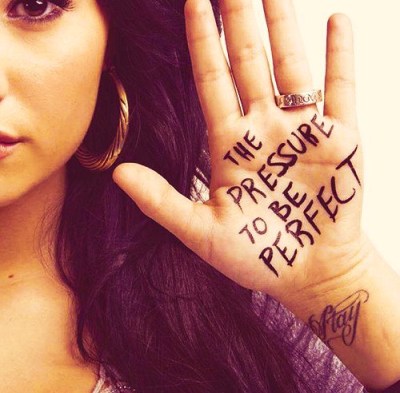
Whether you as a Christian like it or not, the world is watching and waiting for us to fail (they never expect us to succeed). Some of those watching are really anxious for us to fall face down in the sewer. When we do fail, we fall far, and we hit hard, and we take the reputation of God with us when we go over the edge.

Debating atheists on their own terms will not sanctify the Name of God. You will never elevate God’s reputation by trying to “prove” He exists and created the universe. Living a life of faith and devotion to your ideals by helping others and repairing our damaged world will. You may never convince even one atheist to consider a life of faith, but at your finest, you will be fulfilling your oath, doing your best to live as a “tzaddik,” and helping vulnerable and needy people in the process. But you should always question your own motives before criticizing someone else’s.

If you have not yet succeeded in fulfilling the criteria to be a critic, yet still feel a necessity to provide criticism, there is an alternative:

Sit and criticize yourself, very hard, from the bottom of your heart, until the other person hears.

If it comes from your heart, it will enter his as well.

-Rabbi Tzvi Freeman
“The Last Word on Criticizing”
Based on letters and talks of the Rebbe
Rabbi M. M. Schneerson
Chabad.org

Repair the world one day at a time. And for Heaven’s sake, be a tzaddik! Do not be a rasha!

How Have We Failed?

Teresa MacBain has a secret, one she’s terrified to reveal.

“I’m currently an active pastor and I’m also an atheist,” she says. “I live a double life. I feel pretty good on Monday, but by Thursday — when Sunday’s right around the corner — I start having stomachaches, headaches, just knowing that I got to stand up and say things that I no longer believe in and portray myself in a way that’s totally false.”

“On my way to church again. Another Sunday. Man, this is getting worse,” she tells her phone in one recording. “How did I get myself in this mess? Sometimes, I think to myself, if I could just go back a few years and not ask the questions and just be one of those sheep and blindly follow and not know the truth, it would be so much easier. I’d just keep my job. But I can’t do that. I know it’s a lie. I know it’s false.”

-by Barbara Bradley Hagerty
“From Minister to Atheist: A Story of Losing Faith”
NPR.org

Our teacher the Baal Shem Tov said: Every single thing one sees or hears is an instruction for his conduct in the service of G-d. This is the idea of avoda, service, to comprehend and discern in all things a way in which to serve G-d.

Hayom Yom: Iyar 9, 24th day of the omer
Compiled and arranged by the Lubavitcher Rebbe
Rabbi Menachem Mendel Schneerson, of righteous memory, in 5703 (1943)
from the talks and letters of the sixth Chabad Rebbe
Rabbi Yosef Yitzchak Schneersohn, of righteous memory

Yesterday I wrote When We’re Left Behind to describe my initial reactions to reading the news story I quoted above. After some thoughts and reflection, it hasn’t gotten much better. I still don’t like being called a “sheep,” “blind,” and thought of as not knowing the “truth.” MacBain’s story is supposed to be the first in a series of news articles on losing faith. I wonder if NPR would consider writing a series on the other side of the coin about people who have struggled, endured, and persevered over their crisis of faith.

Call me cynical, but I seriously doubt it.

The Baal Shem Tov considers everything we see and hear and probably every experience we have as a lesson in how we are to behave in the service of God. I guess that’s what I was trying to convey yesterday when I said we should love and not condemn people like Teresa MacBain. I admire her husband, who has managed to retain his faith in the face of his wife’s atheism. The NPR article spent almost no time exploring how all of this affects him. And I kind of know how he feels.

No, my wife isn’t an atheist, but she isn’t a Christian either. She’s Jewish, and I very much support her in her pursuit of her faith and her identity. But as time has passed, I have come to realize that we represent two different worlds. I used to think there was significant overlap between those two realms, but now I’m not so sure.

No, I’m sure. There’s not much overlap at all.

That brings up an interesting question, both for the MacBains and for me. How do you live with someone who is utterly different from you at the very foundation of your being?

OK, men and women are different, I get that. Every person who’s been married for more than a week or so realizes that living together as a married couple is a challenge. Every couple who has been together for five, ten, twenty, thirty years or more (our 30th wedding anniversary was just last month) knows just how much of a struggle it is at times to make the sorts of adjustments required between two people as they develop and (hopefully) grow.

One of the things I’ve noticed about most of the people of faith I associate with is that, if they’re married, their spouses have the same fundamental understanding of God and religion as they do. That is, if the husband’s a Christian, chances are, so is the wife, and vice versa. Teresa and Ray MacBain have just entered the dubious club of intermarried couples.

Welcome.

So what does Ray MacBain do now? Does he go to church and leave his wife at home every Sunday? Does he go to the same church were his wife was a minister? If so, how does he deal with the inevitable gossip and tongue-wagging over his Teresa’s decision to leave the faith and her “coming out” as an atheist?

I haven’t listened to the audio interview (like most people, I can read a great deal faster than people can talk). I have briefly scanned some of the comments under the NPR story and saw the typical war of words between self-righteous atheists and self-righteous Christians. Does bashing each other really help? If an atheist wants the freedom of choice, why can’t I have that same right as a person of faith?

Here’s one of the more illuminating comments I read:

It bothers me to no end to see the intolerance and arrogance of my atheist friends who look down upon the faithful as if they’re second class muggles… just as it bothers me to watch the intolerance of the “faithful” Christian towards other beliefs or non-beliefs.

What I see are the human flaws of conceit and arrogance – people who think they know what’s “right” or what’s “best” for others, and have no room in their worldview for people with different viewpoints.

I sympathize with Teresa’s plight – I struggle with my faith. It saddens me that people seem more concerned with sticking it to their fellow human being than trying to find the best path to walk for themselves.

Alas, “intolerance and arrogance” are very human traits and not limited just to the religious or the irreligious.

As annoying as it is to be called a “sheep,” I guess it shouldn’t really surprise me. There’s nothing about being an atheist or an agnostic that should cause me to expect them to be good, bad, or indifferent. There’s not inherit moral code to not believing in God, so when someone says they’re an atheist, there’s no way I can know what exactly they’re going to say or do.

However,  I do have some sort of idea of what to expect from someone who says they are a disciple of Jesus. We are expected to take the higher moral road just because of who we are. That’s why it’s especially disappointing to see Christians making snarky comments to atheists (and I’m not immune) in an NPR online news story. If your life is supposed to be an example of how you have been changed by God, how is acting like a regular, “run-of-the-mill” human being accomplishing that?

Is that “God thing” working for you yet?

That’s what I see coming out of this news story, out of the comments, and out of the buzz about Christians vs. Atheists on the web. It’s not my faith in God I’m worried about, it’s my faith in people. On somewhat rare occasion, I meet a Christian who really deserves to be called by the name of the Master. I meet a person who is truly helpful, compassionate, charitable, kind, and loving to everyone they meet, not just the people they know and like. What really scares me is that the sort of person I’m describing is rare in religious circles. It’s even more scary that they might be more common among the atheists.

I know Christians reading what I just wrote are saying, “It doesn’t matter if an atheist is nicer than a Christian. The atheists are still going to hell.” Oh. It doesn’t matter?

“When the Son of Man comes in his glory, and all the angels with him, then he will sit on his glorious throne. Before him will be gathered all the nations, and he will separate people one from another as a shepherd separates the sheep from the goats. And he will place the sheep on his right, but the goats on the left. Then the King will say to those on his right, ‘Come, you who are blessed by my Father, inherit the kingdom prepared for you from the foundation of the world. For I was hungry and you gave me food, I was thirsty and you gave me drink, I was a stranger and you welcomed me, I was naked and you clothed me, I was sick and you visited me, I was in prison and you came to me.’ Then the righteous will answer him, saying, ‘Lord, when did we see you hungry and feed you, or thirsty and give you drink? And when did we see you a stranger and welcome you, or naked and clothe you? And when did we see you sick or in prison and visit you?’ And the King will answer them, ‘Truly, I say to you, as you did it to one of the least of these my brothers, you did it to me.’

“Then he will say to those on his left, ‘Depart from me, you cursed, into the eternal fire prepared for the devil and his angels. For I was hungry and you gave me no food, I was thirsty and you gave me no drink, I was a stranger and you did not welcome me, naked and you did not clothe me, sick and in prison and you did not visit me.’ Then they also will answer, saying, ‘Lord, when did we see you hungry or thirsty or a stranger or naked or sick or in prison, and did not minister to you?’ Then he will answer them, saying, ‘Truly, I say to you, as you did not do it to one of the least of these, you did not do it to me.’ And these will go away into eternal punishment, but the righteous into eternal life.” –Matthew 25:31-46 (ESV)

Sure looks like it matters to me. More importantly, it sure looks like it matters to God.

I’m going to stop short of blaming “the church” for failing Teresa MacBain. We each negotiate our own relationship with God, so Teresa is just as responsible for her’s as I am for mine. However, if she had any lingering doubts about her decision, the various “bad attitude comments” from Christians in response to her “outing” herself probably sealed the deal.

Christians, Jews, Muslims, and most other religious people tend to be pretty judgmental, relative to the world around us. On the one hand, we do have a specific set or standards we feel we’re upholding, as opposed to an “anything goes” sort of world view. On the other hand, we tend to substitute judgment for compassion and “legalism” (yes, even Christians) for grace. Jesus was hammered verbally for hanging out with the low-lives of his day: prostitutes and tax-collectors (collaborators with the occupying Roman army). We’re kind of like the folks who judged Jesus. We judge and accuse and complain when a Christian hangs out with and is accepting of “low lives” such as gays, for example (a really big sin in the eyes of most Christians…much bigger than wife beating, bank robbery, and surfing porn on the web). We demand that Christians only hang out with other Christians and the split second someone tells us they have doubts about their faith, they are dead to us.

Man, do I make Christians sound bad. Almost like the way some atheists talk about us.

But if all of us were really practicing grace, and I think we can do this without compromising our principles and blending in to the moral structure of the secular world around us, I doubt if too many people would have a lot to complain about when Christianity was mentioned.

The church hasn’t failed Teresa MacBain, but a Christian fails every time he or she doesn’t show compassion for someone in pain, including someone who has struggled and even lost their faith. It is said the church is the only army that shoots its own wounded. I believe that. Teresa MacBain may never come back to faith in God and discipleship in Jesus, but if she wants to, and if she came to you about it, would you extend your hand in welcome or show her back out the door, not wanting to be tainted by a “low life?”

What are you supposed to learn from this experience about your conduct in the service of God today?


Living Out Loud

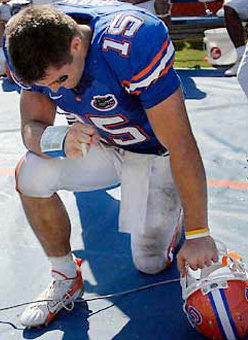
Tim Tebow is an anomaly – in more ways than one. Although he plays quarterback for the Denver Broncos, he seems to run as much as he passes. (For those of you not familiar with the National Football League, a quarterback traditionally throws the ball much more than he runs with it.) And when he does throw, he has an unorthodox throwing motion. As a result, many sports analysts dislike him as an NFL quarterback. But the criticism doesn’t end there. You see, Tebow is also a religious Christian whose values influence his conduct both on and off the field. As a result, many people dislike him as a person.

“The Tebow Effect”
Lev Echad blog

We all have our animal inside. The point is not simply to muzzle that animal, but to harness its power. To determine what sort of an animal this is and what can be done with it.

A sheep, for example, is easily domesticated and doesn’t care to hurt anyone, while an ox may kick and gore. But did you ever see a sheep plow a field?

-Rabbi Tzvi Freeman
“Your Beast”
Based on letters and talks of the Rebbe
Rabbi M. M. Schneerson
Chabad.org

If you’re a religious person, do you ever feel a little picked on by the world around you? Do you ever feel that you are sometimes misjudged by secular society or even by your atheist friends and family members? Do you ever get a little angry and want to snap back at them when they call you “ignorant” or “unscientific” or “superstitious” or even a “bigot?” If you do, then I suppose that makes you human. It also speaks to Rabbi Freeman’s commentary on “Your Beast”. Christians are sometimes taught to “turn the other cheek” (Matthew 5:39) when confronted unfairly, and many times we do. Sometimes we don’t and there are even times when some of us are really unfair.

When Stella Harville brought her black boyfriend to her family’s all-white church in rural Kentucky, she thought nothing of it. She and Ticha Chikuni worshiped there whenever they were in town, and he even sang before the congregation during one service.

Then, in August, a member of Gulnare Free Will Baptist Church in Pike County told Harville’s father that Chikuni couldn’t sing there anymore. And last Sunday, in a moment that seems from another time, church members voted 9 to 6 to bar mixed-race couples from joining the congregation.

“Rural Kentucky church revisits ban on interracial couples”
Los Angeles Times

Examples like this are fairly rare, but they do exist and unfortunately, once they make national and even international headlines, this is what the secular world sees as Christianity. Could this be why so many people who cheer on quarterback Tim Tebow of the Denver Broncos want him to keep quiet about his Christianity, at least in public?

Whether or not Ebersole endorses that view or merely observes it, he definitely touches on a common perception of public religion. Believe whatever you want and worship whoever you want with your family in private. But when you step into the public arena, you can’t say much more than “God bless you” and “God bless America” without stirring controversy. This idea, that religion belongs only in the home, underlies the principle of public reason that I discussed in my last post.

-David Fryman
“Tebowing as a Political Metaphor”
Jewneric.com

If you believe in free speech rights, rights to peaceful assembly, and rights to worship in the religion of your choice, then even if you are an American atheist, you must support the right of Tim Tebow or anyone else to hold whatever beliefs they wish, whether you agree with them or not. However, as Fryman just pointed out, most people want us to be quiet about it. I’m sure it would be “safer” for us to do so, to gather in our churches and our synagogues and to keep to ourselves. I don’t mean “safer” in the sense that we would be physically threatened if we chose to pray in public, such as before eating a meal at our local restaurant, but safer in the sense that we wouldn’t have to hear how “bad” we are (perhaps because of our stance on some hot political and social topic such as abortion, same-sex marriage, or “creationism”). We also wouldn’t have to take as much fallout over news reports of those little religious anomalies like the aforementioned interracial banning Kentucky church.

It’s interesting because, in response to the media backlash on the Kentucky church’s controversial vote, that church may be changing its tune. In this case, I applaud them for rethinking their blatantly racist position, but it does bring up a disturbing thought. Racism and banning interracial couples in a house of worship cannot be reasonably supported from how I understand the Bible, but what about those times when we, as people of faith, do take a stand based firmly on our faith, that does contradict societal political correctness? Should we just keep our mouths shut and stay “safe” or open our mouths and be dismissed as hateful bigots? Or should we change our minds in order to better fit in with what the secular world wants out of us: compliance with established social norms?

If it’s a matter of faith and principle, I believe we should stand our ground. Otherwise, our faith becomes a sham and our identity as disciples of the Master becomes a paper-thin mask hiding the fact that we are no different from people who claim no faith in God (and there are churches already doing this). Fryman’s final comments on his blog tell us why we must not hide who we are and, God forbid, cave in to media and social pressure.

Tim Tebow is Christian. Sounds obvious, I know, but his critics (of his religiosity, not his quarterbacking) don’t seem to understand. I know he’s Christian, but does he have to be so damn religious every time he opens his mouth?! Yes, he does. Because that’s what religion is: a way of life. Football is his life, so of course his football is Christian. If politics were his life, his politics would be Christian too.

There are times when it is best for us to be as meek as sheep but sometimes we are faced with a task such as “plowing a field”. Sheep can’t do the heavy lifting but an ox can. Both of those natures are part of us for a reason. The trick is knowing which trait to display and under what circumstances. Some expressions of our faith are best demonstrated in private prayer or in our houses of worship. But our faith, if authentic, is not just a weekly plug-in we connect to on Saturday or Sunday. It is who we are more than any other aspect of our being. Like the gay community is so fond of saying of themselves, we should “live out loud” our lives of faith.