
 Do you only believe when you can see with your eyes? When your prayers are answered and miracles carry you on their wings? Or do you also believe when circumstances fly in your face?
If it touches you to the core, if it is a belief you truly own, if it is as real to you as life itself, then it does not change.
And if it does not change, then you are bound up with the true essence of the One who does not change.
-Rabbi Tzvi Freeman
“Faith in the Dark”
Based on letters and talks of the Rebbe
Rabbi M. M. Schneerson
Chabad.org
I’ve said before that I don’t consider myself the “sharpest knife in the drawer.” In the world of faith, I think I have plenty of company, though. For instance, I don’t think most Christians consider the idea that there are two basic levels of knowledge in our religion (or probably most religions): the common worshiper’s view and the scholar’s view. For instance, New Testament scholar Larry Hurtado recently posted on his blog an article called An “Early High Christology”. I mean really. What in the world is high Christology and what’s the difference between high vs. low Christology?
I’ll let you click the links I provided since my discussion today isn’t focused on those topics. I’m just including them to illustrate that most people in the church don’t have the same view of God, Jesus, and the Bible as do theologians and Bible scholars. These people talk a different language than we do and conceptualize the Word of God in ways most of us can’t even imagine. I’m not even sure most of them could communicate their ideas and perspectives to a crowd of “regular Christians” at their local neighborhood church in any successful way.
Which is kind of a shame, because the information these people work with would almost assuredly challenge and perhaps even change the viewpoint and direction of most believers in most churches if we had access to it in a comprehensible way.
Well, they do publish popular books, some of them anyway, but most Christians don’t take advantage of that material (let alone anything more scholarly, such as a Ph.D Thesis). Most people who sit in the pew on Sunday are content to believe that they are being adequately “fed” by their local Pastor, who no doubt is doing a good job, but may feel constrained to offer only the “food” he or she believes the audience will comfortably tolerate.
I occasionally get “dinged” for including non-Biblical sources in my writings since they are, after all, non-Biblical and thus cannot carry the same weight of authority as the scriptures in the Bible. But I’m no Bible scholar and I do love a good metaphor, so I include things like Rabbinic midrash, Chassidic tales, and commentary about Kabbalah, largely for their cultural, metaphorical and symbolic meaning. I certainly can’t discuss them from the perspective of a Pastor, Rabbi, or someone else with an advanced education in Theology or Divinity.
That doesn’t keep me from being curious though, and curiosity often leads me down interesting if troublesome paths.
Here’s one such path:
Numbers 22-24: While the Numbers text itself is inconclusive, both rabbinic legend and the Apostolic Scriptures clearly paint Balaam as wicked through and through.
“The Error of Balaam”
Commentary on Torah Portion Balak
First Fruits of Zion
 Um, what was that? The Torah was inconclusive about the nature and character of the “wizard” Balaam, but both the New Testament and midrashim agreed that he was evil? That seems like an odd combination. Of course, it’s not that the New Testament writers and the authors of midrash expected to agree with each other, but in this case, strangely enough, they did. Here’s the New Testament commentary on Balaam.
Forsaking the right way, they have gone astray. They have followed the way of Balaam, the son of Beor, who loved gain from wrongdoing, but was rebuked for his own transgression; a speechless donkey spoke with human voice and restrained the prophet’s madness. –2 Peter 2:15-16 (ESV)
But these people blaspheme all that they do not understand, and they are destroyed by all that they, like unreasoning animals, understand instinctively. Woe to them! For they walked in the way of Cain and abandoned themselves for the sake of gain to Balaam’s error and perished in Korah’s rebellion. –Jude 1:10-11 (ESV)
Admittedly, the opinions being rendered about Balaam in the New Testament text are rather brief. But what about the midrash?
Some say Balaam of Pethor (פתור) was called a money-changer (petor, פתור) because the kings of the nations rushed to him for counsel in the same way that people rush to a money-changer to change their currency. –Numbers Rabbah 20:7
This may not be the only Rabbinic commentary on Balaam, but it’s the only one I have access to due to my limited knowledge in this area.
Am I saying that we can compare the New Testament and Talmud, for example? Probably not, or at least, only very, very carefully, with lots of caveats attached (as a side note, can the New Testament and the later Rabbinic commentaries both be considered midrash?). On the other hand, there is just so much we don’t truly understand about the Bible, and there are so many other sources of information that we have access to that may provide additional perspective. We just need to be able to clearly delineate between the Bible and other information sources. We also need to remember that we don’t have to be so binary in our thinking that we always have to say, “Bible good! Everything else, bad!”
After pursuing my personal faith issues for the past few years, I’m slowly coming to the conclusion that the Bible doesn’t always tell us the “whole story.” Both Christian and Jewish scholars and sages have spent the past several thousand years trying to understand the mind of God by delving into the Word of God. They’ve produced an untold amount of commentary that their audiences judge to be of greater or lesser value in defining the faith. The fact that gentlemen like Larry Hurtado even exist as New Testament scholars tells us there is more to be learned about the New Testament than we already know or think we know. I’m sure the same is true for the rest of the Bible.
I’ve previously mentioned last Thursday’s conversation between me, my son, and two other believers that lead to quite an interesting theological discussion. One of the things I didn’t mention was that David asked me what the minimum amount of knowledge was that would still qualify a person as a believer in God and a disciple of the Master. I don’t recall the details of my answer, but I don’t doubt it’s a good deal less than what the scholars, sages, and experts possess.
I suppose we could limit ourselves to knowing just the basics.
And one of the scribes came up and heard them disputing with one another, and seeing that he answered them well, asked him, “Which commandment is the most important of all?” Jesus answered, “The most important is, ‘Hear, O Israel: The Lord our God, the Lord is one. And you shall love the Lord your God with all your heart and with all your soul and with all your mind and with all your strength.’ The second is this: ‘You shall love your neighbor as yourself.’ There is no other commandment greater than these.” –Mark 12:28-31 (ESV)
But people are curious creatures. We very rarely hold ourselves back to the basics, well, some of us, anyway. We want to know more and we push our limits. We push the limits of religious propriety, asking questions the church doesn’t want to answer. We push our intellectual limits, asking questions that have answers we may not have the ability to understand. We push the limits of what are considered viable information sources and methods of study and what are not, at least by those folks who are “in the know,” such as Hurtado or Timothy George.
 But the alternative is to shut up, don’t ask questions, and do as we’re told. For some people, that’s the entire scope of their faith. For others, for people like me, that would be the end of my faith. It would die for lack of nourishment.
So I’ll probably keep asking questions, being rebuffed, offending people, entering areas that are “off limits” to mere mortals and those of us with a limited religious education (and IQ), and generally stubbing my toe every other step.
I feel like a person who is trapped in an endless, man-sized maze looking for the cheese. Problem is, the maze is completely blacked out. I can’t see a thing. So the only way to discover my path is to bump into a lot of walls as if I were a human Roomba. My path seems completely random. Hopefully, I’ll cover the necessary territory.
What else can I do?
You don’t need to move mountains.
You just need to know where to aim.
You can transform an entire family forever with one flickering Shabbat candle of one little girl.-Rabbi Tzvi Freeman
“A Small Candle”
Based on letters and talks of the Rebbe
Rabbi M. M. Schneerson
Chabad.org
I recently read a very interesting blog post written by Jacob Fronczak called Every man is not a theologian which seems to give me a sort of “permission” not to pretend I know what a theologian knows. You might want to have a look and see what you think.

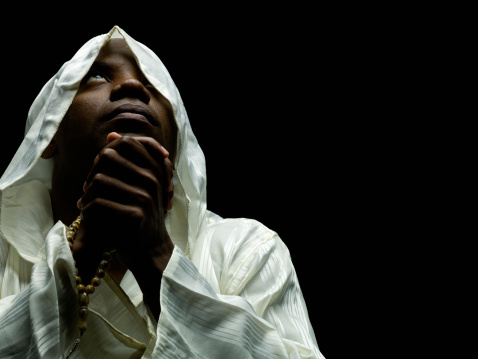
 Morning Meditations