Tag Archives: Bible

The Inescapable God

MitzvahBe as careful with a minor mitzvah as with a major one, for you cannot know the rewards of the mitzvos.Ethics of the Fathers 2:1

On the surface, the mishnah’s point is simple enough: do not weigh and categorize G-d’s commandments. But upon closer examination, its words seem fraught with ambiguity and contradiction.

Are there or are there not differences between mitzvos? The mishnah seems to saying that there aren’t, but it itself uses the terms “minor” and “major” (kaloh and chamurah) – terms which are used to categorize mitzvos in the Talmud and its commentaries and in the various codes of Torah law.

On the Essence of the Mitzvah:
Commanding Connection and Refining Deed
Sivan 13, 5771 * June 15, 2011
Chabad.org

What does it mean to obey God? What does it mean to sin? Are their big sins and little sins? Can one form of obedience be better than another?

The commentary from which I quoted above struggles with this question and the meaning of what obeying the commandments does for us and for others. And while it is true, this commentary was written for a Jewish audience, I think there is more than ample reason for Christians to take it seriously as well.

One of the teachers of the law came and heard them debating. Noticing that Jesus had given them a good answer, he asked him, “Of all the commandments, which is the most important?”

“The most important one,” answered Jesus, “is this: ‘Hear, O Israel: The Lord our God, the Lord is one. Love the Lord your God with all your heart and with all your soul and with all your mind and with all your strength.’ The second is this: ‘Love your neighbor as yourself.’ There is no commandment greater than these.”

“Well said, teacher,” the man replied. “You are right in saying that God is one and there is no other but him. To love him with all your heart, with all your understanding and with all your strength, and to love your neighbor as yourself is more important than all burnt offerings and sacrifices.”

When Jesus saw that he had answered wisely, he said to him, “You are not far from the kingdom of God.” And from then on no one dared ask him any more questions.-Mark 12:28-44

If you love me, keep my commands. –John 14:15

This isn’t to suggest that the commands issued by Jesus and applied to his non-Jewish disciples were identical to the 613 commandments given to the Children of Israel at Sinai, but it is clear that the grace of God did not wipe away the law of God in the world and that each of us has a responsibility to obey our Creator and to avoid rebellion against Him.

But putting aside the specific content of the commandments for a moment, why do we have those that Jesus gave to the nations and those that Moses related to Israel?  Why do we have commandments at all? It’s not as if obeying or disobeying God can add to or take away from His Holiness and perfection. Continuing with the “On the Essence of the Mitzvah” commentary, we find:

In other words, there are two dimensions to the mitzvos. On the most basic level, a mitzvah, by virtue of its being commanded by the Almighty, binds its performer (as well as the resources which he utilizes in its performance) to its Commander. In this, all mitzvos are indeed equal. A mitzvah that takes tremendous sacrifice and many years of spiritual development to fulfill connects us to G-d no more than one which is observed with a single, effortless act.

But G-d did more. He not only opened a channel into our lives by which we may connect to Him, He also made this path a “perfect way”, a way of life which improves and perfects those who travel it. His word not only conveys His will and command, it is also a “refined” word—a word that refines those who heed it. This is the second, “specific” dimension of the mitzvah. When we give charity, we not only fulfill a Divine command, we also develop in ourselves a sensitivity to the needs of others and learn the proper perspective on the material resources which have been entrusted to us.

This reads very much like the “two greatest commandment” I quoted above from Mark. While in one sense, commandments are equal in that they all serve God (though we cannot know their true, relative merit from a Heavenly perspective), they also differ in that some of them connect us to God exclusively while others serve this purpose, plus they make us sensitive to those around us. In other words, what we do for God, though He has no needs at all that we can satisfy, is inexorably intertwined with what we do for people (and we have a great ability to perform acts that benefit other human beings), the act of which benefits others and refines our nature.

Yet, one of the “dangers” of serving other people is that we can let that “feel good” experience when we perform kindness and charity distract us from the One who we are serving as well:

However, warns the Ethics, never lose sight of the deeper import of the mitzvos. Employ the Divine commandments to build a better self and world, thus experiencing them as an entire array of major and minor influences on your life, but remember that they all share a deeper, unified truth. Be equally careful of them all, for their true reward is beyond knowledge and experience.
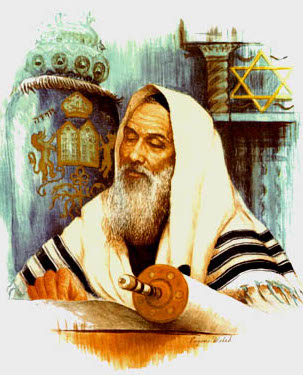
Studying TorahWhat we do to connect to God, to refine our own character, and to serve the needs of others, must remain balanced within us. To bias our viewpoint in one direction or the other could mean we continue to do mercy and justice while losing sight of the unifying “why”. But even losing sight of God does not mean He loses sight of us. His Hand is still upon us, regardless of who we are or how we are behaving or thinking. How many people have lost sight of God or have never experienced Him in a deliberate and conscious manner, and yet still yearn for Him, His Justice, and His mitzvot?

I do not accept your assertion that you do not believe.

For if you truly had no concept of a Supernal Being Who created the world with purpose, then what is all this outrage of yours against the injustice of life?

The substance of the universe is not moral, nor are plants and animals. Why should it surprise you that whoever is bigger and more powerful swallows his fellow alive?

It is only due to an inner conviction in our hearts, shared by every human being, that there is a Judge, that there is right and there is wrong. And so, when we see a wrong, we demand an explanation: Why is this not the way it is supposed to be?

That itself is belief in G-d.

Rabbi Tzvi Freeman
“True Belief”
Chabad.org

We cannot escape God. We are made in His image. Atheists cannot escape God, for even in crying out against the real and perceived injustices in the world, they unknowingly appeal to the One True Judge. We, as believers, cannot escape God either. You might imagine that, being “religious people” we only want to draw closer to Him, but we must realize that we do so only on His terms, and not on ours.

Rabban Gamliel the son of Rabbi Judah HaNassi would say: Make that His will should be your will, so that He should make your will to be as His will. Nullify your will before His will, so that He should nullify the will of others before your will. –Ethics of the Fathers 2:4

If you love me, keep my commands. –John 14:15

Father, if you are willing, take this cup from me; yet not my will, but yours be done. –Luke 22:42

Know the Master you serve and then seek to do His will with all your heart.

Stories are Miracles

R. Jacob Kaidaner heard from R. Pinhas Reises of Shklov that “once he was on the way with the holy rebbe [R. Shneur Zalman of Lyady], when the skies suddenly grew dark and a pouring rain began to fall. His honoured holiness said that once the Ba’al Shem Tov had been travelling, and a pouring rain began, and he recited a single verse and the rain stopped. He told us the verse that he [the Ba’al Shem Tov] had recited, and he also expounded for us the mystical intent of the verse. And before he finished the exposition, we saw a true wonder, namely, a torrent on both sides of the wagon, while the wagon itself was completely dry, indescribably so, not a single drop..and when we came to the inn and his holiness took his feet out of the wagon, it immediately was filled from the rain.

Kaidaner, Sipurim nora’im
as told in Gedaliah Nigal’s book
The Hasidic Tale

One day Jesus said to his disciples, “Let us go over to the other side of the lake.” So they got into a boat and set out. As they sailed, he fell asleep. A squall came down on the lake, so that the boat was being swamped, and they were in great danger.
The disciples went and woke him, saying, “Master, Master, we’re going to drown!”

He got up and rebuked the wind and the raging waters; the storm subsided, and all was calm. “Where is your faith?” he asked his disciples.

In fear and amazement they asked one another, “Who is this? He commands even the winds and the water, and they obey him.”-Luke 8:22-25

Besides the fact that both of these stories have to do with storms and involve miracles, you may be wondering what they have in common. If we look outside their immediate context and theme though, we find that they are linked by how they affect the audience and how they reveal God.

Yesterday, I spent some time in my “morning mediation” describing and comparing the tales of the Chasidim to the tales of the Messiah’s “Chasidim”. However, from a traditional Christian point of view, the two types of “storytelling” I just quoted seem as different as apples and canaries. But remembering that Jesus has a great deal in common with Rabbis and tzadikim (holy or righteous “saints”), the connection to me seems to be more than clear.

I’ve been reading Nigal’s book, but I don’t seem to be able to get more than a few pages when the way Nigal tells his own story of the Chasidic tales inspires one of my own. Here’s what started me off today:

A fourth characteristic of the hasidic story is its intrinsic ability to perform miracles and wonders. The Ba’al Shem Tov was asked by R. David Forkes how one could pray for a sick person through stories, and indeed, tsadikim succeeded in healing the ill in this manner: R. Berisch of Oshpetzin healed a sick woman through stories, and a young man who suffered from melancholy was cured in the same way. Problems of many other kinds, too, were solved by the power of the tsadik’s storytelling.

Christians are accustomed to how Jesus and his disciples performed miracles, but we don’t see them doing so by telling stories. Often, we see the disciples invoking the name of Jesus, in the same manner as any disciple of any Jewish Rabbi or Maggid does when acting in his Master’s name, and then performing the miraculous act. The Chasidim use stories the way I sometimes think of the therapeutic metaphors of Milton Erickson, but perhaps therapy, healing, and the hand of God are not really different things.

There are ways of making the connection between who we are and who our Master is by using stories, and these stories let us work in mystic ways or bring the Divine within our awareness and perhaps within our grasp:

“Will the Lord reject forever?
Will he never show his favor again?
Has his unfailing love vanished forever?
Has his promise failed for all time?
Has God forgotten to be merciful?
Has he in anger withheld his compassion?”

Then I thought, “To this I will appeal:
the years when the Most High stretched out his right hand.
I will remember the deeds of the LORD;
yes, I will remember your miracles of long ago.
I will consider all your works
and meditate on all your mighty deeds.” –Psalm 77:7-15

I remember the days of long ago;
I meditate on all your works
and consider what your hands have done.
I spread out my hands to you;
I thirst for you like a parched land.

Answer me quickly, LORD;
my spirit fails.
Do not hide your face from me
or I will be like those who go down to the pit. –Psalm 143:5-7

True, these are songs and prayers, but they are also meditations, recollections, and indeed, even stories about the mighty deeds of God and how He has rescued His people time and again. In telling the stories of God and putting our trust in Him as we hear these tales, what wonders and miracles can we receive? Maybe the answer to prayer is contained in a story.

What about when you read the Bible? What do you experience? Hopefully, a feeling of encouragement and maybe even a touch of wonder, but is that it? What if you were to recite some of the stories of Jesus? The time he healed the woman of the issue of blood, perhaps. How about when he spoke to the woman at the well? You could even recall some of the stories Jesus himself told. The parable of the prodigal son, for example, or the parable of the talents, or the one about the sower.

Why did Jesus tell these parables hidden in riddles? Just to describe the Kingdom of God in metaphor? Sure, at least that much. But what if the stories he told also performed their own miracles, winning the hearts of the sons of Israel for their Father? What do the stories about Jesus do for us? What do they do for someone who hears them for the first time?

When you turn your heart away from sin and to the Savior of the world, isn’t that a miraculous healing, just as miraculous as halting a storm? Isn’t it a wonder beyond the reason of our world when anyone turns to God?

Let me tell you one more story:

Rav Elchonon Halperin, shlit”a, explains this practice with a statement brought on today’s daf. “Our sages tell us in Menahcos 97 that one’s table atones for him (in the place of the altar in the Beis HaMikdash; the Holy Temple in Jerusalem). Rashi explains that one’s table atones in the merit of feeding poor people at the table. Yet imagine the embarrassment of destitute people who have no choice but to take their meals as charity at another’s table. Surely only a very rare person can give the poor food in a manner which will not be a huge embarrassment. Most people eating at the table of another out of necessity feel nothing less than bitter darkness.

“But at the table of tzaddikim, everyone eats for free. Both the poor and the wealthy join together and one who is hungry can obtain as much food as he wants in an honorable manner. No one feels above his friend, since everyone is there for the same reason and is treated the same way. All those who attend a tisch feel a sense of togetherness that emerges out of holy love and companionship. With such a pleasant atmosphere is it any wonder that we cannot imagine the great atonement of a chassidic tisch?”

Daf Yomi Digest
Stories off the Daf
“The Atoning Table”
Menachos 97

While the vast majority of Christians might say that it is laudable to feed the poor from your own table, this act of charity and kindness has no power to atone for sins nor could it replace any of the sacrifices Jews once offered at the Temple. Only confession of sins and faith in Jesus Christ atones for sins.

Of course, the vast majority of Jews don’t see it that way, and with the Temple gone these past 2000 years, acts of charity and prayer are believed to substitute for the Temple offerings.

But what is the story telling us?

Does the act of performing a kindness, feeding the poor at your own table and at the same time, treating the disadvantaged with respect and as equals to even the very wealthy eating beside them…does that mean something? Does it do something? What is burning in your heart? It’s one thing to repent of your sins and turn to God, but words don’t reveal that you have really changed as clearly and definitely as performing acts of kindness and righteousness.

I said a little while ago that the “Messianic Tales” can perform the miraculous act of turning a stone heart into one of flesh; of turning a heart of sin into one that accepts and performs righteousness. Yet do we turn to God only because of us? Well, yes…probably at first. People can be very self-centered. But here is another miracle.

StoriesBy hearing a story about a person feeding poor people at his own table and relieving them of the burdens of shame and embarrassment, not only are the poor fed but so are the poor in spirit…us. Hearing the story, having faith in the tales of the tzadikim, letting it turn our hearts, and causing us to perform acts of righteousness is a miracle and a wonder and who knows what else God may do because of our trust?

God is a storyteller. Why else did He leave us with such a marvelous book of sagas involving tragedy, wonder, courage, and despair? For it is the stories told by God that fill the world with miracles. When we retell those stories, we cause the miracles to be infused in the world around us, in the people that we meet, and within our very souls.

In the beginning God created the heavens and the earth. Now the earth was formless and empty, darkness was over the surface of the deep, and the Spirit of God was hovering over the waters. –Genesis 1:1-2

In the beginning was the Word, and the Word was with God, and the Word was God. He was with God in the beginning. Through him all things were made; without him nothing was made that has been made. In him was life, and that life was the light of all mankind. The light shines in the darkness, and the darkness has not overcome it. –John 1:1-5

And the word became a human being and walked among us. What a wonderful and miraculous story.

Let these commandments that I command you today be on your heart. Teach them thoroughly to your children and speak of them while you sit in your home, while you walk on the way, when you retire and when you arise. –Deuteronomy 6:6-7

The Messianic Tale

The Ba'al Shem TovThe third goal of the hasidic story was to rouse its hearers into action for the service of God. Several compilers of hasidic stories quoted the dictum by R. Elimelekh that ‘it is an auspicious sign for a person if, when he hears what is related regarding the virtues of the tsadikim and their faithful holy service of the Lord, may he be blessed, his heart beats at that time with the desire and very great fervour that he also merit faithfully to serve the Lord, may he be blessed; this is a good sign that the Lord is with him.’

from The Hasidic Tale
by Gedaliah Nigal

As they approached the village to which they were going, Jesus continued on as if he were going farther. But they urged him strongly, “Stay with us, for it is nearly evening; the day is almost over.” So he went in to stay with them. When he was at the table with them, he took bread, gave thanks, broke it and began to give it to them. Then their eyes were opened and they recognized him, and he disappeared from their sight. They asked each other, “Were not our hearts burning within us while he talked with us on the road and opened the Scriptures to us?”Luke 24:28-32

Gedaliah Nigal relates to his audience the importance to the Chasidim of storytelling  about tzadikim (righteous ones), Chasidim (devoted disciples), and the deep and multi-layered influence these tales can have. As you’ve already seen, one of the purposes of Chasidic storytelling is to inspire the listeners to perform acts of righteousness and devotion for the sake of God. We also see in Luke’s Gospel, that the words of the risen Messiah did the same thing. That brings us to an interesting question: is one of the main purposes of the Bible to tell stories that inspire the reader?

I’m not really asking if the Bible is inspirational. I think most believers would say “yes”. What I’m asking is whether or not the Bible is a collection of stories designed to inspire its readers?

I’ve just implied that not everything in the Bible is literally true, a contention supported by many leading New Testament (NT) scholars, not the least of which is Bart D. Ehrman. You might be tempted to dismiss Ehrman based on the fact that he is a self-declared agnostic (though a former Christian), but other scholarly New Testament books address the question of how literally we can take the Bible, including whether or not the New Testament defines Jesus as God (see Maurice Casey’s From Jewish Prophet to Gentile God and Larry Hurtado’s How on Earth Did Jesus Become a God as examples).

If you believe that the Bible is 100% literally true and should be read as a history, I’ve no doubt just shocked you by suggesting otherwise, yet modern NT scholars readily confirm that the Bible is less a history book and more a set of stories (based on eyewitness accounts, at least to some degree) about the teachings of the Jewish Messiah and what they mean to the nations of the world in terms of access to God, forgiveness of sins, and a life beyond the one we know. The New Testament speaks to the Jewish people but it also speaks to the non-Jewish nations about the God of Israel and the Son of God, Jesus, the Messiah who brought the Good News of the Most High to all of mankind. These “stories” represent as much the perspectives and character of the  NT authors (who may not always be the people we attribute these stories to) as well as the nature of character of the Messiah.

That brings us to another purpose of these “stories”:

The very power of the hasidic tale wins adherents to hasidism. Many people, among them some outstanding individuals, have been drawn to hasidism by its stories. R. Menahem Mendel of Kotsk, one of the leading hasidic tsadikim, said of himself that ‘he was made a hasid by an old man who told stories about the holy tasdikim’. The Ba’al Shem Tov excelled in his ability to attract new followers by this means.

Teaching of the TzadikimWhile Nigal is speaking of Jews who turn toward the teachings of Chasidic Judaism, I will admit to being attracted, as a Gentile, to these teachings when I read some of the tales of the Chasidim. It’s difficult to disregard the wisdom and compassion of the inspirational stories about the Chasidic tzadikim, but it doesn’t stop there. This, I think, is also what is so attractive about the tales of the “tzadik” Jesus. In fact, there is one Chasid who, after thoroughly investigating the Gospels, found the “stories” of John especially to be reminiscent of the tales of the Chasidim and as a result, became a lifelong disciple of the “Maggid of Nazeret”.

He read the Gospels in German. Then he obtained a Hebrew version and reread them. Though he was in the midst of a Gentile, Christian city where Jesus was worshiped in churches and honored in every home, Feivel felt the Gospels belonged more to him and the Chasidic world than they did to the Gentiles who revered them. He found the Gospels to be thoroughly Jewish and conceptually similar to Chasidic Judaism. He wondered how Gentile Christians could hope to comprehend Yeshua (Jesus) and His words without the benefit of a classical Jewish education or experience with the esoteric works of the Chasidim.

Taken from Jorge Quinonez:
“Paul Philip Levertoff: Pioneering Hebrew-Christian Scholar and Leader”
Mishkan 37 (2002): 21-34
as quoted from Love and the Messianic Age

If a young Chasid named Feivel Levertoff (he later changed his name to “Paul Philip”) could discover the Messiah in Jesus in the late 19th century because John’s Gospel was so much like the powerful and mystic writings on which he was raised, is it so difficult to imagine that a passionate exploration of Jesus might lead a Christian to discover an extension of his faith in Chasidic tales?

What are you looking for? Wealth? Prestige? Position? You have all these right now. You should be altogether happy. And yet you are miserable – I can feel it for all your brave speech. Can you not be satisfied? And this way of living that fills you with restlessness and discontent – I am not a Jew but even I have sensed something lovely in Judaism, in its faith and in its morality with its emphasis on pity. Even its rituals are not without poetic grace. See how many Gentiles have been converted to your religion. Does that not prove that it possesses virtues which the Greek world lacks? These are at your disposal now. What more do you want?

-Nicholaus to Elisha in the novel:
As a Driven Leaf
by Milton Steinberg

In the days prior to and even after Christ’s earthly existence, it was somewhat common for non-Jews to see the beauty and wisdom in the teachings of the God of Israel, so in those days, many Gentiles converted to Judaism as the only means by which they could live a life of righteousness (though through the revelation of Christ, all people may be reconciled to God). While Christianity begins with Judaism as its root, two millennium of separation between Judaism and Christianity have made them two almost completely unrelated faiths, with only the spectre of a connection between them (most Jews would say that the term “Judeo-Christian” is a misnomer). However, if Christianity truly accepts that we follow the Jewish Messiah, who first came for the lost sheep of Israel and only afterwards for the nations, who never abandoned his people, and as the Apostle Paul taught, all of Israel will one day all be saved (Romans 11:26), then we cannot be so arrogant as to brush aside the natural branch just because we, the wild and alien olive shoot, have been grafted into the root (Romans 11:17).

Perhaps you’ve heard the story of Hillel, Shammai, and the Three Converts as related in the Ethics of the Fathers (Avot Pirkei). I won’t recount the entire story (you can click on the link I just provided and read it for yourself), but it does illustrate the drive and passion among some of the Gentiles to truly understand what it is to be a Jew and to have that special covenant relationship with God. While Hillel and Shammai died perhaps only within a few years of the birth of Christ, they each established great schools of Jewish learning and their disciples, native Jews and converts, carried on their teachings and traditions for generations and eventually, ensured that their stories would be recorded for all time so that we have them with us even today.

The “Chasidim” of Jesus also made sure the stories of their Master were passed on from generation to generation, eventually being recorded and passed on to the future…to us.

Paul Philip Levertoff thought that the teachings of Jesus read like a collection of Chasdic tales. Perhaps as Gentile Christians reading tales of the Chasidim, we can also find a connection to the Messiah, the Prophet, and the greatest Tzadik, whose own death atoned for not just a few, but for all.

Crossroads

Crossroads“Let me explain,” Demonax continued. “To you philosophy is science. To me it is art. To you it is a method of discovering the truth. To me it is a guide to noble living.”

Demonax to Elisha in
Milton Steinberg’s book
As a Driven Leaf

In my previous blog post Two Worlds, I compared my journey of faith to that of Elisha’s. Elisha is a Jewish man living in the first fifty years after the destruction of the Second Temple in Jerusalem. He is a man who had been trained as a Rabbi and who had served as a member of the great Sanhedrin. Yet, in a profound crisis of faith, he has abandoned his Jewish heritage and the Torah of Moses and fled to the Syrian city of Antioch to try to find the truth of his existence in the realms of Greek literature, science, and philosophy.

I, for my part, am a person who came to faith in Jesus sometime after my 40th birthday and after a few years not being satisfied by the answers of the church, proceeded into a “blending” of Christian and Jewish practices in a small, local congregation. However, in recent years, from the vantage point of a Christian man, I’ve been watching my Jewish wife on her journey of discovery to embrace her Judaism. I now find myself challenged by both the Christian and Jewish worlds to explore the value of my own faith through a Jewish lens.

But Elisha has the worst position of the two of us. He is trying to seek an objective method of proving the existence of God (or proving God doesn’t exist) and then determining, regardless of the result, how men are supposed to live based on scientific and indisputable evidence.

Good luck.

But look at how Demonax, the Greek moralist and cynic philosopher, differs with Elisha in even describing the task and the goal. Elisha is trying to understand the “meaning of life” by scrutinizing existence as an astronomer looks at a planet through a telescope. By contrast, Demonax sees the meaning of life not as an attempt to understand existence, but to live it out. The mechanic vs. the poet. While both perspectives are valid, here they are placed at odds with each other.

But should they be?

Think about why a person comes to faith, any sort of faith, in any religious structure. There are two approaches. The first is that a person concludes in their current system that life is random and without meaning. Why is the earth here? What is the purpose of existence? Is the universe the result of a blind, unreasoning accident or is there a conscious creativity at work? How am I supposed to understand the world around me?

The second approach is that a person concludes in their current system that their life is random and without meaning. The questions are similar but pregnant with a profound difference. Why am I here? What is the purpose of my existence? Am I just the result of a random joining of two reproductive cells or is my life special and meaningful? Then, the most important question is, if my life is special, meaningful, and unique, what am I supposed to do? “How am I supposed to live?”

The two questions generally lead to the same answer, for in discovering the meaning of the universe, you discover the meaning of yourself and how you are to live out the life you were given. Both Elisha and Demonax are traveling to the same city but they’re taking two radically different routes.

ChasidNow consider the Chasidic understanding of the Torah. You may look at a Torah scroll or a Bible and see words on paper, but that’s only the surface appearance and this only hints at its true purpose and meaning. In the following series of short quotes, Rabbi Tzvi Freeman brings to light some of the wisdom of the Lubavitcher Rebbe, Rabbi Menachem Mendel Schneerson to help us understand what we are really seeing:

They translate it as “The Bible,” or “The Law,” but that’s not what the word means. Torah means “instructions.”

Whatever piece of Torah you learn, you must find the instructions it is giving you. -from Instructions

Torah is the blueprint by which the world was designed. Everything that exists can be found in the Torah.

Even more: In any one concept of Torah you can find the entire world. -from Blueprint

At Mount Sinai, tradition tells, there was no echo.

Torah penetrates and is absorbed by all things, because it is their essence. There is no place where it does not apply, no darkness it does not illuminate, nothing it cannot bring alive. Nothing will bounce it back and say, “Torah is too holy to belong here.” -from Penetrating Wisdom

We find that the Torah is not only the blueprint for existence, but a set of instructions for our existence. Beyond that, we discover that every object and being within the created universe is a container, of sorts, for the “material” used for its creation: the Torah. I don’t mean to say that all of humanity should attempt to live a “Torah lifestyle” identical to the Jewish people, but it seems more than reasonable that we should study the Torah to learn the essential truths by which God intends for us to live. After all, God’s instructions to do so are here:

Many peoples will come and say,
“Come, let us go up to the mountain of the LORD,
to the temple of the God of Jacob.
He will teach us his ways,
so that we may walk in his paths.”
The Torah will go out from Zion,
the word of the LORD from Jerusalem. –Isaiah 2:3

Rabbi Freeman’s teachings are not far from what this early 20th century Chasidic scholar had to say:

Why has God created the world and mankind, and for what purpose? Why has the soul descended into the body? (The preexistence of the soul was assumed in Chasidism.) Is there a more ideal world than the divine world in which the soul previously existed? Is there a greater joy than when man rejoices in God?

-Paul Philip Levertoff
as published in “The Love of God”
Messiah Journal issue 107

Elisha considers philosophy and thus the search for meaning and ultimately for God, to be a science. Demonax believes the same journey is the art of learning how to live in a noble, and even in a holy manner. Yet Elisha’s personal doubts have blinded him to what he should have known, having been a student of the Torah from childhood. He should have seen that the Torah contains all the questions and all the answers. Greek science and philosophy, like our modern, western thought, seeks to compartmentalize and to segregate our objective environment, our physical bodies, and our souls, but the Torah is the maker and container of all these and indeed, we are a container for the Torah, as is the entire universe and everything in it.

Like a splinter in our minds, the questions drive us madly to seek the answers of why we’re here and why the world exists, and yet the answers are right in front of us and they have been right in front of me all along:

One of the teachers of the law came and heard them debating. Noticing that Jesus had given them a good answer, he asked him, “Of all the commandments, which is the most important?”
“The most important one,” answered Jesus, “is this: ‘Hear, O Israel: The Lord our God, the Lord is one. Love the Lord your God with all your heart and with all your soul and with all your mind and with all your strength.’ The second is this: ‘Love your neighbor as yourself.’ There is no commandment greater than these.”

“Well said, teacher,” the man replied. “You are right in saying that God is one and there is no other but him. To love him with all your heart, with all your understanding and with all your strength, and to love your neighbor as yourself is more important than all burnt offerings and sacrifices.” –Mark 12:28-33 (quoting Deut. 6:4-5 and Lev. 19:18)

Christ’s answer tells us both the meaning of the universe and the meaning of our lives, what Creation is, who we are, and what we are supposed to be doing.

The great sage Hillel once summed up the Torah as that which is hateful to you, do not do to your fellow. That is the whole Torah; the rest is the commentary; go and study” (Shab. 31a). While the “two greatest commandments” don’t give us every detail of the journey on which we must travel, it does provide a clear direction. Here I am, standing at a crossroads looking for a direction, just as Elisha was. May I make a better decision than he did. I pray we all do.

Well I looked into dream of the millions
That one day the search will be through
Now here I stand at the edge of my embattled illusions
Looking into you

-Jackson Browne
“Looking into You” (1971)

Chag Sameach Shavuot.

Candle in Obsidian

Rising SparksFrom the moment that they were sundered apart, the earth has craved to reunite with heaven; physical with spiritual, body with soul, the life that breathes within us with the transcendental that lies beyond life, beyond being.

And yet more so does the Infinite Light yearn to find itself within that world, that pulse of life, within finite, earthly existence. There, more than any spiritual world, is the place of G-d’s delight.

Towards this ultimate union all of history flows, all living things crave, all of human activities are subliminally directed. When it will finally occur, it will be the quintessence of every marriage that has ever occurred.

May it be soon in our times, sooner than we can imagine.

-Rabbi Tzvi Freeman
“Cosmic Marriage”
Chabad.org

The 213th mitzvah is that we are commanded to acquire [by kiddushin] a woman before marrying her [n’suin]: either by giving her something [of sufficient value]; by giving her a document [of marriage]; or by having marital relations [for the purpose of kiddushin]. This is the mitzvah of kiddushin.

This mitzvah is hinted to in the Torah in the verse, “When a man acquires a woman and has relations with her….” This implies that he can acquire her through having relations.

-Rabbi Berel Bell
“Marriage: Positive Commandment 213”
Sefer Hamitzvot in English
Chabad.org.

Therefore what God has joined together, let no one separate.Mark 10:9

There are all kinds of “marital metaphors” in the Bible. In the Tanakh, Israel is often described as God’s bride (sometimes as a faithless lover) and in the Apostolic Scriptures, “the church” is referred to as the Bride of Christ. This language implies a special type of intimacy between God and his redeemed community (depending on your point of view regarding who is “redeemed”). While we’d like to think of ourselves as “intimate” with God, Rabbi Freeman points out that as long as heaven and earth are separate environments, man and God are like forlorn lovers, separated by a broad and dark sea, yearning for each other as if estranged paramours in a tale by Chaucer.

I once quoted Paul Philip Levertoff’s commentary on this from his work Love and the Messianic Age thus:

From this life and light proceeds the divine “spark” which is hidden in every soul. Not all men succeed in rising to this close union with God at prayer, because this spark is imprisoned in them. “Yea, even the Shechinah herself is imprisoned in us, for the spark is the Shechinah in our souls.

We are all made in the image of God and what He has placed in us yearns to return to the Source. Those of us who call ourselves “believers” are receptacles for His Holy Spirit and as such we find that we are with God and of God, yet still apart. It’s as if we can see each other and yearn for each other, but are still somehow separated. The Vine of David commentary on Levertoff says it this way:

Although every man has the divine potential of a godly soul planted within him, this is not a guarantee that every man will enter into a relationship with HaShem or even that every soul will be redeemed. Instead, the soul is separated from God by a wall of partition – sin and guilt. HaShem removes the wall of partition between man and Himself through the work of the Messiah. When the wall is removed, then the soul can connect with HaShem. Then He can “use it for the gathering of these ‘sparks’.”

But even after we confess our sin to God and receive forgiveness, redemption, and reconciliation, there is still a “wall of partition” between us. We live in a broken world and that “brokeness” in Creation and in the nature of man, mars the intimacy of who would otherwise be perfect lovers.

Rabbi Bell’s interpretation of the 213th positive commandment speaks of how Jews see the mitzvah of marriage. A man may join with a woman by presenting her with a gift, a document of marriage, or by being physically intimate with her for the purpose of marriage. In the case of the Children of Israel, God in the role of the groom, presented His gift, the Torah, to the entire assembly, His bride, at Sinai. For the nations of the world, the marriage document “became a human being and dwelt among us” (John 1:14) and the other document (of divorce) that condemned us and separated us from this gift was destroyed when “the Word made flesh” died on our behalf (Colossians 2:14).

We have access to an intimate relationship with God. So why do I often feel alone? Perhaps it’s because we don’t have such a relationship between ourselves or even within ourselves.

Candle in ObsidianWhile God is perfect, the human beings in the community of faith are not. We are as flawed and as broken as the world we live in. We seek to fly up like sparks into heaven while our feet are stuck in the mud and roots of a sullied earth. The Master said Therefore what God has joined together, let no one separate, yet we put barriers between each other and between us and God all the time. We may gather together all of the “Divine Sparks” in the world but still struggle to reunite them to Heaven:

At a certain point, each of us, through all our many journeys through life, will have found and redeemed all the Divine sparks in our share of the world. Then the darkness that holds such mastery, such cruelty, such irrational evil that it cannot be elevated—all this will simply vanish from its place, like a puff of steam in the midday air.

-Rabbi Tzvi Freeman
“Completion”
Chabad.org

Rabbi Freeman paints a very optimistic picture but the truth is, gathering together these sparks is easier said than done. If it weren’t, we would all be shining with God’s light and the darkness would not exist. Rabbi Freeman completes his thought:

All that we salvaged and used for good, on the other hand, will shine with a tremendous light beyond even the light of the G-dly realm. The world will have arrived.

More’s the pity that we must await the Messiah to ignite the final bowl of the Menorah. Our own light is not enough to illuminate the abyss of a world shrouded in darkness. What should be the courtship of estranged but impassioned lovers burning like a forest fire has become a dim flame frozen in obsidian:

I sit before my only candle,
like a pilgrim sits beside the way
Now this journey appears before my candle
As a song that’s growing fainter, the harder I play
That I fear before I end, will fade away
I guess I’ll get there, but I wouldn’t say for sure

-from “Song for Adam”
by Jackson Browne

Building a Home

RainA home is more than a house, it is a state of being. A home provides space and shelter, not just for bodies, but for the human spirit.

Who creates this space? Mainly the woman. As it says, “A woman’s wisdom builds her home.”
-Rabbi Tzvi Freeman
“Home”
Chabad.org

“There’s no place like home.”
-Dorothy

Sometimes I catch myself saying “I want to go home.” No, it’s not like I’m having a bad day at work and want to go home to wife and hearth. It’s more like I get tired of the various battles of life and I want to go “home” to someplace safe and quiet. It’s not even a feeling that I want to be in a place. It’s more like a sense of nostalgia; stringing together little bits and pieces of my memory and history together from the fabric of my life to create a warm and secure blanket in which to hide.

Then I blink and return to whatever I was doing when that random musing happened upon me.

The world isn’t a safe place. I’m not talking about the physical dangers around us, although they exist, but when I say the world’s not safe, I mean it’s not safe for our souls. It’s not easy to contemplate a life of holiness when everything we’re surrounded by is unholy. It’s difficult to find the tiny and precious pearls in life when they’re covered by a humongous pile of manure. But then, I’m forgetting myself.

“I am coming to you now, but I say these things while I am still in the world, so that they may have the full measure of my joy within them. I have given them your word and the world has hated them, for they are not of the world any more than I am of the world. My prayer is not that you take them out of the world but that you protect them from the evil one. They are not of the world, even as I am not of it. Sanctify them by the truth; your word is truth. As you sent me into the world, I have sent them into the world. For them I sanctify myself, that they too may be truly sanctified.” –John 17:13-19

The Master left the world, but he did not leave us alone:

“If you love me, keep my commands. And I will ask the Father, and he will give you another advocate to help you and be with you forever – the Spirit of truth. The world cannot accept him, because it neither sees him nor knows him. But you know him, for he lives with you and will be in you. I will not leave you as orphans; I will come to you.” –John 14:15-18

There is much talk in the church about Jesus the Savior and about the comfort and wisdom given to us by the Holy Spirit of God, but I find it more than coincidental that the giving of the spirit, the event Christianity calls Pentacost, comes on Shavuot, or the Festival of Weeks (which is arriving in just a few days), the anniversary of the giving of the Torah to the Children of Israel at Sinai. Is the Torah another “comforter”?

The sages expounded in the language of the Mishnah (blessed is He who chose them and their learning):
Rabbi Meir would say: Whoever studies Torah for Torah’s sake alone, merits many things; not only that, but [the creation of] the entire world is worthwhile for him alone. He is called friend, beloved, lover of G-d, lover of humanity, rejoicer of G-d, rejoicer of humanity. The Torah enclothes him with humility and awe; makes him fit to be righteous, a chassid, correct and faithful; distances him from sin and brings him close to merit. From him, people enjoy counsel and wisdom, understanding and power, as is stated, “Mine are counsel and wisdom, I am understanding, mine is power.” The Torah grants him sovereignty, dominion, and jurisprudence. The Torah’s secrets are revealed to him, and he becomes as an ever-increasing wellspring and as an unceasing river. He becomes modest, patient and forgiving of insults. The Torah uplifts him and makes him greater than all creations. –Pirkei Avot 6:1

While the sages are addressing a Jewish audience, I don’t see anything here that can’t apply to any person who is devoted to God and who clings to His wisdom and teachings. In clinging to the Torah, we are indeed clinging to God, and perhaps there is no difference between what the Apostles received in that upper room of the Temple in Jerusalem (Acts 2:1-4) and what the Children of Israel received from God through the hands of Moses thousands of years before:

Adonai’s Torah is pure, reviving the soul.
Adonai’s testimony is sure, educating the simple.
Adonai’s laws are just, delighting the heart.
Adonai’s command is clear, lighting the eyes.
Adonai will give strength to his people. Adonai will bless his people with peace.
God’s way is pure, and Adonai’s word is clear. He protects all who seek refuge in Him. All you who cling to Adonai your God are alive today.

from the Torah Service portion of
My People’s Prayer Book

Ruby SlippersGod has provided something to comfort us regardless of where we are or what we’re doing. He has given us access to His Spirit, but in more than one way. David, Israel’s greatest King and forerunner of the Messiah, loved God and He cherished His Torah:

One who learns from his fellow a single chapter, or a single law, or a single verse, or a single word, or even a single letter, he must treat him with respect. For so we find with David, king of Israel, who did not learn anything from Achitofel except for two things alone, yet he called him his “master,” his “guide” and his “intimate,” as is stated, “And you are a man of my worth, my guide and intimate friend.” –Pirkei Avot 6:3

Perhaps David expressed his relationship with God, the Torah, and provided the answer to my need for “home” in times of distress, in his most famous Psalm:

A Psalm of David. The LORD is my shepherd; I shall not want.
He maketh me to lie down in green pastures; He leadeth me beside the still waters.
He restoreth my soul; He guideth me in straight paths for His name’s sake.
Yea, though I walk through the valley of the shadow of death, I will fear no evil, for Thou art with me; Thy rod and Thy staff, they comfort me.
Thou preparest a table before me in the presence of mine enemies;
Thou hast anointed my head with oil; my cup runneth over.
Surely goodness and mercy shall follow me all the days of my life;
and I shall dwell in the house of the LORD for ever. –Psalm 23

David found “home” in the midst of his enemies, yet he feared no evil and lived in the presence of God. His cup overflowed with goodness and he was anointed with oil. In the valley of the shadow of death, he was in God’s house forever.

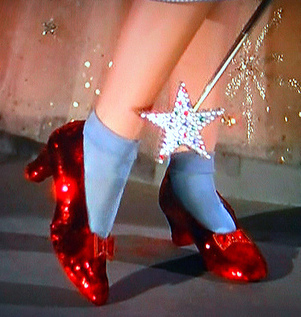
Rabbi Freeman says that “a women’s wisdom builds her home” and this is very true, but it isn’t always that simple. Beneath the woman’s wisdom and warmth, it is God’s providence that is the foundation of home, both the dwelling of the family and the shelter for the heart. Near the end of the film The Wizard of Oz (1939), we discover that Dorothy had the power to return home to Kansas at any time she wanted. She just had to discover that power within herself. We too have that ability but we have to discover God within ourselves and within the pages of the Torah. When He created the Torah and us, He made it all out of the stuff of Heaven. This is what we use to build “home”.

May the Messiah come soon and in our day.