Tag Archives: Chasidim

The Inescapable God

MitzvahBe as careful with a minor mitzvah as with a major one, for you cannot know the rewards of the mitzvos.Ethics of the Fathers 2:1

On the surface, the mishnah’s point is simple enough: do not weigh and categorize G-d’s commandments. But upon closer examination, its words seem fraught with ambiguity and contradiction.

Are there or are there not differences between mitzvos? The mishnah seems to saying that there aren’t, but it itself uses the terms “minor” and “major” (kaloh and chamurah) – terms which are used to categorize mitzvos in the Talmud and its commentaries and in the various codes of Torah law.

On the Essence of the Mitzvah:
Commanding Connection and Refining Deed
Sivan 13, 5771 * June 15, 2011
Chabad.org

What does it mean to obey God? What does it mean to sin? Are their big sins and little sins? Can one form of obedience be better than another?

The commentary from which I quoted above struggles with this question and the meaning of what obeying the commandments does for us and for others. And while it is true, this commentary was written for a Jewish audience, I think there is more than ample reason for Christians to take it seriously as well.

One of the teachers of the law came and heard them debating. Noticing that Jesus had given them a good answer, he asked him, “Of all the commandments, which is the most important?”

“The most important one,” answered Jesus, “is this: ‘Hear, O Israel: The Lord our God, the Lord is one. Love the Lord your God with all your heart and with all your soul and with all your mind and with all your strength.’ The second is this: ‘Love your neighbor as yourself.’ There is no commandment greater than these.”

“Well said, teacher,” the man replied. “You are right in saying that God is one and there is no other but him. To love him with all your heart, with all your understanding and with all your strength, and to love your neighbor as yourself is more important than all burnt offerings and sacrifices.”

When Jesus saw that he had answered wisely, he said to him, “You are not far from the kingdom of God.” And from then on no one dared ask him any more questions.-Mark 12:28-44

If you love me, keep my commands. –John 14:15

This isn’t to suggest that the commands issued by Jesus and applied to his non-Jewish disciples were identical to the 613 commandments given to the Children of Israel at Sinai, but it is clear that the grace of God did not wipe away the law of God in the world and that each of us has a responsibility to obey our Creator and to avoid rebellion against Him.

But putting aside the specific content of the commandments for a moment, why do we have those that Jesus gave to the nations and those that Moses related to Israel?  Why do we have commandments at all? It’s not as if obeying or disobeying God can add to or take away from His Holiness and perfection. Continuing with the “On the Essence of the Mitzvah” commentary, we find:

In other words, there are two dimensions to the mitzvos. On the most basic level, a mitzvah, by virtue of its being commanded by the Almighty, binds its performer (as well as the resources which he utilizes in its performance) to its Commander. In this, all mitzvos are indeed equal. A mitzvah that takes tremendous sacrifice and many years of spiritual development to fulfill connects us to G-d no more than one which is observed with a single, effortless act.

But G-d did more. He not only opened a channel into our lives by which we may connect to Him, He also made this path a “perfect way”, a way of life which improves and perfects those who travel it. His word not only conveys His will and command, it is also a “refined” word—a word that refines those who heed it. This is the second, “specific” dimension of the mitzvah. When we give charity, we not only fulfill a Divine command, we also develop in ourselves a sensitivity to the needs of others and learn the proper perspective on the material resources which have been entrusted to us.

This reads very much like the “two greatest commandment” I quoted above from Mark. While in one sense, commandments are equal in that they all serve God (though we cannot know their true, relative merit from a Heavenly perspective), they also differ in that some of them connect us to God exclusively while others serve this purpose, plus they make us sensitive to those around us. In other words, what we do for God, though He has no needs at all that we can satisfy, is inexorably intertwined with what we do for people (and we have a great ability to perform acts that benefit other human beings), the act of which benefits others and refines our nature.

Yet, one of the “dangers” of serving other people is that we can let that “feel good” experience when we perform kindness and charity distract us from the One who we are serving as well:

However, warns the Ethics, never lose sight of the deeper import of the mitzvos. Employ the Divine commandments to build a better self and world, thus experiencing them as an entire array of major and minor influences on your life, but remember that they all share a deeper, unified truth. Be equally careful of them all, for their true reward is beyond knowledge and experience.
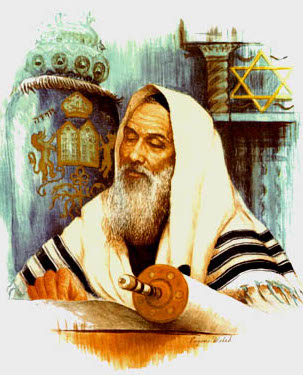
Studying TorahWhat we do to connect to God, to refine our own character, and to serve the needs of others, must remain balanced within us. To bias our viewpoint in one direction or the other could mean we continue to do mercy and justice while losing sight of the unifying “why”. But even losing sight of God does not mean He loses sight of us. His Hand is still upon us, regardless of who we are or how we are behaving or thinking. How many people have lost sight of God or have never experienced Him in a deliberate and conscious manner, and yet still yearn for Him, His Justice, and His mitzvot?

I do not accept your assertion that you do not believe.

For if you truly had no concept of a Supernal Being Who created the world with purpose, then what is all this outrage of yours against the injustice of life?

The substance of the universe is not moral, nor are plants and animals. Why should it surprise you that whoever is bigger and more powerful swallows his fellow alive?

It is only due to an inner conviction in our hearts, shared by every human being, that there is a Judge, that there is right and there is wrong. And so, when we see a wrong, we demand an explanation: Why is this not the way it is supposed to be?

That itself is belief in G-d.

Rabbi Tzvi Freeman
“True Belief”
Chabad.org

We cannot escape God. We are made in His image. Atheists cannot escape God, for even in crying out against the real and perceived injustices in the world, they unknowingly appeal to the One True Judge. We, as believers, cannot escape God either. You might imagine that, being “religious people” we only want to draw closer to Him, but we must realize that we do so only on His terms, and not on ours.

Rabban Gamliel the son of Rabbi Judah HaNassi would say: Make that His will should be your will, so that He should make your will to be as His will. Nullify your will before His will, so that He should nullify the will of others before your will. –Ethics of the Fathers 2:4

If you love me, keep my commands. –John 14:15

Father, if you are willing, take this cup from me; yet not my will, but yours be done. –Luke 22:42

Know the Master you serve and then seek to do His will with all your heart.

Stories are Miracles

R. Jacob Kaidaner heard from R. Pinhas Reises of Shklov that “once he was on the way with the holy rebbe [R. Shneur Zalman of Lyady], when the skies suddenly grew dark and a pouring rain began to fall. His honoured holiness said that once the Ba’al Shem Tov had been travelling, and a pouring rain began, and he recited a single verse and the rain stopped. He told us the verse that he [the Ba’al Shem Tov] had recited, and he also expounded for us the mystical intent of the verse. And before he finished the exposition, we saw a true wonder, namely, a torrent on both sides of the wagon, while the wagon itself was completely dry, indescribably so, not a single drop..and when we came to the inn and his holiness took his feet out of the wagon, it immediately was filled from the rain.

Kaidaner, Sipurim nora’im
as told in Gedaliah Nigal’s book
The Hasidic Tale

One day Jesus said to his disciples, “Let us go over to the other side of the lake.” So they got into a boat and set out. As they sailed, he fell asleep. A squall came down on the lake, so that the boat was being swamped, and they were in great danger.
The disciples went and woke him, saying, “Master, Master, we’re going to drown!”

He got up and rebuked the wind and the raging waters; the storm subsided, and all was calm. “Where is your faith?” he asked his disciples.

In fear and amazement they asked one another, “Who is this? He commands even the winds and the water, and they obey him.”-Luke 8:22-25

Besides the fact that both of these stories have to do with storms and involve miracles, you may be wondering what they have in common. If we look outside their immediate context and theme though, we find that they are linked by how they affect the audience and how they reveal God.

Yesterday, I spent some time in my “morning mediation” describing and comparing the tales of the Chasidim to the tales of the Messiah’s “Chasidim”. However, from a traditional Christian point of view, the two types of “storytelling” I just quoted seem as different as apples and canaries. But remembering that Jesus has a great deal in common with Rabbis and tzadikim (holy or righteous “saints”), the connection to me seems to be more than clear.

I’ve been reading Nigal’s book, but I don’t seem to be able to get more than a few pages when the way Nigal tells his own story of the Chasidic tales inspires one of my own. Here’s what started me off today:

A fourth characteristic of the hasidic story is its intrinsic ability to perform miracles and wonders. The Ba’al Shem Tov was asked by R. David Forkes how one could pray for a sick person through stories, and indeed, tsadikim succeeded in healing the ill in this manner: R. Berisch of Oshpetzin healed a sick woman through stories, and a young man who suffered from melancholy was cured in the same way. Problems of many other kinds, too, were solved by the power of the tsadik’s storytelling.

Christians are accustomed to how Jesus and his disciples performed miracles, but we don’t see them doing so by telling stories. Often, we see the disciples invoking the name of Jesus, in the same manner as any disciple of any Jewish Rabbi or Maggid does when acting in his Master’s name, and then performing the miraculous act. The Chasidim use stories the way I sometimes think of the therapeutic metaphors of Milton Erickson, but perhaps therapy, healing, and the hand of God are not really different things.

There are ways of making the connection between who we are and who our Master is by using stories, and these stories let us work in mystic ways or bring the Divine within our awareness and perhaps within our grasp:

“Will the Lord reject forever?
Will he never show his favor again?
Has his unfailing love vanished forever?
Has his promise failed for all time?
Has God forgotten to be merciful?
Has he in anger withheld his compassion?”

Then I thought, “To this I will appeal:
the years when the Most High stretched out his right hand.
I will remember the deeds of the LORD;
yes, I will remember your miracles of long ago.
I will consider all your works
and meditate on all your mighty deeds.” –Psalm 77:7-15

I remember the days of long ago;
I meditate on all your works
and consider what your hands have done.
I spread out my hands to you;
I thirst for you like a parched land.

Answer me quickly, LORD;
my spirit fails.
Do not hide your face from me
or I will be like those who go down to the pit. –Psalm 143:5-7

True, these are songs and prayers, but they are also meditations, recollections, and indeed, even stories about the mighty deeds of God and how He has rescued His people time and again. In telling the stories of God and putting our trust in Him as we hear these tales, what wonders and miracles can we receive? Maybe the answer to prayer is contained in a story.

What about when you read the Bible? What do you experience? Hopefully, a feeling of encouragement and maybe even a touch of wonder, but is that it? What if you were to recite some of the stories of Jesus? The time he healed the woman of the issue of blood, perhaps. How about when he spoke to the woman at the well? You could even recall some of the stories Jesus himself told. The parable of the prodigal son, for example, or the parable of the talents, or the one about the sower.

Why did Jesus tell these parables hidden in riddles? Just to describe the Kingdom of God in metaphor? Sure, at least that much. But what if the stories he told also performed their own miracles, winning the hearts of the sons of Israel for their Father? What do the stories about Jesus do for us? What do they do for someone who hears them for the first time?

When you turn your heart away from sin and to the Savior of the world, isn’t that a miraculous healing, just as miraculous as halting a storm? Isn’t it a wonder beyond the reason of our world when anyone turns to God?

Let me tell you one more story:

Rav Elchonon Halperin, shlit”a, explains this practice with a statement brought on today’s daf. “Our sages tell us in Menahcos 97 that one’s table atones for him (in the place of the altar in the Beis HaMikdash; the Holy Temple in Jerusalem). Rashi explains that one’s table atones in the merit of feeding poor people at the table. Yet imagine the embarrassment of destitute people who have no choice but to take their meals as charity at another’s table. Surely only a very rare person can give the poor food in a manner which will not be a huge embarrassment. Most people eating at the table of another out of necessity feel nothing less than bitter darkness.

“But at the table of tzaddikim, everyone eats for free. Both the poor and the wealthy join together and one who is hungry can obtain as much food as he wants in an honorable manner. No one feels above his friend, since everyone is there for the same reason and is treated the same way. All those who attend a tisch feel a sense of togetherness that emerges out of holy love and companionship. With such a pleasant atmosphere is it any wonder that we cannot imagine the great atonement of a chassidic tisch?”

Daf Yomi Digest
Stories off the Daf
“The Atoning Table”
Menachos 97

While the vast majority of Christians might say that it is laudable to feed the poor from your own table, this act of charity and kindness has no power to atone for sins nor could it replace any of the sacrifices Jews once offered at the Temple. Only confession of sins and faith in Jesus Christ atones for sins.

Of course, the vast majority of Jews don’t see it that way, and with the Temple gone these past 2000 years, acts of charity and prayer are believed to substitute for the Temple offerings.

But what is the story telling us?

Does the act of performing a kindness, feeding the poor at your own table and at the same time, treating the disadvantaged with respect and as equals to even the very wealthy eating beside them…does that mean something? Does it do something? What is burning in your heart? It’s one thing to repent of your sins and turn to God, but words don’t reveal that you have really changed as clearly and definitely as performing acts of kindness and righteousness.

I said a little while ago that the “Messianic Tales” can perform the miraculous act of turning a stone heart into one of flesh; of turning a heart of sin into one that accepts and performs righteousness. Yet do we turn to God only because of us? Well, yes…probably at first. People can be very self-centered. But here is another miracle.

StoriesBy hearing a story about a person feeding poor people at his own table and relieving them of the burdens of shame and embarrassment, not only are the poor fed but so are the poor in spirit…us. Hearing the story, having faith in the tales of the tzadikim, letting it turn our hearts, and causing us to perform acts of righteousness is a miracle and a wonder and who knows what else God may do because of our trust?

God is a storyteller. Why else did He leave us with such a marvelous book of sagas involving tragedy, wonder, courage, and despair? For it is the stories told by God that fill the world with miracles. When we retell those stories, we cause the miracles to be infused in the world around us, in the people that we meet, and within our very souls.

In the beginning God created the heavens and the earth. Now the earth was formless and empty, darkness was over the surface of the deep, and the Spirit of God was hovering over the waters. –Genesis 1:1-2

In the beginning was the Word, and the Word was with God, and the Word was God. He was with God in the beginning. Through him all things were made; without him nothing was made that has been made. In him was life, and that life was the light of all mankind. The light shines in the darkness, and the darkness has not overcome it. –John 1:1-5

And the word became a human being and walked among us. What a wonderful and miraculous story.

Let these commandments that I command you today be on your heart. Teach them thoroughly to your children and speak of them while you sit in your home, while you walk on the way, when you retire and when you arise. –Deuteronomy 6:6-7