Tag Archives: children

Tetzaveh: Our Children Are Watching

The Rebbe and the ChildA rabbi was sitting next to an atheist on an airplane. Every few minutes one of the rabbi’s children or grandchildren would inquire if they could bring him something to eat or drink or if there was anything they could do for him. The atheist commented, “It’s wonderful the respect your children and grandchildren show you; mine don’t show me that respect.” The rabbi responded, “Think about it. To my children and to my grandchildren, I am one step closer in a chain of tradition to the time when God spoke to the whole Jewish people on Mt. Sinai. To your children and grandchildren — unfortunately, you are considered to be one step closer to being an ape.”

Are children more inclined to respect their parents if they think they are one step closer to being an ape or if they believe that their parents are one step closer to being created by the Almighty who heard God speak?

-Rabbi Kalman Packouz
“Shabbat Shalom Weekly”
Commentary on Torah Portion Tetzaveh
Aish.com

No, I’m not taking a cheap shot at atheists but I would like to wake up a few religious people about the commandment to honor parents and what it all means. According to Rabbi Packouz, the original commandment regarding parents and the related scriptures (see Exodus 20:12, Deuteronomy 5:16, and Leviticus 19:13) actually describe two separate commandments:

We see from these verses that there are two mitzvot (commandments): 1) To honor your parents and 2) To revere your parents. Love motivates one to do positive things; fear keeps one from transgressing the negative.

We are to love and fear (revere) our parents. This may seem more apparent when one is a child. As an adult, we may still love our parents, but we typically don’t fear them anymore. After all, can an eighty year old father or mother send their fifty-eight year old son to “time out?”

But then again, we may be missing something about the full implications of this commandment.

And he said to him, “You shall love the Lord your God with all your heart and with all your soul and with all your mind. This is the great and first commandment. And a second is like it: You shall love your neighbor as yourself. On these two commandments depend all the Law and the Prophets.”

Matthew 22:37-40 (ESV)

We have a Father in Heaven who we are also commanded to love. In fact, in some ways, it’s by having a Father on earth that we can even begin to conceptualize the Father in Heaven. Of course, the analogy is far from perfect. A human Father can be flawed, selfish, distracted, drunk, abusive, overbearing, hostile, wishy-washy, the list goes on. God is perfect and therefore, all of His actions toward us are perfect.

In quoting Rabbi Packouz above, I immediately thought that the Rabbi’s children would only see their Father as closer to God if he acted in a manner consistent with that impression. It’s not like all kids of all Rabbis, Pastors, and other clergy people offer their Dad’s equal reverence. Sometimes it has little to do with the sort of job the Dad has or what the family’s religious tradition is, but children very much are affected by what their father’s actually do, and mold their opinions about him and about Dads in general based whether or not he acts consistently with his stated principles and ideals.

And sometimes how we relate to our earthly Father is how we relate to our Father in Heaven. If we haven’t learned to respect, love, revere, and honor our own Father and Mother, what sort of model do we have for respecting, loving, revering, and honoring our Father in Heaven?

But then, it can work in the opposite way, too. I’ve heard stories of people who have had horrible and abusive Dads, Dads who have sexually molested their children, brutalized them, neglected them, abandoned them. And yet some of those kids have learned to trust their Father who is perfect in Heaven in spite of the cruelty they had to endure from their Father on earth.

children-watchingI don’t think the Rabbi and the other airplane passenger had different relationships with their children because the children of the former saw him as one step closer to God while the children of the latter saw him as one step closer to the apes. I think the difference is who each person was as a Father and a man and how each one of them treated his children and most likely his wife, the children’s mother. Children are more likely to respond by what they see their parents doing rather than what their parents say or who their parents even are (a Rabbi vs. an Atheist). It’s a little scary to think that how we relate to our kids may strongly affect how they relate to God.

But how we behave as a parent and as a human being depends on who we are, what we believe, and then how we choose to act out of all of that.

Gather together and I will tell you what will befall you at the end of days.

Genesis 49:1

Prior to his death, the Patriarch Jacob wished to disclose to his children the future of the Jewish nation. We know only too well what those prophecies were, and Jacob knew that revealing the enormous suffering that the Jews were destined to experience would be devastating to his children. The only way they could hear these things was if they “gathered together” and, by virtue of their unity, could share their strengths.

What was true for our ancestors holds true for us. Our strength and our ability to withstand the repeated onslaughts that mark our history lie in our joining together.

Jacob knew this lesson well. The Torah tells us that “Jacob remained alone, and a man wrestled with him” (Genesis 32:25). Jacob discovered that he was vulnerable only when he remained alone.

Some people feel that they must be completely independent. They see reliance on someone else, be it others or God, as an indication of weakness. This destructive pride emanates from an unhealthy ego. [There is sometimes an] apparent paradox that a humble person is one who is actually aware of his strengths, and that feelings of inadequacy give rise to egocentricity and false pride.

Not only are we all mutually interdependent, the Torah further states that when we join together, our strengths are not only additive, but increase exponentially (Rashi, Leviticus 26:8). Together, we can overcome formidable challenges.

Today I shall…

…try to join with others in strengthening Judaism and in resisting those forces that threaten spirituality.

-Rabbi Abraham J. Twerski
“Growing Each Day, Adar 9”
Aish.com

Part of the Rabbi’s “success” as a father in the original quote was his perception of himself as a Rabbi and as a Jewish man. Without his sense of spirituality and his identity as a Jew who is connected to all other Jews, both in the present, and back across history, how he would behave as a Father and how his children would respond to him might be very different. It might also be very different how his children would choose (or if they would choose) to respond to God.

If you’re a parent, teaching your children about the commandments related to honoring and revering you as parents (which extends also to how they should respond to their grandparents) is a very good thing, but you may be having a much greater impact on your kids than you might imagine. In forging a relationship with your children, teaching them what God expects of parents and children, you are also teaching them what they should expect from God and how to respond to Him as a Father.

family-praying-picnicAs a Christian and a parent, you have a specific identity and source to draw from to define yourself and to define the relationship you have with your children based on what you know of God from His Spirit and from the Bible. While the Rabbi’s children were born Jewish (assuming they had a Jewish mother, and I think this is likely), a Christian’s children aren’t “born Christian.” A Christian doesn’t inherit his or her relationship with God the way a Jew does. Although Jewish children can, Heaven forbid, choose to reject their relationship with God and with Judaism, children born of Christian parents are one more step removed because every Christian must choose their path in life, including a path of faith. It’s even more important for us as parents and grandparents to behave in accordance with our stated beliefs and our faith because unless our children actually see that, we have no hope of transmitting Christian faith to the next generation. Even Jewish parents have a tough time transmitting Jewish faith and values to the next generation, so you can imagine what challenges there are for Christian parents.

That’s why we must make sure that God is continually with us so that our children can see that holiness is our constant companion.

When someone walks the street and thinks words of Mishna or Tanya, or sits in his store with a Chumash or Tehillim – that is more valued today than it was when the streets were bright with the light of Torah. We must not go about in the street with a vacant heart. We must have some Torah memorized, to take with us into the street.

“Today’s Day”
Sunday, 9 Adar I, 5703
Compiled by the Lubavitcher Rebbe
Translated by Yitschak Meir Kagan
Chabad.org

For a Christian, that means living, eating, reading, and breathing our faith, spending time in the Bible, associating with friends who are believers, and behaving in every aspect of our lives in complete consistency with what we know we should be doing as a Christian. This is also why it is vitally important for Jewish parents to perform the mitzvot, regularly daven, recite the Shema, and keep kosher.

No pressure, eh?

But what choice do we have? After all, our children are watching.

Good Shabbos.

On the 40th Anniversary of Roe vs. Wade

unborn-babyI was still an atheist and a liberal when my wife became pregnant with our twin sons (now 26 years old). That’s when I started questioning my assumptions about abortion. From the start, my wife and I started relating emotionally to our child (we didn’t know she was having twins until about twenty weeks gestation) as a personality. I started bonding and loving long, long before they were born. I just couldn’t imagine in my wildest dreams ending their lives at any stage, including before birth. How could I do that?

I know that, in theory, the pro-abortion advocates are supporting “pro-choice.” That is, when a woman becomes pregnant, she can choose to go through being pregnant and give birth, or she can choose to have her unborn child medically “terminated.” But let’s look at this. My guess is that most people who are pro-choice are either parents or will be parents someday. They don’t hate children and they don’t hate people who love their own children. They see their position as one where they want to have control of when they become parents.

But let’s say that the first time a woman becomes pregnant, for whatever reason, she doesn’t want to have the child (financial difficulties, under-age, unmarried…) and has an abortion. In order to be able to successfully have an abortion, she cannot relate to her unborn child as a child. She has to relate to it as a “thing.” Otherwise, how could she go through with it?

So she has the abortion. A few years later, she purposefully becomes pregnant and begins bonding with her child from the first moment she discovers she’s pregnant, probably within just a few weeks of conception. How can she decide to love one child from the very beginning but totally emotionally and physically disregard the other child? The abortion industry has been very successful in selling this strange dichotomy and mindset, but to me, it is so completely alien.

What’s the difference between a precious unborn baby and a fetus (a term which is used as a synonym for “thing”)? The only difference is that the first is wanted and the second is not. No quality the unborn child possesses makes it more or less worthy of life in the mother’s eyes or in any pro-choice advocate’s eyes. More’s the pity.

I wrote the above commentary on Facebook after reading a New York Times blog post on the topic. In consulting the blog again, I ran across this comment:

We fought and (thought we had) won the war against compulsory childbearing decades ago, so that our daughters would have agency over their own bodies and the ability to make decisions about their health care without government interference. Just as we fought for our daughters’ right to apply to medical school, and law school, and to compete fairly for jobs in any number of professions. We fought for our own and our daughters’ right to own real estate, to buy and own stocks and have bank accounts and credit in their own name, to be free of groping and sexual demands on the job, or to keep a job.

These battles were won within my adult lifetime. And our daughters don’t know a time when they couldn’t not open a bank account, buy a home, attend the medical school of their choice, be a bartender or carpenter or police officer as well as a barmaid.

I think we who fought the battles got complacent, or just plain tired. Maybe the neanderthal right has done us a favor this past election season, reminding us and our daughters and granddaughters that freedom and liberty must be constantly nurtured and protected like a perfect rose.

The phrase “compulsory childbearing” in the above empassioned declaration caught my attention, as if people or organizations outside of the woman’s control were somehow forcing them to engage in sex, become pregnant, and have children against their will. I could go on and I know this is a complex subject, so I won’t say too much more. Some believers treat all this as black-and-white without seeing the anguish many women go through when facing the decision of whether or not to abort their children. A woman having an abortion isn’t a terrible or bad person, she’s someone facing a very difficult choice, and one that is not as simple and clear cut as either the pro-abortion or the pro-life movements make it out to be.

I used to work at a Suicide Prevention hotline in Berkeley in the late 1970s and early 1980s. I typically worked midnight until 8 a.m., so I spoke with many people who felt all alone in the night. Sometimes, I would end up talking to a woman who would be crying inconsolably (there were more than just a few of them) because she had just done the unthinkable sometime yesterday…killed her unborn child.

Nat'l Organization For Women Marks Roe V. Wade Anniversary At Supreme CourtThis is the side of Roe vs. Wade that the media, the abortion industry, and the “pro-choice” political advocates never talk about. What it does to a woman after the abortion is over. What is it like when you have exercised what you’ve been told are your “reproductive rights,” taken control of your own body and your own destiny, done what fifty plus years of modern feminism have told you that you must do when you are pregnant and you don’t want to be, and had an abortion? What is it like after it’s all over, the “medical procedure” was successfully performed, you’ve gone back to your home, and you have time to realize what just happened? You’re alone now. It’s the middle of the night, but you can’t sleep. You always imagined having children someday and you know someday you will. But there is one little cry in the night you’ll never hear, one voice you’ll never respond to, one baby you will never feed and comfort. There is one child you’ll never nurture, support, love, hug, kiss, cherish, and help grow and thrive.

What about him? What about her? Your baby wasn’t an “it.” Your baby was a little boy or a little girl. What would you have named him? What would you have called her?

“Happy Anniversary,” Roe vs. Wade. In forty years, how many mother’s hearts have you broken? How many babies never took their first breath because of you and because of the illusion that you’ve drawn over the eyes of all their mothers? How many? Why is this a good thing?

Why?

Addendum: The Woman Behind “Roe” and why she has dedicated her life to overturning Roe vs. Wade.

Early in the Morning – Late in Life

Running out of timeMoshe ascended early in the morning and descended early in the morning.

-Shabbos 86a

Rabbi Menachem Bentzion Sacks used to expound upon this theme. The climb to God, the spiritual drive to perfection, must begin early in one’s life. In reference to Moshe’s receiving the second tablets (34:2), the Torah similarly emphasizes: “Be ready in the morning, and go up in the morning to Mount Sinai, and be placed there before Me at the top of the mountain.” Within these words is contained a message for all generations. Namely, one must prepare in the “early morning” of one’s life and begin an ascent in order to stand before Hashem when one reaches the peak of one’s maturity.

Our sages have praised those who partake of a hearty morning meal. We are told (Bava Kama 92b): “I will remove illness from amongst you.” (Shemos 23:25). This refers to the removal of eighty-three maladies associated with the disease called “marah”. Also among the benefits gained by eating a morning meal is that one is granted the ability to study Torah and to teach.

Finally, “Sixty men may pursue one who has early meals in the morning, but they will not overtake him.” All of these advantages can be applied as well to one who partakes of spiritual food. “Torah is compared to water, as in Yeshayahu 55:1.” – Bava Kama 17. The more a young person is nourished early in the morning by studying in the dawn of his life, the stronger and more solid are the fibers of his spiritual foundation. By means of this reinforced and vitalized internal charge, our youth can merit to study Torah, to teach Torah, and to have the knowledge of Torah permeate their beings. Shlomo HaMelech has written (Mishlei 22:6): “Educate a child in the way he should go, and when he is old he will not depart from it.” This system serves to immunize children from illnesses of the soul which otherwise infect them with ‫ .מרה‬Only when our youth are equipped with Torah ideals can they withstand the difficult and corrupting challenges which the world will present to them later.

Daf Yomi Digest
Gemara Gem
“Early in the Morning – Early in Life”
Commentary on Shabbos 86a

Fortunate are we that our youth has not caused us embarrassment in later life.

-Succah 53a

Many people gain wisdom in their later years. When they look back on their youth, they regret having squandered so much time. Some people’s “golden years” are unfortunately marred with regret over the time they lost.

Young people can learn from their elders. People who reflect on the past during their last days often say, “My greatest regret is that I did not spend more time with my family.” Has anyone ever said, “My greatest regret is that I did not spend more time at the office”?

While experience teaches most efficiently, some things are simply too costly to be learned by experience, because the opportunity to apply these lessons may never arise. Our learning too late that we have spent time foolishly is a prime example.

Ask your father and he will tell you; your elders and they will say it to you (Deuteronomy 32:7). In his last words, Moses gives us this most important teaching: “Why learn the hard way when you can benefit from the experience of others who have been there?” We should regularly ask: “How pleased will I be in the future about what I am doing now?”

Today I shall…

try to examine my actions with the consideration of how I will look back at them in the future.

-Rabbi Abraham J. Twerski
“Growing Each Day, Tevet 15”
Aish.com

None of the above is at all comforting to those of us who came to faith later in life. Worse, since my initial coming to faith was not within a Jewish context and there were a lot of “mixed messages” between Christianity and Judaism traveling in my household when my children were young, I was unable to communicate a distinct Jewish “intent” for my children who now, as young adults, operate only marginally within the Jewish lifestyle and not at all within one of religious observance and faith.

interfaithMore’s the pity and certainly as the Father, it is my fault.

Not that my children blame me, I suppose, but given the dangers we hear about intermarriage and assimilation as delivered by the Jewish community and by Jewish history, I feel the weight of responsibility rests upon my shoulders.

Patrick Stewart (in the role of Captain Jean-Luc Picard on Star Trek: The Next Generation) once delivered the line…

Remembrance and regrets, they, too, are a part of friendship…And understanding that has brought you a step closer to understanding humanity.

Being human and given my particular background, I may understand humanity, but I am no less vulnerable to human foibles and failures as the next man. I suppose, from the Jewish point of view, at least if I use the above quoted commentaries as my guide, I’ve arrived at the party far too late and wearing the wrong suit for the occasion. Only the Master suggests that it may be otherwise.

“For the kingdom of heaven is like a master of a house who went out early in the morning to hire laborers for his vineyard. After agreeing with the laborers for a denarius a day, he sent them into his vineyard. And going out about the third hour he saw others standing idle in the marketplace, and to them he said, ‘You go into the vineyard too, and whatever is right I will give you.’ So they went. Going out again about the sixth hour and the ninth hour, he did the same. And about the eleventh hour he went out and found others standing. And he said to them, ‘Why do you stand here idle all day?’ They said to him, ‘Because no one has hired us.’ He said to them, ‘You go into the vineyard too.’ And when evening came, the owner of the vineyard said to his foreman, ‘Call the laborers and pay them their wages, beginning with the last, up to the first.’ And when those hired about the eleventh hour came, each of them received a denarius. Now when those hired first came, they thought they would receive more, but each of them also received a denarius. And on receiving it they grumbled at the master of the house, saying, ‘These last worked only one hour, and you have made them equal to us who have borne the burden of the day and the scorching heat.’ But he replied to one of them, ‘Friend, I am doing you no wrong. Did you not agree with me for a denarius? Take what belongs to you and go. I choose to give to this last worker as I give to you. Am I not allowed to do what I choose with what belongs to me? Or do you begrudge my generosity?’ So the last will be first, and the first last.”

Matthew 20:1-16 (ESV)

That helps me but it doesn’t help my family, particularly my children who, as young adults, are now responsible for making their own decisions without any sort of “parental influence” from me, at least the unwanted kind.

But if I didn’t arrive early enough, perhaps it’s still not too late.

Hearken and hear Israel, (Devarim 27:9) this is the time marked for the redemption by Mashiach. The sufferings befalling us are the birth-pangs of Mashiach. Israel will be redeemed only through teshuva. (Jerusalem Talmud, Taanit I:1) Have no faith in the false prophets who assure you of glories and salvation after the War. Remember the word of G-d, “Cursed is the man who puts his trust in man, who places his reliance for help in mortals, and turns his heart from G-d” (Yirmiyahu 17:5). Return Israel unto the Eternal your G-d; (Hoshei’a 14:2) prepare yourself and your family to go forth and receive Mashiach, whose coming is imminent.

“Today’s Day”
Wednesday, Tevet 15, 5703
Compiled by the Lubavitcher Rebbe
Translated by Yitschak Meir Kagan
Chabad.org

early_morning_skyI wish I could prepare my family to go forth and receive Mashiach, but the best I’m able to do at the moment is attempt to prepare myself. On the other hand, my wife recently confided in me that she feels I blog more about my feelings of going back to church than I ever discuss with her. I was rather shocked at hearing this, since I had no idea she had any interest in my church activities at all. Maybe what I do to prepare myself to go forth and receive Mashiach is more noticeable than I thought.

On the one hand, God and faith seem to be happening too late to do much good in my life and in the lives of those I love the most. On the other hand, Rabbi Tzvi Freeman had this to say about the Rebbe’s lessons, which may also apply to me.

There is a recurring theme in the volumes of stories told of the Rebbe: The tale of the man who was in the right place at the right time.

There are the stories of someone embarking on a trip to some distant place, and the Rebbe gave him a book to take along, or asked him to do a certain thing there, or to meet a certain person. Or the Rebbe simply asked someone to go to a place, with little direction of what to do there.

And then, in these stories, it always works out that just at the right time the right person turns up in the right place and all the story unfolds. It’s all a matter of making connections: Every soul has certain sparks of light scattered throughout the world that relate to it in particular. The Rebbe sees the soul and senses, like a geiger counter, the sparks that await this soul. All that was needed is to bring the two within a reasonable proximity and the rest takes care of itself.

The stories are meant as a teaching as well. The Rebbe was revealing to us the wonder of our own lives, that there is purpose latent in whatever you are doing.

To extend the metaphor and express it as a question, is God still writing my story with purpose and intent in what I am doing today? Is it still possible for my life to draw others to God?

“A wise man changes his mind, a fool never”

-Spanish Proverb

A Prayer for Newtown

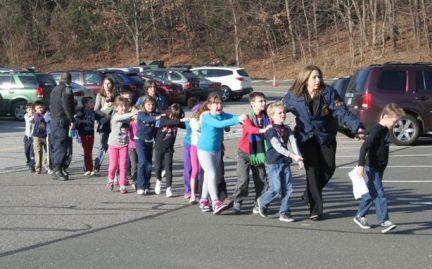
school_shooting_in_connFor those who suffer, and those who cry this night, give them repose, Lord; a pause in their burdens.

Let there be minutes where they experience peace, not of man but of angels.

Love them, Lord, when others cannot.

Hold them, Lord, when we fail with human arms.

Hear their prayers and give them the ability to hear You back in whatever language they best understand.

Margaret A. Davidson

I can’t think of a worse nightmare for a parent than the death of a child. My children are all adults and I continue to pray daily that God will watch over their lives. I can’t imagine what the parents of the child victims of the Sandy Hook Elementary School shootings in Newtown, Connecticut are going through right now and, coward that I am, I don’t want to know.

This isn’t the first time I’ve talked about a child’s death and sadly, I’m sure it won’t be the last. 8-year old Leiby Kletzky was murdered over a year ago in Brooklyn, and several Jewish children were killed at their school in Toulouse, France by a heartless terrorist.

I’m reminded of the final words of John Donne’s very old, very famous poem No Man is an Island:

Therefore, do not send to know
For whom the bell tolls
It tolls for thee

In truth, no matter where a child dies in the world or how he or she is taken, the child is taken from all of us. They are all our children. When someone’s precious son or daughter is killed, they’re taken from all of us and we all grieve.

I know I grieve.

Glorified and sanctified be God’s great name throughout the world which He has created according to His will. May He establish His kingdom in your lifetime and during your days, and within the life of the entire House of Israel, speedily and soon; and say, Amen.

May His great name be blessed forever and to all eternity.

Blessed and praised, glorified and exalted, extolled and honored, adored and lauded be the name of the Holy One, blessed be He, beyond all the blessings and hymns, praises and consolations that are ever spoken in the world; and say, Amen.

May there be abundant peace from heaven, and life, for us
and for all Israel; and say, Amen.

He who creates peace in His celestial heights, may He create peace for us and for all Israel; and say, Amen.

-Mourner’s Kaddish

Doing Joy

Rejoice always, pray without ceasing, give thanks in all circumstances; for this is the will of God in Christ Jesus for you.

1 Thessalonians 5:16-18 (ESV)

Therefore, first of all, man ought to be happy and joyous at all times, and truly live by his faith in the Lord who animates him and is benignant with him every moment. But he who is grieved and laments makes himself appear as if he has it somewhat bad, and is suffering, and lacking some goodness; he is like a heretic, Heaven forbid.

Igeret HaKodesh 11 (Kehot)

Apparently, I struggle with joy. I suppose it’s part of my nature or my personality to do so, just like I struggle with everything else, including God. I don’t have an easy relationship with joy. It’s like my relationship with all those religious and spiritual people who seem to be so happy and carefree all the time. I just don’t see how they can be perpetually “warm and fuzzy” (kittens, puppies, John Lennon quotes) and still manage to relate to those of us who seem to need to keep a toe or a foot in the real world.

Was that cynical?

While I have recently acknowledged joy, I have even more recently mourned its lack in my life. But I have still managed to say something hopeful about joy.

I can only conclude that joy, like love, is a verb; it’s something you do, not something you feel. We can love by performing acts of love, such as feeding the hungry, hugging a crying child who just skinned his knee, helping an elderly, infirm person across the street, or visiting a sick person in who is in the hospital. But how to you do joy?

This morning (as I write this), I realized that last night I actually did joy. I just didn’t know that’s what I was doing at the time. That means I actually do joy more often, much more often than I thought I did.

Here’s what happened.

On Tuesday evenings, my son and daughter-in-law take a class and they ask my wife and I to watch our grandson Landon while they’re out. Last Tuesday night, my wife had to work late, so when I dropped off my son at his place after work (we commute to and from work together), I took Landon home with me (oh, he’s three-and-a-half years old, just so you know). My daughter was home and cutting up lots and lots of organic and recently picked apples on the back patio as part of her latest culinary masterpiece project (cider, I believe). The sukkah was still up, which should help set the scene for you.

Oh, one more thing. Rabbit and Alley. We have two hand puppets that we acquired (I don’t remember the details) when our own children were small. One is a rabbit and the other is an alligator (hence, “Rabbit and Alley”). Landon adores Rabbit and Alley (or “Raddit and Alley” as he calls them). They are his very close friends, almost as close as “Baby” which is his favorite stuffed toy (a giraffe).

When we got to my place, he saw that his aunt was out back and he wanted us all (Grandpa, Rabbit, and Alley) to play outside so we could be with her. My grandson is a picky eater, so he didn’t want to have dinner with me. He did sit beside me and we chatted while I ate. After my hunger was sufficiently assuaged, we proceeded out back.

Landon consumed a lot of (Auntie provided) fresh apples between periods of playing in the sandbox. Rabbit and Alley (and I) watched him as he transferred sand almost endlessly from one container to another. He put sand in a small bucket and pretended that he was planting (alternately) “pretty flowers” and tomatoes. Rabbit received the honor of watering the “plants” (pouring more sand in the bucket). He gave Rabbit and Alley “flowers” to put in their “pockets” and fed them imaginary tomatoes, since Rabbit and Alley like their vegetables (Landon, not so much).

When the sun went down sufficiently, I turned the lights on that are mounted on the sukkah, and we went inside. Landon ate more apples and asked me to read the Hebrew that is on two walls of the sukkah. I can’t read Hebrew, but was able to point out the names of Abraham, Isaac, Jacob, Moses, Aaron, Joseph, and David. Landon was a little confused when I mentioned that David played a harp because his Dad (also David) plays the drums. I had to explain that one is a King and the other is his Daddy.

We ran around the outside of the sukkah “hiding” from each other. He hid behind bushes. He picked up a “pretty rock” and carried it around for a while. I’m pretty sure I was wearing Rabbit and Alley on my hands the whole time. I tend to forget they’re actually on my hands when I’m playing with him, unless I need to take them off to turn the pages of a book I’m reading to him, or some similar activity.

In fact, when the sun went down, we did go in and I read him two books, one about an adventurous young penguin, and the other about a duck who likes to make soup.

His parents came to pick him up and, as is true with most children who are in the middle of having a good time, he didn’t want to go. So, to encourage Landon to go to the car, Rabbit, Alley, and Grandpa went out to the front to see him off. After he and his parents left, I went back inside and only then remembered to take off Rabbit and Alley and place him in their seat of honor near the fireplace.

I woke up this morning and realized that playing with my grandson was “doing joy”. It’s not that I had been emotionally ecstatic and overwhelmed with mind-bending happiness, but I recalled, looking back on the evening, that I had been quietly, pleasantly happy. I’ve mentioned before that one of the acts of love we are able to perform is to hug a crying child who has just skinned his knee. If that’s love, then joy must be playing “Rabbit and Alley” with a small child who on some level (even though he sees me put the puppets on and take them off) believes that Grandpa, Rabbit, and Alley are his best friends.

Love and joy are playing with your grandson. The next time you can’t find the Spirit of God within you and you feel lost, abandoned, and arid inside, play with someone you love. There, you’ll find joy and every other gift that God provides.

When man has moved away from the Divine, the only rectification is for man to move back toward God. Therefore the Zohar concludes that repentance is the key to heal the rift, which caused the destruction of the second Temple. This would also explain the Midrash cited at the outset — Moses knew that the absence of the Temple necessitated man’s movement toward God; therefore, Moses instituted thrice daily prayer, in order to remind man constantly, in all his experiences, that he must not forget God, rather he should take every opportunity to stand in front of God.

Furthermore, prayer is described as “service of the heart.” Evidently the heart, the emotions are crucial for this return.

But the Zohar insists that repentance coming from the heart full of love is needed to return the Jews to the level which should have been reached via the first fruits offerings. When this happens, joy will become a reality — everlasting and complete joy.

-Rabbi Ari Kahn
“Joy: Commentary on Torah Portion Ki Tavo”
(Deuteronomy 26:1-29:8)
Aish.com

I’m beginning to think that Moses should have instituted thrice daily play times with small children to remind us constantly that we must not forget God.

Turn away from feeling lost and lonely by cherishing whoever God gives you to play with, and your heart will return to Him. Go do love and joy.

They Are All Our Children

In 1972 I was part of a group of young internationals who travelled to Israel to help defend our land and our people. Communication was rough; we were from South Africa, Britain, Australia, Poland, Argentina, America, France and Russia, and most of us could hardly speak or read Hebrew.

The IDF (Israeli Defense Force) designated me a Nahal soldier – a sort of part pioneer and part fighter farmer. Our base was located halfway between the yellow-bricked, fly-infested Egyptian town of El-Arish and the Suez Canal.

We tramped through sand and desert scrub, looking for any signs of landmines or intruders. I liked to be assigned to the watchtower. No one would bother me up there and I loved to look at the mountains and wonder which one was Mt. Sinai.

For the most part it was blessedly quiet. Our biggest excitement involved a Phantom jet roaring 100 feet above us heading to the Canal.

During basic training I obtained a small prayer shawl, tallit, and a prayer book in Hebrew and English. On Shabbat I would go off on my own to pray.

I wanted a set of tefillin, the black ritual boxes (containing the holy shema prayer) donned on weekdays…I wanted to feel the binding on my arm and the weight of the tefillin on my head. I wanted to be reminded that G‑d is above me. But at Nahal Yam there were no tefillin.

-Jerry Klinger
“Tefillin in the Sinai Desert?”
from the “First Person” series
Chabad.org

I suppose this could be just me quoting a random article because of my support of Israel and my attraction to Jewish religious and faith practices.

But it isn’t.

I recently read another story about the American Girl in the Bunker, a young Jewish woman from New York City to has volunteered to serve with the IDF among 85 combat soldiers on the border of Gaza and Sinai. She’s seen a little more “excitement” than Jerry Klinger did back in 1972:

Three days ago we were just minding our business when we heard a huge explosion that literally shook the ground. I know the floor moved because our coffee spilled.

I didn’t think it could be a rocket or bomb because the warning siren, the tzeva adom, had not sounded. We all ran out to see what the noise was all about, and in the distance, maybe 2 kilometers away, we could see the telltale plume of smoke.

Seconds later, the siren rang and we all ran to the nearest shelter. The shelter is windowless. The room is built to hold 30 people, but somehow we managed to squeeze 70 inside. Luckily there was air conditioning, but it leaked everywhere and no matter where we sat, our bodies were splattered. People were pushing themselves up against the bunker walls to make room for the latecomers. In this chaos, it was my job to get a head count of my whole unit and make sure everyone had made it.

After three hours, we were told by the head of the base’s intelligence that it was safe to leave. It wasn’t for long, though. BOOM! BOOM! BOOM! Three more rockets fell minutes later, this time even closer to us. The tzeva adom rang, but there was no time to find safety. Two seconds after the siren’s scream we felt the earth shake beneath our feet. We were totally vulnerable.

The nights are hell. I cannot sleep. I lie in bed, fully clothed, boots and helmet on, waiting to hear the alarm, waiting to dash out of the room to safety.

-Talia Lefkowitz, volunteer soldier with the Israeli Defense Force Paratroopers Brigade

My son David served in the Marine Corps for four years. On his deployment to Iraq, he was fired on by mortars on numerous occasions but wasn’t in a position to be able to fire back. I can’t imagine what the experience was like, but I can imagine what it’s like to have one of your children in that position, in harm’s way, in combat, at risk, where he could die.

And there was nothing I could do about it.

There was nothing I could do about it the day David told my wife and me that he was joining the Marines (though we tried very hard to talk him out of it). There was nothing we could do the day he left for boot camp. There was nothing we could do the day he graduated from boot camp, except be very proud of him. There was nothing we could do the day he left for Iraq, the day he left to go to war, the day I knew that I might never see him again.

Except pray that God would watch over him and bring our son safely home.

And He did.

Mostly.

Like a lot of veterans, David suffers from various injuries, not as a direct result of combat, but of the conditions he had to serve under. He has a body that seems much older than his almost 26 years (his birthday is just two days away as I write this). We work out together five days a week. I watch him as he tries to repair a damaged ankle, a damaged knee, a damaged back, the pain he can never escape.

He also struggles with numerous emotional issues as a result of what he’s seen and what he’s experienced. It’s not like his personality is different, but his personality is being forced to filter and manage what it was like when people were trying to kill him with mortars, when people trying were trying to kill him by hiding explosives under pieces of trash so he’d drive over it, making it (and him) blow up, when he had to watch people all the time to make sure they weren’t going to shoot him.

This isn’t movie combat like you see in films such as Saving Private Ryan or gaming combat like when you play Call of Duty. This is real life where real people are holding real guns, getting ready to shoot other real people, listening to explosions, feeling the real fear of what could happen to them, and waiting for the next “boom” and wondering if they will be hurt or killed.

But David came home. He came home more or less intact. He’s married to a loving, compassionate wife and has a wonderful, three-year old son. And he struggles everyday with the consequences of having served in combat zone as a United States Marine.

I talked to him recently about Israel and the IDF. He has a great admiration for the IDF and, as a Jew, he supports the nation of Israel. If things had been different, if he had been a little more mature in years gone by, a little more in tune with a plan, he probably would have done what Jerry Klinger did or what Talia Lefkowitz is doing.

Or what Shayna Detwiler is about to do.

I met Shayna at a conference I attended last May. In fact, she was the co-ordinator for the conference and the person who made sure that I had a room, transportation, and everything else I needed to make it possible for me to attend the conference.

And she’s only twenty years old.

I don’t know what to feel. I don’t really know her, but she seems like a nice person. She young, energetic, friendly, outgoing.

Did I mention that she’s young?

I’m not really old. Not like my father, who just turned 80 is old. But I’m older. I see younger people through the eyes of a father and grandfather. I sometimes look at younger people and try to remember what I was doing when I was their age.

But mostly, I look at people like Shayna and remember the day when David went off to war. I hoped for the best and planned for the worst. Thank God the worst never came, but war is war. You never walk away from it exactly the same person you were when you walked into it.

Jerry Klinger told us what he remembers about his experience with war and in many ways it is very uplifting (read the whole article to find out why). Talia Lefkowitz is the girl sandwiched into a bunker with 85 combat soldiers, listening to the explosions and wondering if the next one is for her. David Pyles is still telling me his stories, even though he’s been honorably discharged from the Marines for a few years now.

David is my son and I listen and I become retroactively scared when he tells me something I didn’t know before about what happened to him. I sometimes get scared when he tells me something that’s happening to him now, which might be a flashback to something that happened years ago, and yet it is also happening to him now.

Shayna has parents and grandparents who love her and are probably worrying about her right now. I can’t help them. I’d be worried, too. In fact, I am worried too, even though I barely know her.

But I don’t have to know her. I have a son who served in war but in the end, they are all our sons and daughters…our brothers, our sisters, our fathers, our mothers. When someone goes off to war, they are all our family, and they all belong to us.

And may God go with Shayna and with all of our young men and women. And may God bring them all home again so that we can continue loving them.

I am a New York City girl who came to Israel to defend the Jewish state. I am proud of my service and of all the remarkable young men I have met who risk their lives every day to keep this country safe. I am the girl in the bunker, and I can tell you that these rocket attacks are a big deal.

-Talia

They are all our children.