Tag Archives: Christian

A Christian Regarding Judaism

Such autonomy was made possible by God’s readiness to limit His say in human decision making and to grant the Jewish community the right to decide for itself how it should understand the commandments that it had received from Him in the Torah. Human reason, employed in clarifying and elaborating the halakhah, was seen as sufficient for that, without any need for divine intervention. Human responsibility for the conditions of life, moreover, was not confined to the religious sphere in the narrow sense, but included mastering the sciences and establishing institutional frameworks for alleviating disease, poverty, illiteracy, and other social evils.

-Rabbi David Hartman
Chapter 10, “Two Competing Covenantal Paradigms”
A Living Covenant: The Innovative Spirit in Traditional Judaism

This may not seem like a typical description of a religious framework if you’re an atheist or an agnostic. Most atheists I interact with seem to believe that religion and science are mutually exclusive terms. Some atheists also seem to think that religion and the moral responsibility to alleviate “disease, poverty, illiteracy, and other social evils” are also incompatible concepts and practices.

If you’re a Christian, you may also take some exception to Rabbi Hartman, since he appears to be advocating for the idea that God gave human beings the ability to decide just how to apply the Word and Will of the Creator in the world. I mean, wasn’t all this stuff made absolute and set in granite the second God caused Moses to create the Pentateuch (Torah) and the other authors to write the rest of the Bible?

I ask that last question ironically.

I can’t even say what Rabbi Hartman is proposing represents the entirety of Jewish thought since, as we’ll see, there are differing opinions in Judaism on just about everything. That, by the way, is the point for today’s mediation, but we’ll get to it all by the by.

In this chapter of Rabbi Hartman’s book, he compares and contrasts the viewpoints of two of the great Jewish sages: Maimonides and Nahmanides. You can learn more about these two Jewish philosophical luminaries by clicking the links I’ve provided, but certainly studying the wisdom and writings of both of these gentlemen would not be a waste of your time or effort.

I won’t go into too many of the details Rabbi Hartman presents, but I do want to draw attention to one critical area of disagreement between Maimonides and Nahmanides that should resonate with some Christians:

Messianism in Maimonides is therefore simultaneously a heroic and a realistic principle of hope anchored in the eternal covenant of Sinai. It is important for him because it does not allow Judaism to become merely a private existential experience. Messianism counteracts the heresy of turning Judaism into a faith for isolated human individuals. It springs from the essential concern of Judaism with the sociopolitical drama of the community. It also expresses the dimension of Judaism that goes beyond the tribal and national framework, since it makes the Jewish community aware that Judaism’s fullest expression requires a changed world order if there is to be a reign of peace.

Nachmanides, on the other hand, uncompromisingly embraced the assumption that Maimonides resolutely sought to eliminate: in the messianic era human nature will be changed. It will be redeemed such that human freedom will no longer lead to sin…

Clearly for him, the messianic age will be characterized by a fundamental transformation of human nature. The problematics of human freedom will be overcome, as all will then yearn to live always in accordance with the will of God.

In reading this chapter from Rabbi Hartman’s book, I immediately found the perspective of Nahmanides very familiar because it seemed to echo the viewpoint of Christianity (and I’m sure Nahmanides never intended such a linkage). As least as I recall my own early days in the church, I was taught that in the Messianic Age, we would lose all desire to sin and would only long to please Jesus in a complete and perfect manner.
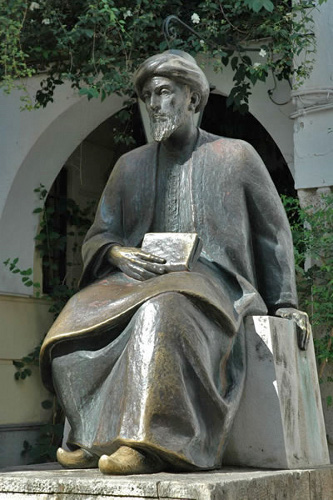
Maimonides, by comparison (at least as Rabbi Hartman presents him) believed that the Messianic era will be a time of social and political change. Israel will be the head of the nations and the Messiah will rule “with a rod of iron” such that the other nations of the world will obey his laws. Man will still have the ability to sin and perhaps even the desire, but the rule of King Messiah in Israel will be obeyed as God establishes His kingdom on Earth. Certainly Maimonides does not deny a supernatural reality, but understands that it works in concert with the natural mechanics of humanity and politics. For Nahmanides, the supernatural power of God simply overwhelms mankind and our very natures are changed such that it is His miraculous power alone that brings about His rule with no intervention by human institutions.

Why do I bring this up?

To throw a monkey wrench into the machine.

More accurately, to present the idea which may not occur to some Christians (or for that matter, atheists and everyone else), that there is more than one way Jews look at God, faith, Torah, halakhah, and the Messiah. Rabbi Hartman even confirms this:

To prevent misunderstandings, I must emphasize again that I am not claiming that Maimonides provides the only possible way whereby an observant Jew can participate in a return of the Jewish people to history such as has occurred in modern Israel.

Rabbi Hartman was talking specifically about the establishment of the modern state of Israel as part of the Messianic plan and the rather troublesome divide in Judaism as to whether Israel should even exist before his arrival (return) or not. I’m not competent to answer that question and, as I said before, my main point here is just to point out that Judaism isn’t a single, cohesive idea, concept, or religious movement. There are different focuses and perspectives in larger observant Judaism, many that contradict each other and occasionally seem wholly at war (sounds sort of like how different Christian denominations treat each other, don’t you think?).

Even though I am married to a Jewish wife, I am an outsider looking in. But if I can say that and live with a Jew every day, I can only imagine what it must be like for the traditional Christian with little knowledge of Judaism and Jews, beyond what is preached from the pulpit, to try to understand what it’s like on the other side of the fence. I think, as Christians, it’s important for us to make that attempt, though. We often “demonize” that which we don’t understand, and history has shown us that such “demonization” of the Jewish people has led to pogroms, exile, torture, and death.

I want to present this tiny slice of Judaism as an example that Jews are not a “type” or a “thing” or an object of any kind. They are a people. They are dynamic. Religious Judaism has many shades and colors and textures. It is even possible for Judaism to teach us a thing or two about our own Christianity. But in order for that to happen, we have to be willing to let ourselves become uncomfortable and to explore new territory.

I’m not talking about walking out of the church, far from it. I’m only suggesting that the next time you look at a Jewish person, try to see a person, a human being. If they are a religious Jewish person, try to see their faith, their relationship with God, their desire to serve Him, not just a collection of “dead” rules and regulations.

Judaism is alive. Jews are alive. It’s kind of cool, actually. It shows the rest of us that in spite of thousands of years of enmity between Jews and the rest of the world that ultimately led to the murder of six million Jewish souls, God kept His promise that the descendants of Jacob would always be a people before Him.

Jews will always be a people in the world and among us, the Gentile nations. If you love and laugh and hurt, so do they. Jesus commanded us to love our neighbors as ourselves (Matthew 22:39). Perhaps we should learn to do so with all of our neighbors, including our Jewish neighbors because of the ways of peace. If all people, religious and otherwise, could put that into practice as well, it would certainly be a plus.

Oh, I’m sure people who are more informed about the history of religious Judaism may point out my mistakes. But remember, I sometimes stick my neck out to try and make a point, and I don’t know everything (alas).

Balancing Flight

These days, my son David and I go to the gym together at about five every weekday morning to work out. This morning, I was on one of the aerobic machines. The last five minutes of a workout, I go into a cooldown mode trying to get my heart rate back down to something more or less reasonable. Often, I’ll close my eyes and imagine that I’m running alone on a path that’s climbing to the crest of a hill. It’s dark, but I can see the light of a new sunrise beckoning ahead of me. The light gets brighter as I near the top. It’s almost as if I can see the breath of God intermingling with my own as we approach each other. I jog toward the crest of the hill but never quite reach it before the timer on my machine gets to zero.

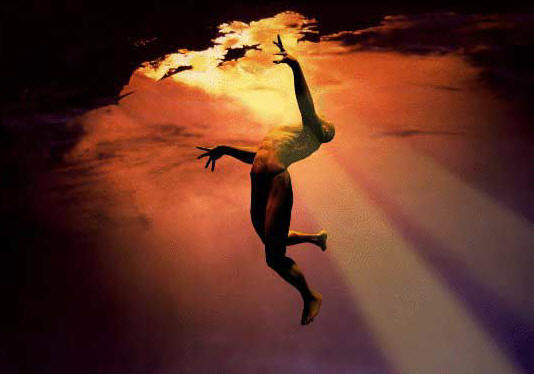
But in the last seconds of my fatal descent from the heavens, I manage to pull back up, avoiding a fiery disaster, and with my wings fully extended and my engines roaring with new life, I begin to climb.

-James Pyles
Climb!

I suppose it’s narcissistic for me to quote myself in order to start another blog post, but I couldn’t think of anything else that fit. OK, how about this one?

I’ve heard that there’s a kind of bird without legs that can only fly and fly, and sleep in the wind when it is tired. The bird only lands once in its life… that’s when it dies.

-Yuddy (played by Leslie Cheung)
from the film Days of Being Wild (1990)
original title, “A Fei jingjyhun”

I’ve never seen this film and probably never will, but when I Googled what I was thinking about, the above-quoted piece of dialog came up. Interestingly enough, I first heard this idea in High School. A fellow in my Creative Writing class (yeah, I was interested in writing even back then) wrote a poem (I think…it’s been forty years) about a bird without legs that was perpetually in flight. Sadly, that’s all I can remember.

But it’s enough.

I had a conversation like this with Boaz Michael at the FFOZ Shavuot Conference last month in Hudson, Wisconsin. During one of his presentations, he was talking about FFOZ being able to “land the plane,” which meant being able to get past the chaos of how various people and groups reacted to their shift away from the One Law theology. The idea was to be able to move on and focus on the primary mission and goals of FFOZ. This includes being able to reach out to the church in an effort to promote a more pro-Jewish message, and reaching out to normative Judaism to promote the Jewish Messiah.

At some point during the conference, I had several opportunities to sit down with Boaz and discuss various topics. One of the things I said is that the plane would never land because there will always be challenges.

I think that’s true of us personally in the realm of faith, too. Once we are introduced to God and realize that we must strive to approach Him, we take flight. But its only when we are in the air that we realize we can never land again. There is no turning back. There is no true sense of rest or peace.

I know that sounds strange, especially to anyone who has a bumper sticker on their vehicle that says, “No Jesus, No Peace; Know Jesus, Know Peace.” But really. You live in a world that is completely hostile to the discipline of religion in general and a Christian faith specifically (I think only Jews and, in some circles, Muslims are more reviled). Once we leave the ground, there are only two options: flight and death.

Sounds pretty grim.

When I say “death,” I don’t mean (necessarily) actually dying but if we choose to leave the faith, we die in terms of being spiritually dead. We no longer have a sense of God. Our relationship with Him is severed. We’ve gotten a divorce.

But considering flight, what a glorious thing it is. Imagine being able to fly without the aid of some sort of machine. Imagine simply extending your arms, raising your head, and realizing that your feet have left the ground. Up, up, up you go. The air is cold and crisp but you don’t feel chilled. Instead, you are invigorated, excited, thrilled. You are sharing the skies with God, seeking Him, soaring up to Him, as a bird might climb high above the clouds to seek out the Sun.

Now imagine that flying is something like running. Eventually all of that flapping will make you tired, just like running a marathon will exhaust you (not that I’ve ever run a marathon). Sooner or later you will want to land, to rest.

And you can’t.

You’re committed. It doesn’t matter how tired you get. It doesn’t matter if you’re exhausted. It doesn’t matter that your wings feel like they’re made of lead and sometimes, you feel as if you don’t care anymore. You just want to rest. Even if you fall. Even if you crash. It’s like Yuddy said:

I’ve heard that there’s a kind of bird without legs that can only fly and fly, and sleep in the wind when it is tired. The bird only lands once in its life… that’s when it dies.

So you can glide. Find a sustaining wind, a jet stream, a thermal and let them do the work. Just hold your wings out and let them catch the air and feel yourself suspended between Heaven and Earth; between life and death.

Isn’t that were we all are right now?

Bette Midler sings the Jeff Silbar and Larry Henley song Wind Beneath My Wings (no, I won’t inflict the YouTube videos on you) and the song ends with:

Fly, fly, fly high against the sky,
So high I can almost touch the sky.
Thank you, thank you,
Thank God for you, the wind beneath my wings.

That last line should probably say, “Thank God, You are the wind beneath my wings.” Without God, how could we sustain such an existence.

We all want to enter into His rest. We all long for the Messiah’s return for just that reason. The character Yuddy said cynically, “I used to think there was a kind of bird that, once born, would keep flying until death. The fact is that the bird hasn’t gone anywhere. It was dead from the beginning,” but if that were true, then faith is in vain. The atheists say that, and they say they are more alive than we are. There are more than a few believers who have been unable to find that updraft to support them, and exhausted and flightless, have collapsed back to earth like a latter-day Icarus, not because they flew too close to the Sun, but because they flew too long with leaden wings. They never found their source or they lost the will to keep seeking out that great imagination.

Now let me tell you a little secret. My wings get tired, too. It isn’t always easy to find a convenient wind to keep me aloft. Sometimes I doze and drift and wake up to find myself in a spiraling descent. I rouse my wings and push and lift and climb.

But sometimes it’s a close call.

Somewhere between Heaven and Earth are the forces that balance flight and falling. I know that God would not have called me into the sky if He only intended me to lose my ability to fly, but like that first generation of Israelites who were called out of Egypt, I sometimes doubt and complain. Like them, I sometimes feel as if God really did call me into the Heavens just to break my wings and send me plummeting back into the mud and tears. Like them, sometimes my faith is shaken. Like them, I fear defeat.

Today, if you hear his voice,
do not harden your hearts, as at Meribah,
as on the day at Massah in the wilderness,
when your fathers put me to the test
and put me to the proof, though they had seen my work.
For forty years I loathed that generation
and said, “They are a people who go astray in their heart,
and they have not known my ways.”
Therefore I swore in my wrath,
“They shall not enter my rest.” –Psalm 95:7-11 (ESV)

What a horrible thought that, after all of this effort, after tiring days and sleepless nights, no rest, no sanctuary, no oasis, constantly encountering resistance and opposition, that when it’s all over, I will not enter into His rest anyway.

So desperately terrified of a flight that never ends even after I have collapsed into shredded bone and flesh, I look around for some sign of another thermal. I try to find a way to let the wind lift me so I can rest my wings. I strive to look for the courage and strength to make it one more day in the air. I hope that God will show me, not just the ponderous effort of flying, but the glory of infinitely ascending across the skies.

Because sometimes, that’s all I have left.

Each journey the soul travels takes her higher.

There are journeys that are painful, because there is struggle. Struggle to wrestle out of one place to reach another, struggle to discern the good from the bad and put each in place, struggle to face ugliness and replace it with beauty. But in each of these, a sense of purpose overwhelms the pain and brings its own joy.

Then there are journeys that seem to have no purpose. Where nothing appears to be accomplished, all seems futile. There is no medicine to wash away the pain.

But every journey the soul travels takes her higher. It is only that in some, the destination is a place so distant, so lofty, she could never have imagined. Until she arrives.

-Rabbi Tzvi Freeman
“Unimaginable Journeys”
Based on letters and talks of the Rebbe
Rabbi M. M. Schneerson
Chabad.org

I hope, I pray, I plead that every day is a journey that takes me higher. But the destination is so far away and the effort to reach it is so great. Yet I dare not consider the possibility of falling. I must climb. I must soar. I must fly.

May God, by His grace and mercy, give me the strength. May He grant it to us all.

The Sacrifice at Golgotha

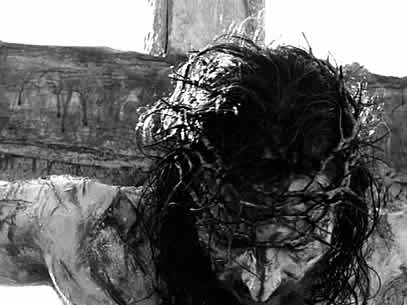
The Death of the MasterI am hoping you will be able to resolve a very important issue confronting the very foundation of Christianity.

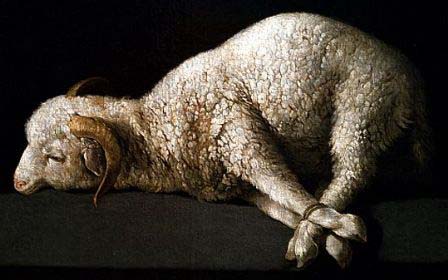
God’s way of testing Abraham by calling for the sacrifice of Isaac…and then the abrupt staying of the knife…was intended to demonstrate that God abhorred human sacrifice and would not accept it (Gen 22.12). When the great central Law of Judaism (the TORAH) was revealed at Sinai, it called for animal sacrifices. The slaying of an animal and the offering of its blood according to certain prescribed rites, symbolized God’s mercy to the sinner, for this would have been his fate. Later in the Law, Moses gives warning to Israel not to worship God in the manner of the pagans (through human sacrifice) for it is an abomination unto the LORD in any way or form it is practiced (Deut 12.30-32).

Turning to the New Testament, Jesus states that he completely upholds the precepts of the Judaic Law until its complete spiritual enactment through-out the world. This great authorization of the central Law of Judaism renders it supreme (Matt 5.18). Nevertheless, here is where a trouble-some contradiction arises. According to Romans 5.6-11, Jesus’ death was a vicarious atonement. But this is a human sacrifice which is expressly forbidden by the very same Law sanctioned by Jesus.

True, Jesus is unique in being both human and Divine. But by sanctioning the Law He did not allow His uniqueness to detract from His subjection to the Law which is understandable since the Law is the perfect Word of God.

In sum, if Jesus was upholding the Law then His death cannot be sacrificial. Or, if His death is sacrificial, He has rejected the Law which He claimed to uphold. In either case, Christianity’s central doctrine of the sacrificial death of Jesus is proven to be scripturally untenable. Christianity is therefore in peril of crumbling away. The stakes are very high. If Christianity succumbs to an inner breakdown, the moral order in the world will soon follow….

This contradiction can only be satisfactorily resolved by reference to Scripture. Scripture is a single, self-consistent truth, but beginning to end. Each verse urges its own truth. When two verses appear to exhibit incompatible claims, a contradiction develops. We must then attempt to resolve this contradiction by reference to another verse(s) which will reconcile the two opposing viewpoints…

When reconciliation is not forthcoming, the contradiction remains and the verse(s) in question are not Divinely revealed facts, but have been spoken by the prophet out of his own authority…

The defensibility of Jesus’ sacrificial death has been troubling me for a long while. I am unable to resolve it according to Scripture. I would be very grateful to you if you could clear it up for me…

Quoted from christianthinktank.com

Have you ever been asked a question you were so sure you knew the answer to that you never even worried about it, and then, when you tried to answer the question, realized you didn’t really know how to respond?

That happened to me yesterday afternoon. Let me explain.

On most Thursdays after work, I meet with a couple of other guys for coffee and discussion. There’s no set agenda, but we usually talk about matters of faith and questions that come up in the Bible that sometimes drive us crazy. We are all reasonably comfortable questioning the traditional Christian assumptions and our coffee meetings give us an opportunity to ask questions we could never ask in church.

I commute to and from work with my son David. On Thursdays I usually drop him off at his place, then go to the coffee shop for my meeting. Yesterday, my daughter-in-law had an activity planned with some female friends at their place and asked if David and I could hang out together. I asked him if he wanted to join my meeting and he said, “OK.”

David was the first of my children to develop a sense of spirituality. When he was little, he went to church with my wife’s brother Steve whenever Steve was visiting from the Bay Area. After David went to church with Steve, he’d ask my wife and me why the rest of us didn’t go to church and believe in Jesus (this was years before my wife and I became religious). That was kind of awkward.

Somewhere between childhood and adulthood, David set his faith aside but it’s always been on the back burner, so to speak. Thursday allowed him to revisit old territory and to ask some of those questions that would drive most Christians nuts.

The four of us were having a fairly stimulating conversation when the question of human sacrifice came up. David sees the death of Jesus on the cross to atone for the sins of the world as a direct violation of the commandment not to sacrifice a human being.

So here we are, three guys from different backgrounds but who all have the same fundamental belief in Christ as Messiah and Savior trying to address this question.

I shot off my big mouth first.

Understand, that this is a very troubling question with no simple answer. Also understand that one of the reasons that I am attracted to Jewish mysticism and particularly the Chassidim, is because I don’t think that there is any other way to explain certain things about the Messiah, including his bloody, sacrificial death, outside of a deeply mystic framework.

Just how can a human sacrifice, even that of the Messiah, atone for the sins of the world? What’s the mechanism that makes it possible and that doesn’t violate God’s prohibition against human sacrifice?

My answer was based on the understanding of the death of a tzaddik being able to atone for the sins of a community or even of an entire generation. Of course, my answer was founded entirely on the Chassidic mystic understanding of this process; something which most Jews, particularly in modern times, do not agree with.

So where is this explained in the Bible?

My friend Russ offered David what I would consider the traditional Christian explanation for the sacrifice of Jesus Christ on the cross. As I listened to him answering David, I realized that I didn’t find the Christian viewpoint particularly satisfying. I know that I’ve had this explained to me before at some point, but my memory is a leaky container and a lot of stuff has dribbled away over time, so I don’t remember exactly what was said or when that conversation occurred.

This really bothered me.

The conversation ended with more questions than answers, which is fairly typical for our little group, but where was David now? He continues to focus on the Torah and the Prophets as the foundation of his understanding about God and the Jewish people, though I’m sure he would benefit from a review of his knowledge base, but the New Testament seems to him like so many exceptions and contradictions to his understanding of Torah. On the drive back to my place, David and I continued our conversation, and I decided to encourage David to start where he is. If the Torah and Judaism are the rock on which he now stands, then I will support him returning to and exploring the cornerstone of his faith.

But it still bothered me that not only could I not give a satisfactory answer to his questions about Jesus, but I couldn’t really answer my own questions. I can’t solely rely on the “mystic” explanation for how a tzaddik’s death provides atonement, and assuming the traditional Christian response to this query is also lacking, then what is the answer?

I don’t know.

I know that faith is sometimes the mortar that fills in the spaces in religious understanding, but I’m uncomfortable with it being the putty that replaces solid Biblical knowledge let alone logic.

OK, I know that logic is the beginning of wisdom and not its conclusion and that once we accept the existence of God, we also must accept the supernatural, but David did bring up what seems to be a huge disconnect between the Tanakh (Old Testament) and the New Testament in terms of death, atonement, and sacrifice. You’ve probably already clicked the link I provided above and read the christianthinktank.com reply to this question. I did too, but I’m not sure I’m buying it.

Do we see any example of the death of a righteous man providing atonement for the sins of other people in the Tanakh? Was any man in the Old Testament deliberately killed in order to turn away God’s wrath toward other human beings? We talk about men like Joseph, Moses, and David being “types and shadows” of the Messiah. But we don’t see that their deaths really did anything to illuminate the problem of Jesus being a human sacrifice to turn away God’s fatal judgment from all people everywhere across time who accept Christ as Lord and Savior.

I’m not that smart. Some people think I’m smart. My wife thinks I’m smart (except when she disagrees with me, then I’m not too bright at all *wink*). But it’s not really true. I suppose it’s more accurate to say that in this particular area, I’m not very well-educated. I feel ill-equipped to manage these sorts of questions. On some level, I think that it’s not very easy or maybe even not very possible to use human language and human logic to explain the mysterious, mystical way the death of the Messiah somehow atones for the sins of people.

And yet, that’s all we have to work with. Assuming extra-Biblical and particularly mystical (when my wife learned about this conversation, her response to me was to ask in an incredulous tone, “You talked to him about mysticism?”) sources are not considered valid in this discussion, then we must rely on scripture. But if the Old Testament and New Testament don’t agree that the Messiah must die to atone for sins, then what do we have?

A big, fat, furry mess, that’s what.

So I’m opening up yet another can of worms and throwing this topic out to the public via the Internet. I’m seeking out a greater imagination or at least a more scholarly believer. What’s the answer to how the death of Jesus isn’t human sacrifice? Is there an answer that doesn’t contradict the commandment to not sacrifice people?

The comments section is now open. What do you think?

Chukat: The Chutzpah of Entering Fire

This is the Torah (law): A man who dies in a tent…

Numbers 19:14

The Torah is only acquired by those who kill themselves for it in the tents of study.

-The Zohar

It happened in the winter of 1798 or 1799, when Rabbi Menachem Mendel of Lubavitch was a child of eight or nine. Every Friday night Rabbi Schneur Zalman of Liadi would deliver a discourse of chassidic teaching to a select group of disciples. Little Mendel begged to be allowed in, but his grandfather refused.

The dwelling of Rabbi Schneur Zalman consisted of two two-room buildings, joined by a connecting passageway. In one of the wings, a large wood-burning stove, used for heating and occasionally to bake bread, was set in the wall between the two rooms. The stove opened into the outer room, and also protruded into the inner room which served as Rabbi Schneur Zalman’s study.

One Friday night, the Rebbe was delivering his weekly discourse in his study. It was an exceptionally cold night, so a gentile was summoned to heat the oven. For some reason, he found it difficult to push the logs all the way in to the oven, so he built the fire near the opening of the stove. As a result, the outer room soon began to fill with smoke. Once again, he tried to push the burning logs further in, but they wouldn’t budge. The poor man had to start all over again. He put out the fire, pulled out the logs, and peered into the stove to see what was preventing the logs from going in.

His shouts and shrieks summoned the entire household. The session in Rabbi Schneur Zalman’s room was disrupted; those in the second building also came running. Inside the stove lay a young boy.

-Rabbi Yanki Tauber
“The Path of Fire”
Commentary on Torah Portion Chukat
Once Upon a Chasid series
Chabad.org

Chassidic tales are very compelling but it’s impossible to know how much some of them represent actual events. I’ve come to look at these tales as stories that have been crafted to communicate important moral and religious thoughts to a specific audience. Since I’m obviously not part of that audience, it’s rather puzzling that I should be drawn to them at all. Certainly most of my fellow Christians are at best, indifferent to the stories of the Chassidim and prefer moral commentaries from the ancient or current Christian scholars and commentators.

So what’s wrong with me?

I don’t know.

According to Rabbi Eli Touger’s commentary on this Torah Portion:

The term Chukim refers to those mitzvos whose rationale cannot be grasped by human intellect.

I find my own “rationale” for pursuing the writing of a blog focused on not only Jewish, but specifically Chassidic teachings, to be just as difficult to grasp by my intellect. As I’ve said in the past, the content that I discover in Chabad sources talks to me with my metaphors, but it doesn’t make sense that it should. This is not only because I’m not Jewish (and certainly not Orthodox), but that I am not particularly learned either. I should be just as put off by what I’m reading as most people in the church. I have no explanation for why I return to this particular pool daily to drink and seek refreshment.

But then not all of my meditations are particularly refreshing.

I mentioned just the other day that we are all seeking out a greater imagination, particularly when our own well becomes dry. I’ve also said that there are times when I feel as if I’m in a wilderness waiting for God to do something, but in truth, it is God who waits in the desert for me. Like a dunce in the corner of the classroom, I may have asked God too many stupid questions but I just can’t figure out how else to talk to Him.

But it’s not just me and God. If it were, I suppose life wouldn’t seem so complicated. Being married to the girl with the Jewish soul has taught me that Judaism isn’t really accessible to me, but then Christianity isn’t exactly an open door, either. I call myself a Christian as a matter of intellectual honesty, but I’m the weirdest Christian I know. If I ever entered a church and actually said what I really think, feel, and believe in a completely unfiltered manner, I’d most likely get thrown out on my ear.

I’ve talked about “not fitting in” before and I suppose this missive is just the latest incarnation of that personal state. Judaism is, by definition, community and in theory, so is Christianity (though “salvation” is personal and not corporate) but I’ve gotten just too “strange” to fit into anybody’s community, at least for more than a tiny march of days. Not only that, but I have to consider how my joining any particular community would affect my family. My being married to a Jewish woman, and being dedicated to ensuring the safety of her being a Jew takes an obvious toll on my being a Christian. She can tolerate my meeting with a couple of guys once a week, but church would be pushing the envelope a little too hard…for the both of us.

So I have a mystery and no answers. While I share my perspectives with the Internet, it’s a wholly impersonal environment. People respond to me, but it’s “virtual” and only on rare and brief occasions does the virtual transcend into reality.

I know what I’m writing has virtually no connection to Chukat, but this is who I am and where I am right now. How about we finish the story as told by Rabbi Tauber and see what turns up.

A small lamp was the only source of light in the smoke-filled room, so it took some time until the child was identified as the Rebbe’s grandson, little Menachem Mendel.

For some weeks now, the child had discovered that he could hear his grandfather’s words through the thin wall of the stove. Every Friday night he would clamber deep into the large stove, and listen to the profound and lofty words of the Rebbe’s teachings. And now, because of the bitter cold, his listening post had been discovered.

Rabbi Schneur Zalman’s daughter-in-law, Rebbetzin Sheina, who was present at the time, related:

“When they pulled the child out of the stove, he was paralyzed with fright. My mother-in-law, Rebbetzin Sterna, cried to my father-in-law, the Rebbe: ‘See what could of happened! A tragedy! Strangers you allow to enter, but when your own child begged you, you wouldn’t let him in!’ Father-in-law replied: ‘Sha, sha. Moses reached Mount Sinai only by beholding fire – only then did he merit that the Torah be given through him. Torah is acquired only through self-sacrifice.’ “

One way to deal with not fitting in is to have the chutzpah to fit in anyway. In little Menachem Mendel’s case, he fit himself into a stove, but unfortunately, he didn’t anticipate that on a cold night, he could end up being part of the fuel used to warm the room. Rabbi Tauber relates a childish error in judgment to the willingness to die for the sake of Torah learning, but clearly in the real world, the little boy wasn’t willing to burn nor were his elders willing to incinerate him for the Torah’s sake. The real lesson (at least according to the Rebbetzin, since the Rebbe disagreed) is that if someone wants in badly enough and they show a willingness to make sacrifices, you should let them in.

That doesn’t really work in my case since I’ll never be Jewish enough (or rather, I’ll never be a Jew at all) to learn as a Jew and I’ll never be Christian enough to fit into the church culture. I don’t know what I’d have to be to fit in with my wife religiously. I don’t think there is an answer to that one except, as I said before, to be a “low profile Christian at home.”

But what about God? I guess I can be a Christian at home in terms of behaviorally displaying my morals and ethics without being overtly “Christian” (openly praying or invoking Christ’s name, for example). In this case, chutzpah won’t get me anywhere except in hot water, so I’ve nowhere else to go except into the privacy of my own thoughts, which gets turned into very public blog posts…and to turn to God.

I’m seeking out a greater imagination, but I’m putting some pretty harsh limits on it.

Solomon couldn’t comprehend the mitzvah of the Red Heifer and I can’t comprehend my own existence. If God didn’t require that Solomon understand, I guess I don’t have to, either. I can only continue living and to see what happens next.

The irony is that I don’t know what to do, and yet I feel as if God is waiting for me to make the next move. I guess that’s what faith is…acknowledging God and proceeding forward, even when it doesn’t make sense, for what alternative do we have?

Today, if you hear his voice,
do not harden your hearts, as at Meribah,
as on the day at Massah in the wilderness,
when your fathers put me to the test
and put me to the proof, though they had seen my work.
For forty years I loathed that generation
and said, “They are a people who go astray in their heart,
and they have not known my ways.”
Therefore I swore in my wrath,
“They shall not enter my rest.” –Psalm 95:7-11 (ESV)

Good Shabbos.


Seeking Out a Greater Imagination

“Do not seek to follow in the footsteps of the wise. Seek what they sought.”

-Matsuo Basho

Rabbi Sholom Ber of Lubavitch used to say that if the hedonists would know the ecstasy of mystic union, they would instantly drop all their worldly pleasures and chase after it.

It is not just pleasure. It is the source of all pleasures.

-Rabbi Tzvi Freeman
“Paradise”
Based on letters and talks of the Rebbe
Rabbi M. M. Schneerson
Chabad.org

I recently had a discussion with an (apparent) atheist in the comments section of one of my blog posts. As with many other Christian/Atheist discussions on the web, he found Christianity wanting due to its lack of morality. That generally means “lack of morality” as progressive secular humanism defines the term (and the definition tends to shift over time). But is the sole reason for someone to become a person of faith or a person of faithlessness to gain a sense of morality and ethics?

Probably not. At its core, I think a person selects one system of philosophy or theology over another in an attempt to seek a reason for existence. Rabbi David Hartman in his book A Living Covenant: The Innovative Spirit in Traditional Judaism (chapter 9) says it this way:

As history has shown, the human being is not only a fact-seeking animal, but equally and possibly more so, a value-hungry individual seeking direction and significance in life. We hunger for a frame of reference that orders and orients everyday existence into some meaningful pattern. In spite of the extreme importance of facts, their range does not exhaust the sources from which one constructs a vision of life that gives meaning and direction to existence.

Beyond the quest to determine the moral relativity of right and wrong, and even beyond the desire to understand the nature of the universe, its origins and its development, is the overwhelming desire of human beings to seek out and discover themselves. This is perhaps the greatest mystery within our awareness, greater than the origin of life and greater than the scope of the cosmos.

Who are we? Why are we here? Is this all there is? Is there something more?

I was recently watching the first part of a two-part episode of Star Trek: Voyager called “Scorpion”. The starship Voyager was about to enter an area of space dominated by the Borg, which is a highly malevolent cybernetic race and mortal enemies of the Federation. It is the only path Voyager can take to make it back to the Alpha Quadrant and home.

The Borg are under attack by an equally malevolent race of beings from a realm outside our universe who are referred to only as “species 8472.” The destruction caused by the war between the Borg and species 8472 is vast and multiple star systems have been destroyed in its wake. If Captain Kathryn Janeway (played by Kate Mulgrew) orders Voyager to go forward, the ship and everyone on board will be annihilated. If she turns the ship around to ensure everyone’s safety, she must admit that she will never get her crew home. She’s trapped in an endless loop of guilt and remorse, because it was her decision to save an alien race that stranded the Voyager crew over 70,000 light years away from home nearly four years ago.

As a diversion, Janeway had previously programmed a holodeck simulation of Leonardo da Vinci (played by the acclaimed British actor John Rhys-Davies) and his workshop environment. Janeway takes on the role of Master da Vinci’s student in order to relax, work on various art projects, and be inspired by a holographic replica of one of history’s most innovative creators. In the throes of despair, as Voyager is poised to either move forward to destruction or turn back in defeat, Janeway makes a midnight visit to the Master’s studio seeking a solution she cannot find within the limits of her own resources.

She finds da Vinci sitting in his darkened studio, softly illuminated by dozens of candles, staring at light and shadow as they play upon a blank wall. Janeway sits with him and asks him what he sees. da Vinci (Rhys-Davies) responds:

A flock of starlings; the leaves of an oak; a horse’s tail; a thief, with a noose around his neck… Uh… And a wall, with the candlelight reflecting on it. There are times, Katarina, when I find myself transfixed by a shadow on the wall, or the splashing of water against a stone. I stare at it, the hours pass, the world around me drops away, replaced by worlds being created and destroyed by my imagination. A way to focus the mind.

Out of desperation, with all other options exhausted, Janeway turns to this computer generated simulation of one of the world’s finest minds and imaginations and opens her soul to him.

There’s a path before me – the only way home. And on either side, mortal enemies bent on destroying each other. If I attempt to pass through them, I’ll be destroyed as well. But if I turn around – that would end all hope of ever getting home. And no matter how much I try to focus my mind, I can’t see an alternative.

Then da Vinci replies in a way I found absolutely fascinating, especially since Janeway has always been played as a pragmatic atheist (and after all, she programmed da Vinci).

When one’s imagination cannot provide an answer, one must seek out a greater imagination. There are times when even I find myself kneeling in prayer.

I’m sorry to take you through a mini-tour of one of my favorite Voyager stories (especially if you’re not a Star Trek fan) but this is the point I was building up to. This is what we as human beings are seeking; a greater imagination. I don’t mean one that we can possess, but something beyond ourselves and our reality. Janeway and Voyager are exploring the galaxy, or a non-trivial part of it, as they attempt to travel 70,000 light years from the Delta Quadrant back to the Alpha Quadrant and Earth, but the real journey; the human journey is far more wondrous and vast.

The human journey is the attempt to travel beyond the limits of observation, science, and the very conceptualization of a physical and temporal reality and to find what lies beyond, which must surely be a greater creative imagination than ours and the One who is responsible for everything we now experience.

On a website called The God Debates, a discussion on a cause for the universe’s existence is going on (as I write this). I seriously doubt that the matter will be resolved to everyone’s satisfaction, but the need to have this discussion is completely human and shows us how much we need to seek out “a greater imagination.” An even more unusual example of this is a story at Jewish Ideas Daily called Disturbing the Universe. This is Kabbalah scholar Daniel Matt’s review of cosmologist Lawrence M. Krauss’s new book, A Universe from Nothing: why There Is Something Rather Than Nothing. In the same article, Matt reviews Alan Lightman’s new novel Mr g: A Novel About the Creation. An article where a Kabbalah scholar reviews both a very serious book on cosmology and a seemingly light-hearted but compelling work of fiction on God and Creation? Definitely worth a read.

However, why does one person seek the limits of the universe in a microscope, a telescope, in a chemistry class, in an archaeological dig, or using the cutting-edge tools of physicists? Why does another person seek to escape the limits of the universe entirely and encounter the infinite wonder that lies beyond the scope of the mechanisms mankind feebly constructs with flesh and blood hands?

Maybe sub-atomic particles and a vast, expanding universe are the only wonders that exist, but I certainly hope not. If it is true that this is all there is and there is nothing more, then everything mysterious, wonderful, and astounding about our existence is potentially within man’s grasp and one day, there will be no more mysteries. The universe will be “solved” and man will reach the end of his own adventure and become his own “god” (if he hasn’t already).

But in seeking God, man longs to go beyond the possible and to engage a mystery that can never be solved. But that’s the greatness of spiritual man: the need, the desire, and drive to seek out the impossible and to experience even the briefest glimpse of the unseeable, the untouchable, the unknowable.

In seeking God, man approaches the real purpose of his being. This is what pushes us past the barriers of despair, loneliness, hardship, and torture. This is why man endures. This is why man achieves. Without the search for God, man’s labors are no more significant than an ant pushing a bread crumb across a dirt lot, regardless of the illusion of “greatness” we bestow upon ourselves.

Some abandon the covenant after the death of a single loved one, but others retain belief in God’s love for and commitment to themselves despite having lost their whole family in the Holocaust. One human being leaves Auschwitz an atheist and another as a person whose belief has grown stronger.

-Hartman

I suppose there are many cynical explanations for why a person who has suffered incredible horrors would retain a faith in God and even increase that faith in the shadow of Auschwitz, or a dying child, or a body shattered in war. Some more “enlightened” individuals accuse us of needing a “crutch” as if atheism is far more courageous and noble. But I don’t think it’s a matter of courage and nobility, and I can’t really say what it is that causes one person to deny God and another to seek him out, even sometimes at the cost of his own life.

The best I can see is that, like John Rhys-Davies’s version of Leonardo da Vinci, even when it seems to defy the person we think we are, we absolutely need to seek out a greater imagination than our own. We find ourselves seeking it and Him by kneeling in prayer.

It is only God who makes it possible for a human being to search for that which exists in a place no man can reach or touch or see. But that’s where we will find Him…and us.


Struggling with the World, Part 2

From the anthropological perspective on the problem of evil, therefore, the prime concern is not so much to defend the notions of divine justice and power. It is rather, as in other personal relationships, to determine what measure of continuity, stability, and predictability can enable the relationship with God to survive all shocks. It is to identify the cluster of beliefs that supports a person’s will to persist in the face of tragedy and suffering. If the world I live in requires that I become overly vigilant because of the threat of danger striking at any moment, then how can I sustain commitment to a way fo life predicated on God’s covenantal love and justice?

How do we respond to events that can call into question our whole identity as God’s relational partners?

-Rabbi David Hartman
Chapter 8: “Rabbinic Responses to Suffering”
A Living Covenant: The Innovative Spirit in Traditional Judaism

Note: If you haven’t read Part 1 of this “meditation” already, please do so before proceeding here.

An atheist can dismiss such questions by dismissing God. The presence of tragedy, suffering, and evil can be accepted as conditions of a natural world filled with imperfect human beings. It can also be a world that, while imperfect, is struggling to develop toward a higher moral and ethical reality as indeed, progressivism strongly believes. Human beings then, establish and revise the foundations of our own morality, sometimes radically, as time advances and the concepts of rightness, mercy, and justice continue to evolve in societal consciousness.

The covenantal Jew on the other hand, perpetually wrestles with God as did Jacob (Genesis 32:22-32) before his confrontation with the (supposedly) murderous Esau. But it’s in that battle that a Jew struggles not only with God but with himself.

A covenantal religious consciousness is always vulnerable to self-doubt and to feelings of rejection and guilt. When suffering and tragedy have struck without any explanation once, twice, and repeatedly, individuals in the community no longer know what kind of world they are living in. Like Job, they may ask: “Why do You hide Your face and treat me like an enemy?” (Job 13:24)

-Hartman

But in Rabbi Hartman’s viewpoint, a Jew is not simply a conduit for the cosmic forces of an Almighty Being to use to manipulate the course of history or even personal events.

The acceptance of that responsibility therefore need not entail that paralyzing sense of guilt alleged in Paul’s criticism of the law. Nor does mitzvah demand unconditional obedience without rational discernment, since the halakhah expects from Jews not just a dedicated will to serve God but also a reflective, sensitive, and critical moral disposition.

This takes away the motivation for a covenantal Jew to say that “God told me to do it” when facing a moral decision or in responding to personal disaster. The Torah is not a static set of rules carved in stone but rather a moral imperative written on the living and beating heart of every Jew. Each situation must be examined and evaluated not only against the yardstick of tradition and the mitzvah, but as potentially a wholly new phenomenon that may require a completely unique and unanticipated response, framed within the organic, evolving Jewish moral and historical tapestry.

Returning to Rabbi Freeman’s commentary on Judaism and its response encountering the demands of a progressive culture, the Rebbe felt that modernity didn’t present a set of obstacles but only “challenges. Challenges chiding you to show your stuff. Show that stuff and do what a Jew has to do, and those challenges themselves lift you on their shoulders, carrying you high.”

To continue:

Every talk, every letter, every teaching of the Rebbe must be understood in that context: We are not prisoners within an ominous world; we are the agents of its Master. We are not here to placate the world, but to repair it; not to reform ourselves to its tastes, but to reform it to the tastes of its Creator; not to conserve Judaism, but to be an organic part of its flourishing growth; not to reconstruct it, but to use it to reconstruct our world. Because ours is not a Torah of the past, but one that beckons to us from a magnificent future.

The Rebbe’s response to the challenges of a world and its developing, progressive morality is to move one giant step backward and to take a “metaview” of that world. Human advancement and even human history is transitory. Modern liberal progressive thought acknowledges that morality is not a fixed entity and adapts across time and the needs of the human spirit. While the Rebbe no doubt had a more established sense of moral and ethical standards, he also understood that the world is not ownerless or that, human beings are not the only “landlords” of reality. The world has a Master and we are His agents.

The world of human events wasn’t something to be avoided, but to be encountered and wrestled with. Rabbi Freeman characterises the Rebbe’s response by saying that “he grabbed it by its horns and harnessed it to plow his field.” For the Rebbe, each Jew stands in this place:

When you stand in a place of enlightenment, the Rebbe so often taught, you may have boundless, infinite light—but you do not have G‑d Himself. In the void of light where this world was made; in the darkness of Jewish exile, where we must choose life from the depths and create our own light to find it; in a society that forces us to wake up, take the reins of our own lives and challenge everything—there we touch G‑d at the very core.

A Jew may be surrounded by darkness but he stands in a place of light and it is from that light, regardless of how hopeless the circumstance, he must proceed, carrying with him not only the strength of the traditions of the past, but the infinite hope of a future from which the Moshiach will emerge and where God will rescue His people. Atheism, progressivism, secular humanism are conditions to be wrestled with, to be “grabbed by its horns and harnessed,” but they are not defining, either of a Jew nor the world that is ultimately owned by God.

My understanding of all of this is that Judaism may wrestle with itself, with the demands of society, and ultimately with God, but it is the Jewish identity that remains the one constant that enables them as a people, to move forward, to survive not only challenges, but horrors, and that will see them finally standing at the foot of the throne of God, receiving His promises of life and peace.

As I’ve been writing this, I’ve been seeing a few elements that can be adapted to Christianity and those promises we expect to be fulfilled by our Master at the end of this age. But we must also learn to establish an identity that can engage our environment without fear or despair. Our “liability” as such, is that we Christians are commanded to not only encounter our neighbor and love him, but to attempt to convince him to adopt our faith and our worldview (which is something no Jew must face). In that, we present ourselves as agents of the world’s greatest benefactor while being perceived by many in the secular world as humanity’s greatest enemy.

We are ridiculed and reviled by atheists and humanists and in response, we struggle with our own doubts, retreat into concrete bunkers of inflexible dogma, or attack the inhabitants of an unbelieving world, thereby abandoning our evangelical imperative. But we can neither ignore the world nor hate it. We are commanded to live in it and to live with faith in God. Like the covenantal Jew, we must be anchored to our legacy who, for us, are the Apostles and disciples of ancient times, and also look to the hope of the future when Jesus returns.

In the meantime, like the Rebbe, we need to seize the world around us and live in it, though we are not of it. We must treat each person we encounter with love, respect, and dignity. Our values do not require that they respond in kind, only that we are consistent in imitating the example of our teacher and Master by being involved and by being a light.

We are not trapped between a hostile and violent army and a vast and unconquerable sea. We can move forward. The sea will part. But first, we have to get our feet wet.

Don’t be afraid.

Addendum: Just found an article at Commentary Magazine on liberal intolerance of religious folks (in this case, Jews) called Liberal Prejudice Against the Orthodox Crosses a Line. I can see we have a long way to go.