Tag Archives: D Thomas Lancaster

The Evolution of Judaism, Part 6: Evolutions

ancient_jerusalemThe best evidence that the temple was the locus of prayer during the First and Second Temple periods is the book of Psalms. Virtually all the biblical psalms, even those that lament personal or national catastrophes or that hail a king at this coronation, are hymns of praise to God. They range in date from the period of the monarchy, if not earlier (some of them are Israelite versions of Canaanite or Egyptian hymns), to that of the Maccabees.

All these texts imply that the recitation of prayers was a prominent feature of Jewish piety, not just for sectarians like the Jews of Qumran but also for plain folk. Jews who lived in or near Jerusalem prayed regularly at the temple. This is the plausible claim of Luke 1:10, “Now at the time of the incense offering, the whole assembly of the people was praying outside [the temple],” and Acts 3:1, “One day Peter and John were going up to the temple at the hour of prayer, at three o’clock in the afternoon.”

By the third century BCE, diaspora Jews began to build special proseuchai, which literally means “prayers” but probably should be translated “prayer-houses.” Instead of “prayer-houses,” the Jews of the land of Israel had synagogai, which literally means “gatherings” but probably should be translated “meeting-houses.” Whether they prayed regularly in their “meeting-houses,” which are not attested before the first century CE, is not entirely clear.

The history of this (Amidah or Eighteen Benedictions) prayer is immensely complicated, but its basic contours were established no later than the second century CE, and its nucleus certainly derives from the latter part of the Second Temple times. It bears obvious similarities to the Lord’s Prayer (Matt. 6:9-13 and Luke 11:2-4).

…by the end of the Second Temple period, sections of the Torah were read publicly in synagogues every week.

The purpose of all these rituals was, as the Torah repeatedly says, to make Israel a “holy” people (Exod. 19:6; Lev. 19:2; Deut. 7:6). To better achieve this objective, the Jews of the Second Temple period developed new rituals, broadened the application of many of the laws of the Torah, and in general intensified the life of service to God.

After the destruction of the temple, the petition was changed from a prayer for acceptability of the sacrifices to a prayer for their restoration, and the petition entered the Eighteen Benedictions. In rabbinic times, the prayer was still in flux.

This practice is based on the idea that God can be worshiped through the study of his revealed word.

-Shaye J.D. Cohen
Chapter 3: The Jewish “Religion:” Practices and Beliefs
From the Maccabees to the Mishnah, 2nd Ed.

Forgive the rather lengthy history lesson from different portions of this chapter in Cohen’s landmark book, but as I’ve continued to read from his work, I’ve been struck by how Judaism developed significantly in practice and in its comprehension of a life of devotion to God from the days of the Mishkan (Tabernacle) in the desert to the post-Second Temple era. Some time ago, I began a series of blog posts intended to outline the evolution of Judaism as it applies to Yeshua (Jesus), halakhah, and the “acceptability” of the various Judaisms in any given age and across time to the God who established Israel as a nation. You can follow the link at the end of Part 1 of the series to review all of my comments to date, which ends at Part 5. I had intended for Messiah in the Jewish Writings, Part 1 to be the “sixth” part of the series, but it was pointed out to me that certain “weaknesses” in the scholarship of the material from which I was quoting made it unsuitable for that purpose.

Before proceeding, you should probably review Noel S. Rabbinowitz’s paper “Matthew 23:2-4: Does Jesus Recognize the Authority of the Pharisees and Does He Endorse their Halakhah?” which can be found as a PDF as published in the Journal of the Evangelical Theological Society 46:3 (September 2003): 423-47. That, along with reading the other “Evolution” blog posts in this series, should provide the foundation for continuing (and ultimately concluding) the discussion here.

In providing the series of quotes from Cohen’s book, I intended to illustrate how what was acceptable Jewish practice in worship, Temple sacrifice, and prayer developed over time and was never a single, static set of religious rules and procedures that perfectly reflected the intent of the Torah and God in the life of Israel. Sometimes in certain corners of Christianity and its variants, we find people who sincerely are seeking a more authentic method of practicing their faith, based on some sort of idealized and perfect template or model that was established, either by Moses or Jesus. Somehow that particular set of behaviors is believed to be what God wants us to do and is the only valid model by which we should construct our faith practices in the present age.

But as the title of this series implies, perhaps the human practice of worshiping God can never be static nor was it ever intended to be a single set of rigid rules and concrete regulations that never modified in the slightest across the long centuries between Sinai and the present.

I don’t mean that right and wrong don’t have timeless value and that God changes His requirements for humanity at a whim, but humanity changes, circumstances change, and what seems right to do at one point in human history seems very much different at another point on the timeline of existence. Surely how Solomon viewed what was proper worship differed greatly from what the Rambam might have considered right Jewish practice, and yet can we say that either one of them (or both) was wrong? They were both certainly convinced that they were doing what God required, but who they were, where they lived, and the demands of history upon both of these men (and the untold scores that lived before and since) were radically dissimilar.

But while you may understand this relative to the history of the Jewish people, what at all does this have to do with believers in Jesus and who we are in Christ?

Agrippa’s first full year as king over Judea (41/42 CE) was a Sabbatical year. Drought had already begun to hamper the land. The people were gathered for Sukkot to pray for rain and to hear the new king read from the Torah (see Deut. 31:10-11). The apostles and the disciples of Yeshua were present along with the rest of the pious of Israel to witness the historic event. Their hearts burned within them, jealous for the Master. They longed for the day when King Messiah will stand in the Temple and read the Torah aloud to the assembly of Israel.

-D. Thomas Lancaster
Torah Club, Volume 6: Chronicles of the Apostles
from First Fruits of Zion (FFOZ)
Torah Portion Shemot (“Names”) (pg 329)
Commentary on Acts 12:1-24

Yom Kippur prayersLancaster is no doubt taking a bit of poetic license in describing whether or not the hearts of the apostles were “burning” on this occasion, but it does cast the early Jewish disciples of “the Way” in a light that integrates them with overall Jewish religious and social participation. In the church, we tend to think of the “early Christians” as a body wholly apart from the various Judaisms that surrounded them, but as I’ve mentioned before, the Jews who were devoted to the Messiah as part of “the Way,” were just as much a valid sect of Judaism as any of the other Judaisms (Pharisees, Essenes, and so on) with which they co-existed.

In fact, the Jewish disciples of the Master in the days recorded by Luke in the book of Acts can only be separated from overall, normative Judaism anachronistically.

The King James Version of Acts 12:4 translates the Greek “pascha” as “Easter.”

The Greek word “pascha” (which transliterates the Hebrew “pesach”) occurs 27 times in the New Testament. In every instance except Acts 12:4, the King James translators rendered it as “Passover.” In Acts 12:4, they retained William Tynsdale’s anachronistic, Christian rendering and translated it as “Easter.”

The translation betrays a theological bias. It assumes Christianity replaced Judaism. Christ cancelled the Torah, and the Christian Jews would not have been keeping Passover any longer. In reality, the apostles had never heard of a festival called Easter. They had no special Christian festivals. They kept the Passover along with all Israel in remembrance of the Master, just as He had instructed them… (Luke 22:19)

-Lancaster, pg 338

Lancaster continues in his commentary, explaining that the separate Christian observance of Easter wouldn’t be established until the Second Century CE as the Gentile believers in Rome began to neglect observing Passover, but began to revere the Sunday that fell during the week of Unleavened bread as the day of Christ’s resurrection. As you can see, the passage of time and the demands of history have resulted in both Judaism and Christianity evolving and changing how they practice their divergent methods of worshiping God. In fact, the divergence of “the Way” from the rest of the Judaisms post-Second Temple is likely part of those historical requirements.

Is all this desirable? Probably not. That is, it would be great to have a Christianity that actually remained a normative part of Judaism and was able to include Gentile practitioners who came to faith in the Messiah, but such was not to be.

Lest you be wise in your own sight, I do not want you to be unaware of this mystery, brothers: a partial hardening has come upon Israel, until the fullness of the Gentiles has come in.

Romans 11:25 (ESV)

Paul seems to be telling us that the schism between the Gentile and Jewish believers was inevitable for the sake of the Gentiles and that, referencing Isaiah 59 and Jeremiah 31, by doing so, all Israel will be saved. (see Romans 11:26-27)

If Judaism was practiced differently and in fact, in radically different ways between the ancient times of Moses, David, and Solomon, the time of the Babylonian exile, the time of Herod, the Second Temple, and the rise of “the Way,” and in the post-Second Temple rabbinic period, can we say that all of these Judaisms are “valid?” I don’t think we have much of a choice but to say that they are. If you disagree, then you have to point to some place in history and say “here’s where the Jews made their big mistake.” I know that many Christians will point to Jesus and say that the Jewish rejection of their own Messiah caused them to become lost and gave rise to the “age of the Gentiles,” but be careful. For the first fifteen years post-ascension, only Jews were disciples of Jesus Christ. Even after Peter’s fateful meeting with Cornelius and the subsequent mission of Paul to the Gentiles of the diaspora, Jews remained in total control of the “Jesus movement” within Judaism until the fall of Jerusalem and the scattering of the vast majority of the Jewish population among the nations (there has always been a remnant of Jews living in the Land). It is rumored that there were Jews in synagogues acknowledging Yeshua as Messiah into the second, third, and possibly even up to the fifth century CE or later.

Rabbi Joshua Brumbach wrote a blog post called Rabbis Who Thought for Themselves which records the lives of a number of prominent 19th century Rabbis who all came to the knowledge and faith of the Messiah in the person of Yeshua (Jesus), and we know of a remnant of Jews in the 21st century who also have come to faith and yet have lives that are completely consistent with modern Jewish halakhah.

At no one point in history will you find the quintessential moment where you can say “that is the true Judaism” or for that matter, “that is the true Christianity.” Humanity in all our forms has been struggling with our relationship with God, what it means, and how to live it out since the days when God walked with Adam in the Garden. We never get it quite right because we live in a broken world and our vision of who we are, who God is, and what it all means is fractured and distorted, even with the Spirit of God residing with us as a guide.

staring-at-the-cloudsWe can look at the mistakes we have made and are making even now, but we cannot say that “at such and thus time, we got it all right.” We never got it right, we just made different mistakes. But faith and devotion have been a constant thread running through the tapestry and that is what we can find tied to our own heartstrings. We can then grab hold of that thread and pull ourselves along the line, touching the lives of the saints and tzaddikim who came before us, who like us, got some things right and some things wrong, but who like us, did their very best to serve the God of Heaven.

It’s easy to point a finger at history and at men who have been dead for hundreds or thousands of years, and vilify them in order to make ourselves look better, but in reality, they were no different from us in the important ways of how human beings work. Our only constant is love of God and of each other. We look to God to be the unchanging part of our own ever-changing universe. And we wait for the day when King Messiah will stand before Israel in Jerusalem and before the body of believers from the nations, and read the Torah aloud, and we will all hear his voice, and we will all know that we are his.
Tales of the Early Church and Judaism

early_judaismWhile the apostles in Jerusalem debated about whether or not to receive Cornelius the God-fearer and his household into the Way, the message was already spreading to Gentiles in other places. Gentiles in the faraway kingdoms of Adiabene and Osroene were learning about the God of the Jews and His Messiah.

The Syriac-speaking kingdom of Adiabene, with its capital at Arbela (modern Arbil, Iraq), straddled the highlands of what is today the Kurdish areas of Iraq, Armenia, and northern Iran. Adiabene was part of the Assyrian province of the Parthian Empire.

Torah Club, Volume 6: Chronicles of the Apostles from First Fruits of Zion (FFOZ)
Torah Portion Miketz (“From the end”) (pg 259)
Commentary on Acts 11:19-20
Additional Reading: Josephus, Antiquities 20:17-96/ii-iv; Eusebius, Ecclesiastical History 1.13

One of the objections I read about Volume 6 of Torah Club recently was its use of non-Biblical information sources. Apparently, this is a big deal for some people who previously found the Torah Club material very illuminating. I guess author D. Thomas Lancaster isn’t supposed to consider other historical documentation when writing about the late Second Temple period and the events surrounding the early church.

That’s pretty strange, since all competent historians and historical theologians review a wide variety of documents and artifacts when studying a specific topic and those documents are frequently referenced by such scholars when they publish their findings. All you have to do is read blogs by theologians such as the one maintained by New Testament scholar Larry Hurtado to see this process in operation. (Additionally, there are many scholars and students who caution us regarding taking everything we read in the Bible as literal fact)

King Abennerig welcomed the young prince into his court and the capital city of Charax Spasinu. Izates quickly won the affection of his host who gave him his daughter Samachos (Sumaqa, Aramaic for “Red”) in marriage and appointed him governor of one of his provinces.

Izates soon learned that Samachos had fallen under the influence of a Jewish teacher. She introduced him to a Jew named Ananias (Chananyah) and the religion of Judaism.

-Lancaster, pg 250

The conversion of Izates to Judaism is a rather well-known story , and it occurred more or less at the same time the Jewish apostle Paul was spreading the Gospel among the Jews and Gentiles in the diaspora. We know that Izates became a God-fearer and student of Judaism and eventually became circumcised and converted to Judaism, however, according to Lancaster, there is some speculation as to whether or not Ananias might have been a disciple of Jesus and a member of the Way. Some have even thought that Ananias might have been the same person we find here.

Now there was a disciple at Damascus named Ananias. The Lord said to him in a vision, “Ananias.” And he said, “Here I am, Lord.” And the Lord said to him, “Rise and go to the street called Straight, and at the house of Judas look for a man of Tarsus named Saul, for behold, he is praying, and he has seen in a vision a man named Ananias come in and lay his hands on him so that he might regain his sight.”

Acts 9:10-12 (ESV)

But unless there’s something more compelling than these two individuals having the same name, I’m not inclined to automatically believe they are the same person. Lancaster seems to take the reader down a particular road, not presenting it as fact, but rather as interesting speculation.

Readers of Josephus have often wondered if Ananias might not have been a believer. His type of active and aggressive proselytism seems more consistent with the disciples of Yeshua than it does with the rest of first-century Judaism. Like the Pauline school of thought, Ananias did not encourage Izates or any of his converts to undergo a formal conversion to become Jewish. He counseled Izates against doing so and encouraged him to remain uncircumcised.

Robert Eisenman speculates that Ananias the merchant is the same as Ananias of Damascus whom Paul encountered. Eisenman also mentions Armenian Christian sources that claim Izates and his mother converted to Christianity – not Judaism. At that early time, “Christianity” was still a sect of Judaism, not an independent religion that could have been defined outside of Judaism. Josephus would not have made the distinction.

Even if Ananias was not a believer or one of the apostles, he taught a type of Judaism for Gentiles similar to the teaching of the apostles.

Like Paul’s converts, Izates became an adherent of Judaism but not Jewish – not a proselyte either. He became a God-fearer.

-Lancaster, pg 250

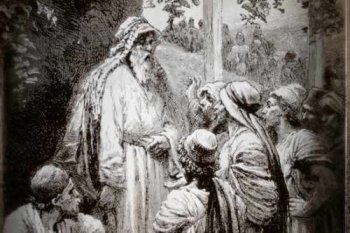
ancient-rabbi-teachingThis certainly throws a monkey-wrench into the machine. Was Ananias a follower of the Way or not? Even if he wasn’t, he (apparently) was not converting Gentiles to Judaism but instead, going out of his way to make God-fearers and to teach them Judaism.

Again, and I can’t stress this strongly enough, all this is speculation and should be taken with more than a grain of salt. But then again, we have a lack of information regarding the “early church” and the spread of the various Judaisms of that day through their “apostles,” so when operating in a vacuum, we tend to fill the gap with our imagination, stringing the bits of scattered facts together with the thread of our personalities.

Izates ultimately ascended to the throne and his mother also became a student of Judaism (actually, before Izates did and without his knowledge). But while Ananias was content and even insistent that the King and his household not convert to Judaism, other Jews were not.

Sometime later, however, a certain Galilean Jew named Eleazar arrived in Adiabene. He was a sage and Torah scholar. King Izates heard about the arrival of the sage and invited him to visit the royal court. When Eleazar entered the palace, he found Izates seated, reading the Torah of Moses. Like Paul’s theological opponents, Eleazar of Galilee dismissed the God-fearer status as illegitimate. He had some sharp words for the uncircumcised king:

Have you never considered, O King, that you unjustly violate the rule of those laws you are studying, and you are an insult to God himself by omitting to be circumcised. For you should not merely study the commandments; more importantly, you should do what they tell you to do. How long will you continue to be uncircumcised? But if you have not yet read the law about circumcision, and if you are unaware of how great an impiety you are guilty of by neglecting it, read it now.

The king sent immediately for a surgeon. Izates completed his formal conversion to Judaism at Eleazar’s behest and under his supervision. His mother did so as well.

-Lancaster, pg 251

According to Lancaster’s sources, Izates and his mother Helena built palaces for themselves in Jerusalem as well as preparing tombs for themselves so after their eventual demise, they could be interned in the holy city. In fact, some part of this has been substantiated, as the “Tomb of the Kings” in East Jerusalem, north of the Old City walls, has been identified as the tomb of Queen Helena and her sons.

In reading this Torah Club commentary…

Helena submitted herself completely to the authority of the sages. Izates and Helena contributed vast sums toward the Temple…(Queen Helena) also had a golden tablet made and inscribed with the words of the vow of the bitter water for the woman suspected of adultery.

-Lancaster, pg 252

All of this is interesting to be sure, but what does it have to do with us? Even if we choose to buy the speculation that Izates and Helena were followers of the Way and converted to that particular sect of Judaism, since that time, Christianity and Judaism have diverged into radically different trajectories so that one has little to do with the other.

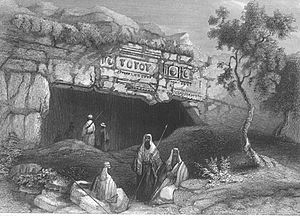
Tomb_of_the_KingsIn the Hebrew/Jewish Roots movement and its variants, there is a particular interest in just how non-Jews were integrated into that sect of Judaism that eventually became known as “Christianity.” I mentioned in Part 1 and Part 2 of my previous commentary on the Torah Club that the “conversion” of Cornelius and his household omitted any actual conversion to Judaism. Like Izates, Cornelius was taught Judaism but not circumcised. There’s no evidence that Peter deliberately discouraged Cornelius from a full conversion, but we don’t know what sort of decision making process occurred among the apostles between Peter’s encounter with Cornelius and Ananias’ encounter with Izates (and we have no real reason to assume that Ananias was also an apostle of the Way).

What we do know is that Izates did keep significant portions of Torah, adhering to Jewish customs and practices which we assume could have included keeping kosher, observing Shabbat, and performing the daily prayers. We certainly have evidence that Izates and Helena, before and after formal conversion, were generous to the Jews and donated to the Temple. This includes Helena purchasing vast quantities of grain and paying for it to be transported on ships to feed the hungry among Israel when she discovered a famine in Jerusalem and Judea (I can’t help but recall Joseph in Egypt in this instance).

Cornelius was also a devout man who observed the set times of prayer, donated funds for the benefit of the Jews, and that these acts were considered by God as a memorial (sacrifice) before him (see Acts 10:1-4). Given that Peter and the other Jews in his party spent several days in the home of Cornelius and likely ate with him and his household, Cornelius probably had kosher food available and maybe even kept a form of kosher himself.

In all this we can construct a model of what it was like (though facts are sparse) to be an early Gentile participant in the sects of Judaism including the Way. We have examples of Gentiles studying Torah and observing some of the mitzvot and either being discouraged when they expressed a desire to convert (Izates) or the option of conversion simply never arising (Cornelius). As we saw above, even Josephus was unlikely to have considered “the Way” as anything separate from the other Jewish sects of the late first century in which some Gentiles were partaking. It is on this basis that many 21st century Gentile believers are adopting some of the modern expressions of the mitzvot, including forms of observing Shabbat, keeping kosher, and davening at the set times of prayer.

Although 2,000 years have passed, there seems to be a hunger among some believers to try to recapture the flavor of the early Gentile disciples of the Way in order to access something they believe is more authentic about their faith. But while observing some of the mitzvot made perfect sense in a religious practice that was completely Jewish in the days of Peter and Paul, does it make any sort of sense now?

I don’t know. Theologically, I don’t think we can really say “no,” since we have precedent in the Bible and other sources, but on the other hand, the Bible and these other sources do not give us a clear picture of Gentiles who had not undergone full conversion observing the mitzvot in the same manner as the born-Jew. In fact, we see in the example of Izates and Eleazar, a definite Jewish objection to an uncircumcised Gentile studying the Torah without actually obeying it by converting to Judaism. This certainly suggests that some sects of Judaism required a Gentile to undergo full conversion prior to observance of the mitzvot, which apparently included even studying the Torah of Moses.

But as I’ve said repeatedly, information is sketchy. We’re not that certain of our facts. Which is a very, very good reason for people who believe they are certain that modern Christians must observe the full Torah mitzvot like a born-Jew or Jewish convert to re-examine their material and their assumptions. I believe Lancaster in this Torah Club commentary took liberties with his information and made certain assumptions to stimulate the imagination of his audience and to get us thinking “outside of the box.” But that’s a long way from saying that his assumptions are facts and that we must treat them as such, altering our faith and our observance accordingly.

pathIt’s interesting and even fun to take what little information we have available to us about the early church and to play a game of “what if.” It’s erroneous and even dangerous to forget that we’re just imagining and to believe the stories we’re building for ourselves. A life of faith is a life of exploration and discovery, but determining the difference between a bit of iron pyrite and a gold nugget is quite a bit harder than we might think.

A final word. If you are a Christian who feels drawn to certain of the mitzvot, if you are inspired by davening with a siddur, by observing the set times of prayer, by lighting the Shabbos candles, by giving tzedakah to the poor among Israel, I can see no reason to object to this. It is what Cornelius would have done. It is what Izates and Helena would have done. But unless you undergo formal conversion through a recognized Jewish authority (which includes circumcision if you are male), it does not make you Jewish nor does it obligate you to keep all of the Torah mitzvot.

While history records that King Izates and his mother fully converted to Judaism and accepted a life of Torah upon themselves, we have no knowledge that Cornelius or any of his household also did so. While Cornelius and his household observed certain of the mitzvot, we have no information that he considered this observance an “obligation” or a “right” but simply a matter of drawing nearer to the God of the Jews, who he came to know as the One God. If we choose to look at our own religious practice as a “drawing nearer” so that we may know God rather than something that is “owed” to us, then perhaps God will hear our prayers and bring us into His Presence in peace.

The Uncircumcised Convert, Part 2

mikveh-project“Can anyone withhold water for baptizing these people, who have received the Holy Spirit just as we have?” And he commanded them to be baptized in the name of Jesus Christ. Then they asked him to remain for some days.

Acts 10:47-48 (ESV)

When Simon Peter heard the Gentiles speaking in the languages and saw that they had received the Spirit just as he and the other Jewish believers had, he could no longer theologically exclude them from participation in the kingdom or discipleship. (see Acts 10:47-48) They had not gone through a legal conversion to become Jewish, nor had they been circumcised. They were still Gentiles, yet they had experienced the Spirit of God, just as the Jewish believers had.

Simon Peter explained to the six men that had accompanied him from Joppa, “Surely no one can refuse the water for these to be baptized who have received the Holy Spirit just as we did, can he?” By skipping circumcision and going directly to immersion, Simon Peter inverted the process by which a Gentile might ordinarily become a disciple of Yeshua. Prior to that occasion, he and the other disciples required a Gentile to first submit to conversion/circumcision. Immersion could follow later.

Torah Club, Volume 6: Chronicles of the Apostles
from First Fruits of Zion (FFOZ)
Torah Portion Vayeshev (“And he dwelt”) (pg 235)
Commentary on Acts 9:32-11:18

If you haven’t done so already, please read Part 1 of this commentary before continuing here.

This is the second time in his commentary on Acts 10 that Lancaster suggests Peter or the other Jewish apostles may have previously converted Gentiles to Judaism by first having them circumcised and then entering them into Jesus discipleship. As I mentioned in Part 1, I can’t think of any record in the Bible that points in this direction. I do note however, that Philip also did not require the Ethiopian eunuch to be circumcised prior to immersion. However, that more than likely means the eunuch was Jewish (and did not need to convert) since Luke makes no point of the eunuch being a Gentile as he does of Cornelius (although as previously mentioned, there are a number of assumptions in play).

What Lancaster says regarding circumcision and conversion of Gentiles does fit nicely into Shaye J.D. Cohen’s opinion (see his book, From the Maccabees to the Mishnah, Second Edition) of how Gentiles were made into Jewish disciples as I mentioned in another commentary.

However, as the history of Israel progressed, the concept of conversation to Judaism for the Gentile began to become more formalized. Cohen cites three essential elements of conversion to Judaism: belief in God, circumcision, and joining the house of Israel. Again, this is a definition of a convert to Judaism, not conditions required for the Gentile to join “the Way” as disciples of Christ. Cohen even references the difference:

For Paul, circumcision represents subjugation to the demands of the Torah (Gal. 3-5).

In other words, while Paul did not see circumcision and thus full obedience to the mitzvot as a requirement for the Gentile Christians, he did see it as a necessary step for full conversion to Judaism. The natural conclusion then is that a Gentile becoming a disciple of the Jewish Messiah in the time of Paul was not the same as a Gentile converting to Judaism.

Another indication that Gentiles entering into Jesus discipleship were not converting to Judaism is found in the aftermath of Peter’s experience with Cornelius.

Now the apostles and the brothers who were throughout Judea heard that the Gentiles also had received the word of God. So when Peter went up to Jerusalem, the circumcision party criticized him, saying, “You went to uncircumcised men and ate with them.”

Acts 11:1-3 (ESV)

This wasn’t exactly a friendly inquiry on the part of Peter’s fellow Jewish apostles.

Rumors of his (Peter’s) activities among the Gentiles preceded him. It did not take long for word of Simon’s Peter’s theological leap and halachic faux pas to reach the rest of the Judean apostolic community. The inclusion of the Samaritans had been controversial enough. Simon’s fraternization with Gentiles raised astonishment and disbelief.

No one objected to Gentiles joining the assembly of Yeshua so long as they first went through a proper conversion, but according to the rumor, that had not happened. People were even saying that Simon Peter had entered the home of the Roman soldier, eaten with him, and invited him to immerse for the name of Yeshua.

Such an association of Gentiles with Jews, and the Gentiles being allowed into discipleship within a Jewish sect without first converting to Judaism, must have seemed outrageous to the Jewish apostolic community in Jerusalem. Luke points out in verse 2 that “circumcision party criticized him,” meaning the people present were Jews, either people born Jewish or converts to Judaism. A Jew eating with a Gentile was a violation of halachah. Lichtenstein in “Commentary on the New Testament” on Acts 11:3 considers this matter further.

“You went to uncircumcized men and ate with them” (Acts 11:3). This does not present a difficulty, for Cornelius was a God-fearer and certainly had kosher food. And the objection of the circumcised men is only about [Peter’s] approaching uncircumcised men and eating with them, for Jews were forbidden to approach a foreigner.

-Lancaster, pg 236

Cohen might not entirely agree with Lichtenstein, since he believes God-fearers were still polytheists, integrating the God of Israel into a panthenon of other “gods.” However, it is quite likely that Peter and the six Jews in his company would not have eaten with Cornelius unless the food was kosher and there’s nothing to say, Cohen aside, that Cornelius must have been polytheistic.

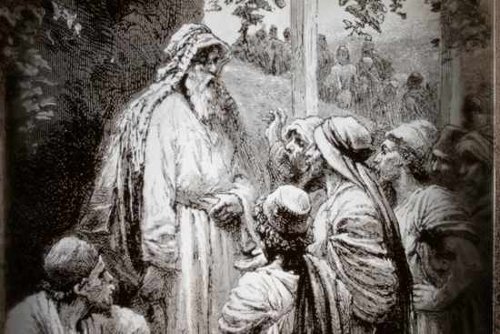
ancient-rabbi-teachingIn his defense, Peter and the other Jews who accompanied him recounted the events that occurred prior to entering the Roman’s home and what happened once Peter engaged Cornelius, including the giving of the Spirit to the Gentiles. (see Acts 11:4-17) Fortunately, upon hearing the explanation, the other apostles understood the graciousness of God, even to the Gentiles.

When they heard these things they fell silent. And they glorified God, saying, “Then to the Gentiles also God has granted repentance that leads to life.”

Acts 11:18 (ESV)

Lancaster presents his final interpretation of the “Cornelius event,” raising another interesting question.

The apostolic leadership accepted Simon Peter’s testimony and the corroboration offered by the six men from Joppa. The were forced to concede that Sinon had acted properly in setting aside the halachah about the uncleanness of Gentiles. More than that, they realized that God accepted the Gentiles into the kingdom. They did not determine whether or not the new Gentile believers should be encouraged to remain God-fearers or go on to full conversion. They only determined that they should receive Gentile brethern without objection as fellow disciples and heirs of the kingdom.

Uncertain of what else to make of the situation, they blessed God.

-Lancaster, pg 237

As we can see, both from the text in Acts and in Lancaster’s interpretation, the early Jewish apostles struggled to understand how to integrate the Gentile disciples into the Jewish Messianic community. The realization that Gentiles may not have to convert to Judaism (and according to Lancaster, at this point the jury was still out on this matter) in order to become disciples was revolutionary. All other sects of Judaism who were actively pursuing Gentiles as disciples required that the Gentiles convert to Judaism as a matter of course. In other words, it was a “no brainer.” Only in the Jesus sect was the method of entering Gentiles into a Jewish sect still something of a question mark. God didn’t just flip some sort of “spiritual switch” and suddenly, all of the apostles “just knew” what to do with the Gentiles and what it all meant.

But if the Gentiles didn’t have to convert; if they didn’t have to accept circumcision, then how was Torah and halachah to be applied to them? As we saw above, Paul and Cohen’s commentary on Paul understand that conversion to Judaism and circumcision meant the Gentiles would be fully obligated to the Torah mitzvot. As of the events in Acts 11 that question hadn’t even been brought up let alone answered. The apostles had no idea what was coming next. Neither did Cornelius and his household or any other Gentiles who subsequently became disciples.

It will be weeks before Lancaster’s Torah Club commentary addresses the events in Acts 15 which presumably will answer these questions. I hope you are looking forward to the future revelations of Volume 6 of the Torah Club as much as I am.

The Uncircumcised Convert, Part 1

corneliusAnd he said to them, “You yourselves know how unlawful it is for a Jew to associate with or to visit anyone of another nation, but God has shown me that I should not call any person common or unclean. So when I was sent for, I came without objection. I ask then why you sent for me.”

Acts 10:28-29 (ESV)

Simon Peter still had no idea why he had been called to Caesarea. The notion of Gentile inclusion in the kingdom had not occurred to him. Though the Master had told the apostles to “make disciples of all the nations” and to witness on His behalf “even to the remotest part of the earth,” He had never implied that this might mean accepting Gentiles as Gentiles (see Matthew 28:19; Acts 1:8). Simon naturally assumed that any Gentiles entering the kingdom and taking on the yoke of discipleship would necessarily convert to become Jewish first.

Torah Club, Volume 6: Chronicles of the Apostles
from First Fruits of Zion (FFOZ)
Torah Portion Vayeshev (“And he dwelt”) (pp 231-2)
Commentary on Acts 9:32-11:18

I don’t know where D. Thomas Lancaster discovered that bit of information about Peter in his commentary on Acts 10 or even if it’s simply an interesting opinion, but if true, then it begs the question, did Peter or any of the other apostles actually convert a Gentile to Judaism as part of the process of making disciples of Yeshua (Jesus) from the nations? As far as I’m aware, there’s no record in the New Testament prior to Acts 10 of the apostles converting a Gentile to Judaism, or allowing a Gentile to enter into the kingdom without conversion in the context of Jesus discipleship. The thousands we see coming to faith in the Jewish Messiah in Acts 2 and later are almost certainly all Jews. For that matter, what do we know of the Ethiopian eunuch encountered by the apostle Philip prior to Peter being summoned by Cornelius?

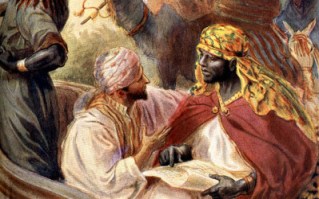
And he rose and went. And there was an Ethiopian, a eunuch, a court official of Candace, queen of the Ethiopians, who was in charge of all her treasure. He had come to Jerusalem to worship and was returning, seated in his chariot, and he was reading the prophet Isaiah.

Acts 8:27-28 (ESV)

The Ethiopian eunuch is sometimes considered the first Gentile convert (E.g., Eusebius, Ecclesiastical History 2.1.13). That seems unlikely. Luke makes no issue about his non-Jewish status as he does regarding Cornelius in Acts 10. Ethiopia was home to a continuous Jewish presence from the days of Solomon up until the modern era. Beta Israel Jews, also known as Ethiopian Jews, claim Jewish ancestry reaching back to the Solomonic Era. One may safely assume that an Ethiopian who went to the trouble of making a pilgrimage to Jerusalem to worship the LORD in His Temple was Jewish. Luke says, “He had come to Jerusalem to worship” (Acts 8:27). The eunuch had traveled a great distance to reach Jerusalem, more than a month’s travel time. He had probably come to attend one of the pilgrimage festivals. While in Jerusalem, he purchased several Greek versions of the scrolls of the prophets – reading material for the trip home.

Torah Club, Volume 6: Chronicles of the Apostles
from First Fruits of Zion (FFOZ)
Torah Portion Vayetze (“And he went out”) (pp 176-7)
Commentary on Acts 8:1-40

I think we have to accept that Lancaster is making some assumptions here, as he says, but they are certainly compelling assumptions. Luke indeed makes “no big deal” of the Ethiopian eunuch’s conversion to the “Jesus sect” but draws a tremendous amount of attention to Cornelius and his household of Gentiles when they receive the Holy Spirit.

While Peter was still saying these things, the Holy Spirit fell on all who heard the word. And the believers from among the circumcised who had come with Peter were amazed, because the gift of the Holy Spirit was poured out even on the Gentiles.

Acts 10:44-45 (ESV)

Peter and his Jewish companions were astonished that the Gentiles could also receive the Holy Spirit while Philip…but wait. Did the Ethiopian eunuch receive the Spirit during his encounter with Philip?

And the eunuch said to Philip, “About whom, I ask you, does the prophet say this, about himself or about someone else?” Then Philip opened his mouth, and beginning with this Scripture he told him the good news about Jesus. And as they were going along the road they came to some water, and the eunuch said, “See, here is water! What prevents me from being baptized?” And he commanded the chariot to stop, and they both went down into the water, Philip and the eunuch, and he baptized him. And when they came up out of the water, the Spirit of the Lord carried Philip away, and the eunuch saw him no more, and went on his way rejoicing.

Acts 8:34-39 (ESV)

Immediately after rising from the water, Philip is taken away by the Spirit, but there is no mention at all of the Ethiopian eunuch receiving the Spirit as did Cornelius and his household in Acts 10 or the apostles in Acts 2. Of course in Acts 10 the Gentiles received the Spirit (verse 44) and then were baptized in water (verse 48). Did the Ethiopian eunuch receive the Spirit prior to immersion and the event was simply not mentioned by Luke?

Now when they heard this they were cut to the heart, and said to Peter and the rest of the apostles, “Brothers, what shall we do?” And Peter said to them, “Repent and be baptized every one of you in the name of Jesus Christ for the forgiveness of your sins, and you will receive the gift of the Holy Spirit. For the promise is for you and for your children and for all who are far off, everyone whom the Lord our God calls to himself.” And with many other words he bore witness and continued to exhort them, saying, “Save yourselves from this crooked generation.” So those who received his word were baptized, and there were added that day about three thousand souls.

Acts 2:37-41 (ESV)

philip_and_the_ethiopianNotice that Peter tells his Jewish audience that to receive forgiveness of sins, they will receive the gift of the Holy Spirit, but when Luke describes the results in verse 41, he only says, “So those who received his word were baptized, and there were added that day about three thousand souls.” He doesn’t say that after they received his (Peter’s) word, they received the Spirit and then were baptized. It’s possible, given that these were Jews being discussed, Luke assumed his readership would know that they received the Spirit based on verses 1-4. That same thought process might have been in use when Luke describes the baptism of the Ethiopian eunuch in Acts 8. However this is just guess-work on my part.

But while the Jews who received the good news of the Moshiach in Acts 2 came to faith in Jesus but did not have to convert to Judaism (and arguably, neither did the Ethiopian eunuch), what about Cornelius and his household in Acts 10? If Lancaster’s assumption is correct, Peter should have expected Gentiles to convert to Judaism as a part of becoming disciples of the Jewish Messiah.

I mentioned in a previous meditation that Shaye J.D. Cohen in his book, From the Maccabees to the Mishnah, Second Edition said it was not uncommon for those from the various sects of late Second Temple era Judaism to make converts from the Gentiles including the God-fearers. If Peter expected, as did the other Judaisms of his day, that Gentiles would have to convert to Judaism in order to enter into discipleship, then he should have had Cornelius and the other male God-fearers present circumcised as part of the conversion process.

When Simon Peter heard the Gentiles speaking in the languages and saw that they had received the Spirit just as he and the other Jewish believers had, he could no longer theologically exclude them from participation in the kingdom or discipleship. (see Acts 10:47-48) They had not gone through a legal conversion to become Jewish, nor had they been circumcised. They were still Gentiles, yet they had experienced the Spirit of God, just as the Jewish believers had.

Simon Peter explained to the six men that had accompanied him from Joppa, “Surely no one can refuse the water for these to be baptized who have received the Holy Spirit just as we did, can he?” By skipping circumcision and going directly to immersion, Simon Peter inverted the process by which a Gentile might ordinarily become a disciple of Yeshua. Prior to that occasion, he and the other disciples required a Gentile to first submit to conversion/circumcision. Immersion could follow later.

-Lancaster, pg 235

This presentation on Lancaster’s Torah Club commentary went longer than I originally planned, so I’m splitting it into two parts. Please join me tomorrow for the second and final part in Monday’s “morning meditation.”

Community Snapshot: Lessons from Acts 2:42-4:31

Now Peter and John were going up to the temple at the hour of prayer, the ninth hour.

Acts 3:1 (ESV)

At Caesarea there was a man named Cornelius, a centurion of what was known as the Italian Cohort, a devout man who feared God with all his household, gave alms generously to the people, and prayed continually to God. About the ninth hour of the day he saw clearly in a vision an angel of God come in and say to him, “Cornelius.”

Acts 10:1-3 (ESV)

The disciples devoted themselves to “the prayers.” “Luke’s reference to ‘prayers’ rather than to prayer per se here may indicate observance of regular prayer times in the Temple – as well as the community’s own prayers.” (see Le Cornu and Shulam, “A Commentary on the Jewish Roots of Acts: Acts 1-15, 147.”) Most English versions obscure the meaning by not transmitting the definite article. The Greek says that they devoted themselves to “the prayers (tais proseuchais).”

“The prayers” should be understood in keeping with the common liturgical, daily prayers of Judaism, the synagogue, and the Temple. Six verses later, Luke depicts Simon Peter and John “going up to the temple at the ninth hour, the hour of prayer” (Acts 3:1).

This does not mean that early believers prayed out of a Siddur. Prayer books did not yet exist. It only implies that they prayed in concert with other Jewish people, following the same forms, conventions, modes, and times of prayer as the rest of the Jewish world. Their faith in Yeshua (Jesus) did not change their mode of worship. Their faith made their worship more intense and ardent.

Torah Club, Volume 6: Chronicles of the Apostles
from First Fruits of Zion (FFOZ)
Torah Portion Lech Lecha (“Go forth”) (pg 63)
Commentary on Acts 2:42-4:31

In my previous meditation about the Torah Club commentary on Acts, I tried to explain a couple of things. Based on Acts 2, I illustrated that those who were at the Shavuot (Pentecost) festival, and the 3,000 who received the Holy Spirit in Christ’s name, were all Jewish. Coupling what we read in Acts 2 with this week’s study of Acts 2:42-4:31, we can see that the very early days of “Christianity” with Peter and John in Jerusalem involved a completely Jewish religious community. In fact, this portion of Acts is devoted to the description of the early Jewish disciples of the Jewish Messiah in the weeks and months after his ascension.

I’m choosing to focus on that aspect of Jewish community involving “the prayers” for a couple of reasons. One is the obvious point that nothing about the practice of the Jewish disciples changed in the slightest because they were disciples of the Jewish Jesus. They still observed “the prayers” at the set times for prayer. They prayed together with other Jews, both disciples of the Master and any others who had gathered together, seemingly in the part of the Jerusalem Temple known as Solomon’s Portico.

However, you will notice that I again insert something from Acts 10 about the Roman Centurion Cornelius, the God-fearer, who at the beginning of that chapter, had not yet received the Christ; the Messiah, as Lord and Savior. And yet, he was praying at the ninth hour which was “the hour of prayer,” just as the Jews did, including Peter and John.

I also said in my previous missive that the non-Jewish God-fearers and later, the non-Jewish disciples of Jesus indeed took on some (or many) of the Jewish religious practices in order to imitate their mentors and in fact, at that point in history, the “Jewish model” for worshiping God was the only model available. This didn’t make Cornelius or any of the Gentile disciples suddenly Jewish or automatically obligated to a full Jewish lifestyle (otherwise, Paul wouldn’t have thrown such a “temper tantrum” in Galatians 5:1-5). However, it does mean that “Christian” worship looked a lot more Jewish, even after the first non-Jews began to be admitted as disciples, than we could ever imagine it being today.

I suppose that I’ll have a lot more material on Cornelius and the first non-Jewish “Christians” when I actually arrive at the Torah Club’s commentary on Acts 10 (which won’t happen for another six weeks or so) but I want to point out, for those of you reading this who may not already know, the discipleship under Jesus Christ for the early Jewish and Gentile believers did not entail some abrupt demarcation from what otherwise was considered “normal” Jewish religious practice. As D. Thomas Lancaster points out in this week’s study (pp. 61-62):

Notice that each of the four devotions (The Apostles’ Teaching, Fellowship, Breaking of Bread, and the Prayers) are hallmarks of Jewish practice. The new community that formed around the disciples of Yeshua did not adopt new customs or innovations that could be considered particularly Christian and distinct from Judaism. Instead, they devoted themselves to the same pursuits that might characterize any Jewish faith community. Today’s churches and communities of faith would look more like messianic synagogues if we committed ourselves to the four devotions of study, community, hospitality, and liturgy.

That recalls a question I asked not too long ago. Do Christians Practice Judaism? As we understand the concepts today, the answer must be “no.” However, as the “Messianic faith” began as a wholly Jewish expression of discipleship under the Master, what were the very first Gentiles doing when they were brought into discipleship with the Jews? For that matter, what did Cornelius think he was doing when he, as a God-fearer, prayed at the ninth hour and (presumably, though we can’t know for sure) gathered with the Jews in synagogue on Shabbat? Practicing Judaism?

Well, probably not, anymore than a modern-day Noahide could be said to be practicing Judaism by davening with Jews in a synagogue on Shabbat. But is the relationship between a Noahide and a Jew in the 21st century the same as that of a “Messianic” Jew and non-Jew in the mid-1st century? Noahides generally see themselves as bound by the covenant of Noah (see Genesis 9), while Jews claim the Abrahamic, Mosaic, and New Covenants, so strictly speaking, they are unlike members of God’s community, attached to God by different covenants.

I’ve said before that I believe we Christians have a relationship with God due to certain blessings included in the Abrahamic and New Covenants but that we are not attached to all of the same conditions within those covenants. Further, it is my belief (because there’s no evidence directly involving non-Jews) that we are not recipients of any blessings from the Mosaic covenant, which more than any of the other covenants, specifically identifies the Jewish people as a unique covenant people, even within the Messianic community of the 1st century and of the budding Messianic Jewish community of the 21st century.

But let’s wind back to the very early chapters of Acts again and take a look at the community as it existed after that first fateful Shavuot when the Spirit was given.

And they devoted themselves to the apostles’ teaching and the fellowship, to the breaking of bread and the prayers. And awe came upon every soul, and many wonders and signs were being done through the apostles. And all who believed were together and had all things in common. And they were selling their possessions and belongings and distributing the proceeds to all, as any had need. And day by day, attending the temple together and breaking bread in their homes, they received their food with glad and generous hearts, praising God and having favor with all the people. And the Lord added to their number day by day those who were being saved.

Acts 2:42-47 (ESV)

Here we see some of what Lancaster called “the devotions,” namely teaching/studying and fellowship through breaking of bread (which is just as it sounds, eating together, rather than some special sacrament). This passage is also sometimes referred to as “Christian Communism,” since everyone “re-distributed wealth” so that everyone shared everything. This brings up a point I want to make, not only about this passage but about the larger issue of community.

There are some who would isolate this part of the second chapter of Acts and say it’s the only way a Christian community should be run, and if any other Christians are “hoarding” material wealth for themselves through private ownership of a car, house, and so on, they are in violation of their Christian faith.

But we’re only talking about five verses in a single chapter of the Bible. Who develops an entire theology and Christian lifestyle based on a tiny handful of verses taken out of context?

Actually, quite a lot of people. I tend to think of Christians and Christian groups who insist on cherry picking verses to fit some arcane theology as “on the fringe” and I hope they are indeed in the minority, because it’s a dangerous practice. Focusing on just little bits and pieces of the Bible in an attempt to justify a “pet theology” and then to “sell” it to a wider audience as some form of “scholarship” is not only dishonest but potentially misleading to people who may actually believe it for lack of any better insights on their part.

Let’s take another example from Lancaster’s commentary. He defines the early Jewish Messianic community in terms of the larger context of 1st century Judaism in Jerusalem and Roman occupied Palestine. Let’s keep in mind that there was no one, monolithic Judaism then, anymore than there is one now (that goes for Christianity too, by the way). There were differing sects of Judaism and the sect that became known as “the Way” was what we see as the early Jewish disciples of Jesus in the beginning chapters of Acts. They were Jewish. They behaved in a way that was considered acceptable relative to Jewish religious and lifestyle practices. Except for their insistence that the man from Nazareth named Yeshua was indeed the Messiah, and that he was unjustly executed and three days later, rose from the dead, their Jewish lives and teachings wouldn’t have raised an eyebrow from any other Jew in the Holy Land.

Can we take a “snapshot” of their lives as we see them lived out in Acts 2 and 3 and say that’s how we Christians should live today? Is it any more valid to say that than to say that we must live a Christian lifestyle that exactly mirrors Acts 2:42-47? Probably not. It fails to take a great deal into consideration.

If the 1st century Jewish disciples of Jesus lived a lifestyle that was completely consistent with their Jewish peers and their surrounding Jewish culture, does that translate into a bunch of non-Jewish Christians in the 21st century doing the same thing? Remember, for the most part, Peter, John, and the rest of the disciples didn’t appear particularly unusual as they prayed at the ninth our in Solomon’s Portico. They didn’t appear particularly unusual as they met together to study the teachings of their Master. They didn’t appear particularly unusual when they met together for communal meals. Lots and lots of different groups of Jewish disciples of one Rabbi or another behaved in very similar ways.

But that wouldn’t necessarily translate to Christians twenty centuries later any more than it would translate to modern Jews. Our situations have changed drastically and on top of that, we don’t have a complete picture of what the early Messianic Jewish communities looked like. We can extrapolate based on whatever knowledge we possess of wider Jewish practices in the late Second Temple era, but we have even less knowledge of “normal” Christian practices among the newly minted Gentile disciples post-Acts 10. How could we ever figure out, assuming our goal was to imitate some portion of 1st century worship behaviors, how to replicate what that community (or those communities if we assume that once early non-Jewish churches were founded, their practices began to vary from those of the Jewish disciples in the synagogues) did way back in the first weeks, months, and years after the ascension of Jesus?

We can’t, at least not to a high degree of reliability and detail. What we can do is take what we understand of some of the general principles we see lived out and match them up with some of Christ’s teachings within a larger Biblical context and figure out some foundational points with which to connect.

Meeting together? Don’t we do that now? Don’t we have churches? Don’t we have home Bible studies? Don’t we serve food and eat together? Don’t we study together? Don’t we pray together?

Didn’t I just cover Lancaster’s four devotions in the previous paragraph?

Nothing in what we’ve seen in the first chapters of Acts necessarily tells us that the Gentile disciples (who didn’t exist during that time frame) where to behave exactly like their Jewish counterparts. It does tell us that the early Jewish disciples behaved very consistently with the Jewish religious and cultural practices in which they lived. Those Jews believed Jesus Christ was the Messiah and yet there was nothing at all to say that they ever stopped being Jews, stopped making sacrifices at the Temple, stopped celebrating the traditional festivals, stopped keeping kosher, stopped observing the Shabbat, stopped…you know what I’m getting at.

In the days when the Second Temple still stood and after the ascension of Christ, there was nothing to show us that the so-called “Jewish Christians” stopped being Jewish and started being “Christian” as we understand the term today.

But while I’m content to table what the later (from an Acts 3 point of view) Gentile disciples were supposed to do within what appears to be a wholly Jewish religious arena (I know I just left this question hanging, but I’ll pick it up again in subsequent studies of Acts via Torah Club), can we say that if the ancient Jewish disciples of the Master lived completely Jewish lifestyles and those lifestyles were totally consistent with their discipleship under Jesus Christ, could the same be true for the modern Jewish disciples of the Jewish Messiah?

Most of my regular readers (the ones who typically comment, anyway), already know that answer. But some of you, especially if you’re just surfing in here, may be a bit surprised. Food for thought.

Children of God

Children of GodYou foolish Galatians! Who has bewitched you? Before your very eyes Jesus Christ was clearly portrayed as crucified. I would like to learn just one thing from you: Did you receive the Spirit by the works of the law, or by believing what you heard? Are you so foolish? After beginning by means of the Spirit, are you now trying to finish by means of the flesh? Have you experienced so much in vain – if it really was in vain? So again I ask, does God give you his Spirit and work miracles among you by the works of the law, or by your believing what you heard? So also Abraham “believed God, and it was credited to him as righteousness.”Galatians 3:1-6

Lancaster identifies the influencers in Galatia (called by most Christian commentators “judaizers”, though “judaize” is derived from an intransitive Greek verb – that is, you can judaize [yourself], but you can’t judaize someone else, cf. Nanos, The Irony of Galatians [Minneapolis, Fortress, 2002], 116) as Gentile proselytes to Judaism who are anxious to secure their status in the Jewish community by influencing believing Gentiles to also become proselytes. His thesis makes more sense than Nanos’s (in which unbelieving Jews are the influencers) due to Nanos’s difficulty with Galatians 6:12.

Lancaster writes that the “different gospel that is not really a gospel” being peddled by these influencers is the message that Jewish identity and full Torah observance were necessary conditions for entrance into the believing community and access to the World to Come. This message was attractive for the Galatian Gentile believers because as liminals, they existed between two worlds.

from the review of
D. Thomas Lancaster’s book
The Holy Epistle to the Galatians
from the Hope Abbey blog.

This is the second part of a blog I wrote on Gentiles, Christians, and Noahides. Please read yesterday’s “morning meditation” called The Sons of Noah before continuing here. Things will probably make more sense if you do.

I wrote my own review of Lancaster’s Galatians book about a month ago, but once picked up, it’s hardly a book or a subject that can be casually laid down again. As much as any of his other letters, Paul’s words to the Galatian non-Jewish disciples of Jesus have a great deal to say to those of us who are Christians today.

In yesterday’s “morning meditation”, I introduced the concept of Gentiles and the Noahide Laws. In Judaism, it is understood that all Jews will be “saved” (to put it in the Christian vernacular), however, non-Jews are not expected to convert to Judaism in order to also attain a “saved” status. Jews are obligated to a very high standard of conduct toward God and other people, but the “nations” (i.e. everybody else)  are not expected to comply with these obligations (and in many cases, Gentiles are forbidden to obey the mitzvot as a matter of halachah). According to Judaism, the obligations of the Gentiles are outlined in Genesis 9 as the Divine code God gave to Noah which today are called Noahide Laws.

But who is a Noahide?

At Caesarea there was a man named Cornelius, a centurion in what was known as the Italian Regiment. He and all his family were devout and God-fearing; he gave generously to those in need and prayed to God regularly. –Acts 10:1-2

When Paul and his companions had passed through Amphipolis and Apollonia, they came to Thessalonica, where there was a Jewish synagogue. As was his custom, Paul went into the synagogue, and on three Sabbath days he reasoned with them from the Scriptures, explaining and proving that the Messiah had to suffer and rise from the dead. “This Jesus I am proclaiming to you is the Messiah,” he said. Some of the Jews were persuaded and joined Paul and Silas, as did a large number of God-fearing Greeks and quite a few prominent women. –Acts 17:1-4

No, I can’t draw a direct connection between the God-fearing Gentiles of the Second Temple period and the later Gentile Noahides, but I can make a suggestion that they are related and then explore that possibility. Both groups are considered “righteous Gentiles” in the sense that they have abandoned pagan idol worship and polytheism and have attached themselves to the One God; the God of Abraham, Isaac, and Jacob, without abandoning their Gentile ethnic and cultural identity (that is, by not attempting to convert to Judaism).

That said, the God-fearers in the day of Peter and Paul, though not attempting to become Jewish, did have only one model on which to draw to describe and practice a life of faith in the God of Israel:

Cornelius answered: “Three days ago I was in my house praying at this hour, at three in the afternoon. Suddenly a man in shining clothes stood before me… –Acts 10:30

Cornelius is describing performing the Minchah prayers or the afternoon prayers that are required in Judaism. Observant Jews pray three times a day: morning (Shacharit), afternoon (Minchah), and evening (Maariv). We can infer from this brief passage in Acts 10 that as a God-fearer, Cornelius did the same, though probably not in a manner identical to his Jewish mentors.

But Peter, in his encounter with Cornelius, saw something amazing take place:

While Peter was still speaking these words, the Holy Spirit came on all who heard the message. The circumcised believers who had come with Peter were astonished that the gift of the Holy Spirit had been poured out even on Gentiles. For they heard them speaking in tongues and praising God.

Then Peter said, “Surely no one can stand in the way of their being baptized with water. They have received the Holy Spirit just as we have.” So he ordered that they be baptized in the name of Jesus Christ. Then they asked Peter to stay with them for a few days. –Acts 10:44-48

Receiving the SpiritThis certainly recalls the events of Acts 2:1-4 when the core group of Christ’s Jewish disciples received the Spirit on Shavuot (Pentecost) and definitively establishes that both non-Jews and Jews have equal access to God through the Covenant of the Messiah.

Now let’s explore a few ideas. Let’s say that Cornelius and his fellow God-fearing Gentiles were the First Century equivalents of today’s Noahides, that is, they were righteous Gentiles who had a relationship with God but not on the same level as the Jewish people (Noahide Covenant vs. Mosaic Covenant). Now we see these God-fearing “Noahides” undergo a startling transformation by receiving the Holy Spirit in just the same manner as the Jewish disciples of Jesus. The status of the God-fearers changes to become more alike with the status of the Jewish disciples.

So in Christ Jesus you are all children of God through faith, for all of you who were baptized into Christ have clothed yourselves with Christ. There is neither Jew nor Gentile, neither slave nor free, nor is there male and female, for you are all one in Christ Jesus. If you belong to Christ, then you are Abraham’s seed, and heirs according to the promise. –Galatians 3:26-29

Paul is saying that in relation to access to God and the love of Jesus Christ, all people of faith are equal. Men are no greater than women in God’s eyes and Jews are no greater than Gentiles in God’s grace and compassion. Does this mean that Jews and Gentiles are absolutely equal in terms of role and function? Of course not, no more than men and women existing in unity as non-gendered, androgynous beings. The Jerusalem Council ruled on this when they issued their now famous edict to the Gentile believers (Acts 15:22-35).

Jewish and non-Jewish equal access does not mean we have identical responsibilities nor identical identities.

It also means that God-fearers or “Noahides” are not equivalent to Gentile Christians. The Covenant of Noah and the Covenant of Christ are not the same, otherwise why would God-fearing Gentiles need to be brought to faith in Jesus by Paul? The non-Jewish people of the world, even those who choose to comply with the Noahide obligations, do not possess the same status as those who take on the greater responsibility of the Messianic Covenant.

2,000 years later, we’re still trying to understand what this all means since, depending on who you listen to, both Noahides and Christians serve God and merit a place in the world to come. I suppose that’s why we have books such as Lancaster’s Galatians and a plethora of blogs on the web such as mine (and of course, in Jewish thought, a Noahide is “saved” by what he does and in Christian thought, a believer is “saved” by what he believes).

So as Christians, if we are no longer simply “Sons of Noah”, who are we?

Yet to all who did receive him, to those who believed in his name, he gave the right to become children of God – children born not of natural descent, nor of human decision or a husband’s will, but born of God. –John 1:12-13

See what great love the Father has lavished on us, that we should be called children of God! And that is what we are! The reason the world does not know us is that it did not know him. Dear friends, now we are children of God, and what we will be has not yet been made known. But we know that when Christ appears, we shall be like him, for we shall see him as he is. All who have this hope in him purify themselves, just as he is pure. –1 John 3:1-3

Paul said that “Therefore, be sure that it is those who are of faith who are sons of Abraham” (Galatians 3:7 [NASB]), which does not undo the status of the Jews as Sons of Abraham, but allows the Gentiles who come to faith to attain equal status in terms of access (though not of Legal obligation and ethnic status). Christians are not Noahides and we are not Jews. Christians are both alike and unlike their Jewish counterparts who have come to faith in Jesus as Moshiach. The Hope Abbey blog provided the following quote illustrating this:

What [Paul’s opponents] evidently failed to appreciate is that Paul made a distinction between Jewish Christians and Gentile Christians… while he saw it as perfectly legitimate for Jewish Christians to express their faith in Jesus through traditional Jewish practices, he strenuously opposed the imposition of these practices on Gentile Christians either for full acceptance by God or as a normative way of life. (Galatians, WBC 41 [Dallas: Word, 1990], xcviii)

While it may be compelling for Christians who are specifically attracted to Judaism and Jewish studies to pursue the status of Noahide (or in some extreme instances, to convert to Judaism) so that they can better associate with the Jewish synagogue and cultural community, in terms of our relationship to God, it’s a step backward. We have a clear record in the Apostolic Scriptures of God-fearers drawing closer to the Almighty by accepting the Messianic Covenant and placing their trust in Jesus Christ as Lord, Savior, and Jewish Messiah. We have been given the right to call ourselves children of the Most High God.

Raising HandsI don’t think that it’s inconsistent for a Christian to pray the three times daily or to observe a Shabbat rest in a manner similar to the Jewish model. We see these practices in the early (non-Jewish) church. I don’t believe Cornelius gave up the “Jewish” pattern of his prayers after he received the Spirit and perhaps becoming a “Christian” enhanced the meaning of coming into the Presence of God. But keep in mind that as a non-Jew, taking up faith in Jesus, becoming “Messianic”, becoming Christian, enables us to be true children of God and not merely servants. We have a greater duty and intimacy to the Father as sons and daughters. We must not lose that. We must not discard that. Like the prodigal son (Luke 15:11-32), if we desert our Father, we are throwing away “sonship” but perhaps “servanthood” as well”.

Cling to your faith. He’s coming.