Tag Archives: D Thomas Lancaster

Sermon Review of the Holy Epistle to the Hebrews: Better Promises

The Messiah “has obtained a more excellent priesthood” than the Aaronic priesthood because he is “the mediator of a better covenant, which has been enacted on better promises” (Hebrews 8:6). What are the better promises? How well do you really know the “new covenant”? This discourse takes a closer look at the “better promises” of the new covenant as described in the prophecies of Jeremiah.

-D. Thomas Lancaster
Sermon Thirty-Two: Better Promises
Originally presented on November 23, 2013
from the Holy Epistle to the Hebrews sermon series

I covered the vast majority of the material from today’s sermon in my previous review of D. Thomas Lancaster’s lecture “Better Promises” from his What About the New Covenant audio CDs.

In comparing my notes from today’s sermon with my prior review, I found that they were almost identical, so I suppose you could just click the link I provided above, read that review, and then call it good.

But, I think I’ll go over some of that material again. It can always use repeating.

But now He has obtained a more excellent ministry, by as much as He is also the mediator of a better covenant, which has been enacted on better promises.

Hebrews 8:6 (NASB)

Better promises. Jesus (Yeshua) is supposed to be a High Priest in Heaven with a superior priesthood to the Levites, and a mediator of a superior covenant than the Old Covenant based on better promises. What are these better promises?

night-and-dayTo find out, we have to go to Jeremiah 31 since the New Covenant isn’t in the Apostolic Scriptures (New Testament), it’s in the Tanakh (Old Testament):

“Behold, days are coming,” declares the Lord, “when I will make a new covenant with the house of Israel and with the house of Judah, not like the covenant which I made with their fathers in the day I took them by the hand to bring them out of the land of Egypt, My covenant which they broke, although I was a husband to them,” declares the Lord. “But this is the covenant which I will make with the house of Israel after those days,” declares the Lord, “I will put My law within them and on their heart I will write it; and I will be their God, and they shall be My people. They will not teach again, each man his neighbor and each man his brother, saying, ‘Know the Lord,’ for they will all know Me, from the least of them to the greatest of them,” declares the Lord, “for I will forgive their iniquity, and their sin I will remember no more.”

Thus says the Lord,
Who gives the sun for light by day
And the fixed order of the moon and the stars for light by night,
Who stirs up the sea so that its waves roar;
The Lord of hosts is His name:
“If this fixed order departs
From before Me,” declares the Lord,
“Then the offspring of Israel also will cease
From being a nation before Me forever.”
Thus says the Lord,

“If the heavens above can be measured
And the foundations of the earth searched out below,
Then I will also cast off all the offspring of Israel
For all that they have done,” declares the Lord.

“Behold, days are coming,” declares the Lord, “when the city will be rebuilt for the Lord from the Tower of Hananel to the Corner Gate. The measuring line will go out farther straight ahead to the hill Gareb; then it will turn to Goah. And the whole valley of the dead bodies and of the ashes, and all the fields as far as the brook Kidron, to the corner of the Horse Gate toward the east, shall be holy to the Lord; it will not be plucked up or overthrown anymore forever.”

Jeremiah 31:31-40 (NASB)

I broke out the different better promises step-by-step in my previous review but now I’ll just give them as numbered and bulleted lists. But first a few introductory points.

  • This is a prophesy about the end of times, the Messianic future, the final redemption.
  • It is a prophesy that the New Covenant will be like the Old (Sinai) Covenant in that it will also be made exclusively with the House of Judah and the House of Israel, that is, with the Jewish people. The Gentile nations are not mentioned, just as they are not mentioned in the Sinai Covenant.
  • It’s not like the Old (Sinai) Covenant in that it’s based on better promises.

And now, just what are those better promises?

  1. The Torah will be written on every Jew’s heart so that every Jew will intuitively, naturally obey God’s commandments.
  2. God will be Israel’s God and they will be His people. This is the promise of redemption and is actually marital language based on a marriage declaration a man made to a woman in the ancient near east.
  3. Every Jew will have an intimate and inclusive knowledge of God, a personal knowledge of God rather than knowing about God.
  4. God will completely and permanently forgive Israel of all of her sins (see Romans 11:25-27).
  5. Israel will always be a nation before God, that is, the Jewish people will always be a separate and unique national, physical entity called Israel in God’s sight, just as long as there is such a thing seasons, the sun, the moon, and the stars.
  6. Jerusalem, the Holy City, the center of King Messiah’s government, will be rebuilt

Those are great promises but there’s still more. If you read Jeremiah 32:36-42, a number of promises are present including:

  • The ingathering of the Jews.
  • The redemption of the Jews.
  • The betrothal.
  • The Torah written on Jewish hearts.
  • The New Covenant will be everlasting.
  • The New Creation.

Cutting BranchesBut that’s not all (I feel like some cheesy salesman selling vegetable choppers on the shopping channel *jk*). Jeremiah 33:14-26 speaks of God’s promise to raise up a “righteous branch” from the House of David, which is King Messiah, as well as rebuild the Temple, restore the Levitical priesthood, and reinstitute the sacrifices. And these promises can only be broken if day and night should cease to exist.

The latter verses speak of how the nations say that Israel is not a nation before God and that God has rejected Israel (which historically the Church has done). God is telling foolish ones who say such things that if day and night cease only then would God reject Israel. This is rhetorical language meaning that God will never reject His people Israel, the Jewish people. Never.

These are all terrific promises and there are still more that are written in the books of the prophets Amos, Ezekiel, Joel, Micah, and others.

Yes, they’re all great promises…if you’re Jewish.

But what about the Gentiles? What about us?

I also covered the answer to this question in my previous review but I think Lancaster worded part of his answer differently here.

What Did I Learn?

What did I learn new about how Gentiles are included in the New Covenant when we aren’t explicitly included in the New Covenant? Lancaster mentioned Abraham but didn’t explicitly describe how a portion of the Abrahamic Covenant is connected to Gentile inclusion in New Covenant blessings. You can read about that in a detailed summary I wrote.

Lancaster did say that as a result of the Acts 15 legal decision made by the Council of Apostles and Elders, Gentiles were given an honorary status within the commonwealth of Israel, an affiliation with the Jewish people by being grafted in as adopted sons and daughters of Abraham. By sharing Abraham’s faith, we are the fulfillment of the promise God made to Abraham that “all the families of the earth will be blessed” through him.

Lancaster said that Gentiles have a share in the New Covenant but (and it’s a big but) only by virtue of their/our association with Israel, that is, the nation of the Jews, through our faith in Messiah, for as the Master said to the Samaritan woman, “Salvation is from the Jews” (John 4:22).

But how?

According to Lancaster (and this is where you may think that things are getting a little bit fuzzy), King Messiah conquers the world, that is, he defeats all of the armies that go up against Israel in the final war. And since he conquers every nation on Earth, he annexes them and their people. And under that annexation, God extends the New Covenant blessings to include the people of those annexed nations, effectively granting them (us) citizenship under the Messiah’s government; citizenship in the Kingdom.

This could be a problem because some people have told me that even in Messianic Days, there will be nations not sworn to acknowledge the King of Israel as their King and people who remain disobedient. That means, if correct, that Messiah does not conquer literally all of the nations and some remain outside his authority.

However, according to Lancaster, for those Gentiles in the present age who have sworn an oath of fealty to the King, we are already annexed, so to speak, and thus gain access as vassel servants to the King, achieving citizenship in the Kingdom of God now, even though it has not yet arrived.

This goes back to the themes I’ve addressed in a number of my blog posts over the last week or two about the actual status of Gentiles as disciples of the Master in relation to the Jewish people, the nation of Israel, and obedience to the Torah mitzvot.
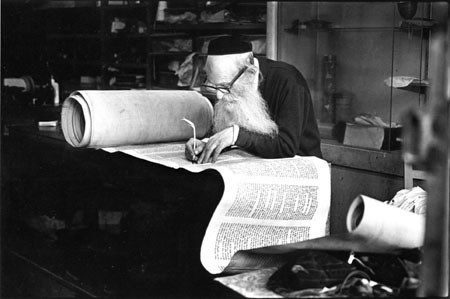
sefer-torahLancaster tossed around terms like “Torah written on Gentile hearts,” “commonwealth of Israel,” and “citizenship” without so much as a “by-your-leave,” but I don’t think he was implying anything you could call “One Law”.

He seems to be saying that when the New Covenant’s better promises are delivered in full to the Jewish people and they are made into a strong and mighty nation, a nation that is at the head of all the nations, those of us who are among the Gentile nations who have been loyal to the Messiah King and who have served him will also be blessed with the fruits of those same promises. Indeed, we are already being blessed as we serve him and cleave to him (which may not necessarily require wearing a kippah and tallit if you aren’t Jewish).

For the Son of God, Christ Jesus, who was preached among you by us—by me and Silvanus and Timothy—was not yes and no, but is yes in Him. For as many as are the promises of God, in Him they are yes; therefore also through Him is our Amen to the glory of God through us.

2 Corinthians 1:19-20 (NASB)

God’s promises find their “yes” in Messiah. All the many promises I listed above and so much more have their “yes” in Jesus Christ for those who believe and who faithfully serve the King and the Kingdom until it comes and then beyond.

“May you be inscribed and sealed for a good year.”

Sermon Review of the Holy Epistle to the Hebrews: The Inner Torah

What is the differences between the letter of the Law and the Spirit of the Law in Pauline terminology?

A discussion on the promise in Jeremiah 31 regarding the Torah written on our hearts in the New Covenant, with reference to Paul’s discourse in Romans 7-8 regarding the Spirit and the Law.

-D. Thomas Lancaster
Sermon Thirty-One: The Inner Torah
Originally presented on November 16, 2013
from the Holy Epistle to the Hebrews sermon series

As I was listening to this recording, I paid close attention to see if I could hear the sounds of an audience in the background, indicating that Lancaster was actually speaking to his congregation at Beth Immanuel Sabbath Fellowship rather than this being a direct repurposing of the third lecture on his What About the New Covenant CD series.

Yes, I could hear people in the background, but the material was virtually identical, right down to the jokes he told. I don’t feel like writing the same review over again, so you can get the details about what Lancaster said concerning “the Inner Torah” at Review of “What About the New Covenant” Part 3.

However, my reviews are always influenced by whatever else I’m reading or listening to at the time, so my head is in a different place now than it was last April when I wrote that review. And given my recent reviews of J.K. McKee’s book One Law for All: From the Mosaic Texts to the Work of the Holy Spirit (see Part 1 and Part 2 as well as my follow-up in If You Love Something), I heard different details than I did before, or at least they seemed more pronounced this time around.

Lancaster was talking about how some Christians, including some Messianics, understand the Holy Spirit. The Holy Spirit could be thought of by these folks as “obedience light”. The covenant conditions God wants Christians to fulfill have not only changed, they are very few and fairly easy to manage. You often can tell what God wants just by how you feel.

I’ve heard a lot of Christians say they’ve felt led by the Spirit to do this and not led to do that. One of the examples Lancaster used was how (amazingly) a Messianic Gentile could actually say they aren’t led by the Spirit to observe Shabbat. Lancaster seemed to be making a point that Christians really should feel led by the Spirit to observe Shabbos.

But later on in his sermon, Lancaster went through a list of the signs of the different covenants and the Sabbath is the sign of the Sinai Covenant God made with Israel.

“But as for you, speak to the sons of Israel, saying, ‘You shall surely observe My sabbaths; for this is a sign between Me and you throughout your generations, that you may know that I am the LORD who sanctifies you.

Exodus 31:13 (NASB)

I’ve just spent several blog posts and frankly, a lot of years believing and writing that the Sinai covenant conditions, that is, the Torah mitzvot, don’t apply to Gentiles as they do to Jewish Israel, so what do we do with Lancaster’s statement here?

Spirit, Torah, and Good NewsHe also said that the sign of the New Covenant (also see my review of last week’s sermon) is the outpouring of the Holy Spirit, which we see famously in Acts 2 with the Jewish Apostles and Acts 10 with the Gentile Cornelius and his entire household. We also know from 2 Corinthians 3:3, 2 Corinthians 5:5, and Ephesians 1:13-14 that the Holy Spirit given to believers is but a down-payment, a token, a small deposit on the whole sum that will not be delivered in full until the resurrection.

So, as Lancaster said before, we’re not living in New Covenant times yet because if we were, then we wouldn’t sin but instead, have the conditions of the covenant written on our hearts as opposed to on paper or animal skins, and we would have an apprehension of God equal to or greater than the greatest of all the prophets.

But if the conditions of the covenant don’t change from the Sinai Covenant to the New Covenant, and if the Sabbath is a sign of the Sinai (Old) Covenant God made exclusively with Israel, and if Lancaster believes that Gentiles today should be led by the Holy Spirit, our down-payment on the deliverables to come in the New Covenant times, to observe the Sabbath, what does that say about Messianic Gentiles and our observance relative to Messianic (or any other kind of) Jews?

So then, brethren, we are under obligation, not to the flesh, to live according to the flesh—for if you are living according to the flesh, you must die; but if by the Spirit you are putting to death the deeds of the body, you will live. For all who are being led by the Spirit of God, these are sons of God. For you have not received a spirit of slavery leading to fear again, but you have received a spirit of adoption as sons by which we cry out, “Abba! Father!”

Romans 8:12-15 (NASB)

We are not under obligation or “debtors” to the flesh, that is our human inclinations, but to the Spirit, which leads us to obey God as if His statues were already written on our hearts, even though they aren’t yet. What makes Romans 6, 7, and 8 so confusing is when Paul refers to “law”, he’s not always talking about the Torah. He’s comparing and contrasting the Law of Torah with the Law of Sin. What’s the Law of Sin?

For the wages of sin is death, but the free gift of God is eternal life in Christ Jesus our Lord.

Romans 6:23 (NASB)

Lancaster didn’t go into a detailed analysis of these passages in Romans so neither will I, but know that it’s quite possible to see the Torah as always good in Paul’s words, and when the law is supposedly denigrated by Paul, this law is the law of sin and death.

But if we are obligated to at least try to the best of our abilities to live life as if it were already the Messianic Era, already the resurrection, when the Torah is written on all hearts and the Spirit is fully poured out on all flesh (Joel 2:28), and that Torah is identical to the conditions of the Sinai Covenant given to Israel in the days of Moses, then where does that leave all Christians right now?

It’s puzzling.

Lancaster, citing Jewish mysticism, leads us to the idea that there is a heavenly Torah, a supernal Torah in Heaven, and that this Torah is the perfect expression of God’s will and wisdom. Lancaster says it is this Torah that will be written on our hearts.

He also says that there is no difference between the supernal Torah and the earthly Torah, but it gets confusing. Over a year ago I wrote a review of Michael Fishbane’s book The Garments of Torah: Essays in Biblical Hermeneutics. While the book was not mystical as such, it certainly illustrated the difficulty in translating God’s perfect will and wisdom into methods, principles, and terms human beings can understand let alone perform. When God “clothed” the Torah so that it could be delivered to our world, the material world, it took on the nature and characteristics of our world so it could be an adequate interface for people.

If it is this “unclothed” Torah that will be written on our hearts, what will that be like? Will the actual mitzvot (Shabbat, Kosher, tzitzit, visiting the sick, charity to the poor) remain exactly the same and our human abilities to perfectly carry them out will be enhanced, or will the nature and character of the commandments themselves be subtly changed because they are internal drives and not external lists?

I don’t know. It gets pretty metaphysical from here.

I did recall a quote from mechon-mamre.org about the days of Mashiach:

In the messianic age, the whole world will recognize YHWH, the LORD God of Israel, as the only true God, and the Torah will be seen as the only true religion (Isaiah 2,3; 11,10; Micah 4,2-3; Zechariah 14,9).

The only true religion for the whole world will be the Torah.

Simchat TorahIs this saying that there’s a principle in Judaism that the Torah will be applied to the Gentiles as well as the Jews in Messianic Days including what are called “sign commandments?”

If I didn’t know what First Fruits of Zion (FFOZ) taught (Lancaster is a primary author of FFOZ’s educational material), I could be convinced Lancaster was preaching some form of “One Law.”

And yet I know that they do describe two sometimes overlapping paths for Jews and Gentiles in Messiah. Their long-awaited Sabbath Table materials have content that is tailored differently, at certain junctions in the reading, to be recited either by a Jew or a Gentile.

And yet, when Lancaster said that the Shema is recited at Beth Immanuel every week, and I know the majority of people who attend that congregation are not Jewish, I found myself wondering if a Gentile disciple of Messiah could or should recite the Shema. I sometimes miss the “old days” when I did recite the Shema on Shabbat, but in deference to the requirements of Messianic Jews (not to mention my wife who is not Messianic but is a Jew), I surrendered that practice along with most other behaviors one could think of as “jewish”.

The very first words you utter when you recite the Shema are:

Hear, O Israel, the L-rd is our G-d, the L-rd is One.

But if everything I’ve been taught and believe is correct, we Gentiles are not Israel, nor will we ever be Israel. Such a thing is a direct violation of the promises God made to Abraham, Isaac, and Jacob about the Land and their inheritance.

Lancaster quoted from Isaiah something I must have read many times before but never picked up on:

O people in Zion, inhabitant in Jerusalem, you will weep no longer. He will surely be gracious to you at the sound of your cry; when He hears it, He will answer you. Although the Lord has given you bread of privation and water of oppression, He, your Teacher will no longer hide Himself, but your eyes will behold your Teacher.

Isaiah 30:19-20 (NASB)

Of course, the prophet is talking to Israel and not the rest of the world, but given that he is referencing a teacher, according to certain circles of Judaism, one of the things the Messiah is supposed to do is teach Torah correctly. Except that once the Holy Spirit is fully poured out on all flesh, that won’t really be necessary since it will all be inscribed on our hearts, the full wisdom and will of God. Our “teacher” then, will no longer hide Himself and we will see Him.

I normally put a section toward the end of these reviews called What Did I Learn but my entire “review” of this sermon today is about interpreting and learning (or at least struggling to learn) rather than an analysis of Lancaster’s lecture and what was new to me in it.

One thing is certain. In the New Covenant age there will be no questions, only answers. Our teacher will be in our hearts. We only currently possess a small down-payment against the full amount to be paid in the resurrection, but Lancaster says that’s no excuse to slack off and blame God for not giving us everything we need up front. The answers are coming but we are supposed to behave as if they’re already here. I feel like I’ve been blindfolded with my hands tied behind my back, and then sent into a maze with the instructions to make it to the other end without falling victim to any of the many, sometimes lethal traps that infest the maze at every turn.

No wonder a life of faith feels so dangerous and frustrating. No wonder it’s so hard to understand the difficult teachings of the Bible. No wonder the temptation is almost overwhelming to turn off my brain and to cleave to the teacher with the easiest story to follow.

But that would drive me crazy. My “inner teacher” won’t allow it.

Lancaster likens faith to a battle between our flesh and spirit natures, a lifetime struggle between two elemental forces locked in conflict until trumpets sound and graves open depositing the dead into life again. The battle is hard but that’s no excuse. We don’t have the option of giving up because if we do, sin and flesh wins and there’s no resurrection among the righteous for us…only among the damned.

the mazeI’m tired of the war, God. I’m tired of fighting with myself every waking minute of every day. And yet people of faith, both Gentile Christians and religious Jews have been fighting this battle for thousands of years. None of them were perfect at it and none of them found its even remotely easy.

I’m no tzaddik. I’m no saint. I’m only a guy trying to figure it all out and then live it all out. It would be nice to have the rules of life all spelled out for us, but as I’ve been trying to say, they’re not, at least not very clearly. Our teacher is still hiding.

Yes, I’ve heard Christians say that “Bible” stands for “Basic Instructions Before Leaving Earth.” A little too cute for me and it trivializes the enormous struggle each one of us faces every day. What do we learn from the sermon of the Inner Torah? Only that we must pray for endurance and perseverance that we last in faith until it arrives, until the King returns, and may God have mercy on those of us whose strength should fail.

Addendum: I wrote this about a week ago and obviously I’ve been doing a lot of reading, pondering, and writing since then. On the FFOZ eDrash for Torah Portion Re’eh, referencing Deut. 12:7, 12, it says in part:

Messiah offers us a similar invitation. He invites us into the Father’s house eternally. He tells His disciples, “In My Father’s house are many dwelling places; if it were not so, I would have told you; for I go to prepare a place for you.” (John 14:2) He invites us into the LORD’s house, not just as invited guests, but as family members. Thanks to Yeshua, we will rejoice before the Father in His holy house for all eternity. We will sit at the table in the kingdom with Abraham, Isaac and Jacob and all Israel. How could we ever refuse such a fabulous invitation?

When I read “not just as invited guests, but as family members,” I saw the relationship between the redeemed nations and Israel again knocked somewhat into a cocked hat. If we believing Gentile disciples of the Master are considered “family members,” that implies a level of access and intimacy very close to the born-sons (if Gentiles are considered adopted). The only way I can resolve this within my current conceptual framework is that in the Messianic Kingdom, the ekklesia of Jews and Gentiles do share a “oneness” of access and knowledge of God. But what does that make Gentiles and Jews together in Messiah?

Sermon Review of the Holy Epistle to the Hebrews: The New Covenant

Discussion on Hebrews 8 and Jeremiah 31 regarding the New Covenant and its meaning from a Messianic Jewish perspective. Discover why the New Covenant is not the New Testament, the “Renewed Covenant,” nor the “Brit Chadashah.” Find out what the New Covenant really is and how the Torah is part of the New Covenant. A foundational teaching for everyone interested in Messianic Judaism and the role of Torah in the lives of disciples of Yeshua.

-D. Thomas Lancaster
Sermon Thirty: The New Covenant
Originally presented on November 9, 2013
from the Holy Epistle to the Hebrews sermon series

I suppose I could just point you to part 1 of my review of Lancaster’s lecture series What About The New Covenant and call it good since it seems he intends to repurpose that material in the next four “Hebrews” lectures, but that probably wouldn’t be fair. Also, I don’t think he presents the information in exactly the same way, so I should review today’s sermon on its own merits.

I’ll skip over Lancaster’s introductory section since I don’t think it adds very much, and cut to the chase. The Old Testament does not equal the Old (Sinai) Covenant and the New Testament does not equal the New Covenant. Christianity has very poorly named these two major sections of the Bible, or at least named them with the intent of misrepresenting what the Old and New Covenants really mean.

Christians really take this naming convention seriously, though. I remember having a conversation about this with the head Pastor at the church I currently attend, and when he said that the books of the New Testament really were the New Covenant, I could scarcely believe my ears. How could someone so intelligent, well read, and well-educated as Pastor Randy actually believe this?

D. Thomas Lancaster
D. Thomas Lancaster

And yet it is a common, though wholly illogical doctrine of the Church. Lancaster told a story of how years back, he had worked for some place called Master’s Institute, a Lutheran seminary, and on his first day, he taught that the New Testament wasn’t the New Covenant. He promptly lost his job without so much as a “by your leave.”

That’s how seriously Christianity takes the doctrine of New Testament = New Covenant. But as Lancaster establishes in his sermon, that doctrine is dead wrong.

Lancaster knocks down all of the standard Christian arguments and if you want to know what they are, you can listen to the audio recording. The link is at the top of the page. What we call the New Testament is really the writings of the Apostles or what I call the Apostolic Scriptures. They contain information about the New Covenant, but the actual covenant is found in the Old Testament writings or the Tanakh.

The writer of the book of Hebrews, just as he made a comparison between the Levitical and Melkizedekian priesthoods and between the earthly and heavenly Temples, is now introducing a new comparison. He compares the Old and New Covenants (see last week’s review: Sermon Review of the Holy Epistle to the Hebrews: Shadow and a Copy for more information).

But now He has obtained a more excellent ministry, by as much as He is also the mediator of a better covenant, which has been enacted on better promises. For if that first covenant had been faultless, there would have been no occasion sought for a second.

Hebrews 8:6-7 (NASB)

Here’s one of the places Christians point to in the Bible and say, “See? The Old Covenant is bad and the New Covenant is better,” implying not only that grace is better than the Law (and that the two are mutually exclusive) but that it replaces the Law.

Except as we have heard in previous sermons, what was at fault with the Old Covenant priesthood wasn’t that the Law was bad or that the Temple or sacrifices were bad, but rather, all of that couldn’t grant resurrection and immortality. The Levitical priests were human, they were mortal, they died. They also had their own sins to deal with. But then again, as Lancaster has said already, that system was never designed to remove sins permanently and to make us sinless human beings.

New CovenantThat’s why we need a New Covenant and why God had it planned all along.

But what is a Covenant? I mentioned that the New Testament is not actually the New Covenant and thus the Old Testament isn’t the Old Covenant.

Guess what? The Old Covenant isn’t the Torah, it’s not the Law. Some of you, unless you already know or have read my commentaries on the New Covenant, are probably shocked that I had the nerve to say that. But it’s true.

Then Moses came and recounted to the people all the words of the Lord and all the ordinances; and all the people answered with one voice and said, “All the words which the Lord has spoken we will do!” Moses wrote down all the words of the Lord. Then he arose early in the morning, and built an altar at the foot of the mountain with twelve pillars for the twelve tribes of Israel. He sent young men of the sons of Israel, and they offered burnt offerings and sacrificed young bulls as peace offerings to the Lord. Moses took half of the blood and put it in basins, and the other half of the blood he sprinkled on the altar. Then he took the book of the covenant and read it in the hearing of the people; and they said, “All that the Lord has spoken we will do, and we will be obedient!”

Exodus 24:3-7 (NASB)

That’s the Old Covenant, also called the Sinai or the Mosaic Covenant, in a nutshell. God makes a proposal.

Now then, if you will indeed obey My voice and keep My covenant, then you shall be My own possession among all the peoples, for all the earth is Mine; and you shall be to Me a kingdom of priests and a holy nation.’ These are the words that you shall speak to the sons of Israel.”

Exodus 19:5-6 (NASB)

If the Israelites agree to obey God and keep the conditions of His Covenant, then He will be their God and make them into “a kingdom of priests and a holy nation.”

That’s the Sinai or Old Covenant. The Law or Torah are the conditions of the covenant but the not the covenant itself. The covenant is an agreement between two parties, in this case between God and the Children of Israel. The Torah contains the conditions that must be obeyed, what the Israelites agreed to do as their part of the bargain.

Here’s a news flash:

I call heaven and earth to witness against you today, that you will surely perish quickly from the land where you are going over the Jordan to possess it. You shall not live long on it, but will be utterly destroyed. The Lord will scatter you among the peoples, and you will be left few in number among the nations where the Lord drives you. There you will serve gods, the work of man’s hands, wood and stone, which neither see nor hear nor eat nor smell. But from there you will seek the Lord your God, and you will find Him if you search for Him with all your heart and all your soul. When you are in distress and all these things have come upon you, in the latter days you will return to the Lord your God and listen to His voice. For the Lord your God is a compassionate God; He will not fail you nor destroy you nor forget the covenant with your fathers which He swore to them.

Deuteronomy 4:26-31 (NASB)

light of torahWhen Israel failed to hold up their end, that is, when they disobeyed God by not observing the conditions of the covenant, God had no intention of abandoning them (see verse 31). He swore never to fail the Israelites and never to destroy them. He swore that even if Israel was faithless, He would never “forget the covenant with [their] fathers which He swore to them.”

Here’s another news flash. We are still living in Old Covenant times. The New Covenant hasn’t arrived yet and it won’t until Jesus (Yeshua) returns. That means the covenant and all its conditions established at Sinai are still in effect. Jewish people, including Jews in Messiah (Messianic Jews), are still under a covenant obligation to observe the Torah mitzvot. Please Christians, don’t try to talk them out of it. That would be a mistake.

OK, if that’s the Old Covenant, what’s the New Covenant?

And when He had taken a cup and given thanks, He gave it to them, saying, “Drink from it, all of you; for this is My blood of the covenant, which is poured out for many for forgiveness of sins.”

Matthew 26:27-28 (NASB)

No, that’s not the New Covenant, that’s Jesus in the process of inaugurating the New Covenant with those present at the Seder. By eating and drinking, they are entering the very leading edge of the New Covenant which is near but will not arrive until the return of the Master when he drinks the fullness of it:

“But I say to you, I will not drink of this fruit of the vine from now on until that day when I drink it new with you in My Father’s kingdom.”

Matthew 26:29 (NASB)

The New Covenant will not reach fruition until the Master drinks the cup of the Covenant in the Messianic Kingdom to come.

But what is the New Covenant then? The writer of Hebrews quotes from it starting in Hebrews 8:8 but Lancaster directs his audience to the source of that quote, which is in Jeremiah 31:

“Behold, days are coming,” declares the Lord, “when I will make a new covenant with the house of Israel and with the house of Judah, not like the covenant which I made with their fathers in the day I took them by the hand to bring them out of the land of Egypt, My covenant which they broke, although I was a husband to them,” declares the Lord. “But this is the covenant which I will make with the house of Israel after those days,” declares the Lord, “I will put My law within them and on their heart I will write it; and I will be their God, and they shall be My people.”

Jeremiah 31:31-33 (NASB)

There’s a lot more to it of course, but this is as far as Lancaster intends to go in his first sermon on the topic.

Torah at SinaiRemember, that a covenant is an agreement and the agreement contains certain terms and conditions that each party is supposed to uphold. In the Old Covenant, God’s part was He would be a God to Israel and make her a kingdom of priests and a holy nation. But that’s only as long as Israel did their part, which was obey the terms and conditions listed in the Torah. When Israel failed their end of things, God withdrew but not completely, sent the nation into exile, and applied any number of disciplinary measures. When Israel repented, God returned to them and returned them to their Land, the nation of Israel.

So what changes in the New Covenant?

“I will put My law within them and on their heart I will write it; and I will be their God, and they shall be My people.”

Isolating just that sentence, it seems that God intends to write His Law, that is, the Torah, on the hearts of the Israelites and He will continue to be their God and they will continue to be His people.

Here’s how Lancaster laid it out.

The Old Covenant

  1. God spoke the Torah
  2. Moses wrote it down and read it to the people
  3. The people said they would do everything in the Torah

The New Covenant

God puts the Torah inside of people rather than them accessing an external source and attempting to obey the covenant’s terms and conditions. The terms and conditions under the New Covenant are made internal for all the Jewish people so it’s natural for them to obey said-terms and conditions of the covenant.

But they are the same terms and conditions listed for the Old Covenant!

The only difference between the Old and New Covenants is where the terms and conditions are written.

The Torah isn’t bad or too hard to obey or a bait and switch to teach people that God’s standards are beyond our reach. In fact, the Torah is beautiful:

The law of the Lord is perfect, restoring the soul;
The testimony of the Lord is sure, making wise the simple.
The precepts of the Lord are right, rejoicing the heart;
The commandment of the Lord is pure, enlightening the eyes.
The fear of the Lord is clean, enduring forever;
The judgments of the Lord are true; they are righteous altogether.
They are more desirable than gold, yes, than much fine gold;
Sweeter also than honey and the drippings of the honeycomb.

Psalm 19:7-10 (NASB)

There’s nothing wrong with the Old Covenant conditions except that human beings are faulty.

For if that first covenant had been faultless, there would have been no occasion sought for a second. For finding fault with them, He says…

Hebrews 8:7-8 (NASB)

sinaiThe first covenant was not faultless, not because the covenant was at fault but they were at fault, that is the Israelites were at fault. They agreed to obey God but they repeatedly disobeyed. God’s solution to the problem of repeated disobedience wasn’t to annul the Old Covenant and its conditions but to make its possible for people to obey the covenant conditions by creating a New Covenant.

God didn’t change the Law, He changed, or rather, He will change the people.

The Church teaches that God did away with the Old Covenant and all of its terms and conditions completely and “dumbed down” the standards for human obedience. Instead of obeying God all we have to do is believe in Jesus Christ. Except that’s not what the Bible says the New Covenant is. But as I mentioned above, the Christian doctrine of the New Covenant is a dearly held assumption, even if it’s completely in error.

In Lancaster’s understanding of the New Covenant, it’s not here yet but it’s near. Jesus said repeatedly, “Repent for the Kingdom of God is at hand” (Matthew 3:2). That’s our job. To repent and to repent now! As much as we are able, we should try to live as if the New Covenant Era has already arrived, we should try to have as high a fidelity to the standards of God as we can in preparation for what is to come.

No, it’s not easy, but before it gets easier, it’s going to get a whole lot harder.

What Did I Learn?

As I’ve already said, I’ve gone over this material before so it’s not exactly a revelation, but as I was listening to the recording, I came up with an obvious problem.

We people of the nations are included in the New Covenant blessings. That is, by faith in Messiah, we too will be resurrected in the next age into immortal bodies and live in an era of total peace and tranquility.

But what will we have written on our hearts? The Torah? Will we be like the Jews? Will we be “grandfathered in” to Judaism? Will we be Jews?

Lancaster may cover all this in subsequent sermons, but it’s a compelling set of queries to consider now.

Remember though that the prophet Jeremiah was writing to the houses of Judah and Israel who were about to be sent into the Babylonian exile. Most of his writing was really bad news and he inserted the information about the future New Covenant times to give them hope. But Jeremiah wasn’t writing to Gentiles at all.

The writer of the epistle to the Hebrews was Jewish and he was writing to other Jews. He wasn’t writing to Gentile disciples, so he didn’t have to take them into account when he crafted the language of his letter.

Coffee and BibleWe Gentile Christians read Hebrews and the rest of the Apostolic Scriptures (and the rest of the Bible) as if it were written exclusively for us in the present age. But while the Bible certainly does have applications for us in our world today, that doesn’t mean every single page is addressing us and our issues. Maybe this epistle doesn’t present an explanation of the New Covenant that takes Gentile disciples into account.

I guess we’ll find out in the next few weeks or so.

Sermon Review of the Holy Epistle to the Hebrews: Shadow and a Copy

Now the main point in what has been said is this: we have such a high priest, who has taken His seat at the right hand of the throne of the Majesty in the heavens, a minister in the sanctuary and in the true tabernacle, which the Lord pitched, not man. For every high priest is appointed to offer both gifts and sacrifices; so it is necessary that this high priest also have something to offer. Now if He were on earth, He would not be a priest at all, since there are those who offer the gifts according to the Law; who serve a copy and shadow of the heavenly things, just as Moses was warned by God when he was about to erect the tabernacle; for, “See,” He says, “that you make all things according to the pattern which was shown you on the mountain.”

Hebrews 8:1-5 (NASB)

Teaching on Hebrews 8:1-5 regarding the Temple as a Shadow and a Copy of the supernal Temple above with references to Colossians 2:16-17 which describes the festivals and holy days as shadows of things that are to come–the substance of Messiah.

-D. Thomas Lancaster
Sermon Twenty-nine: Shadow and a Copy
Originally presented on November 2, 2013
from the Holy Epistle to the Hebrews sermon series

I should also start out by quoting someone who commented on one of my previous reviews of this series:

While I don’t know how Lancaster approaches the passage you cited, one aspect that most folks don’t appreciate is that the background view is one in which the heavenly sanctuary and the earthly one are operating simultaneously in parallel, with the earthly one reflecting the operations of the heavenly one and receiving its authorization therefrom. The lack of this perspective also is responsible for a less-than-accurate English translation of the passage. For example, the word rendered as “change” can mean simply “difference”; hence what was intended as a comparison becomes falsely tainted with a sense of replacement. The encouragement offered in the Hebrews sermonic letter is that operations of the heavenly sanctuary continue to be effective even if those of the earthly one become unavailable, or are interrupted, or the sanctuary is destroyed outright (all of which occurred either just before or just after this letter was circulated).

I hope you got the distinction being made in the aforementioned quotation. If not, read it again slowly and carefully. It’s important.

Todays’ sermon is just loaded with great information so let’s get started. Lancaster began by quoting from Ezekiel 43 where we see the prophet being taken spiritually to the Third Temple that will exist in Jerusalem in the Messianic Era, effectively inventing time travel (at least according to Lancaster).

Then he led me to the gate, the gate facing toward the east; and behold, the glory of the God of Israel was coming from the way of the east. And His voice was like the sound of many waters; and the earth shone with His glory. And it was like the appearance of the vision which I saw, like the vision which I saw when He came to destroy the city. And the visions were like the vision which I saw by the river Chebar; and I fell on my face. And the glory of the Lord came into the house by the way of the gate facing toward the east. And the Spirit lifted me up and brought me into the inner court; and behold, the glory of the Lord filled the house.

“As for you, son of man, describe the temple to the house of Israel, that they may be ashamed of their iniquities; and let them measure the plan. If they are ashamed of all that they have done, make known to them the design of the house, its structure, its exits, its entrances, all its designs, all its statutes, and all its laws. And write it in their sight, so that they may observe its whole design and all its statutes and do them. This is the law of the house: its entire area on the top of the mountain all around shall be most holy. Behold, this is the law of the house.”

Ezekiel 43:1-5; 10-12 (NASB)

Ezekiel's TempleGod is telling Ezekiel that His Divine Presence will dwell in this Messianic Age Temple forever! God commands the prophet to describe the Temple he sees in the vision to the Israelites so they will be ashamed and repent of their sins. Why? Because it was their sins that resulted in the destruction of the Temple as it existed in their day, for Ezekiel was physically in exile in Babylon and the Temple in Jerusalem was in ruins.

At this point in the sermon, I couldn’t help but think about how Judaism sees the cause of the destruction of Herod’s Temple as baseless hatred between one Jew and another. Rabbi Tzvi Freeman writes a rather lengthy midrashic description of this baseless hatred against the backdrop of recent events in modern Israel in the article The Tunnels That Rebuilt Jerusalem.

He also wrote this:

To the Rebbe, the exile of the Shechinah was a painful reality. To the rest of us, well, we have other concerns. Again and again, the Rebbe struggled to bring us to his perspective:

Perhaps, for you, this exile is not so bad. And you feel you are doing whatever you can about it, anyway.

But it is not just you alone in exile. Abraham, Isaac and Jacob and all the generations of their children, as well all the heavenly host—in fact, the entire creation—all is unfulfilled, in exile and imprisoned. Even the Creator, blessed be He, locks Himself into prison along with His creation.

Until you get us out of here.

-from Pity on the Cosmos

As you read this, Tisha B’Av is less than a day in the past and yet once you have fully entered a period of mourning, is it so easy to hold back the tears at its end? Not only should we be grieved at our loss but we should be ashamed of our sins. We should repent and repent quickly for our master the King could return at any moment.

To return to Lancaster’s sermon, he next visits Exodus 25:

Let them construct a sanctuary for Me, that I may dwell among them. According to all that I am going to show you, as the pattern of the tabernacle and the pattern of all its furniture, just so you shall construct it.

Exodus 25:8-9 (NASB)

I recently wrote a commentary on these verses relative to where and how we come close to God, but the more plain meaning of the text tells us something wonderful. It tells us that God laid out the pattern, the blueprint if you will, of the Heavenly Temple Court for Moses and instructed him to construct what amounts to a scale model of the Heavenly Court on Earth in the form of the Tabernacle. For everything in the Tabernacle and about the Tabernacle was an earthly replica of the Heavenly originals…everything…and everyone.

jerusalem-at-nightThat means every object you see described in Exodus that is used in the Tabernacle has a counterpart in Heaven. It also means that every person, the High Priest, the other Aaronic priests, the Levites, everyone, have Heavenly counterparts. Imagine.

Not only that, but Lancaster said that even earthly Jerusalem, the Holy City, is a replica of sorts of a Heavenly Jerusalem. This isn’t as farfetched as it may seem:

And I saw the holy city, new Jerusalem, coming down out of heaven from God, made ready as a bride adorned for her husband.

Revelation 21:2 (NASB)

Just think. If you’ve ever visited Jerusalem and particularly the Old City (sadly, I have not), then you could choose to see just the streets and stones and tourists, or you could allow yourself to envision Jerusalem as a sort of earthly reflection (though a mirror dimly) of the perfected Jerusalem.

And even though we don’t currently have the Temple with us, we know from Ezekiel that we will, and that when it existed and when it will exist again, every action of every one of the Priests on Earth will be a reflection of the Angelic Priests in Heaven. What is it like when an Angel offers incense on the altar before God I wonder?

We know from the two previous sermons in this series, Melchizedek and The Bypass that Yeshua (Jesus) is the High Priest in the Heavenly Temple. We have to believe that there are also Angelic Priests who attend and assist him in his priestly duties, just as God commanded the earthly Priests to assist and attend the Aaronic High Priest.

We also learned during these prior sermons, that the earthly Tabernacle and later Temple and the earthly Priesthood were considered “weak” only because they could not deliver what the Heavenly Temple and Priesthood do: permanent absolution from sin and resurrection immortality.

But then the earthly Temple and Priesthood weren’t designed to do any of those things. I’ve been exploring how Torah observance was never, ever meant to justify anyone before God in my Reflections on Romans series, so this is certainly a parallel.

At this point, Lancaster is finished with his introduction and proceeds to read Hebrews 8:1-5. So we have such a High Priest in Yeshua in the Heavenly (original and eternal) Temple, who is a “minister” in the “true tabernacle” which was “pitched” not by man but by God.

Verse 3 hints at what “gifts and sacrifices” are offered by Yeshua the High Priest, but that won’t be covered in today’s sermon. However, verse 4 says something important:

He would not be a priest at all [on Earth], since there are those who offer the gifts according to the Law…

LevitesYeshua, of the tribe of Judah and the house of David, would not be a Priest on Earth and will not be when he returns. He does not overturn or override the Law of the Temple, since only Aaronic Priests of the tribe of Levi may serve there (and will serve there in the Messianic Age). Yeshua’s priesthood doesn’t replace the Levitical priesthood, it exists altogether separately in a completely different venue.

So Yeshua will not be High Priest on Earth upon his return and will not function as a Priest in “Ezekiel’s Temple” in Jerusalem. But he still will have to perform an inauguration:

Now the king and all Israel with him offered sacrifice before the Lord. Solomon offered for the sacrifice of peace offerings, which he offered to the Lord, 22,000 oxen and 120,000 sheep. So the king and all the sons of Israel dedicated the house of the Lord. On the same day the king consecrated the middle of the court that was before the house of the Lord, because there he offered the burnt offering and the grain offering and the fat of the peace offerings; for the bronze altar that was before the Lord was too small to hold the burnt offering and the grain offering and the fat of the peace offerings.

1 Kings 8:62-64 (NASB)

Yeshua will be the great King and perform duties in relation to the Third Temple just as Solomon the King inaugurated the first Temple.

…who serve a copy and shadow of the heavenly things…

Hebrews 8:5 (NASB)

Here’s where we encounter what Lancaster calls “Christian theological bias.” When we read “copy and shadow,” we’ve been taught in the Church to think “empty,” “meaningless,” “vain,” and even “forgery.” We’ve been taught that all that “stuff,” the Temple, the Priesthood, the sacrifices, and of course, the Torah (Law) had a temporary use but it was all meant to expire and be replaced by the Holy, Heavenly, originals and specifically by Jesus, the High Priest of our hearts, for we replace the stone Temple as little, flesh and blood, spiritual temples.

But that’s not it at all.

To understand this better, Lancaster takes us to Colossians 2:16-17. The quote below is taken from the NASB translation:

Therefore no one is to act as your judge in regard to food or drink or in respect to a festival or a new moon or a Sabbath day—things which are a mere shadow of what is to come; but the substance belongs to Christ.

Some background. Lancaster says this was part of Paul’s argument against the ascetics, those people who believe that one can only be spiritual by disdaining anything that might be physically pleasurable and imposing severe self-discipline and abstention upon themselves.

While there are some practices in Judaism that follow an ascetic pattern (Tisha B’Av and Yom Kippur), the majority of Jewish observances (and remember, Paul was an observant Jewish Pharisee who advocated for Jews in Messiah performing the mitzvot, including Shabbat and the Festivals) such as Pesach (Passover), Shavuot (Festival of Weeks), Sukkot (Festival of Booths), and Shabbat (the Sabbath) were and are celebrated largely by eating and drinking.

Lancaster is interpreting Colossians 2 in a way that says when we observe the festivals, Rosh Chodesh (the observance of the New Moon), and Shabbat, we are experiencing a foretaste of what it will be like in the New Covenant age to feast at the table of Messiah:

I say to you that many will come from the east and the west, and will take their places at the feast with Abraham, Isaac and Jacob in the kingdom of heaven.

Matthew 8:11 (NIV)

Sukkah in the rainThis could well support Gentile Christian observance of the Biblical holidays in the present age since Yeshua (Jesus) was not just speaking of Israel but of the people of the nations “from the east and the west”. If you or I as non-Jewish disciples of the Jewish Messiah were to keep a proper Shabbos, observe the festival of the New Moon, and build a sukkah in our backyard this fall, in performing each of these acts, we are also experiencing a “shadow or copy,” a scale model, a brief tasty little treat of the magnificent banquet that we will be permitted to join in the Messianic Age.

So shadows and copies aren’t cheap knockoffs or poor imitations that need to be cleaned out to make way for the originals. They are previews, coming attractions of the main event, like watching the previews of a biggest, best movie ever to be made in anticipation of one day seeing the entire film in 3D.

But…

…but here we find “Christian theological bias” again, this time in how these verses are translated. Lancaster offered a couple of examples:

Therefore do not let anyone judge you by what you eat or drink, or with regard to a religious festival, a New Moon celebration or a Sabbath day. These are a shadow of the things that were to come; the reality, however, is found in Christ.

Colossians 2:16-17 (NIV)

Therefore no one is to act as your judge in regard to food or drink or in respect to a festival or a new moon or a Sabbath day—things which are a mere shadow of what is to come; but the substance belongs to Christ.

Colossians 2:16-17 (NASB)

I put in bold the words “were” and “however” in the first quote and the word “mere” in the second. Why? Because Lancaster says they don’t exist in the Greek. Later translators added those words to insert an anti-Torah bias into the text. If you just read and understand the Bible in English (or probably a lot of other translations), you’ll completely miss it.

I compared English translations and found the Holman Christian Standard Bible to be just slightly more honest:

These are a shadow of what was to come; the substance is the Messiah.

Unfortunately, it still uses the word “was” which isn’t in the Greek. The Shabbat, Rosh Chodesh, and the other observances are shadows cast by the Holy observances that will enter our world with the Messiah’s return. They are not past, they are present and future.

In other words, the Shabbat, Rosh Chodesh, Passover, Shavuot, Sukkot are all tasty hints and treats, samples from the dessert tray, so to speak, of what is to come, but the full meal deal, so to speak, is the Messiah. Yes, he is the full substance, but we have been provided with previews so we can look forward to what’s coming and experience some of that wonder and delight in the here-and-now.

What Did I Learn?

I felt I already had a pretty good handle on Hebrews 8:1-5 from the background of my general knowledge plus Lancaster’s prior sermons, but what I didn’t expect was how Colossians 2 was so easily applied to the same usage of “copy and shadow.” I was also unconscious of how modern Christian translators have been guilty of some “hanky-panky by apparently playing fast and loose with the oldest Greek manuscripts we have of the text, inserting anti-Torah, anti-Festival, and anti-Jewish bias into Christian minds and hearts.

Face it. Most of us don’t read the Bible in the ancient languages and we rely upon our English Bibles. I find great meaning and truth in the Bible, but on some level, I also feel betrayed. This is a good illustration as to why we must learn to educate ourselves and not depend solely upon traditional Christian learning sources. It’s not even that anyone is lying, but the history of the Church is fraught with traditions stemming from the earliest days of Gentile Christianity, when every effort was made by those pulling away from their Jewish teachers and mentors in the Messianic faith to re-interpret the scriptures in a manner that rendered them totally devoid of their original (Jewish) meaning and truth.

Small wonder most Jews really hate Paul. They’ve learned to interpret him in exactly the same way as most Evangelical Christians, only Christians see Paul’s (supposed) anti-Torah writings as a virtue rather than a curse.

temple-of-messiahI hope you conclude, as I have, that there is nothing about the Heavenly Malkizedekian Priesthood or the Heavenly Tabernacle that undoes, makes obsolete, or terminates the effectiveness and authority of the Torah, the Temple, and the Priesthood here on Earth. When Messiah does return and rebuild the Temple (actually, the Temple Mount is too small to hold the Temple described by Ezekiel, so the geography of Jerusalem is going to have to change somewhat), those Torah Laws that govern the Temple, the Priesthood, and the sacrifices that have been put into abeyance for nearly twenty centuries will be applicable again.

Until that day however, we remain in exile with just the periodic precursors of the age to come to comfort us.

When the Holy Temple was destroyed, there was a wailing voice heard throughout the whole world. The Ministering Angels said to G-d, “Master of the Universe, do You have such emotions of sadness? Isn’t it written ‘Splendor and glory are before You?’ ”

G-d answered: “My House is destroyed, and My children are manacled in chains. Shouldn’t I be suffering?”

Midrash, Yalkut Shimoni, Tehillim 679

From the day that Jerusalem and the Holy Temple were destroyed, there is no joy before G-d… until Jerusalem will be rebuilt and the Jewish People will return to it.

Midrash, Yalkut Shimoni, Eychah 7009

From my father’s sichot: When Mashiach will come (speedily in our time, amein), then we shall really long for the days of the exile. Then we will truly feel distress at our having neglected working at avoda; then will we indeed feel the deep pain caused by our lack of avoda. These days of exile are the days of avoda, to prepare ourselves for the coming of Mashiach, speedily in our time, amein.

-from Tanya: Ch. 11. This subject (p. 379) …infinitely more so. (p. 381).
Compiled and arranged by the Lubavitcher Rebbe, Rabbi Menachem Mendel Schneerson, of righteous memory, in 5703 (1943) from the talks and letters of the sixth Chabad Rebbe, Rabbi Yosef Yitzchak Schneersohn, of righteous memory; translated by Yitschak Meir Kagan

How long, Moshiach? How long?

Sermon Review of the Holy Epistle to the Hebrews: The Bypass

For, on the one hand, there is a setting aside of a former commandment because of its weakness and uselessness (for the Law made nothing perfect), and on the other hand there is a bringing in of a better hope, through which we draw near to God. And inasmuch as it was not without an oath (for they indeed became priests without an oath, but He with an oath through the One who said to Him,

“The Lord has sworn
And will not change His mind,
‘You are a priest forever’”);

so much the more also Jesus has become the guarantee of a better covenant.

The former priests, on the one hand, existed in greater numbers because they were prevented by death from continuing, but Jesus, on the other hand, because He continues forever, holds His priesthood permanently. Therefore He is able also to save forever those who draw near to God through Him, since He always lives to make intercession for them.

For it was fitting for us to have such a high priest, holy, innocent, undefiled, separated from sinners and exalted above the heavens; who does not need daily, like those high priests, to offer up sacrifices, first for His own sins and then for the sins of the people, because this He did once for all when He offered up Himself. For the Law appoints men as high priests who are weak, but the word of the oath, which came after the Law, appoints a Son, made perfect forever.

Hebrews 7:18-28 (NASB)

Does the priesthood of Messiah cancel the priesthood of Aaron and the Levitical system? The relationship between the Aaronic priesthood and the Melchizedekian priesthood explored in Hebrews 7:18-28.

-D. Thomas Lancaster
Sermon Twenty-eight: The Bypass
Originally presented on October 26, 2013
from the Holy Epistle to the Hebrews sermon series

This was a particularly interesting (and difficult) part of Hebrews to get through because I had to bypass (no pun intended) the traditional Christian reading (and what seems to be the plain reading) of the text and not believe that the Aaronic priesthood, the Temple, the sacrifices, and the Torah were all weak and useless and that Jesus replaced them as a better hope in bringing us closer to God.

By his own admission, Lancaster’s “bypass” analogy is flawed and by the end of the recording, he was asking his audience to forget he had even used it. But here it is anyway.

bypassI’ll use my own location as an example. Just west of Boise is the community of Eagle, Idaho. When I first moved here nearly twenty years ago, State Street ran west out of Boise and directly through downtown Eagle. Now between Boise and Eagle, you could travel about fifty-five miles an hour but as you approached Eagle, you had to slow down considerably. This could be a pain if you were just passing through and your destination were further west.

Eventually, the highway department built a bypass. Now State Street completely avoids Eagle and folks can go fifty-five (or more), not go through Eagle at all, and get to where ever they’re going faster. Old State Street still goes through Eagle, but you have to specifically take that turnoff to get there.

Lancaster says the Aaronic priesthood is like Eagle, Idaho and that the priesthood of the Melchizedek “bypasses” it to better promises, as opposed to replacing it. Eagle is still there and still a destination. So is the Aaronic priesthood.

Yeah, it’s an imperfect metaphor. Here’s why.

The former priests, on the one hand, existed in greater numbers because they were prevented by death from continuing, but Jesus, on the other hand, because He continues forever, holds His priesthood permanently. Therefore He is able also to save forever those who draw near to God through Him, since He always lives to make intercession for them.

Hebrews 7:23-25 (NASB)

Why is the Aaronic priesthood considered weak, imperfect, and useless? Was it really so? Was the Torah so weak and were the sacrifices so useless? It depends. It depends on what you are using them for. If you are using the Torah to give you eternal life in the resurrection and to justify you at final, eternal judgment, then yes, they are weak and useless…because they were never designed to be used for those purposes!

To employ another metaphor of Lancaster’s, it would be like using a screwdriver instead of a hammer to pound a nail into a board.

The Aaronic priesthood had a completely different purpose and it wasn’t an eternal purpose, even though the Aaronic priesthood itself is eternal:

Then you shall bring his sons and put coats on them, and you shall gird Aaron and his sons with sashes and bind caps on them. And the priesthood shall be theirs by a statute forever. Thus you shall ordain Aaron and his sons.

Exodus 29:8-9 (NASB)

high_priestThe priesthood belongs to the sons of Aaron by statute forever. They still have a job. It will be there waiting for them when Messiah returns and builds the Temple in Jerusalem.

But…

…but, Jesus as our priest in the order of Melchizedek has a different purpose than the Aaronic priesthood and it operates in a completely different venue, in the Heavenly Court or Temple.

Let them construct a sanctuary for Me, that I may dwell among them. According to all that I am going to show you, as the pattern of the tabernacle and the pattern of all its furniture, just so you shall construct it.

Exodus 25:8-9 (NASB)

God instructed Moses to have the Israelites build what could be described as a scale model of the Heavenly Court on Earth, the mishkan or tabernacle. If you look at the specific instructions, all of the objects of the tabernacle, right down to the priestly robes, and the proportions of the tabernacle itself were all carefully modeled on their Heavenly counterparts.

That means for everything in the tabernacle, there was a counterpart in the Heavenly Court where Yeshua (Jesus) functions as the High Priest (and if it took a whole army of Aaronic priests and Levites to serve in the tabernacle, then there must be a host of priestly angels assisting Jesus our High Priest in Heaven).

So what Jesus does in Heaven as Priest, the sons of Aaron do in the earthly tabernacle and later the Temple in Jerusalem. They are not in competition, they’re complementary. The Heavenly Court then is not a “bypass” around the earthly Temple, they exist on two separate parallel roads, and they don’t even go to the same destination. It would be like modeling one interstate freeway system on a different, similar system.

Oh, “former” priests. Verse 23 is misleading in English. The Greek doesn’t say “former”. Lancaster tells us it says something like “those who are many who have become priests.” If you look at the context, you see the major difference between the Aaronic priests and Yeshua is that the sons of Aaron, like all men, die, while Jesus, having died and been resurrected, is immortal. There were no immortal Aaronic priests in the tabernacle or Temple.

Thus, Jesus is able to intercede for us forever, not just in terms of our immortal souls and salvation at the eternal judgment, but right now, today, Jesus is praying to the Father for us.

What about verses 20 and 21 where it mentions an oath? What oath?

The Lord has sworn and will not change His mind,
“You are a priest forever
According to the order of Melchizedek.”

Psalm 110:4 (NASB)

Oh, that oath.

MessiahGod swore an oath that an immortal Jesus would serve perpetually in the Heavenly Court as the eternal High Priest. No human priest in the Temple in Jerusalem was immortal and God swore no oath regarding them. Their mortality and imperfections, that is, their having sinned, made them “weak” and “flawed” and “useless” for the purposes of providing perpetual forgiveness of sins before the final judgment and eternal life through the resurrection (and remember, that’s not what they were designed to do). Jesus as High Priest is indeed “holy, innocent, undefiled, separated from sinners and exalted above the heavens.”

That’s the difference. That’s a much more consistent explanation of the comparisons and contrasts between the Aaronic and Melchizedekian priesthoods. That the latter is better doesn’t mean it replaces the former. It just means they function in different contexts and each one fulfills different job descriptions. Nearly two-thousand years of Christian interpretive tradition makes it seem otherwise.

What Did I Learn?

Just about everything. As I listened to Lancaster’s sermon, it all clicked into place, but trying to read Hebrews 7 without running it through this interpretive matrix made these passages seem terribly depressing when compared to my overall understanding of the New Covenant message.

That’s what this is all about. The “better promise” is what happens as the New Covenant enters our world and what happens when it reaches fruition. We are still in Old Covenant times. People are not perfected. We don’t have the Torah written on our hearts and our hearts have not yet been circumcised. We have received the indwelling of the Holy Spirit but not in its fullness so that we “know God” and obey His statues as a natural response.

Lancaster said that “perfection” refers to the resurrection and our perfected physical and spiritual states. Well, we certainly haven’t gotten that far yet.

Lancaster alluded to his What About the New Covenant lecture series which I suspect he incorporates into later sermons in his “Hebrews” series. The only way to understand Hebrews or any other part of the Apostolic Scriptures is to have a firm understanding of the New Covenant and how it works, which Lancaster provides in his New Covenant audio recordings.

Without that perspective, it is almost impossible to see the intent of the writer of the Epistle to the Hebrews in any accurate manner or in any way that is consistent with God keeping the promises He made to His nation Israel.

Sermon Review of the Holy Epistle to the Hebrews: Melchizedek

For this Melchizedek, king of Salem, priest of the Most High God, who met Abraham as he was returning from the slaughter of the kings and blessed him, to whom also Abraham apportioned a tenth part of all the spoils, was first of all, by the translation of his name, king of righteousness, and then also king of Salem, which is king of peace. Without father, without mother, without genealogy, having neither beginning of days nor end of life, but made like the Son of God, he remains a priest perpetually.

Now observe how great this man was to whom Abraham, the patriarch, gave a tenth of the choicest spoils. And those indeed of the sons of Levi who receive the priest’s office have commandment in the Law to collect a tenth from the people, that is, from their brethren, although these are descended from Abraham. But the one whose genealogy is not traced from them collected a tenth from Abraham and blessed the one who had the promises. But without any dispute the lesser is blessed by the greater. In this case mortal men receive tithes, but in that case one receives them, of whom it is witnessed that he lives on. And, so to speak, through Abraham even Levi, who received tithes, paid tithes, for he was still in the loins of his father when Melchizedek met him.

Now if perfection was through the Levitical priesthood (for on the basis of it the people received the Law), what further need was there for another priest to arise according to the order of Melchizedek, and not be designated according to the order of Aaron? For when the priesthood is changed, of necessity there takes place a change of law also. For the one concerning whom these things are spoken belongs to another tribe, from which no one has officiated at the altar. For it is evident that our Lord was descended from Judah, a tribe with reference to which Moses spoke nothing concerning priests. And this is clearer still, if another priest arises according to the likeness of Melchizedek, who has become such not on the basis of a law of physical requirement, but according to the power of an indestructible life. For it is attested of Him,

“You are a priest forever
According to the order of Melchizedek.”

Hebrews 7:1-17 (NASB)

The story of Abraham’s encounter with Melchizedek and Hebrews 7:1-17. Was Melchizedek actually a pre-incarnate appearance of Christ in the Old Testament? Who is the mysterious priest and what is his relationship to Yeshua?

-D. Thomas Lancaster
Sermon Twenty-seven: Melchizedek
Originally presented on October 12, 2013
from the Holy Epistle to the Hebrews sermon series

We finally exit the elementary principles of the faith and get back into that “meat” the writer of the Epistle to the Hebrews was talking about. That meat starts with Melchizedek.

Lancaster started out by quoting from Lech Lecha:

When he returned from defeating Chedorlaomer and the kings with him, the king of Sodom came out to meet him in the Valley of Shaveh, which is the Valley of the King. And King Melchizedek of Salem brought out bread and wine; he was a priest of God Most High. He blessed him, saying,

“Blessed be Abram of God Most High,
Creator of heaven and earth.
And blessed be God Most High,
Who has delivered your foes into your hand.”

And [Abram] gave him a tenth of everything.

Genesis 14:17-20 (JPS Tanakh)

So who was Melchizedek? He’s the King of Righteousness. The King of a place called Salem, which is an ancient name for Jerusalem. He’s also called a King of Peace. Sound familiar?

melchizedekLancaster says (and I’ve heard this before as well) that many people believe that Melchizedek is a “pre-incarnate Jesus”. In other words, Jesus showed up in disguise in the Old Testament to honor Abraham. I’ve always had trouble with this interpretation, as it cheapens the incarnation of Jesus being born of woman (much later in history) by having him just appear and disappear in this sequence of events. Fortunately, Lancaster also has a problem with this. But then what is Melchizedek’s relationship to Jesus?

Here’s one connection (sort of). Lancaster says that Melchizedek shows up bringing bread and wine to give Abraham a banquet foreshadowing the banquet of Abraham in Messianic Days. What banquet you ask?

I say to you that many will come from east and west, and recline at the table with Abraham, Isaac and Jacob in the kingdom of heaven…

Matthew 8:11 (NASB)

Oh. That banquet.

So Jesus is supposed to give Abraham a banquet in the Messianic Kingdom? Seems kind of reversed. You’d think Abraham would hold a banquet in honor of King Messiah. On the other hand Abraham did give Melchizedek a tenth of everything after receiving a blessing, but we’ll get back to that.

Lancaster did bring up the midrash in Judaism that suggests Melchizedek was actually Shem, the son of Noah. While this works in terms of the chronology of events, it can’t be true because the writer of Hebrews says that Melchizedek is without genealogy or ancestry, which Shem definitely had.

Lancaster, dispelling the midrash in this case, then quotes the following:

This hope we have as an anchor of the soul, a hope both sure and steadfast and one which enters within the veil, where Jesus has entered as a forerunner for us, having become a high priest forever according to the order of Melchizedek.

Hebrews 6:19-20 (NASB)

We know about the order of the priesthood of Melchizedek from this:

The Lord says to my Lord:
“Sit at My right hand
Until I make Your enemies a footstool for Your feet.”
The Lord will stretch forth Your strong scepter from Zion, saying,

“Rule in the midst of Your enemies.”
Your people will volunteer freely in the day of Your power;
In holy array, from the womb of the dawn,
Your youth are to You as the dew.
The Lord has sworn and will not change His mind,
“You are a priest forever
According to the order of Melchizedek.”

Psalm 110:1-4 (NASB)

All this seems to indicate that the Priest/King Melchizedek had established a priestly order. What do you have to do to join this order?

For this Melchizedek, king of Salem, priest of the Most High God, who met Abraham as he was returning from the slaughter of the kings and blessed him, to whom also Abraham apportioned a tenth part of all the spoils, was first of all, by the translation of his name, king of righteousness, and then also king of Salem, which is king of peace. Without father, without mother, without genealogy, having neither beginning of days nor end of life, but made like the Son of God, he remains a priest perpetually.

Hebrews 7:1-3 (NASB)

the letterLancaster admits that on the surface, this sounds a great deal like Melchizedek could be Jesus. On the other hand, saying he was without father and mother just means that the Torah doesn’t mention them, not that they didn’t exist. Also, it says Melchizedek had no genealogy, but Jesus has a very specific genealogy. He has to in order to qualify as the Messiah King.

Lancaster directs us back to his understanding of why this letter was first authored. The Greek-speaking, Jesus-believing Jews in Jerusalem were going through a crisis of faith. They had been persecuted by the Sadducees who were in control of the Temple. They had been cut off from the Temple, from the sacrifices, and from the (Aaronic) priesthood. And as Lancaster said in past sermons, no one approaches Hashem without a priest.

But the Hebrews writer is saying that they did have a priest, just one of a different order than that of the Aaronic priesthood. But how could that be?

You shall gird them with sashes, Aaron and his sons, and bind caps on them, and they shall have the priesthood by a perpetual statute.

Exodus 29:9 (NASB)

This is a fancy way of saying that the priesthood descending from Aaron was established forever. It was never-ending. It could not be ended or replaced.

So how could Messiah, of the tribe of Judah and the house of David be a priest?

Because he belonged to a different order of priests. The order of Melchizedek. But is there such an order or was the writer of Hebrews speaking metaphorically?

I asked before, what would you have to do if there were such a priestly order and you wanted to join it? According to Psalm 110:4, you had to be immortal because it says, “a priest forever.” As far as we can tell, Melchizedek was not immortal, even though the Bible never records his death (or birth for that matter).

If Melchizedek was a literal King/Priest of the city of Salem, which at that time a Jesubite city ruled by a Canaanite King, then this couldn’t have been a role that Jesus just “popped in” for and then popped back out again up into Heaven after a brief chat and a nosh with Abraham. He would have had to rule over Salem on a day-to-day basis, being the head of a very real government in a very real city with very real human citizens.

Doesn’t seem likely that this is Jesus.

We do know something about Melchizedek as a priest, though. He blessed Abraham and Abraham paid Melchizedek.

But without any dispute the lesser is blessed by the greater. In this case mortal men receive tithes, but in that case one receives them, of whom it is witnessed that he lives on. And, so to speak, through Abraham even Levi, who received tithes, paid tithes, for he was still in the loins of his father when Melchizedek met him.

Hebrews 7:7-10 (NASB)

AbrahamIn almost any context, Abraham, having received the promises from God, was the biggest wheel at the table, so to speak. No one was of a higher authority than Abraham relative to the purposes of God. If anything, Abraham should have blessed Melchizedek, since only the greater blesses the lesser, just like fathers bless their children. That Melchizedek, the Priest of the Most High God, blessed Abraham, then he was superior to Abraham. Also, Melchizedek should have given a “tithe” to Abraham if Abraham were truly in the catbird seat.

If, as the above-quoted verses from Hebrews 7 attest, Aaron and his descendants were “still in the loins of” Abraham, it would be as if, in blessing Abraham, Melchizedek were blessing Aaron and his sons, thus establishing that Melchizedek and his priestly order was superior to Aaron and the Levitical priestly order. This is also why Melchizedek would receive a tithe instead of paying one.

Now if perfection was through the Levitical priesthood (for on the basis of it the people received the Law), what further need was there for another priest to arise according to the order of Melchizedek, and not be designated according to the order of Aaron? For when the priesthood is changed, of necessity there takes place a change of law also.

Hebrews 7:11-12 (NASB)

This makes it seem as if the Melchizedekian order replaces the Aaronic order of priests, and thus Jesus replaces the Levitical priesthood, the Temple, the sacrifices, and the Torah.

Lancaster says he’ll address all that in a subsequent sermon, but in short, Jesus being in the order of the priesthood of Melchizedek doesn’t replace Aaron’s priesthood (and the sacrifices, the Temple, and the Torah), but he represents a different order that exists in a different venue, the Heavenly Temple Court, while the Aaronic priesthood has authority over the earthly Temple and sacrifices.

As I’ve already mentioned, verse 14 addresses the differences between the ancestry of Melchizedek (whose ancestors are not mentioned) and Jesus (who had a very specific ancestry).

And this is clearer still, if another priest arises according to the likeness of Melchizedek, who has become such not on the basis of a law of physical requirement, but according to the power of an indestructible life. For it is attested of Him,

“You are a priest forever
According to the order of Melchizedek.”

Hebrews 7:15-17 (NASB)

Notice this says someone “in the likeness of Melchizedek” and not Melchizedek himself. Also, this order of the priesthood of Melchizedek is not established through a “physical requirement,” that is, who you are descended from, but rather, “according to the power of an indestructible life.” By being the “first fruits of the dead,” (1 Corinthians 15:20), Jesus was the first to have the power of an indestructible life, thus only he was and is qualified to enter into the priestly order of Melchizedek. It comes down to the writer of Hebrews saying that Jesus can be a Priest of a different order than the Aaronic priesthood because Melchizedek had previously been accepted as a Priest of Hashem and was not a descendant of Aaron.

All this I more or less knew, though Lancaster nicely filled in some of my information gaps…

…but…

What Did I Learn?

Take silver and gold, make an ornate crown and set it on the head of Joshua the son of Jehozadak, the high priest. Then say to him, ‘Thus says the Lord of hosts, “Behold, a man whose name is Branch, for He will branch out from where He is; and He will build the temple of the Lord. Yes, it is He who will build the temple of the Lord, and He who will bear the honor and sit and rule on His throne. Thus, He will be a priest on His throne, and the counsel of peace will be between the two offices.”’ (emph. mine)

Zechariah 6:11-13 (NASB)

Compare this to the following:

“Behold, the days are coming,” declares the Lord,
“When I will raise up for David a righteous Branch;
And He will reign as king and act wisely
And do justice and righteousness in the land. (emph. mine)

Jeremiah 23:5 (NASB)

LevitesBoth of these are Messianic prophesies. The passage from Zechariah describes the Israelites returning to their Land after the Babylonian exile. The Temple was in ruins. Prophesy said the Messiah should have arrived at that point, rebuilt the Temple and restored Israel. Where was he?

According to Lancaster, Zechariah’s answer was to prophesy that a (righteous) Branch would come to rebuild the Temple. Then the prophet commanded that a crown be made and placed on the head of Joshua the High Priest, and that he would represent the Branch who would one day come to rebuild the Temple and to sit on the King’s Throne, and that the Branch would also be a Priest, and that he would bring peace between the office of the priesthood and the office of the King.

The kicker is that the High Priest’s name is “Joshua”, which is “Yehoshua” in Hebrew (transliterated), but the Jews coming out of Babylon were speaking Aramaic, not Hebrew. They would have pronounced his name “Yeshua,” which we translate into English as “Jesus.”

The writer of the Book of Hebrews is trying to encourage his readers by saying they really do have a High Priest, one who is in Heaven, even though they are cut off from the earthly High Priest. Based on the precedents set in Psalm 110 and Genesis 14, that High Priest is King Messiah, who like Melchizedek, is both a King and a Priest, which was also prophesied by Zechariah.

This was good news for the Jesus-believing Jews reading this letter, but it’s also good news for us. Even though Kohens are identifiable today, there is no Temple in which they can offer sacrifices. Yet no man comes to God without a priest. But we, like the readers of the Hebrews letter, do have a High Priest, one who brings us near to God. we have Yeshua, we have Jesus, who is both King and Priest in the order of Melchizedek.