Tag Archives: death

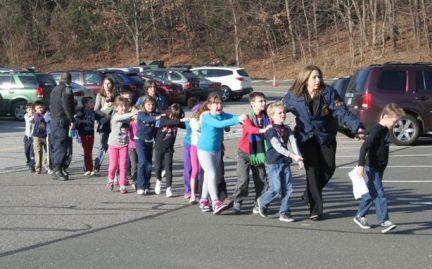
A Prayer for Newtown

school_shooting_in_connFor those who suffer, and those who cry this night, give them repose, Lord; a pause in their burdens.

Let there be minutes where they experience peace, not of man but of angels.

Love them, Lord, when others cannot.

Hold them, Lord, when we fail with human arms.

Hear their prayers and give them the ability to hear You back in whatever language they best understand.

Margaret A. Davidson

I can’t think of a worse nightmare for a parent than the death of a child. My children are all adults and I continue to pray daily that God will watch over their lives. I can’t imagine what the parents of the child victims of the Sandy Hook Elementary School shootings in Newtown, Connecticut are going through right now and, coward that I am, I don’t want to know.

This isn’t the first time I’ve talked about a child’s death and sadly, I’m sure it won’t be the last. 8-year old Leiby Kletzky was murdered over a year ago in Brooklyn, and several Jewish children were killed at their school in Toulouse, France by a heartless terrorist.

I’m reminded of the final words of John Donne’s very old, very famous poem No Man is an Island:

Therefore, do not send to know
For whom the bell tolls
It tolls for thee

In truth, no matter where a child dies in the world or how he or she is taken, the child is taken from all of us. They are all our children. When someone’s precious son or daughter is killed, they’re taken from all of us and we all grieve.

I know I grieve.

Glorified and sanctified be God’s great name throughout the world which He has created according to His will. May He establish His kingdom in your lifetime and during your days, and within the life of the entire House of Israel, speedily and soon; and say, Amen.

May His great name be blessed forever and to all eternity.

Blessed and praised, glorified and exalted, extolled and honored, adored and lauded be the name of the Holy One, blessed be He, beyond all the blessings and hymns, praises and consolations that are ever spoken in the world; and say, Amen.

May there be abundant peace from heaven, and life, for us
and for all Israel; and say, Amen.

He who creates peace in His celestial heights, may He create peace for us and for all Israel; and say, Amen.

-Mourner’s Kaddish

Blessings at Night and Morning

A song of ascents. Praiseworthy is each person who fears HASHEM, who walks in His paths. When you eat the labor of your hands, you are praiseworthy, and it is well with you. Your wife shall be like a fruitful vine in the inner chambers of your home; your children shall be like olive shoots surrounding your table. Behold! For so is blessed the man who fears HASHEM. May HASHEM bless you from Zion, and may you gaze upon the goodness of Jerusalem, all the days of your life. And may you see children born to children, peace upon Israel.

Tremble and sin not. Reflect in your hearts while on your beds, and be utterly silent. Selah.

Master of the universe. Who reigned before any form was created,
At the time when His will brought all into being —
then as “King” was His Name proclaimed.
After all has ceased to be, He, the Awesome One, will reign alone.
It is He Who was, He Who is, and He Who shall remain, in splendor.
He is One — there is no second to compare to Him, to declare as His equal.
Without beginning, without conclusion — His is the power and dominion.
He is my God, my living Redeemer, Rock of my pain in time of distress.
He is my banner, a refuge for me, the portion in my cup on the day I call.
Into His hand I shall entrust my spirit when I go to sleep — and I shall awaken!
With my spirit shall my body remain. HASHEM is with me, I shall not fear.

-Portion of the Bedtime Shema

My father said that the reciting of sh’ma before retiring at night (p. 118-124) is, in miniature form, like the Confession before death. But then one leaves the marketplace permanently, and the commerce of “Today to perform them” is finished. With the Bedside Sh’ma every night, however, one is still in the middle of the “market” and can still accomplish and achieve.

“Today’s Day”
Friday, Kislev 6, 5704
Compiled by the Lubavitcher Rebbe
Translated by Yitschak Meir Kagan
Chabad.org

It is said in Jewish wisdom that one should repent one day before his death. But how can you know when the day of your death will come? You can’t. Therefore repent every day as if it is your last day of life.

I sometimes have bouts of insomnia for a variety of reasons. As I write this though, I slept very well last night. In fact, I recall that I was engaged in a rather compelling dream when the alarm went off, jarring me into consciousness.

But the night before, just prior to retiring, I recited the portion of the Bedtime Shema I quoted above. I can’t necessarily credit the Bedtime Shema with my restful sleep, but I suppose it didn’t hurt. On the other hand, you’d think, given recent events, that I’d have a lot on my mind.

And so I do, but that apparently didn’t disturb my sleep.

I also recite the Modeh Ani when I wake up in the morning. Even if I do not offer God any other prayers during the day, considering Him, even for a few moments as I end my day and again as I start the next one acts like “bookends,” with God on either side of my waking experience and me existing in the middle.

But what about the middle? That’s where we spend our lives or at least the conscious portion of them. It’s where we “feel” we’re alive, it’s where we are aware of being alive. What do we do with that time?

Lots of things. Many of us have jobs where we do our work and earn our pay. Sometimes our thoughts turn to God, but most of the time we are too distracted with our work to consciously consider Him. While a tzaddik, a righteous person, is constantly aware of God, most of us aren’t. Most of us struggle to remind ourselves of God, except at certain times such as when we need God or during a scheduled time of prayer or worship.

Fortunately, God doesn’t need anything to remind Him of us. One of the blessings He gave the Jewish people, and I wish Christianity would adopt such a practice, are set times for prayer. Muslims also have set times to turn away from their common activities and to turn toward God. We in the church tend to just “wing it,” which isn’t necessarily bad, because we should all be free to pray at any moment, but it isn’t necessarily good because we typically ignore God until something comes along to remind us of Him.

Imagine if we handled our human relationships that way. Imagine that we ignored our spouse, our children, our parents, until some external factor came along to remind us of their existence and that we needed something from them. I guess some of us do handle our human relationships that way. More’s the pity. But then, what is the state of those relationships? If you ignore someone long enough, they will eventually ignore you, too.

Pain, loneliness, fear, anxiety, the spectre of death all remind us of God and how much we need Him. While we shouldn’t wait for those reminders, being human, we often do. The troubles in our lives act as God’s messengers, coming to us and telling us we shouldn’t wait too much longer. Why wait for pain or fear to tell you that God is waiting for you?

And may Heaven help us all if even then, we still ignore God.

And if not now, then when? (Ethics of the Fathers 1:14).

Hillel’s famous statement is a bit enigmatic. The simple answer is, “Later.” Why can’t we take care of whatever it is some other time? Granted that procrastination is not a virtue, why does Hillel imply that if not now, then it will never be?

The Rabbi of Gur explained that if I do something later, it may indeed get done, but I will have missed the current “now.” The present “now” has but a momentary existence, and whether used or not, it will never return. Later will be a different “now.”

King Solomon dedicates seven famous verses of Ecclesiastes to his principle that everything has its specific time. His point comes across clearly: I can put off doing a good deed for someone until tomorrow, but will that deed, done exactly as I would have done it today, carry the same impact?

The wisdom that I learn at this moment belongs to this moment. The good deed that I do at this moment belongs to this moment. Of course I can do them later, but they will belong to the later moments. What I can do that belongs to this moment is only that which I do now.

Today I shall…

try to value each moment. I must realize that my mission is not only to get something done, but to get things done in their proper time, and the proper time may be now.

-Rabbi Abraham J. Twerski
“Growing Each Day, Kislev 14”
Aish.com

When I go to sleep — and I shall awaken! With my spirit shall my body remain. HASHEM is with me, I shall not fear.

God allows us to awaken at the proper time, feeds us when we are hungry, gives us rest when we are tired. He is waiting for us now to do something. Tomorrow is too late.

Past and Future Holy

There is a graphic example of this at the beginning of the book of Job. In a series of blows, Job loses everything: his flocks, his herds, his children. Yet his faith remains intact. Satan then proposes subjecting Job to an even greater trial, covering his body with sores (Job 1-2). The logic of this seems absurd. How can a skin disease be a greater trial of faith than losing your children? It isn’t. But what the book is saying is that when your body is afflicted, it can be hard, even impossible, to focus on spirituality. This has nothing to do with ultimate truth and everything to do with the human mind. As Maimonides said, you cannot give your mind to meditating on truth when you are hungry or thirsty, homeless or sick (Guide for the Perplexed 3:27).

-Chief Rabbi Lord Sacks
“Eternity and Mortality”
Commentary on Torah Portion Emor (Leviticus 21-24)
Aish.com

Once I would have believed that but now I’m not so sure. I think that when you are sick, you can and in fact, you must consider, ponder, and meditate upon the Spirit and the ultimate truth, because in the process of dying, you are preparing to meet that truth.

Let me explain.

Last night, as you read this, I renewed my relationship with an old friend. I don’t have his permission to discuss the details here, so I must be deliberately vague. But he’s sick. He’s quite ill. We haven’t spoken in several years, even though he lives very close to me. When I heard that he was ill, I asked a mutual friend if he would like to visit this person with me. Our mutual friend lives in another state but was in town visiting relatives.

So for several hours on Sunday afternoon and going into Sunday night, our mutual friend, me, my friend who is ill and his wife sat in their living room and visited. We talked about many things including what we have been doing with our lives, where we’re living and working, and what else we’ve been doing, and movies we’ve seen, and trivia and science and families.

And we talked about doctors and illness and exams and families and trying to make plans when you know the future won’t be traveling as far ahead of you as you once thought it might.

Have you ever wondered about how God works? I don’t know either, but occasionally, God lets you see how He plays “connect the dots.”

My daughter “coincidentally” ran into the ill gentleman’s wife and one of his daughters in the same store in two separate events on the same day. That’s when my daughter found out that my friend was ill. Then my daughter told my wife. Then my wife and daughter told me. Then my wife said that maybe some other old friends and I should visit this friend. So I contacted a couple of old friends. Only one replied and he lives in another state. But the other state friend was coming into town to spend Thanksgiving with is family who lives locally, so I asked him to let me know when we could get together.

And so he called me on Sunday in the early afternoon and we made plans.

And we got together and drove over to our friend’s place.

And that’s when we got to talking about all kinds of things, especially the stuff no one likes to talk about but that will happen to each and every one of us.

I wonder if that’s why we don’t talk about getting sick and about dying?

Because it will happen to every one of us.

Whether we want it to or not.

Whether we’re rich or poor or black or white or any other color or where we live or anything else about us.

And whether or not we believe in God, we’re all still going to die.

And then we’ll know.

I can’t say this from personal experience (yet), but when you know you’re going to die, not in some distant, hypothetical future, but in a more or less predictable time frame, and you have a relationship with God, assuming the relationship with God survives the terminal news, you start thinking about Him a lot.

I wonder if He starts thinking about you more, too?

That’s probably a stupid question since God is infinite and so are His thoughts, but as I was sitting there talking and listening, I was thinking about God and I was wondering if He was thinking a lot more about my friend, too.

I hope so.

PrayerI know that I want and probably need a lot of attention from God. Just read my blog for a few days and you’ll figure out why. But I’m not so self-absorbed that I don’t realize there are a lot of other people who need God’s attention much more than I do. I know God’s resources are limitless, but if they weren’t and if each of us only got so much from God, then I’d ask God to take some of mine and give it to my friend. He needs more attention right now. So does his wife. So does the rest of his family.

I don’t have a lot to give that’s really valuable in a practical sense. I’m not a good handyman. I’m a lousy plumber and a worse carpenter. I barely know a car’s battery from its distributor cap, and electrical wiring is a complete mystery.

But I do have time. And I do have attention. And I can listen. I can talk, too. I can even read out loud.

And I can pray. I can visit. I can have a discussion with another person. So I have a few things to give.

I’ve been pondering about church and church attendance and community and having conversations with like-minded Christians.

Have you ever wondered about how God works? I don’t know either, but maybe He works just like He worked on Sunday afternoon, re-creating an old friendship and building a new one.

Good morning God. I gratefully thank you, living and existing King, for returning my soul to me with compassion. Abundant is your faithfulness. Thank you for making all things holy, including this past Sunday afternoon and past and future friendships.

The holy is the point at which heaven and earth meet, where, by intense focus and a complete absence of earthly concerns, we open up space and time to the sensed presence of God who is beyond space and time. It is an intimation of eternity in the midst of life, allowing us at our holiest moments to feel part of something that does not die. The holy is the space within which we redeem our existence from mere contingency and know that we are held within the “everlasting arms” (Deut. 33: 27) of God.

Hope in Hopelessness

Last week at the Western Wall, I asked an elderly man to put on tefillin. He strongly refused.

I asked him, “When was the last time you put on tefillin?”

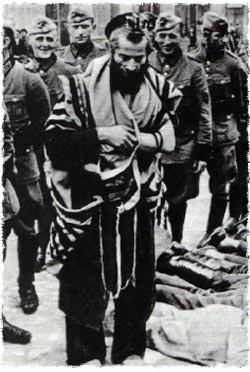
He smiled and proudly said, “72 years ago!” He held out his arm to show me the fading tattooed numbers. “1938,” he said. “It was the day of Kristallnacht. Do you know what Kristallnacht is?”

“Of course I do,” I told him.

“Two hundred and sixty-seven synagogues were burned down in one night. They burned down our synagogue, too. My tefillin were burnt up, and I have never put them on again,” he said.

“I have a friend who was in the camps, too,” I quickly said, “and he not only puts on tefillin today, but he even put them onto others inside the camp! Do you want to hear how he got tefillin into the camp?”

“Yes,” he said strongly. “How did he get them in there?”

-Gutman Locks
“Tefillin After 72 Years”
Stories of the Holocaust series
Chabad.org

I can’t even imagine what it would have been like to experience the horrors of the Holocaust. Like many Americans, I live a relatively comfortable life. I don’t really know what it’s like to go without adequate food, shelter, or clothing. I’ve been in the hospital before, but remain fairly healthy. I was once beaten by several men during a riot when I was 16 and spent some time recovering, but I was home and eventually after over a year, I began to let myself feel safe again. In short, I’ve faced a certain number of challenges over my lifetime, but none have been overly difficult.

I can’t even imagine what it would have been like to experience the horrors of the Holocaust.

I can’t even imagine what it would be like to have a wife who is struggling with cancer and who may die.

I can’t even imagine what it would be like to be the father of terminally ill child.

Frankly, I don’t want to imagine, let alone have to actually face such hideous tragedies in life. I don’t know how people do it and, I’m ashamed to say, I don’t even know how people of faith do it.

Where do you find hope in hopelessness? It’s one thing to say “I rely on my God for my strength,” and it’s another thing to actually live it out, one day at a time, one horrible, agonizing minute at a time. What can you do when someone delivers the terrible news and your courage melts like a plastic sandwich bag in the face of an inferno? What do you do when you’re a young, teenage boy and you and your mates are being herded into the gas chambers by the Nazis and you have only minutes to live?

“He began his story. The Nazis had come to the ghetto and grabbed 137 young boys. He told me that only five of them survived. Only five.

“He was thirteen and a half years old. He was wearing the high boots that his father had bought him, and when he saw them coming, he stuffed his tefillin into one boot and his prayerbook in the other.

“They pushed the boys into a cattle car and drove them to the death camp, not far from the ghetto. When the train stopped, they slid open the side of the cattle car and immediately began pushing them toward the open door of the gas chamber. The boys were frightened and cried out. They asked Laibel, ‘What should we do?’ He told them, ‘We’re going to stand in rows five across, and we’re going to march right into that gas chamber singing a song of faith, the “Ani Maamin.”’ And they did just that. They stood in rows five across, and started singing and marching right into the chamber.

“The guards became so confused that they did not know what to do. They screamed, ‘You can’t do that! No one has ever done such a thing before. Stop it! Stop it at once! Here! Go over there to the showers instead!’

“They pushed them over to the showers, and forced them to undress and throw their clothing into a pile in the middle of the floor. They made them empty their shoes, and the tefillin and prayerbook fell out onto the pile.

“After the shower, when they were dressed in camp clothes and were being pushed out, past the pile of their clothes, Laibel saw his tefillin and prayerbook lying there. He wanted so badly to run and pick them up, but terrifying guards were watching. He said to the boys, ‘I did something for you, so now you do something for me.’

“‘Whatever you want,’ they said. ‘You saved our lives.’

“He said, ‘When I give the signal, start a fight and scream out loud. Okay . . . now!’ The boys started to fight and scream. The guards ran over and tried to pull them apart, but they wouldn’t stop fighting. In the confusion, he ran over and grabbed his tefillin and prayerbook, and hid them under his arms.

Laibel not only managed to retrieve his tefillin but he wore them (clandestinely) in the camp and helped other Jews wear them, too. In the story commemorating his courage, we discover him as an old man today helping men wear tefillin at the Kotel.

And he looked me in the eye and said, ‘And I put tefillin on other men, too.’ I started to cry, and I kissed him on his yarmulke.

“The day after Laibel told me his story, there was a soldier at the Western Wall who wouldn’t put on tefillin. No matter what I said, he simply refused. Then I told him Laibel’s story, and he quickly said, ‘Okay, I’ll do it.’

“And you can do it, too,” I said to the elderly gentleman who hadn’t donned tefillin in 72 years, as I gently slid the tefillin I was holding onto his arm. He said the blessing and started to cry. We said the Shema, and he prayed for his family. He began to smile even while the tears were streaming down his face. A crowd gathered around and congratulated him on overcoming all those years of rejection.

You do not always succeed, but you always have to try.

If there has ever been a hopeless place on earth, it was in the Nazi death camps during the Holocaust. Even those who were not immediately killed expected to die a lingering and torturous death. Even those who survived and who were liberated didn’t expect to live any sort of “normal” Jewish life again. Who could after seeing what they saw and experiencing what they lived through? Even after more than seven decades, Holocaust survivors are suffering delayed post-traumatic stress disorder. The statement is so obvious, it’s almost laughable to report it in the media. Of course they’re suffering after seventy years? Who wouldn’t?

But after over seventy years, some have turned suffering and hopelessness into hope, not just for themselves but for each other. Laibel turns hopelessness into hope every time he helps another Jewish man don tefillin and pray at the Kotel. A Jewish man who hadn’t worn tefillin in seventy-two years because of the nightmare of Kristallnacht put on tefillin again because of Laibel’s inspiration, “said the blessing and started to cry.”

While most of us have never faced such horrendous, nightmarish, ghastly experiences as those of Holocaust survivors, as those who are battling desperately invasive cancer, as those who are anxiously trying to comfort a dying child, we still know the world is filled with hopelessness and despair. All of us face some sort of problem, some sort of challenge, something that makes us want to give up our fight to move forward or maybe even the fight to live.

I have no magic to give you. I have no secret formula with which you can overcome your hardships or worries or fears or tears. I can say “rely on God” but for even those men and women who do rely on Him with an almost superhuman faith and courage, the battle is hard and surrender to the darkness is a constant companion.

But amazingly there is still hope. Laibel must be well over eighty years old and for him, hope is helping just one more man put on tefillin, maybe for the first time in decades, and speak words of blessing to God. Hope is saying, “I love you” to a dying little boy. Hope is continuing to pray for your spouse, even though multiple organs are compromised by cancer and years of radiation and chemotherapy haven’t put the demon back in the bottle.

Hope is in the tears you cry. Hope is in your screams of anguish. Hope is being able to go on when life is impossible. Hope is a man learning how to pray again while crying after seventy-two years.

Hope is the faint light of a tiny candle holding the encroaching abyss at bay.

Hope is God.

 

Hope and Ashes

MourningI remember with perfect clarity the sensation of waking up on the morning of March 9, 1990. In those first few fuzzy moments of consciousness, I oriented myself to where I was — in the spare bedroom of my parents’ New Jersey apartment, and what day it was — two days after my father’s death. As soon as I realized that I had woken up into a world without my father, my heart plunged into a fathomless grief, like waking up into a nightmare that will never end.

The world without my father was not simply the same world minus one; it was a totally different world. This altered, diminished world lacked the stability and goodness that was my father. This world wobbled on its axis; its gravitational pull was heavier.

The ninth day of the Hebrew month of Av — called Tisha B’Av — is to the Jewish people what March 9 was to me. We misrepresent the tragedy of the day by describing it as the destruction of the two Holy Temples, as if the catastrophe is the loss of a building. The American people do not mourn on 9/11 because of the destruction of the Twin Towers; they mourn the thousands of lives lost in the conflagration. Contrast a person who mourns the absence of the majestic towers to the New York skyline with a person who mourns the loss of his/her parents caught on the 98th floor.

Tisha B’Av is more like a death than a destruction, because on that day the world changed irrevocably.

Sara Yoheved Rigler
“Waking Up to a World Without God’s Presence”
Aish.com.

When Jonah’s warning reached the king of Nineveh, he rose from his throne, took off his royal robes, covered himself with sackcloth and sat down in the dust. This is the proclamation he issued in Nineveh:

“By the decree of the king and his nobles:

Do not let people or animals, herds or flocks, taste anything; do not let them eat or drink. But let people and animals be covered with sackcloth. Let everyone call urgently on God. Let them give up their evil ways and their violence. Who knows? God may yet relent and with compassion turn from his fierce anger so that we will not perish.”

When God saw what they did and how they turned from their evil ways, he relented and did not bring on them the destruction he had threatened.Jonah 3:6-10

Sara Yoheved Rigler characterizes the mourning of Tisha b’Av not for the lengthy series of hardships that have been inflicted on the Jewish people and not even for the loss of the First and Second Temples, but for the loss of God in the world. She describes how her son was born into a world without her father, his grandfather, and that he “will never know how the room lit up when my father entered, how secure and supported dozens of people felt because of the bedrock that was my father”.

For the past 2,000 years, Jews have been born into a world without the Holy Temple in Jerusalem, City of David:

In the same way, we who were born into a world without the Divine Presence have never experienced the spiritual luminosity that radiated through the aperture of the Holy Temple. We live in a dimmer, coarser world, where physical reality seems like ultimate truth while spiritual reality seems like a vague phantasm. We navigate in the nightmare without even knowing we’re in it.

It is true that the world is not without God. God is manifest in our world all of the time through the acts of His people, through His answers to prayer, and through His providence in the lives of each and every human being on Earth. Yet, as Rigler points out, the Divine Presence, the unique projection of the infinite God into a finite world through the “humbling” of His essence has not existed in our mortal realm for 20 centuries.

If you’re Christian, I know what you’re thinking. What about Jesus? True. We could say that Jesus was a manifestation of the infinitely Divine in finite moral form. He was the Word made flesh and the Divine Presence in the shape of a man (I say was because he is also our High Priest in the Heavenly Court and he sits at the right hand of the infinite, unknowable, all powerful Ayn Sof; who Christians call “God the Father”).

Candle burning outYet, in the same way that Rigler mourns in a world without the Divine Presence, we Christians can and probably should mourn being born into a world without a living Jesus walking among us. True, God is only a prayer away and He is with us even when we are too weak or ashamed to pray, but something…someone is gone. The world is created but it is damaged. There are pieces missing. We live in a house with walls and part of the roof “deconstructed”. It’s like being born into a world without a loving grandfather…like Sara’s son. It’s also like this:

“And I will pour out on the house of David and the inhabitants of Jerusalem a spirit of grace and supplication. They will look on me, the one they have pierced, and they will mourn for him as one mourns for an only child, and grieve bitterly for him as one grieves for a firstborn son. On that day the weeping in Jerusalem will be as great as the weeping of Hadad Rimmon in the plain of Megiddo. The land will mourn, each clan by itself, with their wives by themselves: the clan of the house of David and their wives, the clan of the house of Nathan and their wives, the clan of the house of Levi and their wives, the clan of Shimei and their wives, and all the rest of the clans and their wives. –Zechariah 12:10-14

Some Christians view this verse as the means to accuse the Jews of “murdering Jesus” and that someday “they’ll be sorry”, but in truth, Jesus died for the sins of all of us. The collective church never really mourns the loss (except perhaps when watching the 2004 film The Passion of the Christ) but only celebrates the resurrection joy on Easter. Where is our sorrow over being the cause of his suffering and death? In claiming the resurrection and everlasting life for our own, where is the agony and sorrow over needing to be saved by his death because of our willful sins?

We were born into a world without the Divine Presence among us because of what we did wrong. Something absolutely perfect is missing from the world, and this side of paradise, we will never fully experience it. Paul said that “we see through a glass, darkly” (1 Corinthians 13:12 KJV) and thus, we were born into the world half-blind, only barely able to see the image of the perfect God in the reflection of the Master. Sin distances us from God and the One who man once walked with in the Garden, though still with us, seems so very distant.

I recently read a story on the Arutz Sheva news website about a group of Christian churches that will, on August 13 and 14, read portions of the Torah in solidarity with the Jews and with Israel. We can fast and mourn with the Jews on Tisha b’Av for this reason as well.

From sundown last night until sundown tonight, Jews all over the world mourn destruction but hope for redemption. As Christians, we know our redemption is in Jesus Christ, and yet he has not returned. There are many who still don’t know him. We who are saved often take that status for granted and continue to sin. We have much to grieve over.

Today, we can fast, dining on ashes, and still hope for the coming of God’s glory back into the world. Sara Yoheved Rigler says something very important in her article:

In one essential way Tisha B’Av differs from death: the catastrophe is reversible. As Rabbi Avraham Isaac Kook declared: “The Temple was destroyed because of causeless hatred [among Jews]; it can be rebuilt only by causeless love.”

It can sometimes be difficult to rise Phoenix-like to embrace a life of “causeless love” from the ashes of grief, sorrow, failure, and “wanton hate” (as expounded upon so well at the Lev Echad blog). Rabbi Tzvi Freeman says the following based on the wisdom of the Rebbe, Rabbi M. M. Schneerson:

Your soul is in captivity when you know what is right and you allow the world to stop you.

Captivity begins by believing that you are small and the world is big. Once you believe that, next you are likely to believe it will step on you, and your fear it.

And then you come to obey it, then to run after it. And then you are it’s slave, thirsting for water for the soul but not even able to remember where to look for it.

To fear the world is to deny the Oneness of the Creator.

Don’t take the world and its darkness so seriously – it is not as real as it feigns to be. The only thing real about it is its purpose of being – that you should purify it.

I struggle to see the hope beyond the loss and yet, today especially, I sit in the darkness and mourn in ashes.

The road

The road is long and often, we travel in the dark.

Awaiting Dawn

Waiting for DawnPeople ask, “But how could you see so much good in the future when so much evil predominates now —-and it grows day by day?”

But such is the order of things: Darkness was only placed in the world to challenge light. As the light intensifies, the darkness thickens to defy it.

-Rabbi Tzvi Freeman
“Defiant Darkness”
Chabad.org

Kletzky’s parents marked the end of their seven-day grieving period Wednesday morning with a religious tradition of walking outside their Brooklyn home. Nachman and Esty Kletzky, surrounded by relatives, walked around their block at 15th Ave. in Borough Park at about 6 a.m. “It’s a sign that your escorting the soul to its resting place,” said Jack Meyer, of Misaskim, an organization that provides services to grieving families.

Story from NYDailyNews.com

“In the midst of cruelty and horror, human beings can respond in such a warm and caring way it restores our faith in the world and mankind. That is the atmosphere I feel here right now,” said Rabbi Alvin Kass, describing public support for the Kletzy family.

Story from CBS New York News

This is the third “morning mediation” that has been prompted by the death of 8-year old Leiby Kletzky. Perhaps I’ve got this matter too much on my mind, but when something so horrible happens in the world, we should not disregard it after it has been discussed for only a week or so. Certainly Leiby’s parents will not be free of their mourning in so short a time, if at all. Yet the questions I pose here must also be at the forefront of their thoughts and feelings, only with far greater intensity and sharpness. I continue to search for answers within their own context and from the Rebbe, who knew their Brooklyn community and every soul in it so well.

They say the most profound darkness comes just before the dawn. The harshest oppression of our forefathers in Egypt came just before their liberation.

That was a coarse darkness of slavery of the body. Today it is a darkness of the soul, a deep slumber of the spirit of Man. There are sparks of light, glimmerings of a sun that never shone before —-but the darkness of night overwhelms all.

Prepare for dawn.

I woke up much earlier than I expected to this morning. It was still dark outside with no hint of dawn on the horizon. When you are the only one awake in your household, it can feel especially empty, no matter how many people are asleep in their beds. The first subtle bands of light in the east may be only minutes away, but they might as well be on the other side of midnight. Yet we wait for the light, not just out of expectation, but with enduring faith.

“Arise, shine, for your light has come,
and the glory of the LORD rises upon you.
See, darkness covers the earth
and thick darkness is over the peoples,
but the LORD rises upon you
and his glory appears over you.
Nations will come to your light,
and kings to the brightness of your dawn. –Isaiah 60:1-3

Tree of LifeThe Jewish people today exist in an unbroken line between the present and the ancient days when the words of the Prophet Isaiah were first spoken, so it is no surprise that in their darkest hours, they would turn to the light. Through Jesus Christ, the rest of the world can become attached; grafted in to these words and promises and become sharers of the light and indeed, disciples of the light of the world, who we all long to see come.

After 33 centuries, all that’s needed has been done. The table is set, the feast of Moshiach is being served with the Ancient Wine, the Leviathan and the Wild Ox —-and we are sitting at it. All that’s left is to open our eyes and see.

[Adapter’s Note: These words I write, but I do not understand. But then, if I understood them, I suppose I would not need to be told to open my eyes.] -Rabbi Tzvi Freeman

I say to you that many will come from the east and the west, and will take their places at the feast with Abraham, Isaac and Jacob in the kingdom of heaven. –Matthew 8:11

Rabbi Freeman quotes from a letter written by the Rebbe:

Before I had even started school, a picture of liberation was already forming in my mind.
Such a liberation, and in such a way, that it would truly make sense of all the suffering, all the oppression and persecution we have undergone.

It is not that there will be no more darkness, no more suffering, that those things shall cease to exist.
It will be such an essence-light that darkness itself will become light
—even the darkness and suffering of the past.

While the Rebbe wouldn’t have considered the following, we who are the disciples of the Master cannot help but recall these words of prophecy and hope as we continue to wait for him to come:

And I heard a loud voice from the throne saying, “Look! God’s dwelling place is now among the people, and he will dwell with them. They will be his people, and God himself will be with them and be their God. ‘He will wipe every tear from their eyes. There will be no more death’ or mourning or crying or pain, for the old order of things has passed away. –Revelation 21:3-4

In the midst of pain, all we can do is cry and call out, “Abba! Father!”, endure the suffering, and look forward to the days when there indeed will be no more tears, pain, and death. When sorrow will be abolished from the earth and the King will reign in justice, mercy, and bringing joy and peace to the subjects of the Kingdom. May the Moshiach come soon and in our days. Amen.

“They (Mr. and Mrs. Kletzky) have had thousands of people who came to show them moral support,” he said. “Now the trying time starts. They’re all alone. … Now they’ve got to cope with it on their own.” -Jack Meyer of Misaskim

Everyone will sit under their own vine
and under their own fig tree,
and no one will make them afraid,
for the LORD Almighty has spoken.
All the nations may walk
in the name of their gods,
but we will walk in the name of the LORD
our God for ever and ever. –Micah 4:4-5