Tag Archives: forgiveness

God’s Shadow

love-in-lightsGod is your shadow at your right hand.

Psalms 121:5

The Baal Shem Tov taught that God acts toward individuals accordingly as they act toward other people. Thus, if people are willing to forgive those who have offended them, God will similarly overlook their misdeeds. If a person is very judgmental and reacts with anger to any offense, God will be equally strict. The meaning of, God is your shadow, is that a person’s shadow mimics his or her every action.

At a therapy session for family members of recovering alcoholics, one woman told the group that she had experienced frustration from many years of infertility and tremendous joy when she finally conceived. Her many expectations were shattered, however, when the child was born with Down’s syndrome.

“I came to love that child dearly,” she said, “but the greatest thing that child has done for me is to make me realize that if I can love him so in spite of his imperfections, then God can love me in spite of my many imperfections.”

If we wish to know how God will relate to us, the answer is simple: exactly in the same way we relate to others. If we demand perfection from others, He will demand it of us. If we can love others even though they do not measure up to our standards and expectations, then He will love us in spite of our shortcomings.

Today I shall…

…try to relate to people in the same manner I would wish God to relate to me.

-Rabbi Abraham J. Twerski
“Growing Each Day, Kislev 3”
Aish.com

I just reviewed the First Fruits of Zion television program episode The Golden Rule, which illustrates that principle of “do unto others” from a first century Jewish perspective.

I’ve also been reviewing a series of blog posts written by Pastor Tim Challies recording his impressions of John MacArthur’s Strange Fire conference, which is MacArthur’s commentary and warning about Pentecostalism and the Charismatic movement.

In reading the concluding summary (yes, I read ahead), it wasn’t the information or the scriptures presented by MacArthur and company that bothered me. I didn’t feel the real argument was about whether Pentecostalism was better or Reformed theology was better. For me, the issue was whether or not God would have handled the situation the same way MacArthur did.

Who knows, maybe He would have (and you may also believe that MacArthur is God’s tool to do just that).

Then I read messages like the one I quoted from Rabbi Twerski. I guess I’m just a soft and “mushy” inspirational Christian as opposed to one who sees God as perpetually wielding a club and who is ready to bludgeon us the minute we get out of line.

God knows we’re imperfect. God knows we’re messed up. God knows that, all things being equal, we’d mess up a free lunch…which is what most of us have done with the blessings and gifts He’s provided us.

“I came to love that child dearly,” she said, “but the greatest thing that child has done for me is to make me realize that if I can love him so in spite of his imperfections, then God can love me in spite of my many imperfections.”

I know the hardcore “justice” fans on the blogosphere will say that’s no excuse for not standing up to error and proceeding forward with the sword of truth to smite everyone who has drifted from the “true” path…uh, but doing it in “love,” of course.

If all you are as a person of faith is someone who has to fix the mistakes or others, the errors in theology and doctrine (or at least those things you perceive as errors), then you’re basically a mechanic who is always using a wrench and a hammer to hunt down that funny noise the car’s engine makes periodically.

Or, like the woman Rabbi Twerski talks about, we can be like a mother of a child who will always be imperfect, but not beyond improving. We don’t beat such a child, we shouldn’t beat any child, just because they’re imperfect. We influence and promote change by loving, not condemning.

Before we relate to any other human being regardless of the experience, if we could imagine how we would want God to relate to us under similar circumstances, maybe we’d be better people of faith. If we want God’s love and forgiveness, we have to be loving and forgiving. If we are harsh and judgmental, even if we’re being technically and scripturally correct, how will God judge us? How will God treat us?

Forgive us as we forgive others.

Matthew 6:12 (God’s Word Translation)

By the standard we use to treat others…that is the standard God will use on us.

Toldot: Eating Words

eat_words1“And Yitzhak was forty years old when he took Rivkah, the daughter of Besuail the Aromite, from Padan Arom, the sister of Lavan the Aromite, for himself for a wife”

Genesis 25:20

The Torah has already stated (in last week’s Torah portion) that Rivkah was the daughter of Besuail, the sister of Lavan, and was from Padan Arom. What do we learn from this seemingly superfluous information?

Rashi asks this question and answers that the Torah is emphasizing the praises of Rivkah. She was the daughter of an evil person, the sister of an evil person and lived in a community of evil people. Nevertheless, she did not learn from their behavior!

Many people try to excuse their faults by blaming others as the cause of their behavior. “It’s not my fault I have this bad trait, I learned it from my father and mother.” “I’m not to blame for this bad habit since all my brothers and sisters do it also.” “Everyone in my neighborhood does this or does not do that, so how could I be any different?” They use this as a rationalization for failing to make an effort to improve.

Dvar Torah on Torah Portion Toldot
based on Growth Through Torah by Rabbi Zelig Pliskin
quoted at Aish.com by Rabbi Kalman Packouz

I’ve had the displeasure of reading two very vitriolic and venomous blog posts written by a single individual (with comments, some of which were equally virulent) this week (no, not in my “morning meditations,” fortunately). I have to remind myself that online attack dogs are often really victims in a real or perceived sense (even if you misinterpret what is going on around you as “victimizing,” the emotional distress is still the same).

In this week’s Torah portion, we see some rather disturbing behavior by Isaac, his wife Rebecca, their son Jacob, and particularly Esau. Esau thinks so little of his birthright that he sells it to the rather clever Jacob for the price of a meal (it’s unlikely Esau was literally starving on that occasion). Both Isaac and Rebecca play favorites among their children, though Rebecca has some “inside information” about Jacob from God to guide her reasoning. And his two apparent acts of deception force Jacob to abruptly leave home and seek out the relative safety of the ancestral home of Paddan-aram and the house of Beuthuel.

Isaac is the son of Abraham, who walked with God, and yet he and his family, who should have known better, would be called “dysfunctional” in our day and age. But what does the Dvar Torah say of Rebecca (Rivkah)? She was raised in an environment of evil and you would expect that she’d emulate her family, including her father Laban.

We see from Rivkah that regardless of the faulty behavior of those in your surrounding, you have the ability to be more elevated. Of course, it takes courage and a lot of effort to be different. The righteous person might be considered a nonconformist and even rebellious by those in his environment whose standard of values are below his level. However, a basic Torah principle is that we are responsible for our own actions. Pointing to others in your environment who are worse than you is not a valid justification for not behaving properly.

Here we see that pointing the finger at others, even if the others are “worse” than you (or you only believe them to be worse) is no excuse for what you do or fail to do. Yes, it takes courage to walk the moral high road, to show compassion rather than negativity, to offer friendship rather than rejection, but how often is this kind of courage displayed by those people in the Bible who were closest to God?

messiah-prayerAlthough Sodom was unspeakably evil, Abraham pleaded with God to spare the city if it contained just ten righteous people (Genesis 18:16-33). After the sin of the Golden Calf, God was intent on destroying the Children of Israel and ready to start over by making a great nation of Moses, but Moses begged God to relent (Exodus 32:11-14). Even the Master, suffering on the cross, spoke no curses against those who were killing him but instead said, “Father, forgive them; for they do not know what they are doing,” (Luke 23:34).

If you ever find yourself saying, “It’s not my fault I did this. It’s because of the way I was raised or because I learned it from so and so,” change your focus to, “I’ll make a special effort to improve in this area to overcome the tendency to follow in the footsteps of others.”

Blaming others for your faults and saying that you cannot do anything to change them will be a guarantee that they will remain with you. Make a list of the negative traits you picked up from your early environment. Develop a plan of action to improve in those areas!

Even if someone wrongs you, even if someone disappoints you, even if someone you trusted seems to have betrayed you, how you react to them tells the world more about you than any flaw another person may have or display (whether that flaw is real of just imagined by you).

There’s no excuse for playing the victim card in order to express hostility, maliciousness, malevolence, spitefulness, viciousness, vindictiveness, or any other harsh or savage behavior or speech (and “speech” includes what you post in the blogosphere, in discussion forums, and on websites).

As a disciple of the Master, you have a responsibility to represent him in this world. So do I. So do all of us. We can either exalt or denigrate his name by our behavior. Provocation is no excuse. Any sense of victimization by others (real or imagined) is no excuse. Rachel didn’t use that excuse. Abraham prayed for Sodom. Moses pleaded for the Children of Israel. Our Master asked that the Father forgive his executioners.

Look at yourself in the mirror and ask, “What am I supposed to say and do?”

Be careful of the words you say. Keep them soft and sweet, because you never know, from day to day, which ones you’ll have to eat.

-K. McCarthy

Good Shabbos.

Noah: Reminder of the Rainbow

rainbow-israelThe story of one righteous man in an evil generation. The Almighty commands Noah to build the ark on a hill far from the water. He built it over a period of 120 years. People deride Noah and ask him, “Why are you building a boat on a hill?” Noah explains that there will be a flood if people do not correct their ways (according to the comedian Bill Cosby, Noah would ask “How long can you tread water?”). We see from this the patience of the Almighty for people to correct their ways and the genius of arousing people’s curiosity so that they will ask a question and, hopefully, hear the answer.

The generation does not do Teshuva, returning from their evil ways, and God brings a flood for 40 days. ah leave the ark 365 days later when the earth has once again become habitable. The Almighty makes a covenant and makes the rainbow the sign of the covenant that He will never destroy all of life again by water (hence, James Baldwin’s book, The Fire Next Time). When one sees a rainbow it is an omen to do Teshuva — to recognize the mistakes you are making in life, regret them, correct them/make restitution, and ask for forgiveness from anyone you have wronged as well as from the Almighty.

-Rabbi Kalman Packouz
Torah Portion of the Week
Noah, Genesis 6:9-11:32
Aish.com

The rainbow is a sign to do teshuvah. I’d never heard of that before or, if I had, it leaked out of my memory somewhere along the way.

The Jewish world has just completed the period of the High Holidays including Yom Kippur, the Day of Atonement, the most Holy and solemn day on the Jewish religious calendar, a day when every observant Jew seeks to repent and to beg God’s forgiveness and the forgiveness of others. The rest of the world, including most Christians, don’t have much regard for Jewish holidays, but for Christians, you’d think we might take a cue from the rainbow.

Of course, since we have the blood of Jesus covering our sins and we’ve been washed white as snow, most Christians don’t give a great deal of thought to ongoing repentance, forgiveness, and atonement. More’s the pity.

But this is about me, not you. No, I’m not writing this as an exercise in narcissism, but rather as my effort to continue to turn toward God and to seek His face.

The heart of those that seek God shall rejoice. Seek God and His might, constantly seek His countenance

Psalms 105:3-4

As I write this, I didn’t sleep well last night. I thought about seeking God, about recounting His wonders, about remembering His marvels and judgments, but my mind was too clouded and distracted. Reading the Bible while fighting fatigue was unproductive. All I could do was to try to cling to God and pray that He would grant me at least a little bit of rest.

I’ve resolved to meditate on and even to memorize His Word (some of it, anyway) as a way to keep Him and His teachings close to my heart. Last night wasn’t a good time to do that and it reminded me of just how far a journey I must yet travel.

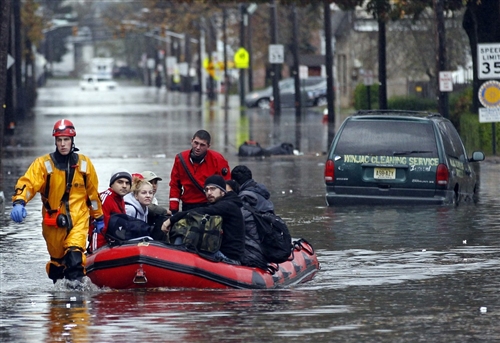
sandy-little-ferry-flooding-hmed-4a_photoblog500If I had known last night what I know this morning, I might have meditated on a rainbow.

Rabbi Yirmiyahu Ullman says that the rainbow is both a curse and a blessing. It’s a curse because it is a reminder that the world deserves to be destroyed for its sins, but that God has promised by covenant not to do so by flooding. Such a grim reminder of destruction that, in slightly smaller ways, we still suffer from today. But then, what else can we say about the rainbow? Rabbi Ullman states this:

The generation of the flood indulged in this worldliness to the point of perversion. Their wanton obsession with variety and variation resulted in their abusing the full gamut of their G-d given powers for the purpose of impurity. The flood purged the world of this impurity and the rainbow was given as a sign and reminder of what results from inundating the world with indulgence. However, the same rainbow simultaneously reminds us to repent from the relentless pursuit of multiplicity drawing us away from G-d. It urges us to direct the full spectrum of our powers and interests over the rainbow to the One on High.

In this way the rainbow is at once both curse and blessing; transgression and repentance; seductively appealing and pristinely beautiful. It depends on what you’re looking for in life. And perhaps that’s why, although it’s forbidden to indulge in the rainbow’s beauty, one may gaze at it – for the purpose of doing teshuva and directing one’s pluralities to G-d — in order to make the blessing.

I think the rainbow is visually appealing so that it will draw our gaze and having done that, remind us that we must continually seek to repent, to do teshuvah, to be reminded that we have a purpose in this world that goes beyond pursuing our individual desires.

I’ll never look at a rainbow the same way again.

One of the fundamental differences in Jewish Law and Noahide Law is that, Jews do not actively pursue Jewish converts, among non-Jewish nations.

The B’nai Noah are already under the Seven Laws, and have been permanently warned concerning their observance, so it is not a matter of trying to “convert” someone, from one religion to another; for the Noahide Code is not a “religion;” and all organized “religions,” are prohibited for the Noahide.

For the Noahide, it is a matter of Teshuva (return to G-d), not proselytization. Similarly a Jew who grew up atheist or agnostic, or who had strayed from the Torah and converted to an idolatrous religion; when he realizes his mistake and returns to Judaism, he does not “convert” back to Judaism; it is a matter of Teshuva, or returning.

It is the same for a Noahide. Others proselytize, Noahides return.

-Shlomo
“The Noahide Teshuva”
Gateway to Heaven

I include this quote because it suggests a very interesting idea. Jewish people are born into a covenant relationship with God whether they want to be or not. When a Jew leads a wholly secular life and later wants to return to God, as “Shlomo” says, that person doesn’t have to “convert” to Judaism, since they’re already Jewish and in relation to God. However, they do have to return to God, to do teshuvah, to repair the damage done in that relationship (I’ll argue that a Messianic Jewish person has not converted to Christianity but rather, made an even more complete return to God by becoming a disciple of Moshiach).

Blessed by GodMost Jewish people don’t recognize the Christian connection to God or that we are the beneficiaries of the blessings of the covenant God made with Abraham. However, they are quite willing to say, as “Shlomo” did above, that all non-Jews already have a covenant relationship with God through Noah. So, from that perspective, a Gentile does not have to “convert” to Judaism or anything else. The Gentile, like the Jew, is born already having a covenant relationship with God and on that basis, must return to God.

And in you all the families of the earth will be blessed.

Genesis 12:3 (NASB)

Now the promises were spoken to Abraham and to his seed. He does not say, “And to seeds,” as referring to many, but rather to one, “And to your seed,” that is, Christ.

Galatians 3:16 (NASB)

Christianity is something else. No one is born a Christian. Even if you are born to parents who are believers, you are not automatically a believer. Each person negotiates their own relationship with God. On the other hand, the covenant God made with Abraham is very old and spans across human history just waiting for any and all of us to grasp it and experience the blessings of the seed, of Messiah. In that sense, are we converting to Christianity or returning to something God intended for us all along?

The Lord is not slow about His promise, as some count slowness, but is patient toward you, not wishing for any to perish but for all to come to repentance.

2 Peter 3:9 (NASB)

Not that all of us will, of course. But we each have a responsibility to turn…to return to Him. It is not a casual act and it’s not something you do once and then it’s done forever. I neglect my relationship with God at my own peril. God created each of us in His own image, and endowed us with free will and a desire to seek Him. Many of us twist or distort those gifts and either go our own merry way in chasing our pleasures, or in seeking “something” we can’t define, become lost in the maze of religions and philosophies, imagining we are wise by worshiping what isn’t alive or even real.

Another Shabbos approaches. Another opportunity to welcome the Lord of the Sabbath (Matthew 12:1-8) beckons. Will the glow of the candles symbolize the warmth of God in my home and my heart? Will I fill in the “missing rainbow colors” in that glow and see the reminder to repent and return?

“A different world cannot be built by indifferent people.”

-Peter Marshall

Good Shabbos.

How Forgiving is Our Teacher?

teaching-childrenMy late teacher Rabbi Louis Finklestein used to say, “When I pray, I speak to God; when I study, God speaks to me.” In the words of our liturgy:

Blessed are You, Lord our God, Sovereign of the universe…who commanded us to study the words of Torah. May the words of Torah…be sweet in our mouths and in the mouths of all Your people so that we, our children, and all the children of the House of Israel may come to love You and to study Your Torah…Blessed are You, Lord, who teaches Torah to the House of Israel.

Note the tense of the verb: God “teaches,” not “has taught,” Torah to Israel. God, then, is a teacher not only at Sinai, in antiquity, but today as well, and not only today but also in the world to come. The souls of the righteous who have perished are described as having gone to “the yeshiva on high,” where God will be their teacher and will elucidate all the puzzles of the Torah that were never clarified while they lived on earth.

-Rabbi Neil Gilman
“Chapter 4: God is Nice (Sometimes),” pp 62-3
The Jewish Approach to God: A Brief Introduction for Christians

I’ve mentioned before that I think of God as a teacher, at least sometimes, a bringer of enlightenment and truth. There are also some in religious Judaism who believe that when Messiah comes (or comes back), he will teach Torah perfectly. I suppose this means he’ll teach the Gentiles as well as the Jews how Torah is to be correctly applied to our lives and all of the messy confusion we experience now will finally go away…as long as we choose to accept his teaching and incorporate them into our daily practice.

It seems amazing that we might not, but as I read the Bible, even after the second advent, there will be plenty of people who won’t recognize him as King, even as he sits on the Throne of David in Holy Jerusalem.

But then again, even when we acknowledge God, sometimes we can still be opposed to Him; we can still be angry with Him. But that may not be as strange as it seems:

Yet even then, their anger at God’s behavior was always expressed from within their long-standing relationship with God. They never allowed their sense of being mistreated by God to drive them out of the religious community and its belief structure.

-Rabbi Neil Gillman
“Chapter 5: God is Not Nice (Sometimes),” pg 65

I know the idea of being angry at God usually elicits a certain amount of “pushback” from some readers, but I maintain that it’s a common human response to God…we just don’t talk about it. But what is God’s response to us when we are angry at Him?

Job’s “comforters” arrive and evoke the classical Torah interpretation of suffering: Job must have sinned. But Job retorts that he has not sinned, or that he has not sinned nearly enough to justify this punishment. At the end of the book, God addresses Job in the speeches “out of the whirlwind.” These are a paean to God’s power and to the complexity of God’s creation. Their message is “Job, don’t try to understand Me. Don’t try to fit Me into your neat moral categories. I am God; you are a human being.” Surprisingly, Job acknowledges the difference:

I know You can do everything,
That nothing You propose is impossible for You…
I had heard You with my ears,
But now I see You with my eyes;
Therefore, I recant and relent,
Being but dust and ashes.

-Job 42:2, 5-6

This implies that Job has now achieved a clearer understanding of God’s ways and a measure of closure.

-Gillman, pg 69
forgiveness_jayThis seems not unlike the article Jay Litvin wrote about his own need to attain closure or at least regain closeness with God, in Mr. Litvin’s case, by “forgiving” God for Litvin’s terminal illness. But Job’s and Litvin’s approaches are quite different. Whereas Job acknowledges God’s statement that he cannot understand the ways of God and thus should abandon any attempt to put God in a theological or doctrinal box, Litvin sets all this aside and treats God, not as understandable, but nevertheless, forgivable.

I suppose you could argue that having the temerity to “forgive” God might require that we would then need to be forgiven by God, that too is the act of a loving Father rather than a harsh and punitive Judge:

He will not always strive with us,
Nor will He keep His anger forever.
He has not dealt with us according to our sins,
Nor rewarded us according to our iniquities.
For as high as the heavens are above the earth,
So great is His lovingkindness toward those who fear Him.
As far as the east is from the west,
So far has He removed our transgressions from us.
Just as a father has compassion on his children,
So the Lord has compassion on those who fear Him.
For He Himself knows our frame;
He is mindful that we are but dust.

Psalm 103:9-14 (NASB)

Then comes the theological underpinnings for the power of repentance: “For He knows how we are formed; He is mindful that we are dust” (Psalm 103:14). God grants us the power of repentance because God knows how we were created: from the dust (Genesis 2:7).

-Gillman, “Chapter 6: God Can Change,” pg 91

In Rabbi Gilman describing the Jewish relationship to God for Christians, he says that God gives human beings the ability to repent because God knows how weak and frail we are (dust and ashes). Out of that knowledge, God desires to forgive us, which, of course, requires that we first repent.

Jonah chapter 3 tells the simple but powerful tale of Jonah prophesying to the great city of Nineveh that unless they repent of their sins, they will be destroyed by God. Amazingly, this Gentile and corrupt city, from the King to the lowest commoner, repent, and because of this, God relents and forgives.

There’s a certain irony, at least to me, in Rabbi Gillman final commentary in this chapter:

The poem then concluded with a theological justification for God’s compassion:

You are slow to anger and ready to forgive. You do not desire the death of the wicked but that we return from our evil ways and live. Even until our dying day, You wait for us, perhaps we will repent, and You will immediately receive us. Our origin is dust and we return to the dust. We earn our bread at the peril of our life. We are like a fragile potsherd, as the grass that withers, as the flower that fades, as a fleeting shadow, as a passing cloud, as the wind that blows, as the fleeting dust, and as a dream that vanishes. But You are ever our living God and sovereign.

The echo of Psalm 103:14…is unmistakable here. God must forgive because God above all knows what it means to be a human being and to live a human life (not because of Jesus, according to Jewish thought, but because God is the creator of all).

-ibid, pg 96

Jonah's KikayonAs a Reform Jewish Rabbi, Rabbi Gillman isn’t about to acknowledge the Christian view of Jesus, but comparisons between his closure to Chapter 6 and the following are unavoidable:

The Lord is not slow about His promise, as some count slowness, but is patient toward you, not wishing for any to perish but for all to come to repentance.

2 Peter 3:9 (NASB)

Therefore, since we have a great high priest who has ascended into heaven, Jesus the Son of God, let us hold firmly to the faith we profess. For we do not have a high priest who is unable to empathize with our weaknesses, but we have one who has been tempted in every way, just as we are—yet he did not sin. Let us then approach God’s throne of grace with confidence, so that we may receive mercy and find grace to help us in our time of need.

Hebrews 4:14-16 (NASB)

It’s not that God couldn’t feel compassion and empathy for human beings without experiencing a human life. What creator is unable to understand his creation? And yet, Jesus as both divine and human is uniquely positioned to understand human frailty and to act as intercessor between a fallen mankind and an ultimately Holy, Ein Sof God. Peter also echos Psalm 103 and “foreshadows” the Yom Kippur service in his words.

I sometimes wonder why we have a Christianity that is completely separate from Judaism. If modern religious Judaism is correct and the Gentiles are to come to God through Israel but without the Jesus of the Bible, then why isn’t modern Israel, the Jewish people, a light to the world, opening that door for the rest of humanity? I know the only “Jewish” requirement for Gentiles is our obedience to the Seven Noahide Laws, but without Jewish mentors and a Jewish understanding of this framework, non-Jewish humanity is without comprehension, let alone community (as far as I know, there are no exclusively Gentile Noahide “synagogues” or “churches”). Does modern Judaism truly believe that God left each generation of Gentiles without a means of redemption? It would seem so, since Judaism, for the most part, does not encourage “Noahidism” among the Gentiles.

Christianity was born of Judaism but we have been separated. Jewish people say the separation occurred when Paul developed an anti-Law religion for the Gentiles, effectively making Paul a Jewish traitor and perverter of Jewish teachings into a new Gentile religion. Christians say that Paul understood that the Law had been replaced by the grace of Christ and Torah entered into a period of obsolescence, making Paul the Jewish vanguard out of Judaism and into Christianity. Even my Pastor, who believes there will be a Third Temple and that there will be sacrifices again, tells me that the Torah was always intended to be temporary, and Paul was the instrument of closure for that part of Jewish existence.

I don’t accept either viewpoint. I can’t. One of the comments made on a recent blog post said in part:

In the case of the biblical literature, re-interpretation is a necessary part of such developments because many adherents to a given system are not native to the languages of the source literatures.

It may have become necessary for the form and structure of religious thought and practice to also have been reinterpreted because of the innate differences between Jewish and Gentile disciples of Messiah. Not only are the covenant structures different (or at least overlapping), but based on the much longer and unique Jewish history with God at the point of the apostolic period, how discipleship was transmitted by the Jewish apostles and received by the various Gentile populations in the then-civilized world, may have well required a sort of cultural “morphing,” even when Gentile Christianity and Jewish “Messianism” were still on speaking terms in the late Second Temple and early post-Temple time frame.

infinite_pathsGod is God of all and God desires to forgive all so that none should perish, but it seems apparent, given the wide variety of Jewish and Gentile approaches to God we’ve seen over the past two-thousand years, that God’s people have yet to come to any sort of consensus as to how that approach should look. Maybe this too is part of God’s gracious forgiveness, not locking human beings into a too tightly structured “approach pattern.”

I know that Jesus said that we only enter through the narrow gate (Matthew 7:13-14), but some Christians believe that gate is as narrow as a single denomination. Some Christians believe you are only “saved” is you are baptized in running water vs. a wading pool. As for observant Jews, how many believe other Jews who do not observe Shabbos will not merit a place in the world to come? How many Jews believe that only their branch of Judaism or only their Rebbe has the true teachings of Torah?

But if God is our teacher and perhaps ultimately, our only teacher, where can we go to learn from Him without having to endure endless layers of human filters? Ourselves and delving into the Bible by the power of the Holy Spirit you say? Many claim to possess the true Spirit and thus out of that (or their own imagination), possess the true teachings of Christ, but I still maintain that there is a lot more chaff than wheat in human understanding of God. I can only hope and pray that God is a lot more merciful and forgiving than some people of faith say He is, so that our honest but fumbling attempts to know Him aren’t in vain.

Yom Kippur: The Brokenhearted Offering

broken-heartedI hated Yom Kippur because it made me feel like a fraud. I would bang away at my chest all day, enumerating all my sins, promising I was repentant. But in my heart I knew that I would return to my mean self the moment the fast was over. I didn’t believe I could ever change, that I was really worthy of life and that I would ever be able to redeem myself. So I would go through the day anxious for it to be over, hating myself for being such a big, fat fraud.

-Eliana Cline
“Why I Hated Yom Kippur”
Aish.com

I’m writing this on Sunday, almost a full week before you’ll read it. Today, my Pastor’s sermon in church was on Yom Kippur. The timing was deliberate. Last week’s sermon, which I missed because I decided to skip church for the holiday weekend, was on Rosh Hashanah. It’s always interesting to hear a sermon in a Christian church about something that is so profoundly Jewish.

Aaron shall place lots upon the two he-goats: one lot “for Hashem” and one lot “for Azazel.” Aaron shall bring near the he-goat designated by lot for Hashem, and make it a sin offering. And the he-goat designated by lot for Azazel shall be stood alive before Hashem, to provide atonement through it, to send it to Azazel to the Wilderness.

Leviticus 16:8-10 (Stone Edition Chumash)

One of the things I’ve come to learn about Jewish holidays and festivals being preached in the church is that these Jewish events can never be allowed to just stand on their own. They always have to “point to Christ.” Otherwise, I guess, they just aren’t really worthy, God-given events all by themselves (that was a little sarcasm).

Anyway, it is Pastor’s opinion that each of these two goats represent the first and second coming of Christ. I have no idea where this idea comes from, but knowing Pastor, it comes from some Christian source or authority. Although I sometimes disagree with him, Pastor does his research and he hardly ever “shoots from the hip” in a sermon.

The analogy, which is how I think of it, falls apart when you realize the Azazel goat (Pastor called it by the more common name “scapegoat”) must bear the sins of Israel and be sent out into the Wilderness, presumably to die. One commentary in my Chumash on verse ten says:

Or HaChaim notes that the goat is referred to here and in verse 21, before the confession, as alive. After Aaron pronounces confession upon it, however, it is no longer called alive, even though it would be some time before it would go to its death. The confession had the effect of placing all of the people’s sins on the goat, which would then carry them off to the desolate Azazel. The presence of such contamination on the goat rendered it spiritually “dead;” thus it was called alive only before Aaron’s confession.

Even if you don’t quite buy what Or HaChaim says, the Azazel goat seems a poor symbol for the King of the Jews returning to redeem Israel in glory and power, leading an army of angelic beings.

But Pastor said a lot of really good things about Yom Kippur and how we Christians can learn from the Day of Atonement. Yes, he said our final atonement is Jesus Christ, who died on the cross for our sins and who was resurrected to give us the promise of eternal life through faith in him.

struggling_prayBut he also deconstructed the mechanism of teshuvah (though he didn’t call it that) as the observant Jewish world sees it, and said point-blank that simply answering an altar call or raising your hand at Christian camp professing belief in Jesus doesn’t automatically grant you the aforementioned eternal life. Seeking atonement of your sins requires much, much more, and we aren’t fully disciples of the Master and Children of God until we do. After that, we still need to have a life of continual repentance, since we sin every day.

Rabbi J. Immanuel Schochet wrote a rather lengthy article called The Dynamics of Teshuvah, which I won’t quote from here. I think it could be called “Everything You Always Wanted To Know About Teshuvah But Were Afraid To Ask.” If you want to know more, Rabbi Schochet’s article is a good source.

But the heart of teshuvah and atonement is contained in the more modest missive written by Rabbi Shlomo Yosef Zelvin called The Master Key:

One year, Rabbi Israel Baal Shem Tov said to Rabbi Ze’ev Kitzes, one of his senior disciples: “You will blow the shofar for us this Rosh Hashanah. I want you to study all the kavanot (Kabbalistic meditations) that pertain to the shofar, so that you should meditate upon them when you do the blowing.”

Rabbi Ze’ev applied himself to the task with joy and trepidation: joy over the great privilege that had been accorded him, and trepidation over the immensity of the responsibility. He studied the Kabbalistic writings that discuss the multifaceted significance of the shofar and what its sounds achieve on the various levels of reality and in the various chambers of the soul. He also prepared a sheet of paper on which he noted the main points of each kavanah, so that he could refer to them when he blew the shofar.

Finally, the great moment arrived. It was the morning of Rosh Hashanah, and Rabbi Ze’ev stood on the reading platform in the center of the Baal Shem Tov’s synagogue amidst the Torah scrolls, surrounded by a sea of tallit-draped bodies. At his table in the southeast corner of the room stood his master, the Baal Shem Tov, his face aflame. An awed silence filled the room in anticipation of the climax of the day—the piercing blasts and sobs of the shofar.

Rabbi Ze’ev reached into his pocket, and his heart froze: the paper had disappeared! He distinctly remembered placing it there that morning, but now it was gone. Furiously, he searched his memory for what he had learned, but his distress over the lost notes seemed to have incapacitated his brain: his mind was a total blank. Tears of frustration filled his eyes. He had disappointed his master, who had entrusted him with this most sacred task. Now he must blow the shofar like a simple horn, without any kavanot. With a despairing heart, Rabbi Ze’ev blew the litany of sounds required by law and, avoiding his master’s eye, resumed his place.

At the conclusion of the day’s prayers, the Baal Shem Tov made his way to the corner where Rabbi Ze’ev sat sobbing under his tallit. “Gut Yom Tov, Reb Ze’ev!” he called. “That was a most extraordinary shofar-blowing we heard today!”

“But Rebbe . . . I . . .”

“In the king’s palace,” said the Baal Shem Tov, “there are many gates and doors, leading to many halls and chambers. The palace-keepers have great rings holding many keys, each of which opens a different door. But there is one key that fits all the locks, a master key that opens all the doors.

“The kavanot are keys, each unlocking another door in our souls, each accessing another chamber in the supernal worlds. But there is one key that unlocks all doors, that opens up for us the innermost chambers of the divine palace. That master key is a broken heart.”

Eliana Cline’s article captured what it is for a Jewish person on Yom Kippur in a more modern setting:

This Yom Kippur, I can feel the pain of not being in a state of connection and own the consequences of my choices. I can say to God, “This is not me,” and mean it. I feel repentant, not from fear – but from a genuine desire for connection, love and transcendence. Getting in touch with my higher self that yearns to be good has enabled me to sense the sadness of my past choices.

The Talmud teaches that on Yom Kippur we are compared to angels. I never really got the comparison. Until now. On Yom Kippur all the daily responsibilities and tasks are removed; it’s a day we transcend the physical and live with total purpose. It’s a day with one sole mission, like an angel, to pray, to think and to connect – to God and to our inner soul.

PrayingWe can choose whether or not to truly repent of our sins and approach God. Most of us most of the time (am I being too cynical?) repent by saying “Sorry” to God, knowing full well, or at least suspecting it in the back of our minds, that we will be revisiting our same old sins again by the by. Repentance for the moment, sin for a lifetime. No wonder Cline felt like a fraud. Most of us should feel the same way.

But Christianity doesn’t have an event on its religious calendar that’s anything like Yom Kippur. Easter probably comes the closest, but that’s a holiday of victory over sin and death, not taking responsibility for sin and repairing relationships with people and with God.

Yom Kippur can seem incredibly depressing if you don’t come at it from the right direction. If you see it as having to wallow in your sins, feeling like a fraud, feeling like an abject failure, then yes, it’s really depressing. You afflict yourself, usually by a complete food and liquid fast for twenty-four hours and a bit more, and hope that’s enough to appease an angry God. But only pagan gods need to be appeased. You can’t “buy off” the One Living God with a sacrifice unless that sacrifice is you!

For You do not desire a sacrifice, else I would give it; a burnt-offering You do not want. The sacrifices God desires are a broken spirit; a heart broken and humbled, O God, You will not despise.

Psalm 51:18-19 (Stone Edition Tanakh)

And by “you,” I mean your broken, humble, and contrite heart.

Take words with you and return to Hashem; say to Him, ‘May you forgive all iniquity and accept good, and let our lips substitute for bulls.’

Hosea 14:3 (Stone Edition Tanakh, verse 2 in Christian Bibles)

Through Him then, let us continually offer up a sacrifice of praise to God, that is, the fruit of lips that give thanks to His name.

Hebrews 13:15 (NASB)

Whether you’re a Christian or a Jew, we all turn to the One God when we repent and ask for forgiveness, though we are unworthy. As Christians, we turn to God through our great intercessor Christ, and we pray that God reveals Himself and his compassion to us through him. I once heard a Jewish person tell me that no man stands between a Jew and his God. I can only ask, especially now, since as you read this, Yom Kippur is just a few hours away, that God reveals all truth, first to the Jews and then to the Gentiles.

Yom Kippur is a gift. It allows us to remove the barriers that separate us from a Holy God and to once again draw near to our Father in Heaven. The gift is offered by grace. All we have to do is accept it. The only cost to us, is to be sincerely brokenhearted.

Have an easy fast and may you be inscribed in the book of life.

12 days.


Forgivable

Yom-KippurThese were the days before Yom Kippur. I was lonely and couldn’t figure out why. The loneliness had been there for months.

Things were good with my wife and kids. I’d been on the phone with my sisters and in close contact with my friends.

So, what was the source of this loneliness?

I was missing G-d.

-Jay Litvin
“Forgiveness”
Commentary on Yom Kippur
Chabad.org

We all miss God sometimes, if we choose to have an awareness of God at all. We’re all afraid of God sometimes, if we choose to be aware that God is a righteous judge. For many religious Jewish people at this special time of year, emotions can run high. Minds and hearts are turned toward God in a way that doesn’t have any sort of comparison in the Christian world.

Most Christians have little regard for Yom Kippur or the Day of Atonement. We’ve been taught that Jesus Christ atoned for our sins and we are free from sin and death through his grace.

Does that mean Christians never get lonely and miss God? Does that means Christians can’t get angry at God?

As Yom Kippur drew close, I continued to wonder what was taking place between G-d and me. I worried that this day of prayer and fasting would be void of the usual connection that Yom Kippur brings.

And then in a flash I realized that I was angry at G-d. And had been for some time. I was angry about my disease and I was angry that I was not yet healed. I was angry about my pain. And I was angry at the disruption to my life, the fear, the worry and anxiety that my disease was causing my family and those who loved and cared about me. I was angry about the whole thing, and He, being the boss of everything that happens in the world, was responsible and to blame.

And so, I entered Yom Kippur angry at G-d.

Actually, Jay Litvin had a lot of reasons, at least from a human perspective, to be angry at God. I won’t reveal more until the end of this missive, but think about it. Have you ever been angry at God? Have you ever thought God treated you unfairly?

Nevermind that you know God is perfect, and righteous, and without sin, and cannot make a mistake, and cannot be unfair. Even the best of Fathers sometimes seems unfair to his children. So it is between us and God.

I once knew an elderly Jewish gentleman who was angry at God. He blamed God for the Holocaust. He blamed God for the execution of six-million Jews and the incredible torture of so many more who had survived. He was already in his 90s when I knew him and he said that when he died, he was going to confront God and give God a piece of his mind.

I know. It sounds ridiculous. But it also sounds very human. If you felt as if God had done you some wrong, could you learn to forgive God?

Forgive God?

I prayed for G-d’s forgiveness, and in my prayer book I read the words that promised His forgiveness. He would forgive me, I read, because that was His nature. He is a forgiver. He loves me. He wants me to be close to Him. And so He forgives me not for any reason, not because I deserve it, but simply because that is who He is. He is merciful and forgives and wipes the slate clean so that we — He and I — can be close again for the coming year.

I read these words, nice words, yet my anger remained.

Then I again remembered the email. In his cynicism, my friend had hit the mark: I needed to forgive G-d. I needed to rid myself of my anger and blame for the sickness He had given me. I needed to wipe the slate clean so that He and I could be close once again.

But how? On what basis should I forgive Him? If He was human, I could forgive Him for His imperfections, His fallibility, His pettiness, His upbringing, His fragility and vulnerability. I could try to put myself in His shoes, to understand His position. But He is G-d, perfect and complete! Acting with wisdom and intention. How could I forgive Him?!

ForgivenessBut wouldn’t it be an affront to God to even consider that He needed our forgiveness, regardless of the circumstances of our lives, regardless of our hardships, regardless of how we have suffered and how those we love have suffered? Isn’t God, regardless of what has ever happened to us, immune from being forgiven because He is perfect and His will is perfect?

But maybe none of that really matters to those of us “on the ground,” so to speak. God certainly understands how faulty we are and how screwed up our thoughts and feelings can be, especially when we’re under a lot of stress, a lot of pain, a lot of anguish, and a lot of grief.

In the ten days between Rosh Hashanah and Yom Kippur, it is expected that Jewish people will pay tremendous attention to how they’ve lived during the past year, recount any incident where they may have injured or offended someone, and then make every effort to make amends to those people, if at all possible.

Sometimes the human need in us to forgive means when we feel hurt and there’s no one else to be angry at, we get angry at God, and in that anger, we need to forgive Him. Even though God doesn’t really need our forgiveness. Even though on a cosmic scale, we understand that He hasn’t done anything wrong and, being God, that He can’t do anything wrong.

It helps us to forgive. It helps us to heal inside. It helps to heal our relationship with God. And out of that, our relationships with everyone else heal, too.

And in the last minutes of Yom Kippur, out of my unbearable loneliness and separation from G-d, I found my ability to forgive. I forgave simply so that we — G-d and I — could be close again. So that we would return to the unity that is meant to be between us. Out my love for Him, my need of Him, my inability to carry on without Him I found the capacity somewhere in me. I reached out to Him in forgiveness and in that moment the pain and blame began to recede.

For me, Yom Kippur has not ended. This forgiveness business is not so easy as to be learned and actualized in a day. My anger and resentment, frustration and intolerance still flare, still cause damage. On my bad days it is hard for me to accept all that is happening, changing, challenging my life. But some new dynamic has entered the process. A softening. An acceptance. A letting go. A…. forgiveness.

For, you see, the last thing I want during the fragility of this time in my life is to be separate from G-d or from those whom I love or from the rising sun or a star-filled night.

Yom Kippur is a gift. It’s God giving us the opportunity to repair the gaps in our lives that stand between us and the people we love. Through forgiveness and asking for forgiveness, we can repair what we have broken in the past year (or anytime in the past). We don’t have to be alone. If we feel alone, much of the time, no one is to blame except us. If we feel the absence of God, it is definitely because we have separated ourselves from Him.

candleGod gave Jay Litvin the gift of forgiveness on Yom Kippur. He forgave God and he repaired the rift between them. God came close to Jay again. Love makes people unforgettable. Love makes God unforgettable. But until we forgive, we remember not the love, but its absence and the pain it causes. Yom Kippur is a reminder. We can forgive at any time. We can stop the loneliness and isolation at any time.

Thankfully, G-d has provided me with the capacity to forgive and, now, in these days since Yom Kippur, he has provided me with the opportunity to reveal that forgiveness. He knows that both He and I, and all those that He and I love, will eventually, continuously do unforgivable things to each other. And despite the pain we will cause each other, we will need to forgive each other.

To not forgive would be an unbearable breach of the unity of creation.

Jay’s article, like Yom Kippur, is a gift. I didn’t realize how dear and precious a gift until I read the very end.

Jay Litvin was born in Chicago in 1944. He moved to Israel in 1993 to serve as medical liaison for Chabad’s Children of Chernobyl program, and took a leading role in airlifting children from the areas contaminated by the Chernobyl nuclear disaster; he also founded and directed Chabad’s Terror Victims program in Israel. Jay passed away in April of 2004 after a valiant four-year battle with non-Hodgkin’s lymphoma, and is survived by his wife, Sharon, and their seven children.

This year, Yom Kippur begins at sundown on Friday, September the 13th, and ends at sundown on Saturday the 14th. As the sun descends toward the western horizon late Saturday evening, will you know that you have been forgiven and that you have forgiven all others, especially God, with all your heart?