Tag Archives: God

Brilliant Light

BrillianceDescribing the joy of the Rebbe is something like describing the majesty of the Rocky Mountains to a prairie dweller. We think of happiness as all the outer trappings of smiley faces and the “having-a-good-time” look. But what we saw on the Rebbe was an inner joy – the sort you feel when a sudden, brilliant light bulb flashes inside – except continual and constant. Not a joy that dissipates and burns itself out, but a tightly contained joy of endless optimism, power and life, waiting the special moment when it would burst forth like an unexpected tsunami, sweeping up every soul in its path.

The Rebbe once confided that he himself was by nature a somber and introspective person. With hard work, he said, he was able to affect his spirit to be full of joy.

Rabbi Tzvi Freeman
from the wisdom of the Rebbe
Menachem M. Schreerson
Bringing Heaven Down to Earth

Last March I wrote about Failing Joy 101, mainly because I don’t go around all smiley and happy all the time. I have my moods. I can be “down”. People who are perpetually perky and “up” kind of annoy me. But that’s not what joy is all about.

Yesterday’s “morning meditation” was in part, about the murder of 8-year old Leiby Kletzky and how his death affected his parents, his Borough Park (Brooklyn) community, and ultimately, everyone with a conscience. I lamented at one point that it will be a long time or never, before Leiby’s parents, an Orthodox Jewish couple, will ever experience joy again. After all, how can they?

The words I quoted from Rabbi Freeman’s book at the beginning of this blog post are from a chapter called “From Despair to Joy”. It’s easy, under the circumstances, to imagine the despair being experienced by Nachman and Itta Kletzky, but how can any reasonable and compassionate person expect them to go from “despair to joy”? Certainly it won’t happen very quickly and only a cad would suggest that people who are in severe emotional and spiritual pain should just “pull themselves up by their boot straps” and “get on with life”.

But what can you do when soul-numbing grief steals your last crumb of joy and all you’re left with is a life in the emotional shadows of depression and loss?

Depression is not a crime. But it plummets a person into an abyss deeper than any crime could reach. -The Rebbe

If you stare into the Abyss long enough the Abyss stares back at you. -Friedrich Nietzsche

The Rebbe could easily have been talking about little Leiby’s murder and Nietzsche could have well been describing the consequences of the crime, or at least, the consequences if we allow ourselves to stare too long into that deep, dark place. The Rebbe “responded” to Nietzsche thus:

Fight depression as a blood sworn enemy. Run from it as you would run from death itself.

I don’t think the Kletzkys can run from death just yet. Death is what surrounds them as they sit shiva for their son. And yet, they can’t sit there forever staring into the darkness, and neither can we, unless we want to be consumed.

The Rebbe anticipated our question, “how can I be happy if I am not?” and suggests an answer:

True, you can’t control the way you feel, but you do have control over your conscious thought, speech, and actions. Do something simple: Think good thoughts, speak good things, behave the way a joyful person behaves – even if you don’t fully feel it inside. Eventually, the inner joy of the soul will break through.

Sounds a lot like some of the things the Apostle Paul taught:

…and we take captive every thought to make it obedient to Christ. –2 Corinthians 10:5

Finally, brothers and sisters, whatever is true, whatever is noble, whatever is right, whatever is pure, whatever is lovely, whatever is admirable – if anything is excellent or praiseworthy – think about such things. Whatever you have learned or received or heard from me, or seen in me – put it into practice. And the God of peace will be with you. –Philippians 4:8-9

Paul suggested thinking of wholesome things and putting them into practice and the Rebbe asks that we start with our thoughts, if necessarily, set our feelings to one side temporarily, and then behave as if we are experiencing joy. The antidote of both Paul and the Rebbe to despair is to do joy.

To be healthy, a person needs to be affecting his surroundings, uplifting those about him and bringing more light.

InfiniteI’ve heard this teaching of the Rebbe more than once. Even when everything has been taken from us and we feel completely empty inside, unable to fill the void in our very being, we still have something we can offer someone else. In bringing another person light, we may discover some of that light is being nurtured within us, dispelling the darkness of the abyss.

The Rebbe tells us that God created the natural state of human beings to be one of joy. That is hardly apparent as we look around us, watch the news, drive through traffic, and otherwise co-mingle with other people, but as his proof, he says, “look at children and you will see”. He also offers us this:

People imagine a place of G-dliness as serious, awesome and intrepidating. That fact is, where G-d is, there is joy. -The Rebbe

How good and pleasant it is
when God’s people live together in unity!
It is like precious oil poured on the head,
running down on the beard,
running down on Aaron’s beard,
down on the collar of his robe.
It is as if the dew of Hermon
were falling on Mount Zion.
For there the LORD bestows his blessing,
even life forevermore. –Psalm 133 (A song of ascents)

There are times when we feel very small, and afraid, and alone, even in the midst of our loved ones. You’ve probably felt this way in the middle of the night, when it’s quiet and dark and when everyone else is asleep, but your private pain and anguish will not give you up to rest. You may feel tormented by a world far larger than you are and you feel yourself shrinking into the night, into the abyss, and you fear in your tininess, that you will be swallowed alive and disappear altogether.

But even at that moment, when you feel as if you are about to vanish from God’s universe, there is something you own that no one can ever take away from you. It will anchor you and safeguard you. Here’s the secret:

A person is happy when he knows something worthwhile belongs to him. A person is very happy when he feels he is small and yet he owns something very great.

We are all finite owners of the Infinite.

We could argue with the Rebbe that we belong to the Infinite and not the other way around, but that’s the secret. He also belongs to us and as long as He does, we can never disappear. It’s not just that we are small and He is large. If God were only big, He would have limits, He could be eclipsed by something even bigger, God could be measured, God could be quantified. God wouldn’t be God.

But God is not big, He is Infinite. He has no limits. He cannot be measured. He does the eclipsing. In fact, being Infinite means God is not like anything or anyone we have experienced or can experience. That’s the secret. That’s the miracle. In our tininess, in our smallness, in our minuscule existence, we own something more than worthwhile, something very great, something Infinite! And belonging to Him and having Him belong to us, we can never truly be lost. Our breadcrumbs can never be consumed. We always know the way home, even in the darkest night.

Jesus answered, “I did tell you, but you do not believe. The works I do in my Father’s name testify about me, but you do not believe because you are not my sheep. My sheep listen to my voice; I know them, and they follow me. I give them eternal life, and they shall never perish; no one will snatch them out of my hand. My Father, who has given them to me, is greater than all; no one can snatch them out of my Father’s hand. I and the Father are one.” –John 10:25-30

Sparks in a Jagged Darkness

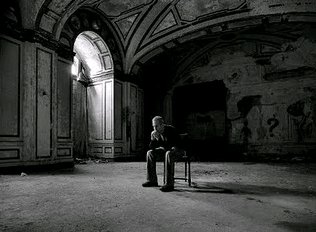
Man alone in a caveIt is written in the holy Zohar that those who have their needs provided for today and sit and fret over what will be tomorrow are not being practical – they are simply incorrectly focused.

Every day you are nourished straight from His full, open and overflowing hand, Everything in between – all your work and accounts and bills and receivables and clientele and prospects and investments – all is but a cloud of interface between His giving hand and your soul, an interface of no real substance which He bends and flexes at whim. If so, if He is feeding you today, and He has fed you and provided all you need and more all these days, what concerns could you have about tomorrow? Is there then something that could stand in His way? Could He possibly have run out of means to provide for you?

Rabbi Tzvi Freeman
from the wisdom of the Rebbe
Menachem M. Schreerson
Bringing Heaven Down to Earth

“Therefore I tell you, do not worry about your life, what you will eat or drink; or about your body, what you will wear. Is not life more than food, and the body more than clothes? Look at the birds of the air; they do not sow or reap or store away in barns, and yet your heavenly Father feeds them. Are you not much more valuable than they? Can any one of you by worrying add a single hour to your life?Matthew 6:25-27

But what if you’re starving?

Sometimes when reading and studying, I hit a wall. While the Bible and the Talmud are replete with encouragement and promote the ideals of faith and trust in God, there is still great suffering in the world, even within the community of faith. People die in pain and loneliness every day. Children are starving to death. Women are beaten and raped. They rely on God’s goodness and kindness even as do you and I. But what happened to God?

I’ll put it another way.

Last week, an 8-year old Jewish boy named Leiby Kletzky who lived in an Orthodox Jewish neighborhood in Brooklyn was kidnapped, brutally slain, and dismembered by Aron Levi, a 35-year old man who lived in the same community. While the event was truly horrific by anyone’s standards, the fact that it happened in the insular Haredi community and that the crime was committed by another Orthodox Jew living in the same small group rocked the Borough Park Jewish community to its core. Sadly, some exploitive groups wasted no time in trying to turn this tragedy to their advantage, adding insult to mind-shredding grief.

Losing a child by any means is beyond devastating. But how can any two parents even begin to cope with the circumstances surrounding the death of young Leiby? Showing unbounded grace in what is doubtless the most difficult time of their lives, Leiby’s parents, Nachman and Itta Kletzky, issued the following public statement:

“We are forever grateful and thankful to Hashem (G-d). We would also like to express to each and every individual – to our friends and neighbors and our fellow New Yorkers and to all the volunteers and to all the agencies from the local, city, state, and federal, who assisted us above and beyond physically, emotionally, and spiritually – and to all from around the world, who had us in their thoughts and prayers. From the depths of our mourning hearts, we thank you!”

Though this statement is brave and open, no one but Nachman and Itta Kletzky can know the immense depth of the pain they are enduring and will continue to suffer under for the months and years to come. They buried their son last Wednesday evening. Does even God know how they’ll continue to walk with Him now?

Sometimes, you’ll hear it said in church that, “what was meant for evil, God means for the good.” In Judaism, the sentiment is expressed as “everything is for the good, perhaps not immediately, but eventually”.

This is true in principle since we must acknowledge that everything in Creation, every object and every event, has a single Source.

Still, how can we not search for a reason beyond the simple platitudes of religion when something hideous and horrific enters our world? What miracle of God could give meaning when an 8-year old boy walking home in his own neighborhood is viciously extracted from life? Can even something like this make a difference?

As he went along, he saw a man blind from birth. His disciples asked him, “Rabbi, who sinned, this man or his parents, that he was born blind?” “Neither this man nor his parents sinned,” said Jesus, “but this happened so that the works of God might be displayed in him. As long as it is day, we must do the works of him who sent me. Night is coming, when no one can work. While I am in the world, I am the light of the world.” –John 9:1-5

Jesus subsequently heals the blind man so that, for the first time in his life, he can see and his life-long suffering “for the glory of God” ends, but those events happened half a world away almost 2,000 years ago. What about suffering today? The pain is real; the anguish is almost a tangible thing. How can anyone endure without God and even with God, suffering is hardly a matter of saying, “don’t worry, be happy”.

The Rebbe’s lesson as told in Rabbi Tzvi Freeman’s book gives an answer of sorts, but I’m not convinced it’s particularly satisfying:

In every hardship, look for the spark of good and focus upon it with all your might. If you cannot find that spark, rejoice that wonder beyond your comprehension has befallen you. Once you have unveiled and liberated the spark of good, it can rise to overcome its guise of darkness and even transform the darkness fully to light.

Man aloneI wonder at what future point will (or if) Mr. and Mrs. Kletzky be able to rejoice again. The Rebbe lived in the same community in Brooklyn where Leiby was murdered and although Rabbi Freeman now lives in Vancouver, British Columbia, Canada, he spent many years studying under the Rebbe in Brooklyn. Staring the spectre of ghastly death straight in the face, how would he feel reading the words of his book today?

I’ve asked a lot of questions and I don’t have an answer to even a single one. I know what the answers are supposed to be and I know the ideals behind them, but there is often a difference between ideals and when horrible events have brought you to your knees or have ground your face into the dirt and sand.

In Rabbi Freeman’s book, he writes of how anxiety and uncertainty can be like a raging storm at sea. He calls to mind the ark of Noah and how that ark endured the greatest flood the world has ever known, brought about by the wrath of a completely just God. From the Rebbe’s wisdom, he suggests the following:

Do as Noah did and build an ark. An ark in Hebrew is “taiva” – which means also “a word”. Your ark shall be the words of Torah and of prayer. Enter into your ark, and let the waters lift you up, rather than drown you with everything else.

That’s a bit like saying, “when you come to the end of your rope, tie a knot and hold on with all of your might”. That’s probably what the Kletzkys are doing right now and will do for some time to come. But a life of faith cannot be lived all of the time in prayer and Torah study. Eventually, you will have to stop sitting shiva and re-enter your day-to-day existence. How can this be done?

It’s a paradox: The greatest revelations are to be found not in meditation, study and prayer, but in the mundane world – but only if you would rather be meditating, studying and praying.

It is one of the most ingenious innovations of chassidic thought: Even if you fail to conquer the darkness entirely, even if you are still rolling in the mud with the enemy – you can still find G-d in the struggle itself.

Jacob, when facing what he thought was certain death at the hands of a vengeful Esau, literally found God in a struggle (Genesis 32:22-32), and despite many other hardships, including the death of his beloved wife Rachel and the perceived death of his favorite son Joseph, he went on to found a twelve tribes of Israel. Could something like this be true of us?

I have some Christian friends in the Puget Sound area who both struggle with cancer. To face this struggle with courage and composure isn’t the same as a lack of suffering. Once recently, I responded to their plea with this:

Our greatest blessings were uttered not by Moses, not by David, not even by G-d Himself. They were uttered by a wicked sorcerer, hired to curse. The most brilliant diamonds hide in the deepest bowels of the earth; the most intense blessings in the darkest caverns of life. -Rabbi Tzvi Freeman

In suffering, no one thing helps all that much, if at all. Even the awareness of God with us may not comfort sufficiently and His presence may even remind us that the all-powerful Sovereign, who could have turned aside our disaster, chose not to. All of the words of the Bible, all of the well-wishes of friends and family, all of the prayers and cries ripped straight from our souls still do not cause the pain to vanish and the jagged reality to become smooth.

The only thing I can offer is that, put all together, they may help us make it through one hour, or even one day. Then we start over again and try to make it through another day…and then another. God’s vision is infinite, but an hour at a time or a day at a time is as far as most of us can glimpse when extreme hardship strikes like a heartless predator. We seek shelter from the storm in the ark and try to ride it out. We exit from the ark and struggle through the aftermath of our world that’s been destroyed.

We pray to God to please help us make another one.

Please.

As If Considering Angels

Broken AngelFor this very reason, make every effort to add to your faith, goodness; and to goodness, knowledge; and to knowledge, self-control; and to self-control, perseverance; and to perseverance, godliness; and to godliness, mutual affection; and to mutual affection, love. For if you possess these qualities in increasing measure, they will keep you from being ineffective and unproductive in your knowledge of our Lord Jesus Christ.2 Peter 1:5-8

Said Rabbi Joshua the son of Levi: Every day, an echo resounds from Mount Horeb, proclaiming and saying: “Woe is to the creatures who insult the Torah.” For one who does not occupy himself in Torah is considered an outcast, as is stated “A golden nose-ring in the snout of a swine, a beautiful woman bereft of reason.” And it says: “And the tablets are the work of G-d, and the writing is G-d’s writing, engraved on the tablets” ; read not “engraved” (charut) but “liberty” (chairut)—for there is no free individual, except for he who occupies himself with the study of Torah. And whoever occupies himself with the study of Torah is elevated, as is stated, “And from the gift to Nahaliel, and from Nahaliel to The Heights.”Ethics of the Fathers 6:2

I know these two quotes may not seem to go together, but consider this. Peter says that we should add faith to goodness and then add goodness to knowledge. What knowledge? Where does this knowledge come from? Rabbi Joshua ben Levi implies that knowledge comes from Torah by expressing the inverse that one who does not occupy himself with Torah “is considered an outcast” and is like a “golden nose-ring in the snout of a swine, a beautiful woman bereft of reason”.

Sounds pretty harsh, but then, so does Peter:

This is especially true of those who follow the corrupt desire of the flesh and despise authority. Bold and arrogant, they are not afraid to heap abuse on celestial beings; yet even angels, although they are stronger and more powerful, do not heap abuse on such beings when bringing judgment on them from the Lord. But these people blaspheme in matters they do not understand. They are like unreasoning animals, creatures of instinct, born only to be caught and destroyed, and like animals they too will perish. –2 Peter 2:10-12

I’ve been involved in a series of online discussions lately that have been critical of Talmud study among Christians. Specifically, the allegation is that the sages who documented the Oral law and established a system of rulings for the Jewish people, were the inheritors of the tradition of the Pharisees and that Jesus had nothing good to say about the Pharisees, citing examples such as this:

Then Jesus said to the crowds and to his disciples: “The teachers of the law and the Pharisees sit in Moses’ seat. So you must be careful to do everything they tell you. But do not do what they do, for they do not practice what they preach. They tie up heavy, cumbersome loads and put them on other people’s shoulders, but they themselves are not willing to lift a finger to move them. “Everything they do is done for people to see: They make their phylacteries wide and the tassels on their garments long; they love the place of honor at banquets and the most important seats in the synagogues; they love to be greeted with respect in the marketplaces and to be called ‘Rabbi’ by others. –Matthew 23:1-7

This is just one of the examples in the Gospels which cast all Pharisees everywhere in a particularly bad light, but as I commented recently, Jesus is upset with this group of Pharisees, not because they taught bad things, but because they didn’t practice what they taught! Keep that in mind. If the Pharisees had behaved consistently with their teachings, Jesus wouldn’t have had a problem with them at all. His only beef with the Pharisees is that they were hypocrites, not false teachers.

Think about it. If, as some have stated, the Talmudic scholars and sages have inherited the mantle of the Pharisees and they behaved consistently with their own teachings, then it is quite possible that the “Rebbe of Nazaret” wouldn’t have any problem with them either.

I know there are a lot of variables to consider and we won’t know for sure until Jesus returns to us, but based on this small bit of simple logic, we cannot reasonably discard or disdain anything in the Talmud based on the behavior of a collection of hypocritical religious authorities that operated in Roman-Judea in the time of Jesus. We can’t also reasonably apply the following to the Rabbis of the Talmud:

The Lord says: “These people come near to me with their mouth and honor me with their lips, but their hearts are far from me. Their worship of me is based on merely human rules they have been taught. Therefore once more I will astound these people with wonder upon wonder; the wisdom of the wise will perish, the intelligence of the intelligent will vanish.” –Isaiah 29:13-14

I know it’s enormously tempting to apply the words of the Prophet not only to the Pharisees but to the Talmudic sages as well. Certainly, if we think of the Talmudic writings as only the rules of men with no Biblical source, then we might be justified in doing so, but taken out of context, we don’t know if Isaiah is even considering the Oral Law (which he would have seen as Torah) or the Rabbinic commentaries and rulings on said-Oral Law (and Written Law), which are recorded in the Talmud. The rulings of the Rabbis don’t overwrite and contradict Torah, but rather, are intended to interpret and make sense of the Written and Oral Law for each generation of Jews as they met new challenges in applying a Torah lifestyle in an ever-changing world.

Here’s something else to consider:

At that time Jesus said, “I praise you, Father, Lord of heaven and earth, because you have hidden these things from the wise and learned, and revealed them to little children. Yes, Father, for this is what you were pleased to do. –Matthew 11:25-26

Taken together with some portions of the quote from Isaiah 29:13-14, these words of the Master might suggest that it’s bad to be intelligent, well-read, and educated. Why bother to learn how to read at all if intelligence is not to be trusted and if it’s better to be ignorant and untaught? I don’t think this is what the Master means here, but rather, he’s saying you don’t have to be a scholar to have access to the grace of God. Of course, he’s not saying grace is denied the learned sage, either.

It’s been suggested that Rabbinic judgments and rulings are not to be trusted and that the wisdom of the average individual, as guided by the Spirit, reading the Bible in English and outside of its history, culture, and other contexts, is far preferable to trusting and learning from people who have spent all of their lives pouring over Scripture and striving to master the teachings of God.

And yet Peter was critical “of those who follow the corrupt desire of the flesh and despise authority”. Further, he said that “First of all, understand this; no prophecy of Scripture is to be interpreted by an individual on his own, for never has prophecy come as a result of human willing – on the contrary, people moved by the Ruach HaKodesh (the Holy Spirit) spoke the message from God”. (2 Peter 1:20-21 [CJB]).

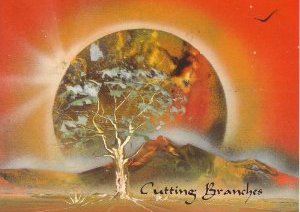
Cutting BranchesWe could be tempted to say Peter is confirming that all a person; any person, needs is the Holy Spirit to interpret the Bible, but he’s also speaking of Prophets like Isaiah, not the average guy on the street. We read the prophecies of Isaiah because he was a prophet of God and we’re not. We read the teachings of Jesus because he’s the Messiah and we’re not. Also, lest we forget, Paul, the Apostle to the Gentiles, and the key to bringing the Gospel of Jesus Christ to the nations of the world, was a very well-educated man…in fact, far more educated than many of Christ’s inner circle who were what we would consider today as blue-collar workers and laborers.

There’s no problem with who Jesus chose to be close to him as being, relatively speaking, uneducated, because, as I’ve already mentioned, the love of Christ isn’t primarily accessed through “book-learning”. But on the other hand, the fact that Paul was chosen by Jesus says that education and authority isn’t a problem either. Certainly, being learned and possessing authority requires that such a position be used with justice, honor, and humility. The Ethics of the Fathers 6:5 speaks to this:

Do not seek greatness for yourself, and do not lust for honor. More than you study, do. Desire not the table of kings, for your table is greater than theirs, and your crown is greater than theirs, and faithful is your Employer to pay you the rewards of your work.

In fact, from the same chapter (Chapter 6:6), we find that study of Torah (which includes Talmud in this context) yields people who have qualities such as:

love of G-d, love of humanity, love of charity, love of justice, love of rebuke, fleeing from honor, lack of arrogance in learning, reluctance to hand down rulings, participating in the burden of one’s fellow, judging him to the side of merit, correcting him, bringing him to a peaceful resolution [of his disputes], deliberation in study, asking and answering, listening and illuminating, learning in order to teach, learning in order to observe, wising one’s teacher, exactness in conveying a teaching, and saying something in the name of its speaker.

As long as the teacher behaves consistently with these, and the other teachings in the Torah and Talmud, what problem could this present? What problem could it present for any person of faith and good will who wishes to devote time to pondering this wisdom?

We see that taking Scripture out of context and applying an overly simple interpretation to what may turn out to be very complex matters of principle actually results in a disservice to the Prophets and Apostles, as well as to the later sages, and finally to Jesus and to God the Father.

We should all be very, very careful how we interpret and apply Scripture, especially if we use it to malign our teachers and scholars and, by inference, every religious Jew who has ever lived or will live, for they too revere the sages and attempt to live their lives by the principles of Torah, which have been established and interpreted across the ages.

I will bless those who bless you, and whoever curses you I will curse; and all peoples on earth will be blessed through you.” –Genesis 12:3

I do not want you to be ignorant of this mystery, brothers and sisters, so that you may not be conceited: Israel has experienced a hardening in part until the full number of the Gentiles has come in, and in this way all Israel will be saved. As it is written: “The deliverer will come from Zion; he will turn godlessness away from Jacob. And this is my covenant with them when I take away their sins.” –Romans 11:25-27

All Israel has a share in the World to Come, as is stated: “And your people are all righteous; they shall inherit the land forever. They are the shoot of My planting, the work of My hands, in which I take pride.” –Sanhedrin 11:1

for there is no free individual, except for he who occupies himself with the study of Torah. –Ethics of the Fathers 6:2

Do not denigrate the root, lest your branch be cut off from it.

The Supernatural Life

SupernaturalWhen G-d makes a miracle, it is so that afterwards we may look at the natural order and say, “I recognize this. This is not what it appears to be. This, too, is a miracle.”

Rabbi Tzvi Freeman
from the wisdom of the Rebbe
Menachem M. Schreerson
Bringing Heaven Down to Earth

Shortly before dawn Jesus went out to them, walking on the lake. When the disciples saw him walking on the lake, they were terrified. “It’s a ghost,” they said, and cried out in fear.

But Jesus immediately said to them: “Take courage! It is I. Don’t be afraid.”

“Lord, if it’s you,” Peter replied, “tell me to come to you on the water.”

“Come,” he said.

Then Peter got down out of the boat, walked on the water and came toward Jesus. But when he saw the wind, he was afraid and, beginning to sink, cried out, “Lord, save me!”

Immediately Jesus reached out his hand and caught him. “You of little faith,” he said, “why did you doubt?”Matthew 14:27-31

What was the greater miracle, that Jesus walked on water or that Peter did? I’d have to say “Peter”. After all, we expect Jesus Christ to perform miracles. He is the Son of God, the living Messiah, our High Priest in the Heavenly Court. We’ve become quite used to Jesus performing miracles. Jesus turns water into wine. Jesus makes the blind see and the deaf hear. Jesus calms the raging storm. He does miracles. We expect it.

But miracles don’t happen today, do they? Why not?

Very truly I tell you, whoever believes in me will do the works I have been doing, and they will do even greater things than these, because I am going to the Father. And I will do whatever you ask in my name, so that the Father may be glorified in the Son. You may ask me for anything in my name, and I will do it. –John 14:12-14

So do you believe him? If so, what miracles have you done lately? Have you tried walking across a lake or even a swimming pool? If you tried, did you walk like Peter or sink like Peter once he got scared and forgot to have faith?

No miracles, huh? Then what was Jesus talking about? What was the Rebbe talking about when he said we’d look at the natural order of things and say, “This, too, is a miracle.”?

I’m not going to answer that question yet, but I will tell you another small story from Rabbi Freeman’s book about the Rebbe:

G-d can do anything. He could even, as the saying goes, “fit an elephant through the eye of a needle.”

So, how would He do it? Would He make the elephant smaller? Or would He expand the eye of the needle?

Neither. The elephant would remain big, the eye of the needle small. And He would fit the elephant through the eye of the needle.

Illogical? True. But logic is just another of His creations. He who created logic is permitted to disregard it.

That’s a little like saying that the world exists simply because we believe it exists. If we started doubting the reality of the world then, “poof”, the world goes away. Does the universe exist simply because God believes it does?

The Master had something similar to say about large animals and needles:

Again I tell you, it is easier for a camel to go through the eye of a needle than for someone who is rich to enter the kingdom of God.” –Matthew 19:24

Not very logical, is it?

Teaching of the TzadikimPeter made a miracle, but it went away when he started having doubts and became afraid. Miracles are hard for some people to understand because they aren’t logical or we spend time trying to figure out how they work or what they mean. I’ve heard some people say that when Jesus referred to “the eye of a needle”, he wasn’t being literal about the needle but rather, referencing a specific gate that is narrow and where it’s difficult to get a camel to pass through. Maybe he was and maybe he wasn’t. Who knows?

James, the brother of the Master, said we don’t have because we don’t ask God (James 4:2) but maybe we don’t have miracles because we don’t live life expecting them. When you read the miracles of Jesus, he does these incredible things that defy nature, transmute substances, performs the impossible by all known physical laws. Yet the Rebbe said that we have these outstanding miracles so that we will recognize the other miracles that are in our lives; miracles that are, so to speak, right under our noses.

What miracles? Look around.

Your life is a miracle. It is said that God wills each beat of your heart and that without His will, your life would come to an abrupt end. We speak of things like “the miracle of birth” and how miraculous it is that we can plant a seed and, with a little dirt, water, and sun, it turns into a plant. Yet these things happen every day.

I guess that means miracles happen everyday, all around us, in every corner of the world.

Why don’t we see them? Are we blind?

Maybe so.

We don’t see miracles because we don’t expect to see miracles in the world around us, occurring through ordinary, everyday events…and yet if we open our eyes, they’re there, right in front of us.

One last teaching of the Rebbe via Rabbi Freeman’s book in this morning’s meditation:

Lead a supernatural life and G-d will provide the miracles.

I based the purpose and philosophy of this blog on the following teaching of Rabbi Freeman:

When you get up in the morning, let the world wait. Defy it a little. First learn something to inspire you. Take a few moments to meditate upon it. And then you may plunge ahead into the darkness, full of light with which to illuminate it.

You can see an adaptation of this quote near the top of the blog. Now let those words to sink in for a bit. Pour yourself another cup of coffee and take a moment to meditate on living a supernatural life. Don’t move away from the computer too fast. Take an extra minute or two to imagine what life would be like if you thought you’d see a miracle today. Once you have that thought firmly in place, close your web browser and get up. Go over the list of what you plan to do today. Add one thing to the top of the list. Make it the first item, before you consider anything else.

Let that first item on your agenda today be, “Expect miracles.”

Live a supernatural life. It might not be as difficult as you imagine.

The Irrelevant Drunkard

PogromOn today’s daf we find the laws of when we follow the majority.

It is difficult to imagine the precarious state of our fellow just a few centuries ago. Even in places where they were relatively safe and prospered, the status quo could change at any time. Virtually all clergy were antisemites, always trying to trip up the Jews who were generally no more than tenuous second-class citizens in their host countries. If a Jewish rabbi could not give a satisfactory reply to a prominent priest’s questions or accusations, the entire community could be exiled from their homes with hardly any notice and no time or even right to sell their possessions, most of which were often confiscated. And if the king himself asked a question which could not be answered, things were at least as bad.

Daf Yomi Digest
Stories Off the Daf
“Majority Rules?”
Chullin 19

It’s difficult for Christians (and everybody else who’s not Jewish) to imagine what living this way must have been like. Probably the closest we get to comprehending a Jewish life of eternal uncertainty in a hostile world is when we watch the film Fiddler on the Roof (1971) or see the stage musical. Even then, we are unlikely to register the true horror of the pogroms, the inquisitions, and the general hatred of the Jews in most parts of the world.

As much as we’d like to believe that all of the Jew-hatred is behind us, there is still a significant presence of these feelings among people, including Christians, today. Even among those (non-Jewish) Christians who are aligned with the “Messianic” movement, while they make a public declaration of love for the Jewish people, love of Judaism, and love of Israel, there is also an underlying current of distrust and frustration, particularly when religious Jews insist upon maintaining a lifestyle and set of traditions that chafe at Christian “goyishe” sensibilities. I once heard a Christian fellow exclaim, “Why can’t the Jews just accept Jesus?”. He was operating out of a sense of historical, social, and theological ignorance that has held the church in thrall for nearly twenty centuries and still exists in many churches and “Messianic” communities to this very day.

To illustrate the point I’m about to make, I will continue to quote from the aforementioned commentary on the daf:

Once, a priest primed his sovereign to ask Rav Yonasan Eybeschuetz, zt”l, what he thought was a genuine stumper. The king was delighted at this trick, since if Rav Yonasan could not answer the question he would fill the coffers of his treasury with Jewish property – an excellent way to improve the economy.

He asked, “The Talmudic rule is that one should follow the majority. Since the non-Jews are the majority of the world’s population, why don’t you join our religion? According to your own law you must follow the custom of the majority!” But Rav Yonasan could not be bested. “We only follow the majority when we are in doubt. When we know the truth, the practice of the majority is irrelevant.”

This could sound pretty harsh to Christian ears. Here we have Rav Yonasan telling a priest and a King that Christianity is irrelevant to a Jew. That’s pretty much a slap in the face, but you have to look at the larger context and what was at stake. If the Rav answered poorly or not at all, his entire community could be evicted from all the lands where the King ruled with not so much as a “by your leave”. The Jews weren’t being “witnessed” to by concerned and well-meaning Christians about the love of Jesus; they were being given an ultimatum that could even be escalated to a death sentence. Rav Yonasan had not only the right to be a little “snippy” toward the priest and the King based on this, but he was also following a path of Godliness and truth that the Jewish people have traveled for untold centuries, going all the way back to Moses at Sinai.

I suppose all this begs the question of how (or if) Christians should witness to Jews and a detailed answer goes beyond the scope of this small article. In short, the answer is “yes” with the caveat that you don’t just go into a synagogue, start “preaching Jesus”, denigrate everything there is about being Jewish, and expect your audience to cry out joyously “Give us an ‘Amen’, brother!” Instead, you’ll be politely asked to leave. If and when God requires that a Gentile Christian share his or her faith with a Jew, that door will become very apparently open. Don’t presume ignorance for “missionary zeal”.

PrayingThe other question this brings up is, when a Jew does accept Jesus, does he or she accept the stereotypical white-Christian Jesus, or are we talking about the Moshiach; the Messiah? Opinions vary, even among believing Jews. Some Jews who have come to faith in Christ lead lives that are little different than any other Christian, including setting aside all of the Torah laws related to the Sabbath, kosher eating, the traditional prayers, and so forth. A very small (but perhaps growing) minority can’t be said to be followers of the Jesus one sees in most traditional paintings of Christ, who bears no resemblance to a first-century Jewish man living in Roman-Judea. Instead, they are disciples of the “Moshiach, the Son of the living God.” (Matthew 16:16).

For this latter group of Jews, there is no inconsistency between living a lifestyle completely consistent with religious Judaism, including Talmud study and adherence to accepted halachah and the logical and ultimately expected discipleship of the “Rebbe of Nazaret”, the “Jewish Jesus of Nazareth”. Although Rav Yonasan Eybeschuetz wasn’t necessarily referencing the Moshiach as opposed to Jesus in the responses we’ve read thus far, the Messiah is always anticipated. Why do a few Jews see him in the person of Jesus while most currently do not? I’ve heard it taught more than once that Jesus, the brother of all Jewish people, is currently concealed, just as Joseph in Egypt, though he spoke to and interacted with his brothers, was temporarily concealed behind an Egyptian “mask” (see Genesis chapters 41-45 for the details).

I’ve also recently read that “prominent sages such as Rabbi Abraham Isaac Kook and the Chazon Ish have ruled that we live in a time of God’s concealment” (quoted from the Lev Echad blog), and although those noteworthy Rabbis are not likely referring to the concealment of Jesus as the Messiah, perhaps we Christians can take such a meaning when considering the Jewish people from our perspective.

The conclusion of our “Story Off the Daf” contains an even more difficult lesson for Christians to learn:

Rav Elchonon Wasserman, Hy”d, offered a different explanation, however. “A sober person would never follow the opinion of even a hundred drunks since they are not thinking straight. The Jewish sages are likened to a sober minority since they purify themselves from ulterior motives and personal agenda. How can we expect people who have not purified themselves from impure agenda to find the truth?”

Thus Christianity goes from being “irrelevant” to in the possession of “drunks” and “people who have not purified themselves from impure agenda”. That does not, in fact, describe the majority of Christians who truly are disciples of the Master and live out his holy teachings, but in the era being described in today’s story, it was most certainly true of the corrupt church authorities who spared no effort to harass, malign, and abuse the Jews just because they could.

However, we don’t have to repeat the mistakes we see laced throughout Christian history. We don’t have to demand that Jews stop being Jews just because we don’t understand them. We don’t even have to demand that Jews who have come to faith in the Moshiach, who we call “the Christ”, stop being Jews just because we’ve been taught that “the law is dead” and that “Pharisees are all hypocrites”. We can however adopt the lesson I found at the Lev Echad blog, from which I previously quoted:

One of the unique aspects of Judaism is learning about all the different roads people take that lead them to God and a life of goodness. While this is certainly a fascinating phenomenon, it can also be a great impediment to how we treat one another. Therefore, our goal in life should not be to turn all our fellow Jews into ideological and/or religious replicas of ourselves. Rather, it should be to guide – not force – others into a life of serving God and His children in a way that best matches their individual personality.

Extending this lesson beyond Judaism, we can realize that it’s not our job to judge. There is only one righteous Judge, and He is God. As there are many different churches and many different congregations of God, so there may be many different ways to offer worship and glory to the King of Kings, and the Lord of Lords. Can you, as a Christian, say that only your church is the true and righteous church and that no other churches, even within your own denomination, worship God in a way that is accepted by Him? Without seeing the world as God sees it, can you dare pronounce judgment on your fellow human being and companion along the path of faith?

If you can be so daring, then perhaps the words of Rav Elchonon are true for you. More’s the pity.

“If your heart is bitter, sugar in your mouth will not help.” -Jewish Proverb

“It was Judaism that brought the concept of a God-given universal moral law into the world…the Jew carries the burden of God in history [and] for this has never been forgiven.” -Reverend Edward H. Flannery

“A Jew never gives up. We’re here to bring Mashiach, we will settle for nothing less.” -Rabbi Yitzchak Ginsburgh

Good Shabbos.

Searching for Sparks

Holding SparksAt one time there were tzaddikim who would look into the soul of a disciple, see the place where the G-dly sparks were awaiting this soul and tell the disciple to go to that place to liberate those sparks.

All that has changed is the perception of the disciples. If you are where you are with the blessing of the Rebbe, you are where you belong. And you are there with a profound purpose.

Rabbi Tzvi Freeman
from the wisdom of the Rebbe
Menachem M. Schreerson
Bringing Heaven Down to Earth

Well, I – I think that it – it wasn’t enough to just want to see Uncle Henry and Auntie Em – and it’s that – if I ever go looking for my heart’s desire again, I won’t look any further than my own back yard. Because if it isn’t there, I never really lost it to begin with! Is that right?

Dorothy
The Wizard of Oz (1939)

It is said that we contain Divine Sparks from our Creator and those parts of us that belong to Him yearn to return to the Source. It’s what causes people to search for something beyond themselves; sometimes not even knowing what they are looking for or how to find it. It’s the part of us that brings some people to God and others to less than noble destinations, believing some false teaching is the answer they need.

It’s also believed that there are other sparks in the world that correspond to those we contain and that finding and liberating those sparks defines the purpose of our lives. Put in less mystic terms, we all have a purpose that gives meaning to our lives. We only need to discover that purpose in order to experience accomplishment, fulfillment, and to understand why we were created by God.

Some people search for this all their lives and die with the truth about themselves still undiscovered. While Hamlet calls death the undiscovered country, I think that “country” is rather the truth of our existence which we must discover while we are still alive. Even David said that once dead, we can offer nothing:

Among the dead no one proclaims your name.
Who praises you from the grave? –Psalm 6:5

It is not the dead who praise the LORD,
those who go down to the place of silence;
it is we who extol the LORD,
both now and forevermore.
Praise the LORD. –Psalm 115:17-18

Continuing with this theme, Vine of David’s commentary on Levertoff’s Love and the Messianic Age tells us:

“Although every man has the divine potential of a godly soul planted within him, this is not a guarantee that every man will enter into a relationship with HaShem or even that every soul will be redeemed. Instead, the soul is separated from God by a wall of partition – sin and guilt. HaShem removes the wall of partition between man and Himself through the work of the Messiah. When the wall is removed, then the soul can connect with HaShem. Then He can “use it for the gathering of these ‘sparks’.”

We journey near and far looking for and gathering sparks in order to fulfill the script of our lives written by God on our souls. But must we necessarily travel to distant and strange lands to find what we seek? Rabbi Freeman gives us part of that answer as he again relates the Rebbe’s wisdom:

People want to run away from where they are, to go to find their Jerusalem. Wherever you are, whatever you are doing there, make that a “Jerusalem”.

I wonder if the Rebbe ever saw The Wizard of Oz?

Hide and SeekGod is mindful of the days of our lives, where we go, what we are doing. He watches us as a father might watch his small son take his first, halting steps. We watch our children as they learn to walk, almost willing them in how to take the next step and in which way they should go. We cannot interfere unless they are about to be hurt, because otherwise, they’d never discover how to walk on their own. God is like that with us. The difference is, we should know that we are learning how to walk and be paying attention to the path. We should know that our Father is watching over us and that He’s ready to keep us from harm. Often, we don’t:

A certain chassid who had suffered a major financial loss stood before Rabbi Schneur Zalman of Liadi and lamented over his debts. “All you are telling me,” Rabbi Schneur Zalman replied, “is what you need. Who needs you, you don’t say much about. Do what G-d expects from you, and He will provide what you want from Him.”

Lest you think that God only expects us to serve and that He doesn’t care about who we are, our fears, our needs, and our concerns, we have two messages that console us; one from the Rebbe, and the other from “the Maggid of Nazaret”, Jesus:

The teaching of the Baal Shem Tov: Not only is the movement of a leaf as it falls off a tree, the quivering of a blade of grass in the wind-each and every detail of existence directed, vivified and brought into being at every moment from above-but beyond that: Every nuance is an essential component of a grand and G-dly scheme, the gestalt of all those vital minutiae.

Meditate on this. And then think: How much more so the details of my daily life.

-The Rebbe
as related by Rabbi Tzvi Freeman

“Therefore I tell you, do not worry about your life, what you will eat or drink; or about your body, what you will wear. Is not life more than food, and the body more than clothes? Look at the birds of the air; they do not sow or reap or store away in barns, and yet your heavenly Father feeds them. Are you not much more valuable than they? Can any one of you by worrying add a single hour to your life?

“And why do you worry about clothes? See how the flowers of the field grow. They do not labor or spin. Yet I tell you that not even Solomon in all his splendor was dressed like one of these. If that is how God clothes the grass of the field, which is here today and tomorrow is thrown into the fire, will he not much more clothe you—you of little faith? So do not worry, saying, ‘What shall we eat?’ or ‘What shall we drink?’ or ‘What shall we wear?’ For the pagans run after all these things, and your heavenly Father knows that you need them. But seek first his kingdom and his righteousness, and all these things will be given to you as well. –Matthew 6:25-33

Finally, in our little game of “hide-and-go-seek” with the Divine in ourselves and in the Universe, Rabbi Freeman presents the Rebbe’s teachings on this matter, again from his book Bringing Heaven Down to Earth:

G-d is not something of a higher realm that you cannot reach Him. Nor is He made of stuff ethereal that you cannot touch Him. G-d is “That Which Is” – He is here now, everywhere, in every thing and in every realm – including that realm in which you live. The only reason you do not perceive Him is because it is His desire that you search for Him.

Life is a game of hide and seek. G-d hides, we seek.

God does not play “hide the ball” with the Universe. He means for us to not only find Him, but everyday, to find who we are in Him. Start gathering the sparks. He’s there. And so are you.