Tag Archives: God

Crying Out to God

Standing before GodWhen the son of Reb Michel Blinner of Nevel was in mortal danger, he asked Rabbi Menachem Mendel of Lubavitch, the “Tzemach Tzedek,” for a blessing. The Tzemach Tzedek responded, “Awaken the power of trust in G‑d with simple faith that He, blessed be He, will save your son. Thought helps. Think good and it will be good.”

And so it was that Reb Michel’s son was saved.

-Rabbi Yosef Yitzchaak Schneerson of Lubavitch
Igrot Kodesh (letters), vol. 7, pg. 197
Quoted from Chabad.org

A request is an expression of what we want, but the most effective prayer is an expression of what we desperately need. Rabbi Aharon Leib Shteinman, one of today’s great Torah sages, once told a visitor, “Last year you said you wanted this. So I asked you then, ‘Who says G-d wants this too?’ This year you said you needed this. In that case you should be successful in getting it, because our Father makes sure His children have what they need.”

-Rabbi Mordechai Dixler
“Who Needs Him?”
ProjectGenesis.org

I wrote my “morning meditation” Shemot: Trusting God yesterday, and so it wasn’t until last night that my wife sent me a link to Rabbi Tzvi Freeman’s article Is the Law of Attraction a Jewish Idea?

According to Wikipedia, the Law of attraction “is the name given to the belief that “like attracts like” and that by focusing on positive or negative thoughts, one can bring about positive or negative result.” It’s also the source of more books and materials than you can shake a stick at including The Law of Attraction: The Basics of the Teachings of Abraham by Esther and Jerry Hicks (no, I haven’t read it) and the very famous Think and Grow Rich by Napoleon Hill (no, I haven’t read this one, either).

But as Rabbi Freeman says, the “law of attraction places the human being smack in the center of the universe, pulling all the strings. You create your own reality.” For this to work, a person must make himself his own god and then have complete faith in that god. Sounds silly from a Christian’s point of view, but what if there’s something to all this “attraction” business after all?

The Law of Attraction is a popular idea that states that a person’s attitude attracts matching happenstance. Pessimism attracts misfortune, while optimism attracts good fortune.

The power of attitude to change the flow of a person’s life is a tacit assumption of much of Torah literature, particularly in that most influential source of common wisdom, the Psalms. “One who trusts in G‑d, kindness surrounds him!” (Psalm 32:10) “Fortunate is the man who puts his trust in G‑d!” (Ibid 40:5)

The sages of the Talmud similarly appear to take this law for granted. For example, in dismissing as useless superstition a folk-omen to determine whether one’s journey will meet with success or doom, the sages advise, “But don’t do it.” Why not? “Because perhaps the omen will be negative, the person will worry, and his fortune will go sour.” (Horayot 12a)

The idea is correct, at least according to Jewish philosophy and mysticism, but people tend to put their focus and trust on themselves rather than the One and true living God.

I quoted Rabbi Kalman Packouz in my earlier meditation, and I mentioned his list of 7 Principles for Trusting in God:

  1. The Creator of the universe loves me more than anybody else in the world possibly can.
  2. The Almighty is aware of all my struggles, desires and dreams. All I need is to ask Him for help.
  3. The Almighty has the power to give me anything I want.
  4. There is no other power in the universe other than the Almighty. Only He can grant me success and give me what I want.
  5. The Almighty has a track record for giving me more than I am asking for.
  6. The Almighty gives with no strings attached. I don’t need to earn it or deserve it. He will give it to me anyway.
  7. The Almighty knows what is best for me and everything He does is only for my good.

For Rabbi Freeman’s conceptualization of the “law of attraction” to work, we must trust in the God of Heaven for all things rather than in ourselves. If we trust that God will provide, then it stands to reason He will, at least according to Rabbi Freeman. If we are constantly worried, on the other hand…

“Therefore I tell you, do not be anxious about your life, what you will eat or what you will drink, nor about your body, what you will put on. Is not life more than food, and the body more than clothing? Look at the birds of the air: they neither sow nor reap nor gather into barns, and yet your heavenly Father feeds them. Are you not of more value than they? And which of you by being anxious can add a single hour to his span of life? And why are you anxious about clothing? Consider the lilies of the field, how they grow: they neither toil nor spin, yet I tell you, even Solomon in all his glory was not arrayed like one of these. But if God so clothes the grass of the field, which today is alive and tomorrow is thrown into the oven, will he not much more clothe you, O you of little faith? Therefore do not be anxious, saying, ‘What shall we eat?’ or ‘What shall we drink?’ or ‘What shall we wear?’ For the Gentiles seek after all these things, and your heavenly Father knows that you need them all. But seek first the kingdom of God and his righteousness, and all these things will be added to you.

“Therefore do not be anxious about tomorrow, for tomorrow will be anxious for itself. Sufficient for the day is its own trouble.

Matthew 6:25-34 (ESV)

Tree of LifeI mentioned Jewish mysticism before. Here is the parallel to the above from the Zohar:

The Lower World is always ready to receive and is called a precious stone. The Upper World only gives it according to its state. If its state is of a bright countenance from below, in the same manner it is shone upon from above; but if it is in sadness, it is correspondingly given judgment. Similarly, it is written, “Serve G‑d with joy!”—because human joy draws another supernal joy. Thus, just as the Lower World is crowned, so it draws from above.

-Zohar, volume 3, 56a

I’m not holding up Kabbalah as, in any sense, equal to the words of the Master, but I do want to show that there are different directions from which we can approach trusting God and having confidence that He will provide. It’s in that confidence that we are healed.

And there was a woman who had a discharge of blood for twelve years, and though she had spent all her living on physicians, she could not be healed by anyone. She came up behind him and touched the fringe of his garment, and immediately her discharge of blood ceased. And Jesus said, “Who was it that touched me?” When all denied it, Peter said, “Master, the crowds surround you and are pressing in on you!” But Jesus said, “Someone touched me, for I perceive that power has gone out from me.” And when the woman saw that she was not hidden, she came trembling, and falling down before him declared in the presence of all the people why she had touched him, and how she had been immediately healed. And he said to her, “Daughter, your faith has made you well; go in peace.”

Luke 8:43-48 (ESV)

Maybe I’m taking this too far, but look again at what Jesus says in verse 48: “Daughter, your faith has made you well.”

He didn’t say “I have made you well” but rather Your faith has made you well.”

Let’s take another example:

And as Jesus passed on from there, two blind men followed him, crying aloud, “Have mercy on us, Son of David.” When he entered the house, the blind men came to him, and Jesus said to them, “Do you believe that I am able to do this?” They said to him, “Yes, Lord.” Then he touched their eyes, saying, “According to your faith be it done to you.” And their eyes were opened. And Jesus sternly warned them, “See that no one knows about it.”

Matthew 9:27-30 (ESV)

Look at the question Jesus asks in verse 28: “Do you believe that I am able to do this?” The two blind men had to ascent that they did believe Jesus could restore their sight. Once they did (I guess Jesus didn’t necessarily take them at their word), the Master said, “According to your faith be it done to you.” In other words, the ability of Jesus to heal these two men was directly related to their faith in his ability to do so.

Woman prayingOK, I don’t want to create a formula or mechanical set of steps for healing and manipulating God, but this does seem to positively connect back to what Rabbis Freeman and Packouz have been saying about trusting God and its effects. No, I’m not saying that God is powerless in the face of a faithless humanity, but I am saying that it seems as if those of us who are aware of God are in some mysterious sense “partners” in His activity in our lives.

In my examples from the Gospels, we seem to see that a lack of faith would have resulted in few or no miracles from Jesus and that, conversely, great faith (even without the conscious awareness of Christ in the case of the woman with the “issue of blood”) produces great miracles. We further see this relationship between faith and “attracting” the power of God here:

And he did not do many mighty works there, because of their unbelief.

Matthew 13:58 (ESV)

Again, I don’t want to suggest that we can exploit some sort of “system” for getting God to do what we want Him to do. After all, how many people of sincere and fervent faith have prayed for the healing of a loved one and instead of a bodily healing, the person being prayed for died? (I know of a number of such people and families)

I’ve said before that there are no guarantees and that we trust in God because, as believers, we simply have no choice. Except we have a choice and we often choose not to trust God. It gets more complicated when we realize that trust or lack thereof, isn’t a matter of our just doing or not doing something, since even a person with supreme trust in the Almighty is still expected to take an active role, not only in prayer, but any other activity involved in achieving what we need.

A meditation for when things get rough:

The world was brought into being with Goodness. And the ultimate good for Man is that he should not be shamed, but feel as a partner in the fulfillment of the divine plan. Free bread is to us bread of shame—such is the nature of Man.

That is why nothing good comes without toil. And according to the toil can be known the harvest that will be reaped in the end.

-Rabbi Tzvi Freeman
“Toil”
Based on letters and talks of the Rebbe
Rabbi M. M. Schneerson
Chabad.org

Groaning by itself won’t do a bit of good. A groan is only a key to open the heart and eyes, so as not to sit there with folded arms, but to plan orderly work and activity, each person wherever he can be effective…

“Today’s Day”
Thursday, Tevet 23, 5703
Compiled by the Lubavitcher Rebbe
Translated by Yitschak Meir Kagan
Chabad.org

Blessed by GodI suppose I’m writing all of this because I’m trying to convince myself to just “let go and let God,” as the popular Christian saying goes. But it’s still not that easy.

Where were you when I established the earth?

Job 38:4

One who reads the book of Job cannot but have compassion for just and pious Job, who appears to be unfairly subjected to suffering. All the rational arguments that his friends offer to account for his innocent suffering appear hollow, and the only acceptable answer is God’s remark to Job, “Where were you when I established the earth?”

In other words, a human being can see only a tiny fragment of the universe, an infinitesimally small bit of time and space. Our vantage point is much like a single piece of a huge jigsaw puzzle, a tiny fragment of the whole picture, which makes no sense on its own. Only when the entire puzzle is assembled do we realize how this odd-shaped piece fits properly. Since no human being can have a view of the totality of the universe in both time and space, we cannot possibly grasp the meaning of one tiny fragment of it.

This explanation does not tell us why the innocent may suffer, but only why there cannot be a satisfactory explanation. Acceptance of suffering therefore requires faith in a Creator who designed the universe with a master plan in which everything that happens has a valid reason. This belief may not comfort a sufferer nor prevent the sufferer from becoming angry at the Designer of the universe. The Torah does not in fact condemn the anger of the sufferer (Bava Basra 16b), but does require that he accept adversity with trust that God is just (Deuteronomy 32:4).

Acceptance does not mean approval, but it does allow us to avoid the paralyzing rage of righteous rage, and to go on with the business of living.

Today I shall …

… try to realize that nothing ever happens that is purposeless, and that I must go on living even when I disapprove of the way the world operates.

-Rabbi Abraham J. Twerski
“Growing Each Day, Tevet 23”
Aish.com

Which in my mind, leads to this:

Be kind, for everyone you meet is fighting a hard battle.

attributed to Plato

I’m trying to write a more optimistic counterpoint to my earlier “Shemot” commentary, but I’m not doing a very good job. I can’t seem to summon up the will, the trust, or whatever it takes to just say “God is good,” and leave it at that. I continue to look at my life and at the world around me and find things that could be better (I’m employing understatement here). We’re all fighting a hard battle and we are begging God to please be kind. We don’t always receive the kindness we ask for, sometimes even in spite of our faith and trust.

But my wife sent me the link to the “law of attraction” article for a reason, so regardless of what I see or what I think about it, perhaps it wouldn’t hurt (and maybe…just maybe it would help) to be a little more trusting and optimistic.

My wife was listening to “When the Heart Cries” by Sarit Hadad on YouTube the other evening. Somehow, it seems appropriate to include that in this “extra meditation” as well.

Shemot: Trusting God

trust2In this week’s Torah portion the Torah tells us “There arose a new king over Egypt who did not know Joseph.” There is a disagreement whether it was truly a new king or whether the king (Pharaoh) chose to ignore any debt of gratitude to Joseph and his people for saving Egypt and the world from the 7 year famine. Obviously, trusting in people — especially heads of governments — is problematic. Who do you trust? Who can you trust?

In my youth there was a television show entitled, “Who Do You Trust?” The show was not entitled “Is There Anyone You Trust?,” because, in the end all of us trust in someone or something. People trust in their intelligence, their power, their charm, their knowledge, their connections, their political candidate, and in their wealth. For those who trust (or trusted…) in their wealth, it is ironic that on the American dollar bill it advises “In God We Trust.”

Ultimately, what will help all of us to weather these difficult times is strengthening our trust in God. Trust in God gives a person peace of mind, the ability to relax and to be free of stress and worry. It helps one to deal with frustrations and difficulties.

Like all intelligent discussions, we first have to start with a definition. Trust in God is believing, knowing, internalizing that all that the Almighty does for us if for our good. It is knowing that the Almighty loves us greater than any love one human being can have for another person. He totally knows and understands us and our personal situations. Only the Almighty has the power to impact your situation. He has a track record. You can rely on Him. Everything the Almighty does for you is a gift; there are no strings attached.

-Rabbi Kalman Packouz
“Who Do You Trust?”
Commentary on Torah Portion Shemot
Aish.com

That sounds fine as far as it goes, but it’s not as simple as all that. Trusting in God does not mean that you are guaranteed a problem-free life. In fact, as we’ve recently seen, Many people suffer horrible tragedy and tremendous loss regardless of their trust, or lack thereof, in God. The hurricane devastates the righteous and unrighteous alike and loss of a child will break anyone’s heart.

However, Rabbi Packouz provides a handy list of 7 Principles for Trusting in God for our review. Here they are:

  1. The Creator of the universe loves me more than anybody else in the world possibly can.
  2. The Almighty is aware of all my struggles, desires and dreams. All I need is to ask Him for help.
  3. The Almighty has the power to give me anything I want.
  4. There is no other power in the universe other than the Almighty. Only He can grant me success and give me what I want.
  5. The Almighty has a track record for giving me more than I am asking for.
  6. The Almighty gives with no strings attached. I don’t need to earn it or deserve it. He will give it to me anyway.
  7. The Almighty knows what is best for me and everything He does is only for my good.

Although Christianity and Judaism are two different religions (with a common root), I think the list above can be applied just as well to the non-Jewish believer as to the Jewish person.

Does God love you more than anybody else in the world can? The New Testament is full of comments about God’s love, the most obvious being John 3:16. Yes, God does love you and He loves me, and He loves all Christians, and all Jews, and all Muslims, and all Buddhists, and all human beings who have ever lived and who will ever lived.

And yet disaster can strike at any moment and human history is replete with tragedies and disasters. The road of our lives and the lives of all who came before us is littered with broken bodies and broken hearts and broken spirits.

Certainly God is aware of all our needs and struggles since nothing is hidden from Him, but point two suggests that all we have to do to be relieved of our pain is to ask Him for help. Does everyone who has a sincere faith and prays to God receive immediate relief from suffering? Ask the parents of those children who were murdered at Sandy Hook Elementary school.

God really does have the power to give you, me, and everyone else anything we want, but that doesn’t mean He will grant us anything we want. In fact, it is very likely that God will not grant us anything we really want most of the time.

From a Christian’s, Jew’s, or Muslim’s point of view, there is only one power in the universe: God. Only God can grant success and comfort. But as I already said, there’s a difference between what He can do and what He will do.

Does God have a track record of giving us more than what we ask for? I’m not even sure how to measure such a thing. I think that’s probably true in some cases, but not in others. Ask six million Jews who died during the Holocaust while praying for God to grant them mercy. Was death the only mercy He decided to give?

no-strings-attachedGod gives with no strings attached. Hmmm. Is that true? Probably in more cases than not, but there’s a presupposition that even in giving, God is trying to get our attention, especially if those receiving His gifts do not have faith. On the other hand, referring back to John 3:16, God is the grand master of unconditional love, so who am I to talk?

God knows what is best for me. I can’t argue against that and this seventh point could be used to explain the other six. We may ask for something and not get it and then conclude that we didn’t get what we wanted because it wasn’t good for us. On the other hand, the parents of 26 murdered children only want this all to be a bad dream and for their precious little ones to be restored to them. Is that not “good for them?”

No, I’m not trying to be a downer and “diss” trusting in God, but such an abiding trust is difficult to come by.

Blessed are You, O God … Who has provided me my every needs.

-Siddur

One of the great tzaddikim lived in abject poverty, yet always had a happy disposition. He was asked how he managed to maintain so pleasant an attitude in the face of such adverse conditions.

“Each day I pray to God to provide all my needs,” he said. “If I am poor, that means that one of my needs is poverty. Why should I be unhappy if I have whatever I need?”

Tzaddikim are great people and we are little people who may not always be able to achieve the intensity of trust in God that would allow us to accept adversity with joy. But even if we cannot attain it to the highest degree, we should be able to develop some sincere trust.

When our children are little, we as parents know what they need. They might prefer a diet of sweets, but we give them nourishing foods. They certainly despise receiving painful injections that immunize them against dreadful diseases, but we forcibly subject them to these procedures because we know what is good for them.

Some people do not believe in God. But to those that do, why not realize that He knows our needs better than we do, and that even some very unpleasant experiences are actually for our own betterment?”

Today I shall…

try to bear adversity with less anger and resentment, remembering that God is a compassionate Father, and that He gives me that which He knows, far better than I, that I truly need.

-Rabbi Abraham J. Twerski
“Growing Each Day, Tevet 20”
Aish.com

The Hebrew word bitachon is typically translated as “trust” in English, but that hardly does it justice. Trusting God isn’t about God always giving us what we want or us experiencing God as always doing what we think of as good. It’s the realization that God is always good regardless of our experiences.

Consider any of the “holy men” you may admire and revere from the Bible. From Abraham to Paul, they all led less than perfect lives. Yes, God granted them many gifts, but He also allowed much hardship. Abraham and Sarah were childless and without an heir for most of their lives and into extreme old age until God granted them Isaac. Jacob was hated by his brother Esau, kept in virtual slavery by his relative Laban for twenty years, his daughter was raped and held captive, his favorite son Joseph was lost and presumed dead. Another son Judah married outside of the Hebrews and two of his three sons died. Joseph was a slave and a prisoner for years in a strange land before being elevated to great power, but only on the condition that he conceal his identity, even from his own brothers. When Joseph died, every one of his descendants for generations was kept as slaves in Egypt. Even their rescuer Moses was unable to lead his people into Canaan and instead wandered with them in the desolate wilderness for forty years until finally dying with almost everyone else in his generation without walking in Israel for himself.

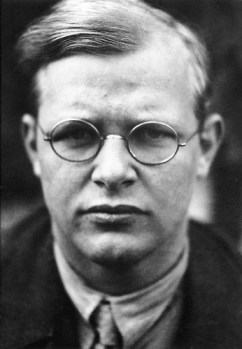
Dietrich BonhoefferThe “saints” of the New Testament fared no better. Consider the stoning of Stephen, the harsh life of Paul leading only to death in Rome, and the martyrdom of Peter and every other Apostle. No, trust and faith did not result in comfort of life.

No, trust in God cannot be based on experience with God because if it were, none of these people would have been able to trust Him. In fact it seems that one must trust God in spite of our life experience. Rabbi Packouz’s list does little good, since God does not perform good on command. Knowing that God can spare us pain and suffering doesn’t help and is a bitter irony when God doesn’t spare us pain and suffering. Job’s most famous line (for me) illustrates what it is to trust in God.

Though he slay me, I will hope in him; yet I will argue my ways to his face.

Job 13:15 (ESV)

This gives us a picture of the Jewish method of trusting God, since it doesn’t preclude telling God how we feel about what’s happening to us.

Rabbi Twerski tells us that only a great tzaddik, a very holy and spiritual person, can truly trust God at the level I’m talking about here. But he also says that it’s not impossible for we “ordinary folk” to trust God, either. In his own declaration on the matter, Rabbi Twerski states, Today I shall try to bear adversity with less anger and resentment, remembering that God is a compassionate Father, and that He gives me that which He knows, far better than I, that I truly need.

In our own times of hardship and anguish, maybe this is the best we can do as well.

For what we proclaim is not ourselves, but Jesus Christ as Lord, with ourselves as your servants for Jesus’ sake. For God, who said, “Let light shine out of darkness,” has shone in our hearts to give the light of the knowledge of the glory of God in the face of Jesus Christ. But we have this treasure in jars of clay, to show that the surpassing power belongs to God and not to us. We are afflicted in every way, but not crushed; perplexed, but not driven to despair; persecuted, but not forsaken; struck down, but not destroyed; always carrying in the body the death of Jesus, so that the life of Jesus may also be manifested in our bodies. For we who live are always being given over to death for Jesus’ sake, so that the life of Jesus also may be manifested in our mortal flesh. So death is at work in us, but life in you.

2 Corinthians 4:5-12 (ESV)

Good Shabbos.

Why Are We Needed?

i-need-youThe sixth Lubavitcher rebbe, Rabbi Yosef Y. Schneerson, recounted the following story some 64 years ago:

Rabbi Schneur Zalman of Liadi, the first Chabad rebbe, had a disciple who was also a great philanthropist. Two causes that were particularly dear to him were supporting the Jewish community in the Land of Israel and ransoming captives.

This wealthy chassid had already married off his children and begun pledging dowries for his less-affluent relatives, when the wheel of fortune turned, and his finances suffered.

He was forced to borrow money, and at the end he was left penniless. Overwhelmed and pursued by creditors, he did what any chassid would do: he traveled to his rebbe and unburdened his heavy heart.

After listening intently to his complaints, Rabbi Schneur Zalman addressed him: “You speak about what you need, but say nothing of what you are needed for!”

In this week’s Torah portion, the first one of the book of Exodus, we read about the beginning of the harsh Egyptian exile. But with the disease comes the cure: in the same portion we read about the birth of Moses, the man who was to lead the Jewish people out of their bondage.

One of the first things we hear about Moses is that how he helps another person. Emerging from a sheltered existence as a member of Pharaoh’s household, he sees an Israelite slave being cruelly beaten by an Egyptian, and rescues him.

There are times in our lives when it may be challenging to think about anyone other than ourselves, but the message of Rabbi Schneur Zalman to the anonymous chassid rings true: You speak about what you need, but say nothing of what you are needed for!

Often, the best response to adversity is to break out of our comfort zones and extend a helping hand to another person with love and gratitude for all the good that we have.

-Rabbi Shaul Wertheimer
“What Are You Needed For?”
Commentary on Torah Portion Shemot
Chabad.org

I’ve recently lamented about the relative significance of our lives to God and His purposes, but I suppose the above-commentary, part of which I’ve read before, provides us with something of an answer. Still, it’s difficult when we have needs, to set those aside and to consider instead what we are needed for. When it is our heart that hurts and our eyes that grow dim, how can we view ourselves as the pilgrim instead of the exile? Yet we see that in God causing Moses to rise up among his Jewish brothers, that He created Moses to become both.

Some time after that, when Moses had grown up, he went out to his kinsfolk and witnessed their labors. He saw an Egyptian beating a Hebrew, one of his kinsmen. He turned this way and that and, seeing no one about, he struck down the Egyptian and hid him in the sand. When he went out the next day, he found two Hebrews fighting; so he said to the offender, “Why do you strike your fellow?” He retorted, “Who made you chief and ruler over us? Do you mean to kill me as you killed the Egyptian?” Moses was frightened, and thought: Then the matter is known! When Pharaoh learned of the matter, he sought to kill Moses; but Moses fled from Pharaoh. He arrived in the land of Midian, and sat down beside a well.

Exodus 2:11-15 (JPS Tanakh)

I can only imagine that after having grown up in Pharoah’s court, becoming a shepherd in Midian was something of a let down for Moses, at least at first. But in my imagination, I think of Moses finally marrying, raising sons, and eventually coming to terms and to a peace with the simple life, tending to his flock in the shadow of the mountain of God.

But then, God had other plans for Moses.

“You speak about what you need, but say nothing of what you are needed for!”

-Rabbi Schneur Zalman

But Moses said to the Lord, “Please, O Lord, I have never been a man of words, either in times past or now that You have spoken to Your servant; I am slow of speech and slow of tongue.” And the Lord said to him, “Who gives man speech? Who makes him dumb or deaf, seeing or blind? Is it not I, the Lord? Now go, and I will be with you as you speak and will instruct you what to say.” But he said, “Please, O Lord, make someone else Your agent.” The Lord became angry with Moses, and He said, “There is your brother Aaron the Levite. He, I know, speaks readily. Even now he is setting out to meet you, and he will be happy to see you. You shall speak to him and put the words in his mouth — I will be with you and with him as you speak, and tell both of you what to do — and he shall speak for you to the people. Thus he shall serve as your spokesman, with you playing the role of God to him, And take with you this rod, with which you shall perform the signs.”

Exodus 4:10-17 (JPS Tanakh)

Most of us have never been a prince in Egypt or even a wealthy philanthropist and chassid, but I’m sure many of you reading this have been poor (or are poor) and in need and have been focused more on your own desperation than the plight of the world around you. It’s only natural that when we are confronted with our own pain, we direct all our attention to it and ask for help. It is only natural that, when presented with a task or a mission that seems well beyond our capacities, we should try to turn it down or ask that it be assigned to someone else.

But sometimes God asks the most unlikely people to do the most unusual things.

For some days he was with the disciples at Damascus. And immediately he proclaimed Jesus in the synagogues, saying, “He is the Son of God.” And all who heard him were amazed and said, “Is not this the man who made havoc in Jerusalem of those who called upon this name? And has he not come here for this purpose, to bring them bound before the chief priests?” But Saul increased all the more in strength, and confounded the Jews who lived in Damascus by proving that Jesus was the Christ.

Acts 9:19-22 (ESV)

micah6-8And what does God ask us to do?

He has told you, O man, what is good; and what does the LORD require of you but to do justice, and to love kindness, and to walk humbly with your God?

Micah 6:8 (ESV)

For kindness is Yours, O God, when You compensate each person according to his actions.

Psalms 62:13

In our productivity-oriented society, we tend to place value on the product rather than on the process. Success is praised and failure is condemned, and we have little interest in the circumstances under which others function.

This attitude might be justified in the marketplace, since commerce lives by the bottom line. Still, our preoccupation with commerce should not influence us to think that people’s successes and failures should be the yardsticks for how we value them.

God does not judge according to outcome. God knows that people have control only over what they do, not over the results. Virtue or sin are determined not by what materializes, but by what we do and why.

Since the Torah calls on us to “walk in His ways,” to emulate God as best we can, we would do well to have a value system so that we judge people by their actions, not their results. This system should be applied to ourselves as well. We must try to do our utmost according to the best ethical and moral guidance we can obtain. When we do so, our behavior is commendable, regardless of the results of our actions.”

Today I shall…

try to be considerate of others and of myself as well, and realize that none of us is in control of the outcome of our actions, only of their nature.

-Rabbi Abraham J. Twerski
“Growing Each Day, Tevet 19”
Aish.com

You and I speak of our needs to God and He desires this. But He also desires that ask Him what we are needed for. The answer is the reason we are all alive today.

Where Do We Find God?

Torah at SinaiWhere is the Torah?

-Shabbos 89a

It seems incredulous that Satan was unaware that Moshe had received the Torah and had taken it down to earth. Tosafos answers that at that moment, Hashem caused the Satan to become confused and confounded in order to avoid the risk of having Satan interfere with the giving of the Torah.

Maharsha notes that the Gemara had earlier reported that when Moshe came to the heavens, all the celestial angels presented Moshe with various gifts, and among those who gave Moshe a tribute was Satan himself. (This interpretation is based upon the fact that Satan and the Angel of Death are one and the same. It was the Angel of Death that divulged the secret of the incense to Moshe, and that it had the power to interrupt a raging plague.) Satan, we see, clearly was aware of the events surrounding Moshe’s mission and that his coming to the heavens was specifically in order to receive the Torah and to bring it back for the Jewish people. Why, then, asks Maharsha, was Satan surprised when Moshe took the Torah back to earth?

Daf Yomi Digest
Gemara Gem
“To where did the Torah go?”
Commentary on Shabbos 89a

This is midrash and as such, it’s not a good idea to try to take it literally, but perhaps there is something we can learn here. If we indeed have an Adversary who seeks to divert us from a life of holiness and an awareness of God and if this Adversary has the ability to succeed in his task, then how is a life of holiness possible at all?

Maharsha responds that…

Satan realized that the Torah was going to be given to Moshe. However, due to its extreme holiness and spiritual nature, Satan was certain that this was valid only as long as Moshe remained in the heavens. It did not seem possible that the Torah had any purpose in being taken to earth, to be shared with men who are made up of physical elements. When Moshe took the Torah to the Jews, Satan was shocked, and he asked, “What happened to the Torah? How could it be fitting for man to have?”

The truth is, though, that the purpose of Torah is indeed for man to have.

There are certain voices in Judaism who believe the Torah is far more than a document; a scroll with words that communicate information. They see the Torah as having a life of its own, it is wisdom and it is also part of God and thus it is the embodiment of God. Interestingly enough, Christianity’s perception of “the Word” is not far from this.

In the beginning was the word, and the word was with God, and the word was God. He was in the beginning with God. Everything was made to exist through him, and nothing that was made to exist was made to exist except by him.

John 1:1-3 (DHE Gospels)

But of course, there’s more.

The word was made flesh and dwelled in our midst. We have beheld his glory, like the glory of a father’s only son, great in kindness and truth.

John 1:14 (DHE Gospels)

The Bible exists between two “bookends,” between two instances wherein we see God dwelling among His people. In Genesis, we see that He walked in the Garden with man and in Revelation, we see God once more among those who love Him. And in between, the Torah was brought to earth by an emissary of God and given to men, both as the Torah from Sinai and the Word made flesh in Israel.

While midrash may ponder how the Adversary could allow the Torah to be brought down from Heaven to become accessible to man, the Bible tells us that he challenged such an action in the days of the second temple.

Then the spirit carried Yeshua into the wilderness so that the satan could test him.

Matthew 4:1 (DHE Gospels .. see Matthew 4:1-11 for more)

everlastingBut testing isn’t the same thing as stopping or preventing or defeating. As the midrash says…

The goal of the Torah is that it be studied and applied by man, in order for him to incorporate it into his unique blend of being made up of both physical and spiritual aspects.

And as told to us by John…

And from his fullness we all have received kindness upon kindness. For the Torah was given by Mosheh and the kindness and truth came through Yeshua the Mashiach. No one has ever seen God; the only son who is in the Father’s lap has made him known.

John 1:16-18 (DHE Gospels)

God has always desired to dwell among His special creation; among humanity. He has done so before, however briefly, and He will do so again in eternity. He has sent His messengers and His emissaries to us to give us gifts of Himself, the Torah of Moses and the Mashiach, the Christ. The means to know God and to be with God are within our grasp. As the sages say, the Torah is not in Heaven. As the Apostles of the Messiah say, the Spirit of God is with us in our hearts.

Blessings to you and all who are yours, and blessed be God who so loved the whole world that he gave us His only son.

Amen.

Day Zero

divide-by-zeroThat fall, Pastor S. from a church in another county came to our church to share in a morning service how they felt led to the mission field and were going to go to another country. S. shared his testimony followed by his wife L. L’s testimony paralleled my life closely, baptized at an early age, regular in church and youth activities but still felt empty. However in her early 20s she realized that she had not admitted that she personally was a sinner and that Christ’s death was for her. At that moment, God opened my eyes and I realized why I had been feeling guilty as my own pastor was preaching. I know the facts about Christ, his birth, life and death but had never applied them personally to myself. I had never admitted I personally was a sinner destined to hell without the shed blood of Jesus and had not believed in the reason for his death on the cross. My sin.

-Testimony found in last Sunday’s church bulletin.

There’s more to the writer’s testimony but I decided to quote just the portion specific to this blog post and of course, I took out any information that might identify the parties involved. This is Day Zero, the last few hours of the last day. At midnight tonight, time runs out in my countdown.

Yesterday, I went to church. It was interesting.

I walked in the side door and immediately ran into Pastor Randy. He smiled and greeted me. In a very friendly way, he asked where I’d been the last couple of weeks (he wouldn’t be the only one). He also surprised me. The day I met him and we had our rather lengthy chat in his office, I had volunteered to do some work for the church that is within my skill set. He hadn’t brought it up again, but yesterday, he said he talked with the deacons and they’d like me to proceed. He’ll email me later this week to set up a meeting and tell me what he has in mind. I’ll keep the nature of the work to myself for now, but in the moment that Pastor brought it up, I knew I was committed to the church. Actually, I knew that before I walked in the door that morning.

I also saw Charlie, who teaches my Sunday school class. He said he’d been thinking about me and wondering where I was. I saw Dick and Virgil and a number of other people whose names I still can’t remember (I’m getting better at it, though). People were friendly, but the friendliness was a different quality. I can’t explain it in so many words, but I felt more welcome somehow. As my wife says, maybe what’s different was my attitude.

Church was still church. There was a brief DVD presentation made by missionaries in the Congo. They baptized 18 people in the first month they were there. They make bricks for their worship structure out of clay that has to be dried in the sun. After the first Sunday service, a storm blew the thatch roof off of the structure and they had a “church work day” to put it back up. Services are spoken in French and then translated into one of the indigenous languages. It’s a different world, and yet, we’re all human beings on a journey to encounter God in our lives.

Pastor spoke on Acts 8:9-25. I’d recently covered the same material in D. Thomas Lancaster’s Torah Club Vol. 6, Chronicles of the Apostles, and Pastor Randy’s treatment of Philip’s encounter with Simon in Samaria seemed very different from Torah Club. The immediate impression I got was that the church was trying a little too hard to apply a modern Christian sense of evangelism to people and events that are 2000 years distant. Ancient Judaism likely didn’t concern itself with how converting someone of Simon Magus’s statue would be a big accomplishment.

But he said something else that made more sense.

Even Simon himself believed, and after being baptized he continued with Philip. And seeing signs and great miracles performed, he was amazed…Then they laid their hands on them and they received the Holy Spirit. Now when Simon saw that the Spirit was given through the laying on of the apostles’ hands, he offered them money, saying, “Give me this power also, so that anyone on whom I lay my hands may receive the Holy Spirit.” But Peter said to him, “May your silver perish with you, because you thought you could obtain the gift of God with money! You have neither part nor lot in this matter, for your heart is not right before God.

Acts 8:14, 17-21 (ESV)

simon-the-magicianWhen Simon first hears the Good News from Philip, it seems like he too comes to faith in the Jewish Messiah King and is willing to reconcile his life to the will of the God of Israel. In other words, it seems like he has converted to Christianity. But his subsequent response to seeing the giving of the Holy Spirit indicates that he completely misunderstands what he is observing and what his faith in God is supposed to really mean. Pastor Randy says there is a faith that doesn’t save. And he said more than that.

He ran off a litany of verses from the New Testament, all “convicting Christians of their sin.” Verses such as 2 Cor. 13:5, Gal. 5:19-21, Eph 5:5-6, 1 Jn 3:6-10. Here’s another one.

For this very reason, make every effort to supplement your faith with virtue, and virtue with knowledge, and knowledge with self-control, and self-control with steadfastness, and steadfastness with godliness, and godliness with brotherly affection, and brotherly affection with love. For if these qualities are yours and are increasing, they keep you from being ineffective or unfruitful in the knowledge of our Lord Jesus Christ. For whoever lacks these qualities is so nearsighted that he is blind, having forgotten that he was cleansed from his former sins. Therefore, brothers, be all the more diligent to confirm your calling and election, for if you practice these qualities you will never fall. For in this way there will be richly provided for you an entrance into the eternal kingdom of our Lord and Savior Jesus Christ.

2 Peter 1:5-11 (ESV)

One of the objections I hear about “going to church” from believers who are not church-goers is that the church gives a whitewashed, “feel good” message, that doesn’t communicate the reality of the Bible, sin, and salvation. That may be true in other churches but it wasn’t in the one I attended last Sunday. It was anything but “whitewashed, feel-good.” The quote I opened this “meditation” with is part of that message. The message is that just because you believe, you may not have a terrifically realistic grip on the consequences of your belief. If you call yourself a Christian or a believer, but still can violate the Word of God with no feelings of guilt, anguish, or remorse, what you have may not even be what is called “faith.” Believing isn’t enough.

You believe that God is one; you do well. Even the demons believe—and shudder!

James 2:19 (ESV)

“Not everyone who says to me, ‘Lord, Lord,’ will enter the kingdom of heaven, but the one who does the will of my Father who is in heaven. On that day many will say to me, ‘Lord, Lord, did we not prophesy in your name, and cast out demons in your name, and do many mighty works in your name?’ And then will I declare to them, ‘I never knew you; depart from me, you workers of lawlessness.’

Matthew 7:21-23 (ESV)

Think about the author of the text I quoted from at the top of this blog post. If he hadn’t experienced God’s message about his life, at the end of all things, he might have been one who the Master declared that “I never knew you…depart from me!” How horrible that a person might live that long and believe they are truly in the service of God through Jesus Christ only to be told to their face that they have been woefully mistaken about what faith means. Even performing great signs and wonders isn’t meaningful. Simon in Samaria was a magician who was called “great,” and yet his magic meant nothing to God.

hourglassIn the days of the Torah the great magician Balaam was commissioned by Balak, a King, to curse the Children of Israel. Balaam spoke with God and an angel of the Lord appeared to Balaam, but he was no servant of the God of Israel (see Torah Portion Balak). Yes, what you do matters (James 2:14-24), but behavior, purpose, and intent all go hand in hand. Everyone has times of doubt when we wonder if God will ever come near, including me, but there comes a time that we can’t simply wait on God to tell us what we need to know, we must pursue God with all of our strength, our will, and our resources. If He is our goal, then we have only one avenue to reach it; Jesus Christ and a true and saving faith in the promises of the Messiah.

There’s much more to do once faith is affirmed or reaffirmed, but sometimes you need to touch home plate to make sure your foundation is solid. It’s like I went to church and God asked me, “Do you know what you’re doing here?” “Do you know what you want?” “Are you sure you want this?” The answer is either “yes” or “no.”

My time is up. The clock is running to zero. Before the last hours, minutes, and seconds ticked down and the hourglass emptied, I said, “yes.”

If Water Can Wear Down A Stone

prayer-hitbodedutSet aside time each day to meditate and pray alone in a room or some meadow and express your innermost thoughts and feelings and personal prayers to God. Use every kind of appeal and argument. Use words that will endear you to God and win His favor. Plead with God to draw you closer and let you truly serve Him. This is Hitbodedut.

You should hold these conversations in whatever language you speak best. Our set prayers are said in Hebrew, but if this is not one’s native language, it is difficult to use it to give expression to all one’s innermost thoughts and feelings and the heart is less drawn after the words. It is easier to pour out your heart and say everything you need in your own language.

You should tell God everything you feel, be it contrition and longing to repent over the past or requests and supplications to come truly close to God from now on, each person according to his level.

Be very careful to get into the habit of spending time every day on your personal prayers and meditation. Fix a regular time for this and then be happy for the rest of the day!

-Rebbe Nachman of Breslov
Translated by Rabbi Avraham Greenbaum
azamra.org

Sunday before last, I was having my bi-monthly coffee encounter with my friend. We spoke of many things, including matters both painful and necessary to me, but one of the topics we briefly touched upon was hitbodeut. I should say that neither of us could remember the name, but this is what we were describing when discussing an encounter with God. To briefly quote from Wikipedia:

Hitbodedut refers to an unstructured, spontaneous and individualized form of prayer and meditation taught by Rebbe Nachman of Breslov. Through hitbodedut one may establish a close, personal relationship with God and gain a clearer understanding of one’s personal motives and aspirations. However, Rebbe Nachman states that the ultimate goal is to free oneself of all negative traits that obstruct the spiritually-transforming non-dual realization of the “Imperative Existent,” which is the Divinity inherent in all being.

Mystic aspects aside, why am I bothering to write about this? Those of you reading my blog who are aware of hitbodedut, probably know far more about the practice than I do, and those of you who don’t can simply reduce the concept down to a way to be alone and talk to God. What’s the big deal?

First off, I have been aware of hitbodedut off and on for a few years but mentally, I always manage to lose track of both the term and the practice. This is a sort of “bookmark” in my memory so if I lose my place again, I can just search my blog and find it. Beyond a reminder, there is also what we know about how Jesus prayed:

At about morning light he left and went to a desolate place.

Luke 4:42 (DHE Gospels)

But he departed to the wilderness areas and prayed.

Luke 5:16 (DHE Gospels)

As he was praying alone, his disciples were gathered to him.

Luke 9:18 (DHE Gospels)

Although we can’t draw a direct connection between these examples of Jesus praying from Luke and Rebbe Nachman of Breslov, we can say that both of them seemed to practice a similar manner of prayer, withdrawing to wilderness areas or other places to be alone in order to pray. Even in his most desperate hour, Jesus continued to seek his Father alone.

Afterward, Yeshua came with them to a courtyard that was called Gat Shamnei. He said to the disciples, “You remain here until I have gone over there and prayed.” He took Petros and the two sons of Zavdai with him, and he began to become distressed and disheartened. He said to them, “My soul is bitterly troubled to the point of death. Stay here and keep watch with me.” Then he went a little bit away from them, fell on his face and prayed, saying “My Father, if it is possible to be so, let this cup pass from me, yet not according to my will, but according to your will.”

Matthew 26:36-39 (DHE Gospels)

I’ve often wondered if Jesus wanted to be alone, why he also took his closest companions with him. Maybe he wanted them to keep watch in case anyone might come who would disturb his prayers. Maybe he wanted them to pray for him in his hour of terror and hardship, before the betrayer came. What is he trying to say to us? Is it better to be alone with God than to pray in assembly?

But as for you, when you pray, go into your room, close your door behind you, and pray to your Father who is in secret, and your Father who sees the secret things will {openly} be generous to you.

Matthew 6:6 (DHE Gospels)

Being alone with God can be a lonely or terrifying experience. It can be lonely if all you experience is the emptiness of your own words. It can be terrifying if God answers you.

Really? How can I say that? Sure, we all have experienced times in prayer when it seems as if God isn’t listening, as if He has taken a two-week vacation to some distant place, leaving us to fend for ourselves, but why would God answering prayer be terrifying?

Because it’s God. He’s not a “cosmic teddy bear” who allows us to hop on His comfortable lap as if He was Santa Claus. We are trying to be seriously alone with the creator of the entire universe, who can and has laid waste to the surface of the Earth. Do we…do I know what I’m asking for?

And how can Nachman of Breslov say, “and then be happy for the rest of the day?”

Hitbodedut is of the greatest value. It is the way to come closer to God, because it includes everything else. No matter what you lack in your service of God, even if you feel totally remote from His service, tell God everything and ask Him for all that you need.

If at times you find yourself unable to speak to God or even open your mouth, the very fact that you are there before Him wanting and yearning to speak is itself very good. You can even turn your very inability to speak into a prayer. Tell God that you feel so far away that you cannot even speak to Him! Ask Him to have mercy on you and open your mouth to tell Him what you need.

Many great and famous Tzaddikim have said that all their achievements came only through Hitbodedut. Anyone with understanding can recognize the supreme value of this practice, which ascends to the most sublime heights. This advice applies to everyone equally, from the very least to the very greatest. Everyone is capable of practicing it and can attain great levels. Happy are all who persist in it.

It is also good to turn Torah teachings into prayers. When you study or hear a teaching of a true Tzaddik, make a prayer out of it. Ask God when you too will be able to fulfill this teaching. Tell Him how far from it you are and beg Him to help you attain everything contained in the lesson.

A person of understanding who wants the truth will be led by God in the path of truth, and he will learn how to practice Hitbodedut and offer words of grace and sound arguments to persuade God to bring him to true service.

Hitbodedut rises to a very high place. This applies especially to turning Torah teachings into prayers, which creates the greatest delight above.

Hitbodedut is the highest level: it is greater than everything.

When God helps with Hitbodedut, it is like a person talking to his friend.

prayers_in_the_darkI get the sense that the “talking to his friend” part is more familiar to some Christians than to many religious Jews. I could be wrong of course, but when I pray from a siddur, the words communicate a more formal relationship with God, a greater awe, the powerful majesty, as we stand before the King of all Glory. Not exactly like schmoozing with a good buddy.

But then again, that’s not exactly right, either. God is closer, more intimate than a friend. As the Master says, He is our Father, our “Abba.”

It is very good to pour out your heart to God like a child pleading with his father.

Doesn’t God call us His children? “You are children to the Lord your God” (Deuteronomy 14:1) . Therefore it is good to express your thoughts and feelings and all your troubles to God, like a child nagging and complaining to his father.

Even if you think you have done so much wrong that you are no longer one of God’s children, remember that God still calls you His child. As the Rabbis taught: “For better or worse, you are always called His children” ( Kiddushin 36a) .

Even if you think God has rejected you and told you that you are no longer His child, you must still say: “Let Him do His will – but I must do my part and continue acting as His child.”

How good it is when you can arouse your heart and plead with God until tears stream from your eyes and you stand like a little child crying before his Father.

Confusing thoughts may enter your mind, but if you stand firm, God will send you another thought to encourage you. You may think you are no longer one of God’s children. But if you do your part, God will eventually send you thoughts of encouragement.

Jesus encouraged his disciples to pray to their Father who is in Heaven. These were his Jewish disciples but by extension (and since we have no other model from the time of Jesus), we may apply the teachings of the Master about prayer to we non-Jewish disciples as well. What choice do we have?

I know Nachman of Breslev is addressing Jews in his teachings, but he does say, “From the smallest to the greatest, it is impossible to be a truly good person without Hitbodedut,” implying that one’s station in life or relative level of spirituality is beside the point. No matter who you are, unless you pray Hitbodedut, that is, pray totally from the heart, you are missing something.

Can we small, finite creatures be intimate with an infinite and Holy God?

Christianity seems to think so and sometimes I think some folks are a little too intimate. I’ve never been one of those who thinks that I can simply sit down at my kitchen table and share a casual cup of coffee with Jesus. He’s a King, not my next door neighbor. Not even his own disciples treated him so commonly.

But I’ve got to “reboot” my journey by starting somewhere. I’ve got to attempt to rise to a higher level. Even if I get it wrong, it’s better to stub my toe while walking the path than to stand frozen in one spot out of appearing foolish or a fear of failure.

During your Hitbodedut, it is good to say: “Today I am starting to attach myself to You!”

Make a new start each time, because everything that comes later is always in accordance with the beginning.

No matter what happens, it is always good to make a new start each time and say, “Today I am beginning…” If things were already good, now they will be even better! And if they were not good before, then you certainly need to start anew.

You’re probably familiar with the phrase, “today is the first day of the rest of your life,” generally attributed to Charles (“Chuck”) Dederich, and that seems to be part of what the Rebbe is saying too. Each day is a new beginning. Every moment is a fresh opportunity. The Master said, the spirit desires but the flesh is weak” (Matthew 26:41). We want to draw nearer to God, but there are so many things we let get in the way. After a while, we start to feel as if there are too many barriers and we stop trying.

But while we live there are always opportunities. Pushing the walls aside is as easy as finding some place to be alone and then starting to talk to God. Our first words can always be, “Today I am starting to attach myself to You!” Even if nothing seems to “happen” first, be patient.

Even if many days and years pass and it seems as if you have accomplished nothing with your prayers and conversations with God, don’t give up! Every single word makes an impression.

“Water wears away stone” (Job 14: 19 ) . It may seem that water dripping on hard stone could not make any impression, yet when water drips on stone continuously for many years, it can literally wear a hole in the stone. We actually see this.

Even if your heart is like stone and it seems that your words of prayer are making no impression at all, still, as the days and years pass, your heart of stone will also be softened. For: “Water wears away stone”.

rabbi-akiva-stone-waterThere is a story told about the great Rabbi Akiva that applies to us and particularly (I hope) to me.

Rabbi Akiva was a shepherd, a laborer, an am ha’aretz – religious in observance, but ignorant of Torah knowledge. At age 40, he didn’t even know how to read the aleph-beis.

One day, while sitting by a brook, Akiva noticed a steady trickle of water hitting a rock. It was only a drip, but it was constant – drop after drop after drop. Akiva observed something incredible: A hole had been carved out by that steady drip of water. He wondered how that could be. He concluded: If something as soft as water can carve a hole in solid rock, how much more so can words of Torah – which is hard as iron – make an indelible impression on my heart.

That marked a turning point in Rabbi Akiva’s life. He committed himself to Torah study, and went on to become the greatest sage of his generation, with 24,000 students learning under him at one time.

-from “Like Water on Rock”
Aish.com

It is said of Rabbi Akiva: If water can wear down a stone, then every Jew can and will study Torah…If water can wear down a stone, the Jewish people can overcome Rome…If water can wear down stone, then the Temple can be rebuilt…

If water can wear down a stone, then I can encounter God in prayer.

And so can you.