Tag Archives: God

47 Days: Learning Humility

Dear Rabbi:

I have a problem. It’s my ego.

I have been duly chiding myself and ever reminding myself that my accomplishments are only possible by G‑d’s good grace, so I should not feel any more accomplished than the guy next door.

But then I start wondering: am I never allowed to feel good about myself? How can you accomplish anything in this world if you never take credit for anything you do?

Answer:

You are not alone in this struggle. This balance between letting go of ego and maintaining a healthy sense of self-confidence is an issue for all of us, simply because we are human.

We have G‑d given talents for a reason: So we can refine them, develop them and use them in our daily lives to serve our Maker. G‑d gives us the tools, but utilizing them to their full potential is up to us.

So we should be thankful and happy that G‑d has given us our unique talents, for it means that He thinks we can develop them and do good things with them. He believes in us. And as we develop an understanding about G‑d and who He is, we can deepen our appreciation for His belief in us.

G‑d’s belief in us is even more apparent when we look at our weaknesses, for that’s where the real challenge lies. G‑d gave us these major challenges because He knows we have the ability to overcome them and succeed. Contemplating this fact will certainly result in a happy and self-confident attitude about oneself.

-Rabbi Avi Davis
“Without Ego, How Can I Feel Good About Myself?”
from “Questions and Answers”
Aish.com

So to keep me from becoming conceited because of the surpassing greatness of the revelations, a thorn was given me in the flesh, a messenger of Satan to harass me, to keep me from becoming conceited. Three times I pleaded with the Lord about this, that it should leave me. But he said to me, “My grace is sufficient for you, for my power is made perfect in weakness.” Therefore I will boast all the more gladly of my weaknesses, so that the power of Christ may rest upon me. For the sake of Christ, then, I am content with weaknesses, insults, hardships, persecutions, and calamities. For when I am weak, then I am strong.

2 Corinthians 12:7-10 (ESV)

All this sounds a lot like what I wrote about yesterday in relation to God’s sovereignty vs. our own over the world. Humanity went from being taken care of in creation to be the caretakers of creation because we desired it. We desired it more than we desired obeying God. Now, on the other side of the equation, we (well, those of us who are aware of God and His nature) realize that we really do need God and that the world is often too big for us to manage alone.

Well, anyway that’s how I feel. The world is too big for me to manage alone. Heck, even my life sometimes is to big and too messy for me to manage on my own. When don’t I plead to God to lend a hand (or two or five) in sustaining me and my family?

And yet amazingly, there are those, even in the community of faith, who don’t seem (at least in public) to have any concerns about their personal abilities whatsoever.

Even if the entire world considers you a tzaddik (pious and righteous), you should nevertheless think of yourself as if you were sinful.

-Niddah 30b

In 1965, I visited the Steipler Gaon, a sage whom people often consulted for medical advice. Since he had heard that I was a psychiatrist, he wanted to find out new developments in medications for mental illnesses. I related to the Gaon whatever I knew about the most recent advances.

“Is anything available that can cure someone from delusions?” he asked. I told the Gaon that delusions were very resistant to treatment, and that while antipsychotic medications could subdue overt psychotic behavior, the delusional thinking itself was difficult to eradicate.

“But what if someone has the delusion that he is the greatest tzaddik in the generation?” the Gaon asked. I could not restrain myself and laughingly replied, “No medication can cure that.”

The Gaon shook his head sadly. “Too bad,” he said. “That malady is so widespread.”

Delusions of any kind are a sign of mental illness. How sick a person must be to consider oneself a tzaddik, and how wise the Talmud was to caution us against developing such delusions!

Today I shall…

try to be honest with myself, and even if my behavior is such that people may think I am a tzaddik, I must not allow myself to be deluded.

-Rabbi Abraham J. Twerski
“Growing Each Day, Cheshvan 28”
Aish.com

This is certainly one delusion I don’t harbor within myself. I have great admiration for the tzaddikim who I encounter in both the Jewish and Christian communities (although I suppose truly righteous Christians would be referred to as “saints”). And yet there are some people, who are fortunately few in number in my corner of the blogosphere (at least since I’ve decided to respond to them differently) who seem to behave as if they were the most righteous people in our generation, apart from anything resembling humility.

There’s an irony here. I have found that those who have achieved great things and who are truly righteous before God are often quite humble. We see in Rabbi Twerski’s story that a man who may well have been one of the most righteous in his generation, did not desire to experience that awareness (I suspect he was speaking of himself and not others) and wanted to be “cured” of his “delusion.” Even Moses, the greatest of the Prophets, who lead millions of people through the wilderness for forty years and spoke “face-to-face” with God, was called the most humble man on the earth (Numbers 12:3).

Most of the time, truly accomplished individuals don’t have to go around telling everyone they are truly accomplished individuals, at least if they are secure in who they are (and secure in God). As we saw from the “Ask the Rabbi” question I quoted at the beginning of this missive, most of us (I include myself in this group) struggle to achieve a balance between humility and a sense of self-worth and accomplishment. And whenever one is in danger of becoming a little too arrogant as a tzaddik, as we see in Paul’s example, God provides a “thorn” or other reminder that he is (and we are) constantly dependent on the Providence of Hashem.

When we are aware of God and we become aware that we have a definite part in His plans for the world around us, sometimes there’s a temptation to take pride in that. It’s difficult for most of us to separate what God is doing through us and what we are doing ourselves. How are we to take pride and boast of God while not boasting of our own achievements?

For a true tzaddik, this doesn’t present much of a problem because they have reached such a spiritual level that their eyes are constantly on God and they can see it is His power and His will that is working in the world. The tzaddik is the instrument of that will, and it is the tzaddik’s job to take the talents God has provided him and refine them in the world for the sake of Heaven.

For the rest of us, we continually strive to realize what the tzaddik has learned. We must bend our will, submit to God, and refine our gifts without succumbing to self-pity, or out of a sense of victimhood, depression, because we feel we aren’t good enough as just who we are. On some occasions, it is exactly those individuals who have succumbed to their identity of “victimization” who appear, on the surface, to be the most arrogant and confident in who they are. In reality, they struggle a great deal (but in a futile way) to achieve a type of signficance from external situations which can only truly be achieved internally, between the person and God. Like Paul, we can only achieve significance in humility.

I have found a new sense of humility in my recent return to church and the challenges it has presented. I am in no sense the conductor of my own destiny within the church’s walls or within its community of souls. I am the recipient of acts of kindness and friendliness among hundreds of strangers who are also my brothers and sisters in Christ.

And yet, I haven’t “talked Christian” as such in many years, so each encounter is like visiting a foreign country for three hours a week and wondering how I can accomplish the “immigration” process to become a “citizen,” not of the Kingdom of Heaven, but of this particular body of believers.

In writing these words, I realize that one of the reasons God has put me where I am right now is to learn this very lesson. Whenever you encounter feelings of inadequacy, loneliness, isolation, and even embarrassment, stop for a minute or two and look at where you are and why you are there. Maybe it isn’t just a tough social situation or being in the wrong place at the wrong time.

Maybe you are in the right place in God’s time. For me, I believe, at least for now, church is where God put me to listen, not just to Him, but to everyone else.

We learn humility and even some modicum of righteousness like we learn anything else…by the doing.

60 Days: There is Still a Light that Shines

Inner lightWhen you come to a place that seems outside of G‑d’s realm, too coarse for light to enter, and you want to run away—

Know that there is no place outside of G‑d, and rejoice in your task of uncovering Him there.

-Rabbi Tzvi Freeman
“Stay Put”
Based on letters and talks of the Rebbe
Rabbi M. M. Schneerson
Chabad.org

The soul above awaits the time it will be privileged to descend into a body. For the soul senses how much it can accomplish here below; it can attain the level of “delighting with G-d.” So what is everyone waiting for?

“Today’s Day”
Shabbat, Cheshvan 15, 5704
Compiled by the Lubavitcher Rebbe
Translated by Yitschak Meir Kagan
Chabad.org

Given what I’ve been writing about in these past few days, the quotes above seem rather fitting. There is no place we can go that God cannot enter with us, ironically including into the church.

I’ve been experiencing a little “push back” (no, not at home) about my decision to re-enter Christian fellowship, as if Christianity was a step backward and that some other philosophy or theology were more evolved for the non-Jewish believer. I can’t say that the path I’ve selected is for everyone, I can only say that it is right for me, at least the “me” who exists today and needs to face a certain set of challenges.

Jewish mysticism sees the soul in Heaven awaiting “assignment” to a physical body so it can enact the will of God in the world of human beings. In a sense, that’s sort of how I feel right now, waiting to enter into the world of the church to see if I have anything to contribute to the body of Christ. I also (and I’ve said this before) must be careful to communicate that I’m not entering the church with “ulterior motives” but rather, to add whatever uniqueness of expression and perspective God has gifted me with to the ekklesia of the Messiah as it exists in my own little corner of the planet.

One of the reasons some people choose to attend a particular church is that they are “fed” there. I’ve never been really sure of what that meant (I’m not very good at “Christianese”) but I suppose it has something to do with the teaching or the level of emotional or spiritual support provided by the Pastoral and teaching staff. I don’t think I’m going to church to be “fed” as such, but I do believe that Christian fellowship will give me something that I’ve been sorely lacking.

O, God, who will dwell in Your tabernacle, who will rest on Your holy mountain? … One who speaks the truth in his heart … who swears to his own hurt but will not retract.

Psalms 15:1-4

In their mind’s eye, people believe that they are acting as truthfully as possible. We all know, however, how easily we can deceive ourselves. Since truth may be elusive, how then can we know that we have the truth?

There is a useful litmus test. We can know that we have the truth when we have the courage to feel the pain of accepting the truth. People lie because they think the lie will be less painful or costly for them than the truth.

People often fail to grow because they are reluctant to face the painful truth that they have done wrong. We have an innate tendency to avoid pain, and therefore we are apt to conjure up rationalizations that justify our behavior. These rationalizations are nothing but lies ― sometimes clever and convincing, but lies nonetheless. Facing the truth and accepting the pain that comes with it requires courage.

People who “speak the truth in their heart,” says the Psalmist, do not retract their word even if it is to their own hurt. On the other hand, those who constantly seek to change everything to conform to their maximum comfort are only lying to themselves.

Today I shall…

try to be courageous and not automatically withdraw from everything that is painful. I shall try to examine my actions to make sure I am not sacrificing truth for comfort.

-Rabbi Abraham J. Twerski
“Growing Each Day, Cheshvan 13”
Aish.com

While I don’t experience the church or Christians as a “painful truth,” in fact, I most likely have been denying myself an experience that I need in order to grow spiritually. It’s easy to say that the church is “such-and-thus” in some negative sense, and to let that be the excuse to keep me away. It’s also easy (but not as easy) to visit a church, and to say to yourself (and others) that “these people aren’t me,” or “I can visit them, but I’m not one of them.” Playing the “superiority card” at the church is no way to contribute to the body of believers, even if you (or I) think that they are less than what they can be and should be.

In the “Today’s Day” lesson for Friday, Cheshvan 14, 5704, we find:

“From G-d are man’s steps established.” (Psalm 37:23) Every one of Israel has a spiritual mission in life – which is to occupy himself with the work of construction, to make a “dwelling-place” for G-d.

That statement doesn’t actually apply to the church or any body of worship so much as it does to the individual and how we establish a “dwelling place” for God within us and within the world, but it still fits. If the Messiah dwells among us when two or three are gathered in his name, (Matthew 18:20) then it behooves us…it behooves me to gather with others so that he may be with us…and with me. Serving God isn’t particularly being served by God, but serving others and summoning the Spirit so that it may dwell within those who need it. There are so many who would hoard the gifts of the Spirit for themselves, but that’s not what we were taught. We can only be who God made us to be by being together and by joining others.

“You are the light of the world. A city set on a hill cannot be hidden. Nor do people light a lamp and put it under a basket, but on a stand, and it gives light to all in the house. In the same way, let your light shine before others, so that they may see your good works and give glory to your Father who is in heaven.

Matthew 5:14-16 (ESV)

This teaching of the master is not unlike what we see presented from a more contemporary Jewish Rabbi.

G‑d did not give you light that you may hold it up in the middle of the day.

When you are given light it is in order to accomplish something, to do something difficult and novel.

Go take your light and transform the darkness that it may also shine!

It feels a little egotistical to say that I’m going to take my light and let it shine among my fellow Christians, but I feel as if the Master is commanding us to do just that; to share and to love and to be with each other. More than that, we are to place that light on a hill and let the rest of the world experience it as well. That’s pretty hard to do in isolation and I don’t think just “blogging light” cuts it. We have to uncover the light, we have to shine the light.

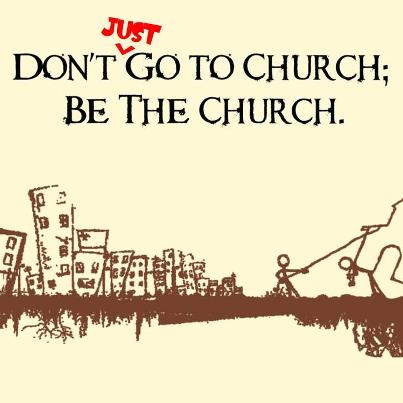
We have to be the light.

Let it be, let it be
Ah let it be, yeah let it be
Whisper words of wisdom, let it be
And when the night is cloudy
There is still a light that shines on me
Shine on until tomorrow, let it be…

-Paul McCartney
Let It Be (1970)

Let it be.

61 Days: Stars

I the Preacher have been king over Israel in Jerusalem. And I applied my heart to seek and to search out by wisdom all that is done under heaven. It is an unhappy business that God has given to the children of man to be busy with. I have seen everything that is done under the sun, and behold, all is vanity and a striving after wind.

What is crooked cannot be made straight,and what is lacking cannot be counted.

I said in my heart, “I have acquired great wisdom, surpassing all who were over Jerusalem before me, and my heart has had great experience of wisdom and knowledge.” And I applied my heart to know wisdom and to know madness and folly. I perceived that this also is but a striving after wind.

For in much wisdom is much vexation, and he who increases knowledge increases sorrow.

Ecclesiastes 1:12-18 (ESV)

The Voyager 1 spacecraft’s 35th anniversary is proving to be unexpectedly exciting, as scientists gathered this week to examine new hints that the spacecraft is on the verge of leaving our solar system.

Voyager 1 is now more than 11 billion miles away from Earth. It blasted off in September 1977, on a mission to Jupiter and Saturn. But it also carried a Golden Record filled with music and the sounds of our planet, in case it encountered intelligent life as it moved out toward the stars.

Scientists have been eagerly waiting for Voyager 1 to become the first human-made object to leave the solar system. And in recent weeks, the spacecraft has sent back intriguing signs that it might be getting close, to the delight of researchers who have been working on it for decades.

-Nell Greenfieldboyce
“After 35 Years, Voyager Nears Edge of Solar System” (Sept. 5, 2012)
NPR.org

Most weekday mornings, I get up early enough to leave home by five, pick up my son who lives nearby, and then go to the gym to workout together. This time of year especially, it’s still dark when I open the garage door. Usually, I step outside for a minute and look up at the sky. The front of my house faces south, so if the sky is clear, I can see a fair number of stars, including the constellation Orion.

I don’t know why I look for it, except I can remember different times in my life, different “eras” in decades gone by, when I would look up at the night sky and recognize that constellation. I suppose it gives me some sense of continuity across my personal history.

It also reminds me of how incredibly small I am.

I intellectually understand how far away the planets and stars are, (I once, very briefly, considered a career in Astronomy) from millions of miles to untold light years, but to actually, experientially grasp the distances, even for a moment, is a staggering feat. I know we have robots on the surface of Mars, and Mars is relatively close to Earth, but if I had to walk such a distance; if I have to travel across the emptiness of interplanetary space, how lonely and isolated I would feel. Imagine yourself somehow traveling with Voyager 1 as it prepares to exit the official confines of our solar system and, setting aside the fiction of Star Trek or Star Wars for a moment, try to comprehend just how far away you would be from everything you know and love…

…except God.

I was thinking all these thoughts this morning as I lay awake in bed around 3 o’clock. I don’t know what brought it to mind. I had a bit of a headache, which is unusual for me, particularly in the morning. Perhaps it was something I had dreamed that disturbed me in some way.

My blog and blog comments periodically come to the attention of a few Internet trolls and, in their self-importance, they find it necessary to be disagreeable (only excusing their rudeness and hostility by calling it “debating” or even some form of “loving”). It’s certainly unsettling to be treated badly by those who also claim the cause of Christ (such as being openly maligned by name on their blogs without so much as a “by your leave”) and I won’t pretend it doesn’t bother me, but then, I stop and realize that it doesn’t really matter.

Oh, of course people matter. I don’t want to suggest that I don’t care about others and their well-being, but what I realize is that there are a few unhappy, or grumpy, or insecure people out there who have to try to suck joy out of the lives of others in a quixotic quest for significance in the blogosphere. It’s their behavior that inspired my Days series where I have been examining the idea of abandoning this blog and perhaps all Internet social media by the end of the calendar year.

So far (and I haven’t made a final decision yet), I’m deciding against giving up. First of all, my trollish critics are few in number, even though they can occasionally make a loud “noise” (like a noisy gong or a clanging cymbal). Secondly, far more people have been encouraging of me, both publicly and “backchannel,” than these two or three “curmudgeons” have been discouraging of me (though they aren’t curmudgeons in terms of years, merely in attitude).

I had thought about making this particular “meditation” today’s morning meditation, but passed it off as random thoughts of the night, deciding that Re-entry was a more worthy topic. But since the trolls have been active today, I decided I’d write this to clear my head of them and to realize that, in our human smallness, what happens from day-to-day in a small collection of blogs among a minority expression of Christianity doesn’t really matter. It’s certainly not worth my peace of mind.

As I said, I’m currently leaning toward continuing this “morning meditation” blog past January 1st, but I also think I’ll institute a tighter set of controls for comments. There haven’t been any really rude comments here for a while, but I anticipate they may return. In the past, in the interests of being fair, I’ve allowed a significant amount of abuse (in the guise of “debate” or being “loving”) in the comments people have posted on my blog, but that is likely to change. Free speech doesn’t mean “free to abuse” and a blog owner is more of a “benign dictator” than a moderator of democratic speech.

No, I won’t immediately flip over into draconian mode and if I think someone has crossed the line, I’ll serve fair warning first, but beyond that, I feel perfectly content to remove specific comments if they cross the line I set for proper decorum. And on occasion, I will close comments on a specific blog post if things get too heated (I’ve done both in the past). Repeat offenders who are not willing to “take a hint,” or those to engage in severe personal attacks or who use obscenities will be immediately banned.

Consider this my version of putting a wall around the roof of my home so that the safety of my “guests,” (and my own safety) who I consider anyone visiting my blog, (and most visitors don’t post comments) can be ensured.

But as I also said, I haven’t made up my mind yet. I can still pull the plug on life support and consign “morning meditations” to a peaceful, dignified demise. Better that than allowing the trolls to abuse what started out as such a peaceful and uplifting vision to begin each day.

When you awake in the morning, learn something to inspire you and meditate upon it, then plunge forward full of light with which to illuminate the darkness.

There are those who insist in living in darkness and they are not satisfied unless they pull others down into their realm with them. I prefer to soar and glide in the heights, letting the light illuminate my mind, my emotions, and my spirit, like the light of the sun gracefully reflects off of the wings of a dove.

The best response to harsh people is how Buddha responded; with a smile, accepting what was good and uplifting around him and not accepting anything else. I can’t even aspire to be Buddha, let alone Jesus, but I am supposed to emulate my Master so far as it depends on me by “living peaceably with all men.” (Romans 12:18)

Infinite darknessAngry and dissatisfied people are not helpful and are not healthy, for themselves or anyone exposed to them, even over the Internet. To repeat a lesson I continually need to learn…

Today I shall…

…try to improve my response to other people so that I only accept and give gifts of kindness, and not of anger.

Everything that we fuss and feud and argue about won’t really matter in the end. Jesus isn’t going to judge us on who won this blogosphere argument or that, no matter how important we may think they are at the time. They don’t really matter. They aren’t significant. Most of what we do isn’t significant. Staring up at the stars at five o’ clock on a clear autumn morning in Idaho, I realize that against all that vastness, against the stars, the space between me and them, and whatever is beyond, I’m not significant at all…

…except to God.

O Lord, our Lord,
how majestic is your name in all the earth!
You have set your glory above the heavens.
Out of the mouth of babies and infants,
you have established strength because of your foes,
to still the enemy and the avenger.
When I look at your heavens, the work of your fingers,
the moon and the stars, which you have set in place,
what is man that you are mindful of him,
and the son of man that you care for him?
Yet you have made him a little lower than the heavenly beings
and crowned him with glory and honor.
You have given him dominion over the works of your hands;
you have put all things under his feet,
all sheep and oxen,
and also the beasts of the field,
the birds of the heavens, and the fish of the sea,
whatever passes along the paths of the seas.
O Lord, our Lord,
how majestic is your name in all the earth!

Psalm 8 (ESV)

61 Days: Preparing for Re-entry

I see church as a less than ideal environment for anyone who wishes to follow Torah…I see the need for rescue missions but for everyone in churches…I think they all need to be rescued — rescued from anti-Judaic doctrines…I see those anti-Judaic Christian doctrines as negatively affecting both Jews and gentiles. There is only one faith and it’s a Jewish faith — it’s the Judaism proposed by Yeshua and the authors of the New Testament.

-a comment from Peter
on Gene Shlomovich’s blog post
One Law Gentile Has a Change of Heart

I’m probably going to regret this, but I really can’t avoid writing this “meditation,” especially given the angst-filled missive I posted yesterday. But in having my conversation over at Gene’s blog, I realized that I’ve been just as guilty of misjudging Christians and been treating the church just as unfairly as I think Peter is. However, he’s right in that he can at least go to a church without writing a month’s worth of daily blogs exposing his every doubt and misgiving, as opposed to me dragging my heels every inch of the way between here and the nearest chapel.

Peter suggests that Christians need to be rescued out of the church and returned to…what?

Well, let’s go back a step. Rescued from what?

rescued from anti-Judaic doctrines…

So you get a small army together, raid a local church during Sunday services, scoop everyone up in a big net, and fly them via helicopter to…where? A late Second Temple era “ekklesia?”

But they don’t exist and frankly, we don’t know how to replicate one. Even if we did, is that our goal? To transport all 21st century Christians back in time twenty centuries to the first “churches” established by Paul in the diaspora? To what end?

OK, I get it. If the Gentiles never stopped worshiping the Jewish Messiah with the Jewish disciples, chances are supersessionism would never have developed and we’d all be hunky-dory together, Jews and Gentiles all praying to Jesus, right?

Well, maybe not.

So I ask, did they stumble in order that they might fall? By no means! Rather through their trespass salvation has come to the Gentiles, so as to make Israel jealous. Now if their trespass means riches for the world, and if their failure means riches for the Gentiles, how much more will their full inclusion mean!

Now I am speaking to you Gentiles. Inasmuch then as I am an apostle to the Gentiles, I magnify my ministry in order somehow to make my fellow Jews jealous, and thus save some of them. For if their rejection means the reconciliation of the world, what will their acceptance mean but life from the dead? If the dough offered as firstfruits is holy, so is the whole lump, and if the root is holy, so are the branches.

But if some of the branches were broken off, and you, although a wild olive shoot, were grafted in among the others and now share in the nourishing root of the olive tree, do not be arrogant toward the branches. If you are, remember it is not you who support the root, but the root that supports you. Then you will say, “Branches were broken off so that I might be grafted in.” That is true. They were broken off because of their unbelief, but you stand fast through faith. So do not become proud, but fear. For if God did not spare the natural branches, neither will he spare you. Note then the kindness and the severity of God: severity toward those who have fallen, but God’s kindness to you, provided you continue in his kindness. Otherwise you too will be cut off. And even they, if they do not continue in their unbelief, will be grafted in, for God has the power to graft them in again. For if you were cut from what is by nature a wild olive tree, and grafted, contrary to nature, into a cultivated olive tree, how much more will these, the natural branches, be grafted back into their own olive tree.

Romans 11:11-24 (ESV)

What picture is Paul painting here? This letter was addressed to a congregation of disciples in Rome that included both Jews and Gentiles. He’s “toggling” back and forth between each population in this letter, trying to keep each group from playing the “superiority card” against the other. He’s telling both the Jewish group of disciples and the Gentile group of disciples not to get too cocky, because God is the final judge of who will be on the root and who will knocked off, and for that matter, who will be put back on again. The “glue” was (and is) faith, not simply being Jewish or being non-Jewish.

But even this early in the history of “the church,” the friction between Jewish and non-Jewish disciples was evident…and this was a combined congregation, with Jews and Gentiles worshiping together, breaking bread, fellowshiping, davening together.

On the one hand, both the Jews and Gentiles in Rome would have been part of the Roman culture, but on a deeper level, Jews, no matter where they live, have their own culture, apart from the surrounding goyim. Chances are, the “Messianic” Jews lived in a Jewish section of Rome, apart from the Gentile disciples. Chances are, there were a thousand other cultural, ethnic, lifestyle and halalaic differences between the Jews and Gentiles that, while they were held together in their faith in the Messiah, they were also separated in these many other ways. Why do you think Paul had to write “neither Jew nor Greek” to other churches as we see in Galatians 3:28?

Often, we miss these matters when reading the New Testament, but the struggle to integrate the non-Jewish nations and the various cultures they represented into the worship of the God of Israel must have been an enormous task for the Jewish disciples who were, at that time, the leaders and mentors of the ekklesia of Christ. Friction between the Jews and the various people groups from the nations was inevitable from the beginning. Maybe that’s part of the reason Paul wrote to the Roman Gentiles, ” a partial hardening has come upon Israel, until the fullness of the Gentiles has come in.”

The partial hardening upon Israel has to come! If the Messianic (Christian) faith had remained exclusively or primarily Jewish at that point in history (and especially if the Gentile disciples were expected to take on the full yoke of the Law as a minority of Hebrew Roots practitioners believe today), then either the Gentiles would not have accepted Jesus in such great numbers or, they would have “reinvented” the faith anyway, alienating the Jews and recreating the Jewish Messiah as the Goyishe Jesus.

Does that mean that part of God’s plan for integrating the nations into faith and trust in God through the Jewish Messiah was a separation between Jews and Gentiles? It certainly could be seen that way. Does that mean we must always be totally separate and even hostile toward one another? Absolutely not. The budding Messianic Jewish movement of the past few decades, which is now gaining increasing traction, is evidence that we can interface and fellowship while retaining our national and cultural distinctions.

I’m quite familiar with the history of supersessionism in the church and the long centuries of enmity between Jew and Christian and thankfully, that is slowly ending. But is the “cure” for this supersessionism to remove the Christians from the church and to include them in a Jewish synagogue setting, attempting to integrate them into modern Jewish cultural and religious practices?

Or is there another way?

What about Christians who are not supersessionist staying in the church or returning to church? What about being members of a church so that the church can become more aware of its heritage and its connections to ancient Judaism; so it can begin to recognize the face of the Jewish Messiah King as the actual face of Jesus Christ?

I launched Going Back to Ekklesia a day early because I needed to write this “sequel.” I needed to firm up my commitment to return to fellowship with other Christians and not treat them as an “alien other” that I’m just “visiting” but not actually a part of. If I am to champion the cause of Christianity to those “Christians” I encounter who disdain the name, then I must belong to the group of people, the church, who have faithfully followed the cause of Christ.

I apologize to anyone who I’ve offended by my previous comments, particularly in my hesitation at joining fellowship. I realize now, by seeing the church through another’s eyes, that I was being woefully unfair and unkind. I ask that you accept me as a fellow brother in the faith, though I probably won’t always talk as you’d expect a Christian to express himself (just read my blog posts to see what I mean). If my personal “wall of separation” is to come down, then I’m the one who has to remove it.

I have no illusions that I’m so powerful or smart or cool that my single contribution will be some sort of “big deal,” but if nothing else, I’ll remove any sort of dissonance from my statements and I’ll have something “real” to talk about.

Whatever comes your way today, whatever situation you walk through, you are safe in God’s hands. Any storm that swirls around you swirls around Him. He is your Shield, your Strength, your Rock, your Fortress. Nothing is getting through without His permission. We may not always understand why He allows what He allows, but we can cling to the blessed fact of His everlasting love.

Marie

Giving

Now the full number of those who believed were of one heart and soul, and no one said that any of the things that belonged to him was his own, but they had everything in common. And with great power the apostles were giving their testimony to the resurrection of the Lord Jesus, and great grace was upon them all. There was not a needy person among them, for as many as were owners of lands or houses sold them and brought the proceeds of what was sold and laid it at the apostles’ feet, and it was distributed to each as any had need.

Acts 4:32-35 (ESV)

Communal life was not new to the first century Jews. The Essenses lived in a communal fashion somewhat similar to Luke’s description of the Jerusalem community. The Essenses surrendered property and possessions to the common fund. The disciples’ economic model of common property, shared meals, and communal life might also be compared to the socialist, secular Kibbutz movement in the modern state of Israel.

from Torah Club, Volume 6: Chronicles of the Apostles
Torah Portion Vayera (“And he appeared”) (pg 92)
Commentary on Acts 4:32-5:42
Produced by First Fruits of Zion (FFOZ)

Periodically, religion gets dragged into the political arena (and after all, this is an election year) or it is thrust into such an arena by some of its adherents. Christianity and Judaism are no exceptions, and particularly fundamental Christianity often makes its presence known, for better or for worse, in support or opposition to issues and candidates. On the other hand, there are Christians who use the example of the early Jewish disciples in the passage we see quoted above as an illustration of how we should “redistribute wealth” so that those who have should give to those who do not, creating a balance of sorts, where everyone possesses exactly the same material goods as the next person, with no one having more and no one having less.

I mentioned the concept of “Christian communism” in last week’s study on Acts and suggested that this particular scenario was never meant to be the eternal model of the Christian church. In fact, according to D. Thomas Lancaster’s study on this week’s portion of Acts, this particular type of community was responding to a very specific set of circumstances.

What factors gave rise to the communal economy of the Jerusalem believers? The apostles were all Galileans. None of them owned property in Jerusalem. With them came their families, wives, and children and several more Galilean followers of Yeshua (Jesus). The entire community intended on staying in Jerusalem where they could meet daily in the Temple. The Temple anchored the believing community in Jerusalem. It became their place of assembly and prayer and the central hub from which they proclaimed the gospel. In addition, pilgrims from all over the world, present at Jerusalem for Shavuot, had become disciples. Many elected to relocate to join the community. They were without property or career in Jerusalem. The establishment of the Jerusalem community required a corporate economy. Those relocating to Jerusalem sold their possessions and contributed to the upkeep of the community.

So, taking the specific context into consideration, we don’t particularly see a case where Peter or John cried out, “Hey everybody! Jesus told us sell all our stuff and give it to all the people who don’t have anything!” We also have to keep in mind that all of this giving was totally voluntary. No one was forced to give up all their personal possessions nor was it actually a condition of being part of the community. It was simply a practical consideration, especially for those Jews (and all of the people we’re talking about here are Jewish) who were making “aliyah,” if I can borrow the modern term, and returning to the Land.

But I know you’re thinking about Ananias and Sapphira.

But a man named Ananias, with his wife Sapphira, sold a piece of property, and with his wife’s knowledge he kept back for himself some of the proceeds and brought only a part of it and laid it at the apostles’ feet. But Peter said, “Ananias, why has Satan filled your heart to lie to the Holy Spirit and to keep back for yourself part of the proceeds of the land? While it remained unsold, did it not remain your own? And after it was sold, was it not at your disposal? Why is it that you have contrived this deed in your heart? You have not lied to man but to God.” When Ananias heard these words, he fell down and breathed his last. And great fear came upon all who heard of it. The young men rose and wrapped him up and carried him out and buried him.

After an interval of about three hours his wife came in, not knowing what had happened. And Peter said to her, “Tell me whether you sold the land for so much.” And she said, “Yes, for so much.” But Peter said to her, “How is it that you have agreed together to test the Spirit of the Lord? Behold, the feet of those who have buried your husband are at the door, and they will carry you out.” Immediately she fell down at his feet and breathed her last. When the young men came in they found her dead, and they carried her out and buried her beside her husband. And great fear came upon the whole church and upon all who heard of these things.

Acts 5:1-11 (ESV)

But what was their great crime and why did they die? Was it because they held back some of their wealth from the community? Peter seemed to think it was because they lied to the Holy Spirit. What if they had said, “we are selling our property but are giving only half the proceeds to the community, keeping the other half for ourselves?” Would they have died for being “greedy;” for desiring to keep some of what was rightfully theirs (and Peter acknowledges this)?

Probably not. But Ananias and Sapphira wanted to appear as if they were giving everything to the community when in fact, they kept back some if the profits. They wanted to “look good” and still secretly keep more for themselves. They wanted to have their cake and eat it too, as the saying goes. So it wasn’t greed as such that resulted in their deaths, but greed that lead to lying to God and to the community.

Perhaps the following will help to illustrate what happened and of what sort of economic model the early Jerusalem community was using.

There are four types of people. There’s the man who says, “What’s mine is mine, and what’s yours is yours.” This kind of man is neither good, nor bad, but some say this is the type of person that lived in Sodom. There is the man who says, “What’s mine is yours and what’s yours is mine.” This kind of man is an ignoramus. There is the man who says, “What’s mine is yours and what’s yours is yours.” This is a righteous man. Finally, there is the man that says, “What’s mine is mine, and what’s yours is mine.” This is a wicked man.

m.Avot 5:10

Applying this principle to the Jerusalem community, Lancaster says:

The third expression, “What’s mine is yours and what’s yours is yours,” best expresses our Master’s ideal for His disciples and describes the type of economy practiced by the Jerusalem community. They sold their possessions and goods only to meet the needs of others as those needs arose.

Notice that the focus is not on everyone being compelled to give up everything for the sake of the community, but rather, while you understand the value of giving and hospitality to others, it is not contingent upon the other having the same values as you. You do not demand that the other consider his possessions as yours. You only accept upon yourself the value your possessions also belonging to the other as the other has need of them. (Notice too, that the one who believes that “What’s mine is yours and what’s yours is mine” is considered an ignoramus.)

But again, we need to remember that we are reading here applies specifically to the Jerusalem Community and isn’t necessarily the universal model for what all Christian communities should be like in the world today. There are also other, related principles to keep in mind.

Now we command you, brothers, in the name of our Lord Jesus Christ, that you keep away from any brother who is walking in idleness and not in accord with the tradition that you received from us. For you yourselves know how you ought to imitate us, because we were not idle when we were with you, nor did we eat anyone’s bread without paying for it, but with toil and labor we worked night and day, that we might not be a burden to any of you. It was not because we do not have that right, but to give you in ourselves an example to imitate. For even when we were with you, we would give you this command: If anyone is not willing to work, let him not eat. For we hear that some among you walk in idleness, not busy at work, but busybodies. Now such persons we command and encourage in the Lord Jesus Christ to do their work quietly and to earn their own living.

2 Thessalonians 3:6-12 (ESV)

But if anyone does not provide for his relatives, and especially for members of his household, he has denied the faith and is worse than an unbeliever.

1 Timothy 5:8 (ESV)

As far as Paul’s letters are concerned, we have to be careful to separate out what he intended to be universal principles of the faith vs. specific instructions to those individual churches with particular problems. However as far as the two above-quoted statements, it seems the ideal of being self-supporting and taking care of one’s family first is a good rule of thumb for any Christian. This certainly does not preclude charitable giving, and particularly providing care for the needy, and tzedakah is a long-established mitzvot among the Jews and was taught repeatedly by Jesus. However, none of that suggests we must give to charity before taking care of our families, nor that we should be compelled to give to what others consider a worthy cause at the cost of supporting our families.

But there’s another important example to consider, one presented to us by our own Master.

And he sat down opposite the treasury and watched the people putting money into the offering box. Many rich people put in large sums. And a poor widow came and put in two small copper coins, which make a penny. And he called his disciples to him and said to them, “Truly, I say to you, this poor widow has put in more than all those who are contributing to the offering box. For they all contributed out of their abundance, but she out of her poverty has put in everything she had, all she had to live on.”

Mark 12:41-44 (ESV)

In Judaism, the principle of giving tzedakah does not require that you give yourself into the poorhouse, so to speak, or require that you starve your family for the sake of others, even if those others appear more needy than you. Yet Jesus praises this poor widow who gave all she had to live on to the offering box. I don’t know if this was meant to be taken literally or as a parable to teach a lesson. For instance, the rich gave out of their wealth and thus sacrificed nothing of their own livelihood, so should they be as praiseworthy, giving thousands of dollars (this is just an example) as compared to one who sacrificed all that she had to live on, even though it was only pennies? What it seems Jesus is teaching is not spending yourself into poverty by giving to the poor, but that it is more praiseworthy for the poor to give little and yet have it be a significant impact on their livelihood, than for the rich to give much and to affect them not at all.

The Rebbe and the ChildIt would be like very small child giving everything in her piggy bank to a charity that supports needy children in disadvantaged nations, vs. Bill Gates giving millions to the same charity (although the child, of course, can depend on her parents to provide for her needs).

So what do we see in all of this that applies to Christians today? Christ does not expect us to do without personal possessions or to do away with belongings of our own. It seems the Christian principle of earning your own way and taking care of your own family is an important and even vital one. We are expected to give and give generously to those who are in need (as opposed to those simply in want who can provide for themselves), but Christianity does not require that literally no one has more than another person.

Also, and this is very important, giving is not mandatory and cannot be forced. If you say you are going to give a certain amount or value, then give it and don’t lie, just to be seen as more holy or more like a good guy. On the other hand, if you sell property, for example, and say you will give half the value to charity and keep the other half for yourself, there’s nothing un-Christian about that. Whatever you give, you give out of willingness, not because you were forced or coerced into it, either by your church, or by your government, or by pressure from a “politically correct” social group.

OK, I’m being maybe a little political here, but I’m trying to illustrate a point. Giving and sharing, as far as the Bible is concerned, cannot be defined by a social group, or a cultural value, or a political party, or a government. Charity is between you, those you give to, and God. It cannot be manipulated by any party or entity outside of those involved.

Blessings.

First Seek Peace

There are three ways to bring unity between two opposites:

The first is by introducing a power that transcends both of them and to which they both utterly surrender their entire being. They are then at peace with each other because they are both under the influence of the same force.

But their being is not at peace—their being is simply ignored.

The second way is by finding a middle ground where the two beings meet. The two are at peace where they meet on that middle ground—but the rest of their territory remains apart and distant.

The third way is to reveal that the essence of every aspect of the two beings is one and the same.

-Rabbi Tzvi Freeman
“Essential Peace”
Based on letters and talks of the Rebbe
Rabbi M. M. Schneerson
Chabad.org

All the possessions and pleasures of the world are only valuable to the extent they are accompanied by peace of mind. A person who has tremendous riches and can gratify all of his desires, will nevertheless suffer if he lacks peace of mind.

As a rule, the power-hungry and the status-seekers lack this obvious realization. Why work on obtaining power and status when you have the ability to work on something that is much more precious? A peaceful mental attitude and serenity of the soul are the most important factors for happiness.

It is related that when an ancient emperor was about to sail for Italy, an advisor asked him what his ultimate plans were. “To conquer Rome,” he replied. “What will be after that?” “To conquer Carthage, Macedonia, and Greece.” “And after you have conquered all that, what are your plans?” Then I will be able to spend my life in peace and comfort.” “But,” queried the wise advisor, “why not be in peace and comfort right now?”

-Rabbi Zelig Pliskin
“Daily Lift #620”
Aish.com

What is it to be at peace? What is it to be at peace with others, especially those who seem to be the opposite as you? In Rabbi Freeman’s commentary, who or what is he talking about? Could it be reconciling between a man and a woman. Plenty of married people feel they are joined with an “opposite” who doesn’t understand the first thing about them? Then again, he could have been talking about man and God, but then, how could he suggest that a third and larger force be able to bring peace between them, when there is nothing larger than God? How about Christian and Jew, but certainly they are not the only “opposites,” for there are many different religious traditions that seemingly contradict each other.

God only knows
God makes his plan
The information’s unavailable
To the mortal man
We work our jobs
Collect our pay
Believe we’re gliding down the highway
When in fact we’re slip slidin’ away

-Paul Simon
from the song “Slip Slidin’ Away” (1977)

Like the ancient emperor in Rabbi Pliskin’s story, we too make all kinds of plans that, in the end, are designed to bring us pleasure and peace. Who knows if they’ll ever work, but we’ve got to try. Of course, that often means putting off pleasure and peace for a long time, maybe many years, until our “retirement,” if it ever comes. In the meantime, what do we do? Do we ever have peace? What is peace?

It seems like we are in a life that is constantly in conflict. The world is in conflict, people in different nations and within our own nation contend with each other. We ruin each other’s peace. Sometimes I think it would be better to be alone. Then at least, there would be peace and quiet. But is that what God intended when he said “be fruitful and multiply,” first to Adam and then to Noah? Probably not. We seem to be expected to make peace with our “opposite,” who in one sense is the mate God chose to correspond to us. But how is this done? Must we just plan and scheme and wait for peace to come like Rabbi Pliskin’s mythical emperor?

“The land of a rich man produced plentifully, and he thought to himself, ‘What shall I do, for I have nowhere to store my crops?’ And he said, ‘I will do this: I will tear down my barns and build larger ones, and there I will store all my grain and my goods. And I will say to my soul, “Soul, you have ample goods laid up for many years; relax, eat, drink, be merry.”’ But God said to him, ‘Fool! This night your soul is required of you, and the things you have prepared, whose will they be?’ So is the one who lays up treasure for himself and is not rich toward God.”

Luke 12:16-21 (ESV)

That didn’t work, either.

What’s the secret? What must we do? Some believe that we must understand what God wants us to do; how God wants us to obey Him, right down to the slightest detail, in order to find peace. Peace is not a state of mind then, nor is it a relationship with an opposite, neither with a spouse, nor with another person such as Christian or Jew, nor with God. Peace is the perfect “doing” of things, like the mitzvot, not due to a desire to please, or as a means to express compassion, grace, or love, but for the sake of simply doing and simply knowing how to do. Is that what God intended, actions and things to be placed above people and particularly loved ones? Does that being peace within and peace with others?

Rabbi Yaakov Ruderman, zt”l, the former Rosh Yeshiva of Ner Yisroel, reported a story which the Chofetz Chaim had told him.

The Chofetz Chaim used to visit the saintly Rabbi Nachum from Grodna. The Chofetz Chaim considered him to be his teacher and Rebbe, as he studied and learned from his holy actions and customs in all areas of Torah. Once, on one of the nights of Chanukah, the Chofetz Chaim was at his Rebbe’s home, and nightfall came and went. The hours passed, the street traffic thinned out, and still the candles of the menorah remained unlit. Much later, the wife of Rabbi Nachum returned home, and only then did his Rebbe kindle the Chanukah lights.

The Chofetz Chaim asked his Rebbe for an explanation of what had happened, for the halachah seems to say that the lighting should be done in an expedient fashion, and his Rebbe’s wife’s obligation could have been fulfilled with her husband’s lighting, even without her being home at the time.

Rabbi Nachum explained. The halachah tells us that if a person has only enough money for either Shabbos candles or Chanukah candles, the candles of Shabbos have priority, for the glow of the Shabbos candles ensures and guarantees tranquility in the house – Sh’lom Bayis. “My wife,” continued Rabbi Nachum, “is selfless and dedicated. It is to her credit that I am able to learn Torah and to be involved in the many Mitzvah activities which I handle. She enjoys being present when I light the Chanukah candles. It is for this reason that I decided that the consideration of “Sh’lom Bayis” takes priority, and I waited for her, rather than light earlier during the prime hour.”

Daf Yomi Digest
Stories Off the Daf
“Sh’lom Bayis comes first”
Shabbos 23b

Obviously, study, learning, and understanding the mitzvot of God is not irrelevant, nor would I ever suggest such a thing, but as we see in this example, it’s not the doing of things that is the most important of the mitzvot, it’s the caring for others, including one’s beloved spouse.

“Do not lay up for yourselves treasures on earth, where moth and rust destroy and where thieves break in and steal, but lay up for yourselves treasures in heaven, where neither moth nor rust destroys and where thieves do not break in and steal. For where your treasure is, there your heart will be also.”

Matthew 6:19-21 (ESV)

Peace is not the absence of conflict, noise, strife, or struggle, but the presence of the heart. Our “treasure;” our peace, both within ourselves and with others including with God, is where ever we place our heart and our love.

If I speak in the tongues of men and of angels, but have not love, I am a noisy gong or a clanging cymbal. And if I have prophetic powers, and understand all mysteries and all knowledge, and if I have all faith, so as to remove mountains, but have not love, I am nothing. If I give away all I have, and if I deliver up my body to be burned, but have not love, I gain nothing.

1 Corinthians 13:1-3 (ESV)

How often is this simple lesson completely ignored or worse, reviled and ridiculed, in favor of “debate” and “argument” and “discussion” in order for people to jockey for position in the hopes of gaining some sort of superiority over their fellow disciples in Christ. Better that we just smile at and return our peace to those who continually seek to give us the gifts of strife and discord.

A caring person is an elevated person. It is a great act of kindness to express your caring for people who might not realize that you care about them.

Today, think of three people who would greatly appreciate your sincere caring. Be resolved to let them know that you care about them as soon as possible.

-Rabbi Zelig Pliskin
“Daily Lift #619”
Aish.com

We see in examples from the Master, the Jewish Messiah King, from his emissary to the Gentiles, the Jewish “sage” Paul, and down to the Rabbis of the modern era, that love, peace, and caring are not something that we consider only after knowledge, study, and scholarship. They are the very goal for which we study. The Bible exists so that we may know God, not as a Professor knows history or as a Scientist knows chemistry or physics, but as a man knows a woman in total intimacy and love. It is from that love and intimacy with God that we can represent His Name and His grace to our fellow human beings, to our spouse, our children, our neighbors, and to even strangers. We are commanded to love. We are made to love, first God and then the world, just as God so loved the world (John 3:16).

And one of the scribes came up and heard them disputing with one another, and seeing that he answered them well, asked him, “Which commandment is the most important of all?” Jesus answered, “The most important is, ‘Hear, O Israel: The Lord our God, the Lord is one. And you shall love the Lord your God with all your heart and with all your soul and with all your mind and with all your strength.’ The second is this: ‘You shall love your neighbor as yourself.’ There is no other commandment greater than these.” And the scribe said to him, “You are right, Teacher. You have truly said that he is one, and there is no other besides him. And to love him with all the heart and with all the understanding and with all the strength, and to love one’s neighbor as oneself, is much more than all whole burnt offerings and sacrifices.” And when Jesus saw that he answered wisely, he said to him, “You are not far from the kingdom of God.” And after that no one dared to ask him any more questions.

Mark 12:28-34 (ESV)

To those of you who have responded to me (for whatever reason) with anger and upset, I’ll have to take my lesson from Gandhi and refuse your “gift.” In seeking my peace, I desire to seek your peace as well. However, that is only available when we love God, for in loving Him and in loving our neighbor, can we be at peace with each other and within ourselves.

Shalom to you all.