Tag Archives: God

Don’t Give Me Flowers

Dear Rabbi,

I am going to visit my grandmother’s grave and was planning to buy a bunch of her favorite flowers. But I have noticed that Jewish graves are usually flowerless. Is there anything wrong with placing a nice bouquet on her grave?

Answer:

While flowers are a beautiful gift to the living, they mean nothing to the dead. In death, the body which is ephemeral and temporary is gone, and all that remains is that eternal part of the person, their soul. The body, like a flower, blossoms and then fades away, but the soul, like a solid stone, lives on forever.

In the world of truth, the place we all go to after life on earth, what counts is the lasting impact we had on the world. It is the achievements of the soul, not of the body, that remain beyond the grave. The money we make, the holidays we go on, the food we eat and the games we play – these are all flowers that die along with us. But the good deeds we do, the love we show to others, the light we bring into the world, these are eternal.

If you want to honor your grandmother, take the money you would have spent on flowers and give it to charity in her memory. Then take a modest stone that costs you nothing and place it on her grave, to tell her that though she is gone, the impact she had on you is everlasting.

-Rabbi Aron Moss
“Why No Flowers on Jewish Graves?”
Chabad.org

I’m tempted to just leave it at that. I mean, how can I possibly add to such a beautiful sentiment? Rabbi Moss has given us such a perfect answer and pointed us in a direction that honors our deceased loved ones and continues to help the living who are in need.

I’ve said before that the religious blogosphere is replete with debates and discussions where two or more groups “jockey for position” and attempt to establish the “rightness” of their arguments relative to the “wrongness” of someone else’s. I don’t deny that it’s important to dynamically exchange ideas in order to seek truth and establish clarity among the worshipers of God, but that’s not really defines us.

As least I hope not.

We know that what is supposed to define the disciples of Jesus Christ is our love for one another, as he expressed it in his new commandment recorded in John 13:34. As far as I know, I may be one of the few people in the religious blogging space who spends so much time “invoking” this new commandment of the Master’s as both lesson and plea to the body of believers (am I beating a dead horse?).

Last week, on Judah Himango’s blog, I suggested that we both (and anyone else who was game) spend the next week blogging only on uplifting and inspirational topics and leave the “debates and discussions” for another time. I subsequently announced my intent on my own blog and for the past week, I’ve made every effort to avoid writing about controversy and to truly create messages that illustrate the beauty of God and the hearts of those who love Him. I hope I was successful, but that’s for my audience to judge.

It’s not like I’ll never post another uplifting and inspirational “meditation” again, but at the end of this coming Shabbat, the week will be over and I’ll open up the content of my blog to a wider range of topics. This week has taught me a few things. For one thing, two of my “followers” dropped off, so I guess blog posts about God, love, and compassion toward others aren’t for everyone. Activity levels have also dropped off somewhat, so I suppose this sort of theme doesn’t inspire a lot of discussion.
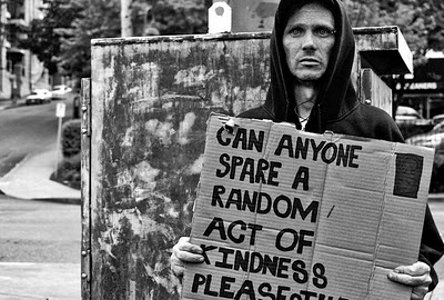
However, I also learned that it’s more difficult to be “dark and moody” when I am focused on crafting a message that must be supportive and uplifting toward anyone who reads it. No debating theological puzzles. No anguishing over personal issues. No staring into the dark abyss of my soul. No controversies. No disputes. No debates. No “us vs. them.” Just following the path created by a God who wants us to love Him by loving other human beings…and by loving ourselves as He loves us.

I thought that dedicating my daily blog posts to a limited theme would be restrictive and in one sense, it was. On the other hand, it was also very liberating. I could put down the weight of defining my theological and spiritual message in terms of what I opposed and was free to rise up out of the mud and seek out a higher purpose. There is no higher purpose than to serve God and to help other people.

It did require though, that I keep my mind more fluid and open to seeing the good in other people, other circumstances, and in everything I encountered.

There is nothing new under the sun. –Ecclesiastes 1:9

America was always there, long before Columbus discovered it. Penicillin killed bacteria long before Fleming discovered it. We could go on to list numerous discoveries which could have benefited mankind long before they came to our attention.

It has been said that when the student is ready, the teacher appears. We can say the same thing about discoveries: they become evident to us when we are ready for them.

Just what constitutes this state of readiness is still a mystery. While technological advances are usually contingent upon earlier progress, many other discoveries were right before our eyes, but we did not see them.

This concept is as true of ideas and concepts in our lives as it is true of scientific discoveries. The truth is out there, but we may fail to see it.

In psychotherapy, a therapist often points out something to a patient numerous times to no avail, until one day, “Eureka!” – a breakthrough. The patient may then complain, “Doctor, I have been coming to you for almost two years. Why did you never point this out to me before?” At this point, many therapists want to tear out their hair.

Just as patients have resistances to insights in psychotherapy, we may also resist awareness of important ideas and concepts in our lives. If we could sweep out these resistances, we could see ourselves with much more clarity. We must try to keep our minds open, particularly to those ideas we may not be too fond of.

Today I shall…

try to keep an open mind so that I may discover ideas that can be advantageous to myself and others.

-Rabbi Abraham J. Twerski
“Growing Each Day, Av 29”
Aish.com

We can think of leaving flowers on the grave of a loved one as something we do more for ourselves than for someone else. After all, Rabbi Moss is right in saying that the flowers mean nothing to the dead. The flowers look beautiful for a day and then fade, wilt, and finally die. Then someone has to come along, pick them up, and toss them in the trash.

In a hundred years, will all the debates and discussions on our “vital issues” in our blogs become dead flowers that have to be thrown in the trash?

But what of our good deeds, our acts of compassion, our expressions of love? Aren’t these the crowns that will last forever?

Everyone who competes in the games goes into strict training. They do it to get a crown that will not last, but we do it to get a crown that will last forever. –1 Corinthians 9:25 (NIV)

Like I said before, it’s not that we shouldn’t discuss, debate, and seek out the truth by placing it in a sort of “blogosphere crucible.” We should just keep our perspective and realize what is really important to people, to our world, and to God. Whoever “wins” a blogosphere debate may get a “crown” but it will not last. Whoever feeds a hungry person, visits a sick friend in the hospital, or comforts a widow in her grief will gain a crown that is eternal.

Re’eh: Choosing to Love

These concepts are relevant with regard to this week’s Torah reading, Parshas Re’eh, which begins: (Deuteronomy 11:26.) “See that I am placing before you today a blessing and a curse.” The portion continues to allude to free choice, reward and punishment: (Ibid.: 27-28.) “The blessing [will come] if you obey the commandments… and the curse [will come] if you do not heed… and go astray from the path which I have commanded.”

Moshe is telling the people that their observance of G-d’s commandments will not be a spontaneous response. Instead, they will constantly be required to make conscious choices.

Why does G-d grant man choice? To elevate him to a higher plane of Divine service. Were man’s choice between good and evil to come naturally, he would not have any sense of accomplishment. What would he have earned?

-Rabbi Eli Touger
“The Power of Sight”
from the “In the Garden of Torah” series
Commentary on Torah Portion Reeh
Chabad.org

But wouldn’t it be easier and a lot less hazardous to our souls if God didn’t give us a choice? After all, look at how badly we messed up the first choice we were ever given.

He said to the woman, “Did God actually say, ‘You shall not eat of any tree in the garden’?” And the woman said to the serpent, “We may eat of the fruit of the trees in the garden, but God said, ‘You shall not eat of the fruit of the tree that is in the midst of the garden, neither shall you touch it, lest you die.’” But the serpent said to the woman, “You will not surely die. For God knows that when you eat of it your eyes will be opened, and you will be like God, knowing good and evil.” So when the woman saw that the tree was good for food, and that it was a delight to the eyes, and that the tree was to be desired to make one wise, she took of its fruit and ate, and she also gave some to her husband who was with her, and he ate. Then the eyes of both were opened, and they knew that they were naked. And they sewed fig leaves together and made themselves loincloths. –Genesis 3:1-7 (ESV)

Were we elevated “to a higher plane of Divine service” on that particular occasion?

On the other hand, consider this.

You are raising a young child and trying to teach him good work habits as well as basic moral and ethical principles. On top of that, like all parents, you want your child to love and respect you. You can teach your child in a couple of different ways. You can threaten to punish your child if he doesn’t do what you ask of him, or you can offer rewards if he does what you want.

This is more or less how we tend to parent children. We put them in “time out” or take some other punitive action when they make “bad choices,” and we give them treats or allowances (money) for achieving certain goals.

But what we really want more than anything else, is for our children to do what we ask of them because they love us.

I mean, what Mom’s heart hasn’t melted when their little boy gives her a card made with construction paper, glitter, and colored with crayons saying “I love you” and it’s not even her birthday or Mother’s day? He did it just because he loves her.

Even the toughest Dad, if he has a heart at all, will turn to mush when his little girl jumps into his lap, gives him a big hug and says, “I love you, Daddy.”

You’re not alive if that doesn’t get to you.

What does God want?

And he said to him, “You shall love the Lord your God with all your heart and with all your soul and with all your mind. This is the great and first commandment. –Matthew 22:37-38 (ESV)

God loves people and He blesses us. He desired to bless the children of Israel, not because they were the best or the brightest or the most humble of all the peoples of the earth, but because He loved them (and He loves them still). The words “bless” and “blessed” are all over this week’s Torah portion. We also see from the often quoted John 3:16 that it wasn’t just the Israelites that God loved (and loves), but it’s the whole world. God loves all of His creations. He loves all of us who have been created in His image.

Naturally, He wants us to love Him back. He provides us with blessings and curses in order to do what we do as parents for our children. To discipline us. To teach us lessons in ethics and morals. To help us understand the difference between right and wrong. But most of all, He doesn’t want us to obey him just because of the blessings and curses. He wants us to obey Him because we love Him.

Be aware of the positive attributes and behaviors of the people with whom you come into contact and help them build upon their strengths. Encouragement is a much more powerful tool for change and growth than blaming and condemning. You can bring about miracles in people’s lives if you believe in their potential.

-Rabbi Zelig Pliskin
“Bring about Miracles in People’s Lives”
from the “Today’s Daily Lift” series
Aish.com

In Matthew 22:39, Jesus tells us that we can show our love to God by loving our neighbors as we love ourselves. We should show love to our neighbor, not because we want a reward or we fear a punishment, but because we love God and frankly, because it’s the right thing to do. Nevertheless, love brings blessings. Rabbi Touger finishes his commentary this way:

The ultimate expression of the potential of sight will be in the Era of the Redemption, with the fulfillment of the prophecy: (Isaiah 40:9) “The glory of G-d will be revealed and all flesh will see.” In contrast to the present era, when we can see only material entities and G-dliness is perceived as an external force, in that future time, we will see directly how G-dliness is the truth of all existence.

Nor is this merely a promise for the distant future. The Redemption is an imminent reality, so close that a foretaste of its revelations is possible today. Indeed, it is already possible to see manifestations of the blessings of Redemption in the events which have occurred to the Jewish people in the recent past.

Whenever we love God by acting out that love toward others, we see not only a vision of the ultimate redemption of the world that will occur when Jesus returns, but we summon something of that Messianic redemption in the very act of being loving. This applies not only to the Jewish people but to anyone who is learning to know and love God. This is also one of the values of the Shabbat, which is a foretaste of the Messianic Age wrapped up in a single twenty-four hour period.

Love God and love others, not because you want something or are afraid of something. Love because you know what it feels like to be loved. Love because you are loved. Just love.

Good Shabbos.


When Judgment is an Opportunity

Shortly, it will be Rosh Chodesh Elul (August 18th and 19th), the beginning of the Hebrew month of Elul. This means that there is one month and counting to Rosh Hashanah (Sunday evening, September 16th). Many people might ask, “So, what?” or might think, “Thanks for the reminder to buy a brisket!” However, the answer to “So, what?” is that we have one month to prepare for Rosh Hashanah … and Yom Kippur. Why would one want to prepare for Rosh Hashanah? Rosh Hashanah is the Day of Judgment when the Almighty decides “Life or death, sickness or health, poverty or wealth.” Does it make sense to prepare for a day of judgment?

-Rabbi Kalman Packouz
from Shabbat Shalom Weekly for
Re’eh (Deuteronomy 11:26-16:17) 5772
Aish.com

Good question. Actually, for most Christians, the only “Jewish holiday” most of us are aware of is Passover. The rest of the Jewish religious calendar is something of a mystery to us and therefore has no particular impact.

Except for those of us who are married to a Jewish spouse or have some other reason to be aware of the annual “lifecycle” of Jewish religious observance and faith.

Also, Rosh Hashanah and Yom Kippur are rather moot to most Christians because we were all “saved” when we became believers and confessed Christ. We were all forgiven of our sins and never once looked back or considered our past sinful lives.

More’s the pity.

But why would I say that? Shouldn’t a Christian celebrate and even revel in the fact that, from God’s point of view, our sins are as far away from us as “the east is from the west?” (Psalm 103:12)

Yes and no.

Please don’t get me wrong. Salvation from our former lives as slaves to our own personal wants and desires and reveling in our isolation from God is a tremendous thing and the cornerstone upon which our faith is built. But I sometimes think we Christians gain a little too much mileage from our salvation. I think the result is that we think too little of our sins, at least some of us, and don’t consider that even though we are disciples of Christ and sons and daughters of the Most High God, we’re not perfect.

Far from it.

What shall we conclude then? Do we have any advantage? Not at all! For we have already made the charge that Jews and Gentiles alike are all under the power of sin. As it is written:

“There is no one righteous, not even one; there is no one who understands; there is no one who seeks God. All have turned away, they have together become worthless; there is no one who does good, not even one.” –Romans 3:9-12 (ESV)

OK, so we’re saved but not perfect. We have no righteousness of our own and we depend on the righteousness of Jesus in order to be reconciled with God. But what does that have to do with Rosh Hashanah and Yom Kippur?

The Jewish religious calendar is replete with times of preparation. Jews prepare themselves for their formal meeting times with God. Jews prepare for Passover, Shavuot, Sukkot, and of course, Rosh Hashanah and Yom Kippur.

But Jews formally meet with God every week on Shabbat and twice daily during formal prayer. And Jews prepare for each event, regardless of its scope and frequency.

What do Christians prepare for? The formality and august, immense, majesty of the Days of Awe seem to be without comparison. I’m not even sure if Christians approach Easter with the same solemn effort of preparation and anticipation (but it’s been a long time since I attended a church).

But maybe we should (after all, Easter comes only once a year). Maybe we should do something to remind ourselves of the price that Jesus paid so that the rest of us; the rest of the world could be redeemed. Maybe we should spend some time taking stock of ourselves, making an inventory of our spiritual lives, and determining where we have failed God in the various areas of our walk of faith.

This can include quiet introspection and prayer, but let’s have a look at what else Rabbi Packouz suggests (all this and more is at his Shabbat Shalom Weekly commentary):

  1. Take a spiritual accounting. Each day take at least 5 minutes to review your last year — a) your behavior with family, friends, associates and people you’ve interacted with b) your level of mitzvah observance.
  2. Attend a class or classes at a synagogue, Aish center, a yeshiva on how to prepare. Read articles on Aish.com and listen to world-class speakers on AishAudio.com.
  3. Study the Machzor (Rosh Hashanah prayer book) to know the order of the service and the meaning of the words and prayers. You can buy a copy of the The Rosh Hashanah/Yom Kippur Survival Kit, by Rabbi Shimon Apisdorf (possibly available at your local Jewish bookstore or at Amazon.com — about 26 left).
  4. Make sure that you have given enough tzedakah (charity) and have paid your pledges (One is supposed to give 10% of his net income). It says in the Machzor that three things break an evil decree — Teshuva (repentance), Tefilla (prayer) and Tzedakah (charity). Why not maximize your chance for a good decree?
  5. Think of (at least) one person you have wronged or feel badly towards — and correct the situation.
  6. Make a list of your goals for yourself and your family — what you want to work towards and pray for.
  7. Limit your pleasures — the amount of television, movies, music, food — do something different so that you take this preparation time seriously.
  8. Do an extra act of kindness — who needs your help? To whom can you make a difference?
  9. Read a book on character development — anything written by Rabbi Zelig Pliskin would be great!
  10. Ask a friend to tell you what you need to improve. A real friend will tell you … but in a nice way!

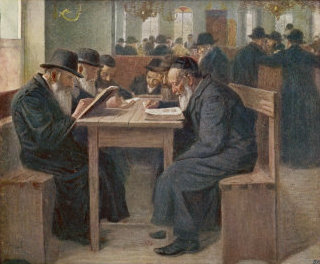
studying-talmudMany of these suggestions probably will seem strange or a poor fit for most Christians. But just look at the level of detail and organization that’s being suggested for Jews as they prepare for the single most holy time in their religious year. Imagine if we in the church were to go through such efforts in order to prepare for our own meeting with God.

I know that Christians and Jews differ on a fundamental level in how we see our service to God. For many Christians, service to God operates in an internal realm and is made up of faith, belief, and prayer. For most religious Jews, although those internal states are present, the main focus is behavioral, not conceptual. Giving to charity in preparation for a meeting with God is totally appropriate. So is taking a religious class, reading an inspirational book, studying relevant sections of the Torah, and reconciling with a friend from whom they have become estranged.

The month of Elul is an opportunity for Jews to review their lives and particularly their failings, and to generate efforts to make amends, to repair relationships, to turn away from sins, and to anticipate the future. In a month, Jews all over the world will approach the throne of God with fear, trembling, and rejoicing. Even on the Day of Judgment; on Yom Kippur, we can learn to dance with God, embracing His Awesome Holiness as both judge and teacher, knowing that we have prepared ourselves for the day of judgment and the day of forgiveness.

Did I say “we?”

The Days of Awe aren’t generally considered appropriate for Christians, but I don’t think it would actually hurt for us to accept Elul as a month of opportunity. Why can’t we use this time to prepare our hearts as well? Couldn’t just spending a little time learning about Rosh Hashanah and Yom Kippur benefit us? Might we not learn to feel just a tad bit more compassion for Jewish people if we learned how they see the God of Abraham and anticipate the Messiah?

We all fail. We all have shortcomings, even the best of us. We can either let that stand or we can do something about it. We can either maintain a “status quo” relationship with God or we can challenge ourselves to draw closer to Him. But that means we’ll have to go through the humiliating and painful process of making a detailed examination of who we are and what we have done to wrong God and to wrong other human beings. We will have to commit ourselves to fixing those damaged and broken relationships, as long as it is within our power to do so. (Romans 12:18)

The month of Elul is the month of reckoning. In the material world, if a businessman is to conduct his affairs properly and with great profit, he must periodically take an accounting and correct any deficiencies… Likewise in the spiritual avoda of serving G-d. Throughout the year all Israel are occupied with Torah, Mitzvot and (developing and expressing) good traits. The month of Elul is the month of reckoning, when every Jew, each commensurate with his abilities, whether scholar or businessman, must make an accurate accounting in his soul of everything that occurred in the course of the year. Each must know the good qualities in his service of G-d and strengthen them; he must also be aware of the deficiencies in himself and in his service, and correct these. Through this excellent preparation, one merits a good and sweet year, materially and spiritually.

“Today’s Day”
Shabbat, Menachem Av 27, 5703
Compiled by the Lubavitcher Rebbe
Translated by Yitschak Meir Kagan
Chabad.org

Failure is wasted if you return only to the place from where you fell. If your plans fail, think bigger, aim higher.

-Rabbi Tzvi Freeman
“Exploiting a Setback”
Based on letters and talks of the Rebbe
Rabbi M. M. Schneerson
Chabad.org

There is no higher goal to aim for than God.

Many Christians believe that devout Jews approach the Days of Awe only with fear of judgment and the almost panicky desire to avoid punishment by “doing things,” to appease an angry God. This couldn’t be further from the truth. Yes, acknowledging failures, confessing sins, and making amends is certainly very humbling and one should not approach an all-powerful God with a casual attitude, but (and my Jewish wife explained this part to me) this is also a wonderful opportunity. This is a wonderful opportunity for Jews to pick up what they’ve put off all year-long, to make their lives and the lives of others better, to improve their relationships, and to almost literally watch God punching the “reset” button on Jewish lives, making everything fresh and new.

While Christians (Jews, too) can do all these things at any time during the year, as human beings we tend to avoid difficult events and tasks. As I said before, the month of Elul is an opportunity to stop being lazy, to get into gear, and to make the effort to be better people that we’ve put off for so long. If this sounds like a terrific opportunity for Jewish people, why shouldn’t a few of us non-Jewish religious people take advantage of it, too?

Grateful Footsteps

Here is a tool for greatness: Watch a truly righteous person very carefully and observe what he does in order to emulate him.

Today, think of three great people that you know, heard of, or have read about. What can you learn from each one?

-see Vilna Gaon – Proverbs 12:26;
-Rabbi Zelig Pliskin
from the “Today’s Daily Lift” series
“Study and Emulate Great People”
Aish.com

G‑d is not understandable. But G‑d ponders Himself. And this mode of pondering Himself He gave to us, dressed in many stories and rituals and ways of life.

Dressed in those clothes we become G‑d, pondering Himself.

-Rabbi Tzvi Freeman
“Dressed in G-d’s Clothes”
Based on letters and talks of the Rebbe
Rabbi M. M. Schneerson
Chabad.org

It’s one thing to attempt to gain some wisdom by studying the teachings of the wise and righteous and another thing entirely to “become God pondering Himself.”

Or is there?

I do not write these things to make you ashamed, but to admonish you as my beloved children. For though you have countless guides in Christ, you do not have many fathers. For I became your father in Christ Jesus through the gospel. I urge you, then, be imitators of me. That is why I sent you Timothy, my beloved and faithful child in the Lord, to remind you of my ways in Christ, as I teach them everywhere in every church. –1 Corinthians 4:14-17 (ESV)

You may think it was odd that Paul said to “be imitators of me” rather than to be imitators of Christ. I’d have to guess at his motivations, but if he understood the discipleship model, then he understood that the teachings of a great Master or Rebbe are passed down from teacher to student multi-generationally. Paul never directly studied under Jesus, but in some manner we don’t fully comprehend, Jesus was indeed his teacher and Paul became the teacher to the Gentiles, passing on the wisdom of the Messiah. In some way, through Paul and the Bible, we have become students of our Master as well.

But there could be many other reasons why Paul phrased his comment to the Corinthians the way he did. It may have to do with how Jesus almost exclusively taught Jewish disciples and how Paul, knowing he was to teach primarily the Gentiles, may have adapted what he taught relative to the requirements of the Goyim, God, and the Torah. But I’m not going to get into that today. I’m not going to get into the mechanics of what God does or doesn’t want us to do in the specific details of our worship and religious practice.

I want to talk about living.

Then, when she was 38, she married Bruce, the man of her dreams. Bruce shared custody of his three daughters from his first marriage, so Julie happily found herself the dedicated mother of a close-knit family. Bruce was a successful professional. They lived comfortably in a big house in an upscale suburb. For ten years, Julie was living her dream.

On a wintery morning in 2009, the dream abruptly ended. Bruce, 48 years old, fell down stairs and hit his head. He died almost immediately.

The shock of her husband’s death was followed by another shock. Of his three life insurance policies, he had let two of them lapse. This included the largest policy, which would have supported his three daughters. Bruce had also neglected to write a will, and to change the beneficiary of his retirement accounts after his first wife divorced him.

By law, half of the large house and Bruce’s other assets should have gone to his first wife, but she and her daughters sued Julie and managed to get 100%, leaving Julie with nothing. Even worse, she turned Bruce’s daughters against Julie. Almost overnight, Julie lost her husband, her close-knit family, her house, and her financial security.

Naturally, Julie felt angry and resentful. “Throughout the entire two and a half years of litigation,” she recalls, “I knew I needed to plug the anger and resentment. At the same time I didn’t want to. I wanted to wallow in my misery. I wanted to make others miserable along with me.

-Sara Yoheved Rigler
“The Power of Gratitude”
Aish.com

I probably wouldn’t have written today’s mediation this way if Rachelle Dawson hadn’t made the following comment on yesterday’s morning meditation:

Making a list of all the sins and faults I’ve been forgiven helps me to put things back in perspective. If I have been forgiven so much, it shouldn’t be such a big thing to show compassion and mercy to others. Anything I give pales in comparison to the compassion I’ve received.

Sara Rigler’s full article is too long to quote here in its entirety, so I encourage you to click the link I provided above and read all of its content. However, what I’m suggesting is that, in emulating great people, we might not always choose people who hold a lofty position in academia or in the clergy. We might instead, find our inspiration in a middle-aged, deaf Jewish woman who has been divorced, widowed, who has lost her home and her job, her once-loving step-children, and who has struggled to find anything at all to be grateful for.

Julie realized that she was standing at a crossroads. She could spend the rest of her life in anger and bitterness or she could choose to grateful and happy. “I decided that I needed to find a way back to my former, positive self, “ she explains. “So I started to practice gratitude as an antidote to my anger.”

We learn from Rigler’s article that the 19th century Rabbi Natan of Breslov taught that complaining about a problem seems to perpetuate your suffering while thanking God for everything, including the problem from which you’re suffering, seems to make the problem vanish.

Rejoice always, pray without ceasing, give thanks in all circumstances; for this is the will of God in Christ Jesus for you. –1 Thessalonians 5:16-18 (ESV)

Who is rich? One who is satisfied with his lot. –Pirkei Avot 4:1

While naturally, we should seek to be like those wise and righteous people who came before us; like Paul, Peter, and most of all, like our Master and Teacher Jesus, we may find, if we’re paying attention, that wise, thoughtful, and compassionate people are all around us. Often, they’re the ones who have suffered the most and yet continually thank God for many things.

Do not seek to follow in the footsteps of the wise. Seek what they sought. -Matsuo Basho

Seek gratitude.

Orchards

Now, O Israel, what does Hashem, your God, ask of you? Only to fear Hashem, your God, to go in all His ways and to love Him, and to serve Hashem, your God with all your heart and with all your soul, to observe the commandments of Hashem and His decrees, which I command you today, for your benefit. Behold! To Hashem, your God, are the heavens and higheset heavens, the earth and everything that is in it. Only your forefathers did Hashem cherish to love them, and He chose their offspring after them – you – from among all the peoples, as this day.

Deuteronomy 10:12-15 (Stone Edition Tanakh)

If you love me, you will keep my mitzvot.

John 14:15 (DHE Gospels)

For the Christian, it might seem strange to try to compare these two verses. Contextually, the passage from Deuteronomy is being addressed to the Children of Israel as they are preparing to cross the Jordan and take possession of the Land of Israel, as promised by God to the descendants of Abraham, Isaac, and Jacob. When Moses says to “observe the commandments of Hashem and His decrees, which I command you today,” we generally understand that he (and God) mean the Israelites are to observe and obey all of the Torah commandments given to them at Sinai. The majority of those commandments are not typically observed by the modern church, at least as we understand them in traditional Christian doctrine. But we do grasp the need to, as a holy people, obey our God.

Then we have the commandment of Christ to “keep my mitzvot.” What does that mean?

The NIV translation of this verse states, “If you love me, you will obey what I command,” while the ESV translation renders it similarly as “If you love me, you will keep my commandments.” Mitzvot (singular: “mitzvah”) is a series or collection of commandments typically associated with the Torah, but in a more expansive sense, “mitzvot” carries the meaning of a group of charitable acts performed for the benefit of others. For a modern observant Jew, even studying the Torah commandments fulfills a mitzvah, and the Jewish concept of mitzvot is far more involved than simply obeying a list of “dos” and “don’ts,” extending into an extremely rich and robust way of life referred to as halachah.

Jesus was and is a Jew and as translated by the DHE Gospels, the word he used that we normally read in English as “commandments” is rendered “mitzvot” in order to capture the truer meaning of his likely intent. Jesus was a Jewish teacher talking to his Jewish disciples and within the historical, national, and linguistic context, his audience would have had a perfect understanding of his meaning.

But do we? What were Christ’s mitzvot that he expected his disciples to obey as a sign of their love for him?

Before trying to answer that question, let me point out something. As Moses is speaking to the Israelites in Deuteronomy 10, he knows his time is short. This is the last time he will be able to speak to the people of Israel. Shortly after he finishes, he will pass his authority to Joshua, who will lead the Israelites across the Jordan, and then Moses will die, his mission completed, at least as deemed necessary by God if not Moses himself.

Jesus, in John 13 and beyond, is also speaking to his disciples as he is preparing to die. Gethsemane, Golgotha, and the cross were only hours away.

Now the son of man is glorified, and God is glorified in him. Yes, God is glorified in Him and God will also glorify him in himself and will glorify him immediately. My sons, I will be with you for a little while longer. You will seek me, and what I have said to the Yehudim – “where I am going you will not be able to come.” –John 13:31-33 (DHE Gospels)

Moses and Jesus, both men on the cusp, both desperately in love with their people, knowing they will be leaving them soon, knowing that their last words are vital, knowing that everything is at stake, and everything will be lost should their followers not heed those words.

Moses and Jesus, both men who have commanded their followers to obey the mitzvot. We have a substantially established idea of the nature of the mitzvot that Moses expected the Israelites to obey. But what are the mitzvot of Jesus Christ?

I am giving you a new mitzvah: that you love one another. With this all will know that you are my disciples: if love dwells among you. –John 13:34-35 (DHE Gospels)

This is my mitzvah: that you love one another as I have loved you. There is no love greater than the love of one who gives his life on behalf of his companions. As for you, if you do what I command you, you are my companions because I have made known to you all that I have heard from my Father. You did not choose me; rather, it is I who chose you. I have charged you to go and produce fruit, and your fruit will endure. All that you ask from my Father in my name he will give you. I command you these things so that you will love one another. –John 15:12-17 (DHE Gospels)

However else you choose to consider the commandments of Jesus and of God as they apply to your life as a Christian or a Jew, the mitzvah of the Master has been laid at our feet. We are to love one another as he has loved us. How has Jesus loved us? He gave his life for his companions; his friends. How do you become a companion of the King of the Jews? By obeying his mitzvah, to love. If you love as he has loved, you become his friend and you will produce fruit. What is this fruit?

But the fruit of the Spirit is love, joy, peace, patience, kindness, goodness, faithfulness, gentleness, self-control; against such things there is no law. –Galatians 5:22-23 (ESV)

No law, no mitzvah opposes such fruit.

I know what you’re thinking. Could it be that simple?

Probably not. I’m sure it’s far more complicated than I’m making it. After all, the blogosphere burns up with discussions of what Jesus meant when he said “such and thus” or how to apply the dynamic interactions of law and grace. But Jesus commanded his disciples to “go and produce fruit.” Paul in his letter to the Galatians gives us one definition of “fruit,” which is “love, joy, peace, patience, kindness, goodness, faithfulness, gentleness, self-control.” I can’t say that I’m such an expert at flawlessly producing this fruit, especially on a consistent basis, but it seems clear that I should.

It also seems clear that we all, as disciples of Jesus; as Christians, should produce this fruit as a consequence of him loving us and us loving him. Like latter-day Johnny Appleseeds, we should go about planting fruit trees, promoting kindness and generosity, and watching the fruits of our labors grow.

We should love. We must love. I know I struggle in this as much or more than most of you. It may seem strange for someone as flawed as I am to invoke and promote the love of Christ among Christians and everyone else. But if we don’t say it out loud, if we don’t declare the mitzvah in public, how will we, will I be able to take the next step and express such a love?

We must learn to bear fruit by loving; I must learn to bear such fruit. We must all plant orchards.

Visions of Inner Pain and Beauty

When dealing with a person you find difficult, keep in mind that this person’s way of behaving and thinking might be causing him to suffer even more than he is causing you to suffer. See life from his point of view – and be compassionate.

“Understanding Difficult People”
-for more essays on this topic
see Rabbi Pliskin’s “Gateway to Self Knowledge,” p.203
quoted from Aish.com

Last week I wrote on this topic in my “meditation” Blessing the Nudnik. But since the term nudnik has negative connotations, and since I have dedicated all of my meditations this week to topics and themes that are positive and uplifting, I thought I’d take advantage of a few quotes from Aish.com to come at this concept from a different angle.

First of all, I’m willing to believe that the vast, vast majority of people I consider to be “difficult” don’t see themselves that way at all. In fact, in any disagreement between them and me, I don’t doubt for a second that they see themselves as “in the right” and view me as the difficult person.

And I probably am a difficult person to deal with, at least sometimes (see my wife for a full and unedited list of my faults…I say that somewhat tongue-in-cheek).

I’m not a perfect person. No, not even close. I can be wrong. And I have been wrong.

So, as I said yesterday, an awareness that we can be difficult people, that we can have shortcomings, that we can feel hurt and disappointment, and that we can be unfair and unkind, should allow us to feel empathy for those people who are like us and sometimes act in a “difficult” manner.

But of course, that requires a great deal of painful personal honesty and the ability to publicly make use of that awareness, thus becoming vulnerable to others who may take advantage of our self-exposure.

But then again…

There is no person on earth so righteous, who does only good and does not sin. –Ecclesiastes 7:20

Reading the suggestions for ridding oneself of character defects, someone might say, “These are all very helpful for someone who has character defects, but I do not see anything about myself that is defective.”

In the above-cited verse, Solomon states what we should all know: no one is perfect. People who cannot easily find imperfections within themselves must have a perception so grossly distorted that they may not even be aware of major defects. By analogy, if a person cannot hear anything, it is not that the whole world has become absolutely silent, but that he or she has lost all sense of hearing and may thus not be able to hear even the loudest thunder.

In his monumental work, Duties of the Heart, Rabbeinu Bachaye quotes a wise man who told his disciples, “If you do not find defects within yourself, I am afraid you have the greatest defect of all: vanity.” In other words, people who see everything from an “I am great/right” perspective will of course believe that they do no wrong.

When people can see no faults in themselves, it is generally because they feel so inadequate that the awareness of any personal defects would be devastating. Ironically, vanity is a defense against low self-esteem. If we accept ourselves as fallible human beings and also have a sense of self-worth, we can become even better than we are.

Today I shall…

be aware that if I do not find things within myself to correct, it may be because I am threatened by such discoveries.

-Rabbi Abraham J. Twerski
“Growing Each Day, Av 25”
Aish.com

Paul’s commentary on Solomon goes like this:

What shall we conclude then? Do we have any advantage? Not at all! For we have already made the charge that Jews and Gentiles alike are all under the power of sin. As it is written:

“There is no one righteous, not even one; there is no one who understands; there is no one who seeks God. All have turned away, they have together become worthless; there is no one who does good, not even one.” –Romans 3:9-12 (ESV)

Given the opinions of these two sage authorities, I think we can conclude that no matter how self-assured, or perhaps even self-righteous, we may feel, even the best of us (and I’m hardly that) has some sort of flaw, especially when in contrast to a perfectly Holy God.

A long time ago, I used to think that people who were (at least in public) perfectly self-confident were either really good people who had it all together or total egomaniacs who thought they were “all that and a bag of chips,” as the saying goes. Only later on did I begin to realize that many of these “self-confident” individuals were really very vulnerable and injured people desperately defending themselves against being hurt again. They say the best defense is a good offense, but a lot of these folks defend by being terribly offensive.

And remember what I said before that even the most difficult of these people almost universally sees themselves as “good” and sees their opponents (which can sometimes include pretty much the rest of the world) as “bad” or as “a threat.” As much as their reaction to the world can cause other people pain and hardship, imagine how difficult it must be for them to feel as if they are about to be hurt and tortured by everyone they encounter.

On some level, we’re all injured. We all have our vulnerabilities; those areas of our lives where we experience fear or shame or humiliation; those domains of our inner being we are terrified people will discover and drag into the light, exposing our deepest darkness and weakness.

However, human beings have different means of coping with vulnerabilities. I don’t believe that we are all injured to the same extent and so we each have different levels of pain and inner opposition to manage and overcome. On top of that, some folks have tremendous coping skills and can manage enormous obstacles and difficulties with seeming ease, while others may struggle mightily all of their lives to barely stay afloat above troubles that don’t seem that tough to the rest of us.

But who am I to judge?

This isn’t about judgment of the frailties of others, it’s about recognizing where we ourselves are lacking and letting that “weakness” function as a strength. Seeing another person who we think of as “difficult,” we should examine ourselves to see how we are like that person and what pain may result from our own “difficult” behavior. For some people who may have reconciled with their “inner demons” so well that they don’t actively perceive themselves as having defects, it might take an extra effort to overcome the barriers that separate them from what they may be afraid of seeing in themselves.

As it turns out, the way to best help another person who is hurt inside but defending that hurt by pushing against others, is not to “come on strong” but to approach with compassion and even a little vulnerability.

That isn’t easy.

When someone pushes us, we want to push back. If we think someone is aggressive and even hostile, the last thing we want to do is “expose our throat” to them. But mercy, grace, compassion, and even “turning the other cheek” (Matthew 5:39) is exactly what the Master requires of us in dealing with injured and imperfect people. Your “olive branch” may not always be accepted and reconciliation may not always be possible, but you at least have to try…we all must make our best efforts, even knowing they won’t be successful all of the time.

We were created to overcome the difficulties in other people with the best and most decent qualities in ourselves (Romans 12:21). Overcome evil with good, not only in “difficult people” but first, within yourself.

“Do not be too quick to assume that your enemy is an enemy of God just because he is your enemy. Perhaps he is your enemy precisely because he can find nothing in you that gives glory to God. Perhaps he fears you because he can find nothing in you of God’s love and God’s kindness and God’s patience and mercy and understanding of the weaknesses of men. Do not be too quick to condemn the man who no longer believes in God, for perhaps it is your own coldness and avarice, your mediocrity and materialism, your sensuality and selfishness that have killed his faith.”

-Thomas Merton

As Rabbi Twerski says, “Today I shall be aware that if I do not find things within myself to correct, it may be because I am threatened by such discoveries.”

It is only by learning to be at peace with the greatest pain within you, that you learn to be at peace with others and with God.

May the Prince of Peace come soon and in our days, and may his peace heal us all.