Tag Archives: grief

The Problem with Religious People, Part 2

rick-warrenIn the aftermath of the tragic suicide of Rick and Kay Warren’s son Matthew, another tragedy is occurring: So-called followers of Jesus are using Matthew’s death as an occasion to attack Pastor Warren. This is sick, ugly, and sadly, indicative of the state of the body today.

It’s one thing for non-believers to make ridiculous statements like, “your son died due to your anti-gay hate toward gay people including your son” (as if there was even evidence that Matthew was gay, or as if he was not greatly loved by his mother and father, which he clearly was). It’s another thing when believers take this occasion to bash Rick Warren’s supposed theological errors, as if this was some kind of divine payback for his alleged sins. What kind of garbage is this?

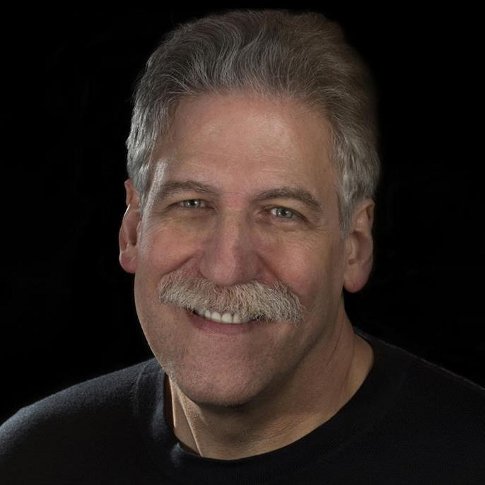
-Dr. Michael L. Brown
“Enough with the Mean-Spirited Words Against Rick Warren (And Others)!”
CharismaNews.com

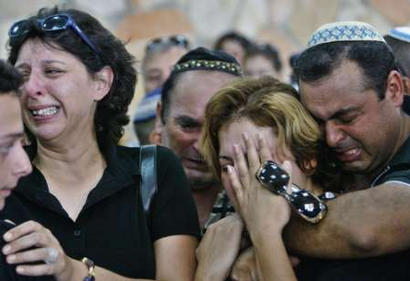
Yesterday, I read about the tragic suicide of well-known author and Pastor Rick Warren’s son Matthew. I have three adult children about the same age as Matthew and I can’t imagine any pain worse than facing the death of any of my children. Words cannot express the agony that Rick and Kay Warren must be enduring at this time, especially because they are people who are in the public eye. Whatever they experience, including heartrending grief, the world media watches them.

Imagine my surprise at reading Michael Brown’s article (I don’t usually read the source website, but I followed the link from Facebook), from which I quoted above, about how not only secular people are mistreating the Warren’s over the death of their son, but other Christians as well.

Really?

I know that Pastor Warren is a target for a number of reasons. Sometimes all it takes is just saying “I’m a Christian” in public. Some people, including many Christians, are critical of MegaChurches. Others, mainly secular folks, are critical of Warren for what they perceive as his “anti-gay” stance. Some of his critics have gone so far as to claim that Pastor Warren’s son Matthew was gay (which has not been substantiated to the best of my knowledge) and that it was Rick Warren’s disapproval of that “fact” which resulted in Matthew’s suicide.

To give you some context, I followed a link from Brown’s article to twitchy.com, which collected a number of “tweets” people made on twitter regarding Matthew Warren’s suicide:

@GayPatriot: I would imagine. But if you’re gay and your dad is the biggest preacher in the country it could lead to mental health problems.

@boymv18: your son died due to your anti-gay hate toward gay people including your son..

@TheReallyRick: Son of Saddleback Church pastor Rick Warren has committed suicide. Place your bets on when its discovered he was gay. #ReligionKills

@BlazePhoenix_: Trust me, I AM being as charitable as I can be about hateful bigoted Pastor Rick Warren’s obvious failure with his own son!

The beat goes on and you can visit the “twitchy” website to read the rest of the “commentary.” It’s not pretty. I periodically encounter atheists on the web and their usual stance is to accuse me of moral failings because I “need religion to be a good person.” The assumption is that it’s better to be a good person based on who you are rather than who you serve.

Uh huh. Color me unconvinced.
michael-brownAnyway, what about Christians criticizing Warren? Brown’s article didn’t quote any Christian criticism nor provide links to websites or blogs taking Pastor Warren to task, so I (briefly) tried to find a few. I didn’t do well at all. The two primary Christian sites I found writing on the topic were Christianity Today and Christian News. Both sites presented straightforward news articles without editorializing excessively, especially in any negative light. I looked at the comments on each site in response, and found that they were universally kind and compassionate.

From the Christianity Today blog:

Loretta: I am so very sad for this family and their great loss. The enemy of God’s people attacks us where he can hurt us the worst, in our families. I will pray for your family’s healing from the Lord. I trust that this young man knew the Lord as his personal Savior and that knowing that will bring the Warren family hope and comfort.

Barbara: I am so sorry, I know the battle, my daughter suffers from depression for many years and she has just turned 27yrs old. I pray everyday for her and others. why do they have to go through this, I am so sorry, I belive Jesus has him now and now he can work on him and bring him to the promise land, May Jesus bless you all .Barbara a mom.

Paul: This is very sad indeed. May the Warrens at this time experience abundant comfort and peace from our God and Father. And may the young man’s soul rest in peace. Amen!

The comments at Christian News were similar:

I am so sorry for your loss. My father committed suicide when I was 3 years old, I will spend my life wanting to help the broken hearted and show them our heavenly fathers love! My prayers are with the Warren family and friends. I pray the do not “what if” but say “what now God!” I love the Warrens for all that they as a pastor and family have given to us. I pray all of our words spoken to this family are filled with love and grace. We all mean well, listen and pray for them! Praying now!!
Mary Ann Moore, Sebastopol, CA

Linda Long: We are so sorry for the loss of your son. We also lost our son to suicide. It’s a Pain that never goes away, but we have an amazing God that will give you all the strength you need to get through this difficult time. Our prayers and thoughts are with you and family. God bless you!

If there is Christian criticism against the Warrens in relation to the death of their son, I can’t find any. That’s probably good, because I periodically have problems with religious people and even sometimes lose my faith in religious people ever having the ability to truly follow the will of God.

Atheists are expected to be mean-spirited and cruel (not that all of them are) but Christians are to aspire to a higher standard. More’s the pity when we don’t.

However, Brown’s focus wasn’t on Rick Warren who, as I said before, is an easy target for a variety of reasons. His focus was on mean-spirited Christians and how we are exceptionally poor witnesses to the world around us when we are unkind and inconsiderate.

Interestingly enough, in Bible study last Sunday, we studied 1 Peter 2 which includes instructions on how to be good examples and good witnesses for Christ in a pagan world:

Beloved, I urge you as sojourners and exiles to abstain from the passions of the flesh, which wage war against your soul. Keep your conduct among the Gentiles honorable, so that when they speak against you as evildoers, they may see your good deeds and glorify God on the day of visitation.

1 Peter 2:11-12

failureIf there are Christians who are publicly criticizing Pastor Rick Warren and his wife Kay for any reason at this difficult time in their lives, you should be ashamed of yourselves. If there are Christians specifically criticizing the Warrens for somehow participating or causing their son’s suicide, again, you should be ashamed. Whatever differences you may think you have with the Warrens or however you may feel about Pastor Warren’s theology, doctrine, or the nature and character of his church, does any of that really matter right now? If someone is grieving…if anyone is grieving, isn’t it our responsibility to show comfort and compassion in the name of Christ?

A new commandment I give to you, that you love one another: just as I have loved you, you also are to love one another.

John 13:34

The implication is that we should love each other, not just in a “warm and fuzzy feeling” way, but with the same sort of love that Messiah loves us…love that’s self-sacrificing…loving someone enough that you would die for them if you had to.

Brown finishes his article with this:

Sadly, it is not just active Christians who frequent Christian websites. There are plenty of former-believers and outright non-believers who visit them too, and all too often, our inability to be civil in the midst of our disagreements, our extreme willingness to identify fellow-believers as false prophets and false teachers, our self-assumed right to judge the motivation of people’s hearts, and our utter violation of Jesus’ command to love one another as he loved us simply demonstrates to the world that our gospel is not true.

May this be the day we search our hearts, determining to watch our words, repent of our sins, and glorify the Lord with everything we write and say. Surely he deserves nothing less than this.

And remember: The world is watching.

The world is watching. We can choose to either sanctify the Name of God or desecrate it. Our choice, and by our choice, people will make decisions for or against God.

And also remember it’s not just people who are watching. God watches as well.

Asking for Help in the Aftermath of Death

joseph-and-pharaohIn this week’s reading, the time for Yosef’s redemption finally arrives. Pharoah has dreams, his sommelier (wine butler) suddenly remembers Yosef, and Yosef is hastily pulled from jail, given a haircut, and sent to interpret the dreams of Pharoah.

Two weeks ago, I spoke about the need to make our own efforts, while knowing that in the end it is G-d who determines the results. But I closed with a question: what was wrong with Joseph’s efforts? Why was he punished for asking the sommelier to remember him?

It’s clear that is what happened. Last week’s reading concludes with the verse, “and the sommelier did not remember Yosef, and he forgot him.” Rabbi Shlomo Yitzchaki explains that he did not remember him that day, and forgot him afterwards — because Yosef had placed his trust in the sommelier rather than G-d. That is a startling indictment of the only one of Yaakov’s sons who was the forefather of two tribes. For someone of his exalted standard, we are told, what Yosef did was wrong. But why — what was wrong with trying?

-Rabbi Yaakov Menken
Commentary on Chanukah and Torah Portion Mikeitz
Director, Project Genesis

2 dead after shooting at Las Vegas hotel Gunman Wounds 3 at Ala. Hospital 28 Dead, Including 20 Children, After Sandy Hook School Shooting

Brent Spiner on twitter

I am angry/disgusted. Amazing that some think the solution is more guns. Madness. Even NRA members want more control. LLAP

Leonard Nimoy on twitter

Late Friday I said a prayer for the victims of the horrible shootings at Sandy Hook Elementary School in Newtown, Connecticut. On the same day, 22 school children were attacked by a man with a knife in China but thank God, none of them were killed. As Actor Brent Spiner’s “tweet” on the micro-blogging site twitter indicates, there have been other tragedies in the world as well. Actor Leonard Nimoy laments the response to these events among some elements of our society to take control, in this case by replying to gun violence with gun violence.

And according to midrash, Joseph condemned himself to additional prison time by desiring to take control of his situation (asking the “chancellor of cups” to remember him to Pharaoh, King of Egypt) rather than relying solely upon the King of the Universe.

But as Rabbi Menken asked above, what’s wrong with trying to take control of a situation with our own efforts, especially when the situation, the world we live in, seems to be totally out of control? Rabbi Menken’s commentary continues.

I saw an interesting explanation attributed to Rabbi Moshe Feinstein, a world-renowned religious leader who passed away barely 25 years ago. He said that Yosef’s high standard was very much part of the issue. Yosef, being who he was, should have recognized immediately that the peculiar circumstance of his being imprisoned together with Pharoah’s personal sommelier and baker, and them having dreams, and him knowing exactly what to tell them — all of that was clearly not coincidence. It should have been obvious to him that G-d’s Plan was already in motion. As we see this week, he was rushed from prison to tell Pharoah that fat cows mean times of plenty, and starving cows mean times of starvation, and was instantly appointed second in command over the whole country. With “20/20 hindsight” it’s obvious that this was all planned out — and enough signs were there that Yosef should have seen it coming.

But we, alas, are not Yosef. Very rarely could we be confident that we are in a situation where our efforts aren’t needed, before the gift of hindsight. We always have to do our best. When should we be idle? When we have done everything humanly possible.

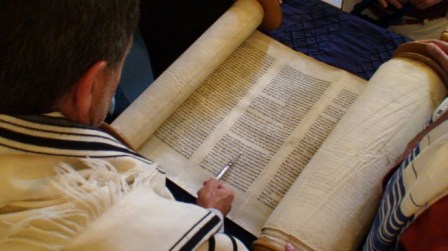
reading-torahWe can read last week’s Torah portion and as we review each word, we know in advance what’s going to happen, because we’ve read and studied these pages many, many times over the years. The story of Joseph’s redemption and rise to Messiah-like authority and position is like an old friend to me. But while Joseph, at his exalted spiritual level (according to midrash), should have known better than to forget to rely on God alone, as Rabbi Menken wisely points out, that is hardly ever the case for you and me.

We are faced with an insurmountable problem, a terrible tragedy, children have been injured and murdered, and what are we going to do about it? The blood of the victims cries out to us, demanding that we respond. Should we ban private ownership of all firearms in this nation? Should we pour more tax dollars into mental health research and treatment? What can we do to prevent this from ever happening again? What could we have done to prevent the deaths of those 20 small lives in Newtown, Connecticut?

Experts of every type, from political pundits, to psychologists, to the clergy are all weighing in with their opinions. Some people feel that the strict separation of church and state in our nation, which “bans God from our schools” is to blame, but for others, that response seems cheap, shallow, and hurtful. Other people and groups want to arm school officials with firearms so that, should such a situation happen again, teachers and school counselors could fire back, protecting the children.

To be perfectly honest, I haven’t the faintest idea what to do. I don’t know if these sorts of attacks are happening more frequently or if we just react as if they are every time something like this happens.

Joseph’s situation and Rabbi Menken’s commentary on it doesn’t seem to help, but then again, neither one was facing what we are facing right now as a nation…as a world. It is said that everything is in the hands of Heaven except fear of Heaven. Christians are fond of saying that God is in control. Tell that to the parents of the 20 dead children in Newtown and see how they answer you…if you dare.

No one knows what the right thing to do is but everybody has an opinion about what they think the solution should be. We people of faith rely on God but it is a bitter thing to lose a child and if I were the father of one or more of the dead children, I would be asking where God was when they died. Rabbi Menken reminds us that faith is not blind, but while that makes for interesting intellectual discussion, how does it help when a parent’s heart is being torn to shreds as they cry bitterly over the loss of a son or daughter?

Don’t look for my opinion or my answer to this disastrous mess. I don’t have one to give. I’m still too angry and too sad and too miserable to render one, and even when I manage to tame my emotional response, my intellect and wisdom will still fail me here. Like Joseph, I want to take control. I want to do something. I want to prevent even one more child from dying. I don’t have the power to even begin to make such and effort and as I’ve already said, I wouldn’t know what to do if that power were mine.

school_shooting_in_connJoseph rose to a position where he had power to save a starving world. His authority was second only to the greatest King who ruled over the most civilized and prosperous nation of his day. Joseph saved Egypt, and he saved Canaan, and he saved everyone who came to him, and he saved his family. He finally reunites with them, provides for them, takes care of them, and sees his aging father before he dies.

And yet, Joseph died just like all men must.

And none of us is like Joseph…or like Jesus…or like God.

God is in control but He rules over a broken world. We broke it. Only God can fix it. But as I’ve mentioned numerous times over the years, according to Jewish thought, human beings are partners with God in tikkun olam, repairing the world. That may mean our human desire to want to act when disaster strikes is built into us by God and part of who we are as His “partners.”

God, what can we do to help? What can any of us do in the face of such an unimaginable pain? I don’t know. All I know how to do is ask for help. Help us. I’m not the only one asking for help.

Please.

A Prayer for Newtown

school_shooting_in_connFor those who suffer, and those who cry this night, give them repose, Lord; a pause in their burdens.

Let there be minutes where they experience peace, not of man but of angels.

Love them, Lord, when others cannot.

Hold them, Lord, when we fail with human arms.

Hear their prayers and give them the ability to hear You back in whatever language they best understand.

Margaret A. Davidson

I can’t think of a worse nightmare for a parent than the death of a child. My children are all adults and I continue to pray daily that God will watch over their lives. I can’t imagine what the parents of the child victims of the Sandy Hook Elementary School shootings in Newtown, Connecticut are going through right now and, coward that I am, I don’t want to know.

This isn’t the first time I’ve talked about a child’s death and sadly, I’m sure it won’t be the last. 8-year old Leiby Kletzky was murdered over a year ago in Brooklyn, and several Jewish children were killed at their school in Toulouse, France by a heartless terrorist.

I’m reminded of the final words of John Donne’s very old, very famous poem No Man is an Island:

Therefore, do not send to know
For whom the bell tolls
It tolls for thee

In truth, no matter where a child dies in the world or how he or she is taken, the child is taken from all of us. They are all our children. When someone’s precious son or daughter is killed, they’re taken from all of us and we all grieve.

I know I grieve.

Glorified and sanctified be God’s great name throughout the world which He has created according to His will. May He establish His kingdom in your lifetime and during your days, and within the life of the entire House of Israel, speedily and soon; and say, Amen.

May His great name be blessed forever and to all eternity.

Blessed and praised, glorified and exalted, extolled and honored, adored and lauded be the name of the Holy One, blessed be He, beyond all the blessings and hymns, praises and consolations that are ever spoken in the world; and say, Amen.

May there be abundant peace from heaven, and life, for us
and for all Israel; and say, Amen.

He who creates peace in His celestial heights, may He create peace for us and for all Israel; and say, Amen.

-Mourner’s Kaddish

Tisha B’Av: Teaching Yourself to Care

Rav Chaim Kreiswirth, zt”l, said a similar thing based on a statement on today’s daf. “In Niddah 66 we find that when a woman went to Rav Yochanan requesting help about a problem that was particular to women he suggested that she ask other women to daven for her. On the surface, this seems strange. We know that our sages say that when one has a sick person in his home he should go to a chacham and request that he daven for the sufferer. Yet here we find an exception to the rule. Instead of the chacham alone davening, he sends her to other women to petition that they daven for her. Although the gemara cites that she is like a metzorah who should tell the many to daven for her, it seems odd that he said specifically to tell other women to daven for her.

“We learn an important principle from this story. That the only one who can really pray properly for a person suffering is the one who can truly empathize with the problem. We see that it is better for one who is ill with a certain sickness to request those who have suffered from it to daven for his recovery. Only those who have suffered from the disease truly empathize and their prayers will be more effective than those who have not.”

Daf Yomi Digest
Stories Off the Daf
“True Empathy”
Niddah 66

Is anyone among you suffering? Let him pray. Is anyone cheerful? Let him sing praise. Is anyone among you sick? Let him call for the elders of the church, and let them pray over him, anointing him with oil in the name of the Lord. And the prayer of faith will save the one who is sick, and the Lord will raise him up. And if he has committed sins, he will be forgiven. Therefore, confess your sins to one another and pray for one another, that you may be healed. The prayer of a righteous person has great power as it is working.

James 5:13-16 (ESV)

It seems in this case, that James, the brother of the Master, and the later Rabbinic sages agree with each other. We indeed should pray for each other and if ill or suffering, we are directed to request prayer from the righteous. For a religious Jew, that means seeking out a chacham or tzaddik, since the prayer of a holy person “has great power as it is working.”

But is it true that our prayers or more effective when “intoned wholeheartedly,” to quote another part of the “story off the daf?” I believe this is true. Haven’t there been times when you attempted to pray for another only out of duty and not because you really cared? Maybe a person asked you to pray for a situation that you didn’t believe was terribly serious. Maybe you even said you’d pray for them and then completely neglected the matter. How would such lackluster prayers or no prayers at all help anyone?

Yesterday was Tisha B’Av, a day of tremendous grief among the Jewish people; a day that marks many terrible tragedies for the Jews, including the failure of the generation of Israelites who left slavery in Egypt to enter into Eretz Yisrael and take possession of the Land. It is also the date on which the Holy Temple in Jerusalem was destroyed and the Jewish people were sent into exile for nearly 2,000 years.

Our Sages explain that the people, who lived at the time of the Temple’s destruction by the Romans learned Torah, did misvot and performed acts of kindness. Why was the Temple destroyed? Because of sin’ at hinam–baseless hatred. Jealousy and selfishness created differences in people. ”Why does he drive such a nice car and I pray that mine will start every time that I put the key in the ignition?”–”I work so hard and do everything with impeccable honesty, so how come his business is flying and mine can’t show a profit?” Questions like these are at the root of baseless hatred. They doubt the correctness of G-d’s “distribution system”. You might even go so far as to say that they reveal a lack of Faith!

-Rabbi Raymond Beyda
“You Gotta Believe”
Commentary on Torah Portion Devarim
Torah.org

It may surprise many Christians to realize that the destruction of the Temple and the exile of the Jews wasn’t due to a lack of piety or religious observance. The religious practice of the Jews in Israel in those days was above reproach.

But…

But, according to midrash, the sin of baseless hatred of one Jew for another was very great and indicated a lack of faith among the people. How can even impeccable acts of piety and holiness be truly effective if faith is diminished by hatred? How can prayers be effective and invoke a response from God if our trust in Him is small?

And when they came to the crowd, a man came up to him and, kneeling before him, said, “Lord, have mercy on my son, for he is an epileptic and he suffers terribly. For often he falls into the fire, and often into the water. And I brought him to your disciples, and they could not heal him.” And Jesus answered, “O faithless and twisted generation, how long am I to be with you? How long am I to bear with you? –Matthew 17:14-17 (ESV)

I don’t say all this to “bash” the ancient or modern Jewish people but to illustrate that we Christians can suffer from the same lack of faith, devotion, and intension as Jesus is describing. We can all suffer from a lack of empathy for our fellow human being.

But what about empathy and true intension in prayer? According to Rav Chaim Kreiswirth, the person who will offer up the most sincere prayers to God for our suffering is the one who has suffered similarly. A woman who labors under difficulties that are unique to women, according to this principle, should seek out other women to pray for her.

Let’s apply this to the Jews and Tisha B’Av. Although the many horrors that the Jews have suffered was technically observed yesterday, because yesterday was also the Shabbat, the fast was not observed. Today is when religious Jews all over the world will allow themselves to fast, to pray, to grieve over their long history of trials and anguish.

And so it has been for thousands of years –the mazal–luck– of the Jewish people has been bad on that night– the night of Tisha B’Ab. The first and the second Temple were destroyed by gentile armies –on Tisha B’Ab. The city of Bitar was raped and pillaged and hundreds of thousands of our gentle brethren were slaughtered on Tisha B’Ab. The Jews were expelled from Spain and England–on the night of Tisha B’Ab. The terrible history of the destruction of Judaism in Europe at the hands of the Nazis y”s, began with the political upheaval of World War I, which, not coincidentally, began on the night of Tisha B’Ab in 1914.

-Rabbi Beyda

Why do we mourn on Tisha B’av? Why not come to terms with the fact that the Holy Temple is gone, accept G-d’s judgment, and make the best of Jewish life without a Temple? Isn’t it an essential Jewish value that we should accept G-d’s decrees? Well, yes, that is true for all of G-d’s decrees — except the destruction of the Temple. For nearly 2000 years, Jews have sat on the floor, weeping through the stirring descriptions of Jerusalem’s destruction and the tragedies faced throughout their history in exile. Every day they have prayed for a rebuilt Jerusalem. These demonstrate an intense national longing to reunite with G-d’s Presence, in a way that could only be felt in the Temple in Jerusalem. When lovers are separated, their bond is shown in their yearning to return to each other. That thirst to reconnect with G-d is the true essence of Tisha B’av.

-Rabbi Modechai Dixler
“Shabbos Mourning”
ProjectGenesis.org

In my previous commentary on Tisha B’Av, I suggested that Christians should also mourn the loss of the Temple because in a way, it’s our loss, too. The Jews will see the Temple rebuilt only when the Messiah rebuilds it. For a Christian, that means the Temple will be rebuilt upon the return of Jesus Christ (I know many Christians believe what Jesus will build is a “spiritual” Temple and not the physical structure, but I have no problem believing that the Throne of the Messiah will one day exist upon the Temple Mount in Jerusalem).

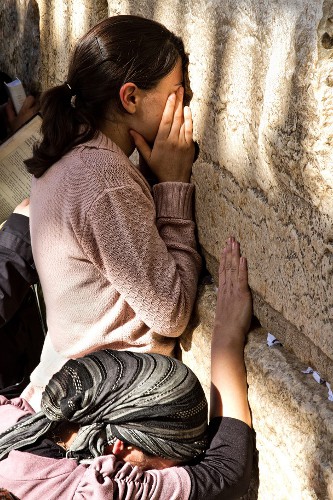
But upon reflection, I wonder how can we mourn with empathy what we don’t understand? How can Christians or anyone but a Jew, actually “feel” the loss of the Temple, the loss of connection to God that the missing Temple represents? On Tisha B’Av, many, many Jews travel to the Kotel, what some call the “Wailing Wall” in Jerusalem, the last remnant of Herod’s Temple that Jews are allowed to access (since they are forbidden to ascend to the top of the Temple Mount and pray), and pour our their tears, their prayers, and their hearts to God, begging for the coming of the Moshiach and for God’s grace and mercy to rain upon His people Israel.

How can we Christians even begin to understand what Tisha B’Av means? How can we pray for the Jews? How can we mourn along side of them?

I don’t know.

I do know that some Christians do (though not as many as I’d wish). I know some believers have turned their hearts to God and to the Jewish people, they have turned to the east to face Jerusalem…and they have cried bitter tears as they see the grief of the Jews and they have allowed their hearts to melt and bleed.

Today is Sunday, and most Christians will be headed off to church this morning. They will pray in their sanctuaries and in their Bible classes. They will pray in their homes and with their families. I only ask that some of you reading this morning’s meditation allow a double meaning to your prayers and petitions to God as His Holy Spirit calls to you.

I would not have you weep any less for that charming, good and handsome Christian. I only ask this: that as the great cold surrounds my bones, you allow a double meaning for your mourning veil. And when you let fall your tears for him, some few will be… for me.

from the play Cyrano de Bergerac
by Edmond Rostand

The love of Cyrano’s life, the beautiful Roxane, was in love with another, the handsome cadet Christian de Neuvillette. Cyrano, although incredibly accomplished, felt no woman could ever love him because of his ugliness. Toward the end of the play, de Neuvillette has died and Roxane is in mourning. Cyrano asks not that she cease her tears for the “charming, good and handsome Christian,” but only that he might consider that, at his own death, some portion of her sorrow could also be for him.

The irony is at the play’s end, Roxane confesses her love for Cyrano as he is dying in her arms. How many of us, like Cyrano, deny ourselves our heart’s desires believing they are unattainable when in fact, they are at our very fingertips.

Perhaps our sincerity and devotion in prayer is like that. We have only but to look in the right direction, to open ourselves to God and to see the Jewish people with new eyes. Maybe we only need to exchange our heart of stone for one of flesh. And then, as Jews weep and fast and immerse themselves in pools of sorrow, some few of us can shed our tears with them.

Any human being can climb higher than this world. But it’s not a flash from above that will take you there.

Every day, from the time you open your eyes until the time you close them, teach your eyes to see the world as it is seen from above.

-Rabbi Tzvi Freeman
“Practice Makes Perfect”
Based on letters and talks of the Rebbe
Rabbi M. M. Schneerson
Chabad.org

Learning Acceptance

Yeshua’s sacrifice is continually before the Father. He is the lamb continually on the altar before the throne. He is the “the Lamb of God” whose atoning sacrifice for sin is continually before the Father. Thus the writer of Hebrews states: “Nor was it that He would offer Himself often. … Otherwise, He would have needed to suffer often since the foundation of the world; but now once at the consummation of the ages He has been manifested to put away sin by the sacrifice of Himself.” (Hebrews 9:25-26)

“The Daily Continual Burnt Offering”
from the Commentary on Torah Portion Tetzaveh
First Fruits of Zion

For Christ has entered, not into holy places made with hands, which are copies of the true things, but into heaven itself, now to appear in the presence of God on our behalf.  Nor was it to offer himself repeatedly, as the high priest enters the holy places every year with blood not his own, for then he would have had to suffer repeatedly since the foundation of the world.Hebrews 9:24-26 (ESV)

I must confess that I’m not entirely sure how to compare the continual burnt offering we see described in Exodus 29:38-42 with this passage from Hebrews 9. It is, in some sense, almost comforting to think of Jesus has my continue “sacrifice” for my continually struggling life of faith, with all its rises and declines, but the writer of Hebrews is clear that Jesus was only sacrificed once, not continually. But then, it wouldn’t be the first time I’ve missed something in the Bible that seems incredibly obvious to others.

I mentioned yesterday that I feel as if I’m waiting in a minefield for God’s next move, since I’m afraid to make that move on my own. OK, I’m being overly dramatic, but this blog is about how I am processing my own faith experience on a day-by-day basis, so what you read is what I’m going through more or less continually, like a sacrifice on the fire. I’m waiting with God and waiting for God but sometimes I just get tired of waiting. God’s timing is long and even infinite, but certainly he knows we short-lived mortals tend to live by the clock and not by a millennium-long calendar. So I’m waiting and waiting, but I’m also thinking and processing and experiencing.

I’m reminded of how nothing is perfect and that I’m shifting from Plan A to Plan B. It occurs to me as I recall my conversation with my wife, that I’ve been holding her responsible for something that has nothing to do with her: my faith. At least in Christianity, each person negotiates their own relationship with God. I suspect the same is true in Judaism but I can only speak from my own point of view. I’ve also been blaming synagogues, and churches, and congregations for not being what I want or need them to be, but that’s not their responsibility, either. God doesn’t become different from who He is because of me, so why should the world of religion. I can see I’ve been unreasonable.

So now that I’ve taken these failed assumptions apart, I need to put the pieces of my puzzle back together in order to see if it makes any sort of map by which I can navigate my course. I think there’s a map in here somewhere, but I’m not very encouraged as to where the trail seems to be leading.

It would be too difficult to pull together all of the different conversations I’ve had on my blog, on other people’s blogs, in various emails, and elsewhere on the web, that make up the pieces of the map, but as it stands now…right now, I need to be who I am all by myself as a person of faith and let that be the primary focus. Who my wife is, or my children, or who anyone else is in their faith and their identity cannot be the lens that colors my perception of who I’m supposed to be. I’m an intermarried Christian man, but my faith has to stand alone or it doesn’t stand at all.

So if I re-enter a Christian religious context, it won’t be a Christian man expressing his faith in relation to a Jewish woman expressing her faith elsewhere, it will be as a religious Christian man in relation to God and God alone. But what does that mean in a practical, “one step at a time” sense?

Barring some unforeseen event, I am probably going to keep exploring who and what I am becoming in my life of faith. Would going back to a church at this point make sense? I don’t know. If my wife doesn’t understand why I would want to be a Christian, or even if she doesn’t understand why I would want a spiritual life at all, I’m not sure the church would understand very much about me, either. As each day, week, and month progresses, as far as our “identities” go, we continue to spiral away from each other, spinning in wildly different directions. I suppose I have to face that and not let it drive me from searching for the person who God wants me to be.

So what if? So what if I just did this alone? I mean, I’m continually reducing my choices down from many to few, and being alone in a life of faith is one choice that has always been in front of me. It doesn’t make sense in terms of the Christian and Jewish templates which both describe social and corporate gatherings and worship, but maybe this is the equivalent of being stranded on a deserted island with nothing but a Bible to read. Just me, the book, and God.

I’ve been criticized before about my incessant complaining regarding lack of fellowship, so maybe it’s time to stop complaining and just to accept the facts about my existence. I’m not dying or in chronic pain. I haven’t stepped on one of those metaphorical landmines I wrote about yesterday and blown a leg off. According to the classic five stages of grief, the final stage, after denial, anger, bargaining, and depression, is acceptance. I don’t know if what I’ve been experiencing can rightly be called “grief” or if I’ve experienced some sort of loss in order to justify a sense of grief, but what if I just skip ahead to “acceptance” and be done with it?

Supposedly, in the world of grieving, “acceptance” isn’t the same thing as being “OK” with the loss. It’s just accepting the reality of the situation. I hate waiting and I’d much rather “cut to the chase,” so to speak. None of the worlds I’ve been exploring are really “home.” I’m not Jewish so I don’t actually belong to a Jewish world. Although I call myself a Christian, I really don’t belong in church singing “Onward Christian Soldier” or jumping up and down in response to the “worship team’s” pep rally presentation as if I were a hyperactive jack rabbit (I was in a church that did that on exactly one occasion and couldn’t get out of there fast enough).

I’m not saying that I’m walling myself off, and when or if God decides to offer me an opportunity to share who I am with others, I will go ahead and jump in, but in the meantime, I can’t wait on pins and needles. I’ve been kvetching about this far too long, and I’m sure you’re getting just as tired of it as I am.

Dr. Michael Schiffman recently said on his blog:

People who are always upset, will always be upset. It’s just a matter of time before they are upset over the next “issue.” We are supposed to live our lives in tranquility, not in a state of constant crisis. Sha’ul wrote in Romans 12:18, “If it is possible, as much as depends on you, live peaceably with all men.” If we are always looking for an argument, always wearing our emotions on our sleeves, we are not living peaceably. It’s an issue of maturity.

Anyone who’s been reading my “meditations” for more than a few days knows that I don’t exist in some otherworldly sense tranquility, and I’ve said more than once that I wear my heart on my sleeve here on this blog. I guess I always will as long as I continue to need to write and allow a venue such as this one to exist. But that doesn’t mean I have to exist suspended between one decision and the next or between one heartbeat and the next. I need to remove myself from suspension and begin to move.

So, until “my ship comes in,” if it ever comes in, I’ll be the guy on the deserted island with a Bible reading and praying and walking with God. Jesus will be the offering continually being burned before the throne of God for me, and for who knows how many others like me. Or, his offering of himself is over and done with as far as me and everyone else like me is concerned. But I’m also done. I’m done scanning the horizon with my telescope every hour on the hour for some sign of “rescue.” A “ship” may come today, tomorrow, or never, but I can’t get on with my life as long as I think something is still on hold. I’m done waiting. I can’t make anything change and in fact, those things that continue to change around me, I have no control over. I might as well face the fact that things are as they are and proceed as best I can by letting go of some of the things that drive me.

The sound of the wind through the trees is my companion and the rising and setting of the Sun mark the passing of my days. I’ll read, and study, and pray, and live, and time will pass. Whatever comes will come. But I’m not going to try and make it turn into something anymore.

There are no plans. There are only nights and days. Let God do as He will.

Hope and Ashes

MourningI remember with perfect clarity the sensation of waking up on the morning of March 9, 1990. In those first few fuzzy moments of consciousness, I oriented myself to where I was — in the spare bedroom of my parents’ New Jersey apartment, and what day it was — two days after my father’s death. As soon as I realized that I had woken up into a world without my father, my heart plunged into a fathomless grief, like waking up into a nightmare that will never end.

The world without my father was not simply the same world minus one; it was a totally different world. This altered, diminished world lacked the stability and goodness that was my father. This world wobbled on its axis; its gravitational pull was heavier.

The ninth day of the Hebrew month of Av — called Tisha B’Av — is to the Jewish people what March 9 was to me. We misrepresent the tragedy of the day by describing it as the destruction of the two Holy Temples, as if the catastrophe is the loss of a building. The American people do not mourn on 9/11 because of the destruction of the Twin Towers; they mourn the thousands of lives lost in the conflagration. Contrast a person who mourns the absence of the majestic towers to the New York skyline with a person who mourns the loss of his/her parents caught on the 98th floor.

Tisha B’Av is more like a death than a destruction, because on that day the world changed irrevocably.

Sara Yoheved Rigler
“Waking Up to a World Without God’s Presence”
Aish.com.

When Jonah’s warning reached the king of Nineveh, he rose from his throne, took off his royal robes, covered himself with sackcloth and sat down in the dust. This is the proclamation he issued in Nineveh:

“By the decree of the king and his nobles:

Do not let people or animals, herds or flocks, taste anything; do not let them eat or drink. But let people and animals be covered with sackcloth. Let everyone call urgently on God. Let them give up their evil ways and their violence. Who knows? God may yet relent and with compassion turn from his fierce anger so that we will not perish.”

When God saw what they did and how they turned from their evil ways, he relented and did not bring on them the destruction he had threatened.Jonah 3:6-10

Sara Yoheved Rigler characterizes the mourning of Tisha b’Av not for the lengthy series of hardships that have been inflicted on the Jewish people and not even for the loss of the First and Second Temples, but for the loss of God in the world. She describes how her son was born into a world without her father, his grandfather, and that he “will never know how the room lit up when my father entered, how secure and supported dozens of people felt because of the bedrock that was my father”.

For the past 2,000 years, Jews have been born into a world without the Holy Temple in Jerusalem, City of David:

In the same way, we who were born into a world without the Divine Presence have never experienced the spiritual luminosity that radiated through the aperture of the Holy Temple. We live in a dimmer, coarser world, where physical reality seems like ultimate truth while spiritual reality seems like a vague phantasm. We navigate in the nightmare without even knowing we’re in it.

It is true that the world is not without God. God is manifest in our world all of the time through the acts of His people, through His answers to prayer, and through His providence in the lives of each and every human being on Earth. Yet, as Rigler points out, the Divine Presence, the unique projection of the infinite God into a finite world through the “humbling” of His essence has not existed in our mortal realm for 20 centuries.

If you’re Christian, I know what you’re thinking. What about Jesus? True. We could say that Jesus was a manifestation of the infinitely Divine in finite moral form. He was the Word made flesh and the Divine Presence in the shape of a man (I say was because he is also our High Priest in the Heavenly Court and he sits at the right hand of the infinite, unknowable, all powerful Ayn Sof; who Christians call “God the Father”).

Candle burning outYet, in the same way that Rigler mourns in a world without the Divine Presence, we Christians can and probably should mourn being born into a world without a living Jesus walking among us. True, God is only a prayer away and He is with us even when we are too weak or ashamed to pray, but something…someone is gone. The world is created but it is damaged. There are pieces missing. We live in a house with walls and part of the roof “deconstructed”. It’s like being born into a world without a loving grandfather…like Sara’s son. It’s also like this:

“And I will pour out on the house of David and the inhabitants of Jerusalem a spirit of grace and supplication. They will look on me, the one they have pierced, and they will mourn for him as one mourns for an only child, and grieve bitterly for him as one grieves for a firstborn son. On that day the weeping in Jerusalem will be as great as the weeping of Hadad Rimmon in the plain of Megiddo. The land will mourn, each clan by itself, with their wives by themselves: the clan of the house of David and their wives, the clan of the house of Nathan and their wives, the clan of the house of Levi and their wives, the clan of Shimei and their wives, and all the rest of the clans and their wives. –Zechariah 12:10-14

Some Christians view this verse as the means to accuse the Jews of “murdering Jesus” and that someday “they’ll be sorry”, but in truth, Jesus died for the sins of all of us. The collective church never really mourns the loss (except perhaps when watching the 2004 film The Passion of the Christ) but only celebrates the resurrection joy on Easter. Where is our sorrow over being the cause of his suffering and death? In claiming the resurrection and everlasting life for our own, where is the agony and sorrow over needing to be saved by his death because of our willful sins?

We were born into a world without the Divine Presence among us because of what we did wrong. Something absolutely perfect is missing from the world, and this side of paradise, we will never fully experience it. Paul said that “we see through a glass, darkly” (1 Corinthians 13:12 KJV) and thus, we were born into the world half-blind, only barely able to see the image of the perfect God in the reflection of the Master. Sin distances us from God and the One who man once walked with in the Garden, though still with us, seems so very distant.

I recently read a story on the Arutz Sheva news website about a group of Christian churches that will, on August 13 and 14, read portions of the Torah in solidarity with the Jews and with Israel. We can fast and mourn with the Jews on Tisha b’Av for this reason as well.

From sundown last night until sundown tonight, Jews all over the world mourn destruction but hope for redemption. As Christians, we know our redemption is in Jesus Christ, and yet he has not returned. There are many who still don’t know him. We who are saved often take that status for granted and continue to sin. We have much to grieve over.

Today, we can fast, dining on ashes, and still hope for the coming of God’s glory back into the world. Sara Yoheved Rigler says something very important in her article:

In one essential way Tisha B’Av differs from death: the catastrophe is reversible. As Rabbi Avraham Isaac Kook declared: “The Temple was destroyed because of causeless hatred [among Jews]; it can be rebuilt only by causeless love.”

It can sometimes be difficult to rise Phoenix-like to embrace a life of “causeless love” from the ashes of grief, sorrow, failure, and “wanton hate” (as expounded upon so well at the Lev Echad blog). Rabbi Tzvi Freeman says the following based on the wisdom of the Rebbe, Rabbi M. M. Schneerson:

Your soul is in captivity when you know what is right and you allow the world to stop you.

Captivity begins by believing that you are small and the world is big. Once you believe that, next you are likely to believe it will step on you, and your fear it.

And then you come to obey it, then to run after it. And then you are it’s slave, thirsting for water for the soul but not even able to remember where to look for it.

To fear the world is to deny the Oneness of the Creator.

Don’t take the world and its darkness so seriously – it is not as real as it feigns to be. The only thing real about it is its purpose of being – that you should purify it.

I struggle to see the hope beyond the loss and yet, today especially, I sit in the darkness and mourn in ashes.

The road

The road is long and often, we travel in the dark.