Tag Archives: holocaust

Yom HaShoah: A Day to Remember

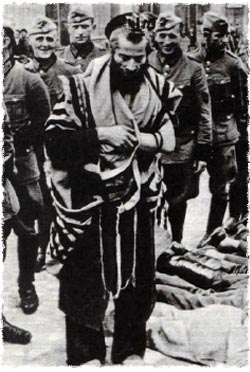
Rav Moshe Teitelbaum, zt”l, the previous Rebbe of Satmar, went through the living inferno that those who survived the Holocaust endured. After some time in Auschwitz, he was moved to Tröglitz, a camp in Rehmsdorf. Despite the danger, the inmates of the camp arranged to pray kol nidrei and they invited the rebbe to lead the prayers.

Of course, it was unthinkable to eat on Yom Kippur. But since the meager evening meal was served after nightfall, it at first appeared as though those who wished to fast would have to go without food before the fast as well. After much wrangling, the head of their block, Dr. Kizaelnik—who had been the rosh kahal in Sighet before the war—finally managed to arrange with the kitchen staff that the evening meal would be served before nightfall.

An eyewitness later recounted, “Before kol nidrei we went back into the block and fell onto our beds, crying bitter tears the likes of which I hope I never hear again. Then the good doctor announced that kol nidrei would soon begin and that any who wished could join the minyan. Still weeping, we went to the part of the room set aside for davening, and the rebbe began to speak.

“The rebbe commenced, ‘Rabbi Akiva said: Ashreichem Yisrael! Before Whom are you purified, and Who purifies you? Just as a mikveh purifies the defiled, God purifies Yisrael. We must recall that Rabbi Akiva was one of the ten martyrs—killed for sins he did not commit. He saw all the terrible travail which would befall Yisrael. Yet he chose to give a message of chizzuk to us for all generations. Although a mikveh literally alludes to a ritual pool, it can also allude to the word tikvah, hope. This
teaches that when we hope to Hashem, and do teshuvah—even if we are in the worst situation—God will uplift us. Even from this present darkness, which no nation has ever experienced, such bitterness and cruelty, God will deliver us. Amen.'”

Daf Yomi Digest
Stories Off the Daf
“The Hope of Yisrael”
Kereisos 23

Originally posted on April 18th, 2012 with some adaptations.

Holocaust Remembrance Day or Yom HaShoah begins in the evening of Sunday, April 7, 2013, and ends in the evening of Monday, April 8, 2013. Do not forget. Do not let your children forget. As long as we remember and repent, there lies our hope in God.

As I edit this blog post, it’s early Sunday afternoon before Yom HaShoah. At Sunday school class earlier, when the teacher asked for prayer requests, an older gentleman named Charlie told us all that tonight at sundown, Holocaust Remembrance Day begins and encouraged us all to pray for Israel and the safety of the Jewish people. I believe it is the duty and honor of all Christians to continually pray for Israel and especially at this time, that never again will the Jews be rounded up and slaughtered like cattle. Pray for King Messiah’s return and for the shalom of all Jews everywhere.

(Click the image below to see a larger version)

According to Dr. Michael Schiffman’s blog, “over 50,000 elderly Holocaust survivors living in Israel, and many thousands of holocaust survivors living in the former Soviet Union (are) living in abject poverty right now.” You can help make a difference. Learn how at Dr. Schiffmans’ blog and then make a donation at chevrahumanitarian.org.

There’s always hope, as long as you repent, remember, and then act out of kindness and compassion.

Hope in Hopelessness

Last week at the Western Wall, I asked an elderly man to put on tefillin. He strongly refused.

I asked him, “When was the last time you put on tefillin?”

He smiled and proudly said, “72 years ago!” He held out his arm to show me the fading tattooed numbers. “1938,” he said. “It was the day of Kristallnacht. Do you know what Kristallnacht is?”

“Of course I do,” I told him.

“Two hundred and sixty-seven synagogues were burned down in one night. They burned down our synagogue, too. My tefillin were burnt up, and I have never put them on again,” he said.

“I have a friend who was in the camps, too,” I quickly said, “and he not only puts on tefillin today, but he even put them onto others inside the camp! Do you want to hear how he got tefillin into the camp?”

“Yes,” he said strongly. “How did he get them in there?”

-Gutman Locks
“Tefillin After 72 Years”
Stories of the Holocaust series
Chabad.org

I can’t even imagine what it would have been like to experience the horrors of the Holocaust. Like many Americans, I live a relatively comfortable life. I don’t really know what it’s like to go without adequate food, shelter, or clothing. I’ve been in the hospital before, but remain fairly healthy. I was once beaten by several men during a riot when I was 16 and spent some time recovering, but I was home and eventually after over a year, I began to let myself feel safe again. In short, I’ve faced a certain number of challenges over my lifetime, but none have been overly difficult.

I can’t even imagine what it would have been like to experience the horrors of the Holocaust.

I can’t even imagine what it would be like to have a wife who is struggling with cancer and who may die.

I can’t even imagine what it would be like to be the father of terminally ill child.

Frankly, I don’t want to imagine, let alone have to actually face such hideous tragedies in life. I don’t know how people do it and, I’m ashamed to say, I don’t even know how people of faith do it.

Where do you find hope in hopelessness? It’s one thing to say “I rely on my God for my strength,” and it’s another thing to actually live it out, one day at a time, one horrible, agonizing minute at a time. What can you do when someone delivers the terrible news and your courage melts like a plastic sandwich bag in the face of an inferno? What do you do when you’re a young, teenage boy and you and your mates are being herded into the gas chambers by the Nazis and you have only minutes to live?

“He began his story. The Nazis had come to the ghetto and grabbed 137 young boys. He told me that only five of them survived. Only five.

“He was thirteen and a half years old. He was wearing the high boots that his father had bought him, and when he saw them coming, he stuffed his tefillin into one boot and his prayerbook in the other.

“They pushed the boys into a cattle car and drove them to the death camp, not far from the ghetto. When the train stopped, they slid open the side of the cattle car and immediately began pushing them toward the open door of the gas chamber. The boys were frightened and cried out. They asked Laibel, ‘What should we do?’ He told them, ‘We’re going to stand in rows five across, and we’re going to march right into that gas chamber singing a song of faith, the “Ani Maamin.”’ And they did just that. They stood in rows five across, and started singing and marching right into the chamber.

“The guards became so confused that they did not know what to do. They screamed, ‘You can’t do that! No one has ever done such a thing before. Stop it! Stop it at once! Here! Go over there to the showers instead!’

“They pushed them over to the showers, and forced them to undress and throw their clothing into a pile in the middle of the floor. They made them empty their shoes, and the tefillin and prayerbook fell out onto the pile.

“After the shower, when they were dressed in camp clothes and were being pushed out, past the pile of their clothes, Laibel saw his tefillin and prayerbook lying there. He wanted so badly to run and pick them up, but terrifying guards were watching. He said to the boys, ‘I did something for you, so now you do something for me.’

“‘Whatever you want,’ they said. ‘You saved our lives.’

“He said, ‘When I give the signal, start a fight and scream out loud. Okay . . . now!’ The boys started to fight and scream. The guards ran over and tried to pull them apart, but they wouldn’t stop fighting. In the confusion, he ran over and grabbed his tefillin and prayerbook, and hid them under his arms.

Laibel not only managed to retrieve his tefillin but he wore them (clandestinely) in the camp and helped other Jews wear them, too. In the story commemorating his courage, we discover him as an old man today helping men wear tefillin at the Kotel.

And he looked me in the eye and said, ‘And I put tefillin on other men, too.’ I started to cry, and I kissed him on his yarmulke.

“The day after Laibel told me his story, there was a soldier at the Western Wall who wouldn’t put on tefillin. No matter what I said, he simply refused. Then I told him Laibel’s story, and he quickly said, ‘Okay, I’ll do it.’

“And you can do it, too,” I said to the elderly gentleman who hadn’t donned tefillin in 72 years, as I gently slid the tefillin I was holding onto his arm. He said the blessing and started to cry. We said the Shema, and he prayed for his family. He began to smile even while the tears were streaming down his face. A crowd gathered around and congratulated him on overcoming all those years of rejection.

You do not always succeed, but you always have to try.

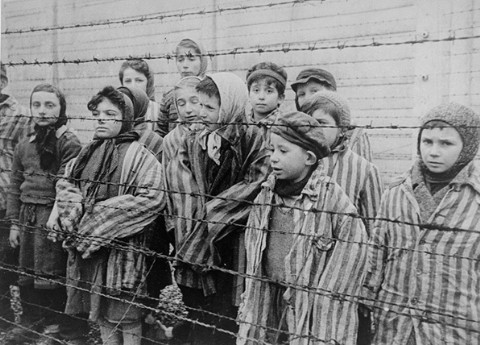
If there has ever been a hopeless place on earth, it was in the Nazi death camps during the Holocaust. Even those who were not immediately killed expected to die a lingering and torturous death. Even those who survived and who were liberated didn’t expect to live any sort of “normal” Jewish life again. Who could after seeing what they saw and experiencing what they lived through? Even after more than seven decades, Holocaust survivors are suffering delayed post-traumatic stress disorder. The statement is so obvious, it’s almost laughable to report it in the media. Of course they’re suffering after seventy years? Who wouldn’t?

But after over seventy years, some have turned suffering and hopelessness into hope, not just for themselves but for each other. Laibel turns hopelessness into hope every time he helps another Jewish man don tefillin and pray at the Kotel. A Jewish man who hadn’t worn tefillin in seventy-two years because of the nightmare of Kristallnacht put on tefillin again because of Laibel’s inspiration, “said the blessing and started to cry.”

While most of us have never faced such horrendous, nightmarish, ghastly experiences as those of Holocaust survivors, as those who are battling desperately invasive cancer, as those who are anxiously trying to comfort a dying child, we still know the world is filled with hopelessness and despair. All of us face some sort of problem, some sort of challenge, something that makes us want to give up our fight to move forward or maybe even the fight to live.

I have no magic to give you. I have no secret formula with which you can overcome your hardships or worries or fears or tears. I can say “rely on God” but for even those men and women who do rely on Him with an almost superhuman faith and courage, the battle is hard and surrender to the darkness is a constant companion.

But amazingly there is still hope. Laibel must be well over eighty years old and for him, hope is helping just one more man put on tefillin, maybe for the first time in decades, and speak words of blessing to God. Hope is saying, “I love you” to a dying little boy. Hope is continuing to pray for your spouse, even though multiple organs are compromised by cancer and years of radiation and chemotherapy haven’t put the demon back in the bottle.

Hope is in the tears you cry. Hope is in your screams of anguish. Hope is being able to go on when life is impossible. Hope is a man learning how to pray again while crying after seventy-two years.

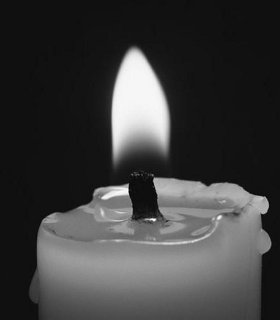
Hope is the faint light of a tiny candle holding the encroaching abyss at bay.

Hope is God.


Yom HaShoah: Remembrance and Hope

Rav Moshe Teitelbaum, zt”l, the previous Rebbe of Satmar, went through the living inferno that those who survived the Holocaust endured. After some time in Auschwitz, he was moved to Tröglitz, a camp in Rehmsdorf. Despite the danger, the inmates of the camp arranged to pray kol nidrei and they invited the rebbe to lead the prayers.

Of course, it was unthinkable to eat on Yom Kippur. But since the meager evening meal was served after nightfall, it at first appeared as though those who wished to fast would have to go without food before the fast as well. After much wrangling, the head of their block, Dr. Kizaelnik—who had been the rosh kahal in Sighet before the war—finally managed to arrange with the kitchen staff that the evening meal would be served before nightfall.

An eyewitness later recounted, “Before kol nidrei we went back into the block and fell onto our beds, crying bitter tears the likes of which I hope I never hear again. Then the good doctor announced that kol nidrei would soon begin and that any who wished could join the minyan. Still weeping, we went to the part of the room set aside for davening, and the rebbe began to speak.

“The rebbe commenced, ‘Rabbi Akiva said: Ashreichem Yisrael! Before Whom are you purified, and Who purifies you? Just as a mikveh purifies the defiled, God purifies Yisrael. We must recall that Rabbi Akiva was one of the ten martyrs—killed for sins he did not commit. He saw all the terrible travail which would befall Yisrael. Yet he chose to give a message of chizzuk to us for all generations. Although a mikveh literally alludes to a ritual pool, it can also allude to the word tikvah, hope. This
teaches that when we hope to Hashem, and do teshuvah—even if we are in the worst situation—God will uplift us. Even from this present darkness, which no nation has ever experienced, such bitterness and cruelty, God will deliver us. Amen.'”

Daf Yomi Digest
Stories Off the Daf
“The Hope of Yisrael”
Kereisos 23

Holocaust Remembrance Day orYom HaShoah begins in the evening of Wednesday, April 18, 2012, and ends in the evening of Thursday, April 19, 2012. Do not forget. Do not let your children forget. As long as we remember and repent, there lies our hope in God.

According to Dr. Michael Schiffman’s blog, “over 50,000 elderly Holocaust survivors living in Israel, and many thousands of holocaust survivors living in the former Soviet Union (are) living in abject poverty right now.” You can help make a difference. Learn how at Dr. Schiffmans’ blog and then make a donation at chevrahumanitarian.org.

There’s always hope, as long as you repent, remember, and then act out of kindness and compassion.

Death in Toulouse

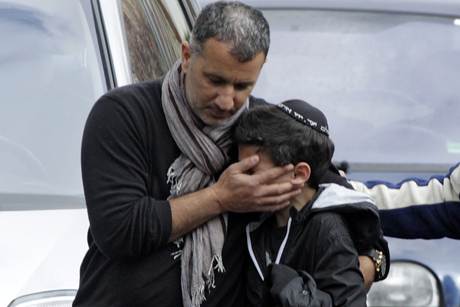
Rabbi Sandler of Kiryat Yovel in Jerusalem and his sons Aryeh, 6, and Gavriel, 3.5, were murdered in Toulouse Monday morning, as was 8 year-old Miriam Monsonegro, daughter of the director of Ozar HaTorah Toulouse, Yaacov Monsonego.

Binyamin Toati, Head of the France Desk of Bnei Akiva, told Arutz Sheva before the names were published that there are reports that the man who was killed is a rabbi who served as an Israel shaliach (emissary) at the school and that two of his children were killed with him.

French press reported that two children were among at least three people killed in a shooting outside a Jewish school. Two other children are reported fighting for their lives. The French news reports said the dead are a teacher and two children, and that two other children were badly wounded.

“Toulouse: Rabbi Yonatan Sandler and his Children among the Dead”
-by Gil Ronen
First Published 3/19/2012, 10:18 a.m.
Arutz Sheva News

I’m sure you’ve heard this tragic news by now. I’m sure you’ve heard that a Rabbi, his two children, and a third child were all murdered in cold blood outside a Jewish school in Toulouse, France yesterday. The story has been covered by virtually every news agency on the planet. Sixty-seven years after the end of World War II and the end of the Holocaust, Jews are still being murdered just because they’re Jews.

I guess I’m taking it personally.

No, I’m not Jewish, but my wife and children are. That means the killer who cut down Rabbi Sandler and three innocent children just because they were Jewish is quite capable and willing to kill anyone who is Jewish, including my family. Yeah, I’m taking it personally, so forgive me if what comes out in this blog isn’t exactly “rational”.

I took a walk by the greenbelt on the Boise river over my lunch hour. It’s the first day of spring and it’s snowing and windy outside. It’s the perfect day to reflect on horror and terror and sadness in the world. It’s the first day of spring, when new life is beginning to trickle back into the trees and grass and flowers are soon to bloom.

And it’s snowing and windy and bitterly cold outside. It fits.

And four Jewish people were murdered yesterday in Toulouse, France for no other reason than just because they were Jewish.

I’m not trying to be insensitive. I know that, in the grand scheme of things, this is just one more harsh thing to happen in a world of harsh things. Many people, including children, are hurt and killed all over the world every day. Just point your web browser to CNN.com and you’ll see all of the headlines. Syria’s maimed children cry out, Slave master becomes abolitionist, 7.4 earthquake hit Mexico, and the beat goes on.

I’m not just upset because kids were murdered, although that upsets me. I’m not just upset because Jews were murdered just because they were Jews, although that upsets me. I’m upset because some people think it’s OK for Jews to be murdered just because they are Jews. OK, maybe I’m exaggerating. Israel’s Prime Minister Benjamin Netanyahu doesn’t think it’s an exaggeration to accuse the European Union’s foreign policy chief, Catherine Ashton, of saying that three Jewish children being murdered in cold blood is exactly the same thing as the children being killed in Gaza because the IDF is retaliating against the Palestinian terrorists who are firing an endless stream of missiles into Israel.

She spoke of remembering “young people who have been killed in all sorts of terrible circumstances — the Belgian children having lost their lives in a terrible tragedy and when we think of what happened in Toulouse today, when we remember what happened in Norway a year ago, when we know what is happening in Syria, when we see what is happening in Gaza and in different parts of the world — we remember young people and children who lose their lives,” she said, according to a transcript of the speech distributed by the European Union.

Ms. Ashton’s spokesman issued a statement of clarification on Tuesday, following the criticism, saying that her words had been “grossly distorted” and that she had not intended to draw any parallel.

“Israel Criticizes E.U. Official for Comments on French School Attack”
-by Isabel Kershner
Published March 20, 2012
The New York Times

To detail Netanyahu’s statement a little better according to the Times:

Prime Minister Benjamin Netanyahu had said that he was “infuriated” by what he called “the comparison between a deliberate massacre of children and the defensive, surgical actions” of the Israeli military that he said were “intended to hit terrorists who use children as a human shield.”

The New York Times viewpoint on the “defensive, surgical actions” of the Israeli military includes:

During the four days of fighting, 26 Palestinians were killed, according to the Israeli military. Most were militants, but four of the dead were civilians. A 12-year-old boy was among those killed in Israeli air strikes; another boy, 14, was killed by explosives in disputed circumstances. During the same period, Palestinian militants fired more than 150 rockets into southern Israel.

Notice the Times uses the term “militants” instead of “terrorists”. A subtle difference? Perhaps.
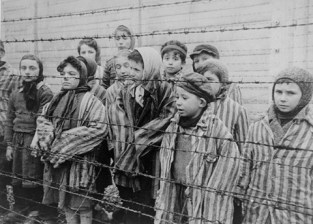
I just keep thinking that it’s been less than 70 years since the end of the Holocaust, and Jews are still not safe. They’re not safe in France and they’re certainly not safe in Israel. They’re also not safe in the world of public opinion or the news media. We’re supposed to live in a modern, civilized, enlightened world, but that’s what made it so difficult for Germany’s Jews to understand the danger they were in when the Holocaust began. They just couldn’t believe that a nation as civilized, as educated, and as enlightened as Germany was in the early 20th century could be capable of such evil. That’s what made it so difficult for the rest of the world to understand, too. That’s why some people didn’t believe it was happening. But is that an excuse for not believing it’s still happening today?

What do you do when you want to kill someone? That’s not a random question. For most of us, it would be almost unthinkable to actually kill someone, even in self defense. We have to weave all sorts of extreme and violent mental scenarios to even imagine ourselves pointing a gun at another person and pulling the trigger. Even if the killing were justified, such as defending your family from violent home intruders, the aftermath; actually living with the memory of having killed someone, would be horrendous.

So unless you are inherently violent or violently insane, it would be extremely difficult to point a gun at someone and to pull the trigger, knowing that they’d be dead in the next few seconds.

So how to you kill someone? How do you train soldiers to kill someone? How do you train a populace that it’s completely acceptable to send an army to another country to kill a lot of people? Today in the United States, the Government doesn’t do a very good job of training the citizens to accept war and so most people don’t accept war. During World War II, we had a fabulous propaganda machine that depicted the Germans and Japanese as non-human, murderous monsters. That made it possible for normally non-violent young men to go overseas and to shoot, bomb, and gas a bunch of other human beings who were trying to shoot, bomb, and gas them. That’s what made it possible for the average U.S. citizen to completely support sending an army to different countries around the globe to shoot, bomb, and gas non-human murderous monsters, who would certainly shoot, bomb, and gas us if they got half a chance.

Ironically, what the United States fails to do in terms of war, it does all too effectively in terms of abortion. What do you have to do to kill an unborn human baby? (I know…you didn’t see that one coming) You make them an “embryo” or a “fetus” but you never, ever make them a human being. It’s the same thing that let U.S. soldiers kill the enemy. It’s the same thing that let U.S. citizens approve of U.S. soldiers killing the enemy. It’s the same thing that let Nazi soldiers and the Nazi SS (Schutzstaffel) round up, torture, starve, shoot, and gas Jewish men, women, and children during the Holocaust.

It’s what let one (reportedly) neo-Nazi killer shoot and kill one Jewish adult and three Jewish children yesterday in France.

To France’s credit, they are (literally) up in arms over these deaths and are diligently searching for the shooter. According to news reports, the shooter has killed prior to this incident and there’s every reason to believe he’ll kill again. I want him caught too, and swiftly. I want him taken off the streets and put in prison.

But he’s only one man.

I know what you’re thinking. He’s only one man. He’s an extremist. He may be mentally ill. He is an aberration. If he’s stopped, things will become safe again.

Will they? I’m sure that the Jews living in Germany in the mid-1930s felt something similar. They couldn’t imagine any irrational hatred of Jews being anything but an aberration; something extremely unlikely to occur, and only involving one or two extreme individuals.

Except they were wrong. It involved thousands who committed horrible atrocities against human beings and millions who condoned it by the actions or their silence. Over the past 70 years tens or hundreds of millions of people have chosen to ignore or to deny the Holocaust, which murdered not only Jews but many other “undesirables” including the physically and mentally handicapped, gypsies, homosexuals, and anyone else who didn’t fit the “Aryan ideal”. All you have to do to kill them is to believe they aren’t human; to believe they aren’t like you, that they’re inferior, that they’re “less,” that they’re “monsters” or “things.”

Because if they’re humans just like you are, then you know that they want to live, just like you do. You know they have feelings, just like you do. You know that they can be scared and hurt, just like you can be scared and hurt. And if you have empathy for someone, you can’t hurt or kill them unless they’re doing something that’s very scary and threatening to you. One Jewish Rabbi and three Jewish children are very unlikely to be doing anything to scare or threaten anyone. They just died because they were Jews.

If we, who represent the rest of the world, don’t speak up and speak out and say “Stop!” to the rest of the world, then our silence is tacit acceptance that it’s permissible to kill a Jew for being Jewish, or to kill a person for being mentally ill, or gay, or for the color of their skin, or for the language they speak, or for being an inconvenient pregnancy.
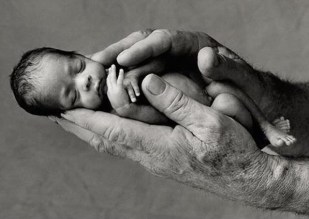
If we believe that it’s acceptable to kill Jewish children for being Jewish, then we’re saying some people aren’t human and that’s OK with us. We like to think we’re civilized and enlightened, but if we are silent and do not protest injustice, then we are accepting injustice. We live in a world that still generally does not condone the murder of Jews, or African-Americans, or Gays, but we do condone the murder of millions of unborn baby boys and girls every year all over the world (and we’ve got a terrific propaganda machine in operation in America that justifies the whole damn thing and makes it sound enlightened and reasonable). Some people still believe it’s OK to kill Jews. A bunch of them live on land that used to be within the borders of Israel until other enlightened nations made Israel surrender that land to people who like shooting missiles at Jews. It’s a crazy world.

I told you I was taking this personally and that I wouldn’t be rational. But murder isn’t rational either. I figure you have a couple of choices. You can stand up and protect the defenseless and the victims from their murderers, or someday you’ll become either one of the murderers or one of the victims.

What? You don’t believe me? Neither did the German Jews in 1930…and neither did their German Gentile neighbors.

 

The Rabbi and the Flood

Although many prosperity churches hold seminars on financial responsibility, Catherine Bowler of the Duke Divinity School alleges that they often offer poor advice. Rosin argues that prosperity theology contributed to the housing bubble that caused the financial crisis of 2007–2010. She maintains that home ownership was heavily emphasized in prosperity churches and that reliance on divine intervention caused people to make unwise choices.

Prosperity Theology page at Wikipedia

Once, I asked Garay how you would know for certain if God had told you to buy a house, and he answered like a roulette dealer. “Ten Christians will say that God told them to buy a house. In nine of the cases, it will go bad. The 10th one is the real Christian.” And the other nine? “For them, there’s always another house.”

-Hanna Rosin
“Did Christianity Cause the Crash?”
the Atlantic

As our forefather Yaakov (Jacob) prepared to encounter his brother Esav again after 34 years, he did three things: sent presents, readied for war, and prayed. He balanced his prayers and trust in G-d with appropriate “worldly” efforts. He neither trusted in his own efforts, nor expected G-d to protect him with open miracles.

Not everyone knows how to strike this balance correctly. At one end of the spectrum are the people who believe that everything is up to them, who panic when they encounter a challenge or pat themselves on the back when things go well. At the other end of the spectrum, perhaps, is the rabbi of a town seated downstream from a dam that was about to break.

-Rabbi Yaakov Menken
“Balanced Trust”
Commentary on Torah Portion Vayishlah
Project Genesis

I suppose there are Christian Pastors who preach a balanced approach to a life of faith, but I more often find such a lesson taught by Rabbis. It seems like, in our current and rather dismal economy, that the poorly-considered Prosperity Theology promoted at some of the rather famous megachurches, is just power-surging through Christianity these days. This phenomena reminds me of how some Christians believe people get sick and even die, just because they don’t have enough faith. After all, if you have enough faith, God will heal you of any injury or disease, right? The mother who died of breast cancer or the father who perished from a sudden heart attack just weren’t “real Christians”, right? There have been “men of God” such as Jimmy Swaggart, Jim Bakker, Benny Hinn, and Joel Osteen who have, at one time or another, preached the basic message that God wants all Christians to be wealthy in this lifetime and if we have enough faith, money and prosperity will drop in our laps like proverbial “pennies from heaven.”

That’s hardly the reality of the Bible. A quick look at any of the Prophets in the Tanakh (Old Testament) and the lives of the Apostles, including Paul and Peter, shows us that often a life of extraordinary faith is also one of extraordinary hardship. No, I’m not saying that a life of faith always results in hardship, but it’s ridiculous to believe that being a “true Christian” means always being “filthy rich”. God has a wide variety of paths for each of us. Some people are “rewarded” (seemingly) in this life and some, by faith, live in financial difficulty and believe they have a reward in the world to come (Matthew 6:19-21). Rabbi Menken uses Jacob as an example of a man who, through a lot of hard work and faith, did well materially, though not without sacrifice. Jacob was a man who, in spite of success, continued to struggle with the world around him and with the Divine, but who was balanced sufficiently to make his own best effort, to pray, and then to trust God.

Most of us aren’t that well-organized and, as people of faith, we forget many of the lessons God has taught us.

People, despite their wealth, do not endure;
they are like the beasts that perish.

This is the fate of those who trust in themselves,
and of their followers, who approve their sayings.
They are like sheep and are destined to die;
death will be their shepherd
(but the upright will prevail over them in the morning).
Their forms will decay in the grave,
far from their princely mansions.
But God will redeem me from the realm of the dead;
he will surely take me to himself.
Do not be overawed when others grow rich,
when the splendor of their houses increases;
for they will take nothing with them when they die,
their splendor will not descend with them.
Though while they live they count themselves blessed—
and people praise you when you prosper—
they will join those who have gone before them,
who will never again see the light of life.

People who have wealth but lack understanding
are like the beasts that perish. –Psalm 49:12:20

We cannot rely only on our faith nor only on our own efforts; rather it is a combination of both that God expects of us (James 2:14-26). But sometimes we get lazy and jump at the sort of message that says God will “do it all” as long as we “bathe it in prayer” and have enough faith. Lack of prosperity, in this particular spiritual framework, means it’s our fault when we don’t prosper, and we haven’t prayed hard enough or prayed some sort of “magical” or “secret prayer” someone wrote a book about, as if God could be manipulated to give us our wishes like a genie in a lamp.

The flip side is when we have success and attribute it entirely to our own efforts, ignoring the graciousness of God. We look at our own magnificence and tell ourselves that people who are destitute are just lazy slackers who want the Government to give them everything rather than really working hard, like we did. The examples of people who are out of balance in one way or another are just endless. Here’s the end of Rabbi Menken’s story to illustrate my point (and I’m sure you’ve heard this joke before):

The sheriff found the rabbi sitting calmly on his front porch, studying. “Rabbi!” yelled the sheriff, “it’s a flood, we have to evacuate!”

“Don’t worry,” said the rabbi, “G-d will help me. I don’t need to go.”

Soon the water flooded the town, and firemen in motorboats were picking up the stragglers. One of them noticed the rabbi, and called him to come with them.

“Don’t worry,” said the rabbi, “G-d will help me. I don’t need to go.”

But the waters rose, and rose, and by the time a helicopter was sent to find the last residents, the rabbi was calmly sitting on his roof. Yet once again, the rabbi refused to go.

Once in Heaven, the rabbi demanded an explanation. “I followed Your ways, I learned Your Torah, I did Your will… why didn’t You help me?!”

“What do you mean?” came the response. “I sent a car. I sent a boat. I even sent you a helicopter, but you refused to be helped!”

The reason the joke is so well-known is because it tells something true about people of faith who only have faith. We look for supernatural miracles as the only answer to prayer, but often God sends us very real-world solutions to our dilemmas which require that we take some sort of definitive action. God opens the door, but we still have to get up off of our rear ends and walk through it.

Rabbi Label Lam at Torah.org quotes the pre-World War II treatise of Rabbi Elchonon Wasserman ztl, “The Epoch of the Moshiach” as an example of how many of the Jews in Europe trusted in the powers of the world around them for safety and prosperity and instead were led into the Holocaust.

“Before the redemption, the Jews will err after various forms of idol- worship… “Any matter which appears to man as a controlling factor independent of HASHEM’s will, and as capable of doing good or evil is included in the definition of idolatry. (Sanhedrin) …

He writes, “Let us now review all the “idols” which were worshipped in the last one hundred years. The Enlightenment of Berlin promised a great salvation. As soon as the breeze of liberalism began to blow, the Jews hastened to stand in the ranks of the foremost exponents. After Liberalism had made its exit, they turned to Democracy (worship of public opinion), Socialism, Communism, and to other “isms”… To these idols they made sacrifices of blood and money- and were betrayed by all of them. Not even one justified the faith that was pinned on it…”

Anything can become an idol if we depend on it beyond God’s will, even faith itself. Having faith in a “system” of Government or economic strategy can and has led to tragic consequences, but walking out in the middle of a busy street, standing directly in the path of a speeding truck, and expecting God to send His angels to rescue us from our own folly is also a kind of idolatry. Whether it’s some corrupt “holy man” telling us what we want to hear or we are telling ourselves the same foolish message, we are not so strong that we do not need God, nor can we neglect the responsibilities God has given us and not expect to collide with the consequences. Like Jacob, we must do the equivalent of “sending gifts, praying, and preparing for war” in every challenge we face. Only then are we fully equipped and worthy children of our Father.