Tag Archives: Israel

Does the Pope Know Something The Rest of Us Don’t?

The Vatican says the Catholic Church must not try to convert Jews to Christianity.

Instead, the Catholic Church must work with Jews and Jewish institutions to further dialogue and mutually understand and fight anti-Semitism, according to the Vatican, which pledged “to do all that is possible with our Jewish friends to repel anti-Semitic tendencies.”

It [the document “The Gifts and Calling of God are Irrevocable”] added, “In concrete terms this means that the Catholic Church neither conducts nor supports any specific institutional mission work directed towards Jews.”

Goals in Jewish-Catholic dialogue, according to the document, include “joint engagement throughout the world for justice, peace, conservation of creation, and reconciliation” in a way that would make the religious contribute toward world peace. “Religious freedom guaranteed by civil authority is the prerequisite for such dialogue and peace,” it said.

“In Jewish-Christian dialogue the situation of Christian communities in the state of Israel is of great relevance, since there — as nowhere else in the world — a Christian minority faces a Jewish majority,” the document said. “Peace in the Holy Land — lacking and constantly prayed for — plays a major role in dialogue between Jews and Christians.”

from the article “Vatican Says Jews Don’t Need Christ to be Saved”
VirtualJerusalem.com

Well, that’s quite the revelation.

I’m sure anti-missionary groups such as Jews for Judaism will be happy to hear they won’t have to worry about Roman Catholics trying to convert Jews anymore.

I do agree that, as much as evangelism is a priority for the Christian Church, most Christians seem to think of converting Jews in a different light than any other people group. Maybe they think they get extra “points” from God when they convert a Jew (not that most Jewish people would feel good about this).

According to an Arutz Sheva story on the same matter, the authors of the aforementioned paper state:

How Jews being saved while not believing in Christ “can be possible remains an unfathomable mystery in the salvific plan of God,” they say.
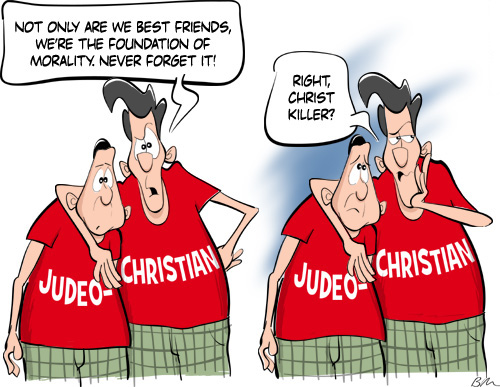
judeo-christianI tried to find Christian reactions to this situation, but the closest thing I could find was at Rapture Forums (the name already has my spider-sense tingling).

One person wrote:

Clearly, they don’t believe the Bible…Acts 4:12.

The word MUST, must be emphasised.

Another person commented:

So much for John 14:6.
Don’t need that anymore.

Another referenced Matthew 23:37:

“Jerusalem, Jerusalem, who kills the prophets and stones those who are sent to her! How often I wanted to gather your children together, the way a hen gathers her chicks under her wings, and you were unwilling.”

The news is pretty new, so a lot of folks may not have weighed in with their opinions yet.

I turned to Facebook and something called The Truth is Viral displayed the most comments of anyone posting this story, at least as far as my short search could find.

Of 27 comments, the first two that appeared were:

Ronald: The Babylon Whore that rides on the Beast and commits fornication with the kings of the Earth . The Anti-Messiah who is drunk with the blood of the saints.

Matt: There was a Twilight Zone like this, the whole world had to change and we thought it was to get along but the reality was to see who was strongest and we destroyed ourselves.
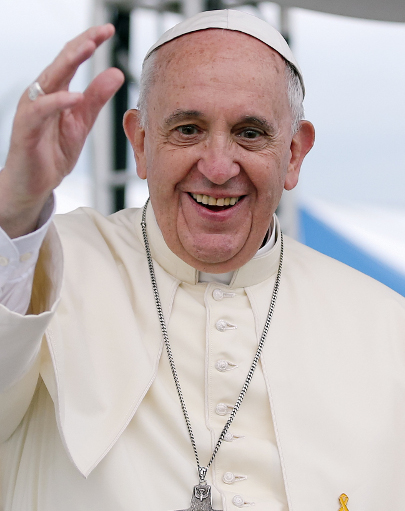
pope francis
2014 Pastoral Visit of Pope Francis to Korea

Others accused the Pope of worshiping Satan, that Mohammad was a false prophet (though Mohammad and Islam have nothing to do with this as far as I can tell), and other similar statements.

I decided to return to an old source for a more sane perspective:

But the Gospel for Jews works differently. It’s the same Gospel, but because the Jews are already God’s people, the Gospel of Yeshua the Messiah comes in a different way. It is still the case that through the Messiah, and only through Him, individual Jews receive atonement and forgiveness of sin – “For there is no other name under heaven given to mankind by whom we must be saved!” (Acts 4:12). But Jews are not alienated from the commonwealth of Israel, they are the commonwealth of Israel! They already have the covenants and the promises; and therefore in a communal sense they already have hope and “have” God. Before accepting Yeshua, Jews do not “have” God and His hope in the same sense as after accepting Him. After accepting Yeshua they have hope and God in an individual, salvific sense – they have forgiveness of their sins, God sees them as righteous because of Yeshua’s atoning death, and they have the certain hope of eternal life with God. Before accepting Yeshua a Jew does not have the certain hope of eternal life with God, but he does share in the communal promises to the Jewish people as a whole – for example, a share in the Land of Israel. A Jew needs God in both the communal and individual senses because this is how God has ordained that it should be.

The Christian attitude toward the Jewish people should be, “The Jews are my home, my family.” Whether the Jewish people will accept Christians as family will depend on how the Gospel is presented to them, and it is the task of Christians and Messianic Jews to find the right way. But an essential aspect of this presentation will be defining the Gentile Christian in the way I have done – rather than in the way Christians have, by their words and deeds, defined themselves: either as enemies of the Jewish people, alienated from their national life, or as people who have no connection with the Jews and can be oblivious to them, or even as outsiders who respect and love the Jews a lot. These definitions not only contradict texts Christians claim to believe, but often foster behavior toward the Jewish people that is sinful, behavior which distances Jewish people from the Gospel and from the Gentile branch of the People of God.

Christians need to redefine who they are in relation to the Jewish people – and then act on the consequences of that redefinition with a renewed commitment to bringing the gospel to Jews. This is the biggest challenge facing the Church.

-Dr. David H. Stern
taken from his book Restoring the Jewishness of the Gospel
as quoted at Tikkun Ministries

I’ve heard it said, according to a source I quoted over eighteen months ago, that one of the primary functions of Yeshua’s first coming was to provide proof that God’s New Covenant promises to the Jewish people were true.

emergeFor instance, the New Covenant (see Jeremiah 31 and Ezekiel 36) promises a universal resurrection from the dead. Yeshua was the first person resurrected from the dead, also called “the firstborn of the dead” (Colossians 1:18). He’s the first, but certainly not the last. His resurrection establishes proof that God will resurrect all of the dead in time.

The indwelling of the Holy Spirit, to the point where even the least among humanity will have an apprehension of God greater than the prophets of old, was also established, first by Yeshua (Matthew 3:13:17), then by the Jewish apostles (Acts 2:1-4), and finally even coming to the Gentiles (Acts 10:44-46).

The New Covenant states that God will forgive the sins of all Israel, which is restated in Romans 11:25-27, and Yeshua forgave the sins of many due to their faith in Hashem and his ability to do so.

Thus Yeshua made a partial delivery on God’s promises and he will complete his mission fulfilling all that Messiah is to do upon his return.

You can click this link to read my thoughts on an insightful comparison between those Jews who have accepted the revelation of Yeshua as Messiah and those who haven’t. In essence, it seems to partly agree with the Pope that the Jewish people are already born into a covenant relationship with Hashem, so that even those who reject Yeshua are not excluded from the Sinai covenant or necessarily from the New Covenant, even though Messiah is the arbiter of that covenant.

I also have to agree somewhat with this latest assessment by the Catholic Church that we do not fully understand the exact mechanism by which Hashem will accomplish all these things. We do know from the New Covenant language that He has promised to do it, and so He will.

MessiahYeshua points Israel back to Hashem and His promises to them. For the rest of us, who were born with no covenant relationship with God whatsoever (unless you accept what is written in Genesis 9 as the Noahide covenant which is binding on us), God, through His mercy and grace, is willing to include us in many of the blessings of the New Covenant, even though we are not named participants, and for the sake of His prophets who declared that every knee will bow (Psalm 72:11; Isaiah 45:22-25; Romans 14:11).

So it’s not like Yeshua is a moot point to the Jewish people or Israel. But Israel’s status in relation to Hashem is somewhat different from that of the Gentile believers because they have a pre-established relationship with God that the rest of the world lacks. Yeshua is the lynchpin, but as Stern pointed out, that works out somewhat differently for the Jewish people than it does for everyone else.

I think I understand, at least a tiny bit, what the Pope is trying to do, relative to establishing better relations between the Catholic Church and the Jewish people, but how he delivered his information, or at least how it’s been covered in the media, is probably going to kick up a major dust storm in the Christian world, particularly with conservative Evangelicals and Fundamentalists.

Christians, in general, believe the New Covenant fully replaced all prior covenants God made, and so they believe that God’s relationship with everyone, including Jews, is identical and that the Jews have no special status. Until the Church learns to accept that Israel remains in covenant relationship with God, they will continue to woefully misunderstand the Jewish people and God’s plan of redemption.

I can only imagine that this blog post could be read with considerable “annoyance” by some Jewish people as well as some Christians, and believe me, I did not write this to offend. I did want to explain (and obviously, I’ve written on similar matters previously) that what the Pope’s comments touched upon is a highly complex situation that is poorly understood by the vast majority of believers, including Christian clergy and scholars.

For that matter, the role of Yeshua as the forerunner of the completed New Covenant promises is poorly understood by both Christians and Jews. Again, I say this not to offend, but to illustrate that what we think we know from the Bible is a highly nuanced and subtle set of messages that requires careful unpacking and analysis. This is difficult for most people because long-established traditions on both sides of the aisle have been constructed to obscure this perspective.
JerusalemIf anyone is tempted to complain to me about this, I ask that you first consider these words:

Instead of complaining about someone’s behavior toward you, it is more constructive to work on your own behavior toward him.

Ignore another person’s grouchiness and anger, and speak cheerfully and with compassion. If you find this difficult, pretend that you are an actor on stage. Adopting this attitude can keep people from much needless quarreling and suffering. Do it consistently and you will see major improvements in their behavior toward you.

Be flexible. People differ greatly on what they evaluate as “positive,” and it is necessary to understand the unique needs of each person you’re dealing with. If one approach is unsuccessful, try other approaches. But keep trying.

-Rabbi Zelig Pliskin
“Put On Your Best Act”
from the Rabbi’s book Gateway to Happiness, p. 137
quoted at Aish.com

As I mentioned a few days ago, in a difficult situation, it is best to seek that small encouraging light in otherwise dark and foreboding surroundings. A fitting sentiment for the current season.


Illuminating the Darkness

“When you awake in the morning, learn something to inspire you and mediate upon it, then plunge forward full of light with which to illuminate the darkness.”

-Rabbi Tzvi Freeman

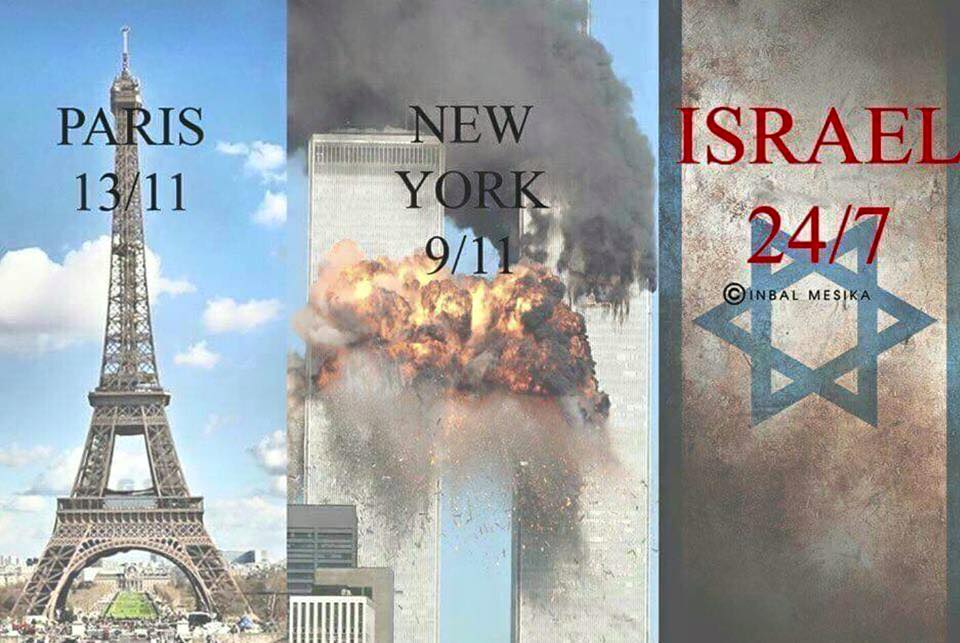
In the wake of the devastating Islamic terrorist attack on the city of Paris, I really wish I could “illuminate the darkness,” as Rabbi Freeman suggests. But all I can see is the encroachment of that darkness on our world, the coming of destruction, the advent of great evil.

MessiahYesterday, I cried out how long, Moshiach…how long until you come? I know he heard. I know he will come. But how many more must suffer and die, how often must evil believe it has won because it stands unopposed, until Hashem has said it is enough, and the final war begins?

Insanity, from frivolity to massacre, rule our planet, and if I had to depend on the news media for my global view, I would believe there were no sane human beings left and that our world was already doomed.

And yet, these are the times when our faith is tested, when we have to face the question of whether God has abandoned us, or worse, that there is no God and we live in a universe where morality is always relative, and that one person’s terrorist is another person’s freedom fighter. Or can we believe that this too indicates the birth pangs of the Messiah must become ever more severe before the time of his return?

If we can sustain our faith, we will believe the latter.

I want to illuminate the darkness, to sweep away despair, to shine like a light on a hilltop, but frankly, I’m not that heroic. All I can do is keep slogging away, moving forward, hip deep in mud, doggedly determined, and hope and pray I can keep going until the great and terrible day of the Lord.

I pray that for us all. I pray that for Paris, for those who continue to suffer in the aftermath of September 11th, for those who suffer everyday in Israel at the hands of terrorists…at the hands of evil.

In a statement attributed to Edmund Burke, Charles F. Aked, and others, “the only thing necessary for the triumph of evil is that good men do nothing.”

I want to get political and say that the “good men” of our government habitually “do nothing,” but this war won’t be won by nations and political parties because it’s not a war of nationalities, but rather, of light vs. darkness, good vs. evil.

However, this isn’t to say we have no participation and that we must watch silently as this all plays out in the spiritual world. No, we are very much involved. People are dying. Our enemies are gloating. We must respond.

paris attacks
Credit: BBC News

But how?

Pray?

Yes, but as a meme I saw recently on the web stated, we must also be prepared for violence, and even for some of us, to do violence. Soldiers will fight in very human wars as they always have, and many more will die.

I don’t know what to do except what I am doing…writing. Pray for Paris, pray for the defeat of ISIS, but most of all, pray for the peace of Jerusalem. It’s not that God doesn’t weep for the people slain in France last Friday night, but we must admit that Israel, of all the nations, is at the center of His mind and heart and spirit. It is through the redemption of Israel that the rest of the nations will be redeemed.

It is in the war to defend Israel that Hashem, Master of Legions, will defeat all evil forever.

However horrible the terrorist attack against Paris is, it’s just another skirmish. The war is coming. We must be ready. We must be ready to give battle. We must be ready to be the light of the world. We must be the light of the world now, so the world, if it wills, will draw near the light of Moshiach, our master, our King.

peaceHe will prevail and in him, we will prevail as well. Indeed. We have already prevailed if we don’t wait for the peace of our Rav to come in the future but to seek it and embrace it now, even in the face of great adversity.

Rejoice in the Lord always; again I will say, rejoice! Let your gentle spirit be known to all men. The Lord is near. Be anxious for nothing, but in everything by prayer and supplication with thanksgiving let your requests be made known to God. And the peace of God, which surpasses all comprehension, will guard your hearts and your minds in Christ Jesus.

Philippians 4:4-7 (NASB)

What Can You Do For The Land Of Israel?

I wanted to take a few minutes this morning to emphasize how important our presence is in the land to the Israelis. (By ‘our’ I mean people living outside the land – whether Jew or Gentile.) So many people I spoke with feel alone, that the world doesn’t care. And what they see the world saying is that all the trouble in Israel is their fault.

Now, I am saying we take the place of God. But aren’t we, as followers of the Messiah, called to be the hands and feet of Hashem in this world? Isn’t it part of our job to love his people and support them? Isn’t that what Paul emphasized?

-Ro Pinto
“We Must Let Them Know”
Journey to Messiah

I suppose you know by now that Israel is suffering from the latest plague of terrorist attacks against its Jewish citizens. I also suppose you aren’t surprised that the news and social media are saying (again) it’s all Israel’s fault.

Given the nature of my blog, I can only believe that most of my regular readers are pro-Israel and support the defense of the Jewish people against their aggressors. Ro, in the blog post I quoted from above, suggested that one of the things we can do in support of Israel is to visit the Land, just as she did a short time ago (and about which she blogged prolifically).

So what can we do? Most of us aren’t in a position financially or in terms of our schedules, to hop a transatlantic flight and vacation in Israel for a couple of weeks. How else can we show our support?

seven things israelI read Ro’s blog when she originally published it to the web, but didn’t consider passing along her message until today when I read an article from the Chabad with the title 7 Things You Can Do for Israel.

This list is definitely written for religious Jews, so not everything applies to the rest of us, but here it is (click the link I provided above to get the full details):

  1. Take Up a “Call to Arms”
  2. Share the Power of Light
  3. Check Your (Spiritual) Security System
  4. Pray
  5. Be Financially Supportive
  6. Nurture Your Faith
  7. Get a Letter

Some items on that list may seem pretty obscure so I’ll expand on them a bit.

The “call to arms” is to help any Jewish man or boy over age 13 put on tefillin. That’s not something we non-Jews get much of an opportunity to do, nor is it something non-Jewish males typically perform (with a few exceptions, or so I’m told).

Sharing the power of light is lighting the Shabbos and holiday candles and encouraging Jewish girls and women to do so. Again, not something most non-Jewish believers tend to perform and we typically aren’t in a position to suggest to Jews that they do so.

The “Jewish security system” is the mezuzah. Because my wife is Jewish, we have a mezuzah attached to pretty much every doorway in our home (bathrooms are the exception). I’ve been told that when a Jew sells his or her home, they leave the mezuzot (plural of mezuzah) in place if another Jew is buying the home, and remove them if a non-Jew is the buyer (because it won’t be a Jewish home anymore).

prayerPraying for Israel is the first item on the list that’s freely accessible to any religious person, and we can certainly encourage others to pray for Israel and the Jewish people as well.

The Chabad article has various links to charitable organizations anyone can donate to for the benefit of Jewish victims of terrorism. You can also do your own research and determine for yourself where you want to give your tzedakah (the word translates commonly as “charity” but also means “justice”).

Nurturing your faith has to do with a Jewish person encouraging more religious observance and acts of faith with their own family and friends, specifically as it relates to a Jew’s connection to Israel.

While we non-Jews don’t have the same connection to the Holy Land, it would be inaccurate to say we don’t have a connection at all. Hashem established Israel for the Jewish people but He also commanded the Jewish people to be a light to the world. That light comes most strongly from Israel and from our Rav, Yeshua (Jesus).

Further, in His grace and mercy, Hashem has extended the promise of the resurrection, eternal life, and the Holy Spirit even to the Goyim, so how could we not be attached to Rav Yeshua, whose symbolic, sacrificial death and miraculous resurrection have opened the door to redemption for any who would repent and come to faith.

We can encourage our own family and friends to embrace their faith in our Rav by expressing clear support of Israel in any manner we have available to us. No congregation that pays homage to Yeshua, which includes any Christian church, should fail to support the nation of the Jews in any way.

torah up closeGetting a letter is unique. Special Torah scrolls are being written in Israel, and the Chabad article says that any Jewish person may purchase a letter being written in a scroll. The way the form is set up, asking for the Jewish name of the person for whom the letter is being purchased, as well as the Jewish mother’s name and so on, I don’t think a non-Jew would be permitted to do this.

On the other hand, we can certainly pass along this information to any Jewish people we know who we believe would be interested.

The article finishes up with the suggestion that we pass this along in social media or anyplace else that Jewish people might see it and act.

I’m writing all this not to make any non-Jew reading it feel discouraged by what they can’t do for Israel. After all, Chabad is in the business of drawing Jewish people to Jewish faith and observance, not Gentiles (though I suppose they’d have an opinion on what a Noahide could do).

I’m writing today to show that we do have options in supporting the Land and the Jewish people. As Ro suggested, we could visit Israel and show our financial (by purchasing goods and services during our visit), emotional, and spiritual support. If we are in a position to do so, we can find some way to support any Jewish people in our local communities who we may know, to greater levels of Jewish observance. We can certainly pray, donate to Israeli charities helping terror victims, and encourage other believers to support Israel as an act of our faith (the last being a great way to educate others at your church or congregation).

Non-Jewish disciples of Rav Yeshua call ourselves Christians, or sometimes believers, followers, or even “Messianic Gentiles.” We are who we are. We are not Jews and we are not Israel. But we can stand by Israel, even if we don’t know a single Jewish person, and do something to support a Land under attack, not just by human terrorism and world-wide public condemnation, but by ancient forces of spiritual evil.

I don’t often write about “supernatural forces” but let’s face it. Our physical world is an extension of a spiritual reality and of powers and events long foretold by the Biblical prophets. We know that bad things are coming for the Jewish people, for Israel, and ultimately for the whole world.

IsraelThis is as good a time as any to stand up and be counted on the side of good…the side of God.

Tag. You’re it. Pass this along.

This is just the short list. For more, read 54 Ways You Can Help Israel and find out which ones you can do…and then do them.

Addendum: Just saw this link on Facebook about helping victims of terrorism and thought I’d share.

The Torah viewpoint is that the Almighty constantly creates the entire world and everything in it for each individual. This concept has the potential to give a person immense pleasure. Think about it for a moment. The Almighty — Creator and Sustainer of the universe — is constantly creating for you the sun, the moon, and all the other worldly phenomena. He is constantly bestowing upon you life, and every single second He supplies you with your needs.

(see Rabbi Noson Tzvi Finkel; Tnuas Hamussar, vol.3, p.202; Gateway to Happiness, p.36)

-Rabbi Zelig Pliskin
Aish.com

How Will We Live in the Bilateral Messianic Kingdom?

When I started writing this missive, I thought the answer had all to do with the Apostle Paul. By the time I finished, I realized I was dead wrong.

Let me explain.

This issue is compounded by two additional assumptions, based on the New Testament book of Romans – written by Paul whose authority is questionable because he never met Jesus.

-Rabbi Bentzion Kravitz
“Know How to Answer Christian Missionaries”
Aish.com

Articles like this make my heart ache because they are based on the assumption that everyone who has received and accepted the revelation that Rav Yeshua (Jesus) is the Messiah has an understanding of Jesus that’s exactly the same as Evangelical Christian theology and doctrine.

This is not consistent with many Messianic Jews I’ve met, either in person or over the web. In fact, most of those Jews have more in common with people like Rabbi Kravitz than they do with me.

But I’m not writing this to convince any Jewish person (or Gentile Noahide for that matter) of the validity of Yeshua’s identity and role, past, present, or future.

My current investigation has to do with a Gentile establishing and maintaining a relationship with Hashem outside traditional Christianity and Messianic Jewish community. For the former, this is the case because I’m definitely not a good fit for the Church, and for the latter, because I suspect any involvement on my part in either Christianity or the Messianic movement just drives my (non-Messianic) Jewish wife nuts.

Not that it’s her fault. That’s just the way it is. She’d probably get along famously with the above-quoted Rabbi Kravitz and eat up his responses to missionaries with a spoon.

So given my circumstances, and the circumstances of quite a number of “Judaicly aware” non-Jews who for many different reasons can’t or won’t join in a community, we turn back to the Bible and to God as our only resources.

I was trying to find a condensed list of the various directives that Paul issued to his non-Jewish disciples so I could “cut to the chase,” so to speak, but doing that search online is proving difficult. I keep encountering traditional interpretations of Paul as having done away with the Law and having replaced it with grace and so on.

I could turn to more “Messianic” or “Jewish” friendly commentaries, but many or most of them are quite scholarly and beyond my limited intellectual and educational abilities and experience.

I do point the reader to a source I’ve mentioned quite a bit of late, the Mark Nanos and Magnus Zetterholm volume Paul within Judaism: Restoring the First-Century Context to the Apostle. This is a collection of articles written by various researchers who are part of the “new perspective on Paul” movement, those who have chosen to reject the traditional interpretation of the apostle and who have taken a fresh look at his life and writings within the context of first century Judaism.

The Jewish PaulYou get a really different opinion of Paul when you take off your Christian blinders (sorry if that sounds a tad harsh).

I did look up Paul at beliefnet.com and they do seem to state that Paul was Jewish, but unfortunately, they take a more or less traditional point of view on what the apostle taught.

They did say that of all the epistles we have recorded in the Apostolic Scriptures, scholars are sure he was actually the author of:

  • 1 Thessalonians
  • Galatians
  • 1 & 2 Corinthians
  • Philippians
  • Philemon
  • Romans

Even limiting my investigation to those letters, I’m still faced with a lot of challenges. Romans alone is worth a book, actually many books, and is so complex I doubt I’d ever do more than scratch the surface of its meaning.

But maybe I don’t have to start from scratch. After all, in the several years I’m maintained this blogspot, I’ve written many times on Paul. Maybe I don’t have to reinvent the wheel. Perhaps all I have to do is read what I’ve already written.

Searching “Paul” on my own blog renders 33 pages of search results but I need to narrow it down more to what Rav Shaul specifically said about the Gentiles.

Actually, only the first two pages contain blog posts specifically with “Paul” in the title. It gets a little more generalized after that.

The added problem is typically, any time I wrote about Paul and the Gentile, it was usually in relation to or contrasting the role of Messianic Jew and Judaicly aware Gentile. I produced very little, if anything, about Gentiles as Gentiles. After all, I’ve been a champion (minor league, of course) of the cause of Messianic Jews to be considered Jewish and operating within a Judaism, just the same as other observant Jews in various other religious Jewish streams.

Only of late have I found it necessary to advocate for the Gentiles, and more specifically, me. Only recently have I realized that while it’s a good thing to emphasize Judaism for the Messianic Jew, it has some serious drawbacks for the so-called “Messianic Gentile,” not the least of which is resulting in some non-Jewish believers losing their identity because they’re surrounded by all things Jewish, including siddurim, kippot, Torah services, and tallit gadolim.

While I still believe that a significant role of the Judaicly aware Gentile as well as the more “standard” Christian is in support of Israel and the Jewish people, just as Paul required of his Gentile disciples in ancient times, I also believe there has to be something more for us to hang onto.

Or to borrow and adapt a hashtag from recent social media outbursts, #GentileLivesMatter (by the way, using Google image search to look up “goy” or “goyishe” returns some pretty anti-Semitic graphics).

multiculturalI did find a blog post I wrote in January 2014 called The Consequences of Gentile Identity in Messiah, but I’m not sure how useful it is in my current quest, in part because I wrote:

I wrote a number of detailed reviews of the Nanos book The Mystery of Romans including this one that described a sort of mutual dependency Paul characterized between the believing Gentiles and believing and non-believing Jews in Rome.

You can go to the original blog post to click on the links I embedded into that paragraph, but if part of who we non-Jews are is mutually dependent on Jews in Messiah, that leaves me pretty much up the creek without a paddle.

Of course, that’s citing Nanos and his classic commentary The Mystery of Romans, which describes a rather particular and even unique social context, so there may be more than one way to be a Judaicly aware Gentile and relate to God.

The problem then is how to take all this “Judaic awareness” and manage to pull a Gentile identity out of it that doesn’t depend on (Messianic) Jewish community. Actually, I would think this would be as much a priority for Messianic Jews as it is for me, especially when, as I’ve said in the past, in order for Messianic Jewish community to survive let alone thrive, Messianic Jewish community must be by and for Jews.

To put it another way quoting Rabbi Kravitz’s lengthy article:

The growth of Christian support for Israel has created an illusion that we have nothing to worry about because “they are our best friends.”

It would be a mistake to think the risk has been minimized, especially to Jewish students and young adults, just because missionaries are less visible on street corners and offer much appreciated Christian support for Israel.

Granted, R. Kravitz must paint the Church in the role of adversary if he believes that Christians are dedicated to missionizing young Jews so that they’ll abandon Jewish identity and convert to Goyishe Christianity, but we non-Jews in Messianic Jewish community are also sometimes cast as a danger in said-community because our very presence requires some “watering down” of Jewish praxis and Jewish interaction.

I suspect the same was true in Paul’s day and ultimately, it was this dissonance that resulted in a rather ugly divorce between ancient Jewish and Gentile disciples of Messiah.

Gentiles resolved the conflict by inventing a new religion: Christianity, and they kicked the Jews out of their own party, so to speak, by refactoring everything Jesus and Paul wrote as anti-Torah, anti-Temple, and anti-Judaism.

That does me no good because I don’t believe all that stuff, that is, I’m not an Evangelical Christian. I need an identity that allows for my current perspective, my pro-centrality of Israel and Torah for the Jews perspective, my King Messiah is the King of Israel and will reign over all the nations from Jerusalem in Messianic Days perspective, and still lets me be me, or the “me” I will be in those days, Hashem be willing.

Think about it.

All Jewish people will live in Israel. It will once again be a totally Jewish nation. As far as I can tell, people from the nations will be able to visit as tourists, but by and large, besides a rare exception or two, we will live in our own countries, which in my case is the United States of America…a United States devoid of Jews, synagogues, tallit gadolim, and all that, because they will only exist among the Jews in Israel.

MessiahI don’t know the answer to this one, but I think this is the central question I’m approaching. How will we Gentiles live in our own nations half a world away from Israel and King Yeshua? What will our relationship be to God?

The answer to how we’ll live in the future is the answer to my current puzzle.

As I ponder what I just wrote, I realize that even searching out Paul’s perspective on the Gentiles is a mistake. He was trying to find a way for Jews and Gentiles to co-exist in Jewish community. He never succeeded as far as I can tell. No one has succeeded since then, including in the modern Messianic Jewish movement.

But in the Messianic future, as such, Jews and Gentiles really won’t be co-existing in Jewish communal space. Jewish communal space will be the nation, the physical nation of Israel. We goys will be living every place else except in Israel. Maybe the Kingdom of Heaven will be more “bilateral” than I previously imagined.

Or have I answered my own question?

The Consequences of Being Chosen: The Laws of Tumah

Speak to the Children of Israel and say to them: Any man who will have a discharge from his flesh, his discharge is contaminated.

Vayikra (Leviticus) 15:2

It is learned from this verse that only the Children of Israel are subject to the laws of tumah; people of other nations do not become tamei with the onset of any of the symptoms described in these laws. The severity with which the Jewish people are treated with regard to tumah is reflected in the term “speak to,” a term that implies a severe or stringent communication (see Rashi to Shemos 6:2).

A Torah Thought for the Day, p.215
Thursday’s commentary on Parashas Metzora
A Daily Dose of Torah

heal meAccording to this commentary, only the Jewish people are susceptible to what one person has called “spiritual skin disease,” not the people of the nations. We don’t have this disorder with us today to test that belief even though we know that these conditions did exist in the time of Jesus (Yeshua):

While He was on the way to Jerusalem, He was passing between Samaria and Galilee. As He entered a village, ten leprous men who stood at a distance met Him; and they raised their voices, saying, “Jesus, Master, have mercy on us!” When He saw them, He said to them, “Go and show yourselves to the priests.” And as they were going, they were cleansed. Now one of them, when he saw that he had been healed, turned back, glorifying God with a loud voice, and he fell on his face at His feet, giving thanks to Him. And he was a Samaritan. Then Jesus answered and said, “Were there not ten cleansed? But the nine—where are they? Was no one found who returned to give glory to God, except this foreigner?” And He said to him, “Stand up and go; your faith has made you well.”

Luke 17:11-19 (NASB)

Well, wait a minute. A Samaritan was among those men of Israel who were healed of tzara’at? How can this be if the commentary above states only the Children of Israel suffer from this affliction?

And this isn’t the only incident:

Now Naaman, captain of the army of the king of Aram, was a great man with his master, and highly respected, because by him the Lord had given victory to Aram. The man was also a valiant warrior, but he was a leper. Now the Arameans had gone out in bands and had taken captive a little girl from the land of Israel; and she waited on Naaman’s wife. She said to her mistress, “I wish that my master were with the prophet who is in Samaria! Then he would cure him of his leprosy.”

It happened when Elisha the man of God heard that the king of Israel had torn his clothes, that he sent word to the king, saying, “Why have you torn your clothes? Now let him come to me, and he shall know that there is a prophet in Israel.” So Naaman came with his horses and his chariots and stood at the doorway of the house of Elisha. Elisha sent a messenger to him, saying, “Go and wash in the Jordan seven times, and your flesh will be restored to you and you will be clean.” But Naaman was furious and went away and said, “Behold, I thought, ‘He will surely come out to me and stand and call on the name of the Lord his God, and wave his hand over the place and cure the leper.’ Are not Abanah and Pharpar, the rivers of Damascus, better than all the waters of Israel? Could I not wash in them and be clean?” So he turned and went away in a rage. Then his servants came near and spoke to him and said, “My father, had the prophet told you to do some great thing, would you not have done it? How much more then, when he says to you, ‘Wash, and be clean’?” So he went down and dipped himself seven times in the Jordan, according to the word of the man of God; and his flesh was restored like the flesh of a little child and he was clean.

2 Kings 5:1-4, 8-14

the leperA non-Jew, Captain of a foreign army, and a pagan was afflicted with this disease and cured by the Prophet Elisha. How can this be? Especially given the following from the same “Torah Thought for the Day:”

However the verse immediately adds [Hebrew phrase]. The root of [Hebrew word] can carry the connotation of “distinguished.” Klal Yisrael is thus told that their being subject to more tumah than others is a sign, not that they are on a lower level, but that they are being held to a higher standard. For when there is no tumah, there can be no exalted level of purity either.

As I mentioned, this condition doesn’t exist among the Jews or anyone else in the modern era, probably because the proscribed cure involved submitting one’s self to the Levitical priests, which as an organized body, are not currently present.

I can see the line of reasoning regarding only Israel being vulnerable to becoming tamei due to their special chosen status and, being given the Torah, having a much higher obligation to Hashem than the people of the nations.

But in Messianic times, upon the Temple being rebuilt and the priesthood being restored, will the laws of tumah also be re-established?

This might be the only way to test whether or not Gentile believers, disciples of the Master, Rav Yeshua, will endure such a visible indicator of their/our sins.

Of course, in the resurrection and under the New Covenant, people will possess an unparalleled apprehension of the Holy Spirit and it will become natural for them to not sin, so perhaps the whole point is moot.

The curing of Naaman by Elisha led the foreign Captain to the worship of the One true God of Israel, so his becoming tamei was ultimately for his benefit.

The Samarian who was unclean was also healed for the glory of the Almighty.

I can believe that the Jewish people are expected to exhibit a higher level of spirituality, and the consequences of failing that results in a greater level of discipline from their God than for the rest of us. However, when a Gentile comes to faith in God through the faithfulness of the Jewish Messiah, we are grafted into the blessings of the New Covenant (indwelling of the Spirit, promise of the resurrection), so who is to say that more isn’t expected of us as well, not necessarily in the manner of the Jews, but more nonetheless?

whisperIf Hashem were to reinstate this class of afflictions tomorrow, would Gentile believers be as vulnerable to them as the Jewish people and for the same reasons? Perhaps we are fortunate in never knowing for sure.

Sorry it’s taking so long to submit my next review from the Nanos and Zetterholm volume Paul within Judaism: Restoring the First-Century Context to the Apostle. I’m currently in the middle of an essay written by Mark Nanos and it’s rather verbose. Hopefully, I’ll have the article read and a review written by early next week.