Tag Archives: Jesus

Who Are Our Teachers?

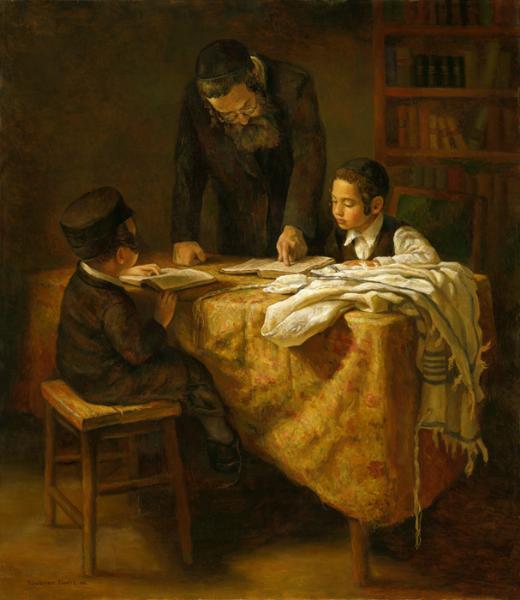
A Rabbi TeachingIf King David, who learned nothing from Achitofel except for two things alone, nevertheless referred to him as his “master,” “guide,” and “intimate,” it certainly goes without saying that one who learns from his fellow a single chapter, a law, a verse, a saying, or even a single letter of Torah, is obligated to revere him.

-Ethics Of The Fathers, 6:3

Our sages tell us, “There are three partners to the creation of man: G-d, his father, and his mother.” The capacity to procreate is, in essence, a distinctly Divine nature…The same is true regarding the “regenerative power” contained in a teaching: when G-d is a partner to their endeavor, the teacher-student relationship yields an infinite progeny.

Commentary on Ethics of Our Fathers: Chapter 6
Tammuz 11, 5771 * July 13, 2011
“Fertile Wisdom”
Chabad.org

I’ve mentioned before that the student-teacher relationship can yield enormous benefits, assuming an honest, knowledgeable, and inspired teacher and a student willing to be open. However, as we see from the quotes above, the teacher isn’t necessarily the most important partner in the transaction, which is good, since human beings are fallible. God is always present when Torah is taught and learned, which makes the act of study not only educational but holy. The Creator is the indispensable element in the room whenever people come together to learn the Word of God.

Rabbi Chalafta the son of Dosa of the village of Chanania would say: Ten who sit together and occupy themselves with Torah, the Divine Presence rests amongst them, as is stated: “The Almighty stands in the community of G-d.” And from where do we know that such is also the case with five? From the verse, “He established his band on earth.” And three? From the verse, “He renders judgment in the midst of judges.” And two? From the verse, “Then the G-d-fearing conversed with one another, and G-d listened and heard.” And from where do we know that such is the case even with a single individual? From the verse, “Every place where I have My name mentioned, I shall come to you and bless you.” –Ethics of The Fathers 3:6

“For where two or three have gathered together in My name, I am there in their midst.” –Matthew 18:20 (NASB)

But from who can we learn? It’s desirable to find a worthy teacher; one we can call our “Rebbe”, but there are problems with this. There are many unworthy teachers out there who are anxious to gather a following out of their own ambition, men and women who believe they have a special insight and who are entitled to share their particular “theological axe” which they desire to “grind”. From these “teachers” we learn there are those who are not to be trusted. Also, Christian tradition, unlike Judaism, doesn’t have a history of “Rebbes” or exalted teachers who pass their knowledge, wisdom, and compassion from one generation of disciples to the next. We are (often rightly) suspicious of gurus, cult leaders, and false teachers who ultimately lead people away from God. Christians even distrust the study of Torah and Talmud from valid and worthy Jewish Rabbis for fear this will lead the Christian away from Jesus.

And yet we are commanded to obey our leaders and teachers in the community of faith:

Have confidence in your leaders and submit to their authority, because they keep watch over you as those who must give an account. Do this so that their work will be a joy, not a burden, for that would be of no benefit to you. –Hebrews 13:17

We also see from David’s example with Achitofel that we are to honor a person who teaches us “a single chapter, a law, a verse, a saying, or even a single letter of Torah.” While we can seek to learn the teachings of an honored Rebbe such as Rabbi Menachem M. Schneerson, of blessed memory (and I’m learning much from his teachings as related by Rabbi Tzvi Freemen in the book Bringing Heaven Down to Earth), we see from the following that a good teaching can come from even a bad source:

It is possible to utilize for G-d’s service, [in a manner] according to Torah, all behavior-traits. This includes those traits that are unwholesome, and even those that are evil, as their names and descriptions indicate. For example, the tzadik Rabbi Meshulam Zushya of Anipoli, of blessed memory, learned [from his Rebbe, the Maggid of Mezritch] a number of ways of serving G-d from [the ways of] a thief:

  1. He works quietly without others knowing.
  2. He is ready to place himself in danger.
  3. The smallest detail is of great importance to him.
  4. He labors with great toil
  5. [and] Enthusiasm.
  6. He is confident and optimistic.
  7. If he did not succeed the first time, he tries again and again.

-[From HaYom Yom by the Lubavitcher Rebbe, translated by Uri Kaploun (Kehot)].
found at Chabad.org

This shouldn’t be so surprising, since the Master, our own great Rebbe in Christianity told us this:

Then Jesus said to the crowds and to his disciples: “The teachers of the law and the Pharisees sit in Moses’ seat. So you must be careful to do everything they tell you. But do not do what they do, for they do not practice what they preach. They tie up heavy, cumbersome loads and put them on other people’s shoulders, but they themselves are not willing to lift a finger to move them. –Matthew 23:1-4

Look at what Jesus is saying. He’s not telling his audience to ignore or disregard the teachings of the Pharisees. He’s saying “you must be careful to do everything they tell you”. What? Aren’t Pharisees hypocrites, liars, untrustworthy, and “under the Law”? Don’t they deny the true teachings of God and the grace of Jesus Christ? Why did Jesus tell his disciples to obey everything the Pharisees told them to do?

It’s because what the Pharisees taught was correct and consistent with the Torah, however the Pharisees of that day were corrupt and indeed, they were hypocrites who, under the Roman occupation, exalted themselves and did not “practice what they preached”, so to speak.

But what they actually taught was worthy of being learned and obeyed.

It’s also important to realize that not every single Pharisee was corrupt and no good. After all, Nicodemus was a Pharisee and he ended up becoming a disciple of Jesus. After the crucifixion of the Master, Nicodemus and Joseph of Arimathea, a wealthy member of the Sanhedrin, approached Pilate and asked permission to bury the Master’s body before the Sabbath began (we aren’t quite clear as to whether this was the eve of Passover or the weekly Sabbath). Not all Pharisees and members of the Sanhedrin were evil and corrupt, so we shouldn’t paint them all with the same broad brush.

KindergartenLook at the teaching of the Rebbe about how to learn from a thief. He doesn’t say the thief is a good and worthy teacher and that we must devote our lives to learning at the feet of a criminal. He says that, by simply observing the thief, there are habits we can learn and adapt to a life of holiness. The same is true of learning from anyone, even if they are unworthy, a hypocrite, or a thief, simply by watching them and listening to them, we can learn much, as long as we continue to use our powers of discernment and to view everything through the lens of the Bible and the Spirit of God.

Remember, in any transaction between two people, one being a teacher and the other being the student, God is there as the indispensable partner in the exchange. Being a student and disciple does not mean being a mindless sponge with no will of your own. In fact, your will, your judgment, and your questioning nature is as necessary to being a student as your attention, openness, and eagerness to learn. You cannot be taught corruption if you are paying attention and you do not have to take anything at face value without asking questions. Even the Bereans didn’t take Paul at his word and checked everything he taught against scripture (Acts 17:10-12). If you feel you have been lead astray by a teacher, look to yourself when asking the question, “how did this happen?”.

I’m sure you’ve heard or read the list compiled by Robert Fulghum, All I Really Need to Know I Learned in Kindergarten. From this, we learn that small children can teach us something. Even the Prophet Isaiah said “and a little child will lead them.” (Isaiah 11:6).

The Maggid also taught Rabbi Zushya, his disciple that we can learn three things from a child:

  • Never for a moment is he idle.
  • When he needs something, he demands it vigorously.
  • He is merry for no particular reason.

-[From The House of Rizhin by Rabbi Menachem Brayer [Mesorah].]

The Pirkei Avot; The Ethics of the Fathers teaches us that a life of learning and performing Torah yields many rewards:

The sages expounded in the language of the Mishnah (blessed is He who chose them and their learning):
Rabbi Meir would say: Whoever studies Torah for Torah’s sake alone, merits many things; not only that, but [the creation of] the entire world is worthwhile for him alone. He is called friend, beloved, lover of G-d, lover of humanity, rejoicer of G-d, rejoicer of humanity. The Torah enclothes him with humility and awe; makes him fit to be righteous, a chassid, correct and faithful; distances him from sin and brings him close to merit. From him, people enjoy counsel and wisdom, understanding and power, as is stated, “Mine are counsel and wisdom, I am understanding, mine is power.” The Torah grants him sovereignty, dominion, and jurisprudence. The Torah’s secrets are revealed to him, and he becomes as an ever-increasing wellspring and as an unceasing river. He becomes modest, patient and forgiving of insults. The Torah uplifts him and makes him greater than all creations. –The Ethics of the Fathers 6:1

Being a student, a disciple, and a person of faith is not a passive activity. Learning isn’t something you only do sitting at someone’s feet or taking notes in a classroom. It’s not always accomplished by reading a book or by visiting inspirational websites. A disciple is always moving, always asking questions, always observing, always sharing their insights with others and asking for feedback. Most importantly, in any learning situation (which is to say, in every waking moment of our lives), we are always turning to the “silent” voice in the room, the indispensable partner in the teaching of Torah. God is with us and He sent us a counselor who will teach us all things (John 14:26). Even when reading the Bible by ourselves at night, we are never alone.

Our teachers can be anyone. Our teachers can be anywhere. We just have to be paying attention to where we are and what we’re doing.

“A brilliant mind without faith is like a beautiful face without eyes.” -Shalom Cohen

Good Shabbos

Searching for Sparks

Holding SparksAt one time there were tzaddikim who would look into the soul of a disciple, see the place where the G-dly sparks were awaiting this soul and tell the disciple to go to that place to liberate those sparks.

All that has changed is the perception of the disciples. If you are where you are with the blessing of the Rebbe, you are where you belong. And you are there with a profound purpose.

Rabbi Tzvi Freeman
from the wisdom of the Rebbe
Menachem M. Schreerson
Bringing Heaven Down to Earth

Well, I – I think that it – it wasn’t enough to just want to see Uncle Henry and Auntie Em – and it’s that – if I ever go looking for my heart’s desire again, I won’t look any further than my own back yard. Because if it isn’t there, I never really lost it to begin with! Is that right?

Dorothy
The Wizard of Oz (1939)

It is said that we contain Divine Sparks from our Creator and those parts of us that belong to Him yearn to return to the Source. It’s what causes people to search for something beyond themselves; sometimes not even knowing what they are looking for or how to find it. It’s the part of us that brings some people to God and others to less than noble destinations, believing some false teaching is the answer they need.

It’s also believed that there are other sparks in the world that correspond to those we contain and that finding and liberating those sparks defines the purpose of our lives. Put in less mystic terms, we all have a purpose that gives meaning to our lives. We only need to discover that purpose in order to experience accomplishment, fulfillment, and to understand why we were created by God.

Some people search for this all their lives and die with the truth about themselves still undiscovered. While Hamlet calls death the undiscovered country, I think that “country” is rather the truth of our existence which we must discover while we are still alive. Even David said that once dead, we can offer nothing:

Among the dead no one proclaims your name.
Who praises you from the grave? –Psalm 6:5

It is not the dead who praise the LORD,
those who go down to the place of silence;
it is we who extol the LORD,
both now and forevermore.
Praise the LORD. –Psalm 115:17-18

Continuing with this theme, Vine of David’s commentary on Levertoff’s Love and the Messianic Age tells us:

“Although every man has the divine potential of a godly soul planted within him, this is not a guarantee that every man will enter into a relationship with HaShem or even that every soul will be redeemed. Instead, the soul is separated from God by a wall of partition – sin and guilt. HaShem removes the wall of partition between man and Himself through the work of the Messiah. When the wall is removed, then the soul can connect with HaShem. Then He can “use it for the gathering of these ‘sparks’.”

We journey near and far looking for and gathering sparks in order to fulfill the script of our lives written by God on our souls. But must we necessarily travel to distant and strange lands to find what we seek? Rabbi Freeman gives us part of that answer as he again relates the Rebbe’s wisdom:

People want to run away from where they are, to go to find their Jerusalem. Wherever you are, whatever you are doing there, make that a “Jerusalem”.

I wonder if the Rebbe ever saw The Wizard of Oz?

Hide and SeekGod is mindful of the days of our lives, where we go, what we are doing. He watches us as a father might watch his small son take his first, halting steps. We watch our children as they learn to walk, almost willing them in how to take the next step and in which way they should go. We cannot interfere unless they are about to be hurt, because otherwise, they’d never discover how to walk on their own. God is like that with us. The difference is, we should know that we are learning how to walk and be paying attention to the path. We should know that our Father is watching over us and that He’s ready to keep us from harm. Often, we don’t:

A certain chassid who had suffered a major financial loss stood before Rabbi Schneur Zalman of Liadi and lamented over his debts. “All you are telling me,” Rabbi Schneur Zalman replied, “is what you need. Who needs you, you don’t say much about. Do what G-d expects from you, and He will provide what you want from Him.”

Lest you think that God only expects us to serve and that He doesn’t care about who we are, our fears, our needs, and our concerns, we have two messages that console us; one from the Rebbe, and the other from “the Maggid of Nazaret”, Jesus:

The teaching of the Baal Shem Tov: Not only is the movement of a leaf as it falls off a tree, the quivering of a blade of grass in the wind-each and every detail of existence directed, vivified and brought into being at every moment from above-but beyond that: Every nuance is an essential component of a grand and G-dly scheme, the gestalt of all those vital minutiae.

Meditate on this. And then think: How much more so the details of my daily life.

-The Rebbe
as related by Rabbi Tzvi Freeman

“Therefore I tell you, do not worry about your life, what you will eat or drink; or about your body, what you will wear. Is not life more than food, and the body more than clothes? Look at the birds of the air; they do not sow or reap or store away in barns, and yet your heavenly Father feeds them. Are you not much more valuable than they? Can any one of you by worrying add a single hour to your life?

“And why do you worry about clothes? See how the flowers of the field grow. They do not labor or spin. Yet I tell you that not even Solomon in all his splendor was dressed like one of these. If that is how God clothes the grass of the field, which is here today and tomorrow is thrown into the fire, will he not much more clothe you—you of little faith? So do not worry, saying, ‘What shall we eat?’ or ‘What shall we drink?’ or ‘What shall we wear?’ For the pagans run after all these things, and your heavenly Father knows that you need them. But seek first his kingdom and his righteousness, and all these things will be given to you as well. –Matthew 6:25-33

Finally, in our little game of “hide-and-go-seek” with the Divine in ourselves and in the Universe, Rabbi Freeman presents the Rebbe’s teachings on this matter, again from his book Bringing Heaven Down to Earth:

G-d is not something of a higher realm that you cannot reach Him. Nor is He made of stuff ethereal that you cannot touch Him. G-d is “That Which Is” – He is here now, everywhere, in every thing and in every realm – including that realm in which you live. The only reason you do not perceive Him is because it is His desire that you search for Him.

Life is a game of hide and seek. G-d hides, we seek.

God does not play “hide the ball” with the Universe. He means for us to not only find Him, but everyday, to find who we are in Him. Start gathering the sparks. He’s there. And so are you.

Walking Together to the House of Prayer

Walking TogetherUnfortunately, intolerance among Jews can be found in all directions. Shortly after Kristallnacht, a Reform synagogue in Rhode Island conducted a special service to which they invited recent Jewish refugees from Europe. Many of those refugees came to the service wearing hats or kippot, which at the time was against Reform practices. A prominent member of the congregation demanded that everyone remove their head coverings. Although the rabbi of the congregation was extremely upset by the man’s behavior, he felt too intimidated to do anything.

Similarly, there are some Orthodox Jews who too easily brand their less observant coreligionists as “heretics” or “non-believers.” Yet, prominent sages such as Rabbi Abraham Isaac Kook and the Chazon Ish have ruled that we live in a time of God’s concealment and therefore cannot apply the religious laws concerning heresy to modern-day Jews who question their faith. Furthermore, it is wrong to harm those who deny even Judaism’s most basic beliefs. Not only should we not hurt such people, we should help them if the situation ever presents itself.

from the Lev Echad blog
“E Pluribus Unum”

While blogger Asher aptly illustrates how different groups of Jews can be less than generous toward each other, this isn’t exclusively a Jewish issue. Certainly different groups in humanity have distrusted and harmed each other throughout history, and this can also be seen in various faith groups, including Christianity. The difference here is that, as I mentioned the other day, being Jewish isn’t just a matter of holding to a collection of beliefs or a certain faith. Jews are tied to each other and connected to God in a way no other people group can claim. Any Christian can renounce his or her faith, but a Jew is always a Jew.

I suppose it’s rather tragic for me to say that “any Christian can renounce his or her faith”. It makes it sound as if our commitment to Christ is too easily ignored or broken, and we see this sometimes. We also see, as Asher points out in Judaism, that the different denominations or groups of Christians cling to their own specific religious views and can take shots at each other, believing that if you don’t believe, say, and do as they believe, say, and do, you are not really a Christian and you are not really saved.

Christianity can be very “tunnel-visioned” in its approach to God and the Bible, especially for those groups that have a very literal understanding of what the Bible says (in English, ignoring the original languages and contexts involved). How Asher ended his blog article suggests another way that we Christians can look at each other, at Jews, and at the rest of humanity:

It takes a considerable amount of humility and tolerance to refrain from forcing our beliefs upon others, but that’s exactly what we should strive for. To do so, objective ethical standards must be upheld, while the more subjective areas of life can be left to the individual. It’s ironic that people tend to focus so much on the subjective when it is really the objective that matters most. For example, some regard those with whom they disagree politically or religiously as bad people, instead of simply judging their overall behavior to determine what kind of person they are. This needs to change if we are to produce a better world.

One of the unique aspects of Judaism is learning about all the different roads people take that lead them to God and a life of goodness. While this is certainly a fascinating phenomenon, it can also be a great impediment to how we treat one another. Therefore, our goal in life should not be to turn all our fellow Jews into ideological and/or religious replicas of ourselves. Rather, it should be to guide – not force – others into a life of serving God and His children in a way that best matches their individual personality.

Christians tend to look at the world as made up of two groups: saved and unsaved, us and them. While we are mandated (see Matthew 28:19-20) to go and make disciples (not converts, disciples) of the unbelieving people around us, we also sometimes see the unbelieving people around us as “the enemy”. It’s pretty difficult to convince a non-believer of the love of Christ if we don’t even like non-believers. It’s even harder to show the unbelieving world Christ’s love if they see that we don’t even like each other due to our different theologies.

Asher might suggest that we try to put our differences aside, both between different groups of Christians and between Christians and everybody else. Try to look at people the way God sees people:

For God so loved the world that he gave his one and only Son, that whoever believes in him shall not perish but have eternal life. For God did not send his Son into the world to condemn the world, but to save the world through him. –John 3:16-17

Since we have now been justified by his blood, how much more shall we be saved from God’s wrath through him! For if, while we were God’s enemies, we were reconciled to him through the death of his Son, how much more, having been reconciled, shall we be saved through his life! Not only is this so, but we also boast in God through our Lord Jesus Christ, through whom we have now received reconciliation. –Romans 5:9-11

The opportunity to be reconciled to God is universally applied to all people everywhere. All we have to do is accept it and start living the life that God designed for us. He didn’t offer reconciliation to only a favored few and He didn’t extend His love only to a select group. It is true that God chose the Children of Israel, but it wasn’t because they were the best, the brightest, or the most numerous:

The LORD did not set his affection on you and choose you because you were more numerous than other peoples, for you were the fewest of all peoples. But it was because the LORD loved you and kept the oath he swore to your ancestors that he brought you out with a mighty hand and redeemed you from the land of slavery, from the power of Pharaoh king of Egypt. Know therefore that the LORD your God is God; he is the faithful God, keeping his covenant of love to a thousand generations of those who love him and keep his commandments. –Deuteronomy 7:7-9

House of PrayerWe also know that God’s love is not limited to Israel but extends to the whole world (John 3:16) and that what He created in Israel was to be a light to the nations, so that we could all call the House of God, a house of prayer:

In the last days the mountain of the LORD’s temple will be established as the highest of the mountains; it will be exalted above the hills, and all nations will stream to it. Many peoples will come and say, “Come, let us go up to the mountain of the LORD, to the temple of the God of Jacob. He will teach us his ways, so that we may walk in his paths.” The law will go out from Zion, the word of the LORD from Jerusalem. He will judge between the nations and will settle disputes for many peoples. They will beat their swords into plowshares and their spears into pruning hooks. Nation will not take up sword against nation, nor will they train for war anymore. –Isaiah 2:2-4

And foreigners who bind themselves to the LORD to minister to him, to love the name of the LORD, and to be his servants, all who keep the Sabbath without desecrating it and who hold fast to my covenant—these I will bring to my holy mountain and give them joy in my house of prayer. Their burnt offerings and sacrifices will be accepted on my altar; for my house will be called a house of prayer for all nations.” –Isaiah 60:6-7

So here we are, fighting and bickering with each other without considering how God sees us all. He’s like a Father who watches His small children argue and fight about who He loves the best, but in truth, He loves us all, just as we love all of our children, even though they are different from each other, and even though they sometimes act foolishly.

I read something written by Rabbi Tzvi Freeman which he applies to the Jewish people, but I think we can also adapt it for the rest of us:

The sages tell us that our father Jacob never died. “Since his children are alive, he is alive.”

Each and every Jew is the personification of his father Jacob, and the heart of each and every Jew is alive and beating strong. To say about any one of them that he is spiritually dead is to pronounce our father Jacob dead. If to you it appears that way, the fault is in you, not in the Jew you observe.

G-d sees only good in them. He will make great miracles for them and they will be safe.

We could say that our “Rebbe”, Jesus the Christ, the Jewish Messiah, lives in the heart of each of his disciples. He died but has risen and he sits at the Father’s right hand. He is alive in us and he makes us alive in him so that through him, we can be sons and daughters of the Father. We absolutely must remember though, that God sees the good in all people and He will make great miracles for everyone, and accepting God, we will all be safe in Him.

Come, let us sing for joy to the LORD;
let us shout aloud to the Rock of our salvation.
Let us come before him with thanksgiving
and extol him with music and song. –Psalm 95:1-2

Top Hat and Shoes

Top Hat and ShoesAbsolute truth is hard to come by. Many gedolim made it their life goal to speak and act only in accordance with their true level. Rav Yerucham Levovitz, zt”l, gave an interesting explanation of why one should not act above his level.

He said, “This can be compared to a person who wears a luxurious top hat but is absolutely barefoot. Surely all who see him will remark at the inappropriateness of such an imbalance in this man’s apparel! The same is true in spiritual matters. One must first put on his shoes, which are the foundation middos. Then he can aim for higher.

Daf Yomi Digest
Stories off the Daf
“Perhaps He is Not His Father…”
Chullin 11

I’m immediately reminded of two other stories; the story of The Emperor’s New Clothes by Hans Christian Anderson, and Kabbalah and the Art of Tying Your Shoelaces by Rabbi Yitzchak Ginsburgh. The former tells a tale of self-delusion which others are willing to buy into, and the latter assures us that the Torah was given so that even the most mundane acts in our lives can be seen as holy.

Besides the clothing motif, what do they have in common? Let me explain.

Rav Levovitz shows us that, as people of faith, we strive to achieve higher spiritual goals. If we are at all connected with God and we’re on speaking terms, we “know” that we can be closer to Him and we can be better people. We can be the people God designed us to be. However, it’s not that easy.

Have you ever set a goal for yourself that, in retrospect, you realized was unrealistically high. Have you ever aimed at achieving something lofty before doing the ground work and laying a foundation for what comes next? I know I have. I believe it’s a fairly common human behavior. We fail, not because we are lazy or don’t have high aspirations, but because we don’t look at the entire sequence of events between where we are and where we want to go. We try to jump from “A” to “Z”, without going through the intervening letters of the alphabet. We fool ourselves into thinking that we don’t have to.

Rabbi Ginsburgh puts what we need to do very simply and elegantly:

First put on your right shoe, then your left shoe, then bind your left shoe, and finally bind your right shoe. That’s the way Jews do it.

Hans Christian Andersen shows us what happens when we cut corners and don’t pay attention to the difference between fantasy and reality.

If you feel like you’re in a rut in your church life, in your synagogue life, in your prayer life, in your spirituality…it’s probably because you are.

A relationship with God is like being married. When you first get married, it’s all exciting and romantic and thrilling. Then five years go by. Ten. Fifteen. Suddenly, you realize you’ve been married for almost thirty years and sometimes, life at home seems pretty boring. Not much romance is going on. No thrills have happened for months, maybe years. Is this the goal you were shooting for?

Let’s go through that story again with a slight twist. You’ve been married for fifteen, twenty, twenty-five years. Some days are better than others. The “magic” in the marriage comes and goes, waxes and wanes. It’s sometimes pretty good and sometimes not so good, but in the end, you find that nothing really gets better or more intimate. Stuck in a rut again.

Let’s apply that back to your relationship with God.

You desire but do not have, so you kill. You covet but you cannot get what you want, so you quarrel and fight. You do not have because you do not ask God. When you ask, you do not receive, because you ask with wrong motives, that you may spend what you get on your pleasures. –James 4:2-3

In marriages, sometimes a breakdown in communication makes it difficult to understand your spouse. Since God always understands us, the breakdown in our relationship with Him can only come from us. We don’t know what to ask or we ask with bad motives. Who am I? Who is God? What do we have in common? How can we communicate? How can I get closer to Him? I put on my best top hat, but I forget to put on socks and shoes. What can I do? Maybe Rav Yerucham has the answer:

In Kotz, a certain chassid who served God with his entire heart once exclaimed while praying, “Oy, Tatte! Oh, Father!”

A fellow Kotzker heard this and quoted a statement on today”s daf, “And maybe he is not his father…”

This shook the chassid up quite a bit and pushed him to consult with the Kotzker Rebbe. Although the rebbe gave many short shrift, he gave this man encouragement. The rebbe said, “You need to cry out, ‘Oy, Tatte,’ so much that He becomes truly like a father to you!”

That sounds almost like:

I will proclaim the LORD’s decree: He said to me, “You are my son; today I have become your father. –Psalm 2:7

Going to GodA few days ago, I wrote about how a spiritual leader can profoundly affect our lives, not just by what he teaches or by his example, but by inspiring us to be better people. It is said that the Rebbe who is head of a Yeshiva is like a father to his students. Indeed, the Rebbe is considered even more of a father than the student’s actual father. A father brings physical life to a child but a Rabbi and teacher brings the student to the Torah and to God, which gives life beyond measure.

Both in Judaism and in Christianity, we call God “Father”, but we don’t recognize Him as our Father until we desperately cry out to Him with all our strength. At that moment, He becomes our Father and we become sons and daughters. All people were created in God’s own image, so regardless of your religious tradition or even if you have no faith at all, you are still God’s child. You only need to recognize that fact and call out to Him.

For those of you who know you are sons and daughters, but who seem to be spinning your wheels in your relationship with Him, cry out to Him. Tell Him you need Him (He knows this, but you might have to remind yourself). Whether you call out “God” or “Father” or “Abba”, you are calling Him. As Christians we are told that what we pray to God in the name of Christ, will be heard in Heaven and answered.

It’s time to move out of apathy and into action. It’s time to reach new heights in your relationship with Him, or perhaps develop a relationship with Him for the first time. Go to God. Put on your finest clothes for the occasion. Just remember to put on your shoes so you can keep your balance.

A Light in Your Reflection

RebbeAre you a Soul Waiting To Be Released? A Chabad emissary brought an English professor from London to see the Rebbe. The professor sat very cold and silent. To break the ice, the Rebbe turned to him and asked, “tell me, when you look at me what do you see?” He was stunned, but remained quiet. Recognizing that the professor won’t say anything, the Rebbe continued, “I’ll tell you what I see when I look at you. I see a Divine soul waiting to be released.” Then he turned again to this professor and said to him, “so now what do you see when you look at me?’ the professor replied, “I see an observant Jew.” the Rebbe responded, “that’s not who I am.”

Rabbi Anchell Perl

I’ve been reading Gedalyah Nigal’s book The Hasidic Tales and there are a lot of intriguing lessons related in the stories of the Chasidim. I was both fascinated and frustrated by Rabbi Perl’s very brief rendition of his story. I asked him (via twitter) if there was a longer version, but if it exists, he’s not aware of it.

Who was the English professor? Why did the Chabad emissary bring him to meet with the Rebbe? What was supposed to happen? Was there any lasting result of the meeting or did it start and end just as we see in Rabbi Perl’s small story?

One does not just drop in on a Rebbe to shoot the breeze. A Rebbe is an exalted spiritual leader and it’s said that his prayers and other intercessions result in miracles. In Christianity, we know this about righteous people, too.

The prayer of a righteous person (tzadik) is powerful and effective. Elijah was a human being, even as we are. He prayed earnestly that it would not rain, and it did not rain on the land for three and a half years. Again he prayed, and the heavens gave rain, and the earth produced its crops. –James 5:16-18

Only very important questions and problems are brought to the Rebbe and he often receives visitors late into the evening and even all through the night. I don’t think there is an analogous individual or relationship in modern Christianity. In Catholicism, the Pope is highly revered but there’s not the same “earthy” texture in an audience with the Pope as there is in a meeting with a Rebbe. At least, that’s my impression.

Last year, Susan Handelman, Professor of English at Bar Ilan University wrote a very heartwarming story about her experiences with the Lubavitcher Rebbe, Rabbi Menachem Mendel Schneerson. You can read the entire content of her article by clicking A Professor’s Moving Recollection With The Rebbe. It’s stories like this one that illustrate one of the stark differences between Judaism and Christianity. In Christianity, it’s said that “God has no grandchildren”. This means that the children of a Christian aren’t automatically Christian, and therefore, they have no more innate attachment to Christ than a child of an atheist. Each individual establishes their own individual relationship with Jesus including, sometimes, no relationship at all. This is not the case with a Jew as Professor Handelman writes:

“I grew up in suburban Chicago in the 1950’s, a typical third-generation assimilated American. Like many of my generation I fled Sunday school and the temple to which my family belonged, and could see nothing true or compelling in what seemed to be the hollow rituals that most of the congregants hardly understood.

Being Jewish in that milieu was a vaguely uncomfortable and perplexing experience, but not any obstacle to full immersion in the non-Jewish culture which surrounded us and swept us along with it. What power took me out of the deep exile in which I lived — not just geographically, but intellectually, spiritually and emotionally?”

Being Jewish seems to be (obviously, I can’t describe this from personal experience) something that’s interwoven with your soul. Even rejecting every religious aspect of being Jewish isn’t enough to stop a person from being Jewish. God still holds the strings that bind your heart. You may walk away from the synagogue and the Torah, but you were chosen at Sinai beyond any ability to become “unchosen”.

In the late 1960’s, when many of my generation rebelled in extreme ways, the Rebbe understood us. He sensed that our restlessness came from a spiritual discontent. Instead of chastising us, he sent us his best Chasidim to found Chabad Houses — to teach us, to live with us, to love us.

I think that was what really lay behind the development under the Rebbe’s leadership of the extraordinary international network of Chabad institutions, from Hong Kong to Paris to Katmandu.

The Rebbe felt our pain, he intuited our yearning. And he saw us not just as products of late twentieth century America, but under the light of Jewish eternity. We were princes and prophets and sages; each Jew was royalty; each Jew was precious; each Jew was the emissary and reflection of G-d in the world.

My wife has become involved in our local Chabad and is friends with the Rabbi and his wife. My wife’s experience wasn’t like that of Professor Handelman, who was born and raised in a Jewish family and who grew up in a religious home. My wife didn’t even know her mother was Jewish until she (my wife) was in college. Although my wife became involved in the Reform synagogue before a Chabad House was established in our community, I think the Chabad served her in the same way it served Handelman.

Although Jews from other traditions don’t always meld very well with the Chabad, the Chabad serves an important purpose. They’re like a life-preserver thrown to the drowning, who in this case, are secular Jews, Jews who have lost their way, and those like my wife, who didn’t begin to explore being Jewish until adulthood.

Professor Handelman lived in the Chabad center in the Crown Heights area of Brooklyn in the mid-1970s and experienced the presence of the Rebbe in a number of ways. She saw his compassion, dedication, and endurance as he continued to age and as he continued to serve, and it had a profound affect on her.

In the few years before he became ill, when in his nineties, he would stand in the alcove by his office every Sunday to speak for a few moments personally and face-to-face with anyone who wanted to see him, and give out dollars to each person to be given for charity.

How could a 90-year-old man stand on his feet for hours and hours without taking a moment’s rest, or a drink? And how could he focus so intently and exclusively on each and every person who came through the line of thousands which stretched for blocks outside his office?

I heard that when urged to sit during these long sessions, he responded by asking: how could he sit when people were coming to him with their problems, needs, and pains?

I only have the written experiences of others to tell me about the Rebbe and his life and character, but part of what Professor Handelman is describing is something we don’t have a lot of in the larger American (or worldwide) landscape anymore: someone to look up to.

ReflectionWhen I was a child in the 1960s, we had heroes; people we looked up to and admired, people we thought were important. It didn’t matter that, in real life, they were just as human as the next person and had just as many flaws. They were our heroes, we looked up to them, and we wanted to be like them. They were sort of a goal we could shoot for in our own lives as we were growing up.

As time passed, society’s ability to collect and disseminate information got better and we started learning so much about our heroes (or those people who were supposed to be our heroes) that we could no longer admire them. They were flawed, they were involved in scandals, they had affairs, they lied.

We became disillusioned. No one in authority could be trusted. There were no more heroes and there probably never were.

Maybe.

I said to a friend once, “It is so paradoxical to find this great tzadik in the midst of all the violence and squalor and despair of this broken-down part of Brooklyn.” And my friend responded, “And where else do you think you would find him? Where else does he belong — the Plaza Hotel?”

The Rebbe refused to abandon Crown Heights when the neighborhood changed. It was consistent with his refusal to abandon any Jew, to leave anyone behind. And it was consistent with his refusal to give in to fear. It was also consistent with the principle of mesirat nefesh, self-sacrifice for love of the Jewish people that he embodied and that he taught his followers.

And it was an affirmation of one of the great principles of Chasidic philosophy that “every descent is for the purpose of an ascent” . . . that from overcoming the darkness ultimately comes the greatest light.

As the Rebbe often said, we live in an era of “doubled and redoubled darkness” — that is, a darkness so deep we do not even know it is darkness any more. He was the light in that darkness, and he remains so even after his passing.

The Lubavitcher Rebbe, Menachem Mendel Schneerson passed from this earth 17 years ago on the 3rd of Tammuz, which this year was from sundown July 4th to sundown July 5th. Although my wife is very involved in the Chabad, my experience with them is somewhat limited. What I do know about the local Chabad Rabbi is that he’s human. He makes mistakes (I don’t say this out of malice or slander, but only because I know it to be true). He’s not perfect. He’s not a “saint”, if I can use such a word in this context. He is serious, devout, and dedicated. He’s also young, so he may have to acquire more experiences as he progresses down the Chasidic path of the Rebbe.

I don’t know if the Lubavitcher Rebbe was a “saint” either, but from what I can tell, he touched a great many lives, not only with his learning and his wisdom, but with his compassion and his humanity. As people, we are supposed to be able to see God in other human beings. You probably know a Rabbi or a Pastor or a teacher or even a neighbor or co-worker who shines with a special light that can only come from a relationship with God. It’s like the light that shone from the face of Moses after he spent time with God on Sinai. It’s something amazing and special and being with such people brings us that much closer to heaven.

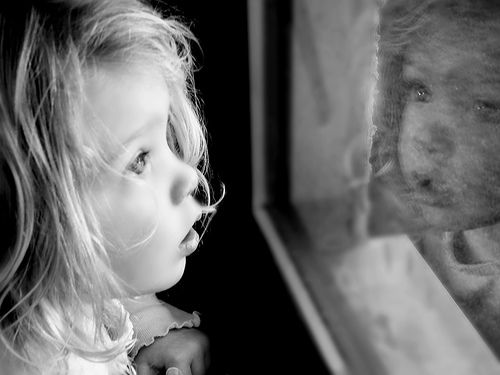
What we don’t see often enough though, is that kind of light shining back from our reflection in the mirror. This is the true value of the tzadik; not in what they teach or in how honored they are in life, but in how, through them, God changes us and brings us closer to Him because we’re imitating the tzadik.

Perhaps we do have this example in Christianity as well, but we have to go back to Judaism to find its source:

I am writing this not to shame you but to warn you as my dear children. Even if you had ten thousand guardians in Christ, you do not have many fathers, for in Christ Jesus I became your father through the gospel. Therefore I urge you to imitate me. For this reason I have sent to you Timothy, my son whom I love, who is faithful in the Lord. He will remind you of my way of life in Christ Jesus, which agrees with what I teach everywhere in every church. –1 Corinthians 4:14-17

Follow my example, as I follow the example of Christ. –1 Corinthians 11:1

A disciple is a student who learns by imitating his or her Master. In the Chasidic tradition, the Chadisim (devoted ones) would imitate their Rebbe and so, in the modern Chabad movement, Chabad Rabbis strive to imitate Rabbi Schneerson. In Christianity, we strive to also imitate our Rebbe, but while the Lubavitcher Rebbe died 17 years ago, our Rebbe died nearly 2,000 years ago. The Chasidim believe that the Lubavitcher Rebbe is the Messiah and will, in God’s proper timing, be resurrected to bring peace to the earth and to exalt Israel, as written in prophesy. We Christians also believe that our Rebbe is the Messiah and that he will, in God’s proper timing, return to us to bring peace to the earth and to exalt Israel, as written in prophesy.

Without having seen him, you love him. Without seeing him now, but trusting in him, you continue to be full of joy that is glorious beyond words. And you are receiving what your trust is aiming at, namely, your deliverance. –1 Peter 1:8-9

The Messiah walked among us as a man. He experienced human pain and suffering. He died and he’s alive again. We wait and we hope for his return in mercy and judgment. In the meantime, we look at our reflection in the mirror and search for the light of his face. We’re waiting for our soul to be released.

Keep speaking and acting like people who will be judged by a Torah which gives freedom. For judgment will be without mercy toward one who doesn’t show mercy; but mercy wins out over judgment. –James 2:12-13 (CJB)

Awakening Messiah

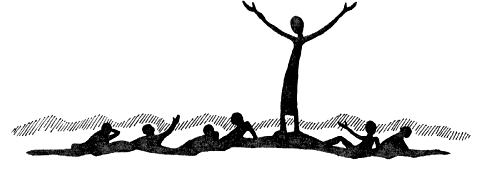
AriseIn each one glows a spark of Moses. He is our teacher. A teacher’s job is to open a small window for the inner knowledge to pour down into the conscious mind.

How do you awaken Moses? By waking yourself.
How do you awaken yourself? By finding someone in whom Moses is awake.

Only the awakened can waken others.

Rabbi Tzvi Freeman
“Moses Inside”
Chabad.org

In Judaism, none like Moses has ever appeared upon the earth again; a man who spoke to God “face-to-face”. In Christianity, only one person has appeared who is greater than Moses:

When Jesus came to the region of Caesarea Philippi, he asked his disciples, “Who do people say the Son of Man is?”

They replied, “Some say John the Baptist; others say Elijah; and still others, Jeremiah or one of the prophets.”

“But what about you?” he asked. “Who do you say I am?”

Simon Peter answered, “You are the Messiah, the Son of the living God.” –Matthew 16:13-16

If we extend Rabbi Freeman’s statement into the life of a Christian, what can we say? Perhaps the clue is in a commentary from this week’s Torah Portion Balak:

The Torah portion Balak relates how Balak, king of Moav, hired the prophet Bilam to curse the Jewish people. G-d, however, frustrated the king’s scheme and caused Bilam to utter praises and blessings of the Jewish people.

Among Bilam’s words of praise and blessing, we find the following: “I see him [Israel] from the peak of flintrocks, and gaze upon him from the heights; it is a nation dwelling alone, entirely dissimilar to other nations.”

In explaining the words: “I see him [Israel] from the peak of flintrocks,” Rashi comments: “I gaze upon their beginnings and their roots, and see them braced and as strong as these flintrocks and rocky heights, on account of their Patriarchs and Matriarchs.” Bilam’s statement was thus allegorical.

The true power of a Jew lies not in his physical might but in his spiritual prowess, particularly his power of mesirus nefesh , a submission to the Divine that is so profound that he is willing to lay down his life if necessary for the realization of G-d’s will. The soul that possesses the power of mesirus nefesh is referred to as “the peak of flintrocks.” This power emanates from a Jew’s mighty, firm and immutable faith in G-d, a faith so powerful that a Jew will offer his very life in order not to renounce G-d.

The Alter Rebbe thus explains that the power to act with mesirus nefesh is a byproduct of G-d’s shining within every Jewish soul, for mesirus nefesh flies in the face of nature; a living creature doesn’t do things that cause its own negation.

-Based on the teachings of the Lubavitcher Rebbe, Rabbi Menachem M. Schneerson for Torah Portion Balak
“A View from Above”
Chabad.org

This fits very well with what Rabbi Freeman wrote earlier and illustrates that strength comes from the presence of the Divine within each individual and within the community as a whole. We see something similar in the writings of Paul:

I know what it is to be in need, and I know what it is to have plenty. I have learned the secret of being content in any and every situation, whether well fed or hungry, whether living in plenty or in want. I can do all this through him who gives me strength. –Philippians 4:12-13

Among his many blessings upon the Children of Israel, Balaam prophesied the coming of the Messiah (Numbers 24:17-19). This is a hope that both the Jewish people and Christianity looks to, though each with a different understanding:

In writing about Moshiach (Messiah), the Rambam states in his Code of Law, Yad HaChazakah : “Whoever does not believe in him or does not await his coming, denies not only [the statements of] the other prophets, but also [those of] the Torah and of Moshe, our teacher, for the Torah attests to his coming, stating: ‘And the L-rd your G-d will bring back your captivity and have compassion upon you.’

-Based on the teachings of the Lubavitcher Rebbe, Rabbi Menachem M. Schneerson for Torah Portion Balak
“The Prophecies of Bilam”
Chabad.org

Arise and ShineWe see that failing to have faith in the coming of the Messiah is failing to have faith in all the Prophets that came before him and indeed, the entire record of the actions of God among mankind. The twelfth of Rambam’s Thirteen Principles of Faith states this message clearly, and we are to make our trust and hope a centerpiece in our life of faith:

I believe with complete faith in the coming of the Messiah. And even though he may delay, nevertheless, every day I anticipate that he will come.

It is in that hope that Jews and Christians sustain themselves, regardless of hardship and the struggles of our lives. In addition to what we’ve read so far, Christians look to the following:

As it is written:

“For your sake we face death all day long;
we are considered as sheep to be slaughtered.”

No, in all these things we are more than conquerors through him who loved us. For I am convinced that neither death nor life, neither angels nor demons, neither the present nor the future, nor any powers, neither height nor depth, nor anything else in all creation, will be able to separate us from the love of God that is in Christ Jesus our Lord. –Romans 8:36-39 (quoting Psalm 44:22)

Three times I pleaded with the Lord to take it away from me. But he said to me, “My grace is sufficient for you, for my power is made perfect in weakness.” Therefore I will boast all the more gladly about my weaknesses, so that Christ’s power may rest on me. That is why, for Christ’s sake, I delight in weaknesses, in insults, in hardships, in persecutions, in difficulties. For when I am weak, then I am strong. –2 Corinthians 12:8-10

To awaken the Messiah within us, we must find someone in whom the Messiah is awake. If the Messiah is awake in you, awaken him in others. Make his power perfect.

Arise, shine, for your light has come,
and the glory of the LORD rises upon you. –Isaiah 60:1

Good Shabbos.