Tag Archives: Jesus

The Truncated Gospel

bible_read_me“The shortest and easiest route home for the two missionaries would have been to continue following the imperial highway through the mountain pass of the Cilician Gates east and then branch right southward to Syria. Surely they might have felt that they had done enough and suffered enough and could now take the easy way home! But Paul was not satisfied with doing a work ‘somehow.’ Always he was constrained to do God’s work ‘triumphantly’ – to finish God’s work with joy on each occasion.

“True shepherds know that it takes time to get a new convert rooted and built up in Christ. This involves sacrifice and hardship for the leader, but there is no eternal fruit without the Cross.”

-from the Sunday School Bible Study notes for Acts 14:21-28
“What Makes a Good Missionary?”

The Sunday School class I go to after church services directly addresses the topic of the Pastor’s sermon and gives the students the opportunity to dig deeper and to comment on the message for the day. Pastor Randy has been in California for the past several weeks but will be back next Sunday when he will be teaching on the aforementioned portion of Acts. My Sunday School teacher hands the study notes out a week early so we have time to review and answer the questions on its pages.

A number of Pastor’s messages about Paul and Acts are mapped to the modern concept and activities of Christian missionaries. This has always bothered me and I never understood why until I took a look at the title of next Sunday’s notes: “What Makes a Good Missionary?” Then it just hit me. Using Paul, beyond a certain point, as a model of the modern missionary is anachronistic. It doesn’t fit. The foundation is different.

Here’s what I mean.

In Paul’s day, he and other Jewish apostles and disciples were attempting to spread the good news of the Jewish Messiah to Jews in Israel, Samaria, and in the diaspora and also to give that news to the Gentiles. Jews had been waiting and waiting for the arrival of the Messiah for centuries, and the need for him to come was especially acute during periods of exile and occupation. Israel was a land occupied by a foreign army and desperate to realize its own liberation and redemption. The news of an arrived Messiah who would be King and who would redeem national Israel would be beyond good news…it would be immense in its impact among world Jewry.

From that point of view, explaining why news of the arrived Messiah would be good news to the Jewish people is a no brainer, but we have to work a little harder (which Paul does) to explain why it is also good news to the people of the nations.

Today, we’ve gotten it somewhat backwards. Not that modern Christian missionaries are doing it wrong. Missionary work is the source of great spiritual and material blessings all over the world. But they are missing a few things.

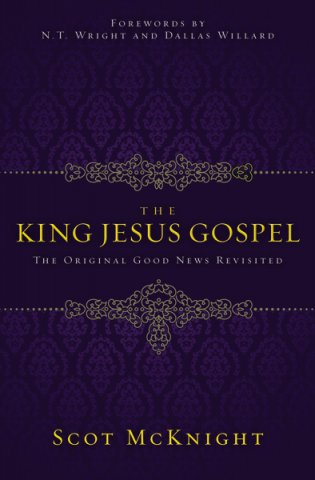
As I mentioned in my book review of Scot McKnight’s The King Jesus Gospel, and as McKnight correctly points out, the plan of salvation is only part of the gospel message. Sadly, modern Christian missionaries believe the salvation plan is the only part of the gospel message.

The more complete message is contained in my review of the First Fruits of Zion television series episode The Good News. What teachers Toby Janicki and Aaron Eby make seem incredibly easy and obvious has actually eluded Gentile Christianity for nearly two thousand years.

What missionaries do today doesn’t map well to what Paul was doing. Paul was delivering the good news that the Messiah had come, had offered salvation from sins for both Jews and Gentiles (and this part was huge since the Jewish people had not anticipated salvation for Gentiles) and that he would return to liberate the captives among Israel, gather the scattered Jewish exiles to their Land, and he would bring peace to Israel and to the nations of the world. The nations would be blessed through Israel, particularly as Israel was made the head of the nations in God’s Kingdom.

I seriously doubt too many Christian missionaries are spreading around that kind of gospel message today. That’s why Paul is used anachronistically as a model for modern Christian missionary work. Most Gentile Christians lack Paul’s vision and emphasis. We don’t exactly preach a different gospel, but it certainly is a truncated one. It’s also kind of upside down.
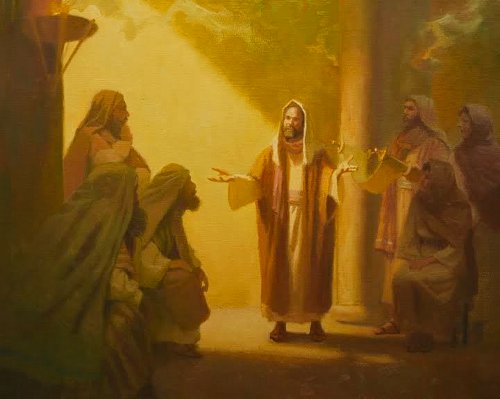
Apostle-Paul-PreachesPaul always visited the synagogues first and appealed to the local Jewish authorities in whatever place he was visiting. The good news of Messiah would make the most sense to the Jewish people. It would only make sense to Gentile God-fearers because they were spending time in synagogues being immersed in Torah and thus, in the knowledge of Messiah. It wouldn’t make sense at all to pagan Gentiles who had no knowledge of Jewish history or teachings about God (see Acts 14:8-20).

Ok, your counter-argument is that times have changed. Gentiles are largely “in charge” of the worship of the Jewish Messiah and disseminating the information about his birth, death, resurrection, ascendance, and ultimate return (as strange as it sounds for Gentiles to be “in charge” of the iconic Jewish message and King). But does it make sense to strip out what’s going to happen upon the Messiah’s return and why that’s good news for Jewish people and Israel?

Much of the history of the church has been based on the idea that Gentile Christianity has replaced Jewish Israel in all of the covenant promises of God. This is patiently untrue and I’ve discussed it in more blog posts and magazine articles than I can count. But it does make sense for the supersessionistic church to remove the good news of Jewish ascendency and Israel’s national supremacy since it reverses the roles upon which the Gentile church has historically been based. As I’m sure you realize at this point, I think that historical foundation is dead wrong.

…these I will bring to my holy mountain, and make them joyful in my house of prayer; their burnt offerings and their sacrifices will be accepted on my altar; for my house shall be called a house of prayer for all peoples.

Isaiah 56:7

Thus says the Lord of hosts: In those days ten men from nations of every language shall take hold of a Jew, grasping his garment and saying, “Let us go with you, for we have heard that God is with you.”

Zechariah 8:23

I was glad when they said to me, “Let us go to the house of the Lord!” Our feet are standing within your gates, O Jerusalem.

Psalm 122:1-2

I realize that Psalm 122 isn’t a Messianic prophesy and is addressing the tribes of Israel, but I believe it also speaks to the spirit of the Messianic age, when we will all be glad to hear the call to go up to Jerusalem and to the House of God, the Holy Temple.

jerusalem_templeEverything in the Jewish message of the gospel points to Messiah, to the Temple, to Jerusalem, to Israel, and to the Jewish people. The mystery of that message isn’t how the Jews will be saved but how everybody else will be saved. From a Jewish point of view, as much today as when Paul was on his “missionary journeys,” the good news of Messiah was a Jewish message aimed straight at the Jewish people and at Israel. It was a given. The big shocker and the mystery of the gospel was how the Gentiles could be saved and redeemed by God as well.

While Peter was still speaking, the Holy Spirit fell upon all who heard the word. The circumcised believers who had come with Peter were astounded that the gift of the Holy Spirit had been poured out even on the Gentiles, for they heard them speaking in tongues and extolling God (emph. mine).

Acts 10:44-46

Given how the Gentile God-fearers and even the pagans (who were probably told what to expect by their God-fearing neighbors and relatives) reacted to Paul’s gospel message in the synagogue at Pisidian Antioch (see Acts 13:48) we can see that they too were amazed at the graciousness of the God of Israel.

We’ve lost how amazing it is that Gentiles can be saved by the God of the Jews. We’ve lost how the message of the gospel is not just about a plan of salvation but about the return of the King and how his Kingdom will be established, restoring Israel to her rightful place, and elevating the people who were chosen by God at Sinai.

It’s time for us to remember and to teach all of the gospel message, as Paul once did. It shouldn’t be hard. Paul’s sermons, some of then anyway, are preserved in our Bibles. It’s all right there in front of us. We just need to take off our blinders and learn how to see and read the message again. Then we can spread the word, not of a truncated gospel, but of overflowing good news to all, good news first and foremost to Israel and yes, then to the rest of the nations.


The Evidence of Love

love-in-lightsThe Alter Rebbe repeated what the Mezritcher Maggid said quoting the Baal Shem Tov: “Love your fellow like yourself” is an interpretation of and commentary on “Love Hashem your G-d.” He who loves his fellow-Jew loves G-d, because the Jew has with in himself a “part of G-d Above.” Therefore, when one loves the Jew – i.e. his inner essence – one loves G-d.

“Today’s Day”
Friday, Menachem Av 12, 5703
Compiled by the Lubavitcher Rebbe; Translated by Yitschak Meir Kagan
Chabad.org

One of the scribes came and heard them arguing, and recognizing that He had answered them well, asked Him, “What commandment is the foremost of all?” Jesus answered, “The foremost is, ‘Hear, O Israel! The Lord our God is one Lord; and you shall love the Lord your God with all your heart, and with all your soul, and with all your mind, and with all your strength.’ The second is this, ‘You shall love your neighbor as yourself.’ There is no other commandment greater than these.”

Mark 12:28-31 (NASB)

I would hardly suggest that the commentary I found in an email I received from Chabad.org was intended to map back to the teachings of Yeshua (Jesus), but the comparison really stands out. Perhaps it is one of those lessons that is equally apparent from a Jewish and Christian point of view, except that Jesus was a Jewish teacher talking to a Jewish scribe within a wholly Jewish context. We non-Jews get that point (or should get it) somewhat after the fact, so it would be wise of us not to do away with the Jewish framework in which the Master was teaching. That’s what gives his lessons their full meaning.

The “Today’s Day” commentary is specifically addressing a Jewish audience as well, which is obvious since it discusses one Jew loving another Jew as being equal to loving God, rather than one human being loving another. The interesting question is, when Jesus was teaching the two greatest commandments, did he mean that loving your neighbor is loving your Jewish neighbor?

That could very well have been the case, if you look at who Jesus was addressing and where this conversation was taking place. I don’t mean that Jesus was unconscious of the larger application of his teaching, but it hadn’t gotten that far yet. He came for the lost sheep of Israel not the lost sheep of planet Earth…well, not at that time. He assigned that job (gathering the lost sheep from the nations) to Paul on the road to Damascus some time later.

As impossible as it sounds, as absurd as it may seem: The mandate of darkness is to become light; the mandate of a busy, messy world is to find oneness.

-Rabbi Tzvi Freeman
“The Mandate of Darkness”
Chabad.org

It’s important to remember that Rabbi Freeman is also addressing a Jewish audience, so don’t go crazy and assume he believes that Jews and Gentiles (particularly Christians) should all be “one.” Except that in Judaism, it is believed that Messiah will unite humanity in peace, not as a homogeneous body of human beings, but as Jews and Gentiles who are all subject to the King, who will come (return) and rule with a rod of iron. We will all be “one” in the sense that we will all be subjects of the King.

Even in the Messianic age though, as I understand it, people will still have the choice as to whether or not to acknowledge and obey the King. On the other hand, it does say that every knee shall bow. But there will still be Israel that is blessed by God and the people of the nations who are blessed through Israel; the people of the nations who are called by His Name.

But what is to be learned from this? Not that those of us who put ourselves under the authority of the King will all be cookie-cutter, carbon copies of one another. What is to be learned is that we will love one another and in fact, all disciples of the Master are commanded to love one another right now.

A new commandment I give to you, that you love one another, even as I have loved you, that you also love one another.

John 13:34 (NASB)

arguing-with-godWithin the context of being disciples of Jesus, both Jewish and non-Jewish followers are commanded to love each other, regardless of our differences. That’s a rather tall order. I once heard a retired Pastor say that he’s seen churches split over what color to paint the walls of the Fellowship Hall. We don’t get along easily, let alone love one another. But if the Baal Shem Tov is correct and loving your fellow human being (I’ll adapt his teaching to be more generalized) is equivalent to our inner essence loving God, then the reverse must be true. Hostility, envy, anger, and hatred toward our “neighbor” must also be the expression of those emotions toward God.

That’s a horrible thought.

I don’t know if it’s true or not but if we were to even pretend it is, our motivation to love should become a great deal more plain. If we say we love God with all our heart and with every fiber of our being (most people tend to exaggerate the extent of their ability to love, but let’s say we are capable of this), then the evidence of our statement is how we treat other people, particularly within the community of faith.

By this all men will know that you are My disciples, if you have love for one another.

John 13:35 (NASB)

See? Love (or lack thereof) of our fellow believer is evidence of whether or not we actually do love God. People will know us as disciples of the Master by how we love each other. God, of course, already knows.

Gratitude

gratitudeAs an exercise, make a list of the ideas you regularly espouse, along with the original sources you heard them from. Think of people who gave you wisdom for living. Did a friend set you straight on something? Your brother saved you from doing some stupid things? An employer gave you good career advice?

Acknowledge that you received the gift. If someone took the blinders off your eyes, it’s fantastic, it’s a different life. Say to yourself: “I am now aware of something very important that I wasn’t paying attention to.” Say it out loud. That alone will make you feel genuine appreciation.

-Rabbi Noah Weinberg
“Way #50: Rewards of Gratitude”
Aish.com

If you ask a Christian who they are grateful to more than anyone, you’ll probably hear “Jesus” nine times out of ten, and rightfully so. Without the grace of the Jewish Messiah and our faith in God through him, we people among the nations would have no connection to the Almighty and His mercy. But Jesus doesn’t exist in isolation. He’s the Jewish Messiah, which Christians sometimes miss. Even when we know that intellectually, we don’t always fully appreciate what it means that he is the Jewish Messiah, the promised Savior of Israel.

I’ve probably said all this before, but in reading Rabbi Weinberg’s commentary, the topic resurfaced for me. Some truths are best restated periodically just to make sure they stay fresh in everyone’s mind.

Make a list of society’s treasures – monotheism, justice for all, universal education, dignity of the individual, preciousness of life. These core values of the civilized world are all from the Torah.

Before the Torah was given, people built their lives on a subjective concept of right and wrong. Then at Mount Sinai, human history underwent a dynamic shift. People understood that there is one God who has moral expectations. You can’t just live as you please; there is a higher authority you are accountable to.

Despite the fact that Jews were never more than a tiny fraction of the world’s population, these ideas became the basis for the civilized world. For example, do you know the source of the idea “Love your neighbor as yourself”?

It’s in the Five Books of Moses – Leviticus 19:18.

The Jewish people are an eminent firm, 3,500 years old. We are no fly-by-night. The world uses our products under different brand names and takes it for granted. Consider what humanity owes to the Jewish people.

If you are living with Jewish wisdom, know it, quote it, and give credit.

There is nothing in the teachings of Jesus that isn’t “Jewish wisdom.” All of Christ’s “source material” was the Torah, the Prophets, and the Writings. It’s what he quoted from. It’s what he taught from. It resonated with his Jewish audience because they had been raised on that “source material” all their lives.

Paul taught from that source material too, when teaching Messiah to Jewish and Gentile God-fearing audiences. Acts 13:13-43 is a perfect example of Paul using Jewish history to explain why Yeshua (Jesus) of Nazareth was the promised Messiah and the Jewish people in the synagogue understood and agreed, at least to the point of inviting Paul and Barnabas back to their synagogue in Pisidian Antioch on the following Shabbat to speak more.

Apostle-PaulEven the Gentiles among the Jews understood because they had been exposed each Shabbat to the teachings from the Torah and so had the basic background that allowed them to follow Paul’s arguments. They understood so well in fact, that they invited practically the whole town (of Gentiles) to hear Paul the following week (which caused problems of their own, but that’s another story).

The only time when “Jewish wisdom” broke down was when Paul and Barnabas addressed a wholly pagan Gentile audience who had absolutely no clue about Judaism and Jewish history. In that case (Acts 14:8-18), Paul had to give the crowd a crash course in Judaism 101 just to keep them from worshiping him and Barnabas as Zeus and Hermes respectively.

I say all this as a reminder (in case anyone’s forgotten) that we would have no understanding of Jesus at all unless we at least minimally understood something about “Jewish wisdom” (and we reject this line of education at our own peril).

More than all, give credit to the Almighty. He gave us a brain to understand and appreciate wisdom. Other teachers enlighten us, but the original teacher is God. He implanted within us the intuition to discover all there is to know about living.

God is showering us with gifts all the time. Food, air, eyes, teeth. Life itself. He programmed us with an antenna for wisdom. Nothing is possible without God.

This should be a no brainer, but it’s more common in Jewish prayer to praise God than in Christian prayer. It’s just my opinion, but I think there’s a definite advantage to praying with a Siddur since the blessings within greatly praise God and thank Him for His mercy and bountifulness. It takes us just a little more concentration to praise God without a prayer book, since the human tendency is to ask for what we want and need (which isn’t bad, except if that’s all we do when we pray).

The problem is that we don’t want to be indebted to Him, so we deny the gifts. We refuse to believe that He loves us.

I know I’ll probably get some static for this, but in a nutshell, I think the Rabbi has given us the reason why many people don’t come to faith. We don’t want to be indebted to Him. We’re afraid of what that means for us, what we’ll have to change about us, how we won’t fit in to the culture, that we’ll realize we aren’t perfect as self-contained human beings.

It’s probably why even a lot of religious people don’t want to thank God, at least not anywhere near as much as He deserves (and face it, He deserves infinite thanks). That may also be why Christians don’t want to thank the Jewish people and Judaism for what we have. We’re afraid of what it will mean. We’re afraid that Jewish people are still part of God’s plan, that He still loves them, maybe more than the Gentile believers. We’re afraid that Israel will be placed at the head of the nations instead of America or Canada or whatever.

raining1We want to be special because we’re Christians, including our particular denomination, branch, or sect. If Jewish Israel was chosen first, they might still be first or at least very special in God’s eyes. What does that do to we Gentiles who are called by His Name (does that make us jealous and covetous of Jews)?

God loving Israel probably does nothing to us except make us just as loved by God as the Jewish people, but also different from them, like two brothers of a King, both loved but both different.

And God loves even those who reject Him and do not want to be called “sons.”

…your Father who is in heaven; for He causes His sun to rise on the evil and the good, and sends rain on the righteous and the unrighteous.

Matthew 5:45 (NASB)

There is no way for the unjust and the unrighteous to acknowledge God and thank Him, but we who are disciples of the Jewish Messiah have no such excuse.

In order to connect with God, you have to learn to appreciate all the good He has done for you. That means giving up the illusion that you alone are responsible for your achievements. It’s all a gift from God. Just as every stroke of Picasso’s brush has his signature on it, everything in this world has God’s signature on it. We have to learn to appreciate it.

Everything in this world has God’s signature on it. Even those people who do not believe, since all human beings have been created in God’s image. We believers know God’s signature is on us. We agreed to that when we acknowledged Messiah and came to faith through the Jewish King.

They asked Rabbi Schneur Zalman:
“Which is greater: love of G‑d,
or love of your fellow man?”

“Love of your fellow man,” he replied.
“For then you are loving the one that your Beloved loves.”

-Rabbi Tzvi Freeman
“Which is Greater”
Based on letters and talks of the Rebbe, Rabbi M. M. Schneerson
Chabad.org

Rabbi Weinberg’s point is that we should publicly give credit to the source of our blessings. Christians usually have no trouble thanking Jesus for our blessings but as I mentioned, Jesus doesn’t exist apart from his connection to Israel. Messiah descended from Heaven for the lost sheep of Israel. When he returns, he will redeem all Israel and restore her at the head of the nations.

We should also give credit to Israel, to the Torah, to the Prophets, to all the instruments God blessed the Jewish people with, because without Abraham, Isaac, and Jacob, without the twelve sons of Israel, without their descendants, without the Davidic Kings, without the Davidic King, Messiah, we would have nothing and be nothing.

Thank you.

Book Review: The King Jesus Gospel

kjgospelContemporary evangelicals have built a ‘salvation culture’ but not a ‘gospel culture.’ Evangelicals have reduced the gospel to the message of personal salvation. This book makes a plea for us to recover the old gospel as that which is still new and still fresh. The book stands on four arguments: that the gospel is defined by the apostles in 1 Corinthians 15 as the completion of the Story of Israel in the saving Story of Jesus; that the gospel is found in the Four Gospels; that the gospel was preached by Jesus; and that the sermons in the Book of Acts are the best example of gospeling in the New Testament. The King Jesus Gospel ends with practical suggestions about evangelism and about building a gospel culture.

from the description of Scot McKnight’s book
The King Jesus Gospel: The Original Good News Revisited
at Amazon.com

Several months ago, D. Thomas Lancaster suggested this book to me and I was able to insert it into my reading list. I can see why Lancaster made the recommendation and while I generally agree with the core message McKnight is presenting, it seems like he could have made a few improvements (in my humble opinion).

But first things first.

The part I liked about McKnight’s book is that he was recasting the gospel message from one that only contains the message of personal salvation to one that is expanded to include the story of Israel.

In his Foreward to the book, N.T. Wright says:

…according to Scot, and I am convinced he’s right: “the gospel” is the story of Jesus of Nazareth told as the climax of the long story of Israel, which in turn is the story of how the one true God is rescuing the world.

Well, that’s true as far as it goes, but this statement illustrates what I see as one of the unfortunate limits of McKnight’s book. While he is correct in stating that the actual gospel message includes the return of Jesus as King of Israel and redeemer of the world (rather than just saving individuals one person at a time), he seems to end the story of Israel after the resurrection of Christ. The end. Israel’s story shifts to the story of a homogenized Kingdom of God in the Messianic Age.

I hope I’m wrong. I hope that McKnight’s vision of a future Israel just got lost between the lines, so to speak. Part of his main point, which he emphasized over and over again (the book was kind of repetitive) was:

Most evangelism today is obsessed with getting someone to make a decision; the apostles, however, were obsessed with making disciples.

I couldn’t agree more. But again, the story of the good news of Messiah goes much further than making disciples. It’s the story of Jesus as the Messiah, the King, the one who will establish his rule of peace on the Earth. This is part of McKnight’s message as well and again, I totally agree.

McKnight also addressed the question of whether or not Jesus and Paul preached the same gospel and (to me), amazingly, whether or not Jesus preached the gospel at all. I was astonished (I don’t know a great deal about the specific theological mechanics of organized Christianity in its various denominations) to discover some Pastors think it was impossible for Jesus to have preached his own good news about himself.

I replied, “A book about the meaning of gospel.”

“That’s easy,” he said, “justification by faith.” After hearing that quick-and-easy answer, I decided to push further, so I asked him Piper’s question: “Did Jesus preach the gospel?”

His answer made me gulp. “Nope,” he said, “Jesus couldn’t have. No one understood the gospel until Paul. No one could understand the gospel until after the cross and resurrection and Pentecost.” “Not even Jesus?” I asked.

“Nope. Not possible,” he affirmed. I wanted to add an old cheeky line I’ve often used: “Poor Jesus, born on the wrong side of the cross, didn’t get to preach the gospel.”

The above transaction gave me a cold chill. It’s terrifying to imagine that hundreds of thousands (or more) of Christians are attending church services, attending Sunday school, attending mid-week Bible classes, and being taught that Jesus could not possibly have understood the good news about himself. Doesn’t anyone read the Bible anymore?

And He came to Nazareth, where He had been brought up; and as was His custom, He entered the synagogue on the Sabbath, and stood up to read. And the book of the prophet Isaiah was handed to Him. And He opened the book and found the place where it was written,

“The Spirit of the Lord is upon Me,
Because He anointed Me to preach the gospel to the poor.
He has sent Me to proclaim release to the captives,
And recovery of sight to the blind,
To set free those who are oppressed,
To proclaim the favorable year of the Lord.”

And He closed the book, gave it back to the attendant and sat down; and the eyes of all in the synagogue were fixed on Him. And He began to say to them, “Today this Scripture has been fulfilled in your hearing.”

Luke 4:16-21 (NASB)

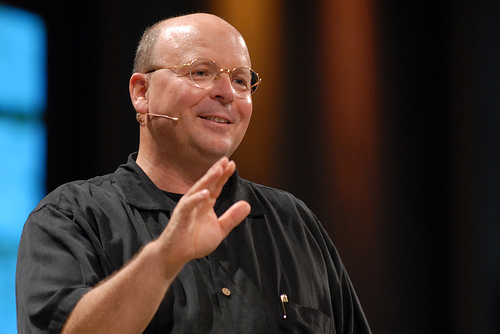
scot-mcknight1That’s pretty much Jesus preaching the good news of the Messiah in a nutshell. It was apparently missed by the above-mentioned Pastor because the gospel message to him is only “justification by faith.” It has nothing to do with Israel, King Messiah, or the national redemption of Israel at all.

I want to make clear at this point that I do believe Jesus does provide the Gentile and the Jewish person salvation from sins on a personal level, but like McKnight, I believe it goes so much further. The gospel message isn’t just about the plan of salvation. It’s the good news that Israel is to be liberated, the exiled Jewish people will be restored to their Land, and national Israel will be elevated to the head of the nations in the physical Kingdom of God.

But you don’t get this in most churches.

…the gospel has lost its edge and its meaning. Nothing proves this more than the near total ignorance of many Christians today of the Old Testament Story.

This is true. It’s impossible to comprehend the full meaning of the Apostolic Writings without a very good grasp of the Torah, Prophets and Writings (Old Testament).

McKnight spends a lot of time saying that to understand the gospel message, you have to start in 1 Corinthians 15. Frankly, that would never have occurred to me as a natural starting point, but then again, I’m not a Bible scholar or a theologian. In fact, to get a good summary of the meaning of the gospel, all you have to do is watch television for about thirty minutes.

Oh not just any show.

I wrote a review of the First Fruits of Zion TV series episode The Good News not too long ago. Here’s a description of the episode from the FFOZ TV web site:

Most Christians believe that the gospel message of Jesus is that he died for our sins and if we have faith in him we will be given the gift of eternal life. While certainly this is a major component of the gospel, it is not the whole story. In episode one viewers will learn that the concept of the gospel wasn’t invented by Jesus or the disciples, but rather was prophesied in the Hebrew Scriptures. The “Good News” was the promise of the coming messiah and that he would bring redemption to the children of Israel.

This sounds very similar to some of McKnight’s writing and I suppose it’s possible this book could have been available (it was published in 2011) to the writers of this television episode, but the content between the two isn’t identical.

Two of the problems I had with McKnight’s definition of the gospel message was that the story of Israel seemed to end with the coming of Messiah (which is a common theme in Christianity) and that he seemed to miss the ascendancy of the Nation of Israel as the core of the Kingdom Messiah is to establish on Earth upon his return. He didn’t say why the Messiah’s gospel message was good news to Jewish people. I summarized this good news for Jewish people in my review:

Toby Janicki, Aaron Eby, and the rest of the FFOZ ministry have “solved” the mystery of the gospel and clued us in on the rest of the message: Jesus came to die for our sins and to deliver the promise of everlasting life for all who believe. But, and this is extremely important, as Messiah King, he came to deliver the promise of good news to all of Israel that when he returns, he will release the captives in exile, restore sight to the temporarily blinded, free the oppressed Jewish people, and proclaim freedom for Israel, the year of favor from the Lord.

This is why I think that Luke 4:16-21 is a better summary of the gospel message of Messiah and proof that Messiah knew what the gospel message was and indeed preached it to Israel. Because the good news of Messiah is first and foremost aimed at Israel nationally and at the Jewish people. After all, Jesus said he came for “the lost sheep of Israel” not the “lost sheep of planet Earth.” Also, Paul always went “first to the Jews and also to the Gentiles.” Why? Because the gospel message is most focused on the Jewish people and made the most sense to the Jewish people.

If McKnight had gone that far, I’d have enjoyed his book a lot better. As it was, I think he made a very important point, but he stopped too soon. He also spent too much time going over and over his central point. I get that he wanted to be thorough and I get that often, an important message needs to be repeated so the reader “gets it,” but I “get it.” I just wanted to get more.

But maybe this is why I didn’t get more.

It is sometimes forgotten that “Christ” is the Greek translation of the Hebrew word Messiah. The word Messiah means “anointed King…”

ffoz-teaching-teamI wasn’t surprised when I saw something so elemental in McKnight’s book. I’d gotten past my surprise after writing my review of the FFOZ TV episode Messiah. Exactly the same point was made during this 30-minute episode: the fact that “Christ” is a word that contains a lot more information and meaning than just the “last name” of Jesus.

Like the FFOZ TV show, McKnight is likely writing to the widest possible Christian audience, attempting to tell the largest number of believers that they have been taught a common misconception about the gospel message. After all, if at least some Pastors have adopted a limited vision of the gospel, how can the people who sit in the pews every Sunday be held accountable for not knowing the wider meaning?

Again, I disagree that Jesus has completed Israel’s story at this juncture. Israel still has a story and it will continue to be central to the good news throughout the Messianic Age and beyond. Israel will be the head of the nations and the people of many nations will stream to the Temple in Jerusalem (Isaiah 2:2, Micah 4:1) in the days of Messiah.

McKnight’s book is readable and educational as far as it goes and I’d recommend it if you want to get out of the traditional rut of gospel equals plan of salvation, period, end of story. But I still wish he’d have taken the story further into the future and presented the Messiah as Israel’s King and his rule on the Throne of David in Jerusalem, his gathering of the exiled Jewish people to himself, and the total redemption of national Israel as well as the people of the nations who are called by his name.

Oh, and this is my 900th blog post on “morning meditations.”

Beyond Tisha B’Av

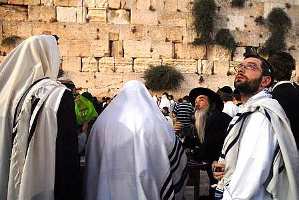
Tisha b'Av at the Kotel 2007In the fourth year of Jehoiakim the son of Josiah, king of Judah, this word came to Jeremiah from the Lord, saying, “Take a scroll and write on it all the words which I have spoken to you concerning Israel and concerning Judah, and concerning all the nations, from the day I first spoke to you, from the days of Josiah, even to this day. Perhaps the house of Judah will hear all the calamity which I plan to bring on them, in order that every man will turn from his evil way; then I will forgive their iniquity and their sin.”

Now in the fifth year of Jehoiakim the son of Josiah, king of Judah, in the ninth month, all the people in Jerusalem and all the people who came from the cities of Judah to Jerusalem proclaimed a fast before the Lord. Then Baruch read from the book the words of Jeremiah in the house of the Lord in the chamber of Gemariah the son of Shaphan the scribe, in the upper court, at the entry of the New Gate of the Lord’s house, to all the people.

Jeremiah 36:1-3, 9-10 (NASB)

For this our heart has become faint, for these things our eyes have grown dim. For Mount Zion, which has become desolate; foxes prowl over it. But You, O G‑d, remain forever; Your throne endures throughout the generations. Why do You forget us forever, forsake us so long? Restore us to You, O G‑d, that we may be restored! Renew our days as of old.

Lamentations 5:17-21 (Tanakh)

This year, the 9th of Av or Tisha B’Av begins at sundown on Monday, July 15th and ends on sundown on Tuesday the 16th. There is no more tragic day in the history of the Jewish people than Tisha B’Av. You can click the link I provided above to read the chronicles of this day of mourning for Israel, but I wanted to provide an additional perspective.

“But when you see Jerusalem surrounded by armies, then recognize that her desolation is near. Then those who are in Judea must flee to the mountains, and those who are in the midst of the city must leave, and those who are in the country must not enter the city; because these are days of vengeance, so that all things which are written will be fulfilled. Woe to those who are pregnant and to those who are nursing babies in those days; for there will be great distress upon the land and wrath to this people; and they will fall by the edge of the sword, and will be led captive into all the nations; and Jerusalem will be trampled under foot by the Gentiles until the times of the Gentiles are fulfilled.

Luke 21:20-24 (NASB)

When the Romans laid siege upon Jerusalem, when they breached her walls, when they utterly destroyed the Holy Temple, how many remembered these words Jesus spoke some forty years before? How many bewailed the tremendous loss, even as Jews all over the world have mourned for their losses since that time? What does the Kotel mean for millions of Jews today? And of the disciples of the Master who lived in the days of destruction, what happened next?

At its height, the Jerusalem community of disciples numbered around ten thousand. Several thousand of these spent the war years in Pella. Their migration back to Jerusalem probably did not happen all at once…

-D. Thomas Lancaster
from Torah Club Volume 6, Chronicles of the Apostles, pg 1135
read with Torah Portion Devarim
published by First Fruits of Zion

There is a three-week period of preparation for commemorating Tisha B’Av but what happens after the fast is over? Go on with regular life? Prepare for the coming week’s Torah reading? Anticipate the Days of Awe and the return of autumn?

After each tragedy, there is a long period of mourning and slow recovery. In the case of the vast majority of Jews after the destruction of Herod’s Temple, they must have struggled to understand how life could go on? How could they make the sacrifices commanded according to Torah? How could they worship God?

As Jewish history continued to unravel forward in time, almost all of the Jewish people were exiled from their land. Holy Jerusalem was renamed by the Romans “Aeilia Capitolina” as yet another insult to the Jews. Only a tiny remnant of Jewish people clung to life within the borders of Israel. According to Lancaster’s commentary, this included Jewish disciples of the Master.

Jewish disciples of our Master continued to live in Pella and the surrounding area at least into the fourth century. In his fourth-century treatise against heresies, Epiphanius complains about the Nazarene “heresy” which he describes as Jewish believers in Yeshua “who remain wholly Jewish and nothing else.”

-ibid

Tisha b'Av at the Kotel 2011Tragedy. Loss. Mourning. Adjustment. Hope.

But much past the fourth century, we must concede that the number of Jewish disciples of Jesus dwindled to few and then none. Like the Temple, Jerusalem, Israel and the Jewish people, Jewish faith in Yeshua of Nazareth as the Messiah went into a long exile and seemed completely lost forever.

But God is gracious. Nearly two years ago, on his blog, Rabbi Joshua Brumbach published a history of Jewish Rabbis who lived during the past several centuries who were also believers, and “who remained wholly Jewish and nothing else.” Both the first and second parts of Rabbis Who Thought For Themselves provide the beginning flickers of illumination after great darkness. Gentile Christianity has flourished in the centuries between the Temple’s destruction and the modern era and Judaism, though suffering greatly, continues to survive and even to thrive in various areas of our world.

But there has always been an enormous disconnect between the two.

That wound is very slowly healing.

In a very real way, Christians and devout Jews are all waiting for the same thing: the coming (or return) of the Jewish Messiah King. Our “visions” of just who is coming (or coming back) and what he will do are quite different, but the Messiah exists as an objective fact, regardless of our beliefs and dreams.

The world herself has been grieving for nearly two-thousand years awaiting the return of the Prince of Peace and the King of Righteousness to stop the bleeding, cease the wars, feed the hungry, and to bring repair and shalom to this broken planet…

…and to her broken people.

Thus said Cyrus king of Persia: Hashem, God of Heaven, has given to me all the kingdoms of the earth, and He has commanded me to build Him a Temple in Jerusalem, which is in Judah. Whoever there is among you of His entire people — may Hashem his God be with him, and let him go up!

2 Chronicles 36:23 (Stone Edition Tanakh)

He who testifies to these things says, “Yes, I am coming quickly.” Amen. Come, Lord Jesus. The grace of the Lord Jesus be with all.

Revelation 22:20-21 (NASB)

May Messiah come soon and in our day, and may he heal the broken and the broken-hearted.

Amen.

The Bible Between God and Man

Moses at NeboThis week’s Torah reading begins: (Deuteronomy 1:1.) “These are the words that Moshe spoke to the entire Jewish people.”

Noting the distinction between this book and the previous four, which are all “the word of G-d,” our Sages explain (Megillah 31b.) that Moshe recited the Book of Deuteronomy “on his own initiative.”

This does not, ח׳׳ו , mean that the Book of Deuteronomy is merely a mortal invention. Our Rabbis (Tosafos, op. cit.) immediately clarify that Moshe delivered his words “inspired by the Holy Spirit.” Similarly, when the Rambam defines the category of “those who deny the Torah,” (Mishneh Torah, Hilchos Teshuvah 3:8.) he includes: “a person who says that the Torah even one verse or one word does not emanate from G-d. If one would say, ‘Moshe made these statements independently,’ he is denying the Torah.”

Not a single commentator maintains that there is a difference in this regard between the Book of Deuteronomy and the four preceding books.

-Rabbi Eli Touger
“A Mortal Mouth Speaking G-d’s Word”
Adapted from Likkutei Sichos, Vol. IV, p. 1087ff; Vol. XIX, p. 9ff
Chabad.org

Reading this commentary on last week’s Torah portion reminded me of my ongoing discussion with my Pastor about the purpose of Torah. Pastor Randy has told me his particular understanding of the function of Deuteronomy, one I’ve never heard before (and I’ll refrain from sharing that with you at this time), but it also made me think of our discussions about the “inspired” nature of the Bible.

Rabbi Touger separates Deuteronomy from the rest of the Torah by saying the first four books were recorded by Moses just as they were given to him by God, but Deuteronomy involves a “relationship” between God’s inspiration and Moshe’s personality.

For the Book of Deuteronomy are merely Moshe’s words. Moshe’s identification with G-dliness was so great that when he states: (Deuteronomy 11:13.) “I will grant the rain of your land in its season,” he speaks in the first person although the pronoun “I” clearly refers to G-d. “The Divine Presence spoke from his mouth.” (See Zohar III, p. 232a; Shmos Rabbah 3:15.)

On the other hand, it is also clear that the book involves Moshe’s own thinking process. To give an example: there is a difference of opinion among our Sages as to whether the proximity (semichus) of two subjects in the Written Torah is significant or not. (Berachos 21b; Yevamos 4a.) One opinion maintains that it is, while the other explains that although when mortals structure their thoughts, order is important, but “Since the Torah was granted by the Almighty, the order of precedence is not significant.” (Raaban [Rabbi Eleazar ben Nasan], sec. 34.)

I’m reading this as saying Deuteronomy is inspired by God so much so that sometimes Moses speaks almost with God’s voice. On the other hand, Deuteronomy involves the words and thoughts of Moses and information provided by God is organized in Moses’s mind and presented in his oratory.

We have to believe that anything coming directly from God is perfect, at least at the moment of its delivery to mankind. What we do with it on the other hand, is another story. So how does that affect the Bible? When God inspired Moses (or any of the other human Bible writers), at that instant in time, perfect information flowed from the Divine to the mundane; from God to man. Through some process we don’t understand, the relationship was developed between that information and how it was interpreted and delivered by the human beings involved.

In Deuteronomy, Moses was speaking to the entire assembly of Israel and, I suppose, either he later wrote down everything he said, or someone was taking notes while he spoke. Tradition says that Moses wrote the entire Torah by his own hand including Deuteronomy. Scholars differ in their opinions, but I’m not going to get into that right now.

Is the Bible perfect?

Well, yes and no.

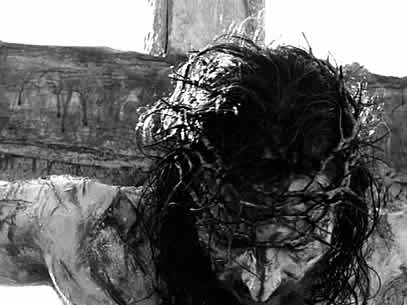
The Death of the MasterWe have to believe it contains the entire inspired Word of God, otherwise, the Bible is just another book, no different from any of the other supposedly holy books in other religious or philosophical traditions. On the other hand, the Bible does contain internal inconsistencies that we can’t resolve or “smooth out,” although both Jewish and Christian translators and theologians have tried over the long centuries.

I didn’t used to believe this until I was challenged to make the different gospel versions of the crucifixion map to each other. What day of the week exactly was Jesus executed? Don’t automatically say it was Friday, because that’s not a for sure thing. You have to understand that Passover was a special shabbat and that the Saturday shabbat was also observed. I won’t go into a lengthy explanation, but if you put the different gospel versions side by side, they do not match up. You can’t tell which day it was when Jesus died. It’s not the same day in all gospel versions.

Did God goof? God can’t goof. So did the various gospel writers goof?

Well, yes and no.

Yes, if you want to read the Bible like a newspaper or a legal document (though some portions are a legal document). No, if you realize that certain portions of the Bible are written like Chasidic tales, stories based on fact, but crafted for a specific audience, drawing from other, older Biblical and extra-Biblical texts, in order to communicate a particular message to the target audience.

If you read the Bible like Joe Friday would have wanted it (“The facts ma’am, just the facts”), it doesn’t work.

The explanation of the above concepts depends on the appreciation of the relationship between the Torah and our world. Our Sages state: “The Torah preceded the world.” Here, the concept of precedence is not chronological, for time like space is a creation, relevant only after G-d brought existence into being. Rather the intent is that the Torah is on a level of spiritual truth which transcends our material frame of reference. Although the Torah “descends” and “enclothes itself” in our world, speaking of seemingly ordinary matters such as agricultural laws, codes for fair business practice, and the proper structure for marriage and family relations, this is not its essence. The essence of the Torah is “G-d’s will and His wisdom,” united with Him in perfect unity. (See Tanya, ch. 4.)

This concept has always fascinated me. Even my Pastor believes that in God’s Heavenly Court, there exists a “perfect” Bible…God’s Word as it was given to humanity unaffected by the human mind, imagination, interpretation, or anything else. By inspiring people to write various portions of His Word, God, in effect, is “clothing” the Bible in humanity so that human beings can consume it.

Surely, this commandment that I am commanding you today is not too hard for you, nor is it too far away. It is not in heaven, that you should say, “Who will go up to heaven for us, and get it for us so that we may hear it and observe it?” Neither is it beyond the sea, that you should say, “Who will cross to the other side of the sea for us, and get it for us so that we may hear it and observe it?” No, the word is very near to you; it is in your mouth and in your heart for you to observe.

Deuteronomy 30:11-14 (NRSV)

This is the part of Torah I point to whenever Christians say that the Law was only given to Jews so that they’d realize the Law of God was too hard to keep and that they needed Jesus instead. It’s also a good scripture to bring out when I meet with Christians. The Torah, and in fact, the Bible as a whole, is a multi-dimensional, multi-layered, intertwining, interactive document that is more than a document, that was given to human beings to enact, ponder, study, discuss, argue over, and experience in awe.

The Bible was written by human beings in supernatural partnership with God and it digs as much into the living human psyche as it does into the Divine realm.

rabbi_child_and_sefer_torahI disagree (respectfully) with Rabbi Touger when he says that human beings as intermediaries and Bible writers are either derech ma’avir or “funnels” channeling God’s words and intent without altering them at all, or derech hislabshus in which the human intermediary puts what is given from God into his own words. I think that every word written by every Biblical writer was in some sense affected, transformed, or colored by the human writers, the derech hislabshus. Otherwise, God could have just written the whole thing with his “finger” as He did with the first tablets Moses took up to Sinai, the ones Moses smashed during the incident of the Golden Calf (and notice that God had Moses do the writing on the replacement tablets).

If there is a perfect Word of God, it resides with God. It is spiritual perfection, absolute wisdom, pure joy, intelligence, and love. But how could people understand any of it if it weren’t written in a human language and filtered through a human personality, vocabulary, cultural context, individual style, and so forth?

Enclothing the Torah in mortal intellect does not merely grant man the opportunity for advancement, it also introduces a higher quality to the Torah itself, as it were. For clothing limitless spirituality in the confines of mortal intellect represents a fusion of opposites that is possible only through the influence of G-d’s essence. Because His essence transcends both finiteness and infinity, it can weld the two together, bringing the spiritual truth of the Torah within the grasp of mortals.

My personal opinion is that the esteemed Rabbi Touger might be overstating his point just a bit. I’d prefer to say that the Bible acts as a sort of bridge between Heaven and Earth, between the existence of God and the existence of people. The split instant perfection entered our world, it became imperfect, hard to interpret, difficult to understand, internally inconsistent, all because human beings were allowed to affect what God provided. But this was allowed by design, otherwise man would have no part in God or His Word.

It is said that there are two revelations of God, the first being all of creation, hence no man has an excuse for not seeking God (Romans 1:20), and the Bible, God’s written revelation. Both are complementary. The universe and everything in it provides one set of information about God and the Bible a different but complementary data set.

But if our bridge is imperfect because we are imperfect, there is yet another revelation that has and will put everything in order.

And the Word became flesh and lived among us, and we have seen his glory, the glory as of a father’s only son, full of grace and truth.

John 1:14 (NRSV)

Jesus taught the Torah to his people Israel correctly and he interpreted many things, most of the time using parables. It is said in certain corners of Judaism that when Messiah comes (returns), he will teach Torah perfectly and we will all know. More than that, it will be written on our hearts so that we will all know.

No longer shall they teach one another, or say to each other, “Know the Lord,” for they shall all know me, from the least of them to the greatest, says the Lord; for I will forgive their iniquity, and remember their sin no more.

Jeremiah 31:34 (NRSV)

But that’s then, not now. Now we struggle, bicker, and argue about the purpose of Torah, the meaning of the Bible, how it should be interpreted, what we’re supposed to do with it, and how it’s supposed to guide our lives. As Paul said:

For now we see in a mirror, dimly, but then we will see face to face. Now I know only in part; then I will know fully, even as I have been fully known.

1 Corinthians 13:12 (NRSV)

Of course, it is both Christianity and Judaism that struggles to peer through Paul’s metaphorical “glass darkly” and to understand who we are and who God is:

Jews as a group rarely agree on matters of Jewish belief. How could we agree on the essence of another?

Rabbi Evan Moffic

aleph.jpgMoses spoke Deuteronomy to the entire assembly of Israel on the banks of the Jordan river as they were about to cross over and enter the Land. We too are on a similar journey, hearing the Word of God as filtered through human beings and waiting to “cross over,” so to speak, not with Joshua but with Messiah, into his Kingdom. This is the gospel message or the good news. Messiah will come as King and restore what was broken and lost, he will gather in his exiled children and restore Israel, Jerusalem, and the Temple. He will also gather in those among the nations who are called by his name.

But we must never forget today that God is not aloof and apart. The Word was given to man from Heaven and it is not far off. True, it’s not well comprehended, but it was meant to be understood, at least to the best of human ability, and to be lived out.

And though we only seem him dimly now, as through a darkened or dirty window, someday we’ll see him face to face.

And we will rejoice.