Tag Archives: Jesus

The Gift

Buddha was walking into the city market one day and near the city entrance an old bitter man was sitting on a box glaring at Buddha, who carried a bright smile on his face. At the sight of him this old man started cursing Buddha up and down, left right and center, telling him how pretentious he was, how much better he thought he was and how he did nothing worthy of the air he breathed in this world. But Buddha simply smiled and kept on walking to the market to get what he needed.

The next day Buddha returned to the market and once again that old man was there, this time his cursing intensified, screaming and yelling at Buddha as he walked by, cursing his mother, cursing his father and everyone else in his life.

This went on for the rest of the week and finally as the Buddha was leaving the market the man came up to him, as his curiosity had simply gotten the best of him. “Buddha, every day you come here smiling and every day I curse your name, I curse your family and everything you believe in” the old man says ” but every day you enter this city with a smile knowing that I await you with my harsh tongue, and everyday you leave through the same entrance with that same smile. I know by speaking to you now that you are not deaf, why do you keep on smiling while I do nothing but scream the worst things I can think of to your face?”

Buddha, with the same smile still on his face looks at the old man and asks “If I were to bring you a gift tomorrow morning all wrapped up in a beautiful box would you accept it?” to which the old man replies “Absolutely not, I would take nothing from the likes of you!”. “Ah ha” the Buddha replies “Well if I were to offer you this gift and you were to refuse then who would this gift belong to?”. “It would still belong to you of course” answers the old man. “And so the same goes with your anger, when I choose not to accept your gift of anger , does it not then remain your own?”

I don’t know the original source for this, (I saw it on Facebook) but a quick Google search revealed a variant of this story posted on the a raft blog. But how does a story about Buddha relate at all to a Christian?

“You have heard that it was said, ‘An eye for an eye and a tooth for a tooth.’ But I say to you, Do not resist the one who is evil. But if anyone slaps you on the right cheek, turn to him the other also. And if anyone would sue you and take your tunic, let him have your cloak as well. And if anyone forces you to go one mile, go with him two miles. Give to the one who begs from you, and do not refuse the one who would borrow from you.

“You have heard that it was said, ‘You shall love your neighbor and hate your enemy.’ But I say to you, Love your enemies and pray for those who persecute you, so that you may be sons of your Father who is in heaven. For he makes his sun rise on the evil and on the good, and sends rain on the just and on the unjust. For if you love those who love you, what reward do you have? Do not even the tax collectors do the same? And if you greet only your brothers, what more are you doing than others? Do not even the Gentiles do the same? You therefore must be perfect, as your heavenly Father is perfect.

Matthew 5:38-48 (ESV)

Not exactly the same lesson, but we see that we don’t have to accept anger and hostility as they are intended, but as we choose for them to be. And as I recall, I was just talking about being perfect very recently. Perfection is somehow the marriage between our experience with God and our behavior toward people. What we do and how we do it depends a great deal on what we believe, not just about God, but about others and about ourselves. It appears this is not just a Christian attitude, either.

Regardless of where a person actually is physically, he is really where his thoughts are. A person constantly has a choice to think elevated and uplifting thoughts – or negative, self-destructive thoughts. How old you feel is greatly dependent on your attitude about yourself. Elderly people can increase their vitality and vigor by considering themselves young.

We constantly talk to ourselves. We can choose to be our own best friend by telling ourselves positive thoughts, or our own worst enemy by repeating negative thoughts.

-Rabbi Zelig Pliskin
“Daily Lift #616”
Aish.com

I didn’t think I was going to write an “extra meditation” today, but some of the angry responses in the comments section of one of Gene Shlomovich’s recent blog posts made it seem necessary.

I can hardly say that I always take the moral high road in these conversations. All things being equal, I can go off half-cocked as quickly as the next guy. But I still know it’s wrong to do so, even when provoked, and that in accepting the anger of someone else, I’m making it my anger. If I choose to refuse the “gift,” then the “giver” retains their anger and hostility and I am left with whatever I receive from God.

Admittedly, this is a goal I will always strive for but probably never quite attain. Buddha was an extraordinary human being and the Messiah, of course, is the Messiah, the font of all wisdom and peace. Me? I’m just a human being, like so many others, and I’m trying to make my way through life in the world.

It is a bitter thing when supposed brothers in the Messiah contend for the sake of “being right.” To try to follow the intent of Rabbi Abraham Twerski’s Growing Each Day commentaries…

Today I shall…

…try to improve my response to other people so that I only accept and give gifts of kindness, and not of anger.

Be Perfect On Earth and in Heaven

When Abram was ninety-nine years old, the Lord appeared to Abram and said to him, “I am El Shaddai. Walk in My ways and be blameless.”

Genesis 17:1 (JPS Tanakh)

“You have heard that it was said, ‘You shall love your neighbor and hate your enemy.’ But I say to you, Love your enemies and pray for those who persecute you, so that you may be sons of your Father who is in heaven. For he makes his sun rise on the evil and on the good, and sends rain on the just and on the unjust. For if you love those who love you, what reward do you have? Do not even the tax collectors do the same? And if you greet only your brothers, what more are you doing than others? Do not even the Gentiles do the same? You therefore must be perfect, as your heavenly Father is perfect.

Matthew 5:43-48 (ESV)

Another translation of “be blameless” from Genesis 17:1 is “be perfect,” such as we see the Master instructing his students (including us) in Matthew 5:48. But how is this possible, especially when Paul wrote:

…as it is written: “None is righteous, no, not one…

Romans 3:10 (ESV)

What does it mean to “be perfect?” I used to think this was one of the great mysteries of the Bible, but perhaps there is an answer after all.

If a human being cannot be perfect, why did God demand perfection of Abraham?

The entire context of the verse indicates both the definition of this perfection and the way in which it can be achieved. It is obvious that no human being can aspire to equal God’s degree of perfection. What man can achieve is to live according to God’s teachings and thereby live up to his own human potential; more than man’s personal maximum is not possible or expected. Thus, God did not say simply, “Be perfect”; He said, “Walk before Me and thereby you will be perfect.” When a person tries to live according to the Divine teachings, that constitutes human perfection, although one is technically never perfect.

Rabbi Samson Raphael Hirsch notes that the Hebrew word for “walk” in the above verse is not telech but heshalech which implies, “Go your way in spite of opposition, not making your progress dependent on external circumstances, but being led from within yourself: Let your movement proceed from your own free-willed decisions.”

The picture is now complete; human perfection can be achieved by making a free-willed choice to live according to the Divine teaching.

Today I shall…

try to realize that although I cannot be absolutely without flaw, I can be perfect if I make free-will decisions to obey the Divine will.

-Rabbi Abraham J. Twerski
“Growing Each Day, Cheshvan 6”
Aish.com

We all make choices. Every day, we make choices. Sure, some of those choices involve making mistakes, but we continue to strive, like Jacob, struggling with God and with our lives, to do better; to be better today than we were the day before. Of course, observant Jews and Christians have different ideas of what one must do to please God and to stand before the Throne of the Almighty as “perfect.” For Jews, it is an adherence to the mitzvot of the Torah, the study of Torah, and prayer. For Christians, prayer is a large component, as is Bible study, but most importantly, is the belief in the person and sacrifice of Jesus Christ. None of this makes us “perfect” people, but it does represent a journey that we each take upon ourselves, to seek God, even as He is also our traveling companion.

Somewhere in-between the doing and the experiencing of God is where we are supposed to be walking.

Rabbi Schneur Zalman of Liadi, the first rebbe of the Lubavitch dynasty, led the services for Yom Kippur, the holiest day of the year. He stood wrapped in his prayer shawl, profoundly entranced in the cleaving of the soul to its source. Every word of prayer he uttered was fire. His melody and fervor carried the entire community off to the highest and the deepest journey of the spirit.

And then he stopped. He turned, cast off his prayer shawl and left the synagogue. With a bewildered congregation chasing behind, he walked briskly to the outskirts of town, to a small dark house from where was heard the cry of a newborn infant. The rabbi entered the house, chopped some wood and lit a fire in the oven, boiled some soup and cared for the mother and child who lay helpless in bed.

Then he returned to the synagogue and to the ecstasy of his prayer.

The Rebbe added:

Note that the rabbi removed his prayer shawl. To help someone, you must leave your world, no matter how serene, to enter the place where that person lives.

-Rabbi Tzvi Freeman
“A Story”
A favorite story of the Rebbe, central to his activist view of life
Based on letters and talks of the Rebbe
Rabbi M. M. Schneerson
Aish.com

Whether you’re Christian or Jewish (or anyone else), the actions of Rabbi Zalman are bound to seem strange, but if you are aware of the extreme solemn devotion and majesty of the Yom Kippur service, certainly the most Holy Day on the Jewish calendar, then imagining the Rabbi abruptly throwing off his tallit in the middle of services, walking out of the synagogue, even in order to care for a newborn infant and his mother, probably seems startling and even shocking.

But what is it to be perfect? Is it entering into an ecstatic holy state of prayer, speaking in tongues, or other mystical or metaphysical experience that brings us closer to the Divine, or is it extending ourselves back outward, away from what we think we want or need, in order to serve someone who has greater needs than ours?

I suppose you could make the argument that it’s both, since after Rabbi Zalman finished his work at the new mother’s home, “he returned to the synagogue and to the ecstasy of his prayer.” On the other hand, he was willing to abandon, however temporarily, the “ecstasy of his prayer” in the middle of worship services on the Holiest day of the year, and perform a servile duty to the lowliest of God’s creatures in their helplessness. It would be as if a Christian Pastor, right in the middle of leading Easter services, were to suddenly stop, walk out of church, and perform the identical action for a new mother and her infant, then go back to church and pick up where he left off.

What would the parishioners think of what he did? Then again, what would God think?

Every person is a microcosm of the entire Creation. When a person brings harmony between his G‑dly soul and his material life, he brings harmony between the whole of heaven and earth.

-Rabbi Tzvi Freeman
“Microhealing”
Based on letters and talks of the Rebbe
Rabbi M. M. Schneerson
Chabad.org

What is it to be perfect? That’s not an easy question to answer. And yet we see that a significant portion of the answer is to strive to obey God and to bring harmony between our “G-dly soul” and our “material life.” The challenge is to find the balance between the two and to continually struggle to not let one overwhelm the other. We cannot serve Him in the material world without being attached to Him as He is in Heaven. But our service to Him in Heaven, so to speak, serves no one unless it is expressed here on Earth.

“Our Father in heaven,
hallowed be your name.
Your kingdom come,
your will be done,
on earth as it is in heaven.

Matthew 6:9-10 (ESV)

70 Days: The Lost Shabbat

Shabbat candlesWhen Lemech named his new son (at the end of last week’s reading, Gen. 5:29), he called the boy “Noach”, saying “this shall comfort us (yeNaCHameinu) from our work and the difficult labor of our hands.” But the name Noach was prophetic in a different vein, as the name also means to be at rest (“NaCH”). The Zohar, the fundamental work of the Kabbalah, of Jewish mysticism, says that “Noach” is thus a hint to the Sabbath, the day of rest. “Shabbos” is derived from the word “SHeVeS,” which also means to be at rest: “for in [the seventh day] He rested (“SHaVaS”) from all His work.” [Gen. 2:3]

In this week’s reading, Noach is commanded to make sure there is a light in the Ark, using the unusual word “Tzohar” (found nowhere else in the Bible) to indicate brightness like midday (“Tzaharayim”). The Avnei Azel writes that when we combine the numerical value of “Tzohar” with that of the Ark, “Tayvah,” the sum is the value of “Shabbos.” The Sabbath encapsulates both the Ark, the shelter from the flood, and the brightness within it.

We live throughout the week with work and other responsibilities, building up (and sometimes crashing down) around us. Shabbos is quite literally a shelter from the storm, and opportunity to withdraw from all the distractions and focus upon what is truly important. It is the busiest executives who, when they decide to fully observe the Sabbath, and stop using all electronic devices and not do business on that day, frequently remark that they don’t know how they survived without it.

Viewed correctly, the Sabbath isn’t about restrictions, but is the opportunity to focus upon the light within.

-Rabbi Yaakov Menken
“The Light Within”
Commentary on Torah Portion Noah
ProjectGenesis.org

I usually “get in trouble” when I post anything mentioning mysticism or Kabbalah, and I want to assure you that I tend to see mystic writings metaphorically, since I am nowhere near being any sort of “mystic” myself. But in reading Rabbi Menken’s commentary on last week’s Torah portion, I can’t help but once again be captured by the “magic” of the Shabbat. I don’t think it’s so much the mechanics of the seventh day, but the idea that God has provided the Jews with a way to wrap themselves inside a comforting blanket of sorts, that provides peace and a special closeness with God for one day a week. It’s as if the week is a cold, winter’s day with an icy wind blowing, freezing you to the marrow as you make your way about your tasks, and Shabbat is staying in bed late in the morning, toasty warm and pleasantly relaxed inside and under your comforter, while that self-same icy wind blows impotently outside.

I have been told more than once that the Shabbat is the sign of the Mosaic covenant with the Children of Israel and as such, is not “transferable” to the rest of the world, but of all the blessings that God provided the Jewish people, I must admit, I continue to “covet” only this one. I find it a particular disappointment that when Jesus made it possible, through certain blessings of the Abrahamic and New covenants, and through his broken body and blood, for we non-Jews to also enter into covenant relationship with God as his disciples, he didn’t make it possible for us to also enter into a weekly Shabbat as well.

More’s the pity.

But then again, early Christianity, when it threw off its Jewish mentors and guides like old rags and “reinvented” itself in the centuries after the destruction of the Temple by the Romans in Holy Jerusalem, set aside many of the “Jewish” aspects of its own Messianic worship, including meeting with other like-minded Gentiles and Jews in the synagogue to daven on Shabbos. We abandoned the potential for such a “rest” in both God the Father and in Christ. We did it to ourselves.

I say all of this because I’ve contacted a Pastor and set up an appointment to meet with him in a little less than two weeks to discuss my “situation.” As I’ve said in other Days blogs, I pretty much have to “fish or cut bait.” I can try to sit on the edge of a razor blade forever, or pick a side and jump off into whatever awaits me below. So I picked a side and jumped. Now, I’ll be in free fall for the next week and a half or so, and then I’ll arrive at ground level and make the first “bounce” in my landing. Believe me, I’ll make sure you hear it when I go “thump.”

But the closer I move toward Christianity and the church, the further I feel I am distancing myself from Judaism and, in some aspects, particularly from my Jewish wife. And as I said, of all the Jewish practices and values I have been exposed to, the Shabbat is the one closest to my heart. Even though the Shabbos candles are no longer lit in my home on Friday evening, I do not abandon it in my heart. But with my body and everything else, having chosen a “course correction” for myself which is designed to increase my trust in God, what am I leaving behind?

In describing the Shabbos, the verse in Bereshis (2:3) writes: “For on it [the seventh day] Hashem rested from all His work which He created לעשות —to do.” This final word in the verse…does not complete the thought of the verse the thought of the verse smoothly, and it seems to even be an extra word altogether.

A cursory observation of the world indicates that Hashem continues to sustain the world on Shabbos just as on every other day. Plants grow and creatures thrive on Shabbos, with the ongoing providence of Hashem overlooking every detail just as on the weekdays. In what manner, then, is the seventh day a day of rest for Hashem?

The Bnei Yisasschar explains that when the world was created, it was set into place with the potential it needed to continue, and for nature to take its course. Creatures were given the instincts necessary to procreate, and plants were placed into their environment for survival and in order to prosper. As the world continues to exist on Shabbos, it is within the realm of work that was put into place before Shabbos, and the work takes place on Shabbos automatically without further input.

The verse tells that Hashem created the world “to be done.” Hashem continually renews the world every moment. Yet, from the day of creation and onward, this supervision of Hashem is manifest in a manner as if the world is set and conducts itself naturally.

Daf Yomi Digest
Gemara Gem
“A World Set in Motion”
Commentary on Shabbos 17

I’ve sometimes wondered about Creation, the Seventh Day, and entropy, that property of all systems including the universe, to go from a more to a less organized state, very slowly running down like an old clock worked by a mainspring (if you’re old enough to remember such clocks and watches). When God “rested” and He built-in to His Creation the ability to continually move forward under its own “momentum,” so to speak, is what we see of the universe’s expansion, and the general long-term decay of systems (including human being “systems”) part of His “rest?”

Jewish philosophy sometimes states that God is continually renewing the universe and if He was to cease, even for the briefest of moments, existence itself would fly apart. But I seem to notice (and I believe the scientific world will agree with me here) that the universe is rather very slowly, ponderously, “flying apart” anyway. Sort of a disturbing counterpart to the “warm, comforting blanket Shabbat’s rest” I described above.

FallingApartBut if God’s rest isn’t a literal, one-to-one model of Shabbat between Creator and creation, then perhaps it is a twist on the metaphor that we should regularly rest in Him, or otherwise “fly apart” for lack of any rest in God at all. However, I understand that we can also consider the Shabbat as a hint or foretaste of the Messianic era to come, when all of our current concerns and labors will come to an end and we will all perpetually rest with Him.

The Jewish people are compared to the stars twinkling in the high heavens. By their light, even he who walks in the darkness of night shall not blunder.

Every Jew, man or woman, possesses enough moral and spiritual strength to influence friends and acquaintances, and bring them into the light.

“Today’s Day”
Wednesday, Cheshvan 5, 5704
Compiled by the Lubavitcher Rebbe
Translated by Yitschak Meir Kagan
Chabad.org

God gave a good many gifts to the Jewish people, not the least of which is the Shabbat. Although both Judaism and Christianity tend to agree that we non-Jews don’t enter into a weekly Shabbat’s rest (no Christian ever treats Sunday like an observant Jew treats the Shabbat, so no, Sunday is not the “Christian Shabbat”), it is much to our own regret that we fail to do so. For we have robbed ourselves of not only a weekly renewal in God, but of a preview of what life will be like when the Jewish King and Lord will take possession of his kingdom, and rule the world in true justice and in peace.

And yet today and in the weeks ahead, I find myself deliberately walking on a path that leads away from that peace. I hope this is me trusting in God rather than me just being foolish.

Noah, Moses, and Peter: Lessons from Acts 2

Receiving the SpiritFor the disciples of the Master, Shavuot already carried extra significance as the fiftieth day since His resurrection. He was the first fruits of the resurrection. The disciples and followers of Yeshua were themselves the first fruits of His labor. On Shavuot, they added 3,000 souls to their number and the great harvest of men began.

The story of Acts 2 depicts the early disciples of Yeshua still engaged in the biblical calendar, keeping the LORD’s appointed times as prescribed by the Torah of Moses. Unlike later Christian tradition which discarded the biblical calendar with its weekly Sabbaths and holy days, the early disciples remained steadfastly Torah observant, even after the resurrection of our Master.

Torah Club, Volume 6: Chronicles of the Apostles
Torah Portion Noach (Noah) (pg 30)
Commentary on Acts 2:1-41

“Chronicles of the Apostles” takes students on a year-long study of the book of Acts with Messianic commentary and Jewish insights into the Epistles.

Follow the lives and adventures of the apostles beyond the book of Acts and into the lost chapter of church history. Study Jewish sources, Church fathers, and Christian history to reveal the untold story of the disciples into the second century.

Promotional description of
Torah Club, Volume 6: Chronicles of the Apostles
from First Fruits of Zion (FFOZ)

All of them were gathered with one heart.

Ma’asei HaShlichim 2:1

So begins my year-long study of the Apostolic writings from Acts and other sources, which runs in parallel with the annual Jewish Torah reading cycle. I say “parallel” rather than a more closely connected link because, although this study in Torah Club is to be read for the Torah Portion Noach (Noah), they have little, if anything to do with each other. Noach doesn’t speak of Shavuot or the giving of the Torah at all, which are events that occur much later in the Torah narrative. And yet perhaps this is a good thing.

In traditional Christian Bible studies, the New Testament is given overwhelming preference with maybe a slight nod to the Old Testament, but almost certainly not the Torah (the Five Books of Moses). In the Hebrew Roots movement, where I have spent most of my history as a believer worshiping God and studying the Word, the Torah is given the greater preference, even though we are followers and disciples of Jesus, the Jewish Messiah. I think it’s good to try to even the scales, so to speak, and give equal time to all of the different portions of the Bible.

A traditional Jewish Torah reading will present from the Torah and the Prophets. Few synagogues also offer the opportunity to read the Psalm for the week, but each Torah Portion has a corresponding Psalm (Psalm 29 in the case of Noah). First Fruits of Zion (FFOZ) has also created a schedule of Gospel readings that map to the readings of the Torah, but the later portions of the Apostolic scriptures are largely ignored, at least formally.

In my “previous life” as a teacher in my former “One Law” (part of Hebrew Roots) congregation, I created an alternating cycle where for one year, Matthew through Acts was read along with the Torah cycle, and the next year, Romans through Revelation was read. So in two years, the congregation would go through the Torah twice, through the traditional readings of the Prophets and the Psalms twice, and through the entire New Testament. Imagine how much you would absorb after a decade of repeatedly reading and hearing read the vast majority of the Bible.

But reading and hearing read is one thing (or two things) and studying is something else. Here, FFOZ and D. Thomas Lancaster offers the Torah Club student (or class, since this material is designed to be used in a small group study) the opportunity to “dig deeper” into the scriptures and to learn how familiar passages in Acts are married back to the Torah, as well as to the Prophets, other portions of the New Testament, and as the study progresses through the annual cycle, to extra-Biblical learned texts as well.

Today, I am learning about the Acts of the early Jewish Apostles, This lesson is about the 3,000 Jews, many probably from the diaspora, who were in Jerusalem for the festival of Shavuot (Pentecost), which is held in the late Spring, and who came to receive the Spirit of the Lord and to come to faith in Jesus (Yeshua), the Jewish Messiah, the Son of the God of Israel, the redeemer of Israel and the world.

The disciples were all “filled with the Holy Spirit.” The Torah uses the same terminology to describe the endowment of God’s Spirit on Joshua, Caleb, Bezalel, and Oholiab. In those examples, the Torah likens a human being to a vessel. God’s spirit can fill a human being like water can fill a jar.

from “Chronicles”
Torah Portion Noah (pg 32)

And what is this supposed to teach me? I’m reminded of something I said just recently:

I’m still not sure of what the process is where I’m supposed to be emptied now and filled later, but in trying to live out that process in writing and in person, I prefer to think of myself as taking “the higher road less traveled”

But in reading Lancaster’s study of Acts 2 and the giving of the Spirit, I’m also reminded of this:

But we have this treasure in jars of clay, to show that the surpassing power belongs to God and not to us. We are afflicted in every way, but not crushed; perplexed, but not driven to despair; persecuted, but not forsaken; struck down, but not destroyed; always carrying in the body the death of Jesus, so that the life of Jesus may also be manifested in our bodies. For we who live are always being given over to death for Jesus’ sake, so that the life of Jesus also may be manifested in our mortal flesh.

1 Corinthians 4:7-11 (ESV)

So aren’t we all fragile jars of clay containing an unimaginably valuable treasure of the Holy Spirit of God, through our Master and Messiah Jesus Christ?

Acts 2 describes the giving of the Spirit to thousands of new Jewish disciples of the Messiah on the day of Shavuot. Is it too soon to bring in the idea that we among the nations were also to receive the Spirit?

While Peter was still saying these things, the Holy Spirit fell on all who heard the word. And the believers from among the circumcised who had come with Peter were amazed, because the gift of the Holy Spirit was poured out even on the Gentiles. For they were hearing them speaking in tongues and extolling God. Then Peter declared, “Can anyone withhold water for baptizing these people, who have received the Holy Spirit just as we have?” And he commanded them to be baptized in the name of Jesus Christ. Then they asked him to remain for some days.

Acts 10:44-48 (ESV)

Perhaps I can also extend the lesson and the metaphor of “jars of clay” to include Gentile God-fearers like Cornelius and his transition into what was later known as Christianity through accepting discipleship under Jesus Christ…and also bring Noah into the lesson.

I establish my covenant with you, that never again shall all flesh be cut off by the waters of the flood, and never again shall there be a flood to destroy the earth.” And God said, “This is the sign of the covenant that I make between me and you and every living creature that is with you, for all future generations: I have set my bow in the cloud, and it shall be a sign of the covenant between me and the earth. When I bring clouds over the earth and the bow is seen in the clouds, I will remember my covenant that is between me and you and every living creature of all flesh. And the waters shall never again become a flood to destroy all flesh. When the bow is in the clouds, I will see it and remember the everlasting covenant between God and every living creature of all flesh that is on the earth.” God said to Noah, “This is the sign of the covenant that I have established between me and all flesh that is on the earth.”

Genesis 9:11-17 (ESV)

As we saw in Acts 10, Peter, the Jewish Apostle, was astonished to discover that the Spirit of God would also come upon the non-Jew who accepted Christ, just as it came upon the Jews during his experience of the events recorded in Acts 2. It had never occurred to him before that such a thing was even possible. What a wonderful God who can also save the children of the nations as well as the Children of Israel.

But earlier in the chapter, we learn some things about Cornelius as he was before becoming a disciple of Jesus:

At Caesarea there was a man named Cornelius, a centurion of what was known as the Italian Cohort, a devout man who feared God with all his household, gave alms generously to the people, and prayed continually to God.

“Cornelius, a centurion, an upright and God-fearing man, who is well spoken of by the whole Jewish nation, was directed by a holy angel to send for you to come to his house and to hear what you have to say.”

Acts 10:1-2, 22 (ESV)

The Roman Centurion Cornelius and his non-Jewish household were known as “God-fearers,” non-Jews who had come to the realization that the God of Israel was the God, the One and only, the Creator. In that realization, they came to faith, abandoned the pagan idols of Rome, and gave homage to God only. Often, non-Jewish God-fearers would worship in the synagogue on the Sabbath. Many took on some of the other Jewish religious practices of the day, including the daily prayers, and even, to a degree, a Kosher observance (for Peter to break bread in Cornelius’s house, this would have to be true in his case).

But would a Gentile simply walk into a Second Temple era synagogue on Shabbat and inform the Rabbi and other Jews that he intended to worship the Israelite God with them? How was this done and under what status would a Gentile appropriately do such a thing?

Recall Genesis 9 and the covenant God made with Noah and all of his descendents which, by definition, includes all of humanity.

The concept of the Noahide was not formalized, as we understand it today, until the Talmudic era, many centuries after Cornelius and Peter walked the earth. However, the covenant of Noah would have been well-known among the Jews and it’s not beyond reason to believe that a man as devoted to God as Cornelius would have learned or been taught that anyone from among the nations stands before God as subject to the covenant with Noah. Perhaps, though not called or even thought of as “Noahides,” many of the Gentiles who would later receive the Spirit and be baptized by water in Christ’s name, were nevertheless, viewed in such a manner, as God-fearing men and women who had heard the distant words of God to Noah at Ararat, and thus, believed.

To borrow more from Lancaster’s Torah Club lesson (pg 47), maybe we can understand the rite of baptism, especially as it related to the God-fearers, just a little better:

Based on this reading, Lichtenstein argues that the formula (see Acts 2:38) is not a baptismal confession but a statement of purpose. The disciples were to immerse people for the sake of declaring their faith in His messianic identity. Their immersion for His sake signified their entrance into His school of disciples and their allegiance to Him.

The apostles believed that the immersion in His name entailed a mystical union with Him, with His suffering, His death, and His resurrection. (see Romans 6:1-13 and 1 Corinthians 4:7-11)

This interpretation of the meaning of baptismal immersion signifies the crossing of a barrier for the non-Jewish adherents to the God of Israel, from God-fearers and possessors of the covenant of Noah, to disciples and people granted entrance to much greater covenant blessings under Messiah Yeshua.

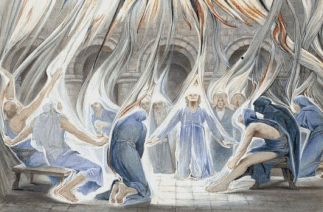
In the events of Acts 2 and during the festival of Shavuot, every Jew present would be constantly reminded of the giving of the Torah at Sinai, of the awesome voice of God thundering from the smoke and fire, of the top of the mountain, smoldering in unspeakable tongues of flame. When the Spirit of God manifested as “tongues of fire” and rested upon the disciples of Moshiach at Solomon’s Portico, and they spoke in the many tongues of men and the languages of the nations, how much more significant was that Shavuot and all those that followed in their annual procession, to the older and newly made disciples? And when Peter saw that even the Hebrew FireGentiles could receive the Spirit, the greater mysteries of God’s work among all the world, linking Noah, to Moses, to Jesus, unfolded like an infinitely wide cloth, spilling amazing treasures across history, from Creation and into the future that even we now inhabit.

Admittedly, I’ve far exceeded the content of this part of volume 6 of the Torah Club in this “meditation,” (though I’ve included only a tiny fraction of what the over 20 pages of lesson notes – not to mention the accompanying audio CD – for this single teaching have to offer) but once I start learning, the connections to many other sparks of God’s wisdom were inevitable. If you continue to follow me in these studies or to embark on your own through the Torah Club, this will happen to you as well. Believe me, if you encounter the wealth of information in just this single study, it will illustrate to you that what you thought you knew about the events of Acts 2 only scratches the surface of what is actually there.

As humble and empty jars of clay, in seeking God and studying His Word, we desire to become filled with His Spirit and His Wisdom, every day, on each encounter with Him, and across all of our years.

…and that repentance and forgiveness of sins should be proclaimed in his name to all nations, beginning from Jerusalem.

Luke 24:47 (ESV)

71 Days: Wrestling with Trust

The realization that our own strength may be inadequate should never cause us to sink back into inertia. Never refrain from a good endeavor because the difficulties involved seem insurmountable. Keep in mind that we have a mighty Helper in the Almighty in all our good endeavors. Let us do our share; the Almighty will do the rest.

-Rabbi Zelig Pliskin
“Today’s Daily Lift #612”
Aish.com

May these words that I have prayed before God be close to God day and night, that He may do justice for His servant and for His people Israel, the needs of each day on that day.

-Siddur

When people lift heavy loads, they are likely to develop severe back pain. When they realize that they are overtaxing their bodies, they discontinue this practice and from then on will lift only as much as their bodies can safely bear.

While we can easily determine our body’s stress capacity, our psychological and emotional stress tolerance is not so readily measurable. Yet, if we exceed that stress level, symptoms of discomfort and dysfunction are just as apt to occur as when the body’s level is exceeded. How is one to determine one’s safe emotional and psychological stress level?

What could be simpler than following the instruction book provided by the Manufacturer?

During the Israelites’ sojourn in the desert, the manna was provided in portions just sufficient for one day, and any excess rotted away.

As for what they would eat the next day, the Israelites had been assured that there would be fresh manna the following day. Our appropriate stress tolerance is to be concerned for just one day – twenty-four hours. If we take on more than that, we may be overburdening the system. In our economy, lacking the miraculous manna and having the ability to save for the future, there may be justification for putting something aside for a rainy day. However, we often take on worries far in advance, about things that we are powerless to alter or to prepare for today. Such futile worry is harmful to a person.

Today I shall…

try to concentrate on my present needs and avoid worrying about things that are not within my capacity to change.

-Rabbi Abraham J. Twerski
“Growing Each Day, Cheshvan 4”
Aish.com

Just in case you ever wonder why I favor Jewish religious and spiritual sources over traditional Christian books and articles, what you’ve just read from Rabbis Pliskin and Twersky should be exceptionally familiar to anyone who calls themselves a follower of Jesus, and certainly to even the most casual reader of the Gospels.

And he said to his disciples, “Therefore I tell you, do not be anxious about your life, what you will eat, nor about your body, what you will put on. For life is more than food, and the body more than clothing. Consider the ravens: they neither sow nor reap, they have neither storehouse nor barn, and yet God feeds them. Of how much more value are you than the birds! And which of you by being anxious can add a single hour to his span of life? If then you are not able to do as small a thing as that, why are you anxious about the rest? Consider the lilies, how they grow: they neither toil nor spin, yet I tell you, even Solomon in all his glory was not arrayed like one of these. But if God so clothes the grass, which is alive in the field today, and tomorrow is thrown into the oven, how much more will he clothe you, O you of little faith! And do not seek what you are to eat and what you are to drink, nor be worried. For all the nations of the world seek after these things, and your Father knows that you need them. Instead, seek his kingdom, and these things will be added to you.

“Fear not, little flock, for it is your Father’s good pleasure to give you the kingdom. Sell your possessions, and give to the needy. Provide yourselves with moneybags that do not grow old, with a treasure in the heavens that does not fail, where no thief approaches and no moth destroys. For where your treasure is, there will your heart be also.

Luke 12:22-34 (ESV)

But knowing is easier than doing, in my case because I was recently reminded how scary some churches and some Pastors can be.

I can just “feel” Jesus admonishing me every time I write one of these “meditations,” particularly in the “Days” series. “Kvetch, kvetch, kvetch,” he might say if he chose to use the yiddish term. “All you do is kvetch. When are you going to do?”

Good question.

But according to my previous “day” (73 Days, to be exact), I may already be “doing” something. Of course that could also be an excuse, “blaming” being intermarried for the fact that I don’t have a congregational affiliation. Even my wife, who only goes to shul once in a blue moon anymore, has an “affiliation” with both the Chabad and the Reform-Conservative synagogues in town. My only affiliation with them, as it were, is in paying for the annual memberships (yes, my name is on them along with my wife’s).

While a life of faith may contain many mysteries, it is primarily supposed to be a relationship of joy and wonder, not puzzlement and conundrum.

Bereishit is a cheerful sedra, even though its ending is not all that pleasant. Noach has the Flood, but the week ends on a happy note with the birth of our father Avraham. The really joyous week is that of parshat Lech L’cha. We live every day of the week with Avraham, the first to dedicate his very life to spreading G-dliness in the world. And Avraham bequeathed his self-sacrifice as an inheritance to all Jews. (See Tanya Ch. 18; Elul 21.)

“Today’s Day”
Monday, Cheshvan 3, 5704
Compiled by the Lubavitcher Rebbe
Translated by Yitschak Meir Kagan
Chabad.org

See what I mean?

On the other hand, putting the whole “church thing” to one side for the moment, there’s also this:

Torah-study every day is crucial to life itself. This applies not only to the soul of the one studying but also to the souls of his family. For then (through Torah-study), the atmosphere of the home becomes an atmosphere of Torah and piety.

“Today’s Day”
Tuesday, Cheshvan 4, 5704
Compiled by the Lubavitcher Rebbe
Translated by Yitschak Meir Kagan
Chabad.org

On Thursday afternoon, volume 6 of the Torah Club (which you’ll recall, I discussed quite recently) arrived at my home:

“Chronicles of the Apostles” takes students on a year-long study of the book of Acts with Messianic commentary and Jewish insights into the Epistles.

Follow the lives and adventures of the apostles beyond the book of Acts and into the lost chapter of church history. Study Jewish sources, Church fathers, and Christian history to reveal the untold story of the disciples into the second century.

This all new Torah Club Volume Six (2011–12) goes beyond the book Acts and opens the lost chapter of Messianic Jewish and Christian history.

In a Bible study that reads like an epic novel, Chronicles of the Apostles harmonizes Josephus, rabbinic lore, and apostolic legends to tell the story of the martyrdom of Peter, the work of Thomas, the flight to Pella, the fall of Jerusalem, John’s exile on Patmos, the Roman persecutions, the second generation of disciples, the transitions from Sabbath to Sunday and from apostolic Judaism to Christianity. Rewind your religion and discover the truth about our Jewish roots.

Since both Genesis and Noah have already been read, I’ll need to do a bit of catch up work in my “Torah Club” reading and audio “assignments,” but I’m anticipating a fresh influx of information and (hopefully) insights to share in my “morning meditations.” Perhaps (and this is also my hope), I’ll also experience fresh insights and spirituality within me as well.

But, as the quotes from the beginning of this little write-up suggest, no amount or type of study material will give you, me, or anyone else what we truly need: the ability to respond to God with faith and trust, and to follow His lead up into His heights, even when we find heights scary.

Noah: Dreading Significance

The Maggid of Mezritch interpreted our Sages’ statement: (Avos 2:1) “Know what is above you,” as: “Know that everything ‘above’ all that transpires in the spiritual realms is ‘from you,’ dependent on your conduct. Each of us has the potential to influence even the most elevated spiritual realms.”

The Torah alludes to this potential in the opening verse of our reading: (Genesis 10:9) “These are the chronicles of Noach. Noach was a righteous man.”

The word noach refers to satisfaction and repose. By repeating the word, the Torah implies that Noach and by extension, every one of his descendants can sow these qualities in two different fields, both among his fellow men, and in the spiritual worlds above.

Every person affects his environment. Our thoughts, words and deeds can inspire peace and tranquillity in our fellow men, helping create meaningful pleasure. And by establishing such conditions in our world, we accentuate similar qualities in the worlds above. To highlight our obligation to spread these virtues, this week’s Torah portion is called Noach.

-Rabbi Eli Touger
“Genuine Satisfaction; Noach’s Legacy”
from the “In the Garden of the Torah” series
Adapted from
Likkutei Sichos, Vol. XX, p. 285ff;
Vol. XXV, p. 23ff
Commentary on Torah Portion Noah
Chabad.org

The higher something is, the lower it falls. So too, the loftiest revelations are to be found in the lowest places.

Therefore, if you find yourself in a place seemingly devoid of anything spiritual—don’t despair. The lower you are, the higher you can reach.

-Rabbi Tzvi Freeman
“Higher Lower”
Based on letters and talks of the Rebbe
Rabbi M. M. Schneerson
Chabad.org

In checking my commentary on this Torah Portion for last year, I noticed that I quoted the same content from Rabbi Touger then as I have just now. But it speaks to me from another direction one year later. I realize (I realized this a year ago, too) that whatever we do in the world has consequences that extend far beyond our world and into the spiritual realms. That means everything we do matters in some mysterious, cosmic sense. It also means that everyone of us matters in ways we can’t even begin to imagine.

That’s almost a shame in my case, because I’m at a point where I would much rather hide from significance than embrace it. I know most people strive all their lives to achieve significance. We want to be significant to our families, we want to be significant to our employers, to our friends, to the community. Some people want and need to be significant to large audiences, spanning the nation or even the globe, though I would imagine those types of people are somewhat rare.

But being significant means taking on responsibilities, and there’s a difference between being noteworthy and doing what it takes to support being noteworthy.

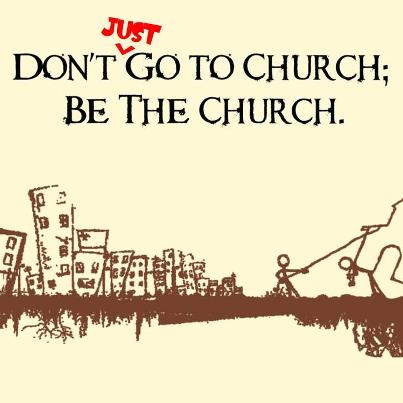
I am aware of the principle in both Christianity and Judaism that directs the member of the community to be in community with their fellows. For a Christian, that generally means going to church, and for most Christians, that’s not a problem. I have known some Christians who have gone to congregation without their spouses, sometimes taking the kids to services, because the spouse is a non-believer. Previously, I regularly attended a congregation of believers without my spouse (though she used to attend) because she stopped being a believer in Christ when she adopted a more traditional identity as a Jew.

I stopped going to that congregation for a lot of very valid reasons (though they are wonderful people and have done nothing wrong), not the least of which was that I abhorred worshiping without my wife at my side. If I couldn’t convince her to join my world, I was (and still am) willing to worship in her’s (though my faith in Jesus remains intact).

That was the plan nearly a year and a half ago and it didn’t happen. It will never happen. The question is, do I keep the peace by not attending any congregation, or do I follow the advice I’ve been receiving from a few people and “trust God” by attending a church?

Enter Noah and this week’s commentary on the Parashah. I’m still contemplating jumping and that first step looks like a doozy.

If I’m going to make a decision, it should be soon. Perhaps I can still become, in some sense, associated with a Christian community and still find an excuse to avoid the “Christmas rush” of programs, plays, and musicals that will occur in December. Waiting too much longer then that will put me into Easter season, and how would I avoid the invitations to the various “ham fests?”

Too cynical or just too nervous?

But like I said, enter this week’s commentary on Noah and the significance all human beings have in every decision we make or fail to make. Do I really dare to imagine that whether or not I go to church has cosmic ramifications? Is that ego or avoiding God?

But you can’t avoid God.

Where shall I go from your Spirit?
Or where shall I flee from your presence?
If I ascend to heaven, you are there!
If I make my bed in Sheol, you are there!
If I take the wings of the morning
and dwell in the uttermost parts of the sea,
even there your hand shall lead me,
and your right hand shall hold me.
If I say, “Surely the darkness shall cover me,
and the light about me be night,”
even the darkness is not dark to you;
the night is bright as the day,
for darkness is as light with you.

Psalm 139:7-12 (ESV)

I sometimes admire (even though I think some of them are misguided) people who state with such assuredness that God has told them “such-and-thus,” as if God were sitting with them at their kitchen table this morning, chatting with them over a cup of coffee or tea. I once had a blog discussion with a Christian fellow who styled himself a “prophet,” and he told me point-blank that was exactly how his conversations with Jesus occurred. I immediately stopped following his blog because, even though he seemed really nice and all, I thought only an ego the size of Montana could imagine the Son of God casually schmoozing with him in his kitchen, with each of them sipping a cuppa.

But who knows? Certainly not me.

I don’t have supernatural revelations telling me to go to the corner of 5th and Main and then await further instructions from the local Angel.

I know, cynical again, right?

Heck, Christians struggle with these questions all the time, right?

Recently I quoted Rabbi Abraham J. Twerski when he said:

The Hebrew word for ark, teivah, has two meanings: it can mean “an ark,” and it can also mean “a word.” In the above verse, the latter meaning tells us that God instructed Noah to “enter into the word.” Rabbi Moshe of Kobrin expounded on this theme, explaining that when we pray, we should “enter into the words,” i.e. totally immerse ourselves into each word of prayer, as though the word is encompassing us.

I can’t avoid God. I can’t avoid my conscience. I can’t avoid the idea that I might have a purpose and a reason beyond pressing a bunch of keys on a keyboard to produce blog posts day after day. I can only choose to attend to God and my conscience or ignore them.

Snakes. Why did it have to be snakes?

-Indiana Jones (Harrison Ford)
from the film Raiders of the Lost Ark (1981)

I know it’s a terrible thing to say, but that’s exactly how I feel. Oh well, maybe I’ll start by emailing the Pastor. Maybe he has some ideas. This is terrible. I’m not looking forward to this at all.

HAL-9000 (voice, Douglas Rain): What is going to happen?
Dave (Keir Dullea): Something wonderful.
HAL-9000: I’m afraid.
Dave: Don’t be. We’ll be together.
HAL-9000: Where will we be?
Dave: Where I am now.

from the film 2010 (1984)

Yeah, well…there’s always hope.

“A rare experience of a moment at daybreak, when something in nature seems to reveal all consciousness, cannot be explained at noon. Yet it is part of the day’s unity.”

–Charles Ives

Good Shabbos.