Tag Archives: Jesus

Jesus, Halakhah, and the Evolution of Judaism, Part 2

Who were the Jewish followers of Jesus?

The members of the Jesus sect were clearly religious Jews who believed that Jesus was the Messiah. They could not have believed that Jesus was “god” and remained Jewish, as such a belief would have been complete idolatry in Jewish eyes and would have appeared closer to the Greco-Roman pagan beliefs where gods took on human form and had relations with humans.

At any rate, the Jesus sect, like numerous other sects in the Land of Israel, would certainly have died out even if its members had survived the revolts against Rome in the first and second centuries. (The Pharisees survived in part due to the vision of their leader, Rabbi Yochanan ben Zakkai)

So where did all the Christians comes from? Indeed, where did Christianity come from?

For the answer, we must look at another colorful personality who appeared on the scene after the death of Jesus, and who is given the credit by virtually every historian of Christianity for spreading the message of Jesus worldwide, if not fashioning Christianity for the consumption of the pagan world.

He was a Jew—originally known as Saul—who became famous in Christianity as “Saint Paul.”

Rabbi Ken Shiro
“Seeds of Christianity”
#40 in the “Crash Course in Jewish History” series
Judaism Online: SimpleToRemember.com

Do religions evolve? That is, can we believe that it is reasonable and expected for any given religious structure to evolve over time in order to adapt to changes in the environment that affect the requirements of the religion’s followers? I asked that question in Part 1 of this series and it stands before me, taunting me, and perhaps even haunting me.

Among people of faith, Christians particularly tend to believe that the truths we possess about God and who we are in Christ are fixed, immutable, unchangeable information that exists and is applied universally in the same manner as when Jesus walked the earth.

That’s not actually true, of course. Over the past 2,000 or so, the Christian faith has metamorphosed tremendously. It’s extremely unlikely that the Apostle Paul, walking into a modern Baptist church, would recognize anything as familiar, even understanding that the church was for only Gentiles and that no observant Jews would be present. What would Paul make of Constantine? How would he perceive the ancient Holy Roman Catholic church? And what about Martin Luther and the reformation? How would Paul look at a 19th century American “fire and brimstone” preacher leading a tent revival meeting somewhere just outside of Tulsa, Oklahoma?

(If you want to get a sort of “snapshot” of the changes that Christianity has undergone over the long centuries, visit Wikipedia’s History of Christianity page)

Wait a minute. Doesn’t the title of this series say “the Evolution of Judaism?” Yes, it does. However, in trying to figure out how to write Part 2 of this series, it was easier for me to approach the evolutionary progression of Judaism by way of Christianity. After all Christianity started out as a small sect of Judaism and, through an extraordinary process, spread like wildfire through the Gentile diaspora world of the First and Second Centuries C.E. Since a large part of the audience for this series are both Jews who have come to faith in Yeshua (Jesus) as the Messiah, and non-Jews who worship Jesus and yet, in some manner or fashion, are attracted to Judaism, my decision to access Judaism by accessing Christianity makes sense to me (though you may not agree).

While the changes that have occurred within Christianity and it’s somewhat fragmented nature in the early 21st century are undeniable, are these changes actual developmental or evolutionary stages that are required of this, or any religion, in order to survive? After all, like many species of plants and animals, over the long centuries many religions and faith groups have died out. They existed once, even flourished for a time, but are no more.

I can’t say that they ceased to exist because they failed to adapt, although that’s certainly an interesting thought. I can’t really find much (at least that’s readily available online) to support what I’m trying to say, but a site called TED.com (Technology, Entertainment, Design: a nonprofit devoted to Ideas Worth Spreading), presents the following questions:

Have religious belief systems evolved over time?

While many religious believers do not accept the theory of evolution in regards to the development of life, from a historical perspective it seems religious and spiritual belief systems themselves have evolved and developed over time.

From the earliest Venus figurines, cave paintings, early burial sites, naturel and ancestor spirits, polytheistic beliefs to the monotheistic, to deist and others.

Do the strongest survive? Do they adapt? Do they interbreed and influence each other? Do they go extinct? Is there some natural selection process that passes on religious ideas memes, and sees others become extinct?

What properties help a religion survive and thrive? Invisible gods perhaps. Evangelical rather than hereditary. Religions linked to economically and militarily strong cultures perhaps. Do religions have a symbiotic relationship with their host cultures – making them stronger and more united supporting development and progress and hence protecting the religion itself.

What are the greatest challenges to the survival of different religions today, and what will help them survive and thrive?

from “Do religions evolve?”
TED.com

I could probably study for years and eventually write a paper trying to answer those questions. But maybe the seeds of the answer are found in Judaism:

“I think sometimes Christians read the Bible and think, ‘Oh, this is what Judaism is,’” he says. “Judaism is a living tradition that continues to grow and adapt and change well beyond the Biblical age.”

-Greg Johnson quoting
Rabbi Mike Uram, director of Penn Hillel
“Tracing the Talmud’s journey”
upenn.edu

Rabbi Uram is describing the point that I’m trying to make: that religions, particularly Judaism, aren’t fixed and static entities with wholly unchanging rules, commandments, and practices that are frozen across history, geography, and culture. The Talmud and how it is studied and understood in Judaism helps us (well, it helps me) comprehend how religious structures can purposefully adapt and change over time and across sub-groups of the religion, in order to better serve the needs of each generation of followers.

PogromNaturally, I can’t say that all changes across Christianity and Judaism have always been beneficial and productive. Certainly the schism between the church and the synagogue that occurred in the early centuries of the common era has resulted in tremendous harm to the Jewish people. The church is guilty of a long list of crimes against the Jews, including the pogroms, the inquisitions, the burning of synagogues, the destruction of Torah scrolls and volumes of Talmud, and quite horribly, the wholesale slaughter of Jewish men, women, and children. All committed in the name of Christ.

But all of that is rapidly (relative to the speed of history) changing. There is more interfaith cooperation between many Christians and religious Jews. It is common to find Christians supporting Israel and Jewish Israeli causes. If the church is currently evolving, it definitely does seem beneficial in terms of its current viewpoint toward Judaism.

The dark side of suggesting that religions evolve is that such change may be at the cost of the enduring truths of the Bible and the will of God. Such change may be solely for the purpose of fitting in with the surrounding culture, while throwing principles, morals, and ethics under a bus.

I can’t say that hasn’t happened in either Christianity or Judaism.

But I can’t say that all change is bad, either. It seems, especially in the case of Judaism, that a fine balance must take place between adapting to environmental changes and protecting the inner core of the faith. I believe that, more than anything, that is exactly the function of the Talmud in Judaism. In spite of overwhelmingly hostile attempts to eradicate Judaism and exterminate anything that might appear distinctively Jewish (including the people), not only do Jews remain in the world today, but a significant portion of the practices established in the Torah 3,300 years ago continue to be performed in some manner.

Jewish men still wear fringes on their clothing. The Shabbat rest is still observed. Prayers are still offered while facing Jerusalem. Meats are still slaughtered in the customary fashion, and prepared in accordance to the traditions. Men still daven in minyans and their prayers are spoken in Hebrew and Aramaic.

Why am I writing this? I live in the world today, so why should I be concerned about whether or not the church has evolved? The church is what it is today and I live in today, so why does it matter? Here’s what I said in Part 1 that’s relevant to these questions.

Now that we’ve seen evidence that it is reasonable to believe Jesus could have accepted Pharisaic authority to establish ancient halakhah and that he not only upheld portions of that halakhah but practiced it as well, (see the full text of Rabbinowitz for details) Part 2 (although I’m not sure when I’ll write it) will examine the “reasonableness” of Christianity and Judaism evolving or developing from ancient to modern forms. After examining that point, we shall try to see if it is even possible for a returning Jewish Messiah King to accept the halakhah that will exist on the day of his return to Jerusalem.

I have no way to really prove that religions evolve or develop forward in time in a productive and beneficial manner. There are hints that how Talmud and tradition is applied in Judaism is both adaptive and stabilizing, and that this is what has enabled religious Judaism and Jews as a people to be preserved throughout their history.

But what does God think about it all?

I have no idea and I don’t believe anyone can know.

But we can speculate (and speculate and speculate, the blogosphere is full of speculation). In Part 1, I presented some information that seems to support how Jesus upheld the authority of the Pharisees (and the larger structure of religious Judaism) to establish and apply halakhah, and how Jesus even advised his Jewish disciples to follow the halakhah of the Pharisees.

But the Rabbinowitz paper (PDF) also said that the authority of the Pharisees was destined to pass away. Eventually, it would no longer be valid. So what would replace it, not just among the small sect of Jewish “Nazarenes” who followed Jesus, but for all of Judaism in its various divisions, both during the life of Jesus and well beyond?

If Jesus established a distinctive halakhah for his Jewish disciples, it died with the passing of ancient “Messianic Judaism”. The Gentile church moved far, far away from anything even remotely Jewish, so they wouldn’t have carried his halakhah forward, and the descendants of the Jews who were disciples of Jesus fell away in only a few centuries or less. After that, only a Judaism that did not recognize Jesus as Messiah remained to establish law, interpretation, tradition, and halakhah for the Jewish people.

the-teacher2All we have of the teachings of Jesus are what is recorded in the Gospels. The early days of the First Century church are seen mainly through the eyes of Paul and a small group of other disciples. We aren’t even sure of who really wrote most of the New Testament, but if there was a “halakhah of Jesus” that deviated from the halakhah established by Second Temple period normative Judaism, only tiny bits and pieces survived in what became canonized into our Bibles.

I’m not proposing any answers today. I just need to throw some large, sweeping concepts out into the open, because I can see them better there than inside the swirling maelstrom of my thoughts.

Ultimately, the questions are:

  • Do religions naturally evolve in productive ways, both to preserve the core faith and to adapt to external changes in history, geography, and culture?
  • Can we see and trace the evolutionary mechanisms and stages in order to differentiate between productive, expected changes and developmental dead ends?
  • Has Christianity evolved in a productive manner and can we identify the benefits (local or global) of that evolutionary process today in the church?
  • Has Judaism evolved in a productive manner and can we identify the benefits (local or global) of that evolutionary process today in the synagogue?
  • At the coming/return of the Messiah (your specific viewpoint on this depends on whether you’re a normative Jew, Messianic, or a Christian), how might the Messiah view and judge Christianity and Judaism relative to how they have changed in the past 2,000 years?

I guess I should have added one last question: “Do I have a prayer of even beginning to answer those questions in a meaningful way?

Probably not, but as I’m fond of saying, this blog is more about chronicling whatever I’m thinking about at any given point in time than actually doling out satisfying answers to complicated questions.

That said, Part 3 of this series, which will be tomorrow’s “morning meditation,” takes an extremely interesting direction, leveraging the opinions of a particular and well-known (in some circles) “One Torah” scholar who believes that Mishnah and “Divine authority” have nothing to do with each other.

The Jesus Covenant, Part 5: Blessings and Consequences

I had a strange dream last night (actually, several nights ago as I write this). Actually, I had a number of strange dreams (but then again, all of my dreams are strange). What was really unusual about this particular dream though, is that I was composing this “meditation” in the dream. You know when something has captured your attention when you start having dreams about it.

More specifically, I was pondering the covenant relationships involved in the “Jesus Covenant,” or what binds we Christians to God, and what attaches the Jewish people to the Creator. As you know, by the end of Part 4 in this series, I still hadn’t figured out how or if the New Covenant we see prominently mentioned in Jeremiah 31 or Ezekiel 36 has any sort of blessings for the non-Jewish people of the world. Since then, I’ve gotten some feedback saying, in part, that it is exceptionally difficult for “virtually all individuals to adequately grasp a topic so profound (and yet so intricate) that it has engaged believers, including scholars, on the deepest levels for two thousand years.” That was a different wake up call than I expected. However, I wrote the bulk of this blog post before Part 4 was ever published so, as you read this, please keep that in mind.

Now to continue with the original missive:

As I’m writing this, I still haven’t received any illumination from God or any response but the knowledgable people I’m associated with, so I guess I’ll wait a bit longer before calling it a wash.

But I dreamed something last night.

I dreamed about this.

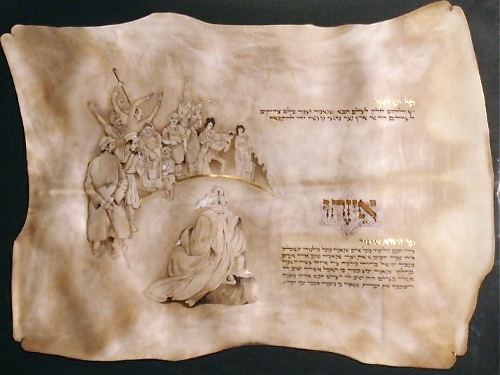
Moses and the elders of Israel charged the people, saying: Observe all the Instruction that I enjoin upon you this day. As soon as you have crossed the Jordan into the land that the Lord your God is giving you, you shall set up large stones. Coat them with plaster and inscribe upon them all the words of this Teaching. When you cross over to enter the land that the Lord your God is giving you, a land flowing with milk and honey, as the Lord, the God of your fathers, promised you — upon crossing the Jordan, you shall set up these stones, about which I charge you this day, on Mount Ebal, and coat them with plaster. There, too, you shall build an altar to the Lord your God, an altar of stones. Do not wield an iron tool over them; you must build the altar of the Lord your God of unhewn stones. You shall offer on it burnt offerings to the Lord your God, and you shall sacrifice there offerings of well-being and eat them, rejoicing before the Lord your God. And on those stones you shall inscribe every word of this Teaching most distinctly.

Moses and the levitical priests spoke to all Israel, saying: Silence! Hear, O Israel! Today you have become the people of the Lord your God: Heed the Lord your God and observe His commandments and His laws, which I enjoin upon you this day.

Thereupon Moses charged the people, saying: After you have crossed the Jordan, the following shall stand on Mount Gerizim when the blessing for the people is spoken: Simeon, Levi, Judah, Issachar, Joseph, and Benjamin. And for the curse, the following shall stand on Mount Ebal: Reuben, Gad, Asher, Zebulun, Dan, and Naphthali. –Deuteronomy 27:1-13 (JPS Tanakh)

No, I didn’t dream about the actual scene being described above, but I could see blocks of paragraphs on my blog that I knew where talking about the blessings and the curses. The rest of Chapter 27 and part of Chapter 28 describes the specifics of what was cried out between Mount Ebal and Mount Gerizim, in case you want to read about the details.

But that’s not all I dreamed.

“When the Son of Man comes in his glory, and all the angels with him, then he will sit on his glorious throne. Before him will be gathered all the nations, and he will separate people one from another as a shepherd separates the sheep from the goats. And he will place the sheep on his right, but the goats on the left. Then the King will say to those on his right, ‘Come, you who are blessed by my Father, inherit the kingdom prepared for you from the foundation of the world. For I was hungry and you gave me food, I was thirsty and you gave me drink, I was a stranger and you welcomed me, I was naked and you clothed me, I was sick and you visited me, I was in prison and you came to me.’ Then the righteous will answer him, saying, ‘Lord, when did we see you hungry and feed you, or thirsty and give you drink? And when did we see you a stranger and welcome you, or naked and clothe you? And when did we see you sick or in prison and visit you?’ And the King will answer them, ‘Truly, I say to you, as you did it to one of the least of these my brothers, you did it to me.’

“Then he will say to those on his left, ‘Depart from me, you cursed, into the eternal fire prepared for the devil and his angels. For I was hungry and you gave me no food, I was thirsty and you gave me no drink, I was a stranger and you did not welcome me, naked and you did not clothe me, sick and in prison and you did not visit me.’ Then they also will answer, saying, ‘Lord, when did we see you hungry or thirsty or a stranger or naked or sick or in prison, and did not minister to you?’ Then he will answer them, saying, ‘Truly, I say to you, as you did not do it to one of the least of these, you did not do it to me.’ And these will go away into eternal punishment, but the righteous into eternal life.” –Matthew 25:31-46 (ESV)

TranscendentPart of what I believe about The Jesus Covenant is that it doesn’t exist as a discrete and stand-alone element (which I discovered only recently, much to my surprise). It is derived from blessings included in the Abrahamic and arguably the New Covenant, but the actual people of both covenants are the Jewish people. I further believe that the Sinai or Mosaic covenant, the conditions of which are included in the Torah, possesses no blessings for the nations and thus, does not contribute anything to what binds we Christians to the God of Israel (although even traditional Judaism does believe that certain, limited aspects of Torah coincide with a non-Jew’s responsibilities to God).

The Torah is very specific and detailed in describing the terms of the “agreement” between God and the Jews. But what about us? What about Christianity? What have we agreed to do and what are the consequences of failing our Savior and failing God?

That’s what I dreamed about. I dreamed about the specifics of the consequences, the blessings and the curses, that the Jewish people agreed upon as a condition of the Sinai covenant. I also dreamed about the passage from Matthew 25, and while it isn’t constructed as an agreement as such, we see that Jesus has posed conditions upon us and consequences for accomplishing or failing to accomplish those conditions in our lives.

I guess even when I’m asleep, I’m looking for clues. I’m looking for connections. I’m looking for attachments. Theologically, what I’ve just suggested may be total baloney, but the dream was still with me when I woke up this morning, (again, as I write this) even though I was having a completely different dream when my alarm went off.

So I had to write it; I had to share it by way of an interlude within this series, standing between the mystery of the New Covenant and what I hope will become the solution. My quest now is to get further along in my understanding of the New Covenant, both with the help of God and a few scholarly human beings. As Lennon and McCartney famously wrote, “I’ll get by with a little help from my friends.”

That “little help” has made Part 6 of this series (and more) possible. See you there.

Praying As One on Sunday

T.G.

Dear Friends,

There will be a world-wide simultaneous event on Sunday, September 23 (11:00 AM New York time), for all Jews to say the following prayer for G-d to send Mashiach (the true Messiah) – see http://www.facebook.com/AllJewsAsOne.

“Master of the Universe, we, the children of Israel, ask You for Mashiach to redeem us, now and with mercy, from exile and all suffering, to reveal Your Name in the world and to bring peace.”

Rabbi Moshe Weiner of Jerusalem (author of Sheva Mitzvot HaShem and The Divine Code) has approved a separate version for ALL GENTILES world-wide, to say as one at that same designated time:

“Master of the Universe, we, the children of Noah, ask You for Mashiach, now and with mercy, to end all suffering, to reveal Your Name in the world and to bring peace.”

We are looking forward to your participation!

Best regards,

-Dr. Michael Schulman
Director
Ask Noah International

I received this as an email this morning and felt I should pass it along, not only to my Jewish readers but to everyone else. Most Christians don’t typically identify themselves as Noahides based on their (our) understanding of a Christian’s covenant relationship with God through Jesus Christ, but I would certainly encourage everyone reading this message to find the time to pray one of the above prayers (Christians will probably want to adapt the “Noahide” prayer) so that we all can be united in speaking to God at one time, with one voice, and one purpose; the purpose of bringing the Messiah.

The time of prayer is based on Israel time (winter time DST) and will begin there at 5 p.m. That will be 5 p.m. Paris time, 11 a.m. New York time, 9 a.m. Boise time (for my local readers), 8 a.m. Los Angeles time, and 1 a.m. (September 24th) Sydney time.

May we, the people of God, all of us, from our many backgrounds, faith traditions, and all peoples of every nation, tongue, and heritage, gather together from around the world and turn our hearts and our voices to God, begging Him to end the exile of the Jewish people and all of humanity’s suffering by bringing Messiah, Son of David, back to us.

May he come soon and in our day.

Vayeilech and Yom Kippur: Seeking the Hidden God

I shall hide my face from them…

Deuteronomy 31:17

Rabbi Avraham ‘the Angel’ was the only son of Rabbi DovBer, the Maggid of Mezeritch. When Rabbi Avraham was a young child, he once came weeping to his father: He had been playing hide and seek with a friend, sobbed the child, but the friend had lost interest and had run off to some new amusement, leaving little Avraham all alone in his hiding place, waiting in vain to be searched out.

Rabbi DovBer lifted his eyes to heaven and cried: “You, too, have hidden Your face from us only because You want us to seek You. But Your children have tired of the game and have run off…”

-Rabbi Yanki Tauber
“The Cop-Out”
from the “Once Upon a Chasid” series
Commentary on Torah Portion Vayeilech
Chabad.org

This may seem a little obscure compared to my usual Torah Portion “meditation,” but bear with me. As we are deeply immersed in the days of repentance between Rosh Hashanah and Yom Kippur, the struggle between man and God is especially acute. While it is normal for observant Jews to seek particular closeness with Hashem at this time, I can only imagine that there’s some frustration going on, too.

I used to hate Yom Kippur. Every year, as we blew the shofar and rushed home to eat, I would secretly breathe a huge sigh of relief. It was finally over – all the misery, the moroseness, the fear – until next year. And as Passover would pass, I would start counting down to the dreaded day which was hovering just beyond the horizon.

I hated Yom Kippur because it made me feel like a fraud. I would bang away at my chest all day, enumerating all my sins, promising I was repentant. But in my heart I knew that I would return to my mean self the moment the fast was over. I didn’t believe I could ever change, that I was really worthy of life and that I would ever be able to redeem myself. So I would go through the day anxious for it to be over, hating myself for being such a big, fat fraud.

-Elaina Cline
“Why I Hated Yom Kippur”
Aish.com

I know exactly how she feels. This isn’t something most people admit to, but there’s this horrible fear that when I repent of something, it will come back to haunt me in the not-so-near or even the near future. When repentance is linked to a specific date on the calendar and for a month or more, you’ve been building up to an august, awesome, humbling, and overwhelming encounter with God, there’s this little voice in the back of your head (OK, in the back of my head) that says, “The balloon is going to pop as soon as the Yom Kippur fast is over, and you’re going to go back to business as usual.”

Yuk. What a horrible thought. What a depressing feeling.

Although this wasn’t the same matter that Moses was facing at the end of his life as recorded in this week’s Torah reading, I can see how he’d be just as depressed and even frustrated with God.

When Moses had put down in writing the words of this Teaching to the very end, Moses charged the Levites who carried the Ark of the Covenant of the Lord, saying: Take this book of Teaching and place it beside the Ark of the Covenant of the Lord your God, and let it remain there as a witness against you. Well I know how defiant and stiffnecked you are: even now, while I am still alive in your midst, you have been defiant toward the Lord; how much more, then, when I am dead! Gather to me all the elders of your tribes and your officials, that I may speak all these words to them and that I may call heaven and earth to witness against them. For I know that, when I am dead, you will act wickedly and turn away from the path that I enjoined upon you, and that in time to come misfortune will befall you for having done evil in the sight of the Lord and vexed Him by your deeds. –Deuteronomy 31:24-29 (JPS Tanakh)

It wasn’t a matter of if the Children of Israel would sin and rebel against God, only when. After forty years of struggling with two generations of Israelites, of struggling with God, of struggling with his own humanity, Moses’ life ends on a down note.

Kind of like how we might end Yom Kippur on a down note. The balloon pops. The piousness wears off. We dig into the first yummy meal after the long fast, and do whatever we were doing before the High Holidays for this year entered our spiritual awareness.

Christians out there might say that they’re immune to this sort of spiritual let down because they can repent anytime they (we) want to, but frankly, so can any Jewish person. Imagine though, how you might experience yourself one way as you are preparing to “cleanse your soul” before Easter, and then what you might think, feel, and do the Monday after it’s all over. I think that’s the closest we non-Jewish Christians can come to the sort of Yom Kippur letdown Cline was talking about.

Rabbi Tauber talked about this same sort of frustration in his commentary. God withdraws from us so that we might look for Him, but when we look and look and do not find, like the child in the story, we abandon out “playmate” and seek other games. I’ve been tempted to do that on more than one occasion, particularly at the frustration of seeking but not finding my way to the New Covenant connection between Christians and God.

Cline continues her analysis of Yom Kippur and her self-analysis:

And I have seen my smallness, too. I have seen my propensity to be critical, cold and judgmental. I have seen my ability to be harsh and cruel. And I have seen the pain I have inflicted on others and myself in these states – the sadness, the depression, the hostility. I have seen my lethargy, my disconnection and my self-pity.

But this year, my darkness is juxtaposed with my light. I realize that change is actually possible. I am not doomed to isolation, meanness and small mindedness.

This Yom Kippur, I can feel the pain of not being in a state of connection and own the consequences of my choices. I can say to God, “This is not me,” and mean it. I feel repentant, not from fear – but from a genuine desire for connection, love and transcendence. Getting in touch with my higher self that yearns to be good has enabled me to sense the sadness of my past choices.

What is frustration and a sense of separation from God juxtaposed with? Not necessarily satisfaction and closeness, but the realization is that a life of faith is not as hopeless as it sometimes seems. Neither is a human life, which is fraught with mistakes, carelessness, thoughtlessness, stumbling, and disappointment. Where is the path of devotion I’m supposed to be walking on?

Remember us for life, O King Who desires life, and inscribe us in the book of life, for Your sake, O living God.

-Amidah, Ten Days of Penitence

What is the meaning of “for Your sake?” How can the extension of life to a person be for the sake of God?

We might read the verse a bit differently. “Inscribe us into the book of a life that is lived for Your sake.” In other words, we pray not only for life, but for a quality of life that is meaningful and purposeful, one that will be lived for the greater glory of God.

Some people find life boring, and it is little wonder that such people seek escape from its boredom. Some turn to intoxicating chemicals, and others to a quest for thrills and entertaining pastimes which, while not destructive, have no purpose except an escape.

But why should there be a need to escape? Why should life ever be boring? A person whose goal is to amass great wealth never tires of adding more to his already sizable fortune. If we have the kind of goal in life that allows us to add to it continually, we will never be bored.

Of course, we wish to be inscribed in the book of life, but it should be a life that we wish to be in rather than one that we seek to escape from.

Today I shall…

try to enrich my life by living it according to the Divine will, bringing greater glory to His Name – and therefore greater meaning to my life.

-Rabbi Abraham J. Twerski
“Growing Each DAy, Tishrei 4”
Aish.com

Getting sick and tired and frustrated with God and toddling off to play with other toys is the same as trying to escape from our own lives. Our lives are lived, whether we choose to be aware of it or not, for the sake of God. He created us. He fashioned us in the “hidden places” of our mothers’ wombs. He molded us to fit the purpose of our lives. We will truly never discover who we are and what we’re doing here until we live our lives for the sake of our Creator.

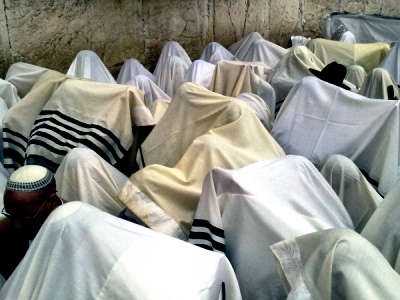
Standing before GodYom Kippur isn’t just about repenting of sin and being inscribed in the Book of Life for another year. It’s about living a life that is realized in the existence of God. The day when we permanently stop seeking God’s hidden face, we stop seeking ourselves and we completely lose our way. Our true purpose becomes an unattainable goal, and frustration and futility become our constant companions.

When Moses died, the bitterness of knowing that the Children of Israel would reject the God of Sinai was balanced by the very Presence of God in his life and after his life. If the Jewish people failed, they also succeeded and even today, are with us in the world, continuing to point us to the path of devotion, particularly though Israel’s “first-born son,” Jesus Christ.

In frustration and even despair, we still can choose to fly with broken wings. Even bearing the weight of the chains of a thousand sins, by continuing to seek God and His purpose for our lives, we can soar with eagles.

Giving glory to the Name of God gives us the power to overcome and to stay the course. He is the path and He is our companion. Walk with Him. Take flight with Him. Even laugh with God on Yom Kippur.

One of my favorite stories is of the house painter who deeply regretted stealing from his clients by diluting the paint, but charging full price. He poured out his heart on Yom Kippur hoping for Divine direction. A booming voice comes from Heaven and decrees, “Repaint, repaint … and thin no more!” Yom Kippur begins Tuesday evening, September 25th.

Rabbi Kalman Packouz

Good Shabbos.

Jesus, Halakhah, and the Evolution of Judaism, Part 1

The ever present studentMoses received the Torah from [G-d at] Sinai and gave it over to Joshua. Joshua gave it over to the Elders, the Elders to the Prophets, and the Prophets gave it over to the Men of the Great Assembly. They [the Men of the Great Assembly] would always say these three things: Be cautious in judgment. Establish many pupils. And make a safety fence around the Torah.

-Pirkei Avot (Ethics of Our Fathers) 1:1

Our first order of business must be to determine the meaning of the phrase “the Seat of Moses”… The precise meaning of the term remains a subject of much debate among scholars. Resolving this question is important, because it has direct bearing upon our understanding of the Pharisees authority and influence in Second Temple Judaism. If Jesus uses “the Seat of Moses” pejoratively, this weakens the argument that the Pharisees exercised any real, or at least any legitimate, authority within the religious and social life of Israel. If, however, he uses the term positively, or as a statement of fact, this strengthens our conviction that the Pharisees had become the authoritative interpreters of the Torah and that their halakhic decisions were accepted by most people within Israel.

-Noel S. Rabbinowitz
“Matthew 23:2-4: Does Jesus Recognize the Authority of the Pharisees
and Does He Endorse their Halakhah?”
Journal of the Evangelical Theological Society 46:3 (September 2003): 423-4 (PDF)

Yes, I know…another series. But this has been on my mind for awhile and during the Rosh Hashanah celebration, I decided to put it into words.

I’m hoping some of my loyal readers who are educationally equipped to examine this information will comment on this topic as it is quite complex and controvertial. Keep in mind, that’s not a promise that I’ll always accept whatever is posted as a response. Your priorities and perspectives may not agree with my own. For example, I reject the common Christian viewpoint that Jesus dismissed all Jewish oral tradition and halakhah of his day, as well as the Torah outright, and replaced it with grace. You’ll see support for my opinion in a minute.

This blog post quotes heavily from Noel Rabbinowitz’s paper “Matthew 23:2-4: Does Jesus Recognize the Authority of the Pharisees and Does He Endorse their Halakhah?” which was published in Journal of the Evangelical Theological Society 46:3 (September 2003): 423-47. I want to acknowledge that I first found this paper linked to the Rosh Pina Project blog post, “Did Jesus Recognize Halakhah?” Although I don’t frequently visit their site, Rosh Pina has a good reputation in the Messianic Jewish space and they’re considered a good and fair source of information.

Why am I writing this?

There have been numerous suggestions on the web that there is no validity in the authority of the Talmudic sages to establish halakhah that would apply to the Messianic Jewish community. By “Messianic Jewish,” I specifically mean a form of Judaism, in its ideal expression, that is wholly “owned and operated” by people who are halachically Jewish (having at least a mother who is Jewish) and (again, ideally) raised in a Jewish home, possessing of a Jewish education, and who are fully identified as ethnically, culturally, and religiously Jewish.

OK, that’s a tall order, since even in the most “Jewish” of Messianic Jewish congregations, the majority of members, and probably a good number of the leaders, are non-Jews. But the idea is that people who come from a very Jewish lived experience and who have come to faith in Yeshua (Jesus) as the Jewish Messiah King, must have a completely appropriate synagogue setting at which to worship, daven in a minyan, celebrate the holidays, and be part of a fully Jewish community that is dedicated to the Jewish Messiah.

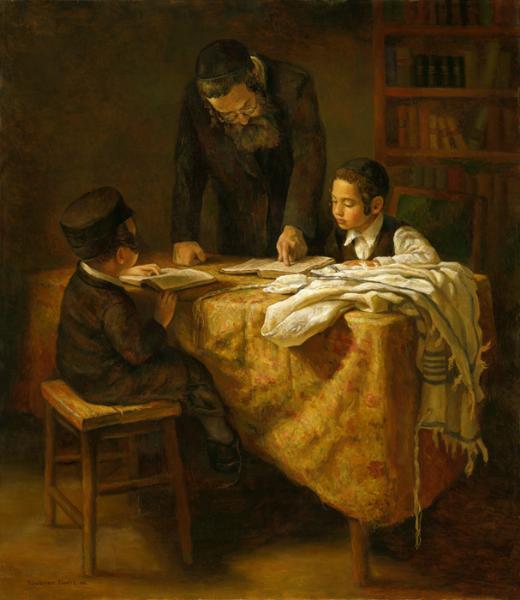
A Rabbi TeachingThe problem is that a significant number of non-Jews who are loosely associated with the Messianic Jewish movement via Hebrew Roots, One Law, and Two-House groups, mildly to vehemently oppose any authority outside of the written Torah, as having the ability to dictate religious and ritual practice. This sort of makes sense given the fact that all of the non-Jews and most of the Jews who make up any portion of Messianic Judaism and Hebrew Roots entered the movement through the church. There’s an enormous perceptual and conceptual hold over from the church in the minds of these folks that says Jesus replaced, if not the Law, halakhah and oral tradition with a type of “grace” and pure interpretation of the Torah that doesn’t require Rabbinic judgments or rulings.

But if you’re Jewish in a fully lived and experiential sense and it is your complete identity, then one does not simply do away with the Talmud with a bit of theological slight-of-hand. My dear wife keeps trying to tell me that it’s impossible to understand and interpret the Torah apart from the traditions. For a Jew, this is obvious. For a Christian (and I include Hebrew Roots in this category), it is practically heresy.

But to delete the Talmud or even to substantially alter it such that it becomes more palatable to Christian Gentile theology and doctrine (again, I’m including Hebrew Roots here), results in the deletion of anything “Jewish” in that theology and doctrine. Jews get a little nervous when someone comes along and tries to invalidate their entire religious and cultural lifestyle.

The detractors and “enemies” of Talmudic authority say that they only recognize Jesus Christ has having authority to interpret Torah and establish a type of “Messianic halakhah” for at least Gentiles and maybe Jews in the modern Messianic movement. But doing away with Jewish “Rabbinics” to define Jewish (including Messianic) practice means that these detractors must discover or recover a complete understanding of how the First Century CE church was organized and operated…

…and we don’t have that. Right from the start, recreating the Church as it actually was in the day of Peter, Paul, and James is doomed to fail.

But maybe it doesn’t matter. Maybe it’s OK for the Judaism and Christianity of today to not be exactly the same as it was 2,000 years ago. Maybe it’s even impossible to work from a twenty century old model of these ancient religious forms.

What if we don’t have to?

One of the problems with accepting modern Jewish halakhah as authoritative, is the question of whether or not Jesus even accepted the halakhah that existed in the Second Temple era. That’s where Rabbinowitz’s paper comes in. I intend to use his work to address the question of whether or not Jesus was likely to have accepted even some of the halakhah of his day. If he was, my next question (which will be the subject of a future “meditation”) will be whether or not, at his second coming (assuming it occurs within the reasonably forseeable future) he might accept modern Jewish halakhah. I know, that requires speculation and more guesswork than I probably should consider, but it’s a compelling question.

This also addresses a larger and related topic: Do religions evolve and is that acceptable to God? Yes, we know that Christianity today isn’t the same as it was when Paul was planting his first churches. Modern Judaism as well is, by requirement, practiced in a different manner than when the sacrifices could still be offered in the Temple of God.

But is “evolution” of religion reasonable, expected, and acceptable to God? I suppose there’s no way to know this in an absolute way, but we can take a stab at it. The first step is an examination of Rabbinowitz’s paper, “Matthew 23:2-4: Does Jesus Recognize the Authority of the Pharisees and Does He Endorse their Halakhah?”

The first question we look at in the paper is whether or not Jesus accepted the scribes and the Pharisees legitimately possessing the authority to interpret the Torah for the Jewish population and to establish and enforce specific halakhah?

Rabbinowitz suggests (pp. 429-30) that “the scribes and Pharisees were the authorized and legitimate teachers of the Torah.”

But even if authorized, did Jesus endorse the Halakhah of the Pharisees? What did Jesus mean when he said, (Matthew 23:3 ESV) “…so practice and observe whatever they tell you—but not what they do.”

When Jesus said to practice what the Pharisees taught, did he say this in reference to their teachings regarding the Torah or was he referring to Pharisaic halakhah as well?

-Rabbinowitz (p. 435)

What’s really interesting, and perhaps exceptionally relevant to our conversation, is the footnote (62) for this text:

“It is unlikely that any group of early Christians ever acknowledged without further ado the authority of non-Christian teachers.” On the other hand, they insist that “the extra-canonical halakhah on tithing is neither dismissed nor belittled but affirmed” (Matthew 3.269–70, 295).

Further commentary adds illumination to whether or not it was even possible for Jesus to have separated Torah from halakhah.

Stein states that disciples were to practice what the Pharisees taught regarding the OT but not regarding their “oral traditions.” We must ask, however, is such a bifurcation possible? Can exegesis be so neatly separated from application and practice?

…Jesus’ own observance of oral tradition creates a very strong argument that “all things” includes at least some halakhic traditions. Even though Matthew is unrelenting in his criticism of the Pharisees, he nevertheless presents Jesus as adhering to the halakhah of his day. Contra Banks, Moo is most certainly correct when he states that “the verdict that there is no evidence that Jesus kept any of the oral law cannot be sustained.”

(pp. 435-6)

This is the same today in modern Judaism where one cannot properly read and interpret the Torah apart from halakhah and the traditions. Rejecting halakhah is only conceivable in religious groups existing wholly outside the ancient and modern structure of Judaism.

Rabbinowitz further nails his point home with the following:

The very fact that Jesus even engages Pharisaic halakhah implies that it possessed a certain legitimacy in contradistinction to other traditions. He acknowledges the authority of the Pharisees but rebukes them for violating the very law they claimed to protect (Matt 15:1–6). Jesus does not reject Pharisaic purity laws concerning the eating of food (Matt 15:10–11) or the washing of vessels (Matt 23:24–25), but he does excoriate the Pharisees for their moral and ethical failure to understand the Law’s true intent. Likewise, he upholds Pharisaic halakhah regarding the tithing of herbs but repudiates the Pharisees because they have stressed that point and neglected the Law’s emphasis upon justice, mercy, and faithfulness (Matt 23:23).

(p. 437)

According to Rabbiniowitz, Jesus didn’t have a problem with the fact that authority to interpret Torah was legitimately in the hands of the Pharisees, nor did he object to their halakhah, his problem was “for they do not practice what they preach.” (Matthew 23:3 NIV)

Interestingly enough, to those critics of Rabbinic Judaism who accuse the Talmudic scholars and judges of continuing to be afflicted with the “leaven of the Pharisees,” it should be noted that Rabbinic Judaism is also critical of the Pharisees.

Our final observation concerns rabbinic Judaism’s own critique of Pharisaic hypocrisy. Weinfeld demonstrates that Jesus’ accusations of Pharisaic hypocrisy are identical to charges of hypocrisy leveled against the Pharisees in the rabbinic material. To cite but one example, the rabbinic literature condemns the arrogant demonstration of piety by the Pharisees. Regarding the midrash on Eccl 4:1, we find the following condemnation of “Pharisaic pea-cockery”…

(p. 441)

The problem that most Christians (and probably some Jews) have with understanding Jesus upholding Pharisaic halakhah is encapsulated by Rabbinowitz:

To the modern reader, halakhic regulations regarding minute aspects of the Law may indeed seem legalistic and onerous. This perception, at least in part, arises out of the fact that the Torah is no longer the central structure around which we organize our daily lives. We no longer ask the all-important question, “How do I fulfill these commandments today?” But for the messianic Jews of Matthew’s Gospel, this was a very real and very practical question.

(p. 443)

Actually, in modern Judaism and especially among the Orthodox, this is a question that is very prominent, very real, and very practical today. Why shouldn’t it be a real and practical matter for some Messianic Jews as well?

Now that we’ve seen evidence that it is reasonable to believe Jesus could have accepted Pharisaic authority to establish ancient halakhah and that he not only upheld portions of that halakhah but practiced it as well, (see the full text of Rabbinowitz for details) Part 2 will examine the “reasonableness” of Christianity and Judaism evolving or developing from ancient to modern forms. After examining that point, we shall try to see if it is even possible for a returning Jewish Messiah King to accept the halakhah that will exist on the day of his return to Jerusalem.

Is the continuing authority of Talmud sustainable in 21st century Judaism? I’m not a Jew so I’m probably not qualified to respond, but maybe the following makes the most sense, given the context:

“We don’t see things as they are, we see them as we are.”

Anais Nin

The Jesus Covenant, Part 3: The New Covenant

The New Covenant is a concept originally derived from the Hebrew Bible. The term “New Covenant” is used in the Bible (both in the Hebrew Bible and the Greek New Testament) to refer to an epochal relationship of restoration and peace following a period of trial and judgment. It is often thought of as an eschatological messianic age or world to come, and is related to the biblical concept of the kingdom of God. Generally, Christians believe that the epoch of the New Covenant began at the first coming of Jesus, who began his ministry saying “the time is fulfilled, and the kingdom of God is at hand; repent and believe in the gospel”. (Mark 1:15) They believe the New Covenant (along with the concept of the kingdom of God) defines and describes the ongoing relationship between Christian believers and God, and that it will be in full fruition after the second coming of Jesus; that is, it will not only be in full fruition in believing hearts, but in the external world as well. Christians believe that Jesus is the mediator of the New Covenant, and that his blood shed at the crucifixion is the required blood of the covenant. As with all covenants between God and man described in the Bible, the New Covenant is considered “a bond in blood sovereignly administered by God.” (from O. Palmer Robertson’s book “The Christ of the Covenants”) The connection between the blood of Jesus and the New Covenant is seen at the Last Supper where Jesus institutes the rite of Communion saying “this cup that is poured out for you is the new covenant in my blood”. (Luke 22:20)

-from New Covenant
Wikipedia.org

In Part 2 of this series, I addressed the blessings for the nations that we find in the Abrahamic Covenant. Now we progress to the New Covenant that we find in Jeremiah 31 and Ezekiel 36. Remember, I’m learning all this as I go, so I’m not acting as a teacher, but as a student.

Talking about the New Covenant is tricky because of all the covenants in the Bible, this one has been so intensely seized upon by Christianity and reworked as a substantial part of the church’s “replacement theology.” As you can see from the description above, the New Covenant as viewed by the church, has precious little to do with the Children of Israel and everything to do with Christianity. And yet, that’s not what the New Covenant actually says:

The days are coming,” declares the Lord, when I will make a new covenant with the people of Israel and with the people of Judah. –Jeremiah 31:31 (ESV)

Therefore say to the house of Israel, Thus says the Lord God: It is not for your sake, O house of Israel, that I am about to act, but for the sake of my holy name, which you have profaned among the nations to which you came. And I will vindicate the holiness of my great name, which has been profaned among the nations, and which you have profaned among them. And the nations will know that I am the Lord, declares the Lord God, when through you I vindicate my holiness before their eyes. –Ezekiel 36:22-23 (ESV)

The House of Israel and the House of Judah are the focus of the New Covenant. The people of this covenant, like the Abrahamic and Mosaic covenants, are the Jewish people, not the non-Jewish people of the world (i.e. Gentile Christians). As you may recall from Part 1 of this series, based on Derek Leman’s material, we know that, like the Abrahamic Covenant, the people of the New Covenant are the Jewish people, but this covenant also has blessings for the people of the nations.

However, because of the long history of supersessionism in the church, it’s more difficult to identify the New Covenant blessings for the nations while preserving the essential and primary promises for the Jewish people. When examining this covenant, it’s important for us to remember that once the Jewish people, or for that matter the Christian church, are called by God, His calling cannot be reversed: .

“The gifts and the calling of God are irrevocable ” (Romans 11:29). It is on this basis that we can declare today that unbelieving Jews are still God’s people, even though they have rejected the Messiah. In the same way, mainstream Christians are still God’s people, even if they have generally rejected the Jewish people as God’s continuing covenant people and the Torah as God’s blueprint of faith for the Jewish people .

-Boaz Michael

But to try to “balance” the scales somewhat between the Christian and Jewish viewpoint on this covenant, I have chosen what I consider to be a very Jewish perspective on the New Covenant, Jews for Judaism:

The term “new covenant” would be meaningless unless what Jeremiah meant by it was the renewing of the old covenant, which will thereby regain its full original vigor. The covenant of old is of eternal duration, never to be rescinded or to be superseded by a new covenant (Leviticus 26:44-45). The covenant between God and Israel is frequently referred to as everlasting (e.g., Genesis 17:7, 13, 19; Psalms 105:8, 10; 1 Chronicles 16:13-18).

The Christian position concerning Jeremiah’s covenant is the complete opposite of what the Jewish Scriptures teach. Hebrews 8:13 states: “In that he says, a new covenant, he has made the first obsolete. Now that which is being made obsolete and growing old is near to vanishing away.” In stark contrast to this statement, the Scriptures state: “The works of His hands are truth and justice; and His precepts are sure. They are established forever and ever, they are done in truth and uprightness” (Psalms 111:7-8); “The grass withers, the flower fades; but the word of our God shall stand forever” (Isaiah 40:8).

Since Jews for Judaism is an “anti-missionary” organization and thus, not exactly “friendly” towards Christianity, I can’t expect them to define how the nations are blessed by this covenant with the Jewish people, but they are very clear (and in my opinion, very correct) that the people of this New Covenant are the Jewish people. Further, they are correct that the New Covenant is actually a renewal of the covenants God previously made with the Jewish people and that nothing from the prior covenants was invalidated or eliminated.

A more benignly worded description of the Jewish view of the New Covenant is from Wikipedia:

The Jewish view of the mere wording “new covenant” is no more than a renewed national commitment to abide by God’s laws. In this view, the word new does not refer to commitment that replaces a previous one, but rather to an additional and greater level of commitment. (Jewish Encyclopedia: New Testament) Because Jews view the Mosaic covenant as applying only to Jews and any New Covenant merely a strengthening of the already existing one, Jews do not see this phrase as relevant in any way to non-Jews.

But having established that the New Covenant is directed at the Jewish people and renews and expands Israel’s national commitment to the Torah, where do we find that it has any blessings at all for the nations?

Perhaps part of the answer is here:

“Behold, the days are coming, declares the Lord, when I will fulfill the promise I made to the house of Israel and the house of Judah. In those days and at that time I will cause a righteous Branch to spring up for David, and he shall execute justice and righteousness in the land. In those days Judah will be saved, and Jerusalem will dwell securely. And this is the name by which it will be called: ‘The Lord is our righteousness.’” –Jeremiah 33:14-16 (ESV)

Here we have the Messianic promise, which is certainly a hope of the Christian church, but again, the complete focus of this promise is upon the Jewish people. This recalls the Davidic Covenant we see in 2 Samuel 7 but does nothing to illuminate the blessings to the Gentiles. About the only references I can find that even mention the non-Jewish peoples are those saying we will know that God is the Lord when we see a restored Israel (Ezekiel 36:37-38, 37:28).

Is the secret elsewhere or is traditional Judaism right in saying that the New Covenant is only for the Jews with no blessings for the Gentiles?

It seems that the next part of my journey takes me to other Prophets:

Thus says the Lord: “Keep justice, and do righteousness, for soon my salvation will come, and my righteousness be revealed. Blessed is the man who does this, and the son of man who holds it fast, who keeps the Sabbath, not profaning it, and keeps his hand from doing any evil.”

Let not the foreigner who has joined himself to the Lord say, “The Lord will surely separate me from his people”; and let not the eunuch say, “Behold, I am a dry tree.” For thus says the Lord: “To the eunuchs who keep my Sabbaths, who choose the things that please me and hold fast my covenant, I will give in my house and within my walls a monument and a name better than sons and that shall not be cut off.

“And the foreigners who join themselves to the Lord, to minister to him, to love the name of the Lord, and to be his servants, everyone who keeps the Sabbath and does not profane it, and holds fast my covenant— these I will bring to my holy mountain, and make them joyful in my house of prayer; their burnt offerings and their sacrifices will be accepted on my altar; for my house shall be called a house of prayer for all peoples.” The Lord God, who gathers the outcasts of Israel, declares, “I will gather yet others to him besides those already gathered.” –Isaiah 56:1-8 (ESV)

“Holds fast my covenant?” Which covenant and what part of it? And are these foreigners “converts” or people of the nations outside of Judaism?

We know that Jesus quoted the prophet Isaiah in Matthew 21:13 when he said, “My house will be called a house of prayer,” but he was addressing and rebuking the money changers in the Temple courts at the time. Regarding the prophet’s statement, “I will gather yet others to him besides those already gathered,” Jesus seems to have uttered something parallel.

I am the good shepherd. I know my own and my own know me, just as the Father knows me and I know the Father; and I lay down my life for the sheep. And I have other sheep that are not of this fold. I must bring them also, and they will listen to my voice. So there will be one flock, one shepherd. –John 10:14-16 (ESV)

We also have other Prophets who seem to describe blessings for the nations:

It shall come to pass in the latter days that the mountain of the house of the Lord shall be established as the highest of the mountains, and it shall be lifted up above the hills; and peoples shall flow to it, and many nations shall come, and say: “Come, let us go up to the mountain of the Lord, to the house of the God of Jacob, that he may teach us his ways and that we may walk in his paths.” For out of Zion shall go forth the law, and the word of the Lord from Jerusalem. He shall judge between many peoples, and shall decide for strong nations far away; and they shall beat their swords into plowshares, and their spears into pruning hooks; nation shall not lift up sword against nation, neither shall they learn war anymore; but they shall sit every man under his vine and under his fig tree, and no one shall make them afraid, for the mouth of the Lord of hosts has spoken. For all the peoples walk each in the name of its god, but we will walk in the name of the Lord our God forever and ever. –Micah 4:1-5 (ESV)

“Thus says the Lord of hosts: Peoples shall yet come, even the inhabitants of many cities. The inhabitants of one city shall go to another, saying, ‘Let us go at once to entreat the favor of the Lord and to seek the Lord of hosts; I myself am going.’ Many peoples and strong nations shall come to seek the Lord of hosts in Jerusalem and to entreat the favor of the Lord. Thus says the Lord of hosts: In those days ten men from the nations of every tongue shall take hold of the robe of a Jew, saying, ‘Let us go with you, for we have heard that God is with you.’” –Zechariah 8:20-23 (ESV)

Path of TorahThe problem with all this is that prophesies are not covenants, though I suppose they could be used to describe some of the blessings of covenants. When we examined the Abrahamic covenant, there seemed to be a very clear picture of the blessings it contained for the nations as well as those reserved for Israel, but in trying to examine the New Covenant, there seems to be no direct connection between the covenant with Israel and the blessings for the nations. It has to be inferred by reading from the other prophets.

Another problem is that what these prophets are saying all seems to be “future tense” even from our point of view in the 21st century. Virtually none of the events being described has happened yet, unless you want to count the existence of the modern state of Israel as the prophesied “in-gathering” of the Jewish people from exile. I suppose we could consider that the Torah has gone forth from Zion by way of the Christian church since even the Rambam once mentioned that Christianity and Islam has spread the knowledge of ethical monotheism to the four corners of the earth.

But can the prophesies we read in Isaiah, Micah, and Zechariah be reasonably connected to the New Covenant from Jeremiah and Ezekiel and more importantly, can all this then be attached to what we read in the Gospels and Epistles. Can we attach these prophesies to the blessings of the New Covenant, and can they then be logically joined with the coming of the Jewish Messiah and his command to make disciples of all nations? (see Matthew 28:18-20)

We’ll take a look at all that in Part 4 of The Jesus Covenant.