Tag Archives: Jesus

Passover: Kos shel Eliyahu

In addition to the four cups of wine that each participant drinks during the Pesach Seder, a fifth cup is placed on the Seder table. This cup, which is not drunk, is known as kos shel Eliyahu , Eliyahu’s Cup.

Regarding this cup, the Alter Rebbe states in his Shulchan Aruch : (Orach Chayim, 481:1.) “It is customary in these countries to pour an additional cup — one more than for those seated. This cup is called kos shel Eliyahu.” What is the reason for this additional cup, and why is it so named?

There is a difference of opinion in the Gemara regarding the necessity of pouring a fifth cup of wine. Since this matter was not clearly adjudicated, there are those who say that a fifth cup is placed on the table. This cup, they say, is called kos shel Eliyahu , because, just as Eliyahu will clarify all doubtful Halachic matters, he will clarify the ruling about this cup as well.

The very fact that kos shel Eliyahu is merely placed on the table and not consumed indicates that it is bound up with a level of Divine service loftier than man’s drinking of wine. This is so, for kos shel Eliyahu is bound up with the final Redemption, something that transcends man’s service.

This belief is to be found within all Jews, for all are “believers and children of believers.” And this is so, notwithstanding the individual’s revealed level of service. For every Jew intrinsically believes in and awaits the coming of Moshiach — this belief and anticipation being a Divine command both in the written and oral Torah. Moreover, these feelings grow ever stronger as we move closer to the Redemption.

“Kos shel Eliyahu— A Cup of Redemption”
Commentary on Pesach
The Chassidic Dimension
Based on Likkutei Sichos, Vol. VII, pp. 48-53
and on the teachings of the Lubavitcher Rebbe
Rabbi Menachem M. Schneerson
Chabad.org

And he took a cup, and when he had given thanks he gave it to them, saying, “Drink of it, all of you, for this is my blood of the covenant, which is poured out for many for the forgiveness of sins. I tell you I will not drink again of this fruit of the vine until that day when I drink it new with you in my Father’s kingdom.”

Matthew 26:27-29 (ESV)

The cup of redemption. The fifth cup. Based on the above, the meaning of this cup is abundantly clear. Its placement at the Seder table is a testimony to the coming redemption of the Jewish people by the prophesied Moshiach. But the cup of the Messiah has meaning for the Goyim as well, since the Master commanded that the nations also be joined to him as disciples (Matthew 28:19-20). Can I say that the actual Passover Seder has meaning for we Christians? Perhaps. I know that it has meaning to me.

I just became aware of the Christian tradition of Maundy Thursday. My daughter plays drums with the local Highlanders and the group practices once a week at a church. When I was driving her to practice on Wednesday evening, I saw on the church marquee a mention of Maundy Thursday, but neither one of us had any idea what it meant. Of course, I looked it up.

Maundy Thursday, also known as Holy Thursday, Covenant Thursday, Great and Holy Thursday, Sheer Thursday and Thursday of Mysteries, is the Christian feast or holy day falling on the Thursday before Easter that commemorates the Maundy and Last Supper of Jesus Christ with the Apostles as described in the Canonical gospels. It is the fifth day of Holy Week, and is preceded by Spy Wednesday and followed by Good Friday.

Wikipedia

My first reaction when reading this was that it was a waste of effort, since Passover is a perfectly good occasion to commemorate these things and it existed thousands of years before the establishment of the Christian event. Kind of like re-inventing the wheel, and maybe it misses the point as well. I subsequently learned that there’s a little more to it than that. The interpretation of the scripture behind the holiday is that Jesus gave his disciples a new commandment to love each other and then (apparently) washed their feet, linking the two events. For different churches, this is interpreted either as a tradition, a custom, or an actual, literal commandment to show love by washing the feet of your fellow believer.

I think that’s a little too literal, and my interpretation was that Jesus washed the feet of his disciples in a “teachable moment” to  illustrate a point by metaphor. But I’ve been wrong before.

Christianity sees the Passover as the commemoration of the death of Jesus and Easter as the celebration of his resurrection and his life, so I suppose they found it necessary to initiate Maundy Thursday to “fill in the gaps.” But as we have already seen, the presence of the fifth cup; Eliyahu’s Cup, is the presence of the promise of the redemption, which encompasses all of these things, including loving God and loving one another. Death and Life are bound together at the Seder table, along with the bitter herbs, the bread of affliction, and the sweetness of the charoset. The beitzah or roasted egg symbolizes life everlasting and the meaning of the shank bone of the lamb should be obvious.

While the Passover Seder is primarily the story and the promise of the Jewish people, the final Seder meal (if it was a true Seder) of the Master is the bridge that allows we who call ourselves by his name to also find meaning and significance in the promise of life through the death of the Lamb. When he was resurrected, joined with Jesus, so were we. But we don’t drink the fifth cup because of its transcendent nature, and because we have yet to come to that place in the progression of all things. The Moshiach hasn’t returned yet. When he returns, he will come for his chosen people, his lost sheep of Israel. And by the grace of God, he will also come for we among the nations, who wait in humility and unworthiness for the King of the Jews.

Why pour a cup if we lack the ability to drink it?

In the course of the Passover Seder we drink four cups of wine, corresponding to the four “expressions of redemption” in the Divine declaration (Exodus 6:2-8):

“I will take you out”,

“I will deliver you”,

“I will redeem you”,

“I will acquire you.”

But the final and culminating level of redemption – its “I will bring you” element, which shall be fully realized only in the era of Mashiach – is something that transcends our human efforts.

This is not a cup we can drink on our own. We can only bring ourselves to the threshold of this Divinely perfect world, through our active realization of the first four “expressions of redemption.”

The drinking of the fifth cup awaits Elijah, herald of the final and ultimate redemption.

“The Fifth Cup”
Commentary on the Passover Seder
Chabad.org

Chag Sameach Pesach

Unavoidable

It was the summer of 1930, before most of these things had happened…It was several months since I had been in London, and then only in passing, so I had really hardly had seen Father at all since he had entered the hospital the autumn before.

So all of us went to the hospital. Father was in a ward. We had arrived much too early and had to wait. We were in a new wing of the big hospital. The floor was shiny and clean. Vaguely depressed by the smell of sickness and disinfectant and the general medical small that all hospitals have, we sat in a corridor downstairs for upwards of half an hour…

Finally, the clock we had been watching got around to the appropriate hour; we went up an elevator. They all knew where the ward was – it was a different ward. I think they had changed his ward two or three times. And he had had more than one operation. But none of them had been successful.

We went into the ward. Father was in bed, to the left, just as you went in the door.

And when I saw him, I knew at once there was no hope of his living much longer. His face was swollen. His eyes were not clear but, above all, the tumor had raised a tremendous swelling on his forehead.

I said: “How are you, Father?”

He looked at me and put forth his hand, in a confused and unhappy way, and I realized that he could no longer even speak. But at the same time, you could see that he knew us, and knew what was going on, and that his mind was clear, and that he understood everything.

But the sorrow of his great helplessness suddenly fell upon me like a mountain. I was crushed by it. The tears sprang to my eyes. Nobody said anything more.

I hid my face in the blanket and cried. And poor Father wept, too. The others stood by. It was excruciatingly sad. We were completely helpless. There was nothing anyone could do.

What could I make of so much suffering? There was no way for me, or for anyone else in the family, to get anything out of it. It was a raw wound for which there was no adequate relief. You had to take it, like an animal. We were in the condition of most of the world, the condition of men without faith in the presence of war, disease, pain, starvation, suffering, plague, bombardment, death. You just had to take it, like a dumb animal. Try to avoid it, if you could. But you must eventually reach the point where you can’t avoid it any more. Take it. Try to stupefy yourself, if you like, so that it won’t hurt so much. But you will always have to take some of it. And it will all devour you in the end.

-Thomas Merton
“Chapter Three: The Harrowing of Hell”
pp 90-91
The Seven Storey Mountain: An Autobiography of Faith

Reading this part of the chapter doesn’t hurt so much today as it did when I first read it a day or two ago. It doesn’t hurt so much as it did when I read it the day after writing about Joe and Heidi’s latest scene from their cancer battle. Merton was about 17 years old when he visited his dying Father in the London hospital as described above. He had gone through a few vague encounters with religion up to that point in his life, but none yet with God. So as he said, facing his father’s terrible illness and imminent death was like a “dumb animal” facing a tragedy it could not avoid and had no ability to understand.

Does faith make tragedy easier to handle? Joe and Heidi think so. I can’t imagine what that must be like, and frankly, coward that I am, I don’t want to imagine. Who actually wants to face that and have their faith tested? Peter, James, and John had their faith tested at Gethsemane (Mark 14:32:42) and it was found wanting.

My friend Leah said that having faith helps. When her husband died in a sudden accident many years ago, she went around in a fog for the first twenty-four hours, but after that, it was her faith in God and the certainty of the resurrection that sustained her. It was still “the year from hell” in which she grieved terribly, and any hint of joy was fleeting if present at all, but the presence of God was with her the entire time. She was not alone.

I suspect Merton was alone in his grief and sorrow when he visited his father in the hospital, even though he was surrounded by family. God was there too, but no one noticed. No one except Merton’s father, that is.

In fact, if he could not talk, there were other things he could do. One day I found his bed covered with little sheets of blue note-paper on which he had been drawing. And the drawings were real drawings. But they were unlike anything he had ever done before – pictures of little, irate Byzantine-looking saints with beards and great halos.

Of us all, Father was the only one who really had any kind of faith. And I do not doubt that he had very much of it, and that behind the walls of isolation, his intelligence and his will, unimpaired, and not hampered in any essential way by the partial obstruction of some of his senses, were turned to God, and communed with God Who was with him and in him, and Who gave him, as I believe, light to understand and to make use of his suffering for his own good, and to perfect his soul. It was a great soul, large, full of natural charity. He was a man of exceptional intellectual honesty and sincerity and purity of understanding. And this affliction, this terrible and frightening illness which was relentlessly pressing him down even into the jaws of the tomb, was not destroying him after all.

-Merton pp 91-92

Merton wrote his autobiography as a young Trappist monk and saw the world and his past through the newly minted lens of his Catholic faith, rather than from the perspective of later in his life as a cleric. I have no idea if, at 17, any of this would have occurred to him, and of course, he had no idea what his father was subjectively experiencing, but his father, a professional artist, was communicating that experience in the only way he knew how. And years later, it’s possible that his son finally understood.

At the time, Merton probably only understood the following, and ironically, decades removed from the event and having lived a completely different life than he, I also understand.

Indeed, the truth that many people never understand, until it is too late, is that the more you try to avoid suffering, the more you suffer, because smaller and more insignificant things begin to torture you, in proportion to your fear of being hurt. The one who does most to avoid suffering is, in the end, the one who suffers most: and his suffering comes to him from things so little and so trivial that one can say that it is no longer objective at all. It is his own existence, his own being, that is at once the subject and the source of his pain, and his very existence and consciousness is his greatest torture.

-Merton, pg 91

I don’t know if Merton captured the ineffable essence of all human suffering in that paragraph or if, by the grace of God, he managed to actually create in that brief stream of words, a completely accurate description that points to my life as it is today specifically for the sake of my soul, but these words speak to me like no other words that I’ve ever read. In virtually one literary breath, Merton describes my predicament and it’s potential cure. In trying to avoid suffering, I have become the author of my own pain. Every little event is registered as another injury, and my very life, with every beat of my heart, is my greatest agony. Each heartbeat is like another splinter inserted into my eyes, and each breath is constricted by a great hand crushing my lungs.

And the cure is to stop avoiding suffering.

Strange cure, I must admit. After all, who seeks to suffer? Who actually wants their own faith to be tested?

But Peter became a better man after he recovered from denying the Master. Merton believed that, even in terrible suffering, with death waiting for him as close as his shadow, that his father’s soul was becoming better because of his torment. Of course, this is a Catholic’s perspective on the matter, and a 17 year old Merton could not truly assess the condition of his father’s soul, but his father could not avoid suffering and so there he was; drawing “little, irate Byzantine-looking saints with beards and great halos,” and communing with God.

So I went back to school, after seeing Father for a moment on the way through London. I had been back for barely a week when I was summoned, one morning, to the Headmaster’s study, and he gave me a telegram which said that Father was dead.

-Merton, pg 93

And so the great mass of horrible agony and pain is really made up of tiny bits and pieces of frustration and annoyance and sorrow. The missed opportunity to say, “I love you,” the driver that cuts you off on the road, the harsh rebuke from your daughter, the unfriendly chiding of an online critic; these are all filtered through the self and the self-loathing of my existence and my life as I vainly attempt to avoid injury and insult. The harder I try to isolate myself from the “slings and arrows,” the more they strike and stab at me.

Is there some truth after all in letting down my defenses and praying that God stand with me in the face of my own wretched life?

Ironically, it was famed martial arts master Bruce Lee who said, “Do not pray for an easy life, pray for the strength to endure a difficult one.” On the one hand, I have no control whatsoever, of the seemingly random events of the world around me. But on the other hand, I have a great deal of control about how or if I choose to try to avoid them and, in encountering such events, how I choose to interpret their impact. Am I in pain? It feels that way. Do I have to be? I don’t know.

Rabbi Tzvi Freeman, interpreting the letters and talks of the Rebbe, Rabbi M. M. Schneerson, said:

In the morning, we make our plea as though unable to tolerate another moment. And as evening comes, we demand again as though morning never passed.

We live on the verge of eternity. May we arrive now.

We live on the verge of eternity, as if life were like dancing on the edge of a razor blade, running fast and hard, terrified that if we fall, we’ll be cut to ribbons.

But what if we…what if I chose one day, to deliberately fall off of the edge of the razor, but rather than falling headlong into the sharpened metal and being destroyed in bloody shredded flesh…

…I flew?

Putting Light in a Cage

On today’s daf we find that Rabbi Akiva asked Rabban Gamliel and Rabbi Yehoshua a halachic question while they were in the market purchasing an animal for Rabban Gamliel’s son’s wedding. This is the way of gedolei Torah. Even while on their way to a simchah, they only think about Torah.

Rav Eliezer Gordon, zt”l, the first Rosh Yeshiva of Telz, was just such a person. The tales regarding his absolute devotion to Torah even during the most unusual times are astounding.

Rav Gordon was a person who had such a deep-felt ahavas haTorah that he would think in learning at every available moment. While he walked down the street and while he was apparently in repose, he was always immersed in a sugya.

Once, when Rav Gordon was on his way to serve as sandek at a bris milah, he passed by a shul and heard two bochurim discussing a certain difficult question in learning. Rav Gordon immediately forgot everything. He stopped in front of the window and, while standing outside, began to discuss this complex question in depth. He attempted to answer it and the bochurim debated various suggestions he proposed that might resolve the problem.

Two hours later, the guests at the bris were still waiting, but the rav had not yet come. Finally they found an acceptable answer and Rav Gordon continued on his way. Then he remembered that he was supposed to be sandek at a local bris.

When he arrived he apologized and explained what had happened. “Regarding Torah I am like a drunk near a bottle of wine who cannot think of anything else!”

Daf Yomi Digest
Stories Off the Daf
“Intoxicated by Torah”
Kereisos 15

I know. It sounds kind of irresponsible to me, too. If I have an appointment and people are expecting me, especially for an important event, I really try to be on time and often, I’m a little early. So how can we explain Rav Gordon?

At the threshold of liberation, darkness filled the land of Egypt. But in the homes of those to be liberated, there was only light.

Light is our true place, and light is the destiny of every child of Noah who nurtures the G-dly beauty of this world. As dawn approaches and Darkness shakes heaven and earth in the final throes of its demise, those who belong to Light and cleave to it with all their hearts have nothing to fear.

For darkness is created to die, but light is forever.

-Rabbi Tzvi Freeman
“Light Forever”
Based on letters and talks of the Rebbe
Rabbi M. M. Schneerson
Chabad.org

Imagine being filled with light all of the time. You can’t really help it. God is not only on your thoughts and affecting your emotions, but His very Word is interwoven into your flesh and bone. It has invaded your blood stream and is coursing through your veins and arteries like life-giving corpuscles. The light of His Word creates the electrical impulses that leap at lightning-fast speeds across the gap between the synapses in your brain. And all that light within you is inexorably drawn to other light just like it…and you cannot help but run the other’s light, so you can join the light within and the light without.

So too, is Rav Gordon, even to the point of allowing himself to be distracted and to be hours late to a bris.

Or he could have just been one of those people who lose track of time when caught up in a compelling intellectual argument.

Where is the balance between the holy and the secular? It is said that Hillel the Elder, the great Torah sage who lived a generation before Jesus, devoted his life to Torah study while also working as a woodcutter. (Hertz J.H. 1936 The Pentateuch and Haftoras. Deuteronomy. Oxford University Press, London.) Certainly Hillel knew the meaning of balance in his life.

And then there’s this:

Now we command you, brothers, in the name of our Lord Jesus Christ, that you keep away from any brother who is walking in idleness and not in accord with the tradition that you received from us. For you yourselves know how you ought to imitate us, because we were not idle when we were with you, nor did we eat anyone’s bread without paying for it, but with toil and labor we worked night and day, that we might not be a burden to any of you. –2 Thessalonians 3:6-8 (ESV)

I can’t find the source, but I recall reading that it is considered a sin if you study Torah to the exclusion of all other responsibilities, such as feeding your family, and meeting your other worldly obligations.

I can’t lay all of that at Rav Gordon’s feet. After all, he was only distracted for a couple of hours and perhaps justifiably so. I’m in no position to judge.

To tell you the truth, it’s far more common for people to allow the demands of their day-to-day secular life to distract them from their duty to study the Bible, to meditate upon God, to pray, to show devotion on the Shabbat. It is far more common to be lured off of the path to God by your daily grind, than to be late for work because you were praying or studying.

God understands that we have a daily life and indeed, he requires that we do have an “ordinary” job so that we, like Paul, can support ourselves and not be a burden to others. All of the great Torah scholars had some means by which they supported themselves, as did the Prophets, and as did the Apostles. Part of a whole life is not only sharing it with God and joining with that light, but allowing the light to shine into the rest of your world. God is in the act of commuting to work, in sitting at a computer keyboard, in picking your children up from school, in mowing the lawn, in paying your taxes, in taking out the garbage.

And He’s in being immersed in a sugya and in joining two bochurim discussing a certain difficult question.

There’s a passion that must be part of who we are as people if we are to overwhelm the oppressive demands of a human experience with the light of God. In Judaism, each soul is considered to be a shard or a spark of the Divine Light of God, come to earth to inhabit a person. The spark yearns to return to its Source but the flesh chains the holy shard to earth. The bird is caged and cannot fly. If you remove freedom from the bird long enough, it forgets how to fly, and pines for its lost freedom. The notes of its song sour and it loses its way back to the Source, perhaps forever.

So too is the soul within us that is cut off too long from its Source. Humanity is an anchor that drags us to the floor of an impenetrably deep sea. This is the opposite of Rav Gordon and his drive to seek out perpetual light perpetually. But if we pray, if we meditate, if we study the Bible, if we associate, even occasionally, with others who have the same drive and light, if we allow the Word to weave its way through us, the bird is not kept in total darkness and it is allowed to spread its wings. It has a song to sing, even while caged within its flesh and blood prison.

The bird has hope, not only that someday it will return to the Source, but that in the here and now, there is a light within that shines, and a light without to follow.

Someday we will be free.

Publishing Mistakes

That doesn’t matter. What’s important is that you recognize the value in researching, teaching, collaborating, and correcting mistakes. That’s why the Move The Web Forward folks went on to encourage writers to “keep your posts updated.”

And that’s why Rebecca Murphey, when discussing how to get better at writing JavaScript, said:

“The number one thing that will make you better at writing JavaScript is writing JavaScript. It’s OK if you cringe at it six months from now. It’s OK if you know it could be better if you only understood X, Y, or Z a little bit better. Cultivate dissatisfaction, and fear the day when you aren’t disappointed with the code you wrote last month.”

In this case, Rebecca was talking about actually writing code, not writing about code. But the same principle applies: you will get better when you make mistakes and correct them.

-Louis Lazaris
“Publish What You Learn”
Smashing Magazine

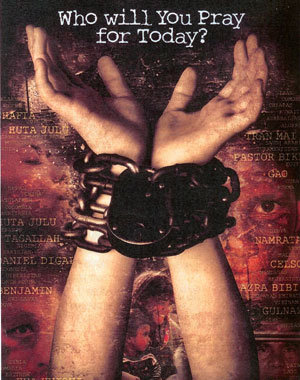
Some sat in darkness and in the shadow of death,
prisoners in affliction and in irons,
for they had rebelled against the words of God,
and spurned the counsel of the Most High.
So he bowed their hearts down with hard labor;
they fell down, with none to help.
Then they cried to the Lord in their trouble,
and he delivered them from their distress.
He brought them out of darkness and the shadow of death,
and burst their bonds apart.
Let them thank the Lord for his steadfast love,
for his wondrous works to the children of man!
For he shatters the doors of bronze
and cuts in two the bars of iron.

Psalm 107:10-16 (ESV)

No, I’m not a programmer, but a great deal of what these “meditations” represent are writing about what I have learned and being open about my mistakes (which is rare in just about any kind of blogging…particularly religious blogging, in spite of what Lazaris just said).

The Psalm writer encourages us (OK, he was writing to a Jewish audience, but I think I can stretch the interpretation to include all of those who were created in the image of God) to acknowledge God and to thank Him for redeeming us, especially when we have been redeemed from our own stupidity and ignorance.

Publicly admitting your mistakes and even thanking God for getting you out of the mess you created is easier said than done. Even after God has redeemed you and relieved you from the consequences (or some of them) of your actions and the punishment for willful sin, there’s still the guilt and shame to deal with. Thanking God for being redeemed is still a lot like saying that you’re a screw up and you did something immeasurably stupid. Blogging about the same “immeasurably stupid” stuff is making the same admission, except it’s to people and not to God.

And yet, there’s supposed to be some sort of benefit to doing both, even though it makes you (and me) feel like crawling under the nearest slime-covered rock and hiding there for the next 70 or 80 years.

The 73rd mitzvah is that we are commanded to verbally acknowledge the sins we have committed before G-d (exalted be He), when we come to do teshuvah (to repent). This is vidui (verbal confession), the idea of which is to say, ” ‘O G-d, I have sinned, I have committed iniquity, I have transgressed and done …” One should elaborate verbally and ask for atonement on this transgression with all the eloquence at his command.

-Translated by Rabbi Berel Bell
From “Sefer Hamitzvot in English”
Confessing Sins
Positive Commandment 73
Chabad.org

So if you are offering your gift at the altar and there remember that your brother has something against you, leave your gift there before the altar and go. First be reconciled to your brother, and then come and offer your gift. –Matthew 23-24 (ESV)

It is said that if we have sinned against God, we must seek forgiveness from God, but if we’ve sinned against man, we must seek forgiveness from that man before God will forgive us. If we do not ask the man for forgiveness, God will not forgive us, either.

And if we do seek forgiveness from man and it is not given, will God then forgive us in the man’s stead?

I don’t know. Logic says that God will forgive you if you’ve made your best effort to seek forgiveness from one you’ve sinned against, but I’m not sure. I only know we are supposed to do our best to live at peace with others, regardless of what they’ve done to us…even if they hate us.

“You have heard that it was said, ‘You shall love your neighbor and hate your enemy.’ But I say to you, Love your enemies and pray for those who persecute you, so that you may be sons of your Father who is in heaven. For he makes his sun rise on the evil and on the good, and sends rain on the just and on the unjust. For if you love those who love you, what reward do you have? Do not even the tax collectors do the same? And if you greet only your brothers, what more are you doing than others? Do not even the Gentiles do the same? You therefore must be perfect, as your heavenly Father is perfect. –Matthew 5:43-48 (ESV)

Bless those who persecute you; bless and do not curse them. Rejoice with those who rejoice, weep with those who weep. Live in harmony with one another. Do not be haughty, but associate with the lowly. Never be wise in your own sight. Repay no one evil for evil, but give thought to do what is honorable in the sight of all. If possible, so far as it depends on you, live peaceably with all. Beloved, never avenge yourselves, but leave it to the wrath of God, for it is written, “Vengeance is mine, I will repay, says the Lord.” To the contrary, “if your enemy is hungry, feed him; if he is thirsty, give him something to drink; for by so doing you will heap burning coals on his head.” Do not be overcome by evil, but overcome evil with good. –Romans 12:14-21 (ESV)

The Bible talks about forgiving others and seeking forgiveness from others and seeking forgiveness from God, but it never talks about forgiving yourself. It seems as if the last person you must forgive is yourself. Otherwise, you live with guilt, shame, and condemnation for the rest of your life, paying for a crime that has already been atoned for in Heaven (or so we hope).

There is a common misconception that life is about being in the right place at the right time. In truth, how you experience life has more to do with what is happening inside you as with what is happening outside.

Like riding a roller coaster without being prepared, if you are not well-tuned to the channel of life, a symphony of miracles could come across as cacophony from the boiler room.

This is what the sages call z’chut –sometimes translated as merit. It means a refinement of the soul, so that it will be precisely on the right frequency and static-clean.

-Rabbi Tzvi Freeman
“Z’chut”
Based on letters and talks of the Rebbe
Rabbi M. M. Schneerson
Chabad.org

People can be very cruel and spiteful, sometimes even to themselves. Do I need to have my frequency fine tuned?

Yeah, I know. I sound more like Yom Kippur is coming up rather than Passover.

Flight of the Sparrow

Devastating News Today, darn it!

Heidi’s tumor markers not only went up but doubled. So this new chemotherapy failed completely, like the one they tried in December/January. We will hear what option(s) are left sometime tomorrow.

My own outpatient surgery is tomorrow morning at 8am, another unwelcome surprise.

We’re really grateful to all of you for your kindness and support.

My beloved wife has metastatic breast cancer (spread to lungs, bone, liver). I am a prostate cancer survivor and my bladder cancer is in remission. We are both treated at Seattle Cancer Care Alliance. But we love God, we love life’s adventures, we love our family & friends. And will do so until God takes us Home. We are followers of Christ.

-Joe Hendricks
Tuesday, April 2nd, 2012

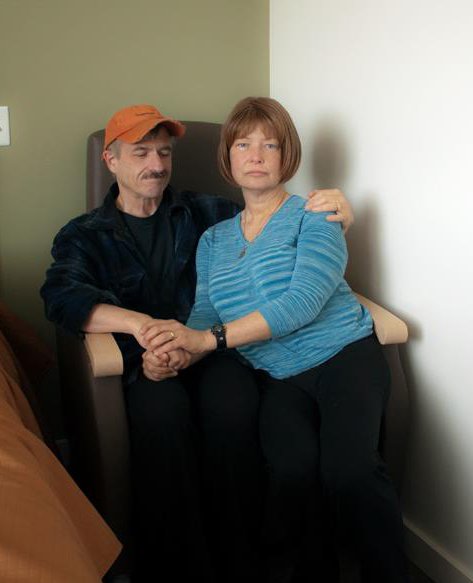
I’ve never met Joe and Heidi Hendricks face to face. I suppose I could, since we live only about a day’s drive away from each other. However, through the “magic” of Facebook, I have shared the last few years of their cancer battle together. The photo I’ve posted is number 56 in their scenes from our cancer battle.

The most startling thing for me about photo 56 is that Joe and Heidi aren’t smiling. No, I don’t expect them to smile after such terrible news, but if you go through their “photo album,” even in the most dire of circumstances, they’re always smiling and joking and pressing on through adversity. Humor is almost the last tool to fail when all other tools have long since burned out in the course of such a tremendous physical and emotional drain. I must admit, mine would have been shot through like swiss cheese in a hail storm long before this. But Joe particularly always makes me laugh.

But not today.

Besides their sense of humor, the thing I admire most about Joe and Heidi is their faith. A lot of Christians say they have faith and trust in God…that is, until something really bad happens. Then it all goes flying out the window and it’s “Why did you let this happen to me, God?” and “How could you be so cruel to me, God?” I’m sure I’d be among that group if I had to face the scenes from Joe and Heidi’s cancer battle first hand.

But no matter how grim it’s been for them, they’ve always grasped tightly onto the hand of God and never let go, just as love has bonded Joe and Heidi together and the never let go of each other.

I’m angry. No, not at God…well, not exactly. I don’t who or what I’m angry at. I think it’s that I feel really helpless and frustrated. Sounds strange, eh? There is horrible tragedy happening all over the world. Every day, someone suffers. Every day, someone dies. Every day, some act of injustice is committed, the helpless are victimized and have no defender, the innocent are made to pay for the crimes of the oppressor. It’s a broken world.

But in the face of all that, I’m angry at the news of Joe and Heidi’s cancer battle today. I know the world isn’t fair, but I’m still angry. It isn’t fair.

It’s like my feelings have mass and can be affected by gravity. It’s like the muscles that hold up my feelings are tired and my sadness is a lead weight, pulling my shoulders down and anchoring me to my seat. I feel as if I’m slowly being pulled to the floor. It’s as if my only light is losing its brightness, and I’m just getting more heavy and silent and it’s getting dark all around me.

The light of laughter is going out in the world.

And where is God?

How many people of faith have asked that question across the long stretch of centuries? How many Christians and Muslims and Jews and whoever else have asked God where He went off to when horrible news, disease, injury, and death stalked us one by one? Is this what ancient man felt like, cowering in some cave in the night, listening to the predators crying out at the moon and declaring to the grey, reflected light that they would find you and consume you?

Is that what it feels like knowing that there is a cancer inside of you and it’s taking over and it won’t be chased away?

I’ve heard the words “God is in control” said countless times in countless church services, but what do the words really mean? God is in control, but people still get sick. God is in control but people still get hurt. We’re alone, and we’re scared, and we need to be able to hang on when our strength, and our stamina, and finally our laughter is dried up like the last drop of water feeding the last wilted flower in the brilliant summer sun baking the vast and endless desert.

I realize that there are forces in the world and forces in our body that we can fight but we can’t always control. At some point, no matter how much you put into the struggle, you (I can only imagine, since I haven’t had to face this) have to let your shoulders relax, let the weight pull you down, look up, put your tiny hand in God’s immense grasp and say, “No matter what happens, please don’t go away.”

I hate crying.

God, don’t go away. Stay with Joe and Heidi, no matter what happens. We all want a miracle, but the greatest miracle is that You even care. If not even one tiny sparrow falls to the earth apart from the will of the Father, then You are mindful of Joe and Heidi, for they are worth much, much more than sparrows.

Stay with them God and, if it is Your will, don’t let them fall. Let them fly.

Easter, Passover, and Myriad Truths

When our universe as we know it first emerged, the soil of the earth was imbued with a wondrous power—the power to generate life.

Place a tiny seed in the ground and it converts the carbon of the air into a mighty redwood—a decomposing seed awakens the power of the infinite.

Yet another miracle, even more wondrous: A quiet act of kindness buried in humility ignites an explosion of G‑dly light.

Infinite power is hidden in the humblest of places.

-Rabbi Tzvi Freeman
“Seeding Miracles”
Based on letters and talks of the Rebbe
Rabbi M. M. Schneerson
Chabad.org

Depending on your religious orientation, we are entering a “season of miracles” in a few days. If you’re Christian, then you are certainly looking forward to Holy Week, culminating with the festivities of Easter and the celebration of the risen Christ this coming Sunday. If you’re Jewish, then you are busy preparing your home and your soul for the Passover season, which begins with Erev Shabbat this coming Friday evening.

Or you have another sort of religious tradition that has no holidays at this time of year, or a tradition that contains no wonders or miracles at all.

I haven’t celebrated Easter for many, many years but I usually look forward to Passover. My wife and I haven’t discussed plans for Pesach this  year, and there are years when we don’t have a personal Pesach seder in our home. Life gets hectic and my spouse isn’t always up to the challenge of preparing an elaborate meal along with the many other preparations and tasks she performs. I suggested yesterday morning, that my sons and I take a turn this year at preparing the Passover meal, but my daughter (who knows what it all entails) just rolled her eyes (mercifully, my wife wasn’t present when I “shot off my big mouth”).

I’ve been avoiding the obligatory Passover blog posts so far due to the uncertainty of the season and, like corporate fellowship, I may have to admit that there will be no personal Passover for me this year. I suppose because I’m not Jewish that it shouldn’t apply to me anyway, so in that, there is no loss if one less Christian isn’t available to attend a purely Jewish commemoration of freedom from slavery and bonding with God.

While, as Rabbi Freeman says, “infinite power is hidden in the humblest of places,” sometimes only humility is to be found in such places as well. There is a time to rise up, to attempt to exceed your limitations, and strive to touch the hem of the garment of God. There are other times that it’s best to step aside and make room for others to achieve that purpose by making yourself small and still. The latter is what’s best for me.

I used to think that so much time had passed since I initiated this “experiment” that my “alternate path” should be apparent to me by now. However, I realize that only an instant has elapsed and it is my place to sit in the shadows and wait. If there is a “miracle” for me, it will be the silence and the muted shades and the stillness of the abyss as I contemplate my existence and ponder on the wonder of God and His unique, radical Oneness.

And I contemplate my path and consider the fork in the road. I can hardly say that it’s either Judaism or Christianity that presents themselves before me, since my options are not two but rather nearly infinite. Within Christianity, there are a myriad of possibilities, both “formal” and idiosyncratic. Judaism, as an option, really doesn’t present itself to me for the simple reason that I am not Jewish. Yet some part of that voice speaks to me and incorporates itself in the other, more “appropriate” options that I still find available to me. Rabbi Freeman presents the transcendent path of truth as containing two paths, but indeed, it contains so much more.

If you find yourself affixed to a single path to truth—

the path of prayer and praise,

or the path of kindness and love,

or the path of wisdom and meditation,

or any other path of a singular mode

—you are on the wrong path.

Truth is not at the end of a path.

Truth transcends all paths.

Choose a path. But when you must, take the opposite path as well.

But if “truth transcends all paths,” then how do you tell truth from its opposite? If choosing truth means choosing opposite paths, when how can I make a choice? If I can’t make a choice, I can then walk no particular path in seeking God.

That leaves me with an impossible decision and no way to make that decision. How can I choose truth if truth is transcendent but I am only human?

If, for me, there is no Easter and there is no Passover, then my choice is to choose no option. That may be the only choice in relation to truth as well. Is it Jacob’s ladder of prayer that sits in front of me, shimmering faintly in the darkness and taunting me in the twilight, or is it the point at which a billion, billion paths converge all demanding I choose the truth and all demanding I choose all truths?

Hypothetical indecision must give way to practical living. I still must wake up each morning, must acknowledge God as the author of my life, such as it is, must get dressed, go to work, labor, go home, be a husband, and father, and grandfather, and walk all the different paths that my life requires, as my tiny march of days on this earth continues to elapse.

All of Judaism will be reading from the seder in a few days, and in a week, Christianity will turn to the end of the Gospels and the resurrection of Jesus. But I will wait and by the dim light of a candle or my soul (I can’t always tell which), I’ll thumb through the pages of Lamentations:

My transgressions were bound into a yoke;
by his hand they were fastened together;
they were set upon my neck;
he caused my strength to fail;
the Lord gave me into the hands
of those whom I cannot withstand.

Lamentations 1:14