Tag Archives: Jewish

The Uninspired Passover Seder

All in all, this year’s Passover seder in my home was pretty lousy. There are a lot of reasons for this, most of which I am not at liberty to discuss. It’s wasn’t anyone’s fault. No one burned the roast, or behaved poorly, or arrived abysmally late to the event. But it certainly wasn’t the joyous occasion of freedom that I usually anticipate…at least not on the surface.

But I was disappointed and sundown at the end of Shabbat and the first full day of Passover was a sad relief. At least it was over.

I had anticipated a simple but happy affair. It is true that we were all busy for the past couple of weeks and there was no elaborate preparation for Passover, as there has been in years past. My wife and daughter (the principle authors of our family seder) were incredibly busy in the weeks approaching the first day of Pesach, so there wasn’t an opportunity to plan an elaborate meal. I had once suggested to my daughter that my sons and I do the actual planning and cooking this year, but her disdain for our “male” abilities in this area became immediately apparent. I actually thought at one point that we wouldn’t have a seder at all.

As the head of household, the responsibility to lead our family seder falls to me. This is when I become acutely aware that I’m a goy and while reading the Leader’s portions of the Haggadah, I tend to become more than a little embarrassed. This year, I was also the only Gentile present in a family of Jews, so my chagrin was even greater than usual. I also hadn’t had time to even look at the Haggadah prior to the start of the seder, so I could feel myself stumbling over the words and wondering if it was such a good idea to even hold the seder.

But it was my idea.

My wife, son, and I actually talked about not having the seder earlier in the day. True, all the food had been prepared, but perhaps, given the circumstances, we should just have a “Passover-themed” meal and call it good. But then, I had to shoot off my big mouth (and remember, I’m the only goy in this conversation) and say that Passover has been observed by Jews in all sorts of difficult circumstances but it has been observed. It’s important (in my humble Gentile opinion) to not give up the celebrations and commemorations of Judaism when faced with adversity. If a little difficulty was all it took to stop a Jew from celebrating what is Jewish, then probably there would be few or even no Jews left by now, or at least, no Jews who remember how to have a Passover seder.

So we went ahead and had our seder.

I won’t describe the grizzly details, but it wasn’t joyous. It wasn’t hideous or outrageously bad, but it simply fell rather flat. It lacked “pizzazz.” Whatever makes a seder an experience rather than just a meal with some reading just wasn’t there.

It was sort of like praying to God in a time of need and then feeling worse after praying then you did before entering His presence.

And it’s over for another year. Next year in Jerusalem? I’d be satisfied if it’s next year in my dining room, as long as at the end of the seder, we all felt, as a family, as if the Passover had been observed and not mangled or abused.

So for the next week or so, I’ll be dining on dry matzah and ashes and trying to remember that holiday expectations are not the same as a relationship with God. Events can be messed up for many, many reasons but it’s what God experiences with us that matters. Since I’m not Jewish, I am not strictly commanded to observe the Passover, but my family is. If I’ve done anything to prevent them from observing the mitzvot associated with the Pesach meal, then I’ll bear my guilt and whatever consequences that go along with it alone.

It’s not particularly my fault. It’s no one’s fault. But this being the first year I’m not affiliated with any congregation or religious organization, I somehow feel that I’m to blame. I’m looking for the good among the bad; the flower among the weeds, but so far, it hasn’t bloomed.

It is hard to describe the dire poverty that afflicted the citizens of Yerushalayim eighty years ago. The scarcity of food was so extreme that children sometimes went to sleep without having tasted a morsel the entire day.

One child was was walking along on a Shabbos afternoon when he noticed a very valuable gold coin. Of course he could not pick it up, since it was muktzeh. But he figured that he could stand on it, to guard it and take it after Shabbos. Unfortunately, an Arab youth passed by and he noticed that the boy remained stationary. Understanding that it was the Jewish Shabbos and that the boy might be guarding something to take after Shabbos, he threw the child to the floor and spotted the valuable coin— which he immediately pocketed.

The child was overwhelmed with grief. Not only had he endured being thrown violently to the ground, he had also lost a coin which could have fed his family for quite some time. He went into the Rachmastrivka shul and began to cry bitter tears.

When Rav Menachem Nochum, zt”l, the Rachmastrivka Rebbe, heard a child crying copiously in the beis haknesses, he immediately went to see what had occurred. When he asked the child and was told the entire story, he comforted the child. “Today is Shabbos, so we can’t speak about money, but please calm down for now. Come to see me after Shabbos.”

After Shabbos the rebbe took out a coin—exactly like what had been taken from him— and showed it to the child. “I am happy to give you this coin if you will sell me the merit of having endured great pain for the honor of Shabbos. To keep the halachah you were thrown onto the floor and you lost a fortune of money.” But the boy immediately refused. “No. I will not relinquish the reward for this mitzvah for any money in the world!”

Later the boy recounted. “I left the rebbe’s presence with a conviction that the treasure I had gained through my suffering was much more valuable than any mere coin!”

Daf Yomi Digest
Stories Off the Daf
“The Golden Treasure”
Kereisos 20

“Blessed are the poor in spirit, for theirs is the kingdom of heaven. –Matthew 5:3 (ESV)

The “poor in spirit” is looking for the golden treasure among broken crumbs of matzah. When a celebration of God dedicated to joy and freedom is anything but joyous and free, what then?

NOTE: I didn’t post my usual “meditation” Sunday morning because, outside of Israel, both the first and second day of Passover are considered “Sabbaths.” For that reason, I refrained from making any comments on the Internet during these special Shabbatot. Thank you to those who contacted me behind the scenes asking if everything is OK. I appreciate it.

Considering Meditation

The cruel facts are that to do what a Jew has got to do, you must think. Not just think as in “If apples are $2/lb., then two pounds are gonna cost me $4.” I mean think as in contemplate, cogitate, ponder, fire up your cerebral cortex into high gear.

That was Rabbi Bachya ibn Pakuda’s point. Rabbi Bachya was a Jewish sage of 11th century Spain. He noted that many authors write about what a Jew is supposed to do and speak—what he calls “duties of the external limbs”—but none write about the “duties of the heart.” He penned a classic work by that name that is still studied to this day. In his introduction, he provides his list of some of the Torah obligations that involve mind and heart. Among them, those that are relevant to deep, contemplation—which he recommends throughout the book…

-Rabbi Tzvi Freeman
“Is Meditation Kosher?”
from the Multimedia Guide to Jewish Prayer series
Chabad.org

With my lips I declare
all the rules of your mouth.
In the way of your testimonies I delight
as much as in all riches.
I will meditate on your precepts
and fix my eyes on your ways.
I will delight in your statutes;
I will not forget your word.
Psalm 119:13-16

Meditation can seem like it’s some sort of far out contemplative state associated with a far eastern religious practice, but both Judaism and Christianity have a history of associating meditation and prayer. I Googled “should a Christian meditate” and got a ton of search results, too numerous for me to review, especially within the context of a single “morning meditation” (Gee, there’s that word, again). I picked the first one available which is from BibleStudyGuide.org:

At first thought, meditation is something that we may believe is reserved for strange, far-out cult members. But, Christians are to spend time in meditation. The meditation of Christians is much different than cult meditation which may use a mantra. Webster defines meditate as “1: to focus ones thoughts on: reflection or ponder over 2: to plan or project in the mind … : to engage in contemplation or reflection.” The greek word logizomai is translated various ways, but is translated meditate (NKJ) and think (KJ) in Phil. 4:8. Vines says of logizomai in Phil. 4:8 “it signifies ‘make those things the subject of your thoughtful consideration,’ or ‘carefully reflect on them.'”

Paul exhorts brethren to carefully consider, reflect, ponder, meditate on those things which are true, noble, just, pure, lovely, of good report, virtuous, and praiseworthy. He says: “Finally, brethren, whatever things are true, whatever things are noble, whatever things are just, whatever things are pure, what ever things are lovely, what ever things are of good report, if there is any virtue and if there is anything praiseworthy – meditate on these things” (Phil. 4:8). In other words, Christians are to immerse their thoughts in everything that is good and spiritual in the Lord.

I have no idea how accurate all that is relative to mainstream Christian thought, but it seems to be enough, on the surface, to justify Christian meditation, even as Rabbi Freeman supports Jewish meditation associated with prayer. We also see, from my quote of David in Psalm 119, that meditation upon the acts of God pre-dates the first Temple in Jerusalem, so it enjoys a very long tradition among the chosen people of God.

But what exactly is meditation, how do we employ it in terms of prayer, and how are we to consider God and ourselves through this process? In Jewish thought, it has to do with the concept of “knowing.”

Note, both in Maimonides’ language and in Bachya, the knowing. Not “to know,” but actively, perpetually going about knowing. There’s a difference between knowledge and knowing. You can stop knowing and still have knowledge. Knowledge is something you have. Knowing is something you do.

But what does that mean? How do we actively participate in the process of “knowing” God versus having “knowledge” of God. For a Jew, it has to do with meditation and obedience to the first five positive and the first five negative commandments of the Rambam’s 613 mitzvot.

Here’s an example from Rabbi Freeman’s article:

# Mitzvah Source Text Source
+1 Knowing that there is G‑d. I am G-d your G-d who took you out of the land of Egypt to be your G-d. Exodus 20:2; Deut. 5:6
-1 Knowing that there is no power other than G-d. You shall have no other gods besides me. Exodus 20:3; Deut. 20:4
+2 Affirming G-d’s oneness. Hear O Israel, the G-d is our G-d, the G-d is one. Deut. 6:4
+3 Loving G-d. You shall love G-d your G-d with all your heart… Deut. 6:5
+4 Revering G-d. You shall revere G-d Deut. 6:13
+5 Serving G-d with your heart (i.e. prayer) You shall serve G-d your G-d.…and to serve Him with all your heart” Exodus 23:25; Deut. 11:13

According to Rabbi Freeman, the process of “knowing” as well as “affirming,” “loving,” and “revering” God requires that we meditate upon Him. But that still doesn’t tell us what it means, only why a Jew must meditate; in order to obey the Torah of God. There’s also the problem of loving and revering. How can a person be commanded to love? You either love or you don’t. You can’t turn the process of loving on and off like a light switch. You can decide to meditate upon God, but can you decide upon command to also love Him?

What is the path to love and reverence of G-d? Meditate on His actions and on His wonderful and vast creations and you will become aware of His endless and unlimited wisdom. Immediately you will come to love, praise and glorify G‑d with great desire to know His great name.

—Rambam (Maimonides), Foundations of Torah 2:2

According to Rambam, you can learn to love God “on command” … by meditating. Think of it the way you think about someone you love romantically. Usually, in the early days of a relationship, you can’t keep your mind of the other person. If you are apart for any reason, you think about them, remember your last conversation, imagine the way the person looked the last time you saw them, and try to conjure up the sound of their voice. In a way, you “meditate” upon them and “all their works” (things that they did). Does this not contribute to our active “knowing” of the person and our progression of “loving” them? Is that so different than David meditating on all the works and wonders of God?

But the last positive commandment is to “serve” God. What does meditating upon God have to do with serving Him? In Judaism, “serving” God is traced back to the duties of the Priests in the Tabernacle and later in the Temple, when performing various services, including the sacrifices. After the destruction of Herod’s Temple by the Romans, much of the concept of the Temple service was translated into prayer. To serve God is to pray to God.

But prayer, in Judaism, isn’t just the act of “talking to God.” Especially in liturgical prayer, a Jew is to contemplate on, concentrate on, and meditate upon, the process of prayer, right down to the individual words involved in the act of praying. This sounds a lot like a sort of meditation during prayer, but meditation is also involved in the Jewish person preparing themselves for prayer, prior the act of Tefillah.

Don’t begin tefillah until you have achieved koved rosh. The fervent ones of old [“chassidim harishonim”] would pause for an hour before tefillah, so that they could focus their hearts on their Father in heaven.

—Talmud Berachot, 30b

Before tefillah, ponder matters of the majesty of the exalted G‑d and of the smallness of humankind. Remove all human pleasures from your heart.

—R’ Moshe Isserles, ibid.

Meditation then, is a state of preparation, wherein you make yourself ready to enter into the presence of God in His realm. You don’t just “drop in” on God (although there are times when we need Him in a very immediate sense). You treat God with awe, dignity, and respect. You prepare yourself as if you are preparing for an extremely important encounter, by making your mind and your emotions ready for the experience. All this is fine for Rabbi Freeman’s Jewish audience, but is anything he’s talking about applicable to the Christian?

I haven’t cited anything wild and kabbalistic, esoteric or arcane (don’t worry, we’ll get to that soon). Just plain Judaism, the stuff that’s meant for every Jew—and wouldn’t hurt for all the rest of humanity as well.

That seems to be a pretty straightforward answer, though if any readers found some of the Jewish concepts in this blogpost challenging, it may be a bit daunting to discover that nothing “wild and kabbalistic, esoteric or arcane” was involved. Not only is a period of contemplation and preparation required for the Jew, but it’s recommended for anyone who is about to enter the Throne room of the King of the Universe.

But how do you do that? I’ll save the answer for next time.

It has to come from the core, but we are not masters over that place.

We can barely master our wardrobe—our conscious thought, our words to others, what our hands and feet are doing. Never mind the hidden things within.

But we can do this: We can wash our clothes and bathe our skin in pure waters. Meaning: we can focus our thoughts, guide our words and clean up our act.

Once scrubbed enough that light can pass through, we await the moment when the core awakens.

This is what Moses told his people on their last day together: “The hidden things belong to G‑d. But the obvious is for us and our children forever, to do what needs to be done.”

-Rabbi Tzvi Freeman
“The Core”
Based on letters and talks of the Rebbe
Rabbi M. M. Schneerson
Chabad.org

Death in Toulouse

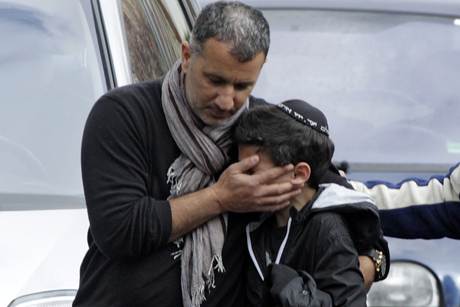
Rabbi Sandler of Kiryat Yovel in Jerusalem and his sons Aryeh, 6, and Gavriel, 3.5, were murdered in Toulouse Monday morning, as was 8 year-old Miriam Monsonegro, daughter of the director of Ozar HaTorah Toulouse, Yaacov Monsonego.

Binyamin Toati, Head of the France Desk of Bnei Akiva, told Arutz Sheva before the names were published that there are reports that the man who was killed is a rabbi who served as an Israel shaliach (emissary) at the school and that two of his children were killed with him.

French press reported that two children were among at least three people killed in a shooting outside a Jewish school. Two other children are reported fighting for their lives. The French news reports said the dead are a teacher and two children, and that two other children were badly wounded.

“Toulouse: Rabbi Yonatan Sandler and his Children among the Dead”
-by Gil Ronen
First Published 3/19/2012, 10:18 a.m.
Arutz Sheva News

I’m sure you’ve heard this tragic news by now. I’m sure you’ve heard that a Rabbi, his two children, and a third child were all murdered in cold blood outside a Jewish school in Toulouse, France yesterday. The story has been covered by virtually every news agency on the planet. Sixty-seven years after the end of World War II and the end of the Holocaust, Jews are still being murdered just because they’re Jews.

I guess I’m taking it personally.

No, I’m not Jewish, but my wife and children are. That means the killer who cut down Rabbi Sandler and three innocent children just because they were Jewish is quite capable and willing to kill anyone who is Jewish, including my family. Yeah, I’m taking it personally, so forgive me if what comes out in this blog isn’t exactly “rational”.

I took a walk by the greenbelt on the Boise river over my lunch hour. It’s the first day of spring and it’s snowing and windy outside. It’s the perfect day to reflect on horror and terror and sadness in the world. It’s the first day of spring, when new life is beginning to trickle back into the trees and grass and flowers are soon to bloom.

And it’s snowing and windy and bitterly cold outside. It fits.

And four Jewish people were murdered yesterday in Toulouse, France for no other reason than just because they were Jewish.

I’m not trying to be insensitive. I know that, in the grand scheme of things, this is just one more harsh thing to happen in a world of harsh things. Many people, including children, are hurt and killed all over the world every day. Just point your web browser to CNN.com and you’ll see all of the headlines. Syria’s maimed children cry out, Slave master becomes abolitionist, 7.4 earthquake hit Mexico, and the beat goes on.

I’m not just upset because kids were murdered, although that upsets me. I’m not just upset because Jews were murdered just because they were Jews, although that upsets me. I’m upset because some people think it’s OK for Jews to be murdered just because they are Jews. OK, maybe I’m exaggerating. Israel’s Prime Minister Benjamin Netanyahu doesn’t think it’s an exaggeration to accuse the European Union’s foreign policy chief, Catherine Ashton, of saying that three Jewish children being murdered in cold blood is exactly the same thing as the children being killed in Gaza because the IDF is retaliating against the Palestinian terrorists who are firing an endless stream of missiles into Israel.

She spoke of remembering “young people who have been killed in all sorts of terrible circumstances — the Belgian children having lost their lives in a terrible tragedy and when we think of what happened in Toulouse today, when we remember what happened in Norway a year ago, when we know what is happening in Syria, when we see what is happening in Gaza and in different parts of the world — we remember young people and children who lose their lives,” she said, according to a transcript of the speech distributed by the European Union.

Ms. Ashton’s spokesman issued a statement of clarification on Tuesday, following the criticism, saying that her words had been “grossly distorted” and that she had not intended to draw any parallel.

“Israel Criticizes E.U. Official for Comments on French School Attack”
-by Isabel Kershner
Published March 20, 2012
The New York Times

To detail Netanyahu’s statement a little better according to the Times:

Prime Minister Benjamin Netanyahu had said that he was “infuriated” by what he called “the comparison between a deliberate massacre of children and the defensive, surgical actions” of the Israeli military that he said were “intended to hit terrorists who use children as a human shield.”

The New York Times viewpoint on the “defensive, surgical actions” of the Israeli military includes:

During the four days of fighting, 26 Palestinians were killed, according to the Israeli military. Most were militants, but four of the dead were civilians. A 12-year-old boy was among those killed in Israeli air strikes; another boy, 14, was killed by explosives in disputed circumstances. During the same period, Palestinian militants fired more than 150 rockets into southern Israel.

Notice the Times uses the term “militants” instead of “terrorists”. A subtle difference? Perhaps.

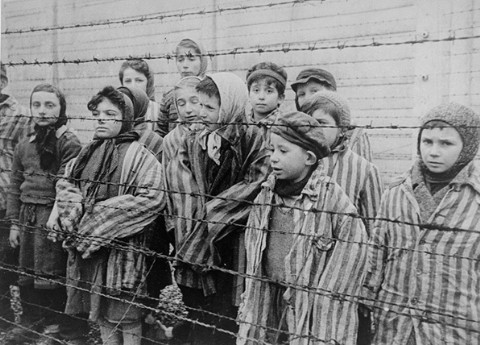
I just keep thinking that it’s been less than 70 years since the end of the Holocaust, and Jews are still not safe. They’re not safe in France and they’re certainly not safe in Israel. They’re also not safe in the world of public opinion or the news media. We’re supposed to live in a modern, civilized, enlightened world, but that’s what made it so difficult for Germany’s Jews to understand the danger they were in when the Holocaust began. They just couldn’t believe that a nation as civilized, as educated, and as enlightened as Germany was in the early 20th century could be capable of such evil. That’s what made it so difficult for the rest of the world to understand, too. That’s why some people didn’t believe it was happening. But is that an excuse for not believing it’s still happening today?

What do you do when you want to kill someone? That’s not a random question. For most of us, it would be almost unthinkable to actually kill someone, even in self defense. We have to weave all sorts of extreme and violent mental scenarios to even imagine ourselves pointing a gun at another person and pulling the trigger. Even if the killing were justified, such as defending your family from violent home intruders, the aftermath; actually living with the memory of having killed someone, would be horrendous.

So unless you are inherently violent or violently insane, it would be extremely difficult to point a gun at someone and to pull the trigger, knowing that they’d be dead in the next few seconds.

So how to you kill someone? How do you train soldiers to kill someone? How do you train a populace that it’s completely acceptable to send an army to another country to kill a lot of people? Today in the United States, the Government doesn’t do a very good job of training the citizens to accept war and so most people don’t accept war. During World War II, we had a fabulous propaganda machine that depicted the Germans and Japanese as non-human, murderous monsters. That made it possible for normally non-violent young men to go overseas and to shoot, bomb, and gas a bunch of other human beings who were trying to shoot, bomb, and gas them. That’s what made it possible for the average U.S. citizen to completely support sending an army to different countries around the globe to shoot, bomb, and gas non-human murderous monsters, who would certainly shoot, bomb, and gas us if they got half a chance.

Ironically, what the United States fails to do in terms of war, it does all too effectively in terms of abortion. What do you have to do to kill an unborn human baby? (I know…you didn’t see that one coming) You make them an “embryo” or a “fetus” but you never, ever make them a human being. It’s the same thing that let U.S. soldiers kill the enemy. It’s the same thing that let U.S. citizens approve of U.S. soldiers killing the enemy. It’s the same thing that let Nazi soldiers and the Nazi SS (Schutzstaffel) round up, torture, starve, shoot, and gas Jewish men, women, and children during the Holocaust.

It’s what let one (reportedly) neo-Nazi killer shoot and kill one Jewish adult and three Jewish children yesterday in France.

To France’s credit, they are (literally) up in arms over these deaths and are diligently searching for the shooter. According to news reports, the shooter has killed prior to this incident and there’s every reason to believe he’ll kill again. I want him caught too, and swiftly. I want him taken off the streets and put in prison.

But he’s only one man.

I know what you’re thinking. He’s only one man. He’s an extremist. He may be mentally ill. He is an aberration. If he’s stopped, things will become safe again.

Will they? I’m sure that the Jews living in Germany in the mid-1930s felt something similar. They couldn’t imagine any irrational hatred of Jews being anything but an aberration; something extremely unlikely to occur, and only involving one or two extreme individuals.

Except they were wrong. It involved thousands who committed horrible atrocities against human beings and millions who condoned it by the actions or their silence. Over the past 70 years tens or hundreds of millions of people have chosen to ignore or to deny the Holocaust, which murdered not only Jews but many other “undesirables” including the physically and mentally handicapped, gypsies, homosexuals, and anyone else who didn’t fit the “Aryan ideal”. All you have to do to kill them is to believe they aren’t human; to believe they aren’t like you, that they’re inferior, that they’re “less,” that they’re “monsters” or “things.”

Because if they’re humans just like you are, then you know that they want to live, just like you do. You know they have feelings, just like you do. You know that they can be scared and hurt, just like you can be scared and hurt. And if you have empathy for someone, you can’t hurt or kill them unless they’re doing something that’s very scary and threatening to you. One Jewish Rabbi and three Jewish children are very unlikely to be doing anything to scare or threaten anyone. They just died because they were Jews.

If we, who represent the rest of the world, don’t speak up and speak out and say “Stop!” to the rest of the world, then our silence is tacit acceptance that it’s permissible to kill a Jew for being Jewish, or to kill a person for being mentally ill, or gay, or for the color of their skin, or for the language they speak, or for being an inconvenient pregnancy.

If we believe that it’s acceptable to kill Jewish children for being Jewish, then we’re saying some people aren’t human and that’s OK with us. We like to think we’re civilized and enlightened, but if we are silent and do not protest injustice, then we are accepting injustice. We live in a world that still generally does not condone the murder of Jews, or African-Americans, or Gays, but we do condone the murder of millions of unborn baby boys and girls every year all over the world (and we’ve got a terrific propaganda machine in operation in America that justifies the whole damn thing and makes it sound enlightened and reasonable). Some people still believe it’s OK to kill Jews. A bunch of them live on land that used to be within the borders of Israel until other enlightened nations made Israel surrender that land to people who like shooting missiles at Jews. It’s a crazy world.

I told you I was taking this personally and that I wouldn’t be rational. But murder isn’t rational either. I figure you have a couple of choices. You can stand up and protect the defenseless and the victims from their murderers, or someday you’ll become either one of the murderers or one of the victims.

What? You don’t believe me? Neither did the German Jews in 1930…and neither did their German Gentile neighbors.


An Invitation From God?

We were created in G-d’s image. The image of His vision.

From a point before and beyond all things, G-d looked upon a moment in time to be, and saw there a soul, distant from Him in a turbulent world, yet yearning to return to Him and His oneness. And He saw the pleasure He would have from this union.

So He invested His infinite light into that finite image, and became one with that image, and in that image He created each one of us.

As for that moment He saw, that was the moment now.

-Rabbi Tzvi Freeman
“G-d’s Image”
Based on letters and talks of the Rebbe
Rabbi M. M. Schneerson
Chabad.org

G-d looked upon a moment in time to be, and saw there a soul, distant from Him in a turbulent world, yet yearning to return to Him and His oneness.

To employ a small joke, I resemble that remark. To be fair, a lot of other people within the community of faith also “resemble that remark,” whether they’re willing to admit it or not. In fact, there are times when I wonder how anyone can feel close to God because, after all, He is the Creator of the universe and the Master of all worlds. How can one, small, insignificant human being really matter to compared to all that?

When I look at your heavens, the work of your fingers,
the moon and the stars, which you have set in place,
what is man that you are mindful of him,
and the son of man that you care for him?
Yet you have made him a little lower than the heavenly beings
and crowned him with glory and honor. –Psalm 8:3-5 (ESV)

Are not two sparrows sold for a penny? And not one of them will fall to the ground apart from your Father. But even the hairs of your head are all numbered. Fear not, therefore; you are of more value than many sparrows. –Matthew 10:29-31 (SEV)

I know, I know. It’s hard to say I’m irrelevant to God in an absolute sense when we have these verses to turn to. The Bible contains all of these little bits and pieces suggesting that human beings have God’s attention but it is nevertheless possible to feel as if you are utterly alone.

Rabbi Freeman, in one of his commentaries on prayer called The View From Within, mentions this.

So here we are, at rock bottom, suffering from all our circumstances because we can’t figure out how on earth any of this could be good. We’re helpless – this is an inherent deficiency in our design and vantage point.

I’m taking this way out of context (the full article can be found at the link I posted above), but it does paint a good picture of where I am right now. Remember from yesterday’s morning meditation that I’m picturing myself as sitting at the bottom of a well. God has just lowered a ladder and it is implied that by praying, I can begin to climb. Today, Rabbi Freeman is saying that even what we pray for is a matter of perspective, as well as how we understand our life circumstances. To illustrate this point, he tells a story:

When the Baal Shem Tov was leader of the chassidim, whenever troubles befell them, he would pray and avert the harsh decrees from heaven. When the Baal Shem Tov passed on and his disciple, the great kabbalist, Rabbi Dov Ber, the Magid of Mezritch, took over the leadership, he would similarly avert these decrees. When the Magid passed on, the most difficult persecutions of their leadership and of their cause began.

The students of the Magid, all of them great, enlightened masters, beseeched him to respond to them from his place in the world beyond. They pleaded, “As long as you were here, you interceded successfully on our behalf. Certainly, from your place in the next world you have yet greater power to intercede!”

The Magid responded to his disciples, “When I was below, I saw these things as harsh and cruel. But from my station up here, I only see the good in all of this. As Rabbi Akiva taught, all that the All-Merciful does is for the good. How could I pray to avert something I see as true goodness?”

His disciples then asked, “If so, our master, what about us? Should we also desist from praying that these decrees be averted?”

“No,” the Magid responded. “Since in your world these appear to be evil, you must do everything in your power to avert them and alter the heavenly decree!”

-Rabbi S.Y. Zevin, Sipurei Chassidim

In real life, we hardly ever hear from people who have ascended into the Heavenly realm (if we do at all) and so we do not, in actuality, have any idea of their perspective. We remain locked into our own, like an ant trying to move a pebble in the dirt. We human beings can look down on that ant with a completely different viewpoint and realize a world the ant has no ability to imagine, let alone experience. But we are unable to impart to that ant how much more there is in the universe around it, even though we see a vast panorama beyond that one small ant pushing a pebble in the dirt.

This is how we are in comparison to God.

But we didn’t create the ant’s universe, nor did we create the ant. The vast majority of us don’t care all that much for ants, and if they get into our homes, we’ll exterminate them without hardly a thought about their deaths. This, we hope and pray, is not how God sees us, and in fact, we hope and pray that God sees us with love and compassion, rather than as insects infesting His world.

But all we have is an ant’s point of view. Unlike the ant, we have the imagination to envision something much more; something we cannot directly experience, but there’s a difference between imagination and knowledge. There’s even a difference between faith and belief and knowledge.

If I were to take Rabbi Freeman’s lesson at face value, I would have to accept that however I currently imagine my experience, it is not at all the same as seen from God’s perspective. What I experience as feelings of emptiness, He may see as something else entirely. But unlike the Magid to his students, God does not speak to we, His creations, to tell us that what we see as evil, God only sees as good.

Or does He?

So here we are, at rock bottom, suffering from all our circumstances because we can’t figure out how on earth any of this could be good. We’re helpless — this is an inherent deficiency in our design and vantage point. And the Mastermind of All Worlds turns to us from His penthouse panorama with banks of video monitors on every creature in the universe, and yells down into your pit, “So how’s the weather down there? Any complaints?”

And this is mitzvah of tefillah! To “petition for all your needs with requests and supplications” three times a day!

It must be, then—because this is the only way out of our conundrum—that for whatever reason (or just out of pure desire), the Creator of this reality is interested in the experience from within, and not just from above. And He wants to bring the two into perfect union.

Tefillah, then, means a union of two worlds, two perspectives, two forms of consciousness: The view from Above unites with the view from within. And we are the matchmakers.

This again, is an interpretation and an imagination as related by Rabbi Freeman’s commentary on prayer. He is telling us that prayer does matter because, in part, it is the joining of our experience with God’s experience and that God desires we share our experience with Him. Of course, Rabbi Freeman is saying all of this from a Jewish perspective and relating it to a Jewish audience, but given the comments on prayer I made yesterday, I don’t think it’s terribly unreasonable for me to apply his lesson to an individual Christian sitting at the bottom of the abyss.

But as I imagine prayer as the means by which I may start climbing out of the pit, Rabbi Freeman has other ideas.

This is vital for us to know before we go any further into the spiritual ascent of prayer, mystic union and higher consciousness: The goal is not a jailbreak out of the dungeon of material existence. The goal is a marriage of two worlds—ours and His. Heaven on earth. Tefillah is where the two kiss.

Sounds very “romantic,” but then in Judaism, God is called “the lover of our souls.” I don’t know if the exact same relationship can be said of God and me relative to Judaism, but perhaps filtered through John 3:16, it might apply because of the Messiah. Because of Jesus, God may also love the Christian soul.

So if prayer isn’t a ladder designed for the human to ascend out of the pit of the world and into the heavens, is it instead an invitation to dance? If so, I’ll have to learn to stand first, and then to walk. Right now, I’m like the wallflower at the high school prom, staring in disbelief at a hand being offered, beckoning me to rise. I hope this isn’t just wishful thinking. We’ll see.

The road

The road is long and often, we travel in the dark.

Ki Tisa: Pursuing Tranquility

Inner lightThe Torah portion of Sisa contains an entire section (Shmos 31:13-18.) relating to Shabbos. It begins by stating that Shabbos is “a sign between Me and you for all generations, so that you know that I, G-d, am making you holy.” The section concludes: “And the children of Israel shall observe the Shabbos … as an everlasting covenant … for in six days G-d made heaven and earth, and on the seventh day He ceased working and rested.”

Why is Shabbos and its laws discussed here at such length, when it was already covered in detail (.Ibid., 20:8-11.) as part of the Ten Commandments?

Our Sages derive (Taanis 27b; Beitza 16a.) from the words “He ceased working and rested,” that “An additional [measure of] soul is granted [the Jew] on the arrival of Shabbos.

What exactly is meant by the statement that “an additional [measure of] soul is granted [the Jew] on the arrival of Shabbos”? According to the Zohar, this literally refers to an additional measure of spirituality that is granted from above as a gift on Shabbos.

“Shabbos and the Additional Soul”
Commentary on Torah Portion Ki Tisa
Based on the teachings of the Lubavitcher Rebbe
Rabbi Menachem M. Schneerson
Chabad.org

I sometimes have difficulty with the rather esoteric teachings of the Chasidic sages, and certainly imagining that an “extra soul” comes upon a Jewish person with the arrival of the Shabbat is a bit of a stretch for me. On the other hand, part of what is being communicated is that, for the Jew, Shabbat brings a special kind of peace and tranquility that cannot be found on the other days of the week. This could be more than simply choosing to refrain from normal work and focusing more on God, and contain a supernatural or even mystical component. After all, where God is involved, anything is possible.

Starting with my “morning meditation” Learning Acceptance, I have been attempting to “pursue peace” in a different manner or fashion than I have previously, making adjustments to my behavior and even my thoughts as I attempt to approach this goal. The arcane imagery of receiving an “additional Shabbat soul” is rather appealing, but the Chasidic teachings on Ki Tisa remind me of the demarcation line that is set between the Jew and the Gentile. According to the Chasidim, this “additional soul” of peace arrives on the Shabbat for the Jew and not for the Gentile, because only the Jew is set apart as holy (Exodus 31:13).

I suppose I could complain about this not being fair, but then I’m sure someone would remind me that life, and even God (although He is always just) are not always fair. But then, the Rebbe and the Chabad Rabbis are hardly taking the teachings of Jesus into consideration. Could there be a kind of peace we Christians can access as well?

Sometimes Christians don’t realize that Jesus, when he walked among men, observed the mitzvot of first century Judaism in the same manner as the other Jews in Israel, as did their fathers and their father’s fathers. The Shabbat was no stranger to Jesus, in spite of the fact that most Christians and Jews believe that Jesus actually taught breaking the Shabbat (which is untrue). His Jewish disciples would also have observed the Shabbat with their Master, and continued to do so in the manner of the Jews after the death, resurrection, and ascension of Christ. Paul, the Apostle to the Gentiles, and James, brother of the Master and leader of the Messianic council in Jerusalem, were also devout, Shabbat keeping Jews.

Although the exact form of the teaching from which I quoted above may not have been known to them, certainly the peace of the Shabbat would be all too familiar to the Jewish followers of the Way. In what manner, if any, would this special type of peace have been transmitted to the non-Jewish disciples, both in Roman occupied Judea and in the Greek diaspora?

There’s no way to know for sure, but it is likely that the Gentile disciples would have worshiped on Shabbat, if for no other reason, than because their Jewish mentors did so. It’s in the realm of the historians and the New Testament scholars as to whether or not the Gentile disciples attempted a form of Shabbat rest along with their Jewish counterparts, but usually, when someone is trying to learn a new type of worship, they do so by imitating an original model. This may be the reason the rather mysterious words of Acts 15:21 were recorded:

For from ancient generations Moses has had in every city those who proclaim him, for he is read every Sabbath in the synagogues.”

The Gentiles were assumed to learn the intricate details of the God of the Hebrews from hearing the readings of the Torah and the Prophets during Shabbat services, but that would presuppose that even a few Gentiles were in the synagogue for worship on Shabbat. Leaping forward twenty centuries, I know from my own experience, the beauty of witnessing the lighting of the Shabbos candles, and the sublime grace of welcoming the Queen into my home. I must admit that my family doesn’t keep the Shabbat as we’d like, but it remains an ideal and a goal toward which we strive.

Tranquility is also an ideal and a goal toward which I strive, even in a troubled world and in struggling with a troubled soul. I guess that’s what makes the idea of receiving an “additional soul” so appealing. But is receiving this “Shabbat soul” something the original non-Jewish disciples would have understood let alone attempted?

I don’t know. Maybe not.

I only know as an outsider looking in, the glow and warmth of Shabbat peace is attractive to me as well.

There are two aspects of Shabbat observance: outwardly, it is a day of rest, but inwardly, it is a time of soul-union with our Maker; in the same way the additional soul has an inner and outer purpose. This outer purpose is, as Rashi explains, an expanded heart, or in other words a sharpening of our sense perceptions comparable to the effect of mind-altering drugs which heighten the ability to see colors, taste food, appreciate sound, and the like. This outer purpose helps us fulfill the commandment of delighting in Shabbat.

From Rafael Moshe Luria; translated by Simcha H. Benyosef
“The Additional Shabbat Soul”
Kabbalah Online
Chabad.org

When Rabbi Eli Touger discusses the dynamics of the sin of the Golden Calf in his Ki Tisa commentary, he says:

Similarly, all the punishments suffered by the Jewish people throughout the centuries are connected to this sin (Sanhedrin 102b; Rashi, Exodus 32:35.). What place can such an event have in a portion whose name points to the Jews’ ascent?

To answer this question, we must expand our conceptual framework, for the state to which G-d desires to bring mankind is above ordinary human conception. This is indicated by the very expression: “When you lift up the heads”; “the heads,” human intellect, must be elevated.

Rabbi Touger shifts his focus from “the Jews’ ascent” to “G-d desires to bring mankind is above ordinary human conception.” That is, the focus shifts from Jews to everyone. Of course, it could just be assumed, given his context, that everything he presents is directed to Jews and that the nations are not to be considered, but how can we reconcile this with the concept that the Jews were to be a light to the nations, and that God so loved even the nations (John 3:16), who were also created in His own image (Genesis 1:27)?

Whatever the understanding of the Chasidim may be in relation to Gentiles, God, and peace, the emissary to the Gentiles had this to say:

Rejoice in the Lord always; again I will say, rejoice. Let your reasonableness be known to everyone. The Lord is at hand; do not be anxious about anything, but in everything by prayer and supplication with thanksgiving let your requests be made known to God. And the peace of God, which surpasses all understanding, will guard your hearts and your minds in Christ Jesus. –Philippians 4:4-7 (ESV)

While this doesn’t address a Shabbat peace, it is an encouragement from our ancient Jewish mentor for the Gentile disciples to also seek peace through “prayer and supplication” and that “the peace of God, which surpasses all understanding, will guard your (our) hearts and your (our) minds in Christ Jesus.” Tranquility for the non-Jewish disciple then, is not considered unattainable nor forbidden.

But what about this “extra soul?”

So Peter opened his mouth and said: “Truly I understand that God shows no partiality, but in every nation anyone who fears him and does what is right is acceptable to him.

While Peter was still saying these things, the Holy Spirit fell on all who heard the word. And the believers from among the circumcised who had come with Peter were amazed, because the gift of the Holy Spirit was poured out even on the Gentiles. For they were hearing them speaking in tongues and extolling God. Then Peter declared, “Can anyone withhold water for baptizing these people, who have received the Holy Spirit just as we have?” –Acts 10:34, 44-47 (ESV)

I know. I’m stretching the metaphor completely out of shape, but when we among the nations accept the Spirit of God as disciples of the Jewish Messiah, do we not also inherit the ability to seek the peace Paul describes in Philippians? I mentioned previously that peace was as much a matter of practice as it is a thing of the spirit, but I think the two need to go together.

This brings up a curious discussion I had in a series of private messages on a Christian forum not too long ago. A person suggested that not all Christians possess the “indwelling of the Holy Spirit.” His evidence (or at least part of it) was that not all (and maybe not most) Christians experience speaking in tongues and the (temporary) gift of prophesy, as we see described in Acts 2 and Acts 10, when they declare Christ as Lord and Savior (that is, convert to Christianity). We also see (Matthew 7:23, Luke 13:27) that not everyone who believes they belong to Christ really have that relationship, and will be rejected by Jesus when he returns. Is it possible for me to “believe” and yet not “belong?” After all, there is a precedence illustrating that people can “confess Christ” and yet experience a delay between that confession and the actual receiving of the spirit. What if a person declares Jesus as Lord but never receives the Holy Spirit? Would there be no peace? Would there be no salvation? Is that person’s faith in vain?

On the other hand, the Ethiopian eunuch was baptized in water and rejoiced without any outward evidence of receiving the Spirit.

And the eunuch said to Philip, “About whom, I ask you, does the prophet say this, about himself or about someone else?” Then Philip opened his mouth, and beginning with this Scripture he told him the good news about Jesus. And as they were going along the road they came to some water, and the eunuch said, “See, here is water! What prevents me from being baptized?” And he commanded the chariot to stop, and they both went down into the water, Philip and the eunuch, and he baptized him. And when they came up out of the water, the Spirit of the Lord carried Philip away, and the eunuch saw him no more, and went on his way rejoicing. –Acts 8:34-39 (ESV)

Or am I making this harder than it really is?

In spite of Jewish exclusivity in relation to the Shabbat in general and a special peace with God in specific, perhaps pursuing tranquility is as simple as setting the rules and commentaries aside and simply opening up the heart and accepting God. Faith is knowing God exists. Trust is knowing that when you open the door and invite Him in, He enters. His Word is a “lamp unto my feet” (Psalm 119:105) not only on Shabbat, but always. Or it’s supposed to be.

True happiness is the highest form of self-sacrifice.
There, in that state, there is no sense of self
—not even awareness that you are happy.

True happiness is somewhere beyond “knowing.”
Beyond self.

All the more so when you bring joy to others.

-Rabbi Tzvi Freeman
“The Highest Happiness”
Based on letters and talks of the Rebbe
Rabbi M. M. Schneerson
Chabad.org

Good Shabbos.

Freeing Prisoners

And the scroll of the prophet Isaiah was given to him. He unrolled the scroll and found the place where it was written,

“The Spirit of the Lord is upon me, because he has anointed me to proclaim good news to the poor. He has sent me to proclaim liberty to the captives and recovering of sight to the blind, to set at liberty those who are oppressed, to proclaim the year of the Lord’s favor.”

And he rolled up the scroll and gave it back to the attendant and sat down. And the eyes of all in the synagogue were fixed on him.Luke 4:17-20 (ESV)

Visit the prisoners and bring them some happiness. Even if they are guilty; even if, in your eyes, they deserve whatever misery they have. Bring them joy.

G-d is always with the oppressed. Even if the oppressor is righteous and the oppressed is wicked, our sages tell us, G-d is with the oppressed.

-Rabbi Tzvi Freeman
“G-d with the Oppressed”
Based on letters and talks of the Rebbe
Rabbi M. M. Schneerson
Chabad.org

He has been sent to proclaim liberty to the captives and to set free the oppressed. When we read these lines Jesus read, citing Isaiah 61:1,2 (see Septuagint) and Isaiah 58:6, we Christians think of ourselves, which I suppose is rather self-centered. We have been set free, if not from the world or our own human natures, at least from being slaves to the values of the world and the complete corruption of the human heart. It’s actually not that simple, since Christians often believe only they (we) can perform good while all of our secular counterparts can do only evil. Yet the just and the unjust can both feed the hungry, give to the poor, and shelter the homeless. Our freedom is to see that we do not serve only ourselves or only other human beings when we do what is good, but we serve God and acknowledge His Kingship over all the earth.

But we were not always free.

For while we were still weak, at the right time Christ died for the ungodly. For one will scarcely die for a righteous person—though perhaps for a good person one would dare even to die – but God shows his love for us in that while we were still sinners, Christ died for us. Since, therefore, we have now been justified by his blood, much more shall we be saved by him from the wrath of God. For if while we were enemies we were reconciled to God by the death of his Son, much more, now that we are reconciled, shall we be saved by his life. More than that, we also rejoice in God through our Lord Jesus Christ, through whom we have now received reconciliation. –Romans 5:6-11 (ESV)

Please keep that in mind. Jesus didn’t die for you (or for me, or for anyone) because you were so cool, but because you were his enemy! I say that because many in the church continue to disdain “sinners” and hold themselves up higher than the human beings who are “unchurched” just because we Christians are “saved by grace.” And yet, many Christians don’t act like they were saved by grace, but rather, they act like they’ve been saved because they were loved by Jesus more than the unsaved (I know…the faulty “logic” confuses me, too).

Really, I’ve met Christians like this. It’s one of the reasons I left the church in which I became a Christian. Self-superiority among many believers is just rampant and it’s appalling.

If we could only look at ourselves as God sees us. What a horrible thing to wish upon anyone.

Oh, you think that you look really terrific to God? By His grace, perhaps, but He can see you, me, and everyone exactly as who we are and who we have been (and who we will be). He saw the good in us and the person He created us to be when we were still slaves to the sin in our hearts and the desire to serve only ourselves. Remember Rabbi Freeman’s advice? Visit the prisoners and bring them some happiness. Even if they are guilty; even if, in your eyes, they deserve whatever misery they have. Bring them joy.

Haven’t we all been guilty? Haven’t we all deserved whatever misery from which we suffered? Didn’t we cause Jesus to suffer and die because of our guilt? And yet God “visited” us when we were prisoners, guilty though we were and brought us the joy of the Good News. Now that we who were oppressed have been set free, and we who were poor in spirit have had the Gospel proclaimed to us, instead of condemning those who continue to be guilty, shouldn’t we proclaim freedom for them as well? And if you do and if you are rebuffed and ridiculed for your faith, should you then rebuff those who treat you poorly, or should you pity them? If you return bad for bad, are you not declaring that you are just as blind as those to whom you offer a lamp?

Bless those who persecute you; bless and do not curse them. Rejoice with those who rejoice, weep with those who weep. Live in harmony with one another. Do not be haughty, but associate with the lowly. Never be wise in your own sight. Repay no one evil for evil, but give thought to do what is honorable in the sight of all. If possible, so far as it depends on you, live peaceably with all. Beloved, never avenge yourselves, but leave it to the wrath of God, for it is written, “Vengeance is mine, I will repay, says the Lord.” To the contrary, “if your enemy is hungry, feed him; if he is thirsty, give him something to drink; for by so doing you will heap burning coals on his head.” Do not be overcome by evil, but overcome evil with good. –Romans 12:14-21 (ESV)

Our righteous shepherd desires that we do kindness, mercy, and justice to those around us, as we have received it from him. Dr. Tsvi Sadan, in his soon to be released book The Concealed Light, shows us a different application of the name shepherd (ro’eh) for the Messiah (pp 222-23), particularly when we, who claim the name of Christ, treat his people Israel as if they are prisoners who will never be redeemed, and as if the Jews are no longer his own sheep.

It is Ezekiel who hears God speak of Messiah as the Shepherd (ro’eh): “I will establish one shepherd over them, and he shall feed them – My servant David. He shall feed them and be their shepherd” (Ezekiel 34:23). This Shepherd – “my servant David” – is seen by the Zohar as Shiloh, the “Faithful Shepherd,” who will deal decisively with Israel’s enemies (Zohar, Pinchas, 246b).

In his book “Em HaBanim Smechah,” Rabbi Issachar Shlomo Teichtal (murdered by the Nazis in 1944) had this to say about the religious leaders of the Jews of his day: “Who will accept responsibility for the innocent blood that has been spilled in our days? It seems to me that all the leaders who prevented the people of Israel from joining the builders [of the land of Israel] cannot cleanse their hands and say, ‘Our hands did not spill this blood!'” (21-22). Rabbi Teichtal wrote this book while hiding from the SS search parties for three years. The remarkable fact is that he cites from memory countless passages from Scripture and Jewish sources, some of which are aimed at explaining his bitter complaint about those Jewish leaders whose approach, “it is preferable to sit and do nothing,” discouraged Jews from immigrating to Israel, thus leaving them to die by the millions in hostile Europe.

In light of these sobering words, the Shepherd of Israel will do what generations of shepherds could not do; namely, he will gather the sheep from the nations to Israel. Then he “will compel them to do justice and righteousness and then he will become their shepherd, meaning that they will accept his reign and will learn from him until they willingly receive him as their shepherd” (Malbim to Ezekiel 34:23).

If this is true of Messiah, the Shepherd of Israel and his people the Jews, shouldn’t we, his Gentile disciples also “do justice and righteousness” to those in our midst and not reject the unsaved among us? And specifically, shouldn’t we support the in-gathering of the Jewish people to Israel from the nations and not disdain them or the mission of the Shepherd to restore the Jews to their land?

Learn to be at peace with others who are unlike you and be at peace with Israel, the Shepherd’s sheep, and the prisoner you will be freeing will be yourself.

This is the “morning meditation” that will be published on Purim (I’m writing this the day before), a celebration of freedom from certain death for the Jews. Certainly God has visited the “prisoner” and announced the good news of life to Israel, bringing great joy to His people. Let us rejoice with them on this day, and in anticipation of His bringing an even greater freedom to Israel and to the nations in the person of the Messiah.

“Peace is not the absence of affliction, but the presence of God.” -Anonymous

Chag Sameach Purim.