
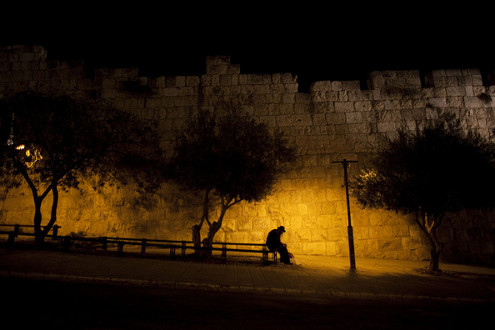
 It used to be that the soul fought with the body, until one conquered the other with force. Then the Baal Shem Tov came and taught a new path: The body, too, could come to appreciate those things the soul desires.
In the place of self-torture and fasting, the Baal Shem Tov showed his students the way of meditation and joy. Every need of the body, he taught, could provide a channel to carry the soul.
Rabbi Tzvi Freeman
Based on letters and talks of the Rebbe, Rabbi M. M. Schneerson
“Working With the Body”
Chabad.org
They said to him, “John’s disciples often fast and pray, and so do the disciples of the Pharisees, but yours go on eating and drinking.” Jesus answered, “Can you make the friends of the bridegroom fast while he is with them? But the time will come when the bridegroom will be taken from them; in those days they will fast.” –Luke 5:33-35
Judaism and Christianity in general see the connection between the soul and the body differently. In Christianity, the “desires of the flesh” are seen as always in opposition to the desires of the spirit (“the spirit is willing, but the flesh is weak” from Matthew 26:41). In order for a person to become closer to God, they must deny anything to do with the physical world and strive for the intangible realm of spiritual things. However for Jews, it’s a bit different.
There’s not much of a history of asceticism among Jews the way we see among the Christian saints (there are exceptions). The world was created by God which includes the pleasures of the world. This isn’t to say that a person is permitted to do anything he or she desires, but those things that Christians blush at enjoying, even within proper confines such as sex between a married couple, aren’t considered shameful, as long as such desires are disciplined and only are expressed as God wills. In fact, within Jewish thought, it is believed that for every sinful impulse, God created an acceptable moral equivalent.
I suppose this is an odd topic to bring up, since the fast of Tisha b’Av begins today at sundown. This is the culmination of the Three Weeks of Mourning between the 17th of Tammuz and the Tisha b’Av commemorating the times of great suffering the Jewish people have endured throughout history. Yet God intends for us to mourn, not as a lifestyle, but only in its proper time and season:
There is a time for everything,
and a season for every activity under the heavens:
a time to be born and a time to die,
a time to plant and a time to uproot,
a time to kill and a time to heal,
a time to tear down and a time to build,
a time to weep and a time to laugh,
a time to mourn and a time to dance… –Ecclesiastes 3:1-4
The words of Jesus as recorded by Luke echo this quite strongly. We live in a broken world but we were given life, not only to serve God’s purpose, but to appreciate. Pleasurable things aren’t to be avoided, only enjoyed within the type of lifestyle we were provided by God. For the past three weeks, Jews all over the world have mourned. Tonight, many will fast and weep. Maybe even a few Christians will fast in solidarity with their Jewish brothers and sisters, and in acknowledgement of the fact that God mourns too over the suffering of His people.
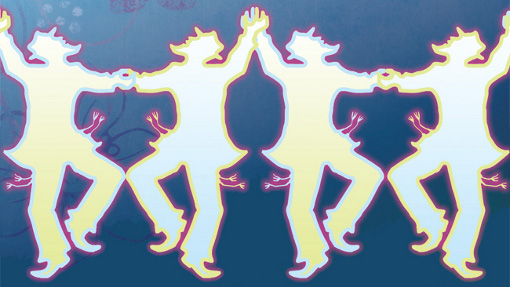 While the world has trouble and there is a time to fast, to repent, to cry, and to grieve, there are also times to celebrate, to dance, to laugh, to sing, and to praise God for life and the fact that He wants us to live it.
While we may long for Heaven or the life of the world to come, God did not intend for us to ignore where we are at and what we are doing right now. Rabbi Freeman expresses the Rebbe’s wisdom on the matter this way:
There is no moment more vital than the one right now. There is no space more crucial than the one in which you stand.
For this is the moment and this is the place from which Moshiach may come.
Tonight and tomorrow, we fast and pray and mourn. The day after, we may sing and laugh. God gave us life. God is good. There is a time to mourn and a time to dance.
Clap your hands, all you nations;
shout to God with cries of joy.
For the LORD Most High is awesome,
the great King over all the earth. –Psalm 47:1-2 (NIV)
In fact, we mourn and fast today because, for every descent, there is an ascent.
It is obvious that when Moshiach comes there will be no need to commemorate the Temple’s destruction and thus no reason to perpetuate these fasts. But why will they be celebrated as “holy days and days of rejoicing”?
The answer is that the four fasts are not just commemorations of tragic dates in Jewish history, but contain a hidden good of such magnitude that we will only be able to discern it when Moshiach comes. In fact, the fasts represent four stages in the progression toward Moshiach. We would never be able to attain the revelation of Moshiach were it not for the destruction and the exile. The entire exile may therefore be termed a “descent for the purpose of ascent.”
-from Merkos on Campus
Less than a week after Tisha b’Av, there is a day of dancing, quoting from Jewish Virtual Library:
“There were no better days for the people of Israel than the Fifteenth of Av and Yom Kippur, since on these days the daughters of Jerusalem go out dressed in white and dance in the vineyards. What they were saying: Young man, consider who you choose (to be your wife).” (Taanit 4:8).
L’Chaim! To life!
 Morning Meditations