Tag Archives: love

Freedom

Seven days shall you dwell in boothsLeviticus 23:42

… and you shall only be rejoicingDeuteronomy 16:15

Succos is the festival designated as the season of our gladness. Yet the commentaries state that one of the symbolisms of the succah, a temporary hut, is that we dwell in it for seven days to symbolize man’s temporary sojourn on earth for his average life span of seven decades (Psalms 90:10).

Human mortality is a rather sobering thought; it is hardly conducive to rejoicing. Most often we do not think about our mortality, and when circumstances force us to face it, we quickly dismiss it from our minds and go on acting as though we will live forever.

How different Torah values are from secular values! The Torah teaches us that there is an eternal life, a wholly spiritual life, whose bliss is far greater than the human mind can imagine. We are placed on this planet for our ephemeral earthly existence only to give us an opportunity to prepare for the eternal life.

The Torah teaches us to enjoy life, and if it restricts some pleasures, it is because we should enjoy life in a manner that befits a human being. Furthermore, our joy of living should not be diminished by the awareness of our mortality, nor need we deny it. The succah – the symbol of our temporary stay on earth – is beautifully decorated, and we enjoy our festive meals therein. Even our temporary existence can be beautiful and happy, and our faith in the eternal life should enhance that happiness.

Today I shall…

try to enjoy life as befits a spiritual person, knowing that the true life of man is not the fleeting one, but that of eternity.

-Rabbi Abraham J. Twerski
“Growing Each Day, Tishrei 15”
Aish.com

Throughout life people will make you mad, disrespect you and treat you bad. Let God deal with the things they do, cause hate in your heart will consume you too.

-Will Smith, American actor

I probably take myself too seriously. Sometimes my wife tells me that. I know it’s certainly true of me in my “online persona.” I guess that comes from being a professional writer. Writing is what I do, so it’s important to me. It’s pretty much my first, best expression of who I am. Not that I’m perfect at it of course. But I don’t paint, and I don’t play music, and I’m not that good a public speaker, and I don’t dance worth anything, so I’ve got to have one way of expressing myself that’s better than all the others.

For me, that is writing. I’ve said before that writing this blog has a therapeutic aspect to it. It helps for me to pound out my thoughts and feelings, to “wear my heart on my sleeve,” so to speak. I can better describe how I feel and think about God, Jesus, Christianity, Judaism, and lots of other things when I write. Not that everyone will agree with me, but then, not everybody has to agree with me.

In this season of joy, during Sukkot, I need to be reminded about the difference between what’s real and important and what’s more or less beside the point. A lot of what happens online is beside the point. No, it’s not that I don’t take my writing seriously, and it’s not that I don’t take the people who I interact with online seriously, but beyond a certain point, I have to let things go.

Some people steal joy, as if joy were something you have and they don’t. As if joy were something they’ll never have and they can’t stand that you have some. They steal it, even if they can’t use it themselves, just so you can’t use it, either.

No one can do that to you unless you let them. In real life, it’s harder to combat, especially if the person stealing your joy is important to you, especially if it’s someone you love. While I get hurt by people I love sometimes, no one I love steals my joy. I’d probably let them if they wanted to, because I love them, but they don’t do it because they love me and they know that stealing joy is wrong.

Online, there are no end of people who steal joy. They may not think of it in those terms, but that’s the net result of their interaction with others. It’s easier to try to steal someone else’s joy online because you can’t see them and they can’t see you. You are depersonalized. They can’t see that they’re hurting you, and so, if they have no empathy, compassion, or grace, they don’t have to care if they’re hurting you. They can verbally harangue you, insult you, make fun of you, and feel well justified in doing so, because you aren’t even human to them. You’re just an anonymous “thing” that they can attack and defeat. I guess that’s what it takes to make themselves feel better.

You’d think that it would be easy to let go of someone like that online. All you have to do is pull the plug on whatever communication conduit they use to connect to you. Stop visiting their blog. Ignore or delete their comments on your blog or even block their IP address. But it’s not that easy. It’s like slamming the door in someone’s face. Even when they’re hostile, and even when they’re abusive, if you’re a decent human being, it still feels rude to (metaphorically) slam the door in their face.

Most hostile and abusive people are usually victims of some kind. Most bullies and trolls online have a history of being bullied themselves. I guess that’s why I put up with some folks as long as I do. I realize that even when they’re in your face, making demands of you, telling you what to do, that it’s really their defense against how hurt they are inside. They’ve never dealt with their pain and never resolved their conflicts. The only way they know how to live inside their own skin is to project all of their “stuff” onto others.

So I was dumb, and I was foolish. I (mentally) cut someone loose but let them back in because I thought maybe there was hope that, though we’d always disagree, we could disagree with a sense of mutual respect. I was taking a risk, but you have to do that sometimes. Sometimes it’s worth it. This time it wasn’t.

You can’t really hate a victim because in many ways, they just can’t help themselves. In order to feel powerful, they have to be hostile. These sorts of people, especially guys, mistake anger and aggressiveness for power, not realizing that true power isn’t hostile or aggressive at all. True power is love, compassion, forgiveness, mercy, graciousness, and tenderness. Some people think the only power is intelligence, education, superiority, winning the argument, devastating twists of irrefutable logic, how well they halalachally perform a mitzvot. That’s the stuff they push in your face to show you that they’re not a victim, that they’re “winning,” that they’re better than you. Then they can feel better about themselves.

But they’ve missed the point. Paul was extremely clear about which gifts are more important. In fact, there’s one gift, one attribute that we can all possess and exercise if we choose to, that trumps all the rest.

If I speak in the tongues of men and of angels, but have not love, I am a noisy gong or a clanging cymbal. And if I have prophetic powers, and understand all mysteries and all knowledge, and if I have all faith, so as to remove mountains, but have not love, I am nothing. If I give away all I have, and if I deliver up my body to be burned, but have not love, I gain nothing.

Love is patient and kind; love does not envy or boast; it is not arrogant or rude. It does not insist on its own way; it is not irritable or resentful; it does not rejoice at wrongdoing, but rejoices with the truth. Love bears all things, believes all things, hopes all things, endures all things.

Love never ends. As for prophecies, they will pass away; as for tongues, they will cease; as for knowledge, it will pass away. For we know in part and we prophesy in part, but when the perfect comes, the partial will pass away. When I was a child, I spoke like a child, I thought like a child, I reasoned like a child. When I became a man, I gave up childish ways. For now we see in a mirror dimly, but then face to face. Now I know in part; then I shall know fully, even as I have been fully known.

So now faith, hope, and love abide, these three; but the greatest of these is love.

1 Corinthians 13:1-13 (ESV)

Really. Read that again. What is Paul saying? He’s not saying that “winning” in some Charlie Sheen fashion is the whole point. He’s saying that, even if you’re fabulous in speaking tongues, are an amazing prophet, even if you have faith that literally can move mountains, but you don’t have love, you have nothing.

GardeningLove is like a small, fragile, budding plant you nurture inside of you. If you don’t take care of it, the love will wither, and you will wither along with it. Love takes a lot of special attention but if you don’t care for the love inside of you, you’ll never be able to show it to others, especially those who really need to be loved. It almost seems paradoxical to say that in order to preserve your love, there are some people you have to let go. But those are the people who suck joy directly from your soul, murdering your love, blackening your heart, and damaging, not only you, but everyone around you who needs and depends on you.

Author C. JoyBell C. said, “You will find that it is necessary to let things go; simply for the reason that they are heavy. So let them go, let go of them. I tie no weights to my ankles.” Sometimes toxic people are the weights that hold us down. And even if it feels like giving up on another human being, it’s better to let go of the weight so that you can rebound and fly, than to keep hanging onto it and letting it; letting that person drag you down into hostility, hopelessness, and despair along with them.

I hope and pray that my “toxic person” finds his way and learns to let go of his own unneeded weights, but he’ll have to learn love, the kind of love Paul was talking about, first. That’s something you can’t teach someone, especially against their will and especially if they equate humility, compassion, forgiveness, and love with being humiliated and being weak.

This is the season of joy. This is the time to rediscover love, love of your fellow person and love of God. To soar up to the source of our flame, we have to unburden ourselves sometimes. In order to fly, you have to break free from the people and things that hold you down.

“Woe to him who does not feel that this life and the next are but one!”

-Nikos Kazantzakis from his novel
“Zorba the Greek”

Ki Tavo: Loving and Honoring God

BikkurimOur Sages teach: (Bava Basra 9b.) “A person who gives a coin to a poor person is granted six blessings; one who gratifies him is blessed elevenfold.” Now, gratifying does not necessarily mean giving more money. It means giving a positive feeling, showing the recipient that you care about him, and that he means something to you. When one so invests himself in another person, putting enough of himself into the stranger that the person feels appreciated, he has given something far greater than money. And so he receives a more ample blessing from G-d.

This leads to a deeper concept: Appreciation stems from involvement; the deeper the relationship between people, the more one appreciates the uniqueness of the other. When a person appreciates a colleague, he is motivated to do whatever he can for that other person.

These concepts apply, not only to our relationships with our fellow man, but also to our relationship with G-d.

-Rabbi Eli Touger
“Entering Deeper and Deeper”
Commentary on Torah Portion Ki Tavo
Chabad.org

“Teacher, which is the great commandment in the Law?” And he said to him, “You shall love the Lord your God with all your heart and with all your soul and with all your mind. This is the great and first commandment. And a second is like it: You shall love your neighbor as yourself. On these two commandments depend all the Law and the Prophets.”

Matthew 22:36-40 (ESV)

I’ve commented more than once that there is an inseparable relationship in the life of a believer between our relationship with other people and our relationship with God. We see here that not only does Jesus teach this lesson as the two most important commandments to learn and obey, but that both ancient and modern Judaism also cherishes this teaching. It resides at the heart of the Torah Portion for this week and should reside at the core who we are as people of God.

Rabbi Touger expands on his commentary and illuminates us further:

One of the major thrusts in Judaism is hakaras hatov, appreciation of the good which G-d constantly bestows upon us. And as with appreciation of our fellow man, the emphasis is on appreciating not only the material dimension of G-d’s kindness, but also the love and care which He showers on every person.

In this vein, we can understand the sequence of our Torah reading, Parshas Ki Savo. The reading begins by describing the mitzvah of bikkurim, (Deuteronomy 26:1-11.) the first fruits which the Jews would bring to the Beis HaMikdash, and shortly afterwards speaks of a covenant concerning the entire Torah. (Op. cit.: 16ff.)

What is the connection between these subjects?

The mitzvah of bikkurim was instituted to show that our gratitude for the good G-d has granted us, (Rashi, gloss to Deuteronomy 26:3.) and to display our appreciation to Him for “granting us all the blessings of this world.” (Sefer HaChinuch, mitzvah 606.) And this appreciation is not expressed merely by words of thanks, but through deed.

Rabbi Touger goes on to describe the deeds of ancient times, were to offer first fruits to God in deep appreciation for all that he bestowed upon the people of Israel, but that appreciation would be incomplete if we didn’t also offer gifts to our fellow human beings. I don’t mean just material goods, although these are important, but the gifts of compassion, mercy, kindness, and justice. From those gifts flow food for the hungry, comfort for the widow, provision for the bride, and spending time with the sick.

If we say we love God, how are we to express this today? Even a Jew cannot offer sacrifices without a Temple. As we approach the High Holidays, many Jews are giving abundantly to charity, offering impassioned prayers, and seeking to repair damaged relationships. In “offering” to God, we have no choice but to give to the people in need around us, for loving people is indeed loving God, just as He loves us.

If anyone truly intends to repent, either because of the approach of Rosh Hashanah and Yom Kippur or because of our imperative as Christians to continually repent before God through Jesus Christ, it would be foolish to imagine we didn’t have to repent and ask forgiveness of those we may have hurt with our careless words and actions.

But it goes beyond repentance and forgiveness and giving to charity. We have a perpetual responsibility to honor others as God honored Christ, for only in seeking the honor of our friend as if it were our own, can we truly become honorable before God and show the world that God deserves much great honor.

Let the honor of your friend be as dear to you as your own.

-Ethics of the Fathers 2:15

Pride, honor, and acclaim have an attraction all their own, but our Sages warn us that these may be destructive (Ethics of the Fathers 4:28). The frustration people may experience when they feel they did not receive due recognition may be extremely distressing.

People who crave honor may sometimes attempt to achieve it by deflating others, thinking that their own image is enhanced when others are disparaged. The truth, however, is just the reverse: when one deflates another, one’s own image is diminished.

Rabbi Nechunya’s students asked him, “By what merits did you achieve long life?” He answered, “I never accepted any honor that was at another person’s expense.” As an example the Talmud tells that when Rav Chana Bar Chanilai visited Rabbi Huna, he wanted to relieve the latter of carrying a shovel on his shoulder. Rabbi Huna objected, saying, “Since it is not your custom to be seen carrying a shovel, you should not do so now” (Megillah 28a). Rav Chana was willing to forgo his own honor for Rabbi Huna’s sake, but Rabbi Huna would not hear of it.

Why does such an attitude merit long life? A person who is not preoccupied with his image, and is not obsessed with receiving honor and public recognition, is free of the emotional stress and frustration that plague those whose cravings for acclaim are bottomless pits. These stresses can be psychologically and physically devastating, and dispensing with them can indeed prolong life.

Aptly did Rabbi Elazar HaKappar say that honor drives a man out of this world (Ethics of the Fathers 4:28). One who pursues honors in this world mortally harms his chance for happiness.

Today I shall…

concentrate on being respectful to others, and avoid pursuing recognition from others.

-Rabbi Abraham J. Twerski
“Growing Each Day, Elul 18”
Aish.com

Seek to show honor to God by honoring people in your midst, not just your friends or those who are like you, but the pauper, the outcast, the lonely, and misfit, for they are all Children of God, even as you are.

Good Shabbos.

Man On A String

interfaithFortunately, sociologist Steven M. Cohen has awakened me from my bloggy slumber with a post on Rosner’s Domain, a blog on L.A.’s Jewish Journal. Journalist/blogger Shmuel Rosner (who updates his blog just a wee bit more than I do) asks sociologist Steven M. Cohen, “Are you biased against intermarried Jews?” In essence, Cohen’s reply is that he has no problem with intermarried Jews, just with intermarriage.

-Julie Wiener
“Some Of My Best Friends Are Inmarried”
from the In the Mix series
The Jewish Week

I’ve missed Julie’s blogs. As an intermarried Christian husband to a Jewish wife, I have a sort of affinity with her favorite topic. On the other hand, even for an intermarried couple, my wife and I are very strange. We don’t fit anyone’s idea of intermarried, mainly because my wife’s parents were intermarried (her mother was Jewish) and she wasn’t raised in a Jewish household.

In a blog post called Being Married to the Girl with the Jewish Soul, I’ve mentioned how I feel about my wife, about her being Jewish, and about my absolute need for her to embrace her Judaism. If you haven’t read it yet, please do so before continuing here. It’ll provide a lot of context and dimension for what I’m going to say next.

Being intermarried is not bed of roses but it’s not exactly a bed of thorns, either. It does define a demarcation point between my wife and I on certain topics, but for the most part, our marriage is just like a lot of other marriages in the U.S. We’ve been married thirty years as of last April. We have three adult children. One of my sons is married and has a three-year old son of his own (my grandson, playmate, and fellow Spider-Man fan).

Another thing that makes our particular intermarriage unusual is my background in the Messianic Jewish/Hebrew Roots movement. As a blogger, I’m remain actively involved in that realm, but only because I tend to write on Jewish and Christian themes. My wife intermittently attends shul and I don’t attend a church or congregation of any kind (long story). We both have our faiths but except for brief moments of passionate interaction on some point, they have lives of their own and rarely show up in the same room. I started this blog fifteen months ago, in part to chronicle what I imagined would be my introduction into her religious world.

When that didn’t happen, I kept on writing because that’s just what I do. I write.

Back to why I’m writing this though. As I was reading Julie’s latest blog, I started thinking about my marriage and how it seems to mirror the larger dynamic between Christians and Jews in the world. More specifically, there is a significant parallel between how I live every day of my married life and the sort of relationship, call it a vision, I would wish upon the Christians and Jews to attempt to connect and interact within the Messianic space.

There’s a sort of debate going on in certain corners of the blogosphere about the exact interaction between Jews who believe that Jesus is the Messiah and those Christians who are drawn to a more Jewish (or Hebraic) lifestyle and worship template. For years, there’s been a kind of “jockeying for position” among the various groups that reside beneath the Messianic Jewish/Hebrew Roots umbrella regarding whether or not it was Christ’s original intent for non-Jewish disciples to perfectly emulate their Jewish mentors in all things, including a form of “Jewish” identity.

I used to believe that such an emulation should take place and now I don’t. Some people didn’t (and still don’t) appreciate that I changed my mind, let alone my lifestyle.

But here’s the interesting part.

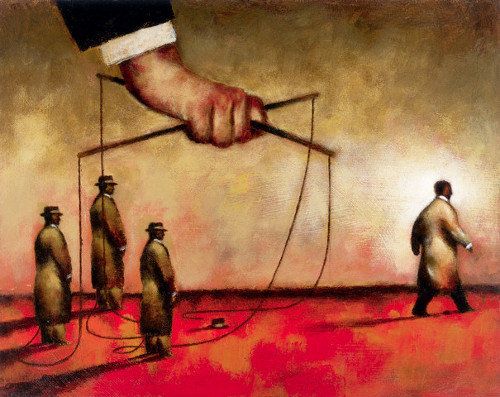
Sometimes, the motives for my change in perspective have been attributed by others to the influence of various individuals and groups in the Messianic Jewish world who advocate for a Jewish/Gentile distinction within Messianism. It was as if I was accused of being a type of Pinocchio to a Messianic Jewish Geppetto; a marionette dancing at the end of someone else’s strings.

I certainly won’t deny that I have been influenced by various folks in the online and real world Messianic community, but that alone probably wouldn’t have been enough to start me investigating the scholarly and Biblical evidence for Jewish and Christian covenant distinction and relationship. After all, organizational position statements and blogosphere commentaries have never changed anyone’s mind about anything.

But I’m married to the girl with the Jewish soul and that made all the difference in the world.

I know I’ve probably explained this before, but I don’t think people understand how important this is to me. I doubt that even my wife understands any of this. Remember in my previous blog post I stressed how vital it is for me to support my wife being Jewish. Obviously, I can’t direct her observance or her lifestyle, but I know how to avoid standing in her way.

In addition to traveling on my own journey of faith, I’ve been watching my wife’s journey. As the months and years passed, I saw just how critical it was and is for her to be part of the Jewish community, to be thought of and treated as a Jew. Every time I picked up a siddur or she “caught” me praying with a tallit and tefillin, I started to feel as if I were stealing from her. It was as if she walked into the room while my hand was in her purse. It was embarrassing and I felt it was pushing us apart rather than bringing us together.

intermarriageNot that she said anything, of course. She always supported me in whatever expression of my faith I chose to observe (though there were times when she was vocal about not understanding it) but I could sense a growing wedge between us. She tried to discourage me from leaving my One Law congregation and I know she didn’t want to influence any of my decisions about what I believed and how I acted upon those beliefs.

Fat chance. How can a husband not let himself be influenced by his wife if he cares about her?

Setting all of those people, those congregations, those organizations aside who have some sort of stake in Messianic worship between Jews and Christians, I’m still a Christian husband married to a Jewish wife. I’m not the perfect husband of course (and my wife reminds me of that periodically), but that doesn’t mean I don’t love my wife and that what’s important to her doesn’t matter to me.

Being Jewish is important to her. Forging a Jewish identity and Jewish relationships for the first time as she’s well into middle-age wasn’t easy for her. She worked very hard to establish her place in the community of Jews. Being married to a non-Jew isn’t a disaster for a Jew, but my being a Christian does throw a monkey wrench into her machine (she’d deny this). My being “Messianic” and performing traditional Jewish acts of worship absolutely threw a pipe bomb into her machine (she’d deny this, too).

My wife is more important to me than whether or not someone on a blog somewhere thinks I should wear a tallit when praying, devote myself to a day of complete rest on Saturday, and try talking to God in a bad approximation of Hebrew (I know some of you are thinking about Matthew 10:34-39, but I don’t think that applies here). That’s why I do what I do and don’t do a bunch other things that other people do.

This next part is important, so pay close attention here! While I agree that Jews continue to have a special covenant relationship with God and unique covenant responsibilities that are not shared by the rest of the world, (including the world of Christians) what really sent me “over the edge” was filtering all that information through the lens of watching my Jewish wife be Jewish. If you’re not a Christian husband married to a Jewish wife, you don’t have my perspective and you are absolutely not going to get the lived experience of my point of view.

But there’s hope. I think I know how to show you what I’m feeling. I’m getting to that part.

Being married to a Jewish wife has allowed me to see Judaism from a singular perspective. I can see how important it is for a Jewish person to be uniquely Jewish and how some Jews struggle when they see others trying to co-opt that uniqueness for their own use. Part of that uniqueness is the way Jews talk, and pray, and worship, and interact, and what they wear sometimes, and lots and lots of other “identity” stuff.

And I don’t want to put my hand in my wife’s “purse” because I love her and I don’t want to take stuff from her.

Please understand that I’m not dancing at the end of some puppeteer’s strings. I’m just a husband who is looking out for his wife. I suppose my methods of doing so seem strange or unusual, but even for an intermarried couple, we can be strange and unusual. She’s not a stereotypical Jew (if there is such a thing) and I certainly am a very odd Christian.

But that’s who I am and who I choose to be and why I’ve made the choices I’ve made. I don’t think these are bad choices and in fact, I think there is a lot to be gained by we Christians coming alongside the Jewish people, even as I am “alongside” my wife, and being co-heirs with Israel, just as my wife and I share our lives together.

I was discussing some of this with my friend Gene on his blog Daily Minyan, and at one point, I made this observation in response to one of his comments:

When I was at the FFOZ Shavuot conference last spring, I met a young Jewish woman named Jordan. She is a gifted scholar and during one of her presentations at the conference, she referred to the Gentiles who supported the spiritual and national redemption of Israel as the crown jewels of the nations. Your comment reminded me of that and the fact that we Gentile disciples of the Master do have a wonderful gift from God, and He has planned out a terrific future for us.

Jordan’s teaching meant a lot to me, not just because it presented such a wonderfully unified vision of a Christian/Jewish “partnership” in the Kingdom of God, but because it so amazingly resonated with how I see my marriage. If I could give everyone reading this blog a gift, it would be to see the relationship between Christianity (that is, all non-Jews who are disciples of Jesus, regardless of denominational or congregational affilation) and Israel the way I see myself and my wife together. If we Jewish and Christian disciples of Jesus could achieve that level of affection and intimacy toward each other, we would be fulfilling the words of the Master.

A new commandment I give to you, that you love one another: just as I have loved you, you also are to love one another. By this all people will know that you are my disciples, if you have love for one another.” –John 13:34-35 (ESV)

Love and peace.

Don’t Give Me Flowers

Dear Rabbi,

I am going to visit my grandmother’s grave and was planning to buy a bunch of her favorite flowers. But I have noticed that Jewish graves are usually flowerless. Is there anything wrong with placing a nice bouquet on her grave?

Answer:

While flowers are a beautiful gift to the living, they mean nothing to the dead. In death, the body which is ephemeral and temporary is gone, and all that remains is that eternal part of the person, their soul. The body, like a flower, blossoms and then fades away, but the soul, like a solid stone, lives on forever.

In the world of truth, the place we all go to after life on earth, what counts is the lasting impact we had on the world. It is the achievements of the soul, not of the body, that remain beyond the grave. The money we make, the holidays we go on, the food we eat and the games we play – these are all flowers that die along with us. But the good deeds we do, the love we show to others, the light we bring into the world, these are eternal.

If you want to honor your grandmother, take the money you would have spent on flowers and give it to charity in her memory. Then take a modest stone that costs you nothing and place it on her grave, to tell her that though she is gone, the impact she had on you is everlasting.

-Rabbi Aron Moss
“Why No Flowers on Jewish Graves?”
Chabad.org

I’m tempted to just leave it at that. I mean, how can I possibly add to such a beautiful sentiment? Rabbi Moss has given us such a perfect answer and pointed us in a direction that honors our deceased loved ones and continues to help the living who are in need.

I’ve said before that the religious blogosphere is replete with debates and discussions where two or more groups “jockey for position” and attempt to establish the “rightness” of their arguments relative to the “wrongness” of someone else’s. I don’t deny that it’s important to dynamically exchange ideas in order to seek truth and establish clarity among the worshipers of God, but that’s not really defines us.

As least I hope not.

We know that what is supposed to define the disciples of Jesus Christ is our love for one another, as he expressed it in his new commandment recorded in John 13:34. As far as I know, I may be one of the few people in the religious blogging space who spends so much time “invoking” this new commandment of the Master’s as both lesson and plea to the body of believers (am I beating a dead horse?).

Last week, on Judah Himango’s blog, I suggested that we both (and anyone else who was game) spend the next week blogging only on uplifting and inspirational topics and leave the “debates and discussions” for another time. I subsequently announced my intent on my own blog and for the past week, I’ve made every effort to avoid writing about controversy and to truly create messages that illustrate the beauty of God and the hearts of those who love Him. I hope I was successful, but that’s for my audience to judge.

It’s not like I’ll never post another uplifting and inspirational “meditation” again, but at the end of this coming Shabbat, the week will be over and I’ll open up the content of my blog to a wider range of topics. This week has taught me a few things. For one thing, two of my “followers” dropped off, so I guess blog posts about God, love, and compassion toward others aren’t for everyone. Activity levels have also dropped off somewhat, so I suppose this sort of theme doesn’t inspire a lot of discussion.

However, I also learned that it’s more difficult to be “dark and moody” when I am focused on crafting a message that must be supportive and uplifting toward anyone who reads it. No debating theological puzzles. No anguishing over personal issues. No staring into the dark abyss of my soul. No controversies. No disputes. No debates. No “us vs. them.” Just following the path created by a God who wants us to love Him by loving other human beings…and by loving ourselves as He loves us.

I thought that dedicating my daily blog posts to a limited theme would be restrictive and in one sense, it was. On the other hand, it was also very liberating. I could put down the weight of defining my theological and spiritual message in terms of what I opposed and was free to rise up out of the mud and seek out a higher purpose. There is no higher purpose than to serve God and to help other people.

It did require though, that I keep my mind more fluid and open to seeing the good in other people, other circumstances, and in everything I encountered.

There is nothing new under the sun. –Ecclesiastes 1:9

America was always there, long before Columbus discovered it. Penicillin killed bacteria long before Fleming discovered it. We could go on to list numerous discoveries which could have benefited mankind long before they came to our attention.

It has been said that when the student is ready, the teacher appears. We can say the same thing about discoveries: they become evident to us when we are ready for them.

Just what constitutes this state of readiness is still a mystery. While technological advances are usually contingent upon earlier progress, many other discoveries were right before our eyes, but we did not see them.

This concept is as true of ideas and concepts in our lives as it is true of scientific discoveries. The truth is out there, but we may fail to see it.

In psychotherapy, a therapist often points out something to a patient numerous times to no avail, until one day, “Eureka!” – a breakthrough. The patient may then complain, “Doctor, I have been coming to you for almost two years. Why did you never point this out to me before?” At this point, many therapists want to tear out their hair.

Just as patients have resistances to insights in psychotherapy, we may also resist awareness of important ideas and concepts in our lives. If we could sweep out these resistances, we could see ourselves with much more clarity. We must try to keep our minds open, particularly to those ideas we may not be too fond of.

Today I shall…

try to keep an open mind so that I may discover ideas that can be advantageous to myself and others.

-Rabbi Abraham J. Twerski
“Growing Each Day, Av 29”
Aish.com

We can think of leaving flowers on the grave of a loved one as something we do more for ourselves than for someone else. After all, Rabbi Moss is right in saying that the flowers mean nothing to the dead. The flowers look beautiful for a day and then fade, wilt, and finally die. Then someone has to come along, pick them up, and toss them in the trash.

In a hundred years, will all the debates and discussions on our “vital issues” in our blogs become dead flowers that have to be thrown in the trash?

But what of our good deeds, our acts of compassion, our expressions of love? Aren’t these the crowns that will last forever?

Everyone who competes in the games goes into strict training. They do it to get a crown that will not last, but we do it to get a crown that will last forever. –1 Corinthians 9:25 (NIV)

Like I said before, it’s not that we shouldn’t discuss, debate, and seek out the truth by placing it in a sort of “blogosphere crucible.” We should just keep our perspective and realize what is really important to people, to our world, and to God. Whoever “wins” a blogosphere debate may get a “crown” but it will not last. Whoever feeds a hungry person, visits a sick friend in the hospital, or comforts a widow in her grief will gain a crown that is eternal.

Re’eh: Choosing to Love

These concepts are relevant with regard to this week’s Torah reading, Parshas Re’eh, which begins: (Deuteronomy 11:26.) “See that I am placing before you today a blessing and a curse.” The portion continues to allude to free choice, reward and punishment: (Ibid.: 27-28.) “The blessing [will come] if you obey the commandments… and the curse [will come] if you do not heed… and go astray from the path which I have commanded.”

Moshe is telling the people that their observance of G-d’s commandments will not be a spontaneous response. Instead, they will constantly be required to make conscious choices.

Why does G-d grant man choice? To elevate him to a higher plane of Divine service. Were man’s choice between good and evil to come naturally, he would not have any sense of accomplishment. What would he have earned?

-Rabbi Eli Touger
“The Power of Sight”
from the “In the Garden of Torah” series
Commentary on Torah Portion Reeh
Chabad.org

But wouldn’t it be easier and a lot less hazardous to our souls if God didn’t give us a choice? After all, look at how badly we messed up the first choice we were ever given.

He said to the woman, “Did God actually say, ‘You shall not eat of any tree in the garden’?” And the woman said to the serpent, “We may eat of the fruit of the trees in the garden, but God said, ‘You shall not eat of the fruit of the tree that is in the midst of the garden, neither shall you touch it, lest you die.’” But the serpent said to the woman, “You will not surely die. For God knows that when you eat of it your eyes will be opened, and you will be like God, knowing good and evil.” So when the woman saw that the tree was good for food, and that it was a delight to the eyes, and that the tree was to be desired to make one wise, she took of its fruit and ate, and she also gave some to her husband who was with her, and he ate. Then the eyes of both were opened, and they knew that they were naked. And they sewed fig leaves together and made themselves loincloths. –Genesis 3:1-7 (ESV)

Were we elevated “to a higher plane of Divine service” on that particular occasion?

On the other hand, consider this.

You are raising a young child and trying to teach him good work habits as well as basic moral and ethical principles. On top of that, like all parents, you want your child to love and respect you. You can teach your child in a couple of different ways. You can threaten to punish your child if he doesn’t do what you ask of him, or you can offer rewards if he does what you want.

This is more or less how we tend to parent children. We put them in “time out” or take some other punitive action when they make “bad choices,” and we give them treats or allowances (money) for achieving certain goals.

But what we really want more than anything else, is for our children to do what we ask of them because they love us.

I mean, what Mom’s heart hasn’t melted when their little boy gives her a card made with construction paper, glitter, and colored with crayons saying “I love you” and it’s not even her birthday or Mother’s day? He did it just because he loves her.

Even the toughest Dad, if he has a heart at all, will turn to mush when his little girl jumps into his lap, gives him a big hug and says, “I love you, Daddy.”

You’re not alive if that doesn’t get to you.

What does God want?

And he said to him, “You shall love the Lord your God with all your heart and with all your soul and with all your mind. This is the great and first commandment. –Matthew 22:37-38 (ESV)

God loves people and He blesses us. He desired to bless the children of Israel, not because they were the best or the brightest or the most humble of all the peoples of the earth, but because He loved them (and He loves them still). The words “bless” and “blessed” are all over this week’s Torah portion. We also see from the often quoted John 3:16 that it wasn’t just the Israelites that God loved (and loves), but it’s the whole world. God loves all of His creations. He loves all of us who have been created in His image.

Naturally, He wants us to love Him back. He provides us with blessings and curses in order to do what we do as parents for our children. To discipline us. To teach us lessons in ethics and morals. To help us understand the difference between right and wrong. But most of all, He doesn’t want us to obey him just because of the blessings and curses. He wants us to obey Him because we love Him.

Be aware of the positive attributes and behaviors of the people with whom you come into contact and help them build upon their strengths. Encouragement is a much more powerful tool for change and growth than blaming and condemning. You can bring about miracles in people’s lives if you believe in their potential.

-Rabbi Zelig Pliskin
“Bring about Miracles in People’s Lives”
from the “Today’s Daily Lift” series
Aish.com

In Matthew 22:39, Jesus tells us that we can show our love to God by loving our neighbors as we love ourselves. We should show love to our neighbor, not because we want a reward or we fear a punishment, but because we love God and frankly, because it’s the right thing to do. Nevertheless, love brings blessings. Rabbi Touger finishes his commentary this way:

The ultimate expression of the potential of sight will be in the Era of the Redemption, with the fulfillment of the prophecy: (Isaiah 40:9) “The glory of G-d will be revealed and all flesh will see.” In contrast to the present era, when we can see only material entities and G-dliness is perceived as an external force, in that future time, we will see directly how G-dliness is the truth of all existence.

Nor is this merely a promise for the distant future. The Redemption is an imminent reality, so close that a foretaste of its revelations is possible today. Indeed, it is already possible to see manifestations of the blessings of Redemption in the events which have occurred to the Jewish people in the recent past.

Whenever we love God by acting out that love toward others, we see not only a vision of the ultimate redemption of the world that will occur when Jesus returns, but we summon something of that Messianic redemption in the very act of being loving. This applies not only to the Jewish people but to anyone who is learning to know and love God. This is also one of the values of the Shabbat, which is a foretaste of the Messianic Age wrapped up in a single twenty-four hour period.

Love God and love others, not because you want something or are afraid of something. Love because you know what it feels like to be loved. Love because you are loved. Just love.

Good Shabbos.


Orchards

Now, O Israel, what does Hashem, your God, ask of you? Only to fear Hashem, your God, to go in all His ways and to love Him, and to serve Hashem, your God with all your heart and with all your soul, to observe the commandments of Hashem and His decrees, which I command you today, for your benefit. Behold! To Hashem, your God, are the heavens and higheset heavens, the earth and everything that is in it. Only your forefathers did Hashem cherish to love them, and He chose their offspring after them – you – from among all the peoples, as this day.

Deuteronomy 10:12-15 (Stone Edition Tanakh)

If you love me, you will keep my mitzvot.

John 14:15 (DHE Gospels)

For the Christian, it might seem strange to try to compare these two verses. Contextually, the passage from Deuteronomy is being addressed to the Children of Israel as they are preparing to cross the Jordan and take possession of the Land of Israel, as promised by God to the descendants of Abraham, Isaac, and Jacob. When Moses says to “observe the commandments of Hashem and His decrees, which I command you today,” we generally understand that he (and God) mean the Israelites are to observe and obey all of the Torah commandments given to them at Sinai. The majority of those commandments are not typically observed by the modern church, at least as we understand them in traditional Christian doctrine. But we do grasp the need to, as a holy people, obey our God.

Then we have the commandment of Christ to “keep my mitzvot.” What does that mean?

The NIV translation of this verse states, “If you love me, you will obey what I command,” while the ESV translation renders it similarly as “If you love me, you will keep my commandments.” Mitzvot (singular: “mitzvah”) is a series or collection of commandments typically associated with the Torah, but in a more expansive sense, “mitzvot” carries the meaning of a group of charitable acts performed for the benefit of others. For a modern observant Jew, even studying the Torah commandments fulfills a mitzvah, and the Jewish concept of mitzvot is far more involved than simply obeying a list of “dos” and “don’ts,” extending into an extremely rich and robust way of life referred to as halachah.

Jesus was and is a Jew and as translated by the DHE Gospels, the word he used that we normally read in English as “commandments” is rendered “mitzvot” in order to capture the truer meaning of his likely intent. Jesus was a Jewish teacher talking to his Jewish disciples and within the historical, national, and linguistic context, his audience would have had a perfect understanding of his meaning.

But do we? What were Christ’s mitzvot that he expected his disciples to obey as a sign of their love for him?

Before trying to answer that question, let me point out something. As Moses is speaking to the Israelites in Deuteronomy 10, he knows his time is short. This is the last time he will be able to speak to the people of Israel. Shortly after he finishes, he will pass his authority to Joshua, who will lead the Israelites across the Jordan, and then Moses will die, his mission completed, at least as deemed necessary by God if not Moses himself.

Jesus, in John 13 and beyond, is also speaking to his disciples as he is preparing to die. Gethsemane, Golgotha, and the cross were only hours away.

Now the son of man is glorified, and God is glorified in him. Yes, God is glorified in Him and God will also glorify him in himself and will glorify him immediately. My sons, I will be with you for a little while longer. You will seek me, and what I have said to the Yehudim – “where I am going you will not be able to come.” –John 13:31-33 (DHE Gospels)

Moses and Jesus, both men on the cusp, both desperately in love with their people, knowing they will be leaving them soon, knowing that their last words are vital, knowing that everything is at stake, and everything will be lost should their followers not heed those words.

Moses and Jesus, both men who have commanded their followers to obey the mitzvot. We have a substantially established idea of the nature of the mitzvot that Moses expected the Israelites to obey. But what are the mitzvot of Jesus Christ?

I am giving you a new mitzvah: that you love one another. With this all will know that you are my disciples: if love dwells among you. –John 13:34-35 (DHE Gospels)

This is my mitzvah: that you love one another as I have loved you. There is no love greater than the love of one who gives his life on behalf of his companions. As for you, if you do what I command you, you are my companions because I have made known to you all that I have heard from my Father. You did not choose me; rather, it is I who chose you. I have charged you to go and produce fruit, and your fruit will endure. All that you ask from my Father in my name he will give you. I command you these things so that you will love one another. –John 15:12-17 (DHE Gospels)

However else you choose to consider the commandments of Jesus and of God as they apply to your life as a Christian or a Jew, the mitzvah of the Master has been laid at our feet. We are to love one another as he has loved us. How has Jesus loved us? He gave his life for his companions; his friends. How do you become a companion of the King of the Jews? By obeying his mitzvah, to love. If you love as he has loved, you become his friend and you will produce fruit. What is this fruit?

But the fruit of the Spirit is love, joy, peace, patience, kindness, goodness, faithfulness, gentleness, self-control; against such things there is no law. –Galatians 5:22-23 (ESV)

No law, no mitzvah opposes such fruit.

I know what you’re thinking. Could it be that simple?

Probably not. I’m sure it’s far more complicated than I’m making it. After all, the blogosphere burns up with discussions of what Jesus meant when he said “such and thus” or how to apply the dynamic interactions of law and grace. But Jesus commanded his disciples to “go and produce fruit.” Paul in his letter to the Galatians gives us one definition of “fruit,” which is “love, joy, peace, patience, kindness, goodness, faithfulness, gentleness, self-control.” I can’t say that I’m such an expert at flawlessly producing this fruit, especially on a consistent basis, but it seems clear that I should.

It also seems clear that we all, as disciples of Jesus; as Christians, should produce this fruit as a consequence of him loving us and us loving him. Like latter-day Johnny Appleseeds, we should go about planting fruit trees, promoting kindness and generosity, and watching the fruits of our labors grow.

We should love. We must love. I know I struggle in this as much or more than most of you. It may seem strange for someone as flawed as I am to invoke and promote the love of Christ among Christians and everyone else. But if we don’t say it out loud, if we don’t declare the mitzvah in public, how will we, will I be able to take the next step and express such a love?

We must learn to bear fruit by loving; I must learn to bear such fruit. We must all plant orchards.