
 I said the New Covenant applies to non-Jews the same way the Abrahamic does: some specific provisions are Israel-specific (land, great nation, bless those who bless you) while the blessings of the covenant are for “all the families of the earth” and “all nations.” Even before the New Covenant was initiated in Messiah’s death (initiated but not fully enacted) non-Jews were invited to God’s blessings in countless Psalms and prophetic passages and in the general invitation to wisdom.
Non-Jews are to read in Israel’s Torah and prophets and writings and find wisdom and righteousness. There is not a separate covenant. It is the covenant with Israel to be read along with Israel.
-Derek Lemen describing the content
of his recent video on Covenants
I was wrong.
I bet that’s not something you read in the blogosphere everyday.
I was used to thinking that Christianity had a separate and wholly contained covenant that connected the non-Jewish disciples of the Jewish Messiah to God. I couldn’t have been more mistaken. No wonder I couldn’t find a “discrete container” for this covenant anywhere in the Bible.
But what then? Are we Christians all existing inside an illusion? Did God never really intend for us to have a relationship with Him? I have to answer “no,” otherwise what was the whole point of Paul’s mission to the nations or Christ’s last command to his Jewish disciples in Matthew 28:18-20?
So where is this mythical covenant. I might as well start from scratch and ask what is a covenant? I grabbed a definition more or less at random from Carm.org:
A covenant (Hebrew berith, Greek diatheke) is a legal agreement between two or more parties. The word “covenant(s)” occurs 284 times in the Old Testament (as found in the New American Standard Bible). “Covenant(s)” occurs 37 times in the New Testament, which gives a total of 321 occurances (sic).
That’s probably not the best definition in existence, but it works.
Once I realized that I didn’t have an answer to a very basic question about my faith, I sent out a general “distress message” via email to the various people I trust to answer my honest but dumb questions. Derek Leman, whose qualifications include M.T.S in Hebrew Bible, Emory University and Rabbinic Studies, Messianic Jewish Theological Institute, was gracious enough to respond. Our set of email transactions included this:
Me: However, one of my problems is being able to point at the Bible and say “such and thus” chapter and verse is where you’ll find the “covenant with the Gentiles.” From what you said (and this is probably where my problem comes in), there is no central location for the “Gentile Messianic covenant.” It’s really a ratification of the previous covenants that allows the nations to partake within certain constraints. Correct?
Derek: Exactly.
I was recently criticized when I suggested that, to define the covenant that attaches the non-Jewish people to God, I’d have to do an inventory of different parts of the Bible. As it turns out, I was on the right track, but not quite right enough. We Gentile Christians are not attached to the God of Israel through Jesus Christ by a covenant that is specifically made with the nations. Instead, we receive blessings from already existing covenants that God made with the Jewish people.
But that presents a problem. If we Christians have a covenant relationship with God through covenants that were made with the Jewish people (Abrahamic and Mosaic, specifically) does that mean all of the conditions, requirements, and blessings of those covenants apply in exactly the same manner to us as they do to the Jewish people? In other words, does coming to faith in Jesus Christ make a non-Jewish person “Jewish?”
No, but this is the part that requires some work to discover.
There are three covenants that seem to apply: The Abrahamic covenant, the Mosaic covenant, and the New Covenant.
I’m borrowing heavily from Derek’s Covenants video here. Also, keep in mind, this information is really a summary. There’s a lot more detail that can be gleaned from a deeper look into each of these covenants.
Abrahamic
This is the covenant that God made with Abraham. You’ll find the announcement of the covenant in Genesis 12, the enactment of the covenant is in Genesis 15, and the sign of the covenant, which is circumcision, in Genesis 17. Derek explains that circumcision isn’t a requirement for the covenant to continue, but it is a requirement for Abraham’s descendants, through Isaac and Jacob specifically, to participate in the covenant. It is vitally important to recognize that the people of the Abrahamic covenant are Abraham’s descendants through Jacob, that is, the Jewish people.
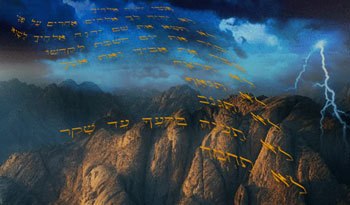 Some parts of that covenant are only for the Jewish people, specifically the land, that Israel will be made into a great nation, that Abraham’s name will be made great, that those who curse you (Abraham and his descendants through Jacob) will be cursed, those who bless you will be blessed.
However, there are parts of the covenant that are not limited to the Jewish people. There are blessings in the Abrahamic covenant that are intended for the righteous of the nations; blessings for all the families of the earth through Israel. God’s blessing comes to Christians through Israel in that Israel gave Christians the Bible and the Messiah, and Israel will be the center of Jesus’ return and where he will establish his kingdom on earth.
Mosaic
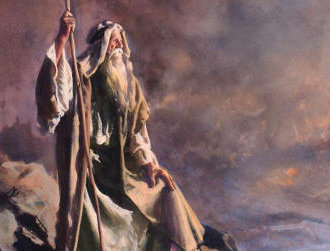
This is the covenant that God made specifically with the Children of Jacob through Moses at Sinai, and the conditions of the Sinai covenant between God and Israel were given as the Torah. The sign of the covenant is the Sabbath.
“You are to speak to the people of Israel and say, ‘Above all you shall keep my Sabbaths, for this is a sign between me and you throughout your generations, that you may know that I, the Lord, sanctify you.'” –Exodus 31:13 (ESV)
Like the Abrahamic covenant, the people of the Mosaic covenant are the Jewish people. However, unlike the Abrahamic covenant, the Mosaic covenant contains no blessings for the nations. The Mosaic covenant of Sinai is applied only to the Jewish people. This means the keeping of the Sabbaths, including the weekly Sabbath and all of the Festivals, are specifically covenant signs between God and the Jews.
New Covenant
The New Covenant can be found in both Jeremiah 31 and Ezekiel 36 however, according to Derek, this is not a New Covenant made with the Christian church. The people of the covenant, just like the Abrahamic and Mosaic covenants, are the Jewish people.
“Behold, the days are coming, declares the Lord, when I will make a new covenant with the house of Israel and the house of Judah, not like the covenant that I made with their fathers on the day when I took them by the hand to bring them out of the land of Egypt, my covenant that they broke, though I was their husband, declares the Lord. For this is the covenant that I will make with the house of Israel after those days, declares the Lord: I will put my law within them, and I will write it on their hearts. And I will be their God, and they shall be my people. And no longer shall each one teach his neighbor and each his brother, saying, ‘Know the Lord,’ for they shall all know me, from the least of them to the greatest, declares the Lord. For I will forgive their iniquity, and I will remember their sin no more.” –Jeremiah 31:31-34 (ESV)
“Therefore say to the house of Israel, Thus says the Lord God: It is not for your sake, O house of Israel, that I am about to act, but for the sake of my holy name, which you have profaned among the nations to which you came. And I will vindicate the holiness of my great name, which has been profaned among the nations, and which you have profaned among them. And the nations will know that I am the Lord, declares the Lord God, when through you I vindicate my holiness before their eyes. I will take you from the nations and gather you from all the countries and bring you into your own land. –Ezekiel 36:22-24 (ESV)
Also, countering what many believers may think, the New Covenant doesn’t replace the older covenants but instead, expands upon them and continues to include the previous covenants with Israel. In fact, the exile the Jewish people had suffered from was a direct penalty cited in the Mosaic covenant (see Ezekiel 36:16-19). The end of this chapter in Ezekiel (vv 33-38) reads very much like a return of the blessings of the Abrahamic and Mosaic covenants upon God’s people Israel:
“Thus says the Lord God: On the day that I cleanse you from all your iniquities, I will cause the cities to be inhabited, and the waste places shall be rebuilt. And the land that was desolate shall be tilled, instead of being the desolation that it was in the sight of all who passed by. And they will say, ‘This land that was desolate has become like the garden of Eden, and the waste and desolate and ruined cities are now fortified and inhabited.’ Then the nations that are left all around you shall know that I am the Lord; I have rebuilt the ruined places and replanted that which was desolate. I am the Lord; I have spoken, and I will do it.
“Thus says the Lord God: This also I will let the house of Israel ask me to do for them: to increase their people like a flock. Like the flock for sacrifices, like the flock at Jerusalem during her appointed feasts, so shall the waste cities be filled with flocks of people. Then they will know that I am the Lord.”
 But is that it? No, for like the Abrahamic covenant, although the people of the covenant are the Jewish people, there are blessings in the New Covenant that include all the nations of the world. These blessings are from God but they go through Israel to the nations. In fact, the blessings go from God, through Israel and specifically through Israel’s “first-born son,” the Messiah, Jesus, who we in the church call, “the Christ,” and then to us, everyone, anyone who comes to faith in God for the sake of Jesus, all the blessings through the Son of David.
“Behold, the days are coming, declares the Lord, when I will fulfill the promise I made to the house of Israel and the house of Judah. In those days and at that time I will cause a righteous Branch to spring up for David, and he shall execute justice and righteousness in the land. In those days Judah will be saved, and Jerusalem will dwell securely. And this is the name by which it will be called: ‘The Lord is our righteousness.’ –Jeremiah 33:14-16 (ESV)
This is only the foundation of my search for the “Jesus Covenant.” Obviously it doesn’t answer all the questions about how what is being said here connects further on down the road to the coming of the Messiah and the gathering of the people of the nations into the blessings I’ve (or rather, that Derek has) mentioned.
But it’s a start. I’m probably not the only Christian who hasn’t really explored the connections in the covenant blessings that bind us to God, so I hope a few others reading this will benefit. I don’t know if I can produce a second part of this series immediately. I’ll probably end up doing some reading and the High Holy Days are very near now. I trust that you’ll be patient. Of course, if those of you, like Derek, who are learned in such matters, choose to contribute to my “knowledge base,” either through email or by commenting here, I wouldn’t object.
“Jealousy comes from counting another’s blessings instead of your own.”
-Anonymous
To continue with this series, join me for Part 2 of The Jesus Covenant.








 Morning Meditations