Tag Archives: Paul

Devarim: At the Threshold of a Dream

Moshe recited the Book of Deuteronomy as the Jews stood on the banks on the Jordan, preparing to enter Eretz Yisrael. The crossing of the Jordan River was to be a spiritual as well as a geographic movement. During their journeys through the desert, the Jews depended on miraculous expressions of Divine favor: they ate manna, their water came from the Well of Miriam, and the Clouds of Glory preserved their garments. After entering Eretz Yisrael, however, the Jewish people were to live within the natural order, working the land and eating the fruits of their labor.

To make this transition possible, they required an approach to the Torah that would relate to man as he functions within his worldly environment. It was for this purpose that Moshe taught the Book of Deuteronomy.

Herein lies a connection to the present day, because we are also “on the banks of the Jordan” preparing to enter Eretz Yisrael together with Mashiach. It is through the approach emphasized by the Book of Deuteronomy fusing the word of G-d with mortal wisdom that we will merit the age when “the occupation of the entire world will be solely to know G-d,” the Era of the Redemption.

-Rabbi Eli Touger
“A Mortal Mouth Speaking G-d’s Word”
from the “In the Garden of the Torah” series
Commentary on Torah Portion Devarim

“I have to confess, I don’t really get it. If you believe in Jesus, you believe he is the King. The Lord. The Boss. Your Boss. There is no other option. It’s an integral part of his identity. The fact that some people have lost sight of that fact is evidence, to me, of how far we have come from a really Biblical idea of who Jesus is. We have forgotten that there is no such thing as a Jesus who is not our King, a Jesus we don’t have to obey.”

-Boaz Michael
Founder and President of First Fruits of Zion

I sometimes wonder what it must have been like to stand there on the banks of the Jordan river, watching and listening to Moses, knowing that this was the last time he would speak to Israel, knowing that they were on the threshold of the fulfilled promises of God, knowing that Moses wouldn’t be part of that fulfillment.

It must have been an incredible thrill mixed with passionate anticipation and more than a tinge of bitter sorrow. How could Israel go into Canaan, take possession of The Land as God had ordained, and yet have God deny the man they had come to know as Prophet, tzaddik, and even father entrance with them? What would the realization of a dream mean if Moses wasn’t there in their midst?

From Moshe’s point of view, how difficult it must have been for him. For over forty years, he had guarded the Israelites. He had guarded them from hunger and thirst, from losing their way, both geographically and spiritually. He had guarded them from hostile kingdoms and armies and he had protected them from their own folly. He had watched the entire generation he brought out of Egypt die one by one in the desert, and he had watched their children grow up and become the people who replaced them; the people who would enter The Land.

But he wouldn’t be going with them. Who would protect them from their folly should they speak against God and God’s anger flare against them?
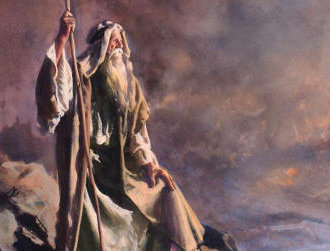
That’s what Deuteronomy is all about. Moshe’s last message to the Children of Israel before he was to die and they were to live and go forward. It was his last opportunity to speak out, to encourage them, to warn them, to beg them, to scream at them, “Don’t screw this up! I won’t be with you to save you anymore!”

The Chassidic sages have much to say about the last speech of Moses, trying to reconcile the words of God that came through the prophet in the first four books of Torah with the words of Moses that fill to the brim this last, fateful tome:

Our Sages note that the Book of Devarim differs from the first four Books of the Torah in that the latter are “from G-d’s mouth,” while Devarim is “from Moshe’s mouth.”

This does not — Heaven forfend — imply that the words in Mishneh Torah are not G-d’s. Rather, as Rashi explains: (Sanhedrin 56b.) “Moshe did not say Mishneh Torah to the Jews on his own, but as he would receive it from G-d he would repeat it to them.”

Since the words of Mishneh Torah too are not Moshe’s words but G-d’s, why are the first four Books of the Torah considered to be from “G-d’s mouth” while the Book of Devarim is considered to be from “Moshe’s mouth”; what difference is there between the first four Books and the fifth?

The inherent sanctity of Torah is such that it completely transcends this physical world; in order for it to descend within this world an intermediary is necessary — one who is both higher than this world yet within it. This intermediary bridges the gap between the sacred Torah and this corporeal world.

“Devarim”
from “The Chassidic Dimension” series
Commentary on Torah Portion Devarim
Based on Likkutei Sichos Vol. XIX, pp. 9-12
and on the teachings of the Lubavitcher Rebbe
Rabbi Menachem M. Schneerson
Chabad.org

I know. It’s difficult for me to comprehend as well. How can the first four books of Torah basically be from God as “dictated” to Moses and yet the fifth book be from Moshe’s own mouth and yet still be inspired by God?

I don’t know.

How can the letters of Paul be Paul’s own words, written in his “style,” expressing his own concerns, his own fears, his anger at the screw ups some of the churches were making, and still be the inspired word of God through the Holy Spirit?

It’s a mystery.

Can you have a rant and still have it be a “holy rant?”

I don’t know that either. But that’s what Deuteronomy is mostly about. The deep anguish and pain of a man who was about as close to God as any human being ever got expressed in his own words, through his own feelings and yet…

…and yet, God was still in all that somehow.

I don’t think I’m a prophet. Far from it. I’m just a guy with a blog. I sincerely doubt that there are any prophets in the world today that we could compare with Moses, Isaiah, and Jeremiah. Holy people, tzaddikim, sure, but no prophets. I don’t think there are “letter writers” (today, they’d all be emailers and bloggers) who have the special mission Paul had, to communicate to the churches in such a way that our words would become holy documents.

But we have our own words. As people of faith, we sometimes faintly hear the whispers of God. Most of the time, we have no idea what we’re hearing. It it our imagination? Is it just the wind? Is it only my feelings?

Paul wrote letters and, in all likelihood, he probably never had any idea that they’d become part of what we consider the Holy Scriptures. He was just doing his job, being the Messiah’s disciple, being the emissary to the Gentiles, trying to make it all work somehow, depending on the Spirit of God to get him through it all.

When Moses was standing there at the Jordan, did he realize that God would have him record everything he was saying later for the Torah? Did he think that it all ended with Numbers? After all, he knew he was to die soon. Maybe he thought the responsibility for recording God’s words was already past. How could he possibly imagine that God would have him record the moment of his own death and then what happened next?

I have no idea. I’m not theologian or historian. For all I know, Christian and Jewish scholars and authorities may have answered these questions ages ago.

Or not.

All I know…all I can tell for sure, is that both Moses and Paul were mere flesh and blood. Just like you and me. Moses had an unparalleled relationship with God. They spoke, for all intents and purposes, as if they were “face to face.” Paul saw a vision of the Master on the road to Damascus (Acts 9:1-6) and later was taken up into the third Heaven. His experience in the latter case goes something like this:

I know a man in Christ who fourteen years ago was caught up to the third heaven—whether in the body or out of the body I do not know, God knows. And I know that this man was caught up into paradise—whether in the body or out of the body I do not know, God knows – and he heard things that cannot be told, which man may not utter. –2 Corinthians 12:2-4 (ESV)

These were both men who led lives and had experiences probably none of us could even begin aspire to. And yet they were human beings, they got hungry and thirsty, they became angry and frustrated, they cried out to God.

Just like you and me.

So as Moses launched into his last, impassioned speech to the Israelites at the Jordan river, anticipating all that was to come and knowing that time was extremely short, God was somehow infused in this last book of Torah, and yet everything that was of Moses was there, too.

What does this teach us?

I can’t give you a definitive answer, I can only give you my answer.

I think it teaches us that a life of faith is a life of companionship. Some people think of time as a predator, stalking us all our lives, closing in on us as we get older and weaker, waiting for the moment to strike and make the kill. However, God shows us that time and a life spent in faith is a life of companionship. God goes with us on the journey and reminds us to cherish every moment, because it will never come again. What we leave behind is not as important as how we’ve lived. After all, we’re only mortal. (with apologies to Patrick Stewart and his alter ego Captain Picard as they appeared in Star Trek: Generations 1994)

Each morning when we wake up, we stand at the threshold of living out our dream. It’s not a dream of the house you’ve always wanted to live in, the clothes and the car you’ve always wanted to own, or the places you’ve always wanted to visit. It’s the dream of a day lived out with God as a companion. It’s the realization that we can be, and we indeed are, fully and completely ourselves, frail and mortal human beings, and yet we can still walk our path, step by step, with the lover of our souls. Moses walked this path until the day he died. So did Paul.

By the grace of God, so will we all. Like them, we will try to continually listen to His Voice and to obey His Words. But as we live out His Words, they will be expressed to the rest of the world through whatever we say and do. This is just like Moses in his farewell to Israel recorded in Deuteronomy. This is just like each of Paul’s letters to the various churches of the diaspora.

This is just like us every time we speak of our lives, our journey, our very existence at the side of our God. The words and the voice everyone hears are ours. But somehow, God is in them, too.

When the white eagle of the North is flying overhead
The browns, reds and golds of autumn lie in the gutter, dead.
Remember then, that summer birds with wings of fire flaying
Came to witness spring’s new hope, born of leaves decaying.
Just as new life will come from death, love will come at leisure.
Love of love, love of life and giving without measure
Gives in return a wondrous yearn of a promise almost seen.
Live hand-in-hand and together we’ll stand on the threshold of a dream.

-Graeme Edge
from the song “The Dream”
on the album On the Threshold of a Dream (1969)

Someday we will cross the threshold with our Master, our Messiah, and we will enter the final Shabbat rest in the Kingdom of Heaven. And the whole world will know God. The dream will become reality.

Good Shabbos.

My Beloved Profound Mystery

And that is what the Zohar says on the verse: “My soul, I desire You at night.” “One should love G-d with a love of the soul and the spirit, as they are attached to the body and the body loves them….” This is the interpretation of the verse: “My soul, I desire You,” which means, “Since you, G-d, are my true soul and life, therefore do I desire You.” That is to say, “I long and yearn for You like a man who craves the life of his soul, and when he is weak and exhausted he longs and yearns for his soul to revive in him (lit., ‘to return to him’).

“Likewise when he goes to sleep, he longs and yearns for his soul to be restored to him when he awakens from his sleep. So do I long and yearn to draw within me the infinite light of the blessed Ein Sof, the Life of true life, through engaging in the [study of the] Torah when I awaken during the night from my sleep”; for the Torah and the Holy One, blessed be He, are one and the same.

Today’s Tanya Lesson (Listen online)
Likutei Amarim, beginning of Chapter 44
By Rabbi Schneur Zalman of Liadi (1745-1812)
founder of Chabad Chassidism
Elucidated by Rabbi Yosef Wineberg
Translated from Yiddish by Rabbi Levy Wineberg and Rabbi Sholom B. Wineberg
Edited by Uri Kaploun

Beloved of the soul, source of compassion,
Shape your servant to your will.
Then your servant will run like a deer to bow before you.
Your love will be sweeter than the honeycomb.
Majestic, beautiful, light of the universe,
My soul is lovesick for you;
I implore you, God, heal her
Be revealing to her your pleasant radiance;
Then she will be strengthened and healed
And will have eternal joy.
Timeless One, be compassionate
And have mercy on the one you love,
For this is my deepest desire:
To see your magnificent splendor.
This is what my heart longs for;
Have mercy and do not conceal yourself.
Reveal yourself, my Beloved,
And spread the shelter of your peace over me;
Light up the world with your glory;
We will celebrate you in joy.
Hurry, Beloved, the time has come,
And grant us grace, as in days of old.

“Yedid Nefesh”
-by Eleazer Ben Moses Azikri
A sixteenth-century Kabbalist
Quoted from easwaran.org

I think it’s safe to say that God loves you more than you love God. I don’t say that to be mean or to minimize your capacity to love God, only that God is infinite and His love is infinite. We are finite and mortal and frail. And yet in reading the excerpt I quoted from the Zohar and the beautiful and classic words of Yedid Nefesh, I can see that at our best, when we are able to touch the hem of the garment of God, our ability to love exceeds mere flesh and bone and blood and the soul of God becomes one with the soul of man.

I wonder if Paul’s commentary in his letter to the church at Ephesius is a “midrash” of such a love between humanity and the Divine?

Husbands, love your wives, as Christ loved the church and gave himself up for her, that he might sanctify her, having cleansed her by the washing of water with the word, so that he might present the church to himself in splendor, without spot or wrinkle or any such thing, that she might be holy and without blemish. In the same way husbands should love their wives as their own bodies. He who loves his wife loves himself. For no one ever hated his own flesh, but nourishes and cherishes it, just as Christ does the church, because we are members of his body. “Therefore a man shall leave his father and mother and hold fast to his wife, and the two shall become one flesh.” This mystery is profound, and I am saying that it refers to Christ and the church. –Ephesians 5:25-32 (ESV)

It is a profound mystery indeed.

You are altogether beautiful, my love;
there is no flaw in you. –Song of Solomon 4:7 (ESV)

Is this the soul of God speaking to man or the soul of man speaking to God?

Or both, intertwined in a graceful yet ephemeral dance?

As If Considering Angels

Broken AngelFor this very reason, make every effort to add to your faith, goodness; and to goodness, knowledge; and to knowledge, self-control; and to self-control, perseverance; and to perseverance, godliness; and to godliness, mutual affection; and to mutual affection, love. For if you possess these qualities in increasing measure, they will keep you from being ineffective and unproductive in your knowledge of our Lord Jesus Christ.2 Peter 1:5-8

Said Rabbi Joshua the son of Levi: Every day, an echo resounds from Mount Horeb, proclaiming and saying: “Woe is to the creatures who insult the Torah.” For one who does not occupy himself in Torah is considered an outcast, as is stated “A golden nose-ring in the snout of a swine, a beautiful woman bereft of reason.” And it says: “And the tablets are the work of G-d, and the writing is G-d’s writing, engraved on the tablets” ; read not “engraved” (charut) but “liberty” (chairut)—for there is no free individual, except for he who occupies himself with the study of Torah. And whoever occupies himself with the study of Torah is elevated, as is stated, “And from the gift to Nahaliel, and from Nahaliel to The Heights.”Ethics of the Fathers 6:2

I know these two quotes may not seem to go together, but consider this. Peter says that we should add faith to goodness and then add goodness to knowledge. What knowledge? Where does this knowledge come from? Rabbi Joshua ben Levi implies that knowledge comes from Torah by expressing the inverse that one who does not occupy himself with Torah “is considered an outcast” and is like a “golden nose-ring in the snout of a swine, a beautiful woman bereft of reason”.

Sounds pretty harsh, but then, so does Peter:

This is especially true of those who follow the corrupt desire of the flesh and despise authority. Bold and arrogant, they are not afraid to heap abuse on celestial beings; yet even angels, although they are stronger and more powerful, do not heap abuse on such beings when bringing judgment on them from the Lord. But these people blaspheme in matters they do not understand. They are like unreasoning animals, creatures of instinct, born only to be caught and destroyed, and like animals they too will perish. –2 Peter 2:10-12

I’ve been involved in a series of online discussions lately that have been critical of Talmud study among Christians. Specifically, the allegation is that the sages who documented the Oral law and established a system of rulings for the Jewish people, were the inheritors of the tradition of the Pharisees and that Jesus had nothing good to say about the Pharisees, citing examples such as this:

Then Jesus said to the crowds and to his disciples: “The teachers of the law and the Pharisees sit in Moses’ seat. So you must be careful to do everything they tell you. But do not do what they do, for they do not practice what they preach. They tie up heavy, cumbersome loads and put them on other people’s shoulders, but they themselves are not willing to lift a finger to move them. “Everything they do is done for people to see: They make their phylacteries wide and the tassels on their garments long; they love the place of honor at banquets and the most important seats in the synagogues; they love to be greeted with respect in the marketplaces and to be called ‘Rabbi’ by others. –Matthew 23:1-7

This is just one of the examples in the Gospels which cast all Pharisees everywhere in a particularly bad light, but as I commented recently, Jesus is upset with this group of Pharisees, not because they taught bad things, but because they didn’t practice what they taught! Keep that in mind. If the Pharisees had behaved consistently with their teachings, Jesus wouldn’t have had a problem with them at all. His only beef with the Pharisees is that they were hypocrites, not false teachers.

Think about it. If, as some have stated, the Talmudic scholars and sages have inherited the mantle of the Pharisees and they behaved consistently with their own teachings, then it is quite possible that the “Rebbe of Nazaret” wouldn’t have any problem with them either.

I know there are a lot of variables to consider and we won’t know for sure until Jesus returns to us, but based on this small bit of simple logic, we cannot reasonably discard or disdain anything in the Talmud based on the behavior of a collection of hypocritical religious authorities that operated in Roman-Judea in the time of Jesus. We can’t also reasonably apply the following to the Rabbis of the Talmud:

The Lord says: “These people come near to me with their mouth and honor me with their lips, but their hearts are far from me. Their worship of me is based on merely human rules they have been taught. Therefore once more I will astound these people with wonder upon wonder; the wisdom of the wise will perish, the intelligence of the intelligent will vanish.” –Isaiah 29:13-14

I know it’s enormously tempting to apply the words of the Prophet not only to the Pharisees but to the Talmudic sages as well. Certainly, if we think of the Talmudic writings as only the rules of men with no Biblical source, then we might be justified in doing so, but taken out of context, we don’t know if Isaiah is even considering the Oral Law (which he would have seen as Torah) or the Rabbinic commentaries and rulings on said-Oral Law (and Written Law), which are recorded in the Talmud. The rulings of the Rabbis don’t overwrite and contradict Torah, but rather, are intended to interpret and make sense of the Written and Oral Law for each generation of Jews as they met new challenges in applying a Torah lifestyle in an ever-changing world.

Here’s something else to consider:

At that time Jesus said, “I praise you, Father, Lord of heaven and earth, because you have hidden these things from the wise and learned, and revealed them to little children. Yes, Father, for this is what you were pleased to do. –Matthew 11:25-26

Taken together with some portions of the quote from Isaiah 29:13-14, these words of the Master might suggest that it’s bad to be intelligent, well-read, and educated. Why bother to learn how to read at all if intelligence is not to be trusted and if it’s better to be ignorant and untaught? I don’t think this is what the Master means here, but rather, he’s saying you don’t have to be a scholar to have access to the grace of God. Of course, he’s not saying grace is denied the learned sage, either.

It’s been suggested that Rabbinic judgments and rulings are not to be trusted and that the wisdom of the average individual, as guided by the Spirit, reading the Bible in English and outside of its history, culture, and other contexts, is far preferable to trusting and learning from people who have spent all of their lives pouring over Scripture and striving to master the teachings of God.

And yet Peter was critical “of those who follow the corrupt desire of the flesh and despise authority”. Further, he said that “First of all, understand this; no prophecy of Scripture is to be interpreted by an individual on his own, for never has prophecy come as a result of human willing – on the contrary, people moved by the Ruach HaKodesh (the Holy Spirit) spoke the message from God”. (2 Peter 1:20-21 [CJB]).

Cutting BranchesWe could be tempted to say Peter is confirming that all a person; any person, needs is the Holy Spirit to interpret the Bible, but he’s also speaking of Prophets like Isaiah, not the average guy on the street. We read the prophecies of Isaiah because he was a prophet of God and we’re not. We read the teachings of Jesus because he’s the Messiah and we’re not. Also, lest we forget, Paul, the Apostle to the Gentiles, and the key to bringing the Gospel of Jesus Christ to the nations of the world, was a very well-educated man…in fact, far more educated than many of Christ’s inner circle who were what we would consider today as blue-collar workers and laborers.

There’s no problem with who Jesus chose to be close to him as being, relatively speaking, uneducated, because, as I’ve already mentioned, the love of Christ isn’t primarily accessed through “book-learning”. But on the other hand, the fact that Paul was chosen by Jesus says that education and authority isn’t a problem either. Certainly, being learned and possessing authority requires that such a position be used with justice, honor, and humility. The Ethics of the Fathers 6:5 speaks to this:

Do not seek greatness for yourself, and do not lust for honor. More than you study, do. Desire not the table of kings, for your table is greater than theirs, and your crown is greater than theirs, and faithful is your Employer to pay you the rewards of your work.

In fact, from the same chapter (Chapter 6:6), we find that study of Torah (which includes Talmud in this context) yields people who have qualities such as:

love of G-d, love of humanity, love of charity, love of justice, love of rebuke, fleeing from honor, lack of arrogance in learning, reluctance to hand down rulings, participating in the burden of one’s fellow, judging him to the side of merit, correcting him, bringing him to a peaceful resolution [of his disputes], deliberation in study, asking and answering, listening and illuminating, learning in order to teach, learning in order to observe, wising one’s teacher, exactness in conveying a teaching, and saying something in the name of its speaker.

As long as the teacher behaves consistently with these, and the other teachings in the Torah and Talmud, what problem could this present? What problem could it present for any person of faith and good will who wishes to devote time to pondering this wisdom?

We see that taking Scripture out of context and applying an overly simple interpretation to what may turn out to be very complex matters of principle actually results in a disservice to the Prophets and Apostles, as well as to the later sages, and finally to Jesus and to God the Father.

We should all be very, very careful how we interpret and apply Scripture, especially if we use it to malign our teachers and scholars and, by inference, every religious Jew who has ever lived or will live, for they too revere the sages and attempt to live their lives by the principles of Torah, which have been established and interpreted across the ages.

I will bless those who bless you, and whoever curses you I will curse; and all peoples on earth will be blessed through you.” –Genesis 12:3

I do not want you to be ignorant of this mystery, brothers and sisters, so that you may not be conceited: Israel has experienced a hardening in part until the full number of the Gentiles has come in, and in this way all Israel will be saved. As it is written: “The deliverer will come from Zion; he will turn godlessness away from Jacob. And this is my covenant with them when I take away their sins.” –Romans 11:25-27

All Israel has a share in the World to Come, as is stated: “And your people are all righteous; they shall inherit the land forever. They are the shoot of My planting, the work of My hands, in which I take pride.” –Sanhedrin 11:1

for there is no free individual, except for he who occupies himself with the study of Torah. –Ethics of the Fathers 6:2

Do not denigrate the root, lest your branch be cut off from it.

Intermediaries

The Torah at SinaiAny belief that an intermediary between man and God could be used, whether necessary or even optional, has traditionally been considered heretical. Maimonides writes “God is the only one we may serve and praise….We may not act in this way toward anything beneath God, whether it be an angel, a star, or one of the elements…..There are no intermediaries between us and God. All our prayers should be directed towards God; nothing else should even be considered.”

-from Jewish Principles of Faith (Wikipedia)

It is a positive precept to pray every day to the blessed God for Scripture says, “and Him shall you serve” (D’varim 6:13); and through the Oral Tradition our Sages of blessed memory learned (Talmud Bavli, Ta’anith 2a) that this service means prayer. For Scripture states, “and to serve Him with all your heart” (D’varim 11:13): What is service with the heart? – prayer.

-from The Concise Book of Mitzvoth
Compiled by The Chafetz Chayim

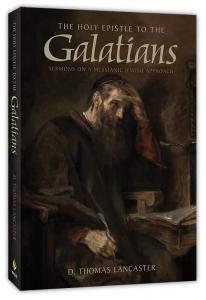
I’m continuing to read D. Thomas Lancaster’s book The Holy Epistle to the Galatians and this part of his commentary about Galatians 3:17-20 struck me as interesting:

Paul said angels put the Torah in place by an intermediary, which is Moses. The martyr Stephen made a similar statement in Acts 7:33 where he spoke of “the law delivered by angels”.

As we see in the previous quotes, one of the principle beliefs in Judaism is that there is no intermediary between a Jew and His God (I recall hearing my Jewish host at a Passover seder declare this in a toast over twenty years ago). Yet clearly, Moses was an intermediary. For that matter, so was Aaron and every High Priest after him, who entered the most Holy Place once a year on Yom Kippur to offer atonement for the nation of Israel.

Christians like to say, at the death of Jesus, when the parokhet (veil) was ripped top to bottom, exposing the most Holy Place (Matthew 27:51; Mark 15:18), that we were given direct access to God through prayer and are now able to “boldly approach the Throne of God” without an intermediary. And yet, both Hebrews 5:1-10 and Hebrews 7 describe Jesus as our High Priest in the Heavenly Court, interceding on behalf of humanity. Paul even said that:

In the same way, the Spirit helps us in our weakness. We do not know what we ought to pray for, but the Spirit himself intercedes for us with groans that words cannot express. –Romans 8:26

I know Jews don’t pray to Moses or Aaron, but at least during the time of the Tabernacle and Temple, Jews did go through the priesthood to offer korban to God. And do all Christians pray to God or, believing in the Trinity, do some pray directly to Christ?

If God is One and key parts of theology say there is no intermediary between man and God, regardless if you are a Jew or a Christian, then how can we reconcile all of these intermediaries?

Building Fellowship

Galatians by D.T. Lancaster“We ourselves are Jews by birth and not Gentile sinners; yet we know that [whether Jewish nor Gentile] a person is not justified by the works of the law [i.e., conversion, circumcision, etc.] but through faith in Jesus Christ, so we [the Jewish believers] also have believed in Christ Jesus, in order to be justified by faith in Christ and not by the works of the law, because by the works of the law no one will be justified. But if, in our endeavour to be justified in Christ, we too were found to be sinners [by eating and fellowshipping with Gentiles], is Christ then a servant of sin? [In other words, does becoming a believer mean we forsake Torah? Is eating and fellowshipping with Gentiles really a sin against Torah?] Certainly not! For if I rebuild what I tore down, I prove myself to be a transgressor. –Galatians 2:15-18

That is to say to Peter, “If you of all people, Peter, rebuild a sharp division between Jew and Gentile by removing yourself from table fellowship with Gentiles, you are rebuilding the barrier that you originally tore down. If you refuse to eat and worship with them, you rebuild the barrier that you originally tore down. You yourself were the first of the apostles to tear that separation down. If now you are putting it back up, then you are admitting that you were wrong in the first place, and you are proving yourself to have been living in sin and transgression.”

-from D. Thomas Lancaster’s book

The Holy Epistle to the Galatians

I received an advance copy of Lancaster’s book from First Fruits of Zion (FFOZ) yesterday and have since been eagerly devouring it. I’m not ready to write my full review, but Sermon 8: The Antioch Incident (the book is a compilation of 26 sermons, with each sermon organized as a chapter, given by Lancaster at Beth Immanuel Fellowship in 2008) brought up some interesting questions, and perhaps even a few answers.

For those of you who may not know, FFOZ is an educational ministry which produces informational materials, including books, audio lectures, and such, to both Jewish and non-Jewish believers in Jesus (Yeshua) in Messianic Judaism (MJ), although they have a wider audience in more traditional Christian (and perhaps more traditional Jewish) circles. One of the ongoing discussions in different branches of MJ is the relationship between Jewish and non-Jewish believers and the relationship those two groups have to the commandments of the Torah.

Without going into a lot of detail, some advocate for Gentiles in MJ to be obligated to the same 613 commandments that observant Jews are taught to obey, while others believe that Gentiles are only obligated to a small subset of those commandments (see Acts 15). The latter group believes that Gentiles who state that they are obligated to the full “yoke of Torah” obliterate Jewish covenant distinctiveness and “blend” Jews and Gentiles in Jesus into one, featureless mass. How Jewish and Gentile believers are supposed to interact given “distinctiveness boundaries”, including in matters of table fellowship, common observance of the Shabbat and the Festivals, has at times become hotly debated.

In reading Lancaster’s “Galatians”, we find this is not a new issue.

Lancaster (and FFOZ) support maintaining distinctions between Jewish Messianics and the Gentiles in MJ and Lancaster states:

We are one body, many parts. The foot is not the eye; the eye is not the foot. Oneness is not sameness. We can be one in the body but not have the same function or calling. Oneness is not sameness. There is one faith, one baptism, and one body, but that body has many parts.

D.T. LancasterLancaster is obviously referencing 1 Corinthians 12:12-31, but what is typically interpreted as a commentary on the struggles between different members of the Christian body sorting out the diversity of their spiritual gifts, Lancaster applies to the distinctions between Jewish and Gentile believers in Christ. I think his application is valid since it holds water in the Galatians context as Paul presents his argument, but that may come as a bit of a surprise if you do not believe that Jewish observance to the covenant of Moses was upheld by the early Jewish apostles for Jews and not for non-Jewish Christians. In other words, you may have a problem with Lancaster’s conclusions if you were taught that the law was done away with for Jews as well as for non-Jewish believers.

My primary interest in this subject, and in Lancaster’s book as a whole, is not from the perspective of Messianic Judaism. At this stage of my spiritual journey, I see myself as a Christian,married to a (non-believing) Jewish wife, who in immersing myself in Jewish Talmudic, mystic, and storytelling sources and traditions in order to better understand Christ who lived, died, and was resurrected a Jew and who taught, spoke, lived, and breathed in a completely Jewish manner and lifestyle. I don’t think you can understand who Jesus is unless you understand not only the Judaism of his day, but Judaism and Torah as they wind their way back to the beginning of Creation and forward to the current age.

This is the lens by which I look at the book and the pen by which I chronicle my thoughts, feelings, and the cries of my spirit.

I have friends who are Jewish believers in Christ and who are fully observant Jews, while I am a Gentile Christian. How are we to interact? Can we eat together? Can we pray together? In what manner may I observe the Shabbat, Passover, Shavuot, and Sukkot? How may I fast and pray on Yom Kippur (and does this offend Jesus who died to remove my sins once and for all)?

These are the questions that underlie “The Antioch Incident” and the entire “Galatians” book. These are the questions that, if you don’t consider them important to you now as a Christian or believing Jew, you definitely will when the Messiah comes.

So what are the answers? I believe I know them and I try to live them out as best I can. Paul worked with great effort as the apostle to the Gentiles to create and support communities where believing Jews and non-Jews freely interacted. Here is how Peter responded to Paul:

After much discussion, Peter got up and addressed them: “Brothers, you know that some time ago God made a choice among you that the Gentiles might hear from my lips the message of the gospel and believe. God, who knows the heart, showed that he accepted them by giving the Holy Spirit to them, just as he did to us. He did not discriminate between us and them, for he purified their hearts by faith. Now then, why do you try to test God by putting on the necks of Gentiles a yoke that neither we nor our ancestors have been able to bear? –Acts 15:7-10

Paul struggled with James, the Jerusalem Council, and other believing Jews as to whether or not Gentiles, once they came to faith in the Jewish Messiah, should be circumcised and convert to Judaism. Indeed, history records that some did, but Paul, who received his “Gospel” from the Messiah and Heaven and not from men, understood that it wasn’t necessary. Jesus is the gateway for the people of the world to enter into the Kingdom of Heaven and yet remain non-Jewish. All who are in the Messiah are One and God’s Name is One, but the members of the Messiah’s body, though one in baptism and spirit, are diverse in type and function. Just as my wife and I are different (being female and male, Jew and Christian) and yet “one flesh”, Jews and Gentiles in the Messiah are two and yet one.

I look forward to continuing this book and will post my full review when I finish.

Blessings.

Addendum: The full book review is now available.