Tag Archives: prayer

Grounded Prayers

The Chozeh of Lublin, zt”l, writes that prayer—even when it is thoughtless or lackluster—always has value. “In Arachin 23 we find that according to Beis Shammai— which is the way that things will be in the ultimate future—if something is declared hekdesh mistakenly, it is nevertheless consecrated. This alludes to the person who prays without any kavanah, whose mouth intones certain words but whose thoughts have boarded a very different train of thought. While prayer is compared to a sacrifice, this can be considered like sanctifying a sacrifice accidentally. In the future world, hekdesh declared erroneously is still holy. Despite its lack of perfection, it will still be precious when it is finally elevated on high.”

Nevertheless, prayers that are intoned without proper focus can sometimes take a very long time to ascend. The Baal Shem Tov, zt”l, once entered a shul with his disciples and immediately left. When asked why he refused to pray there, he gave a very strange explanation. “That shul is full of prayers.”

When he noticed that those with him were very confused by this reply he explained. “A shul should not be filled with Torah and tefilah, since these should ascend on high. It is only if the prayers were said in a very inferior manner that they remain below waiting for someone to elevate them.

On another occasion the Baal Shem Tov said, “Today I elevated prayers that have waited below for eighty years!”

The Tiferes Shlomo, zt”l, uses this story to explain another statement on today’s daf. “This is the deeper meaning of the statement of our sages that one who elevates his property is allowed to keep his tefillin. The word for tefillin…can also refer to prayers. The tefillos of one who sanctifies his property— meaning, one who nullifies himself and stops thinking about business during prayer—are elevated. This person who works to nullify himself as well as he can will be elevated.”

Daf Yomi Digest
Stories Off the Daf
“Accidental Hekdesh”
Arachin 23

I’ve talked about kavanah before. I’ve talked about what we bring to prayer and our struggles in prayer before. Yet this is something that I think is a common problem for many Christians and Jews. It’s difficult to disengage from our daily lives and to focus on being alone with God. Often, during prayer, I find that my thoughts have wandered and I am not so much praying to God as conducting an inventory the recent events in my life. I wonder if this is why the Master instructed his disciples to pray such a short prayer (Matthew 6:5-15). I can’t imagine there’d be much time in “the Lord’s prayer” to lose oneself in thought. But that’s just my opinion, of course.

However, we see from the Daf of Arachin 23 that perhaps even those prayers that are rooted in the mundane still have value and worth to God. I know this probably won’t make much sense to the Christians reading this “morning meditation” since Christianity doesn’t have such an elaborate set of thoughts and ideas woven around the concept of praying to God. For most people in the church, you pray in the name of Jesus, your prayer is heard by God, and that is that. In Judaism, the individual has a much more active and responsible role in prayer as part of the intricate and sometimes delicate relationship between a Jew and his Creator. I think that’s what attracts me to Jewish worship and study; the requirement that a person must be fully engaged and that what you do in worship and even in prayer matters. You’re not allowed to go on “automatic pilot” and expect that it doesn’t make a difference.

Are prayers grounded on earth when the proper kavanah is not attached and did men such as the Baal Shem Tov have the ability to release those prayers to Heaven after their lengthy “waiting period” in our realm? My tendency is to say “no”, but since the experience is subjective and completely mystical, there’s no way for me to know for sure. And yet, I find I don’t have to take a Hasidic Tale at face value and consider it a literal event in order to find value in its telling. Perhaps this story of the Baal Shem Tov and of synagogues already filled with “unascended” prayers can tell us something about our own prayers.

PleadI believe that God is aware of us in a very detailed and exquisite manner. I believe He is with us all of the time, not just with the human race as a whole and not even just with Christians or Jews as people groups and religious congregations as a whole, but with each and every one of us as individuals. How that works, I cannot say, but I believe it is true. God attended individually to such people as Noah, Abraham, Moses, and Peter (and of course to Jesus, but that goes without saying). Why can’t He attend to you and me? That’s why we pray, isn’t it…so that God will hear us…you and me…as individuals?

We see in the Daf that while any prayer has value, the prayer that is directed with kavanah has greater value and it ascends to God. What this tale teaches me is that prayer is not only a mitzvah but a discipline. It isn’t just sitting around with a cup of coffee at the kitchen table “talking” to God, although that has value too, but it is a personal struggle with God as (and I’ve said this before) Jacob struggled with the angel (Genesis 32:22-32). If you enter a wrestling match or any “martial” encounter with another person and you are not completely focused on the “fight”, you will end up with your opponent handing your head to you. You will be battered and knocked to the mat with nothing but your bruises to show for the effort. While it is true that Jacob also came away from such an encounter with an injury, he also received a blessing. But he had to be fulling involved with the angel as we must be fully involved with God in prayer.

Prayer is a comfort and a mitzvah but it is also a discipline. Prayer can come in many forms including liturgical, spontaneous, and even hitbodeut. Prayer can even be a violent encounter with God but that encounter can show us so much, and in our encounter, our prayers can soar to the heights of Heaven. Or, if we let it, prayer can be passive and rote and leave a puddle of thoughts and feelings on the ground like the remains of yesterday’s rain. If we want our “rain” to ascend, we must provide the kavanah and give our prayer wings.

Praying and the Pain of Thorns

Most of us expect prayer to inspire and comfort us. The grandeur of the synagogue, its architectural beauty and music, the peacefulness of the setting – all of these convey the sense that Jewish prayer is about feeling peace. We expect that participating in a service will touch us uniquely and deeply. So when we do not feel that peace, we feel let down.

But if Jewish life is about struggle, we should be suspicious of the assumption that prayer is entirely about peace or comfort. If prayer were designed only to provide comfort, would it contribute to our struggle? Probably not. If prayer were designed only to move and to touch us, if comfort and joy were its only goals, Jewish prayer would actually undermine the difficult effort involved in Jewish spirituality.

-Rabbi Daniel Gordis
“Prayer – Jewish Spirituality and the Struggle to Become” (pp 164-5)
God Was Not In The Fire

This is probably very mysterious to most Christians. Why shouldn’t prayer be about “comfort and joy” instead of struggle? Who wants to struggle with God and with themselves when they are hurt or sick or scared? We want peace when we’re in trouble and praying to God, and we want peace now!

And sometimes, God delivers.

And a lot of times, He doesn’t, at least in the immediate sense of providing instantaneous, overwhelming peace.

Not that I am speaking of being in need, for I have learned in whatever situation I am to be content. I know how to be brought low, and I know how to abound. In any and every circumstance, I have learned the secret of facing plenty and hunger, abundance and need. I can do all things through him who strengthens me. –Philippians 4:11-13 (ESV)

Does any of this mean that Paul never contended with God as Jacob contended with the angel (Genesis 32:22-32)? Here’s the answer.

So to keep me from becoming conceited because of the surpassing greatness of the revelations, a thorn was given me in the flesh, a messenger of Satan to harass me, to keep me from becoming conceited. Three times I pleaded with the Lord about this, that it should leave me. But he said to me, “My grace is sufficient for you, for my power is made perfect in weakness.” Therefore I will boast all the more gladly of my weaknesses, so that the power of Christ may rest upon me. For the sake of Christ, then, I am content with weaknesses, insults, hardships, persecutions, and calamities. For when I am weak, then I am strong. –2 Corinthians 12:7-10 (ESV)

Imagine the conversation (repeat three times):

Paul: Ouch, God! This hurts! Can you please take it away now?

God: No.

Paul: Why not? It’s not like I deserve this. Look at all the good I’ve done in the name of the Moshiach. Half the time, I can’t concentrate because of the pain. Think about how much better I could serve you if I didn’t have this distraction.

God: I’m thinking about how big an ego you’ve got and how much more you’d serve it if you didn’t have to put up with the messenger of Satan I’ve allowed to be jammed into your side.

Paul: That’s not fair.

God: Job said that same thing to me and you know how I answered him.

Paul: I guess I’m stuck for an answer, but it still hurts.

God: It’s not about living without the struggle, it’s about learning to live with it. If you can do that, your message to the disciples among the Goyim will be all the more powerful. You must remember my servant Jacob, as the Goyim will remember my servant Paul.

I have some friends in the Puget Sound area named Joe and Heidi. They’re about my age. They enjoy hiking and photography and they love God. They both have cancer and spend almost all of the time that they’re not climbing over mountains and valleys, in lengthy sessions of treatment and testing. The tumors never seem to abate and the news I hear is often more bad than good. Their faith is virtually without parallel, but at times, so is their suffering and sorrow. They ask for prayer frequently and I pray for them constantly. But what do I pray? What am I supposed to pray? Jesus, tell me how I’m supposed to pray!

The answer probably seems obvious to you. “Pray for their healing,” you say. “Pray that God will give them both a complete and perfect cure,” you say. “Pray that they experience total comfort and joy and peace.”

Is there something wrong with my prayers? I pray for all that, but it doesn’t happen. God is supposed to give us what we need and even what we want if we pray in the name of Jesus Christ, right? Why isn’t it working?

If you ask Me anything in My name, I will do it. John 14:14 (NASB)

In that day you will not question Me about anything. Truly, truly, I say to you, if you ask the Father for anything in My name, He will give it to you. –John 16:23 (NASB)

It’s not working out the way he promised. Instead of being given what I ask for in the name of Christ, I feel like I’ve wrestled with an angel all night long. It’s not easy, it’s exhausting. I’m worn out and no closer to experiencing “comfort and joy,” let alone “contentment,” than I was when I started praying. As far as I can tell, Joe and Heidi are no closer to be cured of cancer now than when I started praying, and it’s not only me. A lot of believers are praying for them all the time. God, where are You when we need You?

That is why Jewish prayer tries to evoke not only peace and comfort, but wrestling and angst as well. Despite our desire to feel beauty and the comfort that often accompanies it, it may be precisely when we feel somewhat disconcerted and not entirely at ease that Jewish prayer may be accomplishing its most central goal. Indeed, that ideal for prayer is communicated by the very word that Jews use for the act of praying.

The Hebrew term for the verb “to pray” is “le-hitpalel,” which means “to judge oneself,” or even “to struggle with oneself.”

-Gordis (pg 165)

Now that is what I experience when I pray!

Rabbi Gordis goes on to explain that prayer is not sending out “Santa’s wish list” up to God so that His miracles can be delivered to us in flashy wrapping paper and tied in a pretty ribbons. Jewish Prayer is not a “Catechism” of devotional statements about what we believe, but a struggle with God and with ourselves, with faith and trust hanging in the balance, along with human lives.

Adon Olam or “Master of the Universe” is a classic Jewish prayer that encapsulates faith, trust, and struggle. The beginning of this 11th century poem speaks of a Jew’s absolute trust in the God of his Fathers, but as Gordis teaches:

…suddenly, after line six, the tone changes. Beginning with the seventh line, the focus shifts. The poet moves away from broad theological claims about God’s grandeur, focusing instead on the speaker’s intimate feelings about God. No longer is God endless and majestic; now, the poet speaks of “my God…a Rock in my travail at the time of distress.” Gone are the claims that “even after all things have come to an end, God alone, awesome, will remain King”; in their stead we hear “to His hand I entrust my spirit, when I sleep and when I wake.” Just as the Mishnah we examined above abruptly switched its emphasis from keva to kavvanah from one line to the next, this text suddenly focuses not on what we believe about God, but on how we feel about God.

-Gordis (pg 173)

The struggle in our spiritual journey of discovery of both God and who we are in God, is contained, not only in Adon Olam, but in the contents of the siddur; in all Jewish prayer. Contrary to what most Christians believe, Jewish prayer contains both spontaneous and liturgical elements that create the structure in which a Jew prays, as well as allowing a Jew’s prayers to fly up free, returning to God as a spark returns to the flame. It also provides the arena in which we wrestle with God and our own spiritual struggle as we progress along the rough and rocky path that leads from earth into heaven.

How can there be misery and suffering in a world created by a perfect and loving God? That unanswered question has resulted in many falling away from the faith and many more never coming near a God they see as horrible and destructive. And yet, the current condition of our world is not God’s fault but man’s. God allowed us to play in our world as a child living in a tinderbox might play with matches. God could have protected us the way any responsible parent would have kept matches out of the reach of a four-year old, but we were meant to be the caretakers of this world, and as such, we were given autonomy over it (Genesis 1:28). We are responsible for our own messes and if the concept of Tikkun Olam has any meaning, we are responsible for preparing the world for the arrival of the Moshiach, who will help us repair the world we damaged so completely, including the world of our lives.

Yes, God answers prayer and sometimes people are miraculously healed, both for His glory and because of His kindness, but prayer isn’t like putting a coin in a vending machine, pressing a few buttons, and expecting a delicious soft drink to come popping out to quench our thirst. Each prayer is a fresh encounter with God where He challenges us to become a little more holy than we were before, often by facing those things about ourselves and our world that are most ugly and repellent. We meet both the best and the worst in ourselves, and in the midst of that battle, we encounter our desperation and our fears. We also encounter the miracle of meeting God on neutral ground, neither heaven or earth, and occasionally find the miracles of joy and comfort. We also encounter the thorn.

Prayer isn’t just a gift where we get what we want. It’s also a place where we share our joys and sorrows with God, and where we begin to realize that even if the conditions of our lives never really change, we come to know that God is always with us, no matter where we go, or what is happening to us.

If God entered the Egyptian exile with Jacob (Genesis 46:4) and even entered the death camps with six million Jews, He also goes into chemotherapy with those who have cancer, lives with the tumors, and climbs along the mountain trails, sharing our struggles, our tears, and even our joy.

The Prayer of Cornelius

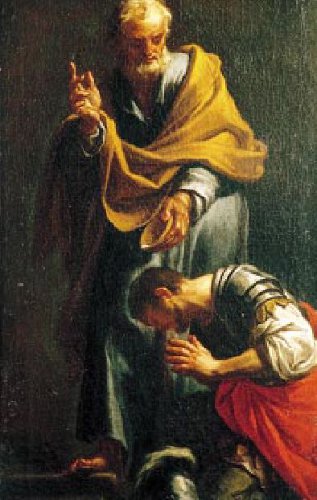
At Caesarea there was a man named Cornelius, a centurion of what was known as the Italian Cohort, a devout man who feared God with all his household, gave alms generously to the people, and prayed continually to God. About the ninth hour of the day he saw clearly in a vision an angel of God come in and say to him, “Cornelius.”Acts 10:1-3

The shortest prayer service of the day takes place in the afternoon, or at least just before sunset, and is called Mincha.

-Rabbi Berel Wein
“Mincha: the afternoon prayer”
Aish.com

moshe.gorin: The KSA says the ikar time for mincha is mincha ketana (9 1/2) hours after sunrise but the Rebbe davened before then. If you’re davening alone, when is best?

Torah613: The Rebbe davvened earlier (probably) because he davvened with the Yeshiva’s minyan, which was daily at 3:15.

Straight halacha would imply that Mincha Ketanah is better, so if it isn’t a question of davvening betzibur, MK is better.

Disaclaimer: As in all halachik questions, a competent Rov should be consulted.

mosheh5769: Whether we pray alone (bediavad) or with a Minyan (betzibbur), the prefered time for Mincha is Mincha K’tanah. Some say that if you pray in Mincha Gedola, you are still Yatza, but Lechatkhila, it is proper to pray at the time of Mincha K’tanah.

I don’t know where and who, but I have no doubt Taryag will help, there is a Posek who ruled that it is better to pray Mincha K’tanah alone than to pray Mincha Gedola with a Minyan. Why, I don’t remember, and I don’t know if other Poskim poskened in the same way.

Anyway, the best time to pray is at the time of Mincha K’tanah and not earlier. But of course, if a Shul has the custom to pray earlier (like the Yeshiva’s Minyan as it has been explained by Taryag) and if there need you to complete the Minyan, even if it is not your custom, you should complete the Minyan and daven earlier.

-from the discussion thread “Best time for Mincha”
Archived thread at Chabadtalk.com

We don’t know much more about the late Second Temple figure Cornelius than what we read in the verses I quoted above. He was what we call a “God-fearer;” a Gentile, a Roman centurion who, by definition, would have been a pagan polytheist, and who, during his assignment in the land of the Hebrews, came to realize that the God of Abraham, Isaac, and Jacob, was and is the God; the One and Unique Creator of the universe.

Coming to that realization alone must have taken great courage and conviction. His actual response to his realization was certainly astounding, given who he must have been and where he had come from. We know he “gave alms generously to the people”, who we assume to be the Jews among whom he lived. The messengers sent to bring Peter to Cornelius after the Centurion’s vision referred to him as “an upright and God-fearing man, who is well spoken of by the whole Jewish nation” (Acts 10:22). And oh wow! Cornelius was so favored by God that this happened.

And Cornelius said, “Four days ago, about this hour, I was praying in my house at the ninth hour, and behold, a man stood before me in bright clothing and said, ‘Cornelius, your prayer has been heard and your alms have been remembered before God. Send therefore to Joppa and ask for Simon who is called Peter. He is lodging in the house of Simon, a tanner, by the sea.’ So I sent for you at once, and you have been kind enough to come. Now therefore we are all here in the presence of God to hear all that you have been commanded by the Lord.” –Acts 10:30-33

Incidentally, the ninth hour is at about 3 p.m. in the way we tell time today, about the time of the Mincha prayers. But why is that important? So who taught Cornelius to pray the Mincha prayers. Ok, there’s nothing to say that he was truly praying Mincha, but here’s why I think he was. Consider this.

The Roman Centurion Cornelius comes to faith in the One true God of the universe. Now what does he do? We know that he gives alms, probably to the poor among the Jews. Whatever else he did resulted in Cornelius being “well spoken of by the whole Jewish nation”, which is no small thing since he was also part of the Roman occupying army. As far as we are able to understand, that group of non-Jews who were called “God-fearers” worshiped on Shabbat among Jews in the synagogue. Where would he have learned the prayers and how to worship? What was the only available model Cornelius could have used to worship a God who was virtually unknown in the Greek and Roman world?

I’m not suggesting that Cornelius “lived as a Jew” in the sense of fully taking on Jewish customs including the various religious and identity markers. It is doubtful (but what do I know) that he would have shown up in the Court of the Gentiles at the Jerusalem Temple. After all, he had to consider appearances and what would the troops in the Italian Cohort have said if one of their Centurions was seen in such a public place among the Jews. On the other hand, his reputation preceded him among the Jewish people based on his being a devout and charitable man. Desiring to worship God above all other considerations, what would he have done? He would have consulted his Jewish mentors as to how to approach God. Prayer offered to the God of Israel is available to everyone, Jew and Gentile alike.

“Likewise, when a foreigner, who is not of your people Israel, comes from a far country for the sake of your great name and your mighty hand and your outstretched arm, when he comes and prays toward this house, hear from heaven your dwelling place and do according to all for which the foreigner calls to you, in order that all the peoples of the earth may know your name and fear you, as do your people Israel, and that they may know that this house that I have built is called by your name. –2 Chronicles 6:32-33

Even in the days of King Solomon, a non-Jew could come to Jerusalem, pray facing the Temple, and expect to be heard by God. Why couldn’t the Jews among whom Cornelius lived and worshiped have taught him the same thing?

How did Jews pray during the Second Temple period? I’m no expert, but assuming the Jews in the time of Cornelius and Peter had similar traditions about prayer to those of Jewish people today, they would have prayed as Jews pray now. They would have prayed the Shacharit (morning), Mincha (afternoon), and Maariv (evening) prayers. If Cornelius wanted to learn how to pray from the Jews, they would have taught him how to pray the way that they prayed, with perhaps only a few variations, because Cornelius was not Jewish. In those days, siddurim (prayer books) were not used and the prayers were generally memorized. That means, Cornelius would have had to say the prayers by memory, probably in Hebrew or Aramaic (given that the Centurion was posted to a foreign land, it’s not inconceivable that he was bi-lingual or multi-lingual). He also would have prayed at the times set by halacha for prayer which, in the afternoon, meant around 3 p.m. or the ninth hour.

Why am I writing this and why should you care? What does it matter to a Christian in the 21st century if a Roman centurion, who came to faith in Jesus almost 2,000 years ago, happened to worship and pray in a manner similar to the Jews? Have you ever wondered why Christians don’t pray in the same manner as the Jews today?

I’m not saying that we must pray morning, afternoon, and night (though it wouldn’t be a bad idea). I’m saying that there’s nothing stopping us from considering where we come from as a faith. However you pray and however you worship in your church, your way isn’t the only way. In fact, if you go back more than a few decades or a few centuries, the way you may consider “Christian” and “holy” probably wasn’t practiced, as least in a manner you’d recognize. Go back far enough, like 2,000 years, and the way a God-fearer and a Christian prayed and worshiped wouldn’t be much different than the way a Jew prayed and worshiped.

Imagine that.

We tend to take prayer and worship for granted because we can always pray and worship anytime we want. But in many ways, the church considers prayer and worship as optional or at least voluntary. We get to choose our own way and manner of doing things. However, for believers and God-fearers like Cornelius, that privlege and honor to worship the King may have come with a commandment attached, maybe at the level of rudimentary “halacha” for non-Jews who had faith.

Today’s amud discusses the halachah regarding hearing the Torah reading when one is in prison. Although today in many places things may be different, it used to be that most prisons would not allow a sefer Torah inside—even for an important person or a minyan of prisoners. When the Vilna Gaon spent about four weeks imprisoned it was impossible for him to fulfill the mitzvah of hearing the Torah reading. After he left prison he called a baal koreh to read for him all four parshios he had missed while in prison.

Although missing so many weeks is very unusual, many greats were meticulous to make up the reading that they had missed that day.

Mishna Berura Yomi Digest
Stories to Share
“The Prisoner’s Duty”
Siman 135, Seif 11-14

Our Gemara reviews a series of Mishnayos where the obligation to fulfill mitzvos is taught to be more inclusive than plainly stated. Regarding the mitzvah to read the Megillah on Purim, R’ Yehoshua b. Levi teaches that the expanded inference is meant to include women. Although this rabbinic mitzvah is one that is restricted to time, and women are generally exempt, here woman are obligated because “they were also included in the miracle.”

Rashi explains that women are obligated in the mitzvah to read the Megillah to the extent that a woman may read the Megillah for her husband or other men.

Daf Yomi Digest
Distinctive Insight
“Women’s obligation in reading and hearing the Megillah”
Arachin 3

The level of “commandedness” which defines Jewish tradition, worship, and prayer seems very “heavy-handed” to most Christians and the spectre of “man-made rulings” is generally disdained in the church (and among many Gentile believers to call themselves “Messianics”). And yet, how would an “upright and God-fearing man” like Cornelius have seen his responsibilities to God as taught to him by his Jewish mentors? Would the Jewish sense of halacha have meant to him what it meant to the Jews? We don’t know. But imagine if we, as Christians, could experience some of the sense of duty and obligation to God, to the prayers, to our way of worship, as Cornelius may have? How much more would God be a part of our lives today? How much more would God be our lives today?

ShemaOne of the functions of tradition and halacha in the life of a Jew is to make every act holy. You cannot eat without blessing God and considering the food on the plate sitting in front of you (or even without considering the plate). You cannot wake up in the morning without gratefully thanking God for returning your life to you. You cannot go to bed at night without asking God to send his angels to guard your soul as you sleep. You cannot progress through your day without ceasing your labors at specific hours in order to devote yourself to God in prayer. And for one day a week, you cannot do many things as you do them on the other days of the week, but instead, you cease labor entirely and dedicate the day to family, prayer, worship, and God.

I’m still not saying that as Christians we should live like Jews, but consider what we’re missing by not taking tradition more seriously. Tradition can be like a straight-jacket or a pair of wings. It can bind us inescapably to a collection of actions and rules that threaten to smother us, or it can send us free into flight away from a mundane world and into the presence of God with practically every move we make.

Maybe this is why the Jews considered the foreigner Cornelius an “upright and God-fearing man”. Maybe this is why God found that Cornelius merited a vision of an angel, and made him and his household a bridge between God-fearers and disciples of Christ.

While Peter was still saying these things, the Holy Spirit fell on all who heard the word. And the believers from among the circumcised who had come with Peter were amazed, because the gift of the Holy Spirit was poured out even on the Gentiles. For they were hearing them speaking in tongues and extolling God. Then Peter declared, “Can anyone withhold water for baptizing these people, who have received the Holy Spirit just as we have?” And he commanded them to be baptized in the name of Jesus Christ. –Acts 10:44-48

Amen.

Recovered Priorities

Once there was a shopkeeper who was very successful and made a fortune off of the people of his city and the surrounding environs. Virtually every waking minute was taken up with work. Not only did he lack time to learn one word of Torah, this gentleman didn’t even have enough time to daven. Since he worked until late at night it was hard for him to get up on time in the morning. He invariably arrived at shul around the time of borchu. Of course, since he always needed to rush to his business, he would leave early and never remained until aleinu.

When this businessman grew older he started to notice that his hair was turning grey. The shock of his own encroaching mortality inspired him to make a rigorous cheshbon hanefesh. He decided that from that day on he would have a daily seder of several hours of Torah study after davening no matter what.

But his partner wondered why this man, always so regular in the past, did not come to help the moment the store opened at 7:00 AM. When he finally arrived somewhat after ten, his partner was a little annoyed with him. “Where were you?” blurted the partner.

“I couldn’t make it on time today,” he replied vaguely.

The next day the partner in the store anxiously awaited the reformed businessman, but to no avail. When this man finally arrived at the store, his partner virtually pounced on him. “Are you crazy? We cannot run a business this way!”

But the partner who had done teshuvah also did not mince words. “Listen carefully. What would you have done if the malach hamaves had come for me? Would you also insist that I simply may not die because our store is filled with customers? So I want you to imagine that, during those first three hours of business in the morning, I have left the world. Why should it bother you if after a couple of hours I am revived from the dead and come to lend a hand at the business?”

Mishna Berura Yomi Digest
Stories to Share
“Early Departure”
Siman 132 Seir 2

The story of the shopkeeper is interesting because it’s not about a person who goes from being an atheist to finding God. It’s the story of a religious person who was just too busy for God. That is, until he got his “wake up call.” I’m glad his revelation was as minor as simply noticing he was turning grey and getting older. For some people, it’s more dramatic, like a heart attack, or the death of a loved one due to cancer. It’s a shame we need such “reminders” at all, but that’s human nature. Even as people of faith, we tend to take God and His gifts (wealth, health) for granted until He gives us a reason not to. Of course we should go to God because He is God, but usually we need a “better” reason than that.

OK, there is no better reason to go to God than because He is King, but as we see from the shopkeeper’s example, we can become hopelessly tied up in our day-to-day lives and all of the immediate priorities we feel cannot wait for a few minutes, let alone a few hours. We may even have someone around us like the shopkeeper’s partner who continued to harass this man about the time he diverted away from business in order to meet his obligations to his Creator.

I found this part of the narrative particularly interesting:

So I want you to imagine that, during those first three hours of business in the morning, I have left the world. Why should it bother you if after a couple of hours I am revived from the dead and come to lend a hand at the business?”

The shopkeeper, in meeting with God for the first three hours of his day, effectively exited the world as we know it and was considered “dead” to the pressures and demands of life. He was “revived” upon leaving the presence of God and as he re-entered the world of the living in order to satisfy the requirements of his present existence. This is a concept not unknown in Judaism or Christianity.

I gratefully thank you living and existing King, for returning my soul to me with compassion. Abundant is Your faithfulness. –Modeh Ani

This is the first blessing an observant Jew recites upon awakening in the morning, usually even before getting out of bed. In religious Judaism, some consider sleep to be “made up” of a significant portion of “death”. It’s as if in sleep, we are closer to the realm of death and thus more at risk of entering its “influence” than when we’re awake.

Christianity expresses a similar sentiment, but the blessing is said before going to bed. If you were raised in a Christian family, you may have said this prayer at bedtime when you were a child.

Now I lay me down to sleep.
I pray the Lord my soul to keep.
If I should die before I wake.
I pray the Lord my soul to take.

I suppose I should mention that in Judaism the Bedtime Shema also contains imagery of entering into a state approaching death and asking God for protection.

The shopkeeper thought he didn’t have time to insert his service to God in his busy life. But when he realized that his life could end at any moment, he knew he didn’t have the same amount of time to devote to business as he did before because he needed to enter into God’s world first.

Why am I writing this? Because I think that “Early Departure” is a moving and meaningful tale, I think that it tells us something we need to be reminded of, and I know that I have put God on the “back burner” more than once because I’ve been too busy.

I also am aware that there are more days behind me than there are ahead and I’ve been arrogant about how I spend my time, ignoring the reality of my existence, which only continues by God’s grace. I suppose this can be considered the latest in a long list of “stop and smell the roses” messages, and as trite as that may sound, it also has the benefit of being true.

Stop for a moment in the middle of your busy day. Take time out today and every day to gratefully thank the King of your life and to let Him know you haven’t forgotten that He is the King.

nightsky1

Struggling to Pray

On today’s amud we find that one should have intense kavanah when saying uva l’tzion. The gemara tells us that since the destruction of the Beis Hamikdash, the world rests upon the careful recital of this kedushah. Unfortunately, many people fail to maintain proper focus during prayer in general.

One day in the beis medrash, as the prayers were drawing to a close, Rav Levi Yitzchak of Berditchev zt”l seemed to be observing a group of his chasidim. While everyone was busy wrapping up their talleisim and tefillin, he made his way over to them. To their surprise, he approached them with a hearty greeting. “Shalom aleichem!” he thundered.

They looked somewhat puzzled to hear their rebbe offer the greeting traditionally given only after returning from a journey of at least three day’s duration. “But Rebbe,” they protested, “we haven’t been anywhere! We’ve been here in Berditchev all along!”

Rav Levi Yitzchak continued to make the rounds, shaking their hands vigorously, as if they were newly-arrived travelers, all smiles.

Suddenly, he turned serious and said, “From the way you were praying, it was clear that your minds were elsewhere! So, welcome back from Odessa, welcome home from the market in Lodz! Since none of you were actually here while you prayed, I was glad to welcome you back upon your return!”

Mishnah Berura Yomi Digest
Stories to Share
“Shalom Aleichem!”
Siman 132 Seif 1

Ouch. That’s embarrassing. I suppose God always notices when during prayer, our minds wander, but if we’re so obvious about it that someone watching us knows as well, then where is our kavanah; our intention? OK, I’ll admit it. During lengthy sessions of prayer (and some not so lengthy), it’s hard to keep focused on God or at least on honoring God in the manner He desires (not that anyone is perfect at this). Often, my mind drifts into a sort of monologue as if I were “talking” to God rather than entering into formal prayer in the presence of the King. I catch myself and try to redirect my thoughts but after another small bit of time passes, my mind starts to wander again. I suppose that’s one reason why praying with a siddur is an advantage. The prayer-book acts as a compass and a guide, directing prayer to where it is supposed to be traveling.

I know Christians tend to criticize the use of liturgical prayer as “lifeless” and “rote”, but I’ve just described the dangers in both liturgical and extemporaneous prayer. In either situation, we must strive to stay within the light and to pray with intention and dedication. Letting yourself “wander” in prayer is as if you are talking to your spouse about an important topic and little by little, you begin rambling about whatever thoughts happen to enter your head at the moment. Imagine what would happen if God were talking to us about something important (and when He “speaks”, it’s always important) and our minds started to wander, recalling the events of the day or planning out our tomorrow.

So how should we pray?

Luke 11:1 records such a request from Christ’s disciples.

One day Jesus was praying in a certain place. When he finished, one of his disciples said to him, “Lord, teach us to pray, just as John taught his disciples.”

In contrast, Matthew 6:1-4 gives us a teaching of the Master on prayer and without any intervention from the disciples, Jesus launches into instructing them (and us) how to pray (Matthew 6:5-15).

“This, then, is how you should pray:

“‘Our Father in heaven,
hallowed be your name,
your kingdom come,
your will be done,
on earth as it is in heaven.
Give us today our daily bread.
And forgive us our debts,
as we also have forgiven our debtors.
And lead us not into temptation,
but deliver us from the evil one.’

For if you forgive other people when they sin against you, your heavenly Father will also forgive you. But if you do not forgive others their sins, your Father will not forgive your sins.

In either case, Jesus is providing the disciples with something they apparently lacked: a template for how to pray to God. I can only conclude (this is just my opinion) that human beings need some sort of “form” to prayer to keep us focused. Adding on to that concept, we must make sure not to allow the form to take on a life of its own and become our intension. It’s a structure or a framework to help us from wandering, but it can, if we let it, substitute for our intension in prayer, as we see in Rav Levi Yitzchak’s criticism to his Chasidim.

However, according to Rabbi Moss at be-true.org, perhaps our difficulties in prayer are exactly what’s supposed to be happening.

Prayer can be a confronting experience. And that is exactly what it is supposed to be. Prayer is an inner battle waged between two distinct sides of your personality. Your spiritual self and your physical self, your body and your soul, are each vying for control over your mind. And it is not a quiet confrontation.

In yesterday’s meditation, I wrote:

We see that happening all of the time, even within the context of the Talmud itself. Judaism isn’t always about “getting it right” but rather, it’s sometimes about struggling with the Torah, other Jews, and God.

I was talking about the struggle in understanding God from the perspective of study, but here we see this struggle can be applied to prayer as well. Although we have the famous example of Jacob wrestling with the Angel (Genesis 32:22-32) as an illustration of how Jews in general struggle in their relationship with God, I think this can apply to anyone who encounters God through faith. As much as we may not want to admit it, we do struggle with God in a “wrestling match” that pits our humanity against our holiness, as Jacob was perhaps pitted between those two aspects of his existence (and I commented on this about a month ago when studying Torah Portion Vayishlah).

According to Rabbi Moss, the more difficult the struggle in prayer, the more effective our prayer actually is.

On the contrary, the more intense the distractions, the more effective the prayer must be. Your soul is being fed, and your body is getting nervous. Don’t give the body the attention it seeks. Rather gently tell it that now is not the time. You are feeding your soul, and there will be plenty of time to feed the body later.

Is there a dichotomy between the physical and the spiritual? This is a common theme in Christianity but it’s not always presented as such in Judaism. A person who is very advanced spiritually should experience virtually no dissonance between his day-to-day life in the world and his life with God. Most of us aren’t that advanced, and so, like Jacob, we “struggle with the Angel”, so to speak, but without a clear-cut winner in the contest. Jacob “won” not because he was so strong as to literally, physically defeat a supernatural being in hand-to-hand combat, but because he was (this is interpretation and midrash) able to defeat his yetzer hara or “evil inclination.” Holiness won and as a result, Jacob became the father of Israel; a man bridging heaven and earth (Genesis 28:10-19) as evidenced, not only by his dream, but by his dual names of Jacob and Israel.

Every time we pray, we build a bridge between heaven and earth and we struggle to keep it stable enough to maintain the connection between us and God. Sometimes building that bridge is like trying to construct a span made of bamboo across a mile wide canyon during a typhoon. Other times, we seem to be able to create the Golden Gate Bridge out of solid steel on a calm day in late spring. Most of the time, for me, my “bridge building” experience is somewhere in-between.

As with all other aspects of our faith, the struggle itself is not the failure. That we have difficulty concentrating and keeping our mind on Him is not the problem. Only surrendering and ceasing our prayers is the failure. If, like Jacob, we continue to struggle against impossible odds, we too will see our dawn…and receive a blessing.

Living Out Loud

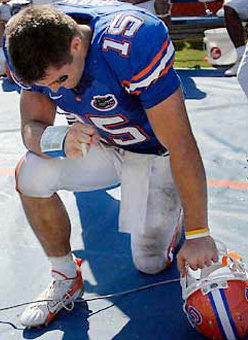
Tim Tebow is an anomaly – in more ways than one. Although he plays quarterback for the Denver Broncos, he seems to run as much as he passes. (For those of you not familiar with the National Football League, a quarterback traditionally throws the ball much more than he runs with it.) And when he does throw, he has an unorthodox throwing motion. As a result, many sports analysts dislike him as an NFL quarterback. But the criticism doesn’t end there. You see, Tebow is also a religious Christian whose values influence his conduct both on and off the field. As a result, many people dislike him as a person.

“The Tebow Effect”
Lev Echad blog

We all have our animal inside. The point is not simply to muzzle that animal, but to harness its power. To determine what sort of an animal this is and what can be done with it.

A sheep, for example, is easily domesticated and doesn’t care to hurt anyone, while an ox may kick and gore. But did you ever see a sheep plow a field?

-Rabbi Tzvi Freeman
“Your Beast”
Based on letters and talks of the Rebbe
Rabbi M. M. Schneerson
Chabad.org

If you’re a religious person, do you ever feel a little picked on by the world around you? Do you ever feel that you are sometimes misjudged by secular society or even by your atheist friends and family members? Do you ever get a little angry and want to snap back at them when they call you “ignorant” or “unscientific” or “superstitious” or even a “bigot?” If you do, then I suppose that makes you human. It also speaks to Rabbi Freeman’s commentary on “Your Beast”. Christians are sometimes taught to “turn the other cheek” (Matthew 5:39) when confronted unfairly, and many times we do. Sometimes we don’t and there are even times when some of us are really unfair.

When Stella Harville brought her black boyfriend to her family’s all-white church in rural Kentucky, she thought nothing of it. She and Ticha Chikuni worshiped there whenever they were in town, and he even sang before the congregation during one service.

Then, in August, a member of Gulnare Free Will Baptist Church in Pike County told Harville’s father that Chikuni couldn’t sing there anymore. And last Sunday, in a moment that seems from another time, church members voted 9 to 6 to bar mixed-race couples from joining the congregation.

“Rural Kentucky church revisits ban on interracial couples”
Los Angeles Times

Examples like this are fairly rare, but they do exist and unfortunately, once they make national and even international headlines, this is what the secular world sees as Christianity. Could this be why so many people who cheer on quarterback Tim Tebow of the Denver Broncos want him to keep quiet about his Christianity, at least in public?

Whether or not Ebersole endorses that view or merely observes it, he definitely touches on a common perception of public religion. Believe whatever you want and worship whoever you want with your family in private. But when you step into the public arena, you can’t say much more than “God bless you” and “God bless America” without stirring controversy. This idea, that religion belongs only in the home, underlies the principle of public reason that I discussed in my last post.

-David Fryman
“Tebowing as a Political Metaphor”
Jewneric.com

If you believe in free speech rights, rights to peaceful assembly, and rights to worship in the religion of your choice, then even if you are an American atheist, you must support the right of Tim Tebow or anyone else to hold whatever beliefs they wish, whether you agree with them or not. However, as Fryman just pointed out, most people want us to be quiet about it. I’m sure it would be “safer” for us to do so, to gather in our churches and our synagogues and to keep to ourselves. I don’t mean “safer” in the sense that we would be physically threatened if we chose to pray in public, such as before eating a meal at our local restaurant, but safer in the sense that we wouldn’t have to hear how “bad” we are (perhaps because of our stance on some hot political and social topic such as abortion, same-sex marriage, or “creationism”). We also wouldn’t have to take as much fallout over news reports of those little religious anomalies like the aforementioned interracial banning Kentucky church.

It’s interesting because, in response to the media backlash on the Kentucky church’s controversial vote, that church may be changing its tune. In this case, I applaud them for rethinking their blatantly racist position, but it does bring up a disturbing thought. Racism and banning interracial couples in a house of worship cannot be reasonably supported from how I understand the Bible, but what about those times when we, as people of faith, do take a stand based firmly on our faith, that does contradict societal political correctness? Should we just keep our mouths shut and stay “safe” or open our mouths and be dismissed as hateful bigots? Or should we change our minds in order to better fit in with what the secular world wants out of us: compliance with established social norms?

If it’s a matter of faith and principle, I believe we should stand our ground. Otherwise, our faith becomes a sham and our identity as disciples of the Master becomes a paper-thin mask hiding the fact that we are no different from people who claim no faith in God (and there are churches already doing this). Fryman’s final comments on his blog tell us why we must not hide who we are and, God forbid, cave in to media and social pressure.

Tim Tebow is Christian. Sounds obvious, I know, but his critics (of his religiosity, not his quarterbacking) don’t seem to understand. I know he’s Christian, but does he have to be so damn religious every time he opens his mouth?! Yes, he does. Because that’s what religion is: a way of life. Football is his life, so of course his football is Christian. If politics were his life, his politics would be Christian too.

There are times when it is best for us to be as meek as sheep but sometimes we are faced with a task such as “plowing a field”. Sheep can’t do the heavy lifting but an ox can. Both of those natures are part of us for a reason. The trick is knowing which trait to display and under what circumstances. Some expressions of our faith are best demonstrated in private prayer or in our houses of worship. But our faith, if authentic, is not just a weekly plug-in we connect to on Saturday or Sunday. It is who we are more than any other aspect of our being. Like the gay community is so fond of saying of themselves, we should “live out loud” our lives of faith.