Tag Archives: purpose

Considering Life and Randomness

Despair is a cheap excuse for avoiding one’s purpose in life. And a sense of purpose is the best way to avoid despair.

-Rabbi Tzvi Freeman from his book
Bringing Heaven Down to Earth
quoted from sichosinenglish.org

A rabbi was once called to a hospital to see a Jewish teenager who was suicidal. Feeling that he was a good-for-nothing who could not get anything right, the boy had attempted to take his own life. But even his suicide attempt failed. Seeing that he was Jewish, the hospital staff called the rabbi to come and try to lift the boy’s dejected spirits.

The rabbi arrived at the hospital not knowing what to expect. He found the boy lying in bed watching TV, a picture of utter misery, black clouds of despair hanging over his head. The boy hardly looked up at the rabbi, and before he could even say hello, the boy said, “If you are here to tell me what the priest just told me, you can leave now.”

Slightly taken aback, the rabbi asked, “What did the priest say?”

“He told me that G‑d loves me. That is a load of garbage. Why would G‑d love me?”

It was a good point. This kid could see nothing about himself that was worthy of love. He had achieved nothing in his life; he had no redeeming features, nothing that was beautiful or respectable or lovable. So why would G‑d love him?

The rabbi needed to touch this boy without patronizing him. He had to say something real. But what do you say to someone who sees himself as worthless?

“You may be right,” said the rabbi. “Maybe G‑d doesn’t love you.”

This got the boy’s attention. He wasn’t expecting that from a rabbi.

“Maybe G‑d doesn’t love you. But one thing’s for sure. He needs you.”

This surprised the boy. He hadn’t heard that before.

-Rabbi Aron Moss
“The Rabbi and the Suicidal Teenager”
Chabad.org

I’ve heard this before and on the surface, it sound pretty good. It sounds like you would never have been born and wouldn’t have continued to live if you didn’t have some important part to play in God’s plan. It also sounds like if you took yourself out of God’s plan (by suicide for instance) there would be a big hole punched into the middle of that plan.

Seems like a really fragile and vulnerable plan. Since human beings have free will, we can commit a thousand different actions that would be contrary to God’s master plan for Creation. If one human being were to kill himself before fulfilling his or her part in the plan, what would God do? Is there a “plan B?”

I want to finish with the Rabbi Moss commentary before continuing:

The very fact that you were born means that G‑d needs you. He had plenty of people before you, but He added you to the world’s population because there is something you can do that no one else can. And if you haven’t done it yet, that makes it even more crucial that you continue to live, so that you are able to fulfill your mission and give your unique gift to the world.

If I can look at all my achievements and be proud, I can believe G‑d loves me. But what if I haven’t achieved anything? What if I don’t have any accomplishments under my belt to be proud of?

Well, stop looking at yourself and look around you. Stop thinking about yourself, and start thinking of others. You are here because G‑d needs you — He needs you to do something.

My friend, you and I know that happiness does not come from earning a big salary. Happiness comes from serving others, from living life with meaning. I am convinced that all you need to do is focus outward, not inward. Don’t think about what you need, but what you are needed for. And in finding what you can do for others, you will find yourself.

Let’s get the easy stuff out of the way first. Does fulfilling your part in God’s plan for your life automatically mean you’re going to be happy about it?  Look at the Apostle Paul’s life. After being commissioned by Jesus to be the emissary to the Gentiles and to spread the Good News of Christ to the nations (Acts 9), was his life happy? It may have been fulfilling and rewarding in the sense that Paul knew he was doing what God was asking, but it was hardly happy or even comfortable. Paul was beaten, left for dead, had to run for his life, was shipwrecked, and bitten by a poisonous snake. He was finally executed in Rome after a lengthy stay as a prisoner. That doesn’t sound like “happy” to me.

But Rabbi Moss isn’t talking about happiness, he’s talking about serving others as part of God’s plan and in doing so, finding yourself. If you had a chance to fulfill a great purpose in life and to serve God in bringing many otherwise lost people to Him, wouldn’t you do it, even if it meant personal hardship?

Actually, that’s a tough question, especially for many Christians in western nations who aren’t typically called upon to make such great sacrifices and to suffer such hardships. In theory, our answer should be “yes,” but in practicality, I’m not so sure we’d all jump up and down enthusiastically and yell out, “Pick me!”

Now let’s dig a little deeper. Paul’s purpose in life was unmistakable. Jesus appeared to him in a vision and told him what he wanted. A few days later, he sent a human messenger to him to tell Paul his next steps. We see in other parts of the Bible how Paul seemingly had other supernatural experiences which no doubt re-enforced his life’s purpose.

But all that stuff doesn’t happen to most of us. Even if it did and we saw visions and heard voices telling us to do such and thus, most Christians around us would think we were nuts and recommend us to the nearest psychiatrist.

But as far as I can tell, most of us don’t have supernatural experiences to tell us what our life’s purpose happens to be. Most of us have to figure it out, seemingly on our own.

Rabbi Moss suggests to his (possibly fictional) suicidal teenager that as a young person, he has most likely not yet had the opportunity to fulfill his life’s purpose. God needs him to do that, so he has to stay alive until that purpose if completed. But what is that purpose? How do you know what it is? How do you know when you’ve done it? Do you just wait around and hope you can figure out what it is and then perform it when opportunity strikes?

Tough questions. Here’s another one. If you do figure out what your purpose in life is and you have already completed it, what’s the purpose in continuing to go on?

Running out of timeOK, that’s somewhat unfair, because the question assumes that your purpose in life is to commit one act that is easily defined and can be performed in a relatively quick manner, like changing a tire, or helping an older person across the street. But what if that’s it? You’ve done what God created you to do. You may have years or even decades of life still left in you. What now?

Of course, your purpose might be long-lasting and multi-dimensional. You could have been created to be a parent and a grandparent and to influence and support your family across your entire lifetime. In that case, you can never fulfill your purpose until God dictates that it is time for you to die.

Reflecting back on everything I’ve just written, it would seem that, if we accept the premise Rabbi Moss provides, we know we haven’t fulfilled our purpose in life because we’re alive. We assume that when we die, we’ve completed what we were created to do.

But what about “suicide” and “plan B?” If free will allows a certain number of people to kill themselves, what happens to God’s plan? Is it irreparably thwarted? That hardly seems likely since God is God. Being human, we tend to think of the progression of time, fate, and the universe relative to God’s plan as rather linear. Step 1 leads to step 2 and then to step 3 and so on. But if we accept that, we’re saying that no sort of randomness is possible in a created universe. But if we have free will, that can’t be true.

If God’s plan includes the possibility of randomness and further, the possibility that not all people born will fulfill their plan (so far, I’ve only included the single reason of suicide, but people may fail to fulfill their plan for a variety of other reasons tied in to their free will and the free will of people in their environment), then God must have a “plan B” (and I’m sure it’s much more complicated than this) to compensate. If one person who is to fulfill some aspect of God’s plan dies, then there must be a method (that is totally outside of human awareness) of shifting people and events around to accomplish God’s goals in this instance.

That means in an absolute sense, as individuals, we are not indispensible to God. We can be replaced. God doesn’t have an ultimate need for our individual lives.

Rabbi Moss’ story may seem compelling and we can even see how it might have turned around this depressed and suicidal boy, but it’s also not too hard to work our way around his argument, either. When Rabbi Freeman says, “Despair is a cheap excuse for avoiding one’s purpose in life. And a sense of purpose is the best way to avoid despair,” it sounds like he is being too dismissive of someone else’s despair. If Rabbi Moss (or whoever was the Rabbi in the story of the suicidal teenager) had walked into the room, dropped Rabbi Freeman’s two sentence “bomb,” and walked out, do you think it would have done any good?

People have better days and worse days. Having a purpose in life is usually pretty important, but most of the time, it gets lost in the day-to-day shuffle of going to work, interacting with our families, paying the bills, and whatever other tasks we’re expected to perform just because of the roles we play in the various areas of our lives. Most of the time, we don’t give our overarching purpose much thought. It only comes up when you read blog posts such as this one or encounter a personal life crisis.

The raw fact is that many of us may never become aware of some higher and nobel purpose of our life, let alone one that is assigned to us by Heaven. Most of us, if we have an awareness of God at all, will live our day-to-day existence, try to love, strive not to hate, read our holy book, pray, and by the time we die, we can only hope that we did whatever we were supposed to do.

That’s not a particularly satisfying thought and Rabbi Moss tells a better tale than I do, but who’s to say if life works out this way or that?

I can’t.

Disconnect Reconnect Disconnect

Normally, I start out a “meditation” with some sort of meaningful or inspirational quote, usually from Chabad.org, but I’ve got other things on my mind. Most of you know that I recently attended the First Fruits of Zion 2012 Shavuot Conference, hosted by Beth Immanuel Sabbath Fellowship in Hudson, Wisconsin. After five wonderful, exhausting days, I’m back home in Idaho. I’m really tired, even after sleeping all night, but I need to start writing about all this.

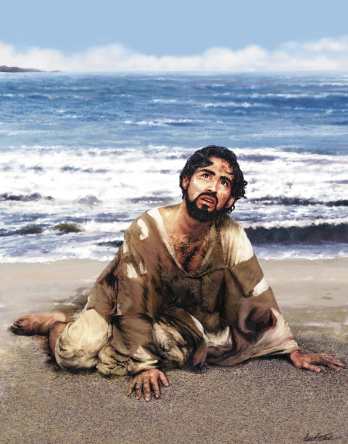
Blogging is inherently lonely. I know it might not seem that way, since in theory, I’m talking to anyone who has Internet access, but the reality of blogging is that I’m sitting at a computer keyboard alone and writing to myself. Ultimately, when I post this online, it’s available to anyone and everyone, but from my point of view, it’s like being a man who is stranded on a small, desert island, writing a note, putting it in a bottle, and then throwing it into the ocean. The tide takes it out and I’ll probably never see it again or know what happens to it. Will the cork work loose and pop out, letting water in and sinking my bottle? Will just enough water get in and ruin the message so that even if someone finds the bottle, they’ll never be able to read the note inside? Or will the bottle just float and float, carried here and there by nameless, unknown currents, bobbing around the seas, lost to time and man forever and ever?

Who knows, but that’s how I feel. Even if someone responds to a blog post, they are far away and faceless, an identity I can communicate with but never really know. An almost anonymous cardboard cut out, but never a living, breathing flesh-and-blood human being.

Until now.

There’s a long story about everything that happened up to the point when I entered Beth Immanuel for the first time last Thursday afternoon, but I won’t tell that tale right now. Jeremiah, my ride from the motel to the conference on the first day, dropped me off and then was called away. I walked into the congregation building (which is a very beautiful and richly textured synagogue) and didn’t get two steps inside before someone said (I can’t remember the exact wording), “You’re Jim Pyles. I love your blog.” (Hi, Michele)

Needless to say, I was stunned.

I really didn’t expect to get any attention relative to this blog. I figured that I’d meet one or two people I know through Facebook but otherwise I’d be pretty much anonymous. That never happened.

Please don’t think I’m saying this to blow my own horn, but probably fifteen people or so came up to me during the conference, recognizing me on sight, and saying something complementary about my blog. Daniel Lancaster publicly introduced all of the staff of FFOZ the first evening of the conference, asking each person to stand up when their name was called. I didn’t think much of it until he called my name.

What?

It probably didn’t help that I agreed be a presenter at Tikkun Leil Shavuos Saturday night (Sunday morning at about 2, actually).

Why am I telling you all this? It’s what happens when someone finds the bottle, reads the message, and comes to rescue you with a boat. It’s what happens when you get on the boat and you realize that a lot of people read the message and because of that, they feel like they know you and they want to get to know you better. It’s when you feel disconnected and alone on a desert island and then the island fills up with people who all know your name and story and all of them want you to know them, too. They tell you their stories and somehow your story and their stories interact, weave, and blend into each other to create a different, larger story about people who come from radically different places and yet all have something in common. To use a “star trek-ism”, it’s infinite diversity coming together to form an infinite combination.

Disconnection becomes connection.

And then it’s over.

Anyone who’s been to a conference like this knows that you are put through a whirlwind of events, worship services, presentations, meals, discussions, and fellowship. Suddenly, you’re back in your motel room asleep and then the next thing you know, it’s another morning and you’re praying shacharit with the congregation again. What seems like a days long stream of activities compresses into a few minutes, and once they blur by, you’re on a plane in the middle of the night, fighting the urge to try to sleep in an extremely uncomfortable seat while wedged between two people, flying back home.

I actually started to feel this loneliness the evening of the first full day of the conference. Some “vision” of the end presented itself to me during one of the presentations and I felt compelled to write notes for this particular blog post. I can’t find the notes but I still feel the separation and disconnection. I suppose that’s to be expected. After one of these events when you make or re-make so many connections so quickly, you almost always feel a sense of profound loss when it’s over. I remember thinking at one point that I could happily settle down into the community at Beth Immanuel and spend the rest of my life in worship there.

Of course, that will never happen for more reasons than I have time to recount in this missive.

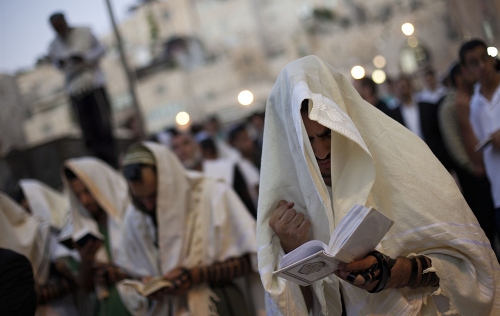
Since I didn’t have a car, Jeremiah Detwiler picked me up from the airport (thanks for all your help, Jeremiah), and during the first night, I met a fellow named Dave who was staying at the same motel, so he agreed to ferry me back and forth (thanks, Dave). Dave and I met in the motel lobby on Friday morning after breakfast and drove back to Beth Immanuel. We got there a little early and sat in the sanctuary. After a few minutes, I heard the faint sound of Hebrew prayers and followed it into the library (the library by the way, is to die for). In a small room above the library, a group of men had gathered together for shacharit before the public ceremonies began.

I remember standing directly under the room and being filled with…something, an emotion, just listening to the prayers, and I found myself floating on the surface of the rhythm of the words, letting myself be carried off to sea. I’m terrible at languages and on my best day in life, I’ll never be able to learn Hebrew, but for some reason I can’t explain, Hebrew prayer just calls to me. However, it would have been too embarrassing to actually try to participate in the prayers with them, and since I’m not Jewish, I’ve promised myself I won’t put on a tallit again for that, and more reasons than I have time to recount here. But I couldn’t help myself when I followed the sound of the prayers from the sanctuary to the library and then I just stood in awe and wonder and longing, and I listened.

The prayers ended and I quickly returned to my seat in the sanctuary, but those precious moments when I was listening to the men praying are one of the highlights of my entire experience at the conference. I really do miss the prayers and while they resonate in some mysterious way with my soul, they also remind me that I can only be who I am and that there is a world I will always orbit but never truly arrive upon. My bird has no legs, so I must forever be suspended alone in flight.

And so I’m disconnected again, but it’s even worse than that.

It’s not simply that I’m restored to my previous state. If that’s all it was, I would eventually return to my “normal life” and that would be the end of it. After all, there’s always next year and I can attend the 2013 conference if I want to.

But it’s not just that.

I brought something back with me from the conference. Yes, I brought books back, and materials back, and memories back, but that’s not what changed things for me, not really. I also brought back questions about purpose, identity, and mission. I’m wondering about goals, and process, and destination. In the days ahead, I’m going to write about what I brought back, some of which is vast in scope and some that touches on just a few tiny details.

In many ways, blogging is futile. While I know now that I’ve touched a lot of people just by writing, I also realize that in a much grander scope, it doesn’t really matter. I can only touch people who choose to read this blog and even then, only those people who choose to be touched. And as a said before, there are severe limitations to the (dis)connections I can make in a virtual universe when, after all, both God and man exist and talk in the real one.

It’s like something really strange happened to the man rescued from the desert island and to all the people who welcomed him on their boat. Instead of going away from the island and letting himself go back to their land with them, the man ate with those people, and talked with those people, and shared experiences with those people for four or five days, and at the end of that time, he got off the boat and went back to the island. The people turned their boat around and went back where they came from. And again, they are isolated from him and he is isolated from them. From disconnection to connection to disconnection.

But he carried away their notes with him and he’s reading them. And he can’t just send out messages in a bottle anymore. And he doesn’t know what to do instead. So he reads. And he thinks. And he prays. And he waits.

And he still writes messages and sends them off upon the currents of the sea every morning as the sun rises because he doesn’t know what else to do.

Maybe one day, God will reach onto the surface of the deep and find one of those messages and read it.

And maybe one day, God will be the one to come to the island and talk to the man.

And then, He’ll tell the man how to leave the island without a boat, even if he has to walk.

And he’ll go to a place where he’ll find someone new to talk to.

I want to thank Dave, and Jeremiah, and Michele, and Karen, and Jim, and Mel, and Jacob, and Jacob, and Michael, and Bill, and Cliff, and lots and lots and lots of other people for talking to me and spending time with me and sharing your lives with me. If I didn’t mention your name, it’s because my memory leaks and sometimes certain details go away. It’s nothing personal, my brain is just getting older.

I also want to thank the leaders and congregation at Beth Immanuel Sabbath Fellowship for hosting the conference and for allowing me to participate in your community. I also want to thank everyone at First Fruits of Zion for creating and producing an absolutely amazing conference that not only informed but illuminated human beings. I now have a lot of new mysteries to experience and anguish over (but in a good way). I want to thank Aaron who I’ve never met before and Daniel who I have, as well as Toby, even though he thought I was a different person at first, and Shayna who kept the entire event under control. I want to thank Nick and Jordan who I never met before and who are two of the most amazing young people it has ever been my privilege to encounter, and Jacob who is an amazing young person who I have (virtually) encountered before.

Most of all, I want to thank Boaz Michael who I have met before but who I never got to know so well as I did over the past five days or so. It’s fairly common to encounter Boaz’s thoughts but I am blessed to have experienced his heart, and his passion, and his desire to please God and to serve not only the Jewish community, but the body of all believers in the Jewish Messiah, no matter who they are or where they may be found.

I’m sitting in a chair in front of a computer on a desert island on a Tuesday afternoon as I write this. I have no idea what’s going to happen next as I listen to the waves softly washing up to the sandy shore and hear the wind rustle the palm fronds above my head. But as I experience the loss of connection and settle back into my solitary niche, I proceed hopefully.

Longing for the Dawn

Moses at SinaiA song of ascents. From the depths I called You, Hashem. O Lord, hear my voice, may Your ears be attentive to the sound of my pleas. If Your preserve iniquities, O God, O Lord, who could survive? For with You is forgiveness, that You may be feared. I put confidence in Hashem, my soul put confidence, and I hoped for His word, My soul [yearns] for the Lord, among those longing for the dawn, those longing for the dawn. Let Israel hope for Hashem, for with Hashem is kindness, and with Him is abundant redemption. And He shall redeem Israel from all its iniquities.Psalm 130 (Stone Edition Tanakh)

It’s been almost six months since I started this experiment. I feel as if I’m no closer to what I’ve been looking for than when I made this life transition last May. I’m not getting any younger, God.

On the other hand, how long did Abraham and Sarah wait before the birth of Isaac? How long did Isaac wait before the coming of Rebecca, his bride? How long did Jacob wait before he could marry Rachel? How long has every Jew who ever lived waited for the coming of the Messiah? Christians continue to wait for the return of Jesus. How long, O Lord, how long must we wait?

Maybe it’s my fault. Maybe it’s just how life works.

We’ve all been so busy lately. My wife returned to work and she is hardly at home these days. I can’t remember the last time she was able to help out in the library at the Reform shul or with an event at Chabad, let alone the last time she or my daughter went to worship at synagogue. It seems like we’re all running around to this place or that, doing one thing or another. To confess, even Shabbat barely seems like any sort of break in activity compared to the rest of the week (I know you must all think I’m terrible).

The NIV Bible translates Psalm 130:6 as:

I wait for the Lord
more than watchmen wait for the morning,
more than watchmen wait for the morning.

lost-in-the-mistAs strange as it may sound to most of you reading these words, my journey of faith has been mostly in darkness or at best, in a half-light. I seem to see what I’m looking for, but I can only picture it dimly (1 Corinthians 13:12), as if I’m straining to see the light of a lamp sitting on the window sill of a home away in the distance. The fog has rolled in and night is upon me. I am chilled to the bone and walk the trail in the darkness alone, with miles before me until my goal, and only the strange ebony sky and unfamiliar territory are my companions.

But more than the watchman at the walls of a besieged city, surrounded by foes and death, do I wait for the morning. “My soul yearns for the Lord, among those longing for the dawn.”

It’s only been six months. Abraham waited for decades for his “miracle” and even after Isaac was born, there were many challenges such as the Akedah and the death of his beloved Sarah. Finally, “Abraham breathed his last, dying at a good ripe age, old and contented; and he was gathered to his kin” (Genesis 25:8 JPS Tanakh) and another generation picked up the banner, and then another, and another, and…

But I am here now and I am waiting like a watchman in the night. I’m not even sure what I’m waiting for or what it will look like when it arrives (assuming it will ever arrive). I suppose I could say, like any other Christian, that I’m waiting for Jesus to return, but I’m waiting for something else before that. What it is, I cannot say, but I do know that it has not come yet and the longing is still here. Is it belonging? Is it illumination? Is it clarity of purpose? I don’t know.

Maybe I’m just waiting for God to tell me what I’m waiting for. Whatever comes out of this will probably end up being very different from what I’d planned. But then it is His will and not my will that must prevail.

Until I reach whatever God has sent to find me, like a soldier preparing for battle or a watchman at the walls of his city at night, I stare into the darkness and pray for even the faintest sign that there will come the dawn.

nightsky1

Who Are We to God?

Who are we?Let us rejoice and be glad
and give him glory!
For the wedding of the Lamb has come,
and his bride has made herself ready.
Fine linen, bright and clean,
was given her to wear.”

(Fine linen stands for the righteous acts of God’s holy people.)

Then the angel said to me, “Write this: Blessed are those who are invited to the wedding supper of the Lamb!” And he added, “These are the true words of God.”Revelation 19:7-9

“Do not be afraid; you will not be put to shame.
Do not fear disgrace; you will not be humiliated.
You will forget the shame of your youth
and remember no more the reproach of your widowhood.
For your Maker is your husband—
the LORD Almighty is his name—
the Holy One of Israel is your Redeemer;
he is called the God of all the earth.
The LORD will call you back
as if you were a wife deserted and distressed in spirit—
a wife who married young,
only to be rejected,” says your God.
“For a brief moment I abandoned you,
but with deep compassion I will bring you back.
In a surge of anger
I hid my face from you for a moment,
but with everlasting kindness
I will have compassion on you,”
says the LORD your Redeemer.Isaiah 54:4-8

This is a continuation of my series based on the JLI course Toward a Meaningful Life. If you haven’t done so already, before going on, review yesterday’s “morning meditation” Shattered Fragments. Then come back and continue reading here.

There are “marriage metaphors” recorded many places in the Bible. We see an example here of Israel being God’s “wife” but also in Revelation we have a picture of “the church” as “the bride of Christ”. Given the traditional Christian viewpoint that Jesus is part of the Trinity and thus is God as much as God the Father is God, how do we reconcile this? Does God have two brides? Is God the bridegroom of Israel and Jesus the husband of the church? Or do we have to entertain the idea that as “co-heirs”, both Jews and Christians become “one new man” and the difference between Jews and non-Jews becomes obliterated under the Kingship and glory of Jesus Christ?

I reject that last option out of hand because I see too much evidence in the Bible for the Jewish people; the nation of Israel being the beneficiaries of an eternal covenant relationship with God, while the other people of the earth can “approach the Throne” through the covenant made available through Christ.

But where does that leave us in terms of these seemingly contradictory “wedding images”?

I’ll tell you right now, that I don’t have an answer. I don’t believe that God has two brides but I don’t know how to make these different parts of the Bible fit together, either.

What I do know is that God is saying something important when he describes His relationship with people as a marital relationship.

Consider yesterday’s morning meditation. We saw a very compelling (though probably flawed) picture of a man and a woman who were “joined” since the beginning. We have an archetype of humanity, created as a single being at the dawn of Creation, and then literally split in half to become man and woman. How could any two people ever get any closer than the two who had been one?

What is God trying to tell us here? Does He really want to be that close to any of us?

The “marriage metaphor” breaks down pretty quickly when we consider that a married couple are supposed to be two equal halves of the same whole. After all, how can we even remotely consider ourselves equal to God? And since we’re not, what sort of “marriage” do we have to a groom who is infinite, all-powerful, and needs nothing from His “bride”? What can we contribute when God does the vast, vast majority of the “heavy lifting” and, by comparison, our efforts amount to a symbolic token, like allowing a four-year old to “help” set the table for dinner?

Am I being cynical?

Experiencing GodThat brings us right back to the question, why did God create us in the first place? Why does He love us? What can we contribute to God and the Universe that He can’t do for Himself?

I mentioned yesterday that only God is a unique One. Only God stands alone with no equal or peer (speaking of why marriage metaphors break down). Ideally, people are created to bond with another in marriage, and to live out the model God designed for living creatures in general and for human beings specifically.

When I started this series, it was with the intent to illustrate, if possible, that the life of each individual has a special meaning and purpose in the world and that we; each and every one of us, is loved by God for who we are and who He created us to be. Part of what I’ve written seems to show that every one of us has something unique to contribute to the world, to each other, and to God, that no one else can provide. The only real mystery involved is discovering what that purpose happens to be and then figuring out how we can possibly live up to our purpose day by day for the rest of our lives.

Put that way, just being here is kind of intimidating. After all, who wants to fail “Life 101”, right?

People’s lives are supposed to have meaning. If meaning doesn’t exist, then God just created a large cosmic maze, made a bunch of white lab rats (humanity), dumped us into the maze, and now He’s sitting back, collecting data, and seeing what we’ll come up with next.

So we decide God created us with a purpose because the alternative is to say nothing matters, life is meaningless, and we might as well devour each other alive because it’s a “dog-eat-dog” world.

Yet, as we saw in the comments section of yesterday’s “morning mediation”, if we aren’t created for one special person, if we could potentially successfully mate with any number of people; having thousands or even tens of thousands (or more) possible selections, then how “special” are our marital relationships? Extending the metaphor back to being God’s “bride”, what does this perspective do to the “specialness” of our relationship with Him? Even if there is a “bride of Christ” or of God, we always see it expressed in the Bible in terms of groups and not individuals. God chooses Israel as a wife, all of Israel, not the individual Jew. And it’s “the church” who is the bride of Christ, not individual Christians.

I can’t see this vast landscape from God’s point of view, so I have no idea how He really perceives all this and all of us. Frankly, even if I could see God’s perspective, I doubt I could comprehend it for even a second. All I can see of Creation is through the other end of the telescope and the image is small and indistinct. I don’t know why the Bible has marriage metaphors unless God, in some manner or fashion, is trying to communicate that He does want to be close to us. He wants some form of intimacy with people, either with the mass of human kind or with each of us as specific individuals (or both), but He desires something and we don’t understand what it is.

We know what we want, or we think we do. We want shelter in an uncertain world. We want to be taken care of and protected in a dangerous and violent universe. We want someone or something more powerful than us to care whether we live or die, and to care about what happens to us in-between birth and death (and beyond). It’s easy to see why people would try to imagine our relationship with God as Him being a loving and protective bridegroom. But it’s hard to see the motivation from God’s point of view.

I gratefully thank You, living and existing King
for returning my soul to me with compassion.
Abundant is your faithfulness. –Modeh Ani

Thank you that I woke up alive this morning, God. Now please tell me what I’m supposed to do.

Eikev: Bringing the Moshiach

And I will put enmity between you and the woman, and between your offspring and hers; he will crush your head, and you will strike his heel.Genesis 3:15

Because (eikev) you listen to these laws and safeguard and keep them, G-d your L-rd will keep His covenant and kindness that He swore to your fathers.Deuteronomy 7:12

The Hebrew word eikev not only means “because,” but also “heel.” Thus Midrash Tanchuma explains that “these laws” refers to mitzvos that seemingly lack significance, so that people tend to “ignore them and cast them under their heels.”

-from “The Chassidic Dimension” series
Commentary on Torah Portion Eikev
“The Healing Effect of Heeling”
Based on the teachings of the Lubavitcher Rebbe
Rabbi Menachem M. Schneerson
Chabad.org

This play on words would completely bypass anyone who doesn’t understand Biblical Hebrew or anyone who doesn’t read traditional or Chassidic Torah commentaries. But now that you know about it, what does it matter?

As it turns out, it matters a lot. Here’s more from the “Chassidic Dimension”:

Eikev alludes to the time just before the coming of Moshiach — “On the heels of Moshiach.” The verse is thus telling us that close to Mashiach’s coming Jews will surely obey G-d’s commands. This is in keeping with the Torah’s assurance that prior to Mashiach’s coming the Jews will return to G-d. (Or HaTorah beginning of Eikev ; ibid. p. 491; ibid. p. 504.)

Recall the quote from Genesis that starts this blog post. This is the first Messianic prophesy in the Bible, and here we see a clear association with the enmity between man and God that only the Messiah can heal, and the words of Moses as he is about to send the Children of Israel on their ordained mission to fulfill God’s promises to Abraham, Isaac, and Jacob, and take possession of the Land.

Somehow, Christianity imagines that Jesus will return and then everyone will repent and turn their hearts, minds, and hands back to God, but this is exactly the opposite of what Judaism expects. In the last days, we will all turn to God and obey His commands and His desires and only then the Messiah will come.

This rather flies in the face of traditional Christian doctrine that says we are saved by grace and not by works, as if God’s grace and our behavior were mutually exclusive concepts. While it is true that we can’t work or buy our way into heaven, it is also true that once saved, we aren’t to sit idly by, read a magazine and wait for the bus to the clouds of glory.

We were given life for a reason. We’re supposed to be doing something with it and what we do or fail to do, will make a difference in the eyes of God.

I know I’ve talked about all this before, but since Moses brought it up, I felt I should go follow his lead, so to speak.

In Deuteronomy 10:20, Moses says, “You shall fear the Lord your God; you shall serve Him and cling to Him…” Here, according to the First Fruits of Zion (FFOZ) commentary for this Torah Portion. “to cling to”:

is actually the same Hebrew word which is used of Adam in the garden when it says, “a man shall leave his father and his mother, and shall cleave to his wife, and they shall become one flesh.” (Genesis 2:24)

But how can we cling to God in the sense that one person can cling to another person with whom they have an intimate bond? In Judaism, the traditional way of interpreting the fulfillment of this command is for a person to cling to a tzadik (Holy person) or Torah teacher. It’s the act of a disciple learning from and following in the footsteps of their Master or Rebbe. The FFOZ commentary continues:

Chasidic Judaism believes that through clinging to one’s rebbe (spiritual leader), one is brought into union with his rebbe. Because the rebbe is in union with God, the disciple is also elevated into union with God by virtue of that connection. In the same way, our Rebbe, Yeshua, taught us that in order to cling to God we must cling to him (John 15:1-7) and by clinging to him, we cling to God. “In that day you will know that I am in my Father, and you in me, and I in you.” (John 14:20)

Cleaving to a Rebbe, honoring him, and learning from him, and then passing what you’ve learned to others and particularly down to the next generation in response to the desire to cling to God. When we cling to our “Rebbe”, to Jesus, we are fulfilling God’s desire.

One of the most important parts of the Shema appears in this Torah Portion (Deut. 11:1): “Love, therefore, the Lord your God, and always keep His charge, His laws, His rules, and His commandments. Moses continues to comment on this theme thus:

Therefore impress these My words upon your very heart: bind them as a sign on your hand and let them serve as a symbol on your forehead, and teach them to your children — reciting them when you stay at home and when you are away, when you lie down and when you get up; and inscribe them on the doorposts of your house and on your gates — to the end that you and your children may endure, in the land that the Lord swore to your fathers to assign to them, as long as there is a heaven over the earth. –Deuteronomy 11:18-21

For the Children of Israel, the concepts of God’s favor and the obedience of the nation are inexorably intertwined along with clinging to God and the promise of the Messiah’s coming. The fulfilling of the promise to give the Holy Land to the Children of Israel and the promise of the coming of the Messiah to bring universal peace to the world go hand-in-hand for the Jewish people, and obedience and living in Israel is a form of joining with the Creator for the Jewish people.

ShemaWhy don’t we have such a clear picture in Christianity?

It’s as if we’ve been told that it doesn’t matter what we do. We’re covered by the grace of Jesus Christ. We’re already saved; we’re already “clinging” to Jesus, so now all we have to do is sit on our thumbs and wait for him to come back and everything will be hunky dory.

Where did we get such a disconnect between the Torah and the Gospels? Who says we just get to sit around? Who says that the minute we were saved that our obligations to God were completed? Certainly not James, the brother of the Master:

What good is it, my brothers and sisters, if someone claims to have faith but has no deeds? Can such faith save them? Suppose a brother or a sister is without clothes and daily food. If one of you says to them, “Go in peace; keep warm and well fed,” but does nothing about their physical needs, what good is it? In the same way, faith by itself, if it is not accompanied by action, is dead.

But someone will say, “You have faith; I have deeds.”

Show me your faith without deeds, and I will show you my faith by my deeds. You believe that there is one God. Good! Even the demons believe that—and shudder.

You foolish person, do you want evidence that faith without deeds is useless? Was not our father Abraham considered righteous for what he did when he offered his son Isaac on the altar? You see that his faith and his actions were working together, and his faith was made complete by what he did. And the scripture was fulfilled that says, “Abraham believed God, and it was credited to him as righteousness,” and he was called God’s friend. You see that a person is considered righteous by what they do and not by faith alone. –James 2:14-24

I know I quote a lot from this passage too, but it says something that we aren’t told very often. It says that Jesus agreed with Moses (and you don’t hear that said in church very much) that a passive faith means nothing. The Children of Israel would draw closer to God and cling to God and they would succeed on their mission to take the Holy Land as long as they obeyed God and taught their children to do the same. We Christians, you and I, have a mission, too. Not just to spread the good news of Jesus and to live lives conformed to our Master, but we have individual missions based on who we are, where we live, and the opportunities God provides for us.

We have a road to walk. God set us upon a path. He has provided us with a light (Psalm 119:105) so we can see the path. Many times He has admonished us to turn neither left nor right, but to keep our eyes on the goal, not only the ultimate goal of existence as believers, but the immediate goals of helping others, feeding the hungry, visiting the sick, and performing whatever special mission and purpose God assigned to us from before the Creation of the world.

We can choose to stand still. We can choose to take God’s words and His purpose for us, throw them under our heels and walk all over them. Or we can choose to start walking and then see where the path leads. Along the way, we’ll meet people and encounter circumstances. How we manage them matters to God and to the people we interact with.

In this week’s Torah portion, Moses is trying to prepare the Israelites for a journey of fresh challenges full of promise and perils. God is doing that with us every day starting when we wake up each morning. Because somewhere out there in what we do today, tomorrow, next week, and into the future, not only affects our lives and the lives of who knows how many others, but each step we take along the path brings the footsteps of the Messiah one step closer to us. To bring the Moshiach, we must cling to our Rebbe who is close to God.

“If you love me, you will keep my commandments. –John 14:15

“A Jew never gives up. We’re here to bring Mashiach, we will settle for nothing less.” -Harav Yitzchak Ginsburgh

Later this afternoon, I’ll be posting another commentary on this week’s Torah Portion called “Eikev: Blessing God”, probably a few hours before Shabbat begins.

The Prophet and the Shade Plant

JonahJonah had gone out and sat down at a place east of the city. There he made himself a shelter, sat in its shade and waited to see what would happen to the city. Now the Lord G-d appointed a kikayon, and it grew up over Jonah to be shade over his head, to save him from his discomfort. Jonah was overjoyed with the kikayon.

But G-d designated a worm when the morning rose the next day, and the worm attacked the kikayon, and it withered.

Now it came to pass when the sun shone, that G-d appointed a stifling east wind; the sun beat on Jonah’s head, and he felt faint. He begged to die, and he said, “It would be better for me to die than to live.”

And G-d said to Jonah: “Are you very grieved about the kikayon?” And he said, “I am very grieved even to the point of death.”

And the Lord said: “You took pity on the kikayon, for which you did not toil nor did you make it grow; it lived one night and the next night perished. Now should I not take pity on Nineveh, the great city, in which there are many more than one hundred twenty thousand people that cannot discern between their right hand and their left, and many animals as well?”Jonah 4:5-11

Before continuing to read, if you haven’t done so already, go to yesterday’s meditation and review part 2 in this series: Mission Drift, then come back here.

The Rohr Jewish Learning Institute’s Rabbi Mordechai Dinerman wrote a commentary called “Jonah and the Big Shade” on which today’s morning meditation is based. You all probably know the basic story of Jonah. My inserting Jonah’s story here may seem a little mysterious in light of what I’m trying to study in this series of blog posts. Most people walk around the earth searching for purpose and meaning, but for Jonah, those things were abundantly clear. Right from the beginning, Jonah was a Prophet of God and his path was set before him:

The word of the LORD came to Jonah son of Amittai: “Go to the great city of Nineveh and preach against it, because its wickedness has come up before me.” –Jonah 1:1-2

I would imagine that if God came out point blank and told me the specifics of my purpose in life, where I was to go to find it, and what I was to do to fulfill it, I’d be thrilled beyond comprehension. But then again, maybe not. Jonah wasn’t thrilled. In fact, he tried to run away from his purpose and from God. He didn’t get very far. He was meant to go to Ninevah one way or the other. Like the old joke says, “we can do this the easy way or the hard way.” Jonah didn’t choose the easy way.

A few weeks ago, I wrote a blog post as a commentary for Torah Portion Masei. One of the key features of this Torah Portion is Moses reciting all of the places the Children of Israel camped during the 40 years of wandering. Why do that? Wasn’t the journey more important than the rest stops?

Perhaps not.

Recall the quote from yesterday’s morning meditation that was taken from the course book for the “Toward a Meaningful Life” lesson:

I wake up in the morning with the knowledge that my unique opportunities will be used to convey my individual personality in the places I find myself, thus inspiring the people around me.

Pay attention to the phrases, “my unique opportunities” and “in the places I find myself”. For Jonah, he could go no place on earth besides Nineveh in order to fulfill his purpose. He tried to go just about anyplace else, but that didn’t work out. Once the Children of Israel were consigned to wander the Sinai for 40 years, were they just wandering, or was there a purpose to where they went and what they did while they were there? What would have happened if they hadn’t encountered the descendents of Lot or Esau? Was it important that Aaron die specifically on Mount Hor? What about the battles and victories over Og, King of the Bashan and Sihon, King of the Amorites?

If the wanderings were truly aimless and the people and events they encountered really just random, why did Moses recount them to all of Israel on the threshold of entering Canaan? Why did Moses even bother to remember? Why were his words recorded in the Torah for all time to come, and why do we have them today?

Jonah's KikayonJonah had a reason to be at Ninevah and there was even a special purpose in his encounter with the kikayon plant (no one know exactly what this plant was supposed to be…it’s just a plant, but it had a purpose, too). Now think about where you go every day. Think about all of the places you’ve lived. Where have you gone on vacation? Where have you been “randomly” sidetracked? What did you do there and did any of it matter?

If your life isn’t random and arbitrary but rather, has a purpose and meaning assigned by God, then so does where your feet have taken you, or your car, or a train, or a plane, or whatever transportation you have used.

But what about the kikayon? Why did Jonah care more about that plant than he did for over 120,000 people in one of the largest cities in the world (at that point in history)? For that matter, why did God care about Ninevah when they had sinned greatly, including against the Israelites? God has exterminated whole people groups for their sin. Why did he care enough to spare Ninevah?

The most common explanation is that He felt compassion for their lives. They didn’t know their left hand from their right. They were helpless and blind, as far as God was concerned. Did Jonah care about the kikayon in the same way that God cared for Ninevah?

Yes and no.

Rabbi Dinerman explains:

In fact, the final message of the Book of Jonah is much more than a message about compassion. It is a message about the utter indispensability of every creature. G-d allows Jonah to enjoy the shade of a simple plant that protects him from the blazing sun. And the relief that Jonah feels as a result is so great that he cannot imagine being deprived of it, and when it is taken away, he is so upset that he cannot imagine living without it.

Jonah wasn’t upset about the kikayon’s death because he had compassion for it. He was upset because the kikayon served the purpose of shading him from the elements, and its death ended that purpose in Jonah’s life. How does this apply to the people and animals of Ninevah? Did God spare them because they repented and He had pity on them, or did He spare them because they repented and they were ready to fulfill their purpose in life?

Wow!

Yesterday, I quoted Rabbi Simon Jacobson’s famous definition of purpose:

Birth is G-d’s way of saying “you matter.”

Perhaps life is G-d’s way of saying “you still matter.” As long as it lived, the kikayon had a purpose and when its purpose ended, God appointed the means of its death. Though Jonah fully expected to die when he was thrown into the sea, God appointed a sea creature to preserve his life and to deliver him to his destination. Although the Book of Jonah ends abruptly, as if stopping in the middle of the story, we know that God spared Ninevah for a reason, we just don’t know what happens next.

You and I are still alive today, but the rest of our story hasn’t been written yet. There are still places to go, people to meet, things to do, and somehow, that’s all part of the reason we are here, even if we don’t always understand it.

“And why do you worry about clothes? See how the flowers of the field grow. They do not labor or spin. Yet I tell you that not even Solomon in all his splendor was dressed like one of these. If that is how God clothes the grass of the field, which is here today and tomorrow is thrown into the fire, will he not much more clothe you – you of little faith? –Matthew 6:28-30

The kikayon was only a plant, and yet it had a purpose assigned by the Creator of the Universe. Even the cattle in Ninevah each had a purpose. Jesus talks about grass growing one day and being thrown into the fire the next, and yet it is clothed in more splendor than King Solomon in all his royal glory.

Are not two sparrows sold for a penny? Yet not one of them will fall to the ground outside your Father’s care. And even the very hairs of your head are all numbered. So don’t be afraid; you are worth more than many sparrows. –Matthew 10:29-31

Grass, kikayons, sparrows, and cattle. Are you not worth more than all of these? If these common things all have a purpose and significance in the eyes of the Creator, how much greater is your purpose and significance to God?

Don’t go away. I’ll publish my commentary for Torah Portion Eikev in a few hours.

This series will continue on Sunday’s “morning meditation” Shattered Fragments. How does man and woman becoming “one flesh” affect the reason God made us?